Gisella Loeffler Art
American, Austrian, 1902-1977
Born in Austria, Gisella came to the United States with her family in 1908, settling in St. Louis, MO. After studying art at Washington University in St. Louis, she became a prominent member of the local art community, joining the St. Louis Art Guild as well as the Boston Society of Arts and Crafts. In addition to creating posters for the St. Louis Post Dispatch, Gisella won prizes from the Artists Guild of the Author’s League of America in 1919 and 1920 and from the Kansas City Art Institute in 1923. She also began working in textiles, including batik, to which she would return later in her career.
Having seen a local exhibition of paintings by Taos artists Oscar Berninghaus (who was from St. Louis) and Ernest Blumenschein, Gisella felt drawn to Taos, which reminded her of the villages of her native Austria. In 1933 the single mother with two daughters, Undine and Aithra, moved to Taos, where she lived off and on for the rest of her life. She traveled frequently, spending extended periods in Mexico, South America, and California, but always returned to New Mexico.
Gisella initially applied an Austro-Hungarian folk-art style to the Indian and Hispanic subjects that she found in New Mexico. In her early work she covered her surfaces with decorative floral and faunal motifs, and her images were flat with no attempt at rendering traditional one-point perspective. Eventually, though, Gisella developed her own style, often using children or childlike figures as subjects. Still, the influence of her native country’s folk art remained evident in her New Mexican, Mexican, and South American images.
In California, Gisella broadened her range of artistic pursuits. She taught art privately, created illustrations for Scripts Magazine, and did interior design for private homes. She also designed greeting cards, a practice she continued after her return to New Mexico, where she created a series of Christmas cards.
Gisella began illustrating children’s books in 1941 when she collaborated on Franzi and Gizi with author Margery Bianco. Eventually she wrote and illustrated her own book, El Ekeko, in 1964. She also designed ceramics—her Happy Time Dinnerware, marketed by Poppy Trail and manufactured by Metlox of Manhattan Beach, CA, is highly collectible today.
As a painter, she worked on canvas or paper in oil, casein, and watercolor. She also painted furniture. Besides making her own clothing, Gisella worked in other fabric arts such as batik and embroidery. In fact, she received the top award in fabric arts in 1959 and again in 1967 from the Mus-eum of International Folk Art in Santa Fe. But perhaps Gisella’s greatest legacy is the murals she painted for children’s areas in hospitals across the United States.
Gisella’s death in 1977 left a large hole in the fabric of the Taos Art Colony and the entire Taos community. Yet her work, so colorful and full of joy, remains an uplifting presence in Taos.2
Overall Width
to
Overall Height
to
2
2
2
1
1
2
2
2
2
1
1
1
2
2
2
2
10,442
2,791
2,504
1,384
2
Artist: Gisella Loeffler
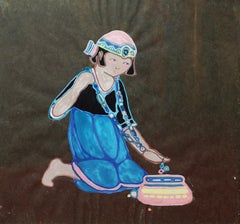
The Necklace and the Pot
By Gisella Loeffler
Located in Missouri, MO
Gisella Loeffler
"The Necklace and the Pot" c. 1919
Gouache on Paper
Initialed Lower Left
Framed Size: approx 15 x 15 inches
In a village filled with colorful characters, few Taos artists were as colorful as Gisella Loeffler [1900-1977]. From her handmade Austrian clothing and hand-painted furniture to whimsical paintings and letters written in multicolored crayon, joyful color defined the artist, who early on chose to use simply Gisella as her professional name and was known as such to everyone in Taos.
In spite of her fame there—the Taos News once labeled her a Taos legend—Gisella is rarely included in scholarly discussions of the Taos Art Colony. This oversight is likely due to the naive quality of her work, in which children or childlike adults inhabit a simple, brightly colored world filled with happiness. The macabre, the sad, the tortured, the offensive—all have no place in Gisella’s paintings. Her naive style of work looks very different from that of the better-known early Taos artists. Yet both Gisella’s artwork and her interesting life command attention.
Born in Austria, Gisella came to the United States with her family in 1908, settling in St. Louis, MO. After studying art at Washington University in St. Louis, she became a prominent member of the local art community, joining the St. Louis Art Guild as well as the Boston Society of Arts and Crafts. In addition to creating posters for the St. Louis Post Dispatch, Gisella won prizes from the Artists Guild of the Author’s League of America in 1919 and 1920 and from the Kansas City Art Institute in 1923. She also began working in textiles, including batik, to which she would return later in her career.
In the early 1920s Gisella married writer and music critic Edgar Lacher. A difficult character, Lacher may have chafed under Gisella’s success, for the couple divorced in the 1930s.
Having seen a local exhibition of paintings by Taos artists Oscar Berninghaus (who was from St. Louis) and Ernest Blumenschein, Gisella felt drawn to Taos, which reminded her of the villages of her native Austria. In 1933 the single mother with two daughters, Undine and Aithra, moved to Taos, where she lived off and on for the rest of her life. She traveled frequently, spending extended periods in Mexico, South America, and California, but always returned to New Mexico.
Gisella initially applied an Austro-Hungarian folk-art style to the Indian and Hispanic subjects that she found in New Mexico. In her early work she covered her surfaces with decorative floral and faunal motifs, and her images were flat with no attempt at rendering traditional one-point perspective. Eventually, though, Gisella developed her own style, often using children or childlike figures as subjects. Still, the influence of her native country’s folk art remained evident in her New Mexican, Mexican, and South American images.
In 1938 Gisella moved briefly to Los Griegos, north of Albuquerque, to be closer to medical facilities for her eldest daughter, who was suffering from rheumatic fever. Two years later, she moved to California to participate in the war effort, painting camouflage and decals on airplanes for Lockheed.
In California, Gisella broadened her range of artistic pursuits. She taught art privately, created illustrations for Scripts Magazine, and did interior design for private homes. She also designed greeting cards, a practice she continued after her return to New Mexico, where she created a series of Christmas cards.
Gisella began illustrating children’s books in 1941 when she collaborated on Franzi and Gizi with author Margery Bianco. Eventually she wrote and illustrated her own book, El Ekeko, in 1964. She also designed ceramics—her Happy Time Dinnerware, marketed by Poppy Trail...
Category
1910s Modern Gisella Loeffler Art
Materials
Gouache

Price Upon Request
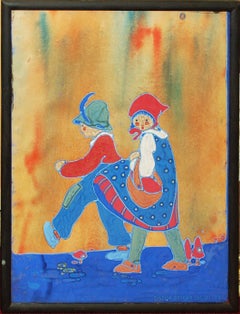
Going for a Stroll
By Gisella Loeffler
Located in Missouri, MO
Gisella Loeffler
"Going for a Stroll" c. 1919
Gouache on Paper
Initialed
Framed Size: approx 17 x 13 inches
In a village filled with colorful characters, few Taos artists were as colorful as Gisella Loeffler [1900-1977]. From her handmade Austrian clothing and hand-painted furniture to whimsical paintings and letters written in multicolored crayon, joyful color defined the artist, who early on chose to use simply Gisella as her professional name and was known as such to everyone in Taos.
In spite of her fame there—the Taos News once labeled her a Taos legend—Gisella is rarely included in scholarly discussions of the Taos Art Colony. This oversight is likely due to the naive quality of her work, in which children or childlike adults inhabit a simple, brightly colored world filled with happiness. The macabre, the sad, the tortured, the offensive—all have no place in Gisella’s paintings. Her naive style of work looks very different from that of the better-known early Taos artists. Yet both Gisella’s artwork and her interesting life command attention.
Born in Austria, Gisella came to the United States with her family in 1908, settling in St. Louis, MO. After studying art at Washington University in St. Louis, she became a prominent member of the local art community, joining the St. Louis Art Guild as well as the Boston Society of Arts and Crafts. In addition to creating posters for the St. Louis Post Dispatch, Gisella won prizes from the Artists Guild of the Author’s League of America in 1919 and 1920 and from the Kansas City Art Institute in 1923. She also began working in textiles, including batik, to which she would return later in her career.
In the early 1920s Gisella married writer and music critic Edgar Lacher. A difficult character, Lacher may have chafed under Gisella’s success, for the couple divorced in the 1930s.
Having seen a local exhibition of paintings by Taos artists Oscar Berninghaus (who was from St. Louis) and Ernest Blumenschein, Gisella felt drawn to Taos, which reminded her of the villages of her native Austria. In 1933 the single mother with two daughters, Undine and Aithra, moved to Taos, where she lived off and on for the rest of her life. She traveled frequently, spending extended periods in Mexico, South America, and California, but always returned to New Mexico.
Gisella initially applied an Austro-Hungarian folk-art style to the Indian and Hispanic subjects that she found in New Mexico. In her early work she covered her surfaces with decorative floral and faunal motifs, and her images were flat with no attempt at rendering traditional one-point perspective. Eventually, though, Gisella developed her own style, often using children or childlike figures as subjects. Still, the influence of her native country’s folk art remained evident in her New Mexican, Mexican, and South American images.
In 1938 Gisella moved briefly to Los Griegos, north of Albuquerque, to be closer to medical facilities for her eldest daughter, who was suffering from rheumatic fever. Two years later, she moved to California to participate in the war effort, painting camouflage and decals on airplanes for Lockheed.
In California, Gisella broadened her range of artistic pursuits. She taught art privately, created illustrations for Scripts Magazine, and did interior design for private homes. She also designed greeting cards, a practice she continued after her return to New Mexico, where she created a series of Christmas cards.
Gisella began illustrating children’s books in 1941 when she collaborated on Franzi and Gizi with author Margery Bianco. Eventually she wrote and illustrated her own book, El Ekeko, in 1964. She also designed ceramics—her Happy Time Dinnerware, marketed by Poppy Trail...
Category
1910s Modern Gisella Loeffler Art
Materials
Gouache
Price Upon Request
Related Items
1950
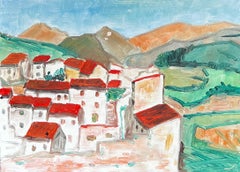
s Modernist/ Cubist Painting - Red Roof Green Landscape
By Bernard Labbe
Located in Cirencester, Gloucestershire
French Landscape
by Bernard Labbe (French mid 20th century)
original gouache on board unframed
size: 9.5 x 13 inches
condition: very good and ready to be enjoyed
provenance: the art...
Category
Mid-20th Century Modern Gisella Loeffler Art
Materials
Gouache
$417 Sale Price
40% Off
H 9.5 in W 13 in
1950
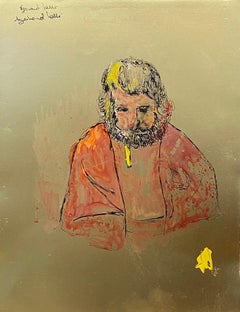
s Modernist Painting - Portrait Of Figure On Gold
By Bernard Labbe
Located in Cirencester, Gloucestershire
Gold Man
by Bernard Labbe (French mid 20th century), stamped verso
original watercolour/gouache painting on paper
overall size: 111.75 x 8.5 inches
condition: very good and ready to...
Category
Mid-20th Century Modern Gisella Loeffler Art
Materials
Watercolor, Gouache
$413 Sale Price
40% Off
H 11.75 in W 8.75 in
1950
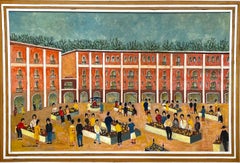
s Big Modernist/ Cubist Painting - Figures Gathered
By Bernard Labbe
Located in Cirencester, Gloucestershire
French Landscape
by Bernard Labbe (French mid 20th century)
original gouache on paper mounted on card
size: 18.75 x 24 inches
condition: very good and ready to be enjoyed
provenance...
Category
Mid-20th Century Modern Gisella Loeffler Art
Materials
Gouache
$626 Sale Price
40% Off
H 18.75 in W 24 in
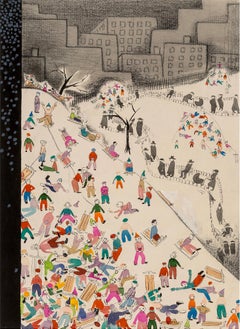
Children Snow Sledding in Central Park - New Yorker Cover Study
Located in Miami, FL
Hungarian/American artist/illustrator depicts a charming scene of sledding in the snow in Central Park. The work is abstract in its design as it's functional in its narrative - Unpublished New Yorker...
Category
1940s Modern Gisella Loeffler Art
Materials
Charcoal, Ink, Watercolor, Gouache, Pencil
$15,000
H 16.85 in W 12.25 in
1950
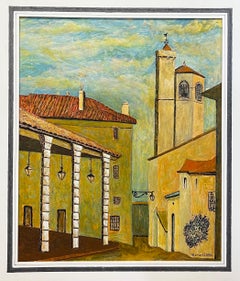
s Big Modernist/ Cubist Painting - Peaceful Backstreets Of French Village
By Bernard Labbe
Located in Cirencester, Gloucestershire
French Landscape
by Bernard Labbe (French mid 20th century)
original gouache on paper mounted in a card frame
size: 25.5 x 21 inches
condition: very good and ready to be enjoyed - wi...
Category
Mid-20th Century Modern Gisella Loeffler Art
Materials
Gouache
$417 Sale Price
40% Off
H 25.5 in W 21 in
1950
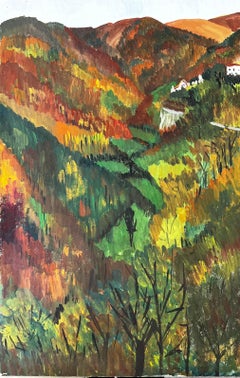
s Modernist/ Cubist Painting - Autumn Tree Landscape
By Bernard Labbe
Located in Cirencester, Gloucestershire
French Landscape
by Bernard Labbe (French mid 20th century)
original gouache on artist paper, unframed
size: 20 x 12.75 inches
condition: very good and ready to be enjoyed.
provena...
Category
Mid-20th Century Modern Gisella Loeffler Art
Materials
Gouache
$417 Sale Price
40% Off
H 20 in W 12.75 in
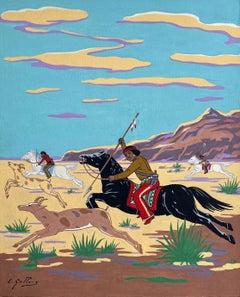
French Gouache Painting of Native American Antelope Hunt in Utah
Located in Cirencester, Gloucestershire
Title: French Gouache Painting of Native American Antelope Hunt in Utah
by Emile GALLOIS (1882-1965, French)
Signed: Yes
Medium: Original gouache painting on thick unframed paper,
Si...
Category
Mid-20th Century American Modern Gisella Loeffler Art
Materials
Gouache
$578 Sale Price
20% Off
H 13.75 in W 11 in D 1 in
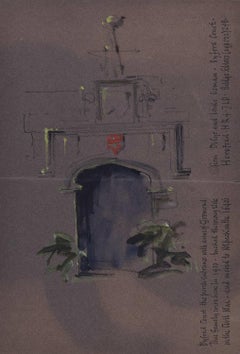
Louis Osman Christmas Card, Byford Court, 1985, Herefordshire Architect design
By Louis Osman
Located in London, GB
To see our other Modern British Art and works by the architect Louis Osman, scroll down to "More from this Seller" and below it click on "See all from this Seller" - or send us a message if you cannot find the artist you want.
Louis Osman FRIBA (1914-1996)
Christmas Card, Byford Court, 1985
22 x 31cm
Gouache and ink on paper
This characterful card was sent by Louis Osman and his wife Dilys, whom he had married in 1940. Written and painted in 1985, it features an ink sketch and gouache painting of the porch entrance to Byford Court, with handwritten notes about the house's significance. Osman moved to Byford Court in 1976, following a brief brush with bankruptcy.
Osman attended the Bartlett School of Architecture and the Slade School of Art, and became a Donaldson Medallist of RIBA in 1935.
In the late 1930s he took part in the British Museum and British School of Archaeology expeditions to Syria. After war service he worked in London designing buildings, furniture, tapestries, and glass including work in Westminster Abbey, Lincoln, Ely, Exeter and Lichfield Cathedrals. He also did work for the National Trust at Staunton Harold Church in Ashby de la Zouch.
Before moving to Byford Court, Osman and his wife lived at Canons Ashby House in Northamptonshire. Whilst there, they made the crown used at the investiture of Charles, Prince of Wales. In 1976, they also made the gold enamelled casket holding the Magna Carta...
Category
1980s Modern Gisella Loeffler Art
Materials
Gouache, Pen
$271
H 8.67 in W 12.21 in
1950
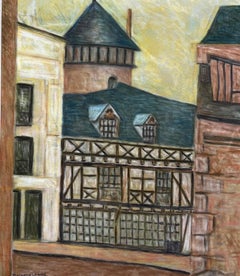
s Big Modernist/ Cubist Painting - French Building
By Bernard Labbe
Located in Cirencester, Gloucestershire
French Landscape
by Bernard Labbe (French mid 20th century)
original gouache on artist paper, mounted in a card frame
size: 25.5 x 21 inches
condition: very good and ready to be enjo...
Category
Mid-20th Century Modern Gisella Loeffler Art
Materials
Gouache
$501 Sale Price
28% Off
H 25.5 in W 21 in
1950
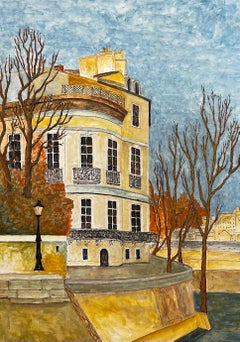
s Big Modernist/ Cubist Painting - Parisian Apartment
By Bernard Labbe
Located in Cirencester, Gloucestershire
French Landscape
by Bernard Labbe (French mid 20th century)
original gouache on artist paper, unframed
size: 25.5 x 19.5 inches
condition: very good and ready to be enjoyed
provenan...
Category
Mid-20th Century Modern Gisella Loeffler Art
Materials
Gouache
$417 Sale Price
40% Off
H 25.5 in W 19.5 in
French Gouache Painting of Indigenous Council Gathering in Colorado Nevada
Located in Cirencester, Gloucestershire
Title: French Gouache Painting of Indigenous Council Gathering in Colorado Nevada
by Emile GALLOIS (1882-1965, French)
Signed: Yes
Medium: Original gouache painting on thick unframed...
Category
Mid-20th Century American Modern Gisella Loeffler Art
Materials
Gouache

$584 Sale Price
20% Off
H 13.75 in W 11 in D 1 in
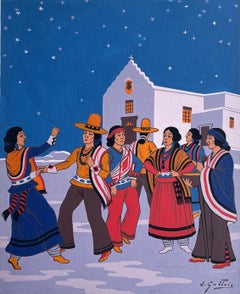
French Gouache Painting of Navajo Night Dance in New Mexico
Located in Cirencester, Gloucestershire
Title: French Gouache Painting of Navajo Night Dance in New Mexico
by Emile GALLOIS (1882-1965, French)
Signed: Yes
Medium: Original gouache painting on thick unframed paper,
Size: 1...
Category
Mid-20th Century American Modern Gisella Loeffler Art
Materials
Gouache
$601 Sale Price
20% Off
H 13.75 in W 11 in D 1 in
Previously Available Items
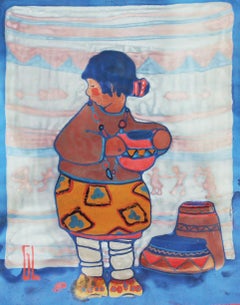
Little Native Girl
By Gisella Loeffler
Located in Missouri, MO
Gisella Loeffler
"Little Native Girl" c. 1919
Gouache on Paper
Initialed Lower Left
Framed Size: approx 15 x 12 inches
In a village filled with colorful characters, few Taos artists were as colorful as Gisella Loeffler [1900-1977]. From her handmade Austrian clothing and hand-painted furniture to whimsical paintings and letters written in multicolored crayon, joyful color defined the artist, who early on chose to use simply Gisella as her professional name and was known as such to everyone in Taos.
In spite of her fame there—the Taos News once labeled her a Taos legend—Gisella is rarely included in scholarly discussions of the Taos Art Colony. This oversight is likely due to the naive quality of her work, in which children or childlike adults inhabit a simple, brightly colored world filled with happiness. The macabre, the sad, the tortured, the offensive—all have no place in Gisella’s paintings. Her naive style of work looks very different from that of the better-known early Taos artists. Yet both Gisella’s artwork and her interesting life command attention.
Born in Austria, Gisella came to the United States with her family in 1908, settling in St. Louis, MO. After studying art at Washington University in St. Louis, she became a prominent member of the local art community, joining the St. Louis Art Guild as well as the Boston Society of Arts and Crafts. In addition to creating posters for the St. Louis Post Dispatch, Gisella won prizes from the Artists Guild of the Author’s League of America in 1919 and 1920 and from the Kansas City Art Institute in 1923. She also began working in textiles, including batik, to which she would return later in her career.
In the early 1920s Gisella married writer and music critic Edgar Lacher. A difficult character, Lacher may have chafed under Gisella’s success, for the couple divorced in the 1930s.
Having seen a local exhibition of paintings by Taos artists Oscar Berninghaus (who was from St. Louis) and Ernest Blumenschein, Gisella felt drawn to Taos, which reminded her of the villages of her native Austria. In 1933 the single mother with two daughters, Undine and Aithra, moved to Taos, where she lived off and on for the rest of her life. She traveled frequently, spending extended periods in Mexico, South America, and California, but always returned to New Mexico.
Gisella initially applied an Austro-Hungarian folk-art style to the Indian and Hispanic subjects that she found in New Mexico. In her early work she covered her surfaces with decorative floral and faunal motifs, and her images were flat with no attempt at rendering traditional one-point perspective. Eventually, though, Gisella developed her own style, often using children or childlike figures as subjects. Still, the influence of her native country’s folk art remained evident in her New Mexican, Mexican, and South American images.
In 1938 Gisella moved briefly to Los Griegos, north of Albuquerque, to be closer to medical facilities for her eldest daughter, who was suffering from rheumatic fever. Two years later, she moved to California to participate in the war effort, painting camouflage and decals on airplanes for Lockheed.
In California, Gisella broadened her range of artistic pursuits. She taught art privately, created illustrations for Scripts Magazine, and did interior design for private homes. She also designed greeting cards, a practice she continued after her return to New Mexico, where she created a series of Christmas cards.
Gisella began illustrating children’s books in 1941 when she collaborated on Franzi and Gizi with author Margery Bianco. Eventually she wrote and illustrated her own book, El Ekeko, in 1964. She also designed ceramics—her Happy Time Dinnerware, marketed by Poppy Trail...
Category
1910s Modern Gisella Loeffler Art
Materials
Gouache
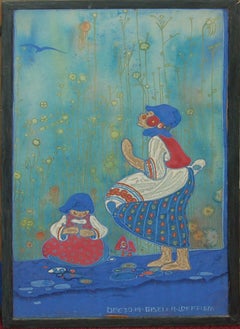
Mother and Child In the Garden
By Gisella Loeffler
Located in Missouri, MO
Gisella Loeffler
"Mother and Child in the Gardenl" 1919
Gouache on Paper
Initialed Lower Right
Framed Size: approx 19 x 10 3/4 inches
In a village filled with colorful characters, few Taos artists were as colorful as Gisella Loeffler [1900-1977]. From her handmade Austrian clothing and hand-painted furniture to whimsical paintings and letters written in multicolored crayon, joyful color defined the artist, who early on chose to use simply Gisella as her professional name and was known as such to everyone in Taos.
In spite of her fame there—the Taos News once labeled her a Taos legend—Gisella is rarely included in scholarly discussions of the Taos Art Colony. This oversight is likely due to the naive quality of her work, in which children or childlike adults inhabit a simple, brightly colored world filled with happiness. The macabre, the sad, the tortured, the offensive—all have no place in Gisella’s paintings. Her naive style of work looks very different from that of the better-known early Taos artists. Yet both Gisella’s artwork and her interesting life command attention.
Born in Austria, Gisella came to the United States with her family in 1908, settling in St. Louis, MO. After studying art at Washington University in St. Louis, she became a prominent member of the local art community, joining the St. Louis Art Guild as well as the Boston Society of Arts and Crafts. In addition to creating posters for the St. Louis Post Dispatch, Gisella won prizes from the Artists Guild of the Author’s League of America in 1919 and 1920 and from the Kansas City Art Institute in 1923. She also began working in textiles, including batik, to which she would return later in her career.
In the early 1920s Gisella married writer and music critic Edgar Lacher. A difficult character, Lacher may have chafed under Gisella’s success, for the couple divorced in the 1930s.
Having seen a local exhibition of paintings by Taos artists Oscar Berninghaus (who was from St. Louis) and Ernest Blumenschein, Gisella felt drawn to Taos, which reminded her of the villages of her native Austria. In 1933 the single mother with two daughters, Undine and Aithra, moved to Taos, where she lived off and on for the rest of her life. She traveled frequently, spending extended periods in Mexico, South America, and California, but always returned to New Mexico.
Gisella initially applied an Austro-Hungarian folk-art style to the Indian and Hispanic subjects that she found in New Mexico. In her early work she covered her surfaces with decorative floral and faunal motifs, and her images were flat with no attempt at rendering traditional one-point perspective. Eventually, though, Gisella developed her own style, often using children or childlike figures as subjects. Still, the influence of her native country’s folk art remained evident in her New Mexican, Mexican, and South American images.
In 1938 Gisella moved briefly to Los Griegos, north of Albuquerque, to be closer to medical facilities for her eldest daughter, who was suffering from rheumatic fever. Two years later, she moved to California to participate in the war effort, painting camouflage and decals on airplanes for Lockheed.
In California, Gisella broadened her range of artistic pursuits. She taught art privately, created illustrations for Scripts Magazine, and did interior design for private homes. She also designed greeting cards, a practice she continued after her return to New Mexico, where she created a series of Christmas cards.
Gisella began illustrating children’s books in 1941 when she collaborated on Franzi and Gizi with author Margery Bianco. Eventually she wrote and illustrated her own book, El Ekeko, in 1964. She also designed ceramics—her Happy Time Dinnerware, marketed by Poppy Trail...
Category
1910s Modern Gisella Loeffler Art
Materials
Gouache
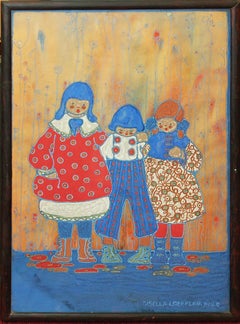
Three Girls
By Gisella Loeffler
Located in Missouri, MO
Gisella Loeffler
"Three Girlsl" c. 1919
Gouache on Paper
Initialed Lower Left
Framed Size: approx 19 x 13 inches
In a village filled with colorful characters, few Taos artists were as colorful as Gisella Loeffler [1900-1977]. From her handmade Austrian clothing and hand-painted furniture to whimsical paintings and letters written in multicolored crayon, joyful color defined the artist, who early on chose to use simply Gisella as her professional name and was known as such to everyone in Taos.
In spite of her fame there—the Taos News once labeled her a Taos legend—Gisella is rarely included in scholarly discussions of the Taos Art Colony. This oversight is likely due to the naive quality of her work, in which children or childlike adults inhabit a simple, brightly colored world filled with happiness. The macabre, the sad, the tortured, the offensive—all have no place in Gisella’s paintings. Her naive style of work looks very different from that of the better-known early Taos artists. Yet both Gisella’s artwork and her interesting life command attention.
Born in Austria, Gisella came to the United States with her family in 1908, settling in St. Louis, MO. After studying art at Washington University in St. Louis, she became a prominent member of the local art community, joining the St. Louis Art Guild as well as the Boston Society of Arts and Crafts. In addition to creating posters for the St. Louis Post Dispatch, Gisella won prizes from the Artists Guild of the Author’s League of America in 1919 and 1920 and from the Kansas City Art Institute in 1923. She also began working in textiles, including batik, to which she would return later in her career.
In the early 1920s Gisella married writer and music critic Edgar Lacher. A difficult character, Lacher may have chafed under Gisella’s success, for the couple divorced in the 1930s.
Having seen a local exhibition of paintings by Taos artists Oscar Berninghaus (who was from St. Louis) and Ernest Blumenschein, Gisella felt drawn to Taos, which reminded her of the villages of her native Austria. In 1933 the single mother with two daughters, Undine and Aithra, moved to Taos, where she lived off and on for the rest of her life. She traveled frequently, spending extended periods in Mexico, South America, and California, but always returned to New Mexico.
Gisella initially applied an Austro-Hungarian folk-art style to the Indian and Hispanic subjects that she found in New Mexico. In her early work she covered her surfaces with decorative floral and faunal motifs, and her images were flat with no attempt at rendering traditional one-point perspective. Eventually, though, Gisella developed her own style, often using children or childlike figures as subjects. Still, the influence of her native country’s folk art remained evident in her New Mexican, Mexican, and South American images.
In 1938 Gisella moved briefly to Los Griegos, north of Albuquerque, to be closer to medical facilities for her eldest daughter, who was suffering from rheumatic fever. Two years later, she moved to California to participate in the war effort, painting camouflage and decals on airplanes for Lockheed.
In California, Gisella broadened her range of artistic pursuits. She taught art privately, created illustrations for Scripts Magazine, and did interior design for private homes. She also designed greeting cards, a practice she continued after her return to New Mexico, where she created a series of Christmas cards.
Gisella began illustrating children’s books in 1941 when she collaborated on Franzi and Gizi with author Margery Bianco. Eventually she wrote and illustrated her own book, El Ekeko, in 1964. She also designed ceramics—her Happy Time Dinnerware, marketed by Poppy Trail...
Category
1910s Modern Gisella Loeffler Art
Materials
Gouache
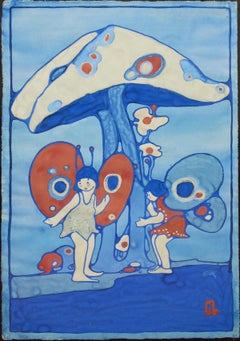
Mushroom Fairies
By Gisella Loeffler
Located in Missouri, MO
Gisella Loeffler
"Mushroom Fairies" c. 1919
Gouache on Paper
Initialed Lower Left
Framed Size: approx 21 x 13 3/4 inches
In a village filled with colorful characters, few Taos artists were as colorful as Gisella Loeffler [1900-1977]. From her handmade Austrian clothing and hand-painted furniture to whimsical paintings and letters written in multicolored crayon, joyful color defined the artist, who early on chose to use simply Gisella as her professional name and was known as such to everyone in Taos.
In spite of her fame there—the Taos News once labeled her a Taos legend—Gisella is rarely included in scholarly discussions of the Taos Art Colony. This oversight is likely due to the naive quality of her work, in which children or childlike adults inhabit a simple, brightly colored world filled with happiness. The macabre, the sad, the tortured, the offensive—all have no place in Gisella’s paintings. Her naive style of work looks very different from that of the better-known early Taos artists. Yet both Gisella’s artwork and her interesting life command attention.
Born in Austria, Gisella came to the United States with her family in 1908, settling in St. Louis, MO. After studying art at Washington University in St. Louis, she became a prominent member of the local art community, joining the St. Louis Art Guild as well as the Boston Society of Arts and Crafts. In addition to creating posters for the St. Louis Post Dispatch, Gisella won prizes from the Artists Guild of the Author’s League of America in 1919 and 1920 and from the Kansas City Art Institute in 1923. She also began working in textiles, including batik, to which she would return later in her career.
In the early 1920s Gisella married writer and music critic Edgar Lacher. A difficult character, Lacher may have chafed under Gisella’s success, for the couple divorced in the 1930s.
Having seen a local exhibition of paintings by Taos artists Oscar Berninghaus (who was from St. Louis) and Ernest Blumenschein, Gisella felt drawn to Taos, which reminded her of the villages of her native Austria. In 1933 the single mother with two daughters, Undine and Aithra, moved to Taos, where she lived off and on for the rest of her life. She traveled frequently, spending extended periods in Mexico, South America, and California, but always returned to New Mexico.
Gisella initially applied an Austro-Hungarian folk-art style to the Indian and Hispanic subjects that she found in New Mexico. In her early work she covered her surfaces with decorative floral and faunal motifs, and her images were flat with no attempt at rendering traditional one-point perspective. Eventually, though, Gisella developed her own style, often using children or childlike figures as subjects. Still, the influence of her native country’s folk art remained evident in her New Mexican, Mexican, and South American images.
In 1938 Gisella moved briefly to Los Griegos, north of Albuquerque, to be closer to medical facilities for her eldest daughter, who was suffering from rheumatic fever. Two years later, she moved to California to participate in the war effort, painting camouflage and decals on airplanes for Lockheed.
In California, Gisella broadened her range of artistic pursuits. She taught art privately, created illustrations for Scripts Magazine, and did interior design for private homes. She also designed greeting cards, a practice she continued after her return to New Mexico, where she created a series of Christmas cards.
Gisella began illustrating children’s books in 1941 when she collaborated on Franzi and Gizi with author Margery Bianco. Eventually she wrote and illustrated her own book, El Ekeko, in 1964. She also designed ceramics—her Happy Time Dinnerware, marketed by Poppy Trail...
Category
1910s Modern Gisella Loeffler Art
Materials
Gouache
Gisella Loeffler art for sale on 1stDibs.
Find a wide variety of authentic Gisella Loeffler art available for sale on 1stDibs. If you’re browsing the collection of art to introduce a pop of color in a neutral corner of your living room or bedroom, you can find work that includes elements of blue and other colors. You can also browse by medium to find art by Gisella Loeffler in gouache, paint, watercolor and more. Much of the original work by this artist or collective was created during the 1910s and is mostly associated with the modern style. Not every interior allows for large Gisella Loeffler art, so small editions measuring 11 inches across are available. Customers who are interested in this artist might also find the work of Daniel Ginsbourg, Jane Levy, and Florence E. Nosworthy.