Harry Humphrey Moore Paintings

American, 1844-1926

Born deaf in New York City, Harry Humphrey Moore was a student of Thomas Eakins when attending a school for the deaf in Philadelphia. Eakins recommended he study at École des Beaux-Arts in Paris where he became a student of Jean-Léon Gérôme.

Completing his studies in 1869, Moore traveled in Spain with Eakins, and he was so impressed by the landscape that he stayed several years. In 1872, he married and moved to Morocco and also went to Japan, having been encouraged by the artist Robert Blum.

Moore’s reputation was established by his interest in Oriental subject matter — along with William Heine, Edward Kern and Winckworth Allan Gay, Moore was one of the first American artists to visit Japan. There he created about sixty paintings of Oriental subject matter including temples, gardens and Geisha girls.

Throughout his life, Moore was a world traveler, spending much of his time in Paris, but returned to America to spend time in San Francisco between 1864 and 1907.

Find original Harry Humphrey Moore paintings and other art on 1stDibs.

to
4
Overall Width
to
Overall Height
to
4
3
1
3
1
1
1
1
1
1
1
1
1
1
1
1
1
4
4
4
4
4
781
712
712
689
1
4
Artist: Harry Humphrey Moore
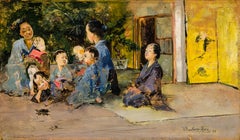
Japanese Children with Tortoise
By Harry Humphrey Moore
Located in New York, NY
Harry Humphrey Moore led a cosmopolitan lifestyle, dividing his time between Europe, New York City, and California. This globe-trotting painter was also active in Morocco, and most importantly, he was among the first generation of American artists to live and work in Japan, where he depicted temples, tombs, gardens, merchants, children, and Geisha girls. Praised by fellow painters such as Thomas Eakins, John Singer Sargent, and Jean-Léon Gérôme, Moore’s fame was attributed to his exotic subject matter, as well as to the “brilliant coloring, delicate brush work [sic] and the always present depth of feeling” that characterized his work (Eugene A. Hajdel, Harry H. Moore, American 19th Century: Collection of Information on Harry Humphrey Moore, 19th Century Artist, Based on His Scrap Book and Other Data [Jersey City, New Jersey: privately published, 1950], p. 8). Born in New York City, Moore was the son of Captain George Humphrey, an affluent shipbuilder, and a descendant of the English painter, Ozias Humphrey (1742–1810). He became deaf at age three, and later went to special schools where he learned lip-reading and sign language. After developing an interest in art as a young boy, Moore studied painting with the portraitist Samuel Waugh in Philadelphia, where he met and became friendly with Eakins. He also received instruction from the painter Louis Bail in New Haven, Connecticut. In 1864, Moore attended classes at the Mark Hopkins Institute in San Francisco, and until 1907, he would visit the “City by the Bay” regularly. In 1865, Moore went to Europe, spending time in Munich before traveling to Paris, where, in October 1866, he resumed his formal training in Gérôme’s atelier, drawing inspiration from his teacher’s emphasis on authentic detail and his taste for picturesque genre subjects. There, Moore worked alongside Eakins, who had mastered sign language in order to communicate with his friend. In March 1867, Moore enrolled at the prestigious École des Beaux-Arts, honing his drawing skills under the tutelage of Adolphe...
Category

Late 19th Century Harry Humphrey Moore Paintings

Materials

Oil, Wood Panel

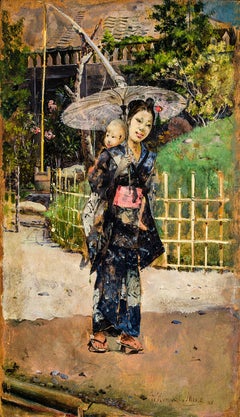
Japanese Girl Promenading
By Harry Humphrey Moore
Located in New York, NY
Harry Humphrey Moore led a cosmopolitan lifestyle, dividing his time between Europe, New York City, and California. This globe-trotting painter was also active in Morocco, and most importantly, he was among the first generation of American artists to live and work in Japan, where he depicted temples, tombs, gardens, merchants, children, and Geisha girls. Praised by fellow painters such as Thomas Eakins, John Singer Sargent, and Jean-Léon Gérôme, Moore’s fame was attributed to his exotic subject matter, as well as to the “brilliant coloring, delicate brush work [sic] and the always present depth of feeling” that characterized his work (Eugene A. Hajdel, Harry H. Moore, American 19th Century: Collection of Information on Harry Humphrey Moore, 19th Century Artist, Based on His Scrap Book and Other Data [Jersey City, New Jersey: privately published, 1950], p. 8). Born in New York City, Moore was the son of Captain George Humphrey, an affluent shipbuilder, and a descendant of the English painter, Ozias Humphrey (1742–1810). He became deaf at age three, and later went to special schools where he learned lip-reading and sign language. After developing an interest in art as a young boy, Moore studied painting with the portraitist Samuel Waugh in Philadelphia, where he met and became friendly with Eakins. He also received instruction from the painter Louis Bail in New Haven, Connecticut. In 1864, Moore attended classes at the Mark Hopkins Institute in San Francisco, and until 1907, he would visit the “City by the Bay” regularly. In 1865, Moore went to Europe, spending time in Munich before traveling to Paris, where, in October 1866, he resumed his formal training in Gérôme’s atelier, drawing inspiration from his teacher’s emphasis on authentic detail and his taste for picturesque genre subjects. There, Moore worked alongside Eakins, who had mastered sign language in order to communicate with his friend. In March 1867, Moore enrolled at the prestigious École des Beaux-Arts, honing his drawing skills under the tutelage of Adolphe Yvon, among other leading French painters. In December 1869, Moore traveled around Spain with Eakins and the Philadelphia engraver, William Sartain. In 1870, he went to Madrid, where he met the Spanish painters Mariano Fortuny and Martin Rico y Ortega. When Eakins and Sartain returned to Paris, Moore remained in Spain, painting depictions of Moorish life in cities such as Segovia and Granada and fraternizing with upper-crust society. In 1872, he married Isabella de Cistue, the well-connected daughter of Colonel Cistue of Saragossa, who was related to the Queen of Spain. For the next two-and-a-half years, the couple lived in Morocco, where Moore painted portraits, interiors, and streetscapes, often accompanied by an armed guard (courtesy of the Grand Sharif) when painting outdoors. (For this aspect of Moore’s oeuvre, see Gerald M. Ackerman, American Orientalists [Courbevoie, France: ACR Édition, 1994], pp. 135–39.) In 1873, he went to Rome, spending two years studying with Fortuny, whose lively technique, bright palette, and penchant for small-format genre scenes made a lasting impression on him. By this point in his career, Moore had emerged as a “rapid workman” who could “finish a picture of given size and containing a given subject quicker than most painters whose style is more simple and less exacting” (New York Times, as quoted in Hajdel, p. 23). In 1874, Moore settled in New York City, maintaining a studio on East 14th Street, where he would remain until 1880. During these years, he participated intermittently in the annuals of the National Academy of Design in New York and the Pennsylvania Academy of the Fine Arts in Philadelphia, exhibiting Moorish subjects and views of Spain. A well-known figure in Bay Area art circles, Moore had a one-man show at the Snow & May Gallery in San Francisco in 1877, and a solo exhibition at the Bohemian Club, also in San Francisco, in 1880. Indeed, Moore fraternized with many members of the city’s cultural elite, including Katherine Birdsall Johnson (1834–1893), a philanthropist and art collector who owned The Captive (current location unknown), one of his Orientalist subjects. (Johnson’s ownership of The Captive was reported in L. K., “A Popular Paris Artist,” New York Times, July 23, 1893.) According to one contemporary account, Johnson invited Moore and his wife to accompany her on a trip to Japan in 1880 and they readily accepted. (For Johnson’s connection to Moore’s visit to Japan, see Emma Willard and Her Pupils; or, Fifty Years of Troy Female Seminary [New York: Mrs. Russell Sage, 1898]. Johnson’s bond with the Moores was obviously strong, evidenced by the fact that she left them $25,000.00 in her will, which was published in the San Francisco Call on December 10, 1893.) That Moore would be receptive to making the arduous voyage across the Pacific is understandable in view of his penchant for foreign motifs. Having opened its doors to trade with the West in 1854, and in the wake of Japan’s presence at the Philadelphia Centennial Exposition of 1876, American artists were becoming increasingly fascinated by what one commentator referred to as that “ideal dreamland of the poet” (L. K., “A Popular Paris Artist”). Moore, who was in Japan during 1880–81, became one of the first American artists to travel to the “land of the rising sun,” preceded only by the illustrator, William Heime, who went there in 1851 in conjunction with the Japanese expedition of Commodore Matthew C. Perry; Edward Kern, a topographical artist and explorer who mapped the Japanese coast in 1855; and the Boston landscapist, Winckleworth Allan Gay, a resident of Japan from 1877 to 1880. More specifically, as William H. Gerdts has pointed out, Moore was the “first American painter to seriously address the appearance and mores of the Japanese people” (William H. Gerdts, American Artists in Japan, 1859–1925, exhib. cat. [New York: Hollis Taggart Galleries, 1996], p. 5). During his sojourn in Japan, Moore spent time in Tokyo, Yokohama, Kyoto, Nikko, and Osaka, carefully observing the local citizenry, their manners and mode of dress, and the country’s distinctive architecture. Working on easily portable panels, he created about sixty scenes of daily life, among them this sparkling portrayal of a young woman dressed in a traditional kimono and carrying a baby on her back, a paper parasol...
Category

Late 19th Century Harry Humphrey Moore Paintings

Materials

Oil, Wood Panel

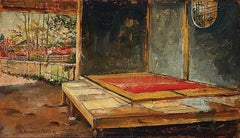
Interior of a Japanese House
By Harry Humphrey Moore
Located in New York, NY
Harry Humphrey Moore led a cosmopolitan lifestyle, dividing his time between Europe, New York City, and California. This globe-trotting painter was also active in Morocco, and most importantly, he was among the first generation of American artists to live and work in Japan, where he depicted temples, tombs, gardens, merchants, children, and Geisha girls. Praised by fellow painters such as Thomas Eakins, John Singer Sargent, and Jean-Léon Gérôme, Moore’s fame was attributed to his exotic subject matter, as well as to the “brilliant coloring, delicate brush work [sic] and the always present depth of feeling” that characterized his work (Eugene A. Hajdel, Harry H. Moore, American 19th Century: Collection of Information on Harry Humphrey Moore, 19th Century Artist, Based on His Scrap Book and Other Data [Jersey City, New Jersey: privately published, 1950], p. 8). Born in New York City, Moore was the son of Captain George Humphrey, an affluent shipbuilder, and a descendant of the English painter, Ozias Humphrey (1742–1810). He became deaf at age three, and later went to special schools where he learned lip-reading and sign language. After developing an interest in art as a young boy, Moore studied painting with the portraitist Samuel Waugh in Philadelphia, where he met and became friendly with Eakins. He also received instruction from the painter Louis Bail in New Haven, Connecticut. In 1864, Moore attended classes at the Mark Hopkins Institute in San Francisco, and until 1907, he would visit the “City by the Bay” regularly. In 1865, Moore went to Europe, spending time in Munich before traveling to Paris, where, in October 1866, he resumed his formal training in Gérôme’s atelier, drawing inspiration from his teacher’s emphasis on authentic detail and his taste for picturesque genre subjects. There, Moore worked alongside Eakins, who had mastered sign language in order to communicate with his friend. In March 1867, Moore enrolled at the prestigious École des Beaux-Arts, honing his drawing skills under the tutelage of Adolphe Yvon, among other leading French painters. In December 1869, Moore traveled around Spain with Eakins and the Philadelphia engraver, William Sartain. In 1870, he went to Madrid, where he met the Spanish painters Mariano Fortuny and Martin Rico y Ortega. When Eakins and Sartain returned to Paris, Moore remained in Spain, painting depictions of Moorish life in cities such as Segovia and Granada and fraternizing with upper-crust society. In 1872, he married Isabella de Cistue, the well-connected daughter of Colonel Cistue of Saragossa, who was related to the Queen of Spain. For the next two-and-a-half years, the couple lived in Morocco, where Moore painted portraits, interiors, and streetscapes, often accompanied by an armed guard (courtesy of the Grand Sharif) when painting outdoors. (For this aspect of Moore’s oeuvre, see Gerald M. Ackerman, American Orientalists [Courbevoie, France: ACR Édition, 1994], pp. 135–39.) In 1873, he went to Rome, spending two years studying with Fortuny, whose lively technique, bright palette, and penchant for small-format genre scenes made a lasting impression on him. By this point in his career, Moore had emerged as a “rapid workman” who could “finish a picture of given size and containing a given subject quicker than most painters whose style is more simple and less exacting” (New York Times, as quoted in Hajdel, p. 23). In 1874, Moore settled in New York City, maintaining a studio on East 14th Street, where he would remain until 1880. During these years, he participated intermittently in the annuals of the National Academy of Design in New York and the Pennsylvania Academy of the Fine Arts in Philadelphia, exhibiting Moorish subjects and views of Spain. A well-known figure in Bay Area art circles, Moore had a one-man show at the Snow & May Gallery in San Francisco in 1877, and a solo exhibition at the Bohemian Club, also in San Francisco, in 1880. Indeed, Moore fraternized with many members of the city’s cultural elite, including Katherine Birdsall Johnson (1834–1893), a philanthropist and art collector who owned The Captive (current location unknown), one of his Orientalist subjects. (Johnson’s ownership of The Captive was reported in L. K., “A Popular Paris Artist,” New York Times, July 23, 1893.) According to one contemporary account, Johnson invited Moore and his wife to accompany her on a trip to Japan in 1880 and they readily accepted. (For Johnson’s connection to Moore’s visit to Japan, see Emma Willard and Her Pupils; or, Fifty Years of Troy Female Seminary [New York: Mrs. Russell Sage, 1898]. Johnson’s bond with the Moores was obviously strong, evidenced by the fact that she left them $25,000.00 in her will, which was published in the San Francisco Call on December 10, 1893.) That Moore would be receptive to making the arduous voyage across the Pacific is understandable in view of his penchant for foreign motifs. Having opened its doors to trade with the West in 1854, and in the wake of Japan’s presence at the Philadelphia Centennial Exposition of 1876, American artists were becoming increasingly fascinated by what one commentator referred to as that “ideal dreamland of the poet” (L. K., “A Popular Paris Artist”). Moore, who was in Japan during 1880–81, became one of the first American artists to travel to the “land of the rising sun,” preceded only by the illustrator, William Heime, who went there in 1851 in conjunction with the Japanese expedition of Commodore Matthew C. Perry; Edward Kern, a topographical artist and explorer who mapped the Japanese coast in 1855; and the Boston landscapist, Winckleworth Allan Gay, a resident of Japan from 1877 to 1880. More specifically, as William H. Gerdts has pointed out, Moore was the “first American painter to seriously address the appearance and mores of the Japanese people” (William H. Gerdts, American Artists in Japan, 1859–1925, exhib. cat. [New York: Hollis Taggart Galleries, 1996], p. 5). During his sojourn in Nippon (which means, “The Land of the Rising Sun”), Moore spent time in locales such as Tokyo, Yokohama, Kyoto, Nikko, and Osaka, carefully observing the local citizenry, their manners and mode of dress, and the country’s distinctive architecture. Working on easily portable panels, he created about sixty scenes of daily life, among them this depiction of an interior of a dwelling. The location of the view is unknown, but the presence of a rustic rail fence demarcating a yard bordering a distant house flanked by tall trees, shrubs and some blossoming fruit trees, suggests that the work likely portrays a building in a city suburb or a small village. In his book, Japanese Homes and Their Surroundings, Edward S. Morse (an American zoologist, orientalist, and “japanophile” who taught at Tokyo Imperial University from 1877 to 1879, and visited Japan again in 1891 and 1882) noted the “openness and accessibility of the Japanese house...
Category

Late 19th Century Harry Humphrey Moore Paintings

Materials

Oil, Wood Panel

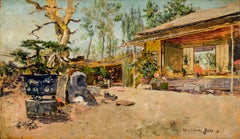
Japanese Tea Garden
By Harry Humphrey Moore
Located in New York, NY
Harry Humphrey Moore led a cosmopolitan lifestyle, dividing his time between Europe, New York City, and California. This globe-trotting painter was also active in Morocco, and most importantly, he was among the first generation of American artists to live and work in Japan, where he depicted temples, tombs, gardens, merchants, children, and Geisha girls. Praised by fellow painters such as Thomas Eakins, John Singer Sargent, and Jean-Léon Gérôme, Moore’s fame was attributed to his exotic subject matter, as well as to the “brilliant coloring, delicate brush work [sic] and the always present depth of feeling” that characterized his work (Eugene A. Hajdel, Harry H. Moore, American 19th Century: Collection of Information on Harry Humphrey Moore, 19th Century Artist, Based on His Scrap Book and Other Data [Jersey City, New Jersey: privately published, 1950], p. 8). Born in New York City, Moore was the son of Captain George Humphrey, an affluent shipbuilder, and a descendant of the English painter, Ozias Humphrey (1742–1810). He became deaf at age three, and later went to special schools where he learned lip-reading and sign language. After developing an interest in art as a young boy, Moore studied painting with the portraitist Samuel Waugh in Philadelphia, where he met and became friendly with Eakins. He also received instruction from the painter Louis Bail in New Haven, Connecticut. In 1864, Moore attended classes at the Mark Hopkins Institute in San Francisco, and until 1907, he would visit the “City by the Bay” regularly. In 1865, Moore went to Europe, spending time in Munich before traveling to Paris, where, in October 1866, he resumed his formal training in Gérôme’s atelier, drawing inspiration from his teacher’s emphasis on authentic detail and his taste for picturesque genre subjects. There, Moore worked alongside Eakins, who had mastered sign language in order to communicate with his friend. In March 1867, Moore enrolled at the prestigious École des Beaux-Arts, honing his drawing skills under the tutelage of Adolphe Yvon, among other leading French painters. In December 1869, Moore traveled around Spain with Eakins and the Philadelphia engraver, William Sartain. In 1870, he went to Madrid, where he met the Spanish painters Mariano Fortuny and Martin Rico y Ortega. When Eakins and Sartain returned to Paris, Moore remained in Spain, painting depictions of Moorish life in cities such as Segovia and Granada and fraternizing with upper-crust society. In 1872, he married Isabella de Cistue, the well-connected daughter of Colonel Cistue of Saragossa, who was related to the Queen of Spain. For the next two-and-a-half years, the couple lived in Morocco, where Moore painted portraits, interiors, and streetscapes, often accompanied by an armed guard (courtesy of the Grand Sharif) when painting outdoors. (For this aspect of Moore’s oeuvre, see Gerald M. Ackerman, American Orientalists [Courbevoie, France: ACR Édition, 1994], pp. 135–39.) In 1873, he went to Rome, spending two years studying with Fortuny, whose lively technique, bright palette, and penchant for small-format genre scenes made a lasting impression on him. By this point in his career, Moore had emerged as a “rapid workman” who could “finish a picture of given size and containing a given subject quicker than most painters whose style is more simple and less exacting” (New York Times, as quoted in Hajdel, p. 23). In 1874, Moore settled in New York City, maintaining a studio on East 14th Street, where he would remain until 1880. During these years, he participated intermittently in the annuals of the National Academy of Design in New York and the Pennsylvania Academy of the Fine Arts in Philadelphia, exhibiting Moorish subjects and views of Spain. A well-known figure in Bay Area art circles, Moore had a one-man show at the Snow & May Gallery in San Francisco in 1877, and a solo exhibition at the Bohemian Club, also in San Francisco, in 1880. Indeed, Moore fraternized with many members of the city’s cultural elite, including Katherine Birdsall Johnson (1834–1893), a philanthropist and art collector who owned The Captive (current location unknown), one of his Orientalist subjects. (Johnson’s ownership of The Captive was reported in L. K., “A Popular Paris Artist,” New York Times, July 23, 1893.) According to one contemporary account, Johnson invited Moore and his wife to accompany her on a trip to Japan in 1880 and they readily accepted. (For Johnson’s connection to Moore’s visit to Japan, see Emma Willard and Her Pupils; or, Fifty Years of Troy Female Seminary [New York: Mrs. Russell Sage, 1898]. Johnson’s bond with the Moores was obviously strong, evidenced by the fact that she left them $25,000.00 in her will, which was published in the San Francisco Call on December 10, 1893.) That Moore would be receptive to making the arduous voyage across the Pacific is understandable in view of his penchant for foreign motifs. Having opened its doors to trade with the West in 1854, and in the wake of Japan’s presence at the Philadelphia Centennial Exposition of 1876, American artists were becoming increasingly fascinated by what one commentator referred to as that “ideal dreamland of the poet” (L. K., “A Popular Paris Artist”). Moore, who was in Japan during 1880–81, became one of the first American artists to travel to the “land of the rising sun,” preceded only by the illustrator, William Heime, who went there in 1851 in conjunction with the Japanese expedition of Commodore Matthew C. Perry; Edward Kern, a topographical artist and explorer who mapped the Japanese coast in 1855; and the Boston landscapist, Winckleworth Allan Gay, a resident of Japan from 1877 to 1880. More specifically, as William H. Gerdts has pointed out, Moore was the “first American painter to seriously address the appearance and mores of the Japanese people” (William H. Gerdts, American Artists in Japan, 1859–1925, exhib. cat. [New York: Hollis Taggart Galleries, 1996], p. 5). During his sojourn in Japan, Moore spent time in Tokyo, Yokohama, Kyoto, Nikko, and Osaka, carefully observing the local citizenry, their manners and mode of dress, and the country’s distinctive architecture. Working on easily portable wood panels, he created about sixty scenes of daily life, among them this picturesque vignette of a Japanese tea garden...
Category

Late 19th Century Harry Humphrey Moore Paintings

Materials

Oil, Wood Panel

Related Items
"Mephistopheles and the Faust" Mid 19th c, Antique Oil Painting on Wood Panel
By Alfred Jacomin
Located in Jacksonville, FL
The painting is dated and signed on the bottom left side. Description: Alfred Jacomin was a landscape and genre painter. He was a student of his father, Jean-Marie Jacomin, the Swiss...
Category

19th Century Academic Harry Humphrey Moore Paintings

Materials

Oil, Wood Panel

Original Set of 4-The Weaver-UK Awarded Artist-feat. Scottish Tartan vs Camellia
Located in London, GB
2024, Shizico Yi takes on an innovative project she named it "The Weaver," inspired by the heritage of family's Tartan, the rich lineage and history of the Clan. Within the patterns...
Category

2010s Abstract Impressionist Harry Humphrey Moore Paintings

Materials

Gesso, Oil, Acrylic, Wood Panel

Antique oil painting on panel, interior scene with a cat, Belgium, 19th century
Located in DEVENTER, NL
Franciscus Melzer (1808-1865) Interior painting with a cat that gives out a scratch Signed lowerright corner F. Melzer Oil on mahogany wooden pane...
Category

19th Century Flemish School Harry Humphrey Moore Paintings

Materials

Oil, Wood Panel

"Good News" Three Colorful Butterflies on Gold Background with Scoring Framed
By Hunt Slonem
Located in New York, NY
A wonderful composition of one of Slonem's most iconic subjects, Butterflies. This piece depicts three delicate butterflies in ascension placed in a wonderful golden landscape. Slone...
Category

2010s Neo-Expressionist Harry Humphrey Moore Paintings

Materials

Oil, Wood Panel, Mixed Media

"Young Boy with Toy Airplane" Post-Impressionist French Oil Painting on Canvas
By Jacques Zucker
Located in New York, NY
This painting depicts a whimsical portrait of a young boy with light brown hair against a viridian green background. The piece is done in a highly impressionistic manner and is a won...
Category

20th Century Post-Impressionist Harry Humphrey Moore Paintings

Materials

Canvas, Oil, Wood Panel

Emmanuel Costa Riverside Town Landscape Painting
By Emmanuel Costa
Located in New York, NY
Attributed to Emmanuel Costa (French, 1833-1921) Untitled, c. Late 19th century Oil on wood panel 9 1/2 x 13 1/4 in. Framed: 14 x 18 x 1 1/4 in. Signed lower right: Costa Emmanuel B...
Category

Late 19th Century French School Harry Humphrey Moore Paintings

Materials

Oil, Wood Panel

"Nicole" Black Bunny on White Background Oil Painting on Wood Panel Framed
By Hunt Slonem
Located in New York, NY
A wonderful composition of one of Slonem's most iconic subjects, Bunnies. This piece depicts a gestural figure of a black bunny on white background with thick use of paint. It is hou...
Category

2010s Neo-Expressionist Harry Humphrey Moore Paintings

Materials

Oil, Wood Panel

Captain
Located in Columbia, MO
F. CLEVEROT Captain 1898 Oil on panel 18 x 14 inches Framed: 28 x 24 inches Hand signed lower right recto
Category

19th Century Naturalistic Harry Humphrey Moore Paintings

Materials

Oil, Wood Panel

Captain
Captain
$8,640
H 28 in W 24 in
Two Peaches -21st Century Contemporary Realistic Still life Painting of Fruit
By Bart Koning
Located in Nuenen, Noord Brabant
Bart Koning (Dutch artist) Two Peaches 24,9 x 34,7 cm ( framed included 25,3 x 35,1 cm) Oil paint on wood panel We're proud to introduce Dutch/ German artist Bart Koning. Incredibl...
Category

2010s Contemporary Harry Humphrey Moore Paintings

Materials

Oil, Wood Panel

"Sea Side" Black Outline Bunny on Aqua Blue Oil Painting on Wood Panel Framed
By Hunt Slonem
Located in New York, NY
A wonderful composition of one of Slonem's most iconic subjects, Bunnies. This piece depicts a gestural figure of a black bunny on an Aqua blue background with thick use of paint. It...
Category

2010s Neo-Expressionist Harry Humphrey Moore Paintings

Materials

Oil, Wood Panel

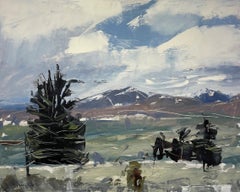
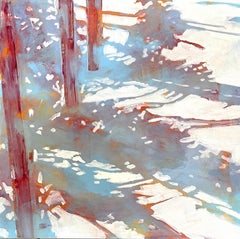
Winter Trees
By Dale Najarian
Located in Fairfield, CT
Dale Najarian is an internationally recognized artist. She received her BFA from Moore College of Art Design and worked for over fifteen years as a Graphic Designer and Art Dir...
Category

2010s Harry Humphrey Moore Paintings

Materials

Oil, Wood Panel

Winter Trees
$1,080
H 18 in W 18 in
Portrait of a lady in blue dress ”Countess of Peterborough”
Located in Stockholm, SE
This exquisite portrait, with its new attribution to Theodore Russel, is believed to depict Lady Penelope O'Brien, daughter of Barnabas O'Brien, the sixth Earl of Thomond, and wife of the Earl of Peterborough, whom she married in 1644. The painting thus belongs to a historically significant period, capturing the refined elegance of the time. The portrait has a prestigious provenance from Elleholms Hofgård, a historic estate in Mörrums socken, Blekinge, Sweden. Elleholms Hofgård, whose two-story, timber-framed main building was constructed in 1730 and expanded in 1804, has changed ownership several times since the 17th century. The ancestors of the present owners acquired the estate in 1915, and from the 20th century until 2023, this painting was prominently displayed in the estate’s main building, making it an integral part of the estate’s history. Theodore Russel, an English portrait artist born in 1614, studied under the renowned Sir Anthony van Dyck, whose influence can be seen in Russel’s meticulous style. Russel often painted on cabinet-sized panels, such as this one, which measures approximately 39 x 31 cm. This preference for panels is a notable characteristic that sets him apart from contemporary artists like Sir Peter Lely, who exclusively used canvas. The size of the panel is a key reason for the reattribution to Russel from Peter lely, as Lely never used panels for his works. This distinctive format, along with Russel’s characteristic style, strongly supports the new attribution. Russel, the son of Nicasius Rousseel, a goldsmith and jeweler to James I and Charles I, refined his skills under the mentorship of his uncle, the famous portrait painter Cornelis Janssen. He also worked as an assistant and copyist for van Dyck, further honing his artistic style. This captivating portrait exemplifies Russel’s craftsmanship, reflecting the elegance of the period’s fashion and the artist's refined techniques. oil on wood panel with indistinct inscription Countess of Peter[...] upper left. with inscription on the reverse: ”Countess of Peterborough. P. Lely 1670. S Beatty Picture Restorer [...] Warwick”. unframed 39 x 31 cm = 15.35 x 12.2 inches framed 52 x 41.5 cm = 20.47 x 16.34 inches Condition: The portrait has just been restored by a professional art conservator in Stockholm and is now in a very good condition. The colors are vivid, and the skin tones appear more natural than before. It is a very fine painting. The frame is newly made and included. Provenance: Elleholms Hofgård, Mörrums socken, Blekinge, Sweden **; Stockholms Auktionsverk, Fine Art & Antiques Autumn...
Category

17th Century Old Masters Harry Humphrey Moore Paintings

Materials

Oil, Wood Panel

Harry Humphrey Moore paintings for sale on 1stDibs.

Find a wide variety of authentic Harry Humphrey Moore paintings available for sale on 1stDibs. You can also browse by medium to find art by Harry Humphrey Moore in oil paint, paint, panel and more. Not every interior allows for large Harry Humphrey Moore paintings, so small editions measuring 7 inches across are available. Customers who are interested in this artist might also find the work of Sarah Lamb, Michael Kotasek, and Lawrence Wilbur. Harry Humphrey Moore paintings prices can differ depending upon medium, time period and other attributes. On 1stDibs, the price for these items starts at $6,500 and tops out at $12,000, while the average work can sell for $9,500.

Recently Viewed

View All