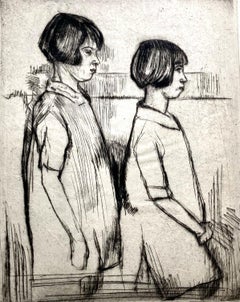
Harry Morley Interior Prints
Harry Morley was a British painter, etcher and engraver, known for his classical and mythological compositions. He was born in Leicester, where he attended Alderman Newton's School. At the age of 16 years, he left school to study architecture at Leicester School of Art, under Augustus Spencer and Benjamin Fletcher. In 1900, Morley was awarded a scholarship to study architecture under Professor Beresford Pite at the Royal College of Art (RCA). He won an RCA scholarship in 1903, which enabled him to visit Italy for the first time. Later that year, Morley was articled to Beresford Pite, whose architectural practice was on the RCA campus. At the Royal College, Morley also attended the mural painting department and life classes. He won two further scholarships in 1905 an RCA Architecture Award and another from the Royal Institute of British Architects (RIBA), for the study of colour decoration. These awards allowed him to spend long periods in Italy, between 1905 and 1908, where he came to admire early Renaissance painters, such as Pinturicchio, Pietro Perugino, Paolo Uccello and Sandro Botticelli. Now, determined to become a painter himself, he attended the Académie Julian, Académie Colarossi and Académie de la Grande Chaumière in Paris.
In London, in 1911, Morley married Lilias Helen Swain ARCA. A skilful calligrapher and embroiderer, Lilias had studied design at the Royal College of Art under William Lethaby. She was trained in lettering and illumination by Professor Edward Johnston and went on to become his first assistant. She studied embroidery under Grace Christie, whom she assisted after her graduation. Lilias was teaching calligraphy and embroidery at the Royal College, when she became engaged to Harry Morley. Lilias all gave up her artistic career to support Morley in his work. Whenever the opportunity arose, she undertook private commissions in calligraphy and embroidery design. She continued to draw and paint under the name Lester Romley. A quiet feminist from an early age, Lilias shared digs in Chelsea with fellow Royal College of Art student, Sylvia Pankhurst, who like Lilias, was from Manchester. Lilias designed and embroidered for the Pankhursts, a demonstration banner (now lost).
By 1921, Morley had been elected a member of the Art Workers' Guild. He joined the Society of Painters in Tempera, two years later. The ethos and camaraderie of artist groups appealed to him. He was an active member of both organisations. The Society of Painters in Tempera frequently held their meetings in Morley's studio. John D. Batten, the painter-activist, Mary Sargant Florence, Francis Ernest Jackson, Maxwell Armfield and Joseph Southall were among the many that attended. The revival of British interest in tempera painting had begun as early as 1901, with the formation of the Society. By the 1920s, the medium was better understood. However, it was only after the Royal Academy of Arts's ground-breaking “Italian Art exhibition”, at Burlington House, in 1930, that the Academy accepted contemporary tempera paintings in its “Summer Exhibition”. A tempera of Morley's was one of the 36 tempera paintings shown that first year. Morley was considered to be an artist's artist. His pictures proclaim their dependence on the early Italian masters, not only by their oil and tempera technique, but in their visual vocabulary. The artist's strong sense of monumental form and spatial clarity reflected his early training as an architect. Together, with his use of clean lines, academic coolness and detachment, Morley's work is clearly distinguished from the narrative purpose and sentiment of the Pre-Raphaelites. Morley's principal concern was the mythological and biblical figure paintings in oil and tempera that he exhibited at the Royal Academy of Arts from 1912. In 1924, his tempera painting, Apollo and Marsyas was purchased for the Tate, under the terms of the Chantrey Bequest.
The 1920s and 1930s, marked for Morley, a period of relative success and public recognition. Despite the collapse of the art market, during the economic depression that followed the 1929 Wall Street Crash, Morley continued to paint, engrave and exhibit. In 1932, he reluctantly accepted a post at St. Martin's School of Art, where for eight years, he taught painting and life drawing, two days a week. Portrait commissions also supplemented his income, during the 1930s. Morley's friend and Keeper of the Royal Academy Schools, Sir Walter Westley Russell invited him to attend the Schools, as a visiting teacher to critique students' work. Morley was appointed to the Faculty of Engraving, at the British School at Rome, in 1931. He was elected Associate of the Royal Watercolour Society (RWS), in 1927 and a full member, in 1931. He served as RWS Vice President, from 1937 to 1941. Having been nominated for Associate Membership of the Royal Academy of Arts (ARA) since 1921, he was eventually elected ARA in 1936. That same year, he was also elected Master of the Art Workers's Guild. A series of six articles by Morley on the “Theory and Practice of Figure Painting in Oils” appeared in the Artist Magazine, between September 1936 to February 1937. Morley's mythological and classical figure compositions helped establish his reputation and attract critical approval. By the mid 1930s, however, he had begun to experiment with a new approach to landscape painting, influenced in part by his long-standing admiration for the work of Paul Cézanne. Were it not for the disruption caused by World War II, his relocation out of London, his ill-health and early death, it is impossible to tell where this new direction might have led.
Early 20th Century Modern Harry Morley Interior Prints
Engraving
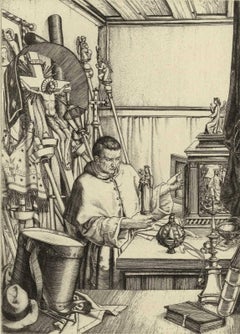

Early 19th Century Old Masters Harry Morley Interior Prints
Engraving
Early 20th Century American Modern Harry Morley Interior Prints
Drypoint
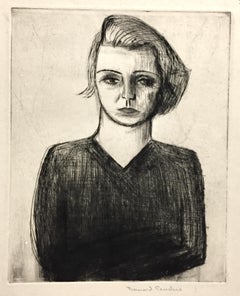
1930s Modern Harry Morley Interior Prints
Drypoint
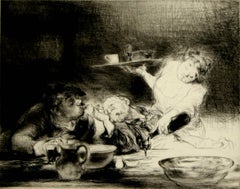
1990s Contemporary Harry Morley Interior Prints
Paper, Engraving
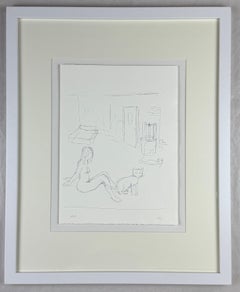
Early 19th Century English School Harry Morley Interior Prints
Handmade Paper, Engraving, Watercolor
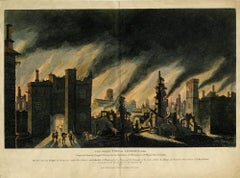
1910s Modern Harry Morley Interior Prints
Drypoint, Etching
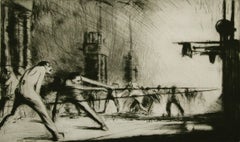
1990s Contemporary Harry Morley Interior Prints
Paper, Engraving
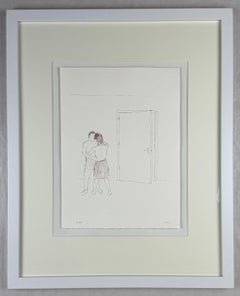
1880s French School Harry Morley Interior Prints
Laid Paper, Drypoint, Etching, Aquatint

Early 20th Century Modern Harry Morley Interior Prints
Drypoint, Etching
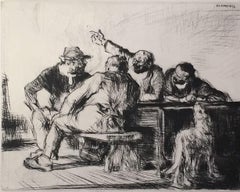
1720s Baroque Harry Morley Interior Prints
Engraving
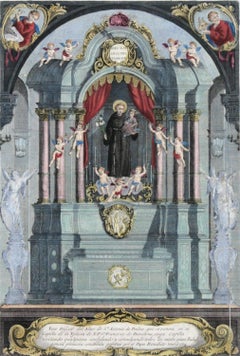
Early 20th Century American Modern Harry Morley Interior Prints
Drypoint
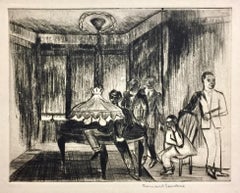
1920s American Modern Harry Morley Interior Prints
Drypoint