Hugó Scheiber Paintings
to
2
2
1
Overall Width
to
Overall Height
to
5
1
2
1
1
5
4
3
2
2
1
1
1
1
1
3
3
3
2
2
10
779
726
723
683
1
4
1
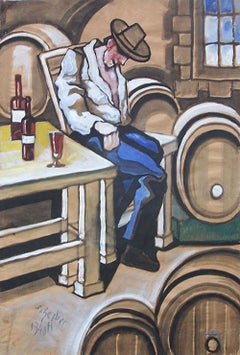
Artist: Hugó Scheiber
At the Winery - Hungarian Art
By Hugó Scheiber
Located in London, GB
This original painting is hand signed by the artist "Scheiber H" in the lower left corner,
and dated "1940" below the signature.
Exhibited: Hugo Scheiber - Bela Kadar, Galerie Le Mi...
Category
1940s Hugó Scheiber Paintings
Materials
Tempera, Gouache
Rare Modernist Hungarian Rabbi Pastel Drawing Gouache Painting Judaica Art Deco
By Hugó Scheiber
Located in Surfside, FL
Rabbi in the synagogue at prayer wearing tallit and tefillin.
Hugó Scheiber (born 29 September 1873 in Budapest – died there 7 March 1950) was a Hungarian modernist painter.
Hugo Scheiber was brought from Budapest to Vienna at the age of eight where his father worked as a sign painter for the Prater Theater. At fifteen, he returned with his family to Budapest and began working during the day to help support them and attending painting classes at the School of Design in the evening, where Henrik Papp was one of his teachers. He completed his studies in 1900. His work was at first in a post-Impressionistic style but from 1910 onward showed his increasing interest in German Expressionism and Futurism. This made it of little interest to the conservative Hungarian art establishment.
However, in 1915 he met the great Italian avant-gardist Filippo Tommaso Marinetti and the two painters became close friends. Marinetti invited him to join the Futurist Movement. The uniquely modernist style that he developed was, however, closer to German Expressionism than to Futurism and eventually drifted toward an international art deco manner similar to Erté's. In 1919, he and his friend Béla Kádar held an exhibition at the Hevesy Salon in Vienna. It was a great success and at last caused the Budapest Art Museum to acquire some of Scheiber's drawings. Encouraged, Scheiber came back to live in Vienna in 1920.
A turning point in Scheiber's career came a year later, when Herwarth Walden, founder of Germany's leading avant-garde periodical, Der Sturm, and of the Sturm Gallery in Berlin, became interested in Scheiber's work. Scheiber moved to Berlin in 1922, and his paintings soon appeared regularly in Walden's magazine and elsewhere. Exhibitions of his work followed in London, Rome, La Paz, and New York.
Scheiber's move to Germany coincided with a significant exodus of Hungarian artists to Berlin, including Laszlo Moholy-Nagy and Sandor Bortnyik. There had been a major split in ideology among the Hungarian avant-garde. The Constructivist and leader of the Hungarian avantgarde, Lajos Kassák (painted by Hugó Scheiber in 1930) believed that art should relate to all the needs of contemporary humankind. Thus he refused to compromise the purity of his style to reflect the demands of either the ruling class or socialists and communists. The other camp believed that an artist should be a figurehead for social and political change.
The fall out and factions that resulted from this politicisation resulted in most of the Hungarian avant gardists leaving Vienna for Berlin. Hungarian émigrés made up one of the largest minority groups in the German capital and the influx of their painters had a significant effect on Hungarian and international art. Another turning point of Scheiber's career came in 1926, with the New York exhibition of the Société Anonyme, organized by Katherine Dreier. Scheiber and other important avant garde artists from more than twenty-three countries were represented. In 1933, Scheiber was invited by Marinetti to participate in the great meeting of the Futurists held in Rome in late April 1933, Mostra Nazionale d’Arte Futurista where he was received with great enthusiasm. Gradually, the Hungarian artists began to return home, particularly with the rise of Nazism in Germany. Kádar went back from Berlin in about 1932 and Scheiber followed in 1934.
He was then at the peak of his powers and had a special flair in depicting café and cabaret life in vivid colors, sturdily abstracted forms and spontaneous brush strokes. Scheiber depicted cosmopolitan modern life using stylized shapes and expressive colors. His preferred subjects were cabaret and street scenes, jazz musicians, flappers, and a series of self-portraits (usually with a cigar). his principal media being gouache and oil. He was a member of the prestigious New Society of Artists (KUT—Képzőművészek Új Társasága)and seems to have weathered Hungary's post–World War II transition to state-communism without difficulty. He continued to be well regarded, eventually even receiving the posthumous honor of having one of his images used for a Russian Soviet postage stamp (see image above). Hugó Scheiber died in Budapest in 1950.
Paintings by Hugó Scheiber form part of permanent museum collections in Budapest (Hungarian National Museum), Pecs (Jannus Pannonius Museum), Vienna, New York, Bern and elsewhere. His work has also been shown in many important exhibitions, including:
"The Nell Walden Collection," Kunsthaus Zürich (1945)
"Collection of the Société Anonyme," Yale University Art Gallery, New Haven, Connecticut (1950)
"Hugó Scheiber: A Commemorative Exhibition," Hungarian National Museum, Budapest (1964)
"Ungarische Avantgarde," Galleria del Levante, Munich (1971)
"Paris-Berlin 1900-1930," Centre Georges Pompidou, Paris (1978)
"L’Art en Hongrie, 1905-1920," Musée d’Art et l’Industrie, Saint-Etienne (1980)
"Ungarische Avantgarde in der Weimarer Republik," Marburg (1986)
"Modernizmus," Eresz & Maklary Gallery, Budapest (2006)
"Hugó Scheiber & Béla Kádár," Galerie le Minotaure, Paris and Tel Aviv (2007)
Hugó Scheiber's paintings continue to be regularly sold at Sotheby's, Christie's, Gillen's Arts (London), Papillon Gallery (Los Angeles) and other auction houses.
He was included in the exhibition The Art Of Modern Hungary 1931 and other exhibitions along with Vilmos Novak Aba, Count Julius Batthyany, Pal Bor, Bela Buky, Denes Csanky, Istvan Csok, Bela Czobel, Peter Di Gabor, Bela Ivanyi Grunwald, Baron Ferenc Hatvany, Lipot Herman, Odon Marffy, C. Pal Molnar...
Category
Early 20th Century Modern Hugó Scheiber Paintings
Materials
Paper, Charcoal, Pastel, Watercolor, Gouache

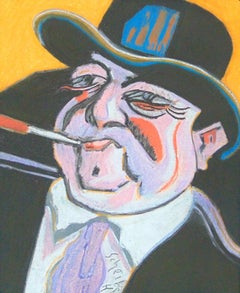
Self Portrait
By Hugó Scheiber
Located in London, GB
HUGO SCHEIBER 1873-1950
1873 - Budapest - 1950 (Hungarian)
Title: Self Portrait
Technique: Original Signed Pastel Drawing on Paper
Size: 37.7 x 30 cm. / 14.8 x 11.8 in.
Additiona...
Category
1940s Futurist Hugó Scheiber Paintings
Materials
Pastel
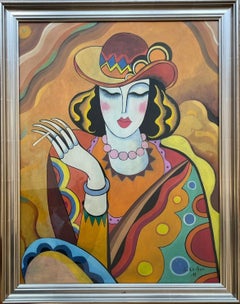
"Woman with a Cigarette", Hugo Scheiber (1873-1950)
By Hugó Scheiber
Located in Paris, FR
Hugo Scheiber (1873-1950) was a Hungarian painter of Jewish origins. He started as a self-taught artist. He was initially inspired by Impressionism before evolving towards Expression...
Category
1920s Expressionist Hugó Scheiber Paintings
Materials
Gouache, Cardboard
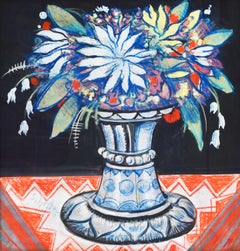
Flowers in a Vase - Hungarian Flowers Flora
By Hugó Scheiber
Located in London, GB
This work is hand signed by the artist at the lower left part "Scheiber H".
Condition: Very good condition.
Category
20th Century Hugó Scheiber Paintings
Materials
Paper, Mixed Media
Related Items
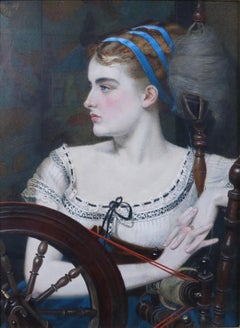
Marguerite - 19th Century Pre-Raphaelite Painting of Beauty from Goethe
s Faust
By Henry Meynell Rheam
Located in Gerrards Cross, GB
‘Marguerite’ by Henry Meynell Rheam RI (1859-1920). The painting is signed with monogram and dated. Watercolour and gouache on paper, newly remounted, glazed with non-reflective UV r...
Category
Late 19th Century Pre-Raphaelite Hugó Scheiber Paintings
Materials
Watercolor, Gouache

$8,157
H 24 in W 22 in D 3 in
Poseidon - Ink and Tempera on Paper by Lucie Navier - 1933
By Lucie Navier
Located in Roma, IT
Poseidon is an original painting realized by Lucie Navier in 1933.
Original Ink and tempera painting on paper.
Dated on the lower right corner (23-6-2033).
Fair conditions except...
Category
1930s Modern Hugó Scheiber Paintings
Materials
Ink, Tempera, Watercolor

$297
H 13 in W 9.45 in D 0.04 in
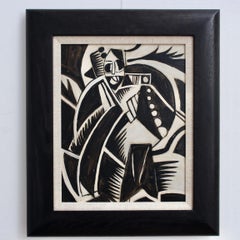
Portrait of Future Man
, German School
Located in London, GB
'Portrait of Future Man', oil on board, Berlin School, (circa 1960s). A thoroughly modern portrait clearly in the style of Italian Futurist, Fortunato Depero (1892-1960). Futurism co...
Category
1960s Futurist Hugó Scheiber Paintings
Materials
Oil, Board
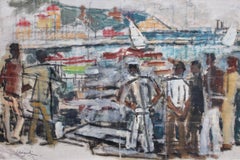
Sailors in the Port of Nice
By Alfred Salvignol
Located in London, GB
'Sailors in the Port of Nice', mixed media - gouache, pastel and oil on paper, by Alfred Salvignol (circa 1950s). The Port of Nice is one of the key hubs of Nice and, in fact, of the entire French Riviera, standing out as one of the main harbours for the boats which sail across the Mediterranean Sea. It accommodates both the ships operated by ferry companies and the private yachts of visitors who come to Nice by sea. The artist here depicts a group of crusty sailors watching...
Category
1950s Expressionist Hugó Scheiber Paintings
Materials
Paper, Pastel, Oil, Gouache
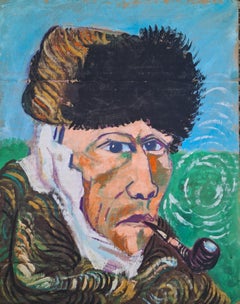
Portrait of Vincent Van Gogh with Bandaged Ear and Pipe.
By (After) Vincent van Gogh
Located in Cotignac, FR
Gouache and watercolour on corrugated cardboard after the famous self portrait by Vincent van Gogh with his fur hat, bandaged ear and pipe. This painting is by Jean Ducel who has pla...
Category
Late 20th Century Hugó Scheiber Paintings
Materials
Watercolor, Gouache, Cardboard
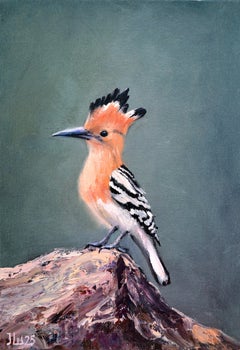
Hoopoe bird
Located in Zofingen, AG
In painting this hoopoe, I poured my fascination for nature's intricate designs into every stroke of oil paint. With a blend of realism and expressionism, I sought to capture not jus...
Category
2010s Expressionist Hugó Scheiber Paintings
Materials
Canvas, Oil, Cardboard
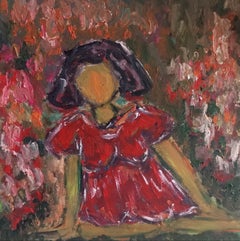
"Woman in a red dress in the garden full of roses"
Located in VÉNISSIEUX, FR
This woman in a red dress in the garden full of roses featured on the painting lost herself in the tender memories of a carefree childhood. She recalls the days when she was a littl...
Category
2010s Contemporary Hugó Scheiber Paintings
Materials
Paper, Oil
$535
H 11.82 in W 11.82 in D 0.04 in
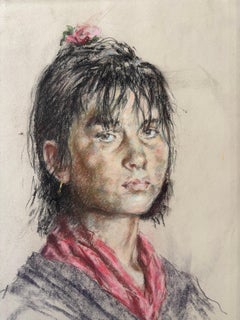
THE RED SCARFE
Located in Pollenca, Illes Baleares
Franco Matania
1922 - 2006
Franco Matania was of Italian origin. He was a pupil of his uncle, the distinguished artist and illustrator, Fortunino Matania RI 1881-1963, and was an art...
Category
21st Century and Contemporary Impressionist Hugó Scheiber Paintings
Materials
Oil, Pastel
$1,302
H 23.63 in W 15.75 in D 0.4 in
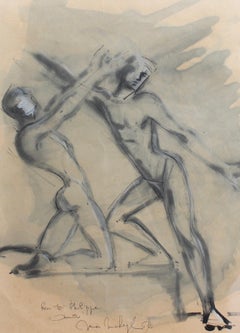
Modern Dancers
By Mick Micheyl
Located in London, GB
'Modern Dancers', pastel, ink and gouache on fine art paper by French artist, singer and sculptor, Mick Micheyl (1964). Two elegant young men are depicted in a graceful dancing pose, arms outstretched, their lithe bodies so agile and limber. Perhaps one of the dancers was her friend, Philippe, to whom the painting is dedicated on the bottom. The dedication says: 'For you Philippe, all my friendship'. Signed: 'Mick Micheyl'. The work has been newly framed and glazed after having been acquired in the S. of France. It is in good vintage condition commensurate with age showing minor blemishing on the paper. Upon request a video of the piece can be provided.
Dimensions with Frame:
H 75 cm / 29.5"
W 61 cm / 24"
Dimensions without Frame:
H 56 cm / 22"
W 42 cm / 16.5"
About the Artist: Mick Micheyl (1922 - 2019) was born in Lyon and had a busy and rewarding artistic career as a singer, producer, reviewer, metal sculptor, artist. After having received training at the School of Fine Arts in Lyon she became a painter and decorator in the theatre but then commenced a career in the musical activities of a theatrical troupe. She won the ABC competition in Paris in 1949 with a song, Le Marchand de Poésie, which she composed herself. She then performed in many cabarets: L'Échelle de Jacob, Harlequin and Liberty's. In the 1950s she was one of the most important French cabaret singers of that period. One of her titles, 'Un Gamin de Paris', became one of the French standards and also performed by Yves Montand and Robert Clary...
Category
1960s Modern Hugó Scheiber Paintings
Materials
Paper, Pastel, Ink, Gouache
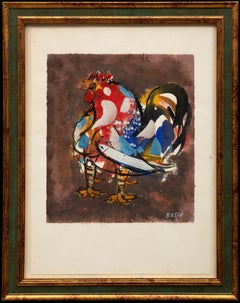
MId Century Animal Portrait: "Rooster" Pierre Bosco (1909-1993)
By Pierre Bosco
Located in SANTA FE, NM
"Rooster"
Pierre Bosco, (1909-1993)
Gouache on paper
10 x 9 (18 x 14 frame) inches
Pierre Bosco showed an interest in art at an early age. His commitment and dedication to painting...
Category
1960s Expressionist Hugó Scheiber Paintings
Materials
Paper, Gouache
$2,375
H 18 in W 14 in
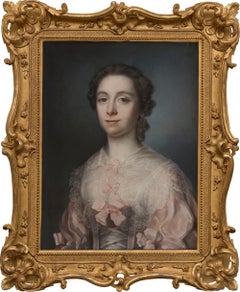
A Pair of Portraits
By Francis Cotes
Located in London, GB
Pastel on paper stretched on canvas
Each 23 ¼ x 19 ¾ inches; 59 x 50 cm
Framed dimensions, each: 83 x 67.5 cm
Both signed ‘F. Cotes Px 1751’
Collections:
Captain Penton;
Christie’...
Category
18th Century Old Masters Hugó Scheiber Paintings
Materials
Canvas, Paper, Pastel
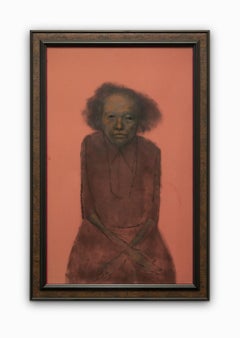
Fantastic Rafael Coronel Mixed Media 1961
By Rafael Coronel
Located in Detroit, MI
"Untitled" is a dramatically placed individual who appears to be withdrawing into herself surrounded by a soft pinkish color. She has a sad look in her non-reflective eyes. This pain...
Category
Mid-20th Century Futurist Hugó Scheiber Paintings
Materials
Mixed Media, Board, ABS
Previously Available Items
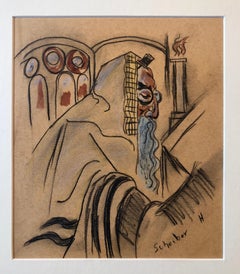
Rare Modernist Hungarian Rabbi Pastel Drawing Gouache Painting Judaica Art Deco
By Hugó Scheiber
Located in Surfside, FL
Rabbi in the synagogue at prayer wearing tallit and tefillin.
Hugó Scheiber (born 29 September 1873 in Budapest – died there 7 March 1950) was a Hungarian modernist painter.
Hugo Scheiber was brought from Budapest to Vienna at the age of eight where his father worked as a sign painter for the Prater Theater. At fifteen, he returned with his family to Budapest and began working during the day to help support them and attending painting classes at the School of Design in the evening, where Henrik Papp was one of his teachers. He completed his studies in 1900. His work was at first in a post-Impressionistic style but from 1910 onward showed his increasing interest in German Expressionism and Futurism. This made it of little interest to the conservative Hungarian art establishment.
However, in 1915 he met the great Italian avant-gardist Filippo Tommaso Marinetti and the two painters became close friends. Marinetti invited him to join the Futurist Movement. The uniquely modernist style that he developed was, however, closer to German Expressionism than to Futurism and eventually drifted toward an international art deco manner similar to Erté's. In 1919, he and his friend Béla Kádar held an exhibition at the Hevesy Salon in Vienna. It was a great success and at last caused the Budapest Art Museum to acquire some of Scheiber's drawings. Encouraged, Scheiber came back to live in Vienna in 1920.
A turning point in Scheiber's career came a year later, when Herwarth Walden, founder of Germany's leading avant-garde periodical, Der Sturm, and of the Sturm Gallery in Berlin, became interested in Scheiber's work. Scheiber moved to Berlin in 1922, and his paintings soon appeared regularly in Walden's magazine and elsewhere. Exhibitions of his work followed in London, Rome, La Paz, and New York.
Scheiber's move to Germany coincided with a significant exodus of Hungarian artists to Berlin, including Laszlo Moholy-Nagy and Sandor Bortnyik. There had been a major split in ideology among the Hungarian avant-garde. The Constructivist and leader of the Hungarian avantgarde, Lajos Kassák (painted by Hugó Scheiber in 1930) believed that art should relate to all the needs of contemporary humankind. Thus he refused to compromise the purity of his style to reflect the demands of either the ruling class or socialists and communists. The other camp believed that an artist should be a figurehead for social and political change.
The fall out and factions that resulted from this politicisation resulted in most of the Hungarian avant gardists leaving Vienna for Berlin. Hungarian émigrés made up one of the largest minority groups in the German capital and the influx of their painters had a significant effect on Hungarian and international art. Another turning point of Scheiber's career came in 1926, with the New York exhibition of the Société Anonyme, organized by Katherine Dreier. Scheiber and other important avant garde artists from more than twenty-three countries were represented. In 1933, Scheiber was invited by Marinetti to participate in the great meeting of the Futurists held in Rome in late April 1933, Mostra Nazionale d’Arte Futurista where he was received with great enthusiasm. Gradually, the Hungarian artists began to return home, particularly with the rise of Nazism in Germany. Kádar went back from Berlin in about 1932 and Scheiber followed in 1934.
He was then at the peak of his powers and had a special flair in depicting café and cabaret life in vivid colors, sturdily abstracted forms and spontaneous brush strokes. Scheiber depicted cosmopolitan modern life using stylized shapes and expressive colors. His preferred subjects were cabaret and street scenes, jazz musicians, flappers, and a series of self-portraits (usually with a cigar). his principal media being gouache and oil. He was a member of the prestigious New Society of Artists (KUT—Képzőművészek Új Társasága)and seems to have weathered Hungary's post–World War II transition to state-communism without difficulty. He continued to be well regarded, eventually even receiving the posthumous honor of having one of his images used for a Russian Soviet postage stamp (see image above). Hugó Scheiber died in Budapest in 1950.
Paintings by Hugó Scheiber form part of permanent museum collections in Budapest (Hungarian National Museum), Pecs (Jannus Pannonius Museum), Vienna, New York, Bern and elsewhere. His work has also been shown in many important exhibitions, including:
"The Nell Walden Collection," Kunsthaus Zürich (1945)
"Collection of the Société Anonyme," Yale University Art Gallery, New Haven, Connecticut (1950)
"Hugó Scheiber: A Commemorative Exhibition," Hungarian National Museum, Budapest (1964)
"Ungarische Avantgarde," Galleria del Levante, Munich (1971)
"Paris-Berlin 1900-1930," Centre Georges Pompidou, Paris (1978)
"L’Art en Hongrie, 1905-1920," Musée d’Art et l’Industrie, Saint-Etienne (1980)
"Ungarische Avantgarde in der Weimarer Republik," Marburg (1986)
"Modernizmus," Eresz & Maklary Gallery, Budapest (2006)
"Hugó Scheiber & Béla Kádár," Galerie le Minotaure, Paris and Tel Aviv (2007)
Hugó Scheiber's paintings continue to be regularly sold at Sotheby's, Christie's, Gillen's Arts (London), Papillon Gallery (Los Angeles) and other auction houses.
He was included in the exhibition The Art Of Modern Hungary 1931 and other exhibitions along with Vilmos Novak Aba, Count Julius Batthyany, Pal Bor, Bela Buky, Denes Csanky, Istvan Csok, Bela Czobel, Peter Di Gabor, Bela Ivanyi Grunwald, Baron Ferenc Hatvany, Lipot Herman, Odon Marffy, C. Pal Molnar...
Category
Early 20th Century Modern Hugó Scheiber Paintings
Materials
Paper, Pastel, Watercolor, Gouache, Charcoal
Hugó Scheiber paintings for sale on 1stDibs.
Find a wide variety of authentic Hugó Scheiber paintings available for sale on 1stDibs. You can also browse by medium to find art by Hugó Scheiber in paint, crayon, gouache and more. Much of the original work by this artist or collective was created during the 20th century and is mostly associated with the Expressionist style. Not every interior allows for large Hugó Scheiber paintings, so small editions measuring 12 inches across are available. Customers who are interested in this artist might also find the work of Béla Czóbel, Jack Levine, and Franz Bergmann. Hugó Scheiber paintings prices can differ depending upon medium, time period and other attributes. On 1stDibs, the price for these items starts at $5,500 and tops out at $28,076, while the average work can sell for $9,929.