J. Graham Kaye Art
to
2
Overall Width
to
Overall Height
to
2
2
2
1
1
1
1
1
1
1
1
2
1
1
1
1
2
10,326
2,785
2,504
1,384
2
2
Artist: J. Graham Kaye
"The Sullivan-Kilrain Fight" Story Illustration
By J. Graham Kaye
Located in Fort Washington, PA
Date: Undated
Medium: Oil on Masonite
Signature: Signed Lower Left
An undated story illustration depicting the 1889 bare-knuckle heavyweight title fight in Richburg, Mississippi, wh...
Category
20th Century J. Graham Kaye Art
Materials
Masonite, Oil
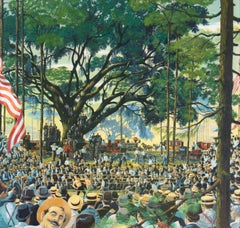
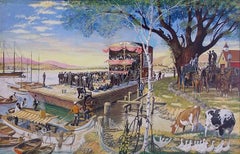
Crowd Watching the Fight
By J. Graham Kaye
Located in Fort Washington, PA
Medium: Gouache
Dimensions: 14.50" x 22.50"
Signature: Signed Lower Right
Category
20th Century J. Graham Kaye Art
Materials
Gouache
Related Items
Contemporary Impressionist Painting by Lawrence Kelsey
The New 42nd Street
By Lawrence Kelsey
Located in White Plains, NY
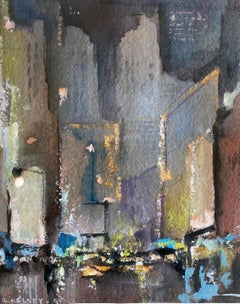
'The New 42nd Street' 2004-2005 by American artist, Lawrence Kelsey. Gouache, 8 x 10.25 in. / Frame: 16.5 x 20.5 in. Depicting a night view of 42nd Street in New York City, this impr...
Category
Early 2000s American Impressionist J. Graham Kaye Art
Materials
Gouache
Contemporary Impressionist Painting
Signs and Lights on Broadway
By Lawrence Kelsey
Located in White Plains, NY
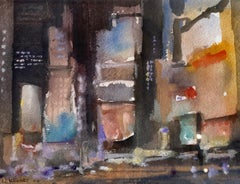
'Signs and Lights on Broadway' 2005 by American artist, Lawrence Kelsey. Gouache, 7.5 x 10 in. / Frame: 16.5 x 20.5 in. Depicting a night view of New York City, this impressionistic...
Category
Early 2000s American Impressionist J. Graham Kaye Art
Materials
Gouache

$1,200
H 16.5 in W 20.5 in
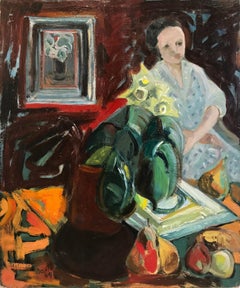
"Interior Scene with Figure" Expressionistic Style Oil Painting on Masonite
By Michael Baxte
Located in New York, NY
A strong modernist oil painting depicted in 1969 by Russian painter Michael Baxte. Mostly known for his abstracted figures on canvas or street scenes, this piece is a wonderful representation of his bold still life paintings, with expressive use of color, shape, and form. Later in his career, Baxte explores Expressionism, infusing both European and North American stylistic trends. This piece is from later in his career, but we can feel this underlying style throughout.
Art measures 21.75 x 18 inches
Michael Posner Baxte was born in 1890 in the small town of Staroselje Belarus, Russia. For the first half of the 19th century it was a center of the Chabad movement of Hasidic Jews, but this group was gone by the middle of the 19th century. By the time the Baxte family immigrated to the United States at the beginning of the 20th century, the Jewish population numbered only on the hundreds. The native language of the Baxte family was Yiddish. It is likely that the death of Michael Baxte’s father triggered the family’s immigration. Three older brothers arrived in New York between 1903 and 1905. Michael and his mother, Rebecca, arrived in 1907. By 1910 Michael, his mother, and brother, Joseph, were living in New Orleans and may have spent some time on a Louisiana plantation. Around 1912, Michael Baxte returned to Europe to study the violin. In 1914 he, his mother, and Joseph moved to New York City.
Meanwhile, in Algeria, a talented young woman painter, Violette Mege, was making history. Since for the first time, a woman won the prestigious Beaux Art competition in Algeria. At first, the awards committee denied her the prize but, with French government intervention, Mege eventually prevailed. She won again 3 years later and, in 1916, used the scholarship to visit the United States of America. When Violette came to New York, she met Baxte, who was, by then, an accomplished violinist, teacher, and composer. Baxte’s compositions were performed at the Tokyo Imperial Theater, and in 1922 he was listed in the American Jewish Yearbook as one of the prominent members of the American Jewish community. As a music teacher he encouraged individual expression. Baxte stated, “No pupil should ever be forced into imitation of the teacher. Art is a personal experience, and the teacher’s truest aim must be to awaken this light of personality through the patient light of science.”
By 1920 Michael Baxte and Violette Mege were living together in Manhattan. Although they claimed to be living as husband and wife, it seems that their marriage did not become official until 1928. On their “unofficial” honeymoon around 1917, in Algiers, Baxte confided to her his ambition to paint. There and later in New Mexico where the wonderful steeped sunlight approximates the coloring of Algiers, she taught him his heart’s desire. He never had any other teacher. She never had any other pupil. For ten years she devoted all her time, energy, and ambition to teaching, encouraging, inspiring him. Then in 1928, their mutual strivings were rewarded, as his works were being chosen as one of the two winners in the Dudensing National Competition for American Painters. Out of 150 artists from across the country participated in the Dudensing, and Michael Posner Baxte and, Robert Fawcett...
Category
1960s Expressionist J. Graham Kaye Art
Materials
Oil, Masonite
$2,000
H 21.75 in W 18 in D 0.25 in
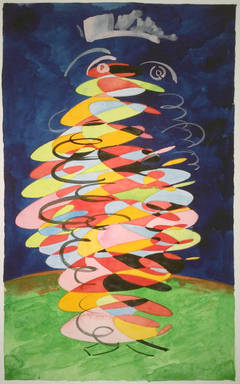
Fourth Guardian
By Lucio Pozzi
Located in New York, NY
Fourth Guardian
Gouache on paper
signed and dated 23 November 1983
image size 10 x 5 inches
paper size 22 x 15 inches
Lucio Pozzi (b. 1935, Milan, Italy) is a multifaceted art...
Category
1980s J. Graham Kaye Art
Materials
Gouache
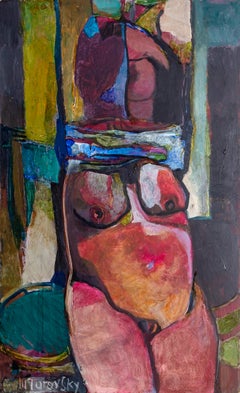
Posing Nude, Modern Oil Painting by Mikhail Turovsky
By Mikhail Turovsky
Located in Long Island City, NY
Posing Nude by Mikhail Turovsky, Russian (1933)
Date: 2001
Oil on Masonite, signed lower left
Size: 48 x 30.5 in. (121.92 x 77.47 cm)
Category
Early 2000s Modern J. Graham Kaye Art
Materials
Oil, Masonite
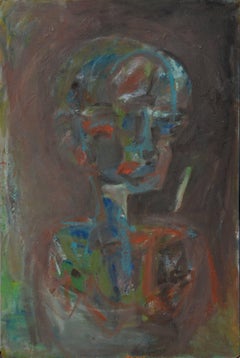
Looking Away - Figurative Abstract
By Daniel David Fuentes
Located in Soquel, CA
A figurative abstract painting on masonite by San Francisco, California area artist Daniel David Fuentes (American, 1978-2016). San Francisco Bay Area abstract expressionist and land...
Category
1990s Contemporary J. Graham Kaye Art
Materials
Masonite, Oil
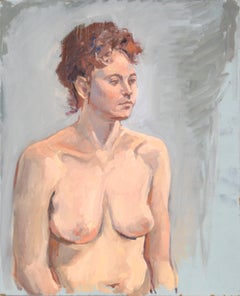
Nude with Curly Red Hair
By George Wishon
Located in Soquel, CA
Beautiful modern impressionist figure painting of a nude woman by George Wishon (American, b.20th Century). The two-toned light blue and ...
Category
Late 20th Century American Impressionist J. Graham Kaye Art
Materials
Oil, Masonite
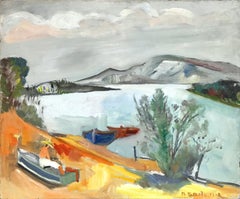
"Landscape Scene of Fisherman by Lake" Expressionistic Oil Painting on Masonite
By Michael Baxte
Located in New York, NY
A strong modernist oil painting depicted in 1963 by Russian painter Michael Baxte. Mostly known for his abstracted figures on canvas or street scenes, this piece is a wonderful representation of his figures in water landscapes with expressive use of color, shape, and form. Later in his career, Baxte explores Expressionism, infusing both European and North American stylistic trends. This piece is from later in his career, but we can feel this underlying style throughout.
Art measures 18 x 21.75 inches
Michael Posner Baxte was born in 1890 in the small town of Staroselje Belarus, Russia. For the first half of the 19th century it was a center of the Chabad movement of Hasidic Jews, but this group was gone by the middle of the 19th century. By the time the Baxte family immigrated to the United States at the beginning of the 20th century, the Jewish population numbered only on the hundreds. The native language of the Baxte family was Yiddish. It is likely that the death of Michael Baxte’s father triggered the family’s immigration. Three older brothers arrived in New York between 1903 and 1905. Michael and his mother, Rebecca, arrived in 1907. By 1910 Michael, his mother, and brother, Joseph, were living in New Orleans and may have spent some time on a Louisiana plantation. Around 1912, Michael Baxte returned to Europe to study the violin. In 1914 he, his mother, and Joseph moved to New York City.
Meanwhile, in Algeria, a talented young woman painter, Violette Mege, was making history. Since for the first time, a woman won the prestigious Beaux Art competition in Algeria. At first, the awards committee denied her the prize but, with French government intervention, Mege eventually prevailed. She won again 3 years later and, in 1916, used the scholarship to visit the United States of America. When Violette came to New York, she met Baxte, who was, by then, an accomplished violinist, teacher, and composer. Baxte’s compositions were performed at the Tokyo Imperial Theater, and in 1922 he was listed in the American Jewish Yearbook as one of the prominent members of the American Jewish community. As a music teacher he encouraged individual expression. Baxte stated, “No pupil should ever be forced into imitation of the teacher. Art is a personal experience, and the teacher’s truest aim must be to awaken this light of personality through the patient light of science.”
By 1920 Michael Baxte and Violette Mege were living together in Manhattan. Although they claimed to be living as husband and wife, it seems that their marriage did not become official until 1928. On their “unofficial” honeymoon around 1917, in Algiers, Baxte confided to her his ambition to paint. There and later in New Mexico where the wonderful steeped sunlight approximates the coloring of Algiers, she taught him his heart’s desire. He never had any other teacher. She never had any other pupil. For ten years she devoted all her time, energy, and ambition to teaching, encouraging, inspiring him. Then in 1928, their mutual strivings were rewarded, as his works were being chosen as one of the two winners in the Dudensing National Competition for American Painters. Out of 150 artists from across the country participated in the Dudensing, and Michael Posner Baxte and, Robert Fawcett, were the winners.
In his 1924 naturalization application, he indicated that he was sometimes known as “Michael Posner Baxte.” One of the witnesses to his application was Bernard Karfiol, a Jewish American artist. That’s when Michael may...
Category
1960s Expressionist J. Graham Kaye Art
Materials
Oil, Masonite
$2,000
H 18 in W 21.75 in D 0.25 in
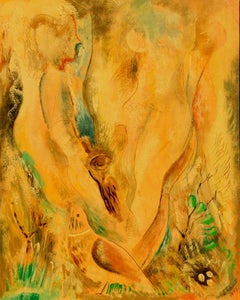
Spring
By Konrad Cramer
Located in New York, NY
Oil on masonite
Signed and dated, l.r.
This painting is offered by ClampArt, located in New York City.
About the artist:
Konrad Cramer grew up in Wurtzburg, Germany, and attended the Karlsruhe Academy. He was a member of Der Blaue Reiter...
Category
1940s Modern J. Graham Kaye Art
Materials
Masonite, Oil
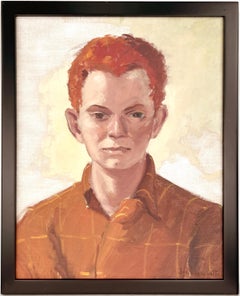
Mid Century Portrait -- Freckled Red Head Boy
By Jon Blanchette
Located in Soquel, CA
Mid century portrait of a red-haired boy with freckles by Jon Blanchette (American, 1908-1987). Rendered his signature style, this portrait is clean and vibrant. The subject is looki...
Category
Mid-20th Century American Impressionist J. Graham Kaye Art
Materials
Masonite, Oil
$1,500
H 21.5 in W 17.75 in D 1.5 in
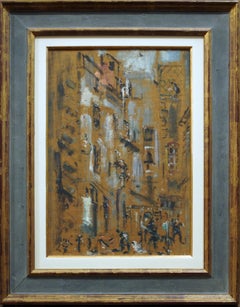
Paris, Hotel des Saint Pères - Oil on Masonite by F. De Pisis - 1948
By Filippo De Pisis
Located in Roma, IT
Oil painting on Masonite realized by the Artist in 1948.
Includes a coeval wooden frame.
Artist paints the Hotel where he used to live in Paris during those years.
Note, title, date ...
Category
1940s J. Graham Kaye Art
Materials
Masonite, Oil
$57,527
H 25.6 in W 14.97 in D 1.19 in
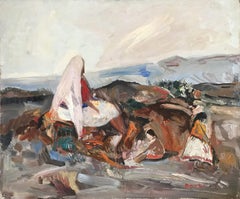
"Mexican Landscape Scene of Mother with Children" Expressionistic Style Painting
By Michael Baxte
Located in New York, NY
A strong modernist oil painting depicted in 1962 by Russian painter Michael Baxte. Mostly known for his abstracted figures on canvas or street scenes, this piece is a wonderful representation of his portraits in countryside landscapes with expressive use of color, shape, and form. Later in his career, Baxte explores Expressionism, infusing both European and North American stylistic trends.
Art measures 21.25 x 25.5 inches
Michael Posner Baxte was born in 1890 in the small town of Staroselje Belarus, Russia. For the first half of the 19th century, it was a center of the Chabad movement of Hasidic Jews, but this group was gone by the middle of the 19th century. By the time the Baxte family immigrated to the United States at the beginning of the 20th century, the Jewish population numbered only on the hundreds. The native language of the Baxte family was Yiddish. It is likely that the death of Michael Baxte’s father triggered the family’s immigration. Three older brothers arrived in New York between 1903 and 1905. Michael and his mother, Rebecca, arrived in 1907. By 1910 Michael, his mother, and brother, Joseph, were living in New Orleans and may have spent some time on a Louisiana plantation. Around 1912, Michael Baxte returned to Europe to study the violin. In 1914 he, his mother, and Joseph moved to New York City.
Meanwhile, in Algeria, a talented young woman painter, Violette Mege, was making history. For the first time, a woman won the prestigious Beaux Art competition in Algeria. At first, the awards committee denied her the prize but, with French government intervention, Mege eventually prevailed. She won again 3 years later and, in 1916, used the scholarship to visit the United States of America. When Violette came to New York, she met Baxte, who was, by then, an accomplished violinist, teacher, and composer. Baxte’s compositions were performed at the Tokyo Imperial Theater, and in 1922 he was listed in the American Jewish Yearbook as one of the prominent members of the American Jewish community. As a music teacher, he encouraged individual expression. Baxte stated, “No pupil should ever be forced into the imitation of the teacher. Art is a personal experience, and the teacher’s truest aim must be to awaken this light of personality through the patient's light of science.”
By 1920 Michael Baxte and Violette Mege were living together in Manhattan. Although they claimed to be living as husband and wife, it seems that their marriage did not become official until 1928. On their “unofficial” honeymoon around 1917, in Algiers, Baxte confided to her his ambition to paint. There and later in New Mexico where the wonderful steeped sunlight approximates the coloring of Algiers, she taught him his heart’s desire. He never had any other teacher. She never had any other pupil. For ten years she devoted all her time, energy, and ambition to teaching, encouraging, inspiring him. Then in 1928, their mutual strivings were rewarded, as his works were being chosen as one of the two winners in the Dudensing National Competition for American Painters. Out of 150 artists from across the country participated in the Dudensing, and Michael Posner Baxte and, Robert Fawcett...
Category
1960s Expressionist J. Graham Kaye Art
Materials
Oil, Masonite
$1,800
H 21.25 in W 25.5 in D 0.25 in
J. Graham Kaye art for sale on 1stDibs.
Find a wide variety of authentic J. Graham Kaye art available for sale on 1stDibs. You can also browse by medium to find art by J. Graham Kaye in paint, gouache, masonite and more. Not every interior allows for large J. Graham Kaye art, so small editions measuring 21 inches across are available. Customers who are interested in this artist might also find the work of Marguerite Blasingame, Leo Mancini-Hresko, and Rob Brooks. J. Graham Kaye art prices can differ depending upon medium, time period and other attributes. On 1stDibs, the price for these items starts at $5,500 and tops out at $7,500, while the average work can sell for $6,500.