James Norman Art

American

James Norman studied at the Art Students League in New York with Theodoros Stamos and was involved in the cooperative Westerly Gallery from 1962–66, founded by a group of Stamos's students (including Robert Barry and Sydney Ball). Norman also exhibited at Reese Palley Gallery (one of the earliest SoHo galleries). Norman, who was born in Louisville, Kentucky, has lived in Tennessee, Virginia, Indiana and Long Island, New York. By 1964, he was a resident of New York City. Educated mainly in the South, Norman was an architectural assistant for two years while studying mechanical design and architecture. After serving two years in the US Navy, he studied commercial art which brought him into contact with the fine arts. Norman developed a serious interest in painting which he preferred to study and work independently. While living on Long Island, in 1961, Norman participated in an exhibition at the Hecksher Museum in Huntington. He received the Purchase Prize and an opportunity to exhibit, in a six-man-show, a selection of his work.

to
6
Overall Width
to
Overall Height
to
6
6
6
6
6
9,962
2,752
1,376
1,373
6
Artist: James Norman
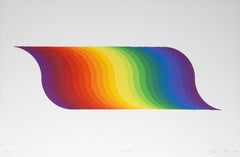
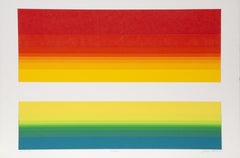
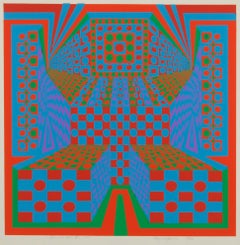
Winter, Rainbow OP Art Screenprint by James Norman
By James Norman
Located in Long Island City, NY
Artist: James Norman, American (1927 - 2011) Title: Winter Year: 1980 Medium: Screenprint, signed and numbered in pencil Edition: 40/50 Image Size: 22 x 32 inches Size: 25 x 38 in. (...
Category

1980s Op Art James Norman Art

Materials

Screen

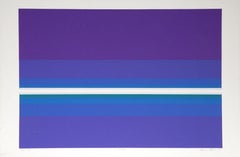
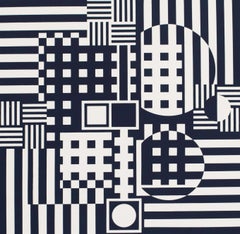
Oscillation II, Rainbow OP Art Screenprint by James Norman
By James Norman
Located in Long Island City, NY
Artist: James Norman, American (1927 - 2011) Title: Oscillation II Year: 1980 Medium: Screenprint, signed and numbered in pencil Edition: 38/95 Image Size: 10 x 32 inches Size: 25 x ...
Category

1980s Op Art James Norman Art

Materials

Screen

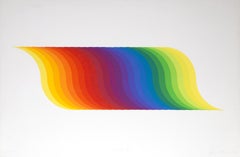
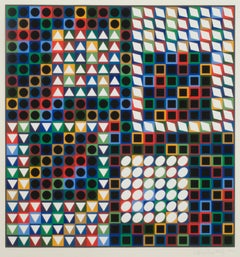
Oscillation I, Rainbow OP Screenprint by James Norman
By James Norman
Located in Long Island City, NY
Artist: James Norman, American (1927 - 2011) Title: Oscillation I Year: 1980 Medium: Screenprint, signed and numbered in pencil Edition: 35/95 Image Size: 10 x 33 inches Size: 25 x 3...
Category

1980s Op Art James Norman Art

Materials

Screen

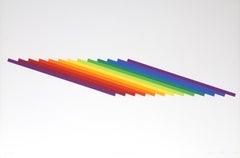
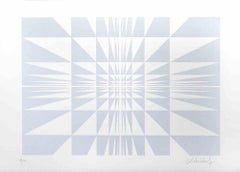
Spectral Image IV, Rainbow OP Art Screenprint by James Norman
By James Norman
Located in Long Island City, NY
Artist: James Norman, American (1927 - 2011) Title: Spectral Image IV Year: 1980 Medium: Screenprint, signed and numbered in pencil Edition: 67/95 Image Size: 7 x 36 inches Size: 25 ...
Category

1980s Op Art James Norman Art

Materials

Screen

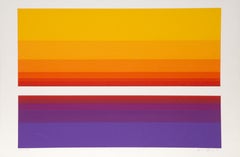
Summer, Rainbow OP Art Screenprint by James Norman
By James Norman
Located in Long Island City, NY
Artist: James Norman, American (1927 - 2011) Title: Summer Year: 1981 Medium: Screenprint, signed and numbered in pencil Edition: 39/50 Image Size: 22 x 32 inches Size: 25 x 38 in. (...
Category

1980s Op Art James Norman Art

Materials

Screen

Fall, Signed Colorful Rainbow OP Art by James Norman
By James Norman
Located in Long Island City, NY
Artist: James Norman, American (1927 - 2011) Title: Fall Year: 1981 Medium: Screenprint, signed and numbered in pencil Edition: 34/50 Image Size: 22 x 32 inches Size: 25 x 38 in. (63...
Category

1980s Op Art James Norman Art

Materials

Screen

Related Items
Julian Stanczak Blue Op Art Screen Print
By Julian Stanczak
Located in Lake Worth Beach, FL
Julian Stanczak Blue Op Art Screen Print screenprint Pencil signed (lower right) edition numbered 20/165, measures 28" x 28". Black frame under Plexiglas. Julian Stanczak American/Polish, 1928-2017. Julian Stanczak explores the visual, psychological, and emotional resonance of color in his Op art paintings, through which he aims to induce a “color meltdown,” as he describes: “I want to fuse many colorants and their gradations into a single color experience.” Influenced by Josef Albers and Russian Suprematism...
Category

1970s Op Art James Norman Art

Materials

Screen

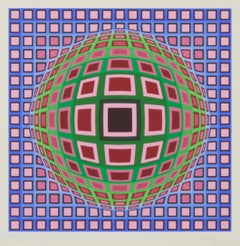
Victor Vasarely Screen Print Abstract, Geometric Squares Cubes Hexagon
By Victor Vasarely
Located in Detroit, MI
Victor Vasarely born in 1906 was a Hungarian-French artist, who is widely accepted as a "grandfather" and leader of the Op Art movement. Op Art is a form of abstract art that gives the illusion of movement by the precise use of pattern and color, or in which conflicting patterns emerge and overlap. Victor Vasarely and Brigit Riley are its most famous exponents. In its visual balancing act of color and movement from a flat plane to developed continuous flow “Untitled” is a complex arrangement of squares and colors that visually expand and contract. It is one of Vasarely’s most successful Op Art abstract works. The piece is signed on the lower right and number 20/150 on the lower left. The print is behind glass and matted. Vasarely was born in Pecs and grew up in Slovakia and Budapest, where in 1925, he took up medical studies. Abandoning medicine he turned to traditional academic painting at the private Podolini-Volkmann Academy. In 1928/1929, he enrolled at Sandor Bortnyik’s private art school widely recognized as Budapest's centre of Bauhaus studies. His studies concentrated on applied graphic art and typographical design. In 1929, he painted his Blue Study and Green Study. In 1930, he married his fellow student Claire Spinner (1908–1990). Together they had two sons, Andre and Jean-Pierre. Vasarely became a graphic designer and a poster artist during the 1930s combining patterns and organic images with each other. Vasarely utilized geometric shapes and colorful graphics, the artist created compelling illusions of spatial depth, as seen in his work Vega-Nor (1969). Vasarely’s method of painting borrowed from a range of influences, including Bauhaus design principles, Wassily Kandinsky, and Constructivism. In the late 1920s, Vasarely enrolled at the Muhely Academy in Budapest, where the syllabus was largely based on Walter Gropius’s Bauhaus school in Germany. After settling in Paris in 1930, Vasarely worked in advertising agencies to support himself as a graphic artist while creating many works including Zebra (1937), which is considered by some to be one of the earliest examples of Op Art. The artist experimented in a style based in Surrealism and Abstract Expressionism during the 1940s, before arriving at his hallmark checkerboard...
Category

Mid-20th Century Op Art James Norman Art

Materials

Paper, Screen

Rivotril, 1990
By Victor Vasarely
Located in Palo Alto, CA
Created in 1990, this original color serigraph is hand signed by Victor Vasarely (Pécs, 1906 - Paris, 1997) in pencil in the lower right margin. Numbered 270/300, this piece was prin...
Category

1990s Op Art James Norman Art

Materials

Screen

Rivotril, 1990
Rivotril, 1990
$10,000
H 31.75 in W 31.5 in
Firebird -- Screen Print, Abstract, Op Art by Bridget RIley
By Bridget Riley
Located in London, GB
Firebird, 1971 Bridget Riley Screenprint in colours, on wove paper Signed, dated and numbered from the edition of 75 (plus 15 artist's proofs) Printed by Kelpra Studio, London Image...
Category

1970s Op Art James Norman Art

Materials

Screen

Veiled
By Julian Stanczak
Located in Miami, FL
TECHNICAL INFORMATION: Julian Stanczak Veiled 1972 Serigraph 32 1/4 × 26 in. Edition of 90 Pencil signed and numbered Accompanied with COA by Gregg Shienbaum Fine Art. Condition: ...
Category

1970s Op Art James Norman Art

Materials

Screen

Veiled
Veiled
$6,100
H 32.25 in W 26 in
Dedicated, from Twelve Progressions
By Julian Stanczak
Located in Miami, FL
TECHNICAL INFORMATION: Julian Stanczak Dedicated, from Twelve Progressions 1971 26 1/8 x 31 3/4 in. Edition of 90 Pencil Signed and Numbered Accompanied with COA by Gregg Shienbaum...
Category

1970s Op Art James Norman Art

Materials

Screen

Diamonds Floating in Orange
By Julian Stanczak
Located in Miami, FL
TECHNICAL INFORMATION: Julian Stanczak Diamonds Floating in Orange 1970 Silkscreen 28 1/4 x 28 1/4 in. Edition of 135 Pencil Signed and Numbered Accompanied with COA by Gregg Shien...
Category

1970s Op Art James Norman Art

Materials

Screen

Conferring Blue
By Julian Stanczak
Located in Miami, FL
Technical Information: Julian Stanczak Conferring Blue 1981 Screenprint 25 x 25 in. Edition of 175 Pencil signed and numbered Accompanied with COA by Gregg Shienbaum Fine Art
Category

1980s Op Art James Norman Art

Materials

Screen

Vilag, 1978
By Victor Vasarely
Located in Palo Alto, CA
This original color serigraph is hand signed by Victor Vasarely (Pécs, 1906 - Paris, 1997) in pencil in the lower right margin. Numbered from the edition of 275, this piece was publi...
Category

1970s Op Art James Norman Art

Materials

Screen

Vilag, 1978
Vilag, 1978
$10,000
H 32.5 in W 30 in
Majus II
By Victor Vasarely
Located in Palo Alto, CA
Victor Vasarely Majus II, 1974 is a screenprint on polyester on metal that is hand-signed by Victor Vasarely (Hungary, 1906 – France, 1997) in pen and ink the lower right margin and...
Category

1970s Op Art James Norman Art

Materials

Metal

Majus II
Majus II
$20,000 Sale Price
20% Off
H 39.5 in W 39.5 in
Fractions, from Twelve Progressions
By Julian Stanczak
Located in Miami, FL
Technical Information: Julian Stanczak Fractions, from Twelve Progressions 1971 Screenprint 26 1/2 x 26 1/2 in. Edition of 90 Pencil signed and numbered Accompanied with COA by Gre...
Category

1970s Op Art James Norman Art

Materials

Screen

Aerial, from Twelve Progressions
By Julian Stanczak
Located in Miami, FL
Julian Stanczak Aerial, from Twelve Progressions 1971 Screenprint 26 1/2 x 26 1/2 in. EA #3 Pencil signed and numbered Julian Stanczak (Polish, November 5, 1928 – March 25, 2017) was a Polish-born American painter and printmaker who is considered a central figure of the Op art movement in the U.S. during the 1960s and 1970s. Described as an artist whose work "evinced a tremendous geometric inventiveness", Stanczak is primarily known for his large-scale polychromatic abstract compositions made using acrylic paint on canvas in which he explored the perceptual dimensions of color.[3] Born in 1928 in Borownica, Poland, Stanczak survived a Siberian labor camp during World War II where he lost the use of his right arm. He retrained himself to paint left-handed and emigrated to the United States in 1950, where he eventually became a citizen. In 1956, Stanczak received an M.F.A. from Yale University, where he studied with Josef Albers and Conrad Marca-Relli, and was roommates with fellow abstract painter Richard Anuszkiewicz. The term "Op art", since used to describe a short-lived movement of 1960s and 1970s, originated from Stanczak's work when the Minimalist artist and sculptor Donald Judd used it in his critical review of the 1964 exhibition titled Julian Stanczak: Optical Paintings at Martha Jackson Gallery in New York. Stanczak achieved broader commercial recognition after being featured in the landmark 1965 exhibition The Responsive Eye created by curator William C. Seitz at the Museum of Modern Art in New York. As the popularity of Op art diminished in the late 1970s, Stanczak remained active as a painter and continued to exhibit his work, but became progressively separated from mainstream contemporary art in the U.S. In addition to being a practicing artist, Stanczak served as a faculty member at the Art Academy of Cincinnati from 1957 to 1964 and, later, as Professor of Painting at the Cleveland Institute of Art from 1964 to 1995. In 2013, he was awarded an honorary doctorate from Case Western Reserve University in Ohio. Stanczak lived and worked in Seven Hills, Ohio with his wife, the sculptor Barbara...
Category

1970s Op Art James Norman Art

Materials

Screen

James Norman art for sale on 1stDibs.

Find a wide variety of authentic James Norman art available for sale on 1stDibs.

Recently Viewed

View All