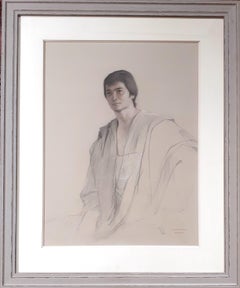
Jean Crotti Figurative Drawings and Watercolors
Jean Crotti was born in Bulle, Switzerland. His first formal art education occurred within the walls of the Munich School of Decorative of Art in 1898, before he moved to Paris in 1901 in order to attend the famed Académie Julian. His tutelage at the Académie did not last, and he abandoned his studies there in 1902. The reasoning for this departure was largely due to Crotti becoming disenfranchised by the rigors of painting within a controlled academic environment. The period that followed was largely dominated by Crotti painting in isolation, and his output was characterized by its Primitivist and Fauvist aesthetics.
In 1907, Crotti started exhibiting his works regularly within major public exhibitions, such as the Salon des Indépendants and the Salon d’Automne. After these initial dalliances with Primitivism and Fauvism, Crotti became influenced by Cubism and Orphism in 1912. This shift toward Orphism brought Crotti into close proximity with the Section d’Or, which was comprised of notable figures such as Marcel Duchamp, his brothers Raymond Duchamp-Villon and Jacques Villon (Gaston Duchamp), Francis Picabia, Robert and Sonia Delaunay and Guillaume Apollinaire.
Crotti, alongside his wife Yvonne Chastel, fled Europe for New York in 1914 — much like a great many of his fellow artists — in order to escape the cauldron of the Great War that began to consume Europe. It was soon after this migration to America that he met Suzanne Duchamp, the sister of Marcel, Raymond and Jacques Villon Duchamp. During this period in New York, he shared a studio space with Marcel Duchamp and Picabia, which had the effect of deepening the relationships between the three that had been established in Paris. The group also produced the highly influential avant-garde publication “291” during this period. It was not long after this move to New York that Crotti’s aesthetic shifted yet again, this time toward Dadaism. This can largely be attributed to his sharing of studio space with the two aforementioned artists and the War that was ravishing the world. These new works were exhibited within New York’s Gallery Bourgeois and the Montross Gallery. It was around this time that Crotti created Les forces mécaniques de l'amour en mouvement (1916), which is considered to be one of the earliest Dadaist works using found objects.
In 1916, Crotti returned to Paris, and shortly after his return to Europe, he divorced his wife for one Suzanne Duchamp. The pair married in 1919 and remained together until his death. This marriage proved to be extremely fruitful artistically, with the pair starting a two-person artistic movement that they called Tabu. This movement was largely characterised by its similarities to Dadaism — differing only slightly in that Crotti added a quasi-religious element to Tabu, in which he attempted to explore notions of the metaphysical and the subconscious, ideas that came to inspire the Surrealists.
In 1921, Dadaism had well and truly arrived within Paris. Crotti featured extensively within the Dadaists’ exhibitions and publications during this time until their flame was extinguished. He also contributed to Tristan Tzara’s unrealized dream of Dadaglobe. In the 1930s, Crotti went on to develop a new technique for creating art that he dubbed it “gemmail.” The process involved creating post-Cubist compositions from shards of glass that were intended to be illuminated from behind. Crotti never remained stagnant throughout his career, and his oeuvre shows that he toyed with many styles throughout his life. This lack of signature style largely contributed to Crotti’s resilience to being comfortably placed in a specific niche within the history of art and thus has made him an artist of extreme interest.
After Crotti’s death, his heirs donated a great swathe of his personal collection of letters to the Smithsonian Institute’s Archives of American Art in Washington, D.C. This collection contains correspondence between Crotti and numerous champions of the avant-garde, such as Francis Picabia, Jean Cocteau, Henri Matisse, Raoul Dufy and Pablo Picasso. Crotti’s works can be found hanging in many prominent public and private collections, such as Tate Modern, London; the Museum of Modern Art, New York; and the Metropolitan Museum of Art, New York. His works have also been a part of notable exhibitions such as “Tabu Dada: Jean Crotti and Suzanne Duchamp, 1915–1922,” Philadelphia Museum of Art (1983–84).
(Biography provided by Stern Pissarro Gallery)
1920s Post-Impressionist Jean Crotti Figurative Drawings and Watercolors
Laid Paper, Pencil
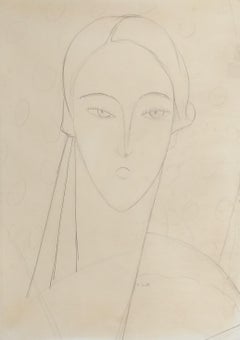
18th Century Rajput Jean Crotti Figurative Drawings and Watercolors
Gold
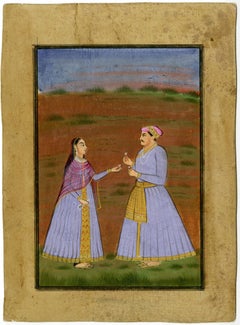

1980s Post-Impressionist Jean Crotti Figurative Drawings and Watercolors
Watercolor, Gouache, Pencil
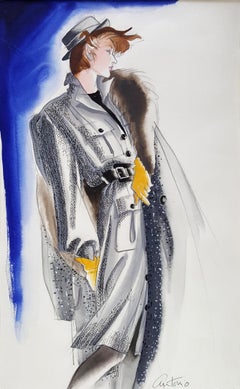
2010s Contemporary Jean Crotti Figurative Drawings and Watercolors
Charcoal, Laid Paper
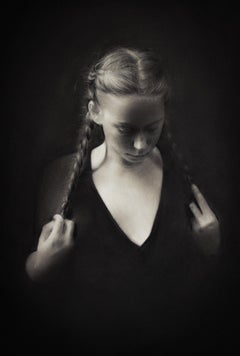
19th Century Rajput Jean Crotti Figurative Drawings and Watercolors
Gold
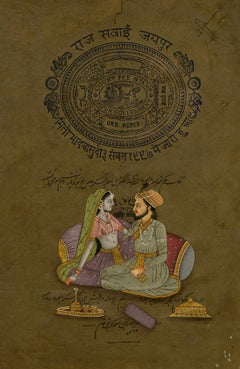
18th Century Rajput Jean Crotti Figurative Drawings and Watercolors
Gold
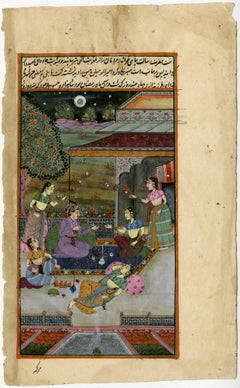
18th Century Rajput Jean Crotti Figurative Drawings and Watercolors
Gold
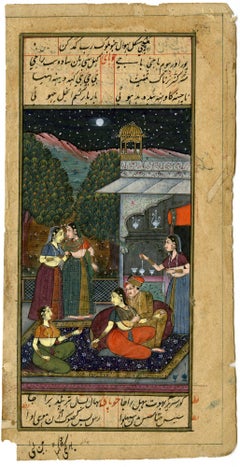
1910s Post-Impressionist Jean Crotti Figurative Drawings and Watercolors
Conté, Carbon Pencil
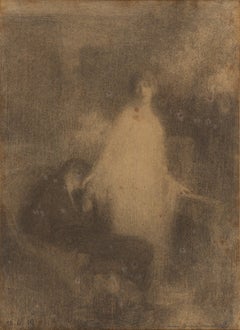
17th Century Rajput Jean Crotti Figurative Drawings and Watercolors
Gold
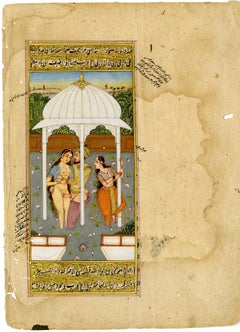
16th Century Old Masters Jean Crotti Figurative Drawings and Watercolors
Ink, Laid Paper, Pen
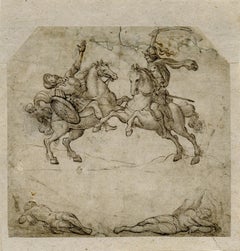
17th Century Rajput Jean Crotti Figurative Drawings and Watercolors
Gold
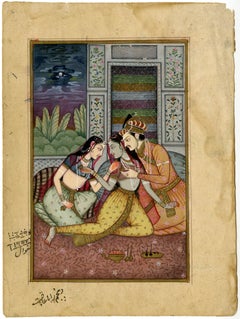
19th Century Rajput Jean Crotti Figurative Drawings and Watercolors
Gold
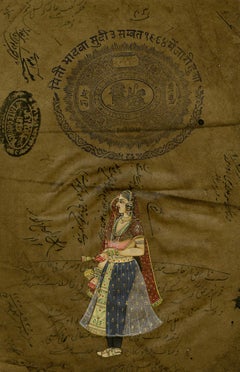
1970s Modern Jean Crotti Figurative Drawings and Watercolors
Conté, Laid Paper, Color Pencil