Joan (Johannes) Blaeu More Prints
to
1
1
Overall Width
to
Overall Height
to
1
6
702
453
235
169
2
2
2
1
2
Artist: Joan (Johannes) Blaeu
Cadiz Island: A Framed 17th Century Hand-colored Map from Blaeu
s Atlas Major
By Joan (Johannes) Blaeu
Located in Alamo, CA
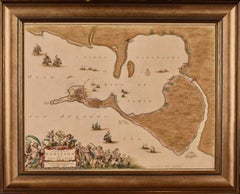
This is a 17th century hand-colored map entitled "Insula Gaditana Isla de Cadiz" from Johannes (Joan) Blaeu's Atlas Maior, published in Amsterdam in 1662.
The map provides an excellent plan of Cadiz Island on the southwest coast of Spain, with its harbor, fortifications, agricultural fields and several surrounding salt processing areas. Numerous sailing ships of various sizes are included in and around the harbor and bay, including five large sailing ships, as well as twenty-four smaller ships. There is a small compass rose overlying the bay. The bridge to the mainland from the island is shown on the right. There is an extremely ornate and colorful title cartouche in the lower left, with its mythological figures reminiscent of Raphael’s Galatea fresco at the Villa Farnesina in Rome. The vibrant colors are vividly preserved. The master colorist tried to emulate a painting by using various tones to create a three-dimensional effect.
Blaeu's name is present in the plate in the lower right. Blaeu stated in his description of Cadiz: “The main wealth of the islanders consists of salt, which they harvest, and
the tuna fisheries.”
This 17th century hand-colored map is framed in an ornate, partially textured bronze-colored wood frame and glazed with UV protected conservation glass. There is a vertical center fold, as issued. There is a faint crease in the lower right and faint color offset on the left from the right side of the map, resulting from having been in an atlas for hundreds of years. Small foci of paint are present in the upper portion of the left margin and in the left corner margin. The map is otherwise in very good condition.
Due in large part to their powerful trade empire, the Dutch became known for cartography in the seventeenth century. This period is considered the Golden Age of Dutch cartography. Their publishing houses produced the highest quality work in Europe, particularly those maps and charts of foreign lands, and Dutch map-making set the bar for cartographic accuracy and artistry into the early-eighteenth century. Some of the most well-known cartographers worked in Amsterdam during this period. Perhaps the most famous of these was the Blaeu family. Willem Janszoon Blaeu, set up shop in Amsterdam. His son, Johannes (Joan), succeeded him upon his death in 1638, continuing in his father’s position as Hydrographer to the Dutch East India Company and selling maps to the public. The Blaeu map presses, located near Amsterdam’s Dam Square...
Category
Mid-17th Century Old Masters Joan (Johannes) Blaeu More Prints
Materials
Engraving
Tabula Magellanica, qua Tierra del fuego, cum celeberrimis fretis a F. Magellano
By Joan (Johannes) Blaeu
Located in New York, NY
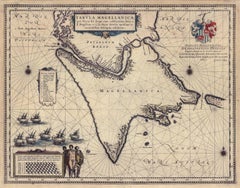
This mid 17th-century map was published by Guiljelmum Blaeu in Amsterdam. The engraved map is 16 1/8 x 21" (41 x 53.1 cm) with beautiful original hand color. Tabula Magellanica is a highly decorative map of the southern tip of South America, including Tierra del Fuego...
Category
Mid-17th Century Other Art Style Joan (Johannes) Blaeu More Prints
Materials
Engraving
Related Items
Restaurant in Mott Street
By Charles Frederick William Mielatz
Located in New Orleans, LA
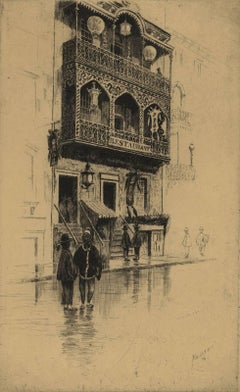
The image depicts a restaurant on New York's Mott Street with ornamental iron work on the balconies. There are six figures in the scene in various stages of contrast. Mott Street is considered the unofficial Main Street of New York's Chinatown. Ella Fitzgerald sang it best: “And tell me what street compares with Mott Street in July? Sweet pushcarts gently gliding by.”
CFW Mielatz was an early influence on the drypoints and etchings of Martin Lewis. This piece was created in 1906 and it is signed in pencil. It is part of the collection of New York's Metropolitan Museum of Art
C.F.W. Mielatz
American, 1860-1919
Born in Bredding, Germany in 1864, Mielatz emigrated to the United States as a young boy and studied at the Chicago School of Design. Mostly self-taught, his first prints were large New England landscapes reminiscent of the painter-etcher school of American Art. Around 1890 he started to produce prints of New York City and by the time of his death, the number totaled over ninety images. He was a master technician in the field of etching, reworking many of his plates to get the exact feeling he was seeking. Mielatz was a member of the New York Etching...
Category
Early 20th Century American Modern Joan (Johannes) Blaeu More Prints
Materials
Drypoint, Etching

Niagara
By Frederick Mershimer
Located in New York, NY
NIAGARA
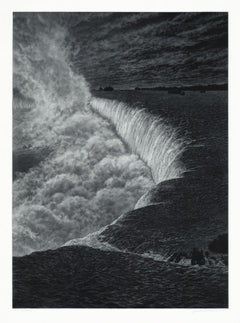
Contemporary artist Frederick Mershimer created the mezzotint engraving entitled “Niagara” in 2021. This impression is signed, titled, dated, and inscribed “5/45”- the 5th ...
Category
21st Century and Contemporary American Realist Joan (Johannes) Blaeu More Prints
Materials
Mezzotint
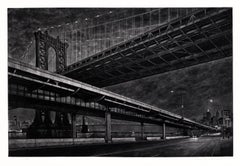
Crossings
By Frederick Mershimer
Located in New York, NY
CROSSINGS
Contemporary artist Frederick Mershimer created the mezzotint engraving entitled "Crossings" in 1998. This impression is signed, titled, and dated in pencil. The printed ...
Category
Late 20th Century American Realist Joan (Johannes) Blaeu More Prints
Materials
Mezzotint
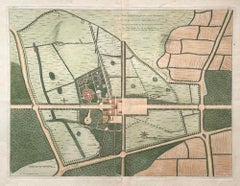
Plan of the Park, Garden and Plantations of Goodwood, 18th century engraving
By Colen Campbell
Located in Melbourne, Victoria
Plan of the Park, Garden and Plantations of Goodwood in Sussex the Seat of his Grace the Duke of Richmond and Lenox &c
Copper-line engraving with later hand-colouring by Hendrik Hul...
Category
18th Century English School Joan (Johannes) Blaeu More Prints
Materials
Engraving
$450
H 21.26 in W 27.56 in
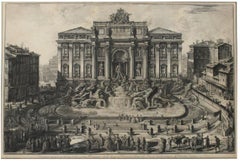
Veduta in Prospettiva della gran Fontana dell
Acqua Vergine detta di Trevi
By Giovanni Battista Piranesi
Located in New York, NY
Etching, 1773.
From the Vedute di Roma.
Framed dimensions 25.5 x 34.5 inches.
Category
18th Century Old Masters Joan (Johannes) Blaeu More Prints
Materials
Etching
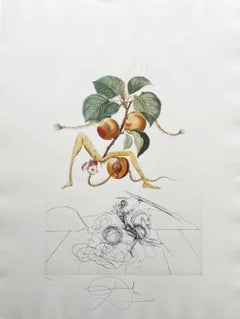
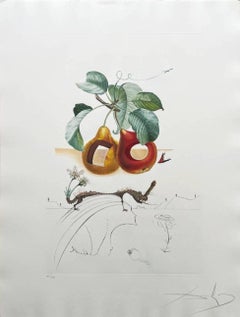
Abricot chevalier (Apricot Knight)
By Salvador Dalí
Located in OPOLE, PL
Salvador Dali (1904-1989) - Holed Fruit from Flordali suite
Lithograph with drypoint etching from 1969.
The edition 16/35 on Rives paper.
Dimensions of work: 74.5 x 54.5 cm.
Hand...
Category
1960s Modern Joan (Johannes) Blaeu More Prints
Materials
Drypoint, Etching
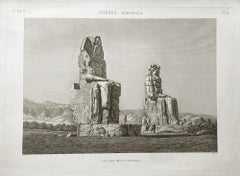
Colossi of Memnon, Thebes, Egypt. Early 19th century engraving, 1820
Located in Melbourne, Victoria
'Vue des Deux Colosses. Thebes, Memnonium'
Elephant folio engraving, by Baltard after Dutetre, from 'Description de l'Egypte', published after Napoleon's expedition to colonize Egyp...
Category
Early 19th Century Other Art Style Joan (Johannes) Blaeu More Prints
Materials
Engraving
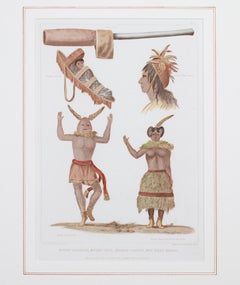
19th century color engraving indigenous figures feathers text full body face
By Seth Eastman
Located in Milwaukee, WI
"Moqui Dancers, Moqui Pipe, Navajo Cradle & Headdress" is a hand-colored engraving by Seth Eastman. It depicts encyclopedic depictions of Native American...
Category
1840s Joan (Johannes) Blaeu More Prints
Materials
Engraving
$650
H 19.875 in W 15.5 in
Holed Fruit from Flordali suite
By Salvador Dalí
Located in OPOLE, PL
Salvador Dali (1904-1989) - Holed Fruit from Flordali suite
Lithograph with drypoint etching from 1969.
The edition 16/35 on Rives paper.
Dimensions of work: 74.5 x 54.5 cm.
Hand...
Category
1960s Modern Joan (Johannes) Blaeu More Prints
Materials
Drypoint, Etching
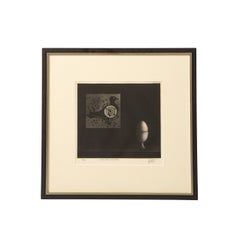
Nature morte au coquetier
By Mario Avati
Located in New York, NY
This elegant mezzotint print, entitled, "Nature morte au coquetier", was realized by the esteemed artist Mario Avanti in France, 1962. It depicts a stylized rendition of a dove as a ...
Category
1960s Modern Joan (Johannes) Blaeu More Prints
Materials
Mezzotint
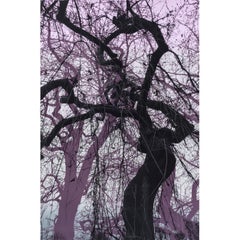
Branches Purple, Limited edition print, Landscape, Tree, Nature art
By Fiona Hamilton
Located in Deddington, GB
Scots Pine drypoint etching printed onto Japanese gampi tissue and backed onto German Hahnemule printmaking paper. This print depicts a mature pine tree, standing proud from the rest...
Category
2010s Contemporary Joan (Johannes) Blaeu More Prints
Materials
Drypoint, Etching
$104
H 22.05 in W 14.97 in D 0.4 in
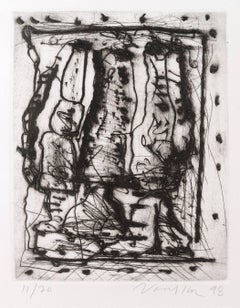
Untitled Dry Point Etching CR 314-PR (Message to inquire about price)
By Peter Voulkos
Located in Kansas City, MO
Dimensions : Image 9 7/8” x 7 7/8”, Paper 19” x 15”
Printed at Alfred University Press, Alfred, NY
Chop mark: Alfred University Press
Signed: Pencil 11/20 Voulkos ‘98
Peter Voulkos (popular name of Panagiotis Voulkos; January 29, 1924 – February 16, 2002) was an American artist of Greek descent. He is known for his abstract expressionist ceramic sculptures, which crossed the traditional divide between ceramic crafts and fine art. While his early work was fired in electric and gas kilns, later in his career he primarily fired in the anagama kiln of Peter Callas...
Category
1990s Contemporary Joan (Johannes) Blaeu More Prints
Materials
Drypoint, Etching
$1,000,000
H 19 in W 15 in
Previously Available Items
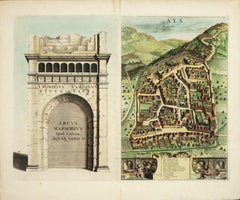
AYX Map of Aix en Provence, France by J. Blaeu 17th c.
By Joan (Johannes) Blaeu
Located in Paonia, CO
Detailed plan of Aix en Provence, in France. This print is a hand -colored double sheet engraving by the famous cartographer Joan (Johannes) Blaeu ( 1596 - 1673 ). The left side ...
Category
Late 17th Century Other Art Style Joan (Johannes) Blaeu More Prints
Materials
Engraving
Joan (johannes) Blaeu more prints for sale on 1stDibs.
Find a wide variety of authentic Joan (Johannes) Blaeu more prints available for sale on 1stDibs. You can also browse by medium to find art by Joan (Johannes) Blaeu in engraving and more. Much of the original work by this artist or collective was created during the 18th century and earlier and is mostly associated with the Old Masters style. Not every interior allows for large Joan (Johannes) Blaeu more prints, so small editions measuring 23 inches across are available. Customers who are interested in this artist might also find the work of Gerard Mercator, and Frans Hogenberg. Joan (Johannes) Blaeu more prints prices can differ depending upon medium, time period and other attributes. On 1stDibs, the price for these items starts at $1,100 and tops out at $1,400, while the average work can sell for $1,200.