Johannes Kip Art
Dutch, 1653-1722
Johannes "Jan" Kip (1652/53 in Amsterdam - 1722 in Westminster) was a Dutch draftsman, engraver and print dealer. Together with Leonard Knyff, he made a speciality of engraved views of English country houses.
Kip was a pupil of Bastiaen Stopendaal (1636–1707), from 1668 to 1670, before setting up on his own; his earliest dated engravings are from 1672. In April 1680, at the age of 27, he married Elisabeth Breda in Amsterdam. After producing works for the court of William of Orange in Amsterdam, Kip followed William and Mary to London and settled in St. John Street in Farringdon, where he conducted a thriving printselling business. He also worked for various London publishers producing engravings after such artists as Francis Barlow (c. 1626–1704) and Caius Gabriel Cibber (1630–1700), largely for book illustrations. He made several engraved plates for Awnsham
John Churchill's "A Collection of Voyages
Travels" (first published 1704). He signed the African scenes in volume V of the 1732 edition as "J. Kip".
His most important works were the large fold-out folio illustrations for "Britannia Illustrata", 1708; for the 65 folio plates he engraved for the antiquary Sir Robert Atkyns, "The Ancient and Present State of Glostershire", 1712 (1st edition); and for "Le Nouveau Théâtre de la Grande Bretagne ou description exacte des palais de la Reine, et des Maisons les plus considerables des des Seigneurs
des Gentilshommes de la Grande Bretagne", 1715, an extended reprint in collaboration with other artists.
The linked careers of Jan Kip and Leonard Knyff made a specialty of engraved views of English country houses, represented in detail from the bird's-eye view, a pictorial convention for topography. Their major work was "Britannia Illustrata: Or Views of Several of the Queens Palaces, as Also of the Principal seats of the Nobility and Gentry of Great Britain, Curiously Engraven on 80 Copper Plates", London (1707, published in the winter of 1708–9). The volume is among the most important English topographical publications of the 18th century. Architecture is rendered with care, and the settings of parterres and radiating avenues driven through woods or planted across fields, garden paths, gates and toolsheds are illustrated in detail. The images are staffed with figures and horses, coaches pulling into forecourts, water-craft on rivers, in line with the traditions of the Low Countries. Some of the plates are in the Siennese "map perspective".to
3
7
2
8
8
5
2
1
1
1
1
1
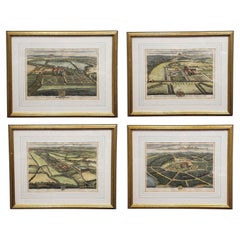
J. Kip and L. Knyff 18th Century Hand Colored Engravings, Set of 4
By Johannes Kip
Located in North Palm Beach, FL
Set of four antique hand-colored engravings. "Britannia Illustrata," the publication in which these prints originally appeared, was one of the most important topographical works of t...
Category
Mid-18th Century English Baroque Antique Johannes Kip Art
Materials
Paper
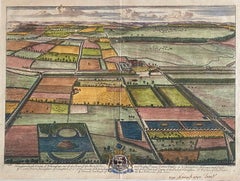
“Haughton in the County of Nottingham” (Near Newark Upon Trent)
By Johannes Kip
Located in Southampton, NY
An original hand colored engraving by Johannes 'Jan' Kip (1653-1722) of Haughton in the County of Nottinghamshire, one of the seats of Prince John Duke of ...
Category
Early 1700s Academic Johannes Kip Art
Materials
Engraving

$960 Sale Price
20% Off
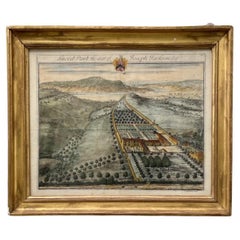
18th Century Engraving Sneed Park, the Seat of Joseph Jackson Esquire.
By Johannes Kip
Located in Vero Beach, FL
18th Century Engraving Sneed Park, the Seat of Joseph Jackson Esquire.
Hand colored engraving, “Sneed Park, the seat of Joseph Jackson Esquire. Illustration from the second volume o...
Category
18th Century English Baroque Antique Johannes Kip Art
Materials
Glass, Giltwood
$1,000 Sale Price
20% Off
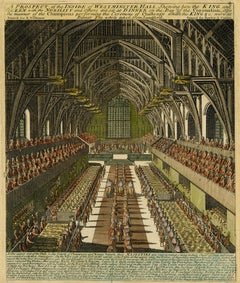
The Grand Coronation Banquet of King George IV at Westminster Hall, 17 July 1821
By Johannes Kip
Located in Middletown, NY
The Grand Coronation Banquet of King George IV at Westminster Hall, the oldest building on the Parliamentary estate.
A Prospect of the Inside of Westminster Hall; The Grand Coronati...
Category
Early 19th Century English School Johannes Kip Art
Materials
Handmade Paper, Engraving, Watercolor
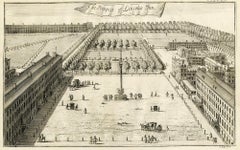
A Prospect of Lincoln
s Inn; A Survey of the Cities of London and Westminster
By Johannes Kip
Located in Middletown, NY
A fine prospect image of gardens at Lincoln's Inn, London.
A Prospect of Lincoln's Inn; A Survey of the Cities of London and Westminster; The Fountain and Gardens in New Square, Lin...
Category
Early 18th Century English School Johannes Kip Art
Materials
Handmade Paper, Engraving
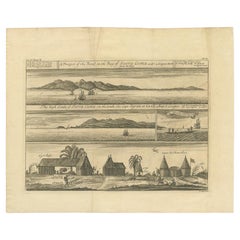
A Prospect of the Road in the Bay of Sierra Liona
..
, Kip, 1732
By Johannes Kip
Located in Langweer, NL
A four panel copperplate engraving: a) 'A Prospect of the Road in the Bay of Sierra Liona', b) 'The high Lands of Sierra Liona, on the South, the Cape Tagrain at E1/4 NE, about 8 Lea...
Category
18th Century Antique Johannes Kip Art
Materials
Paper
$252 Sale Price
20% Off
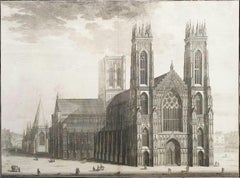
The West Prospect of the Cathedral of York /// "Britannia Illustrata" Engraving
By Johannes Kip
Located in Saint Augustine, FL
Artist: Johannes "Jan" Kip (Dutch, 1652/3-1722)
Title: "The West Prospect of the Cathedral of York" (Vol. 3, Plate 31)
Portfolio: Britannia Illustrata / Le Nouveau Théâtre de la Grande Bretagne
Year: 1715-1724 (Third edition)
Medium: Original Engraving and Etching on cream laid paper
Limited edition: Unknown
Printer: Joseph Smith, London, UK
Publisher: Joseph Smith, London, UK
Reference: "London Illustrated 1604-1850" - Adams No. 22; Crace No. 201; Brunet IV No. 114; Lowndes No. 1277; Lewine page 263-264
Sheet size: 19.25" x 24.19"
Image size: 16.75" x 22.5"
Condition: With centerfold as issued. Some light toning and foxing mainly in margins, and some light edgewear. Has been professionally stored away for decades. It is otherwise a strong impression in very good condition
Rare
Notes:
Provenance: private collection - Ross-on-Wye, UK. Engraved by Dutch artist Johannes "Jan" Kip (1652/3-1722) after a drawing by Dutch artist Leonard Knyff or Leendert Knijff (1650-1722). Comes from Kip's six volume (including Supplement and 'Atlas Anglois') "Britannia Illustrata" / Le Nouveau Théâtre de la Grande Bretagne", (1724-1728) (Third edition), which consists of 394 engravings and etchings. Printed in one color from one copper plate: black.
Biography:
Johannes "Jan" Kip (1652/53 in Amsterdam - 1722 in Westminster) was a Dutch draftsman, engraver and print dealer. Together with Leonard Knyff, he made a speciality of engraved views of English country houses.
Kip was a pupil of Bastiaen Stopendaal (1636–1707), from 1668 to 1670, before setting up on his own; his earliest dated engravings are from 1672. In April 1680, at the age of 27, he married Elisabeth Breda in Amsterdam. After producing works for the court of William of Orange in Amsterdam, Kip followed William and Mary to London and settled in St. John Street in Farringdon, where he conducted a thriving printselling business. He also worked for various London publishers producing engravings after such artists as Francis Barlow (c. 1626–1704) and Caius Gabriel Cibber (1630–1700), largely for book illustrations. He made several engraved plates for Awnsham & John Churchill's "A Collection of Voyages & Travels" (first published 1704). He signed the African scenes in volume V of the 1732 edition as "J. Kip".
His most important works were the large fold-out folio illustrations for "Britannia Illustrata", 1708; for the 65 folio plates he engraved for the antiquary Sir Robert Atkyns, "The Ancient and Present State of Glostershire", 1712 (1st edition); and for "Le Nouveau Théâtre de la Grande Bretagne ou description exacte des palais de la Reine, et des Maisons les plus considerables des des Seigneurs & des Gentilshommes de la Grande Bretagne", 1715, an extended reprint in collaboration with other artists.
The linked careers of Jan Kip and Leonard Knyff made a specialty of engraved views of English country houses, represented in detail from the bird's-eye view, a pictorial convention for topography. Their major work was "Britannia Illustrata: Or Views of Several of the Queens Palaces, as Also of the Principal seats of the Nobility and Gentry of Great Britain, Curiously Engraven on 80 Copper Plates", London (1707, published in the winter of 1708–9). The volume is among the most important English topographical publications of the 18th century. Architecture is rendered with care, and the settings of parterres and radiating avenues driven through woods or planted across fields, garden paths, gates and toolsheds are illustrated in detail. The images are staffed with figures and horses, coaches pulling into forecourts, water...
Category
1720s Old Masters Johannes Kip Art
Materials
Laid Paper, Engraving, Etching, Intaglio
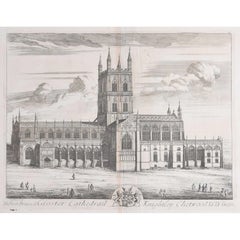
Johannes Kip, The North Prospect of Gloster Cathedral (c.1716) Copper Engraving
By Johannes Kip
Located in London, GB
To see our other architectural drawings and engravings, scroll down to "More from this Seller" and below it click on "See all from this Seller" - or send us a message if you cannot ...
Category
1710s Realist Johannes Kip Art
Materials
Engraving
Hand Colored Copper Engraving "Ingleby Mannor" by Johannes Kip
By Johannes Kip
Located in Long Island City, NY
Hand colored copper engraving "Ingleby Mannor the Seat of the Honble. Sr. Wm. Foulis Bartt.," by Johannes Kip. From Kip's most significan...
Category
Early 1700s English Antique Johannes Kip Art
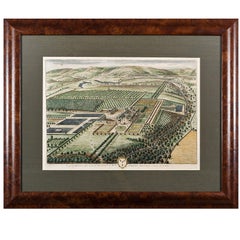
Related Items
"Enshoku Sanju-roku Kasen" (Thirty-six Enchanting Flowers) Woodblock on paper
By Toyohara Kunichika
Located in Soquel, CA
"Enshoku Sanju-roku Kasen" (Thirty-six Enchanting Flowers) Woodblock on paper
Elegant woodblock print by Toyohara Kunuchika (Japanese, 1835-1900). Three women are in talking with each other inside, while a man waits outside holding a bag of some kind. The colors in this piece are rich and saturated, primarily blues, greens, and purple.
Mat size: 16"H x 20"W
Paper size: 14.75"H x 9.88"W
Born in 1835, Toyohara Kunichika grew up in the Kyobashi district of Edo in the midst of merchants and artisans. In 1848, at age 13, he was accepted as an apprentice into the studio of Utagawa Kunisada I...
Category
1880s Edo Johannes Kip Art
Materials
Ink, Rice Paper, Woodcut

$475
H 20 in W 16 in D 0.25 in
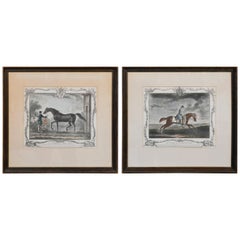
18th Century Pair of English Engravings
Located in Dallas, TX
Superb pair of 18th century English engravings.
Category
18th Century English Antique Johannes Kip Art
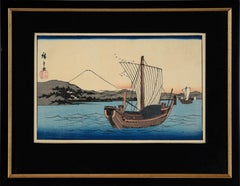
Kiyomi Barrier
Seiken Temple Near Okitsu- Japanese Woodcut Print on Rice Paper
By Utagawa Hiroshige
Located in Soquel, CA
Kiyomi Barrier & Seiken Temple Near Okitsu - Japanese Woodcut Print on Rice Paper
Woodblock print of boats in a harbor by Utagawa Hiroshige (Japanese, 1797-1858). Originally publish...
Category
1850s Impressionist Johannes Kip Art
Materials
Rice Paper, Woodcut
$1,550
H 15.5 in W 19.25 in D 1.25 in
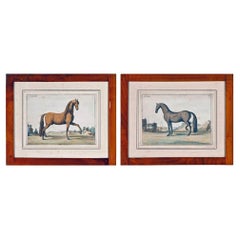
Pair of 18th Century Engravings of Horses
Located in Downingtown, PA
Each print is mounted in a cherrywood parcel-gilt frame, with a glazed reverse depicting the corresponding text sheet.
L'Andaloux, Le Cheval d'Espagne, Plate I;
Le Barbe, Le Che...
Category
Mid-18th Century French Georgian Antique Johannes Kip Art
Materials
Paper
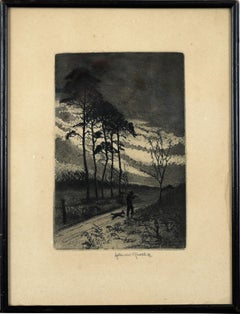
"End of Day" Original Limited Edition Etching
Located in Soquel, CA
"End of Day" Original Limited Edition Etching by John McGrath (Irish/American b.1884 d.1942).
This etching depicts a man with a tool slung over his shoulder walking along a path th...
Category
Early 20th Century American Realist Johannes Kip Art
Materials
Paper, Ink, Drypoint, Etching
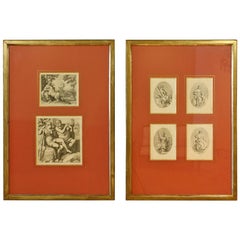
Framed Set of 18th Century Classical Engravings
Located in Pembroke, MA
Two French matted and framed 18th century black and white engravings inspired by Classical Antiquity. The first frame contains an engraving of a woman patting a unicorn, and a man an...
Category
18th Century French Classical Greek Antique Johannes Kip Art
Materials
Giltwood, Paper
$3,500 Sale Price / set
20% Off
H 32.5 in W 23 in D 1.25 in
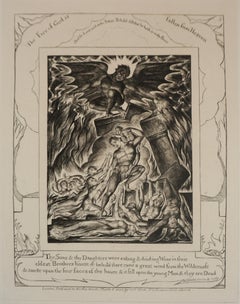
Illustrations From The Book of Job - "The Fire of God is Fallen From Heaven"
By William Blake
Located in Soquel, CA
"Illustrations of the Book of Job" Engraving "The Fire of God is Fallen From Heaven...And the Lord said unto Satan Behold All that he hath is in thy Power"
Engraving, third printing...
Category
1870s Symbolist Johannes Kip Art
Materials
Handmade Paper, Engraving
$3,720 Sale Price
20% Off
H 20 in W 15 in D 0.2 in
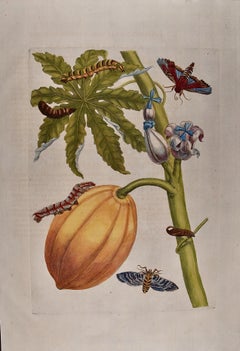
Papaya and Moth Metamorphosis: 18th C. Hand-colored Engraving by Maria Merian
By Maria Sibylla Merian
Located in Alamo, CA
This exquisite hand-colored 18th century folio-sized engraving of a papaya plant and moth metamorphosis is plate 64 from Maria Sibylla Merian's publication '...
Category
Early 18th Century Academic Johannes Kip Art
Materials
Engraving
$5,575
H 21.88 in W 14.5 in
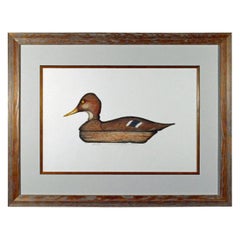
Arthur Nevin Print of a Mallard Hen Duck Decoy, Bay Head, NJ
By Arthur Nevin
Located in Downingtown, PA
The large print by Arthur Nevin is inscribed Mallard Hen Decoy, Bay Head, New Jersey, 1920, it is also signed & numbered 45/150.
Category
1970s American Folk Art Vintage Johannes Kip Art
Materials
Paper
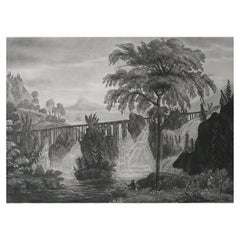
Original Antique Print - The Road of Pillars, China, C.1820
Located in St Annes, Lancashire
Great print of the Road of Pillars, China
Copper-plate engraving
Published by Thomas Kelly, C.1820
Unframed.
Category
Early 18th Century English Chinoiserie Antique Johannes Kip Art
Materials
Paper
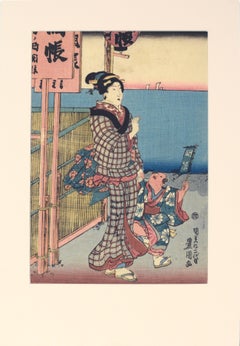
Page from "Spring View in Takanawa" Mid 18th Century Ukiyo-e Print
By Utagawa Kunisada (Toyokuni III)
Located in Soquel, CA
Page from "Spring View in Takanawa" Mid 18th Century Ukiyo-e Print
Left page from the triptych print "Spring View in Takanawa" by Utagawa Kunisada (Toyokuni III) (Japanese b. 1786 d...
Category
1840s Edo Johannes Kip Art
Materials
Printer s Ink, Mulberry Paper, Woodcut
$950
H 19 in W 13 in D 0.25 in
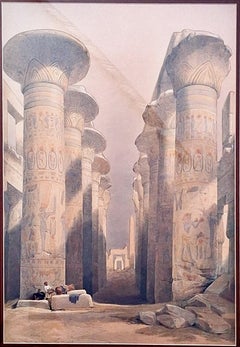
“Thebes, Great Hall at Karnak”
By David Roberts
Located in San Francisco, CA
This lithograph titled "Thebes, Great Hall at Karnak" is a notable work by the Scottish painter David Roberts (1796-1864). This particular scene is part of Roberts' most famous colle...
Category
1840s English School Johannes Kip Art
Materials
Paper, Lithograph
Previously Available Items
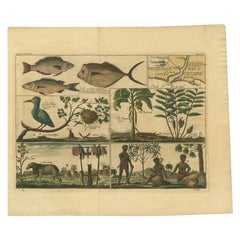
Old Print of the Sestro River in Liberia Showing People and Animals, 1744
By Johannes Kip
Located in Langweer, NL
Antique print, titled: 'A map of Sestro River (…).' - This plate shows Fish, birds, animals and people in the area around the Sestro River, Liberia. Inset; a small map of the mouth o...
Category
18th Century Antique Johannes Kip Art
Materials
Paper
H 13.6 in W 16.1 in D 0.001 in
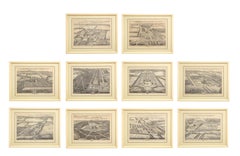
Set of Ten Views of Country Houses from the Britannia Illustrata
By Johannes Kip
Located in New York, NY
Engraved views of various country estates belonging to British nobility and gentry originally published in the Britannia Illustrata, also known as Views of Several of the Queens Pala...
Category
Early 18th Century Johannes Kip Art
Materials
Laid Paper
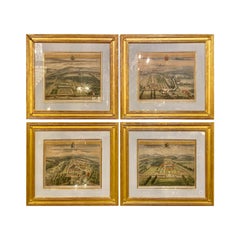
Set of Four Copperplate Engravings Inscribed and Finely Framed, Leonard Knyff
By Johannes Kip
Located in Manhasset, NY
Set of four copperplate engravings inscribed and finely framed and matted by Judy Cormier. All four views under plexiglass several inscribed on the lower left J Kp Delin et Sculp. The set after Leonard Knyff Britannia. Published in London 1707 and incredibly framed by this highly regarded interior designer Cormier this fresh to the market set...
Category
Mid-18th Century English Renaissance Antique Johannes Kip Art
Materials
Paper, Wood
H 26 in W 25.5 in D 1.25 in
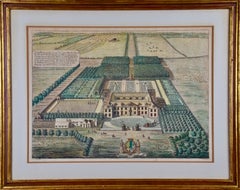
Early 18th Century Bird
s-Eye View of Grimsthorpe Castle, Lincolnshire, England
By Johannes Kip
Located in Alamo, CA
An original early 18th century hand-colored copper engraving by Johannes (Jan) Kip (1652-1722) from a drawing by Leonard Knyff (1650-1722), published by Joseph Smith in London in 170...
Category
Early 1700s Realist Johannes Kip Art
Materials
Etching, Engraving
H 20 in W 25.13 in D 0.88 in
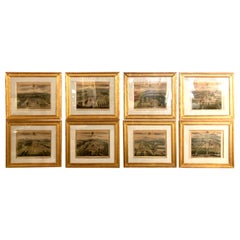
Set of Eight Copperplate Engravings Inscribed and Finely Framed, Leonard Knyff
By Johannes Kip
Located in Manhasset, NY
Set of eight copperplate engravings inscribed and finely framed and matted by Judy Cormier. All eight views under plexiglass several inscribed on the lower feft J Kp Delin et Sculp. The set after Leonard Knyff Britannia. Published in London 1707 and incredibly framed by this highly regarded interior designer Cormier this fresh to the market set...
Category
Mid-18th Century English Renaissance Antique Johannes Kip Art
Materials
Paper, Wood
H 26 in W 25.5 in D 1.25 in
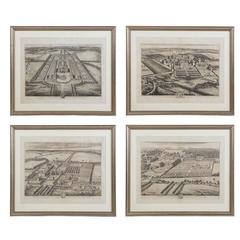
Prints of Estates by Johannes Kip
By Johannes Kip
Located in Gloucestershire, GB
Prints of Estates by Johannes Kip, circa 1768. Four original antique copper engraved prints of Estates by Johannes Kip published in London in 1768.
Category
1760s Antique Johannes Kip Art
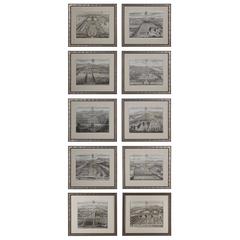
Original Copper Engraved Prints of Kip Estates, circa 1768
By Johannes Kip
Located in Gloucestershire, GB
10 original antique copper engraved prints of Estates by Johannes Kip, published in London in 1768.
Category
Mid-18th Century English Antique Johannes Kip Art
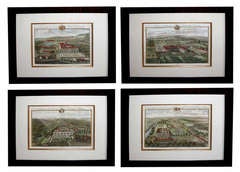
2 Pair of Finely Rendered English Johannes Kip Topographical Engravings
By Johannes Kip
Located in San Francisco, CA
2 pair of finely rendered and rare English Johannes Kip hand-colored topographical engravings of English country manor houses; each large and finely detailed engraving of some of Eng...
Category
18th Century and Earlier English Antique Johannes Kip Art
Johannes Kip art for sale on 1stDibs.
Find a wide variety of authentic Johannes Kip art available for sale on 1stDibs. You can also browse by medium to find art by Johannes Kip in engraving and more. Not every interior allows for large Johannes Kip art, so small editions measuring 19 inches across are available. Customers who are interested in this artist might also find the work of Pieter Van Der Aa, Francois Nicolas Martinet, and Georg Andreas Böckler. Johannes Kip art prices can differ depending upon medium, time period and other attributes. On 1stDibs, the price for these items starts at $314 and tops out at $314, while the average work can sell for $314.