John Charlton Art
to
1
1
Overall Width
to
Overall Height
to
1
1
1
1
1
1
2
1
1
1
1
1
2
2
1
1
1
2
10,225
2,785
2,504
1,382
2
1
1
Artist: John Charlton
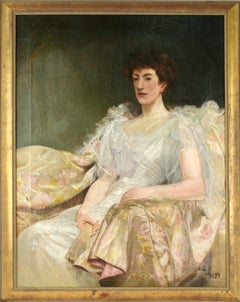
Turn of Century English Portrait of Mrs. Rogerson
By John Charlton
Located in Soquel, CA
Elegant Victorian original oil portrait of Mrs. Rogerson by John Charlton
Robert Azensky Fine Art is pleased to offer this fine example of Victorian portraiture of Mrs. Frances Mary...
Category
Early 1900s Post-Impressionist John Charlton Art
Materials
Linen, Oil, Stretcher Bars
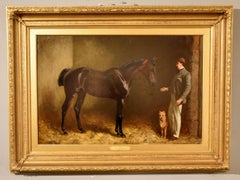
Oil Painting by John Charlton R.I "Rex"
By John Charlton
Located in Mere, GB
Oil Painting by John Charlton R.I "Rex" 1849 - 1917 Northumberland painter of horses and military scenes. Exhibited at the Royal Academy and Royal Institute where he was a member. Oi...
Category
19th Century John Charlton Art
Materials
Oil
Related Items
Shepherd with Sheep, Cows and a Goat in a Landscape by Jan Frans Soolmaker
Located in Stockholm, SE
Jan Frans Soolmaker (Flanders 1635‑1685)
Shepherd with Sheep, Cows and a Goat in a Landscape
oil on relined canvas
canvas size 56 x 53 cm
frame i...
Category
17th Century Old Masters John Charlton Art
Materials
Canvas, Oil


$5,800 Sale Price
25% Off
H 22.05 in W 20.87 in
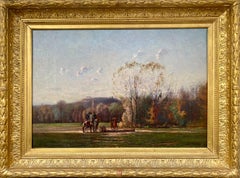
Riders, the autumn meet: equestrian oil by famed French aristocrat and horseman
Located in Norwich, GB
A rare 19th-century oil by the aristocratic painter and distinguished collector, Count Charles Gaston Esmangart de Bournonville de Saint-Maurice. It depicts an equestrian gathering ...
Category
1880s Impressionist John Charlton Art
Materials
Canvas, Oil
$3,660
H 17.33 in W 22.84 in D 1.58 in
1940
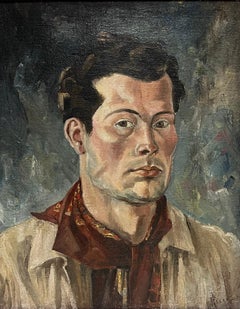
s French Portrait of Young Man Original Signed Oil on Canvas Period Frame
Located in Cirencester, Gloucestershire
Portrait of a Man
by Roger Allain (French 1920-1992)
signed and dated 1941 (a very rare period due to WW2)
oil on canvas
canvas: 22 x 18 inches
provenance...
Category
Mid-20th Century Post-Impressionist John Charlton Art
Materials
Oil, Canvas
$1,754 Sale Price
20% Off
H 22 in W 18 in
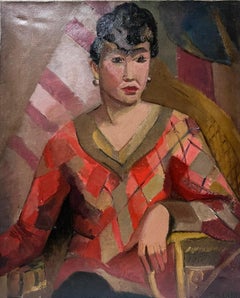
Antique French Fauvist 1920
s Signed Oil Painting Portrait of Fashionable Lady
Located in Cirencester, Gloucestershire
Portrait of a Lady
French School, fauvist style
indistinctly signed
circa 1920's period
oil on canvas, unframed
canvas: 22 x 18 inches
provenance: private collection
condition: very ...
Category
Early 20th Century Fauvist John Charlton Art
Materials
Oil, Canvas
Fauvist 1920
sAntique French Fauvist 1920
s Signed Oil Painting Portrait of Fashionable Lady, 1920
s
$1,096 Sale Price
20% Off
H 22 in W 18 in
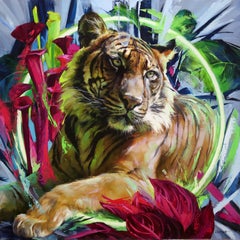
"The Sumatran Tiger" - Original Oil Painting of an Endangered Big Cat
By Lindsey Kustusch
Located in Denver, CO
Lindsey Kustusch's "The Sumatran Tiger" is a stunning handmade original oil on wood panel artwork, with dimensions of 30 x 30 x 1.50 inches. Created in 2023, this piece stands as a p...
Category
2010s Realist John Charlton Art
Materials
Oil, Wood Panel
$6,500
H 30 in W 30 in D 1.5 in
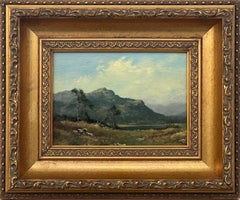
Painting of a Mountain in Lake District England by 20th Century British Artist
By James Wright
Located in Preston, GB
Painting of a Mountain in Lake District England by 20th Century British Landscape Artist, James Wright. Signed, Original, Oil on Canvas, housed in a beautiful ornate gold frame. Prov...
Category
1990s Romantic John Charlton Art
Materials
Canvas, Oil
$1,370 Sale Price
20% Off
H 10 in W 12 in D 2.5 in
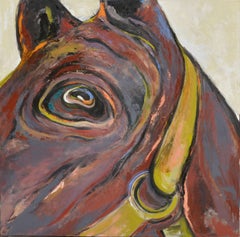
Large Original Oil Painting Abstract Expressionist Horse
Located in Soquel, CA
Stunning large scale abstract expressionist horse's head/eye, circa 1990. Unsigned. Unframed. Size: 60"H x 60"W x 1.5.
Category
1990s Abstract Impressionist John Charlton Art
Materials
Canvas, Oil, Stretcher Bars
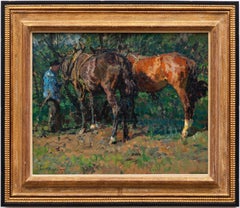
“In June (Im Juni)” By Julius Paul Junghanns dated "1913"
Located in SANTA FE, NM
“In June (Im Juni)”
Julius Paul Junghanns (German, 1876-1958)
Oil on canvas
Signed and dated “1913,” titled on reverse
18 ½ x 23 1/4 (27 1/4 x 31...
Category
1910s Impressionist John Charlton Art
Materials
Canvas, Oil
$4,450 Sale Price
50% Off
H 27.25 in W 31.5 in
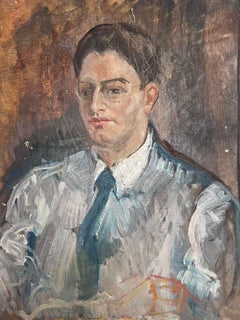
Mid 20th Century French Signed Oil Painting Portrait of Man in Tie
Located in Cirencester, Gloucestershire
Jean La Forgue (French 1901-1975)
signed oil on unstretched canvas, unframed
painting: 27 x 21 inches
provenance: the artists estate, France
condition: the painting is on unstretched...
Category
Mid-20th Century Post-Impressionist John Charlton Art
Materials
Oil, Canvas
$542 Sale Price
20% Off
H 27 in W 21 in
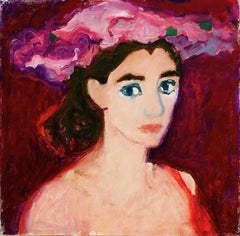
"Self-Portrait with Pink Hat" by Podlach - Bright Red and Pink Self-Portrait
By Betsy Podlach
Located in Carmel, CA
Betsy Podlach (American, born 1964)
"Self-Portrait with Pink Hat" 2021
Oil Paint, Canvas, Stretcher Bars
The artist signed the back of the painting.
About the Artist:
Betsy Podlach ...
Category
2010s Fauvist John Charlton Art
Materials
Canvas, Oil, Stretcher Bars
$10,000
H 28 in W 28 in D 1.5 in
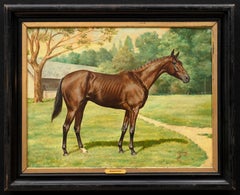
Champion Thoroughbred Racehorse "Sysonby" (1902-1906) Edward Herbert Miner
By Edward Herbert Miner
Located in SANTA FE, NM
"Sysonby"
Edward Herbert Miner (American, 1882-1941)
Depicting the champion thoroughbred horse Sysonby (1902-1906)
Oil on canvas, signed "E H Miner 1905"
24 x 32 inches (31 1/4 x 39...
Category
Early 1900s John Charlton Art
Materials
Canvas, Oil
Edward Herbert MinerChampion Thoroughbred Racehorse "Sysonby" (1902-1906) Edward Herbert Miner, 1905
$10,680 Sale Price
40% Off
H 31.25 in W 39 in
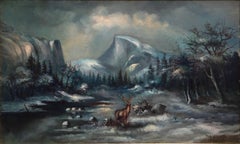
Early 20th Century Yosemite Winter Park Landscape
By William Lemos
Located in Soquel, CA
Beautiful large scale landscape of Yosemite with Half Dome and El Capitan above the Merced River by William Lemos (American, 1861-1942). Rendered in cool grays and blues, Half Dome r...
Category
1910s Romantic John Charlton Art
Materials
Canvas, Oil
Previously Available Items
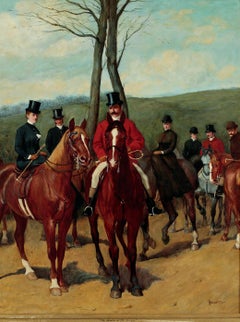
The Master of the Hounds
By John Charlton
Located in Sheffield, MA
John Charlton
English, 1849- 1917
The Master of the Hounds
Oil on canvas
36 by 28 in. W/frame 47 ½ by 39 ½ in.
Signed lower right
Early life:
Born to Samuel Charlton and his wife Mary Ann (née Pickering) Charlton on 28 June 1849, in Bamburgh, Northumberland, he received his first lessons in drawing from his father when he was only three or four years old, and within a few years was drawing horses with some skill. Due to his family’s financial misfortunes, he had to attend Dr. Sharp’s charity school held in Bamburgh’s great castle, and a few years later, was forced to quit and find employment. A job in the Newcastle bookshop of Mr. Robinson, a keen collector of the work of Thomas Berwick, “the father of Wood engraving,” gave him an appreciation of graphic art. It was here that the budding artist began to imitate the master’s work, much to the delight of two of Berwick’s aging sisters. Later he spent seven monotonous years employed in the office of Sir Isaac Bell’s ironworks, but seeing the young man’s skill at draughtsmanship, his employers regularly granted him one day a week in which to practice his art. Mr. Joseph Crawhill suggested that he attend evening classes at the Newcastle School of Arts under William Bell Scott. During this time he began to develop quite a reputation on Tyneside as a painter of horses and dogs, and he received some commissions to portray family pets.
He debuted at the Royal Academy in 1870, and his first painting with a military theme, Exercising artillery horses on a frosty morning, appeared three years later. Realising that his best prospects for advancement lay in the London art world, he ventured south in 1874 and took classes at the South Kensington Museum, now the Victoria and Albert Museum, under J. D. Watson.While he settled in the capital, he never forgot his northern roots, maintaining a house at 24 Windsor Terrace, Newcastle, and at one time lived at Cullercoats, while his final years were spent at Lanercost in Cumbria.
The late 1870s and 1880s were a very busy time for British and colonial forces as they tried to consolidate colonial hold over possessions in northern and southern Africa. Many of the illustrations appearing in The Graphic depicting these events came from the hand of Charlton, especially during the Egyptian campaign of 1882, when he had to draw-up many of the eye-witness sketches posted to the paper by its ‘special artists’ as well as soldiers. It was also during 1882 that he married Kate, daughter of Thomas Vaughan, J.P. of Ugthorp Lodge, Cleveland.
Military Paintings:
Exposed to the wealth of military illustration he decided to try his hand at creating a large painting on canvas using a war theme, and in 1883 exhibited British artillery entering the enemy’s lines at Tel-el-Kebir, 13 September 1882. It was well received, one writer asking, "who can look unmoved upon his vigorous and vividly realistic rendering." Spurred on by the success of this work which "opened up for him a field in which he could find freer scope for his artistic sense of vivid movement and powerful action in both horse and figure-painting, and exercise for his keen imagination," he chose another military scene for his 1887 academy piece. Based on a sketch by Surgeon N. C. Ross of the Royal Marines, Bad news from the front represented the first news of the disaster to General McNeill’s column during the Suakim campaign of 1885: "A number of horses of the Bengal Lancers having broken through the zeriba [thorn-bush stockade] in confusion, galloped back to headquarters, and created much excitement and alarm, it being conjectured that some terrible disaster had befalled the advance column." He returned to the Sudan campaign for his 1893 piece, Placing the Guns, the same year his wife died leaving him to look after their two young sons.
For his next military subject, Charlton turned once again to men and horses in battle with a theme from the Zulu War: After the charge: 17th Lancers, Ulundi, July 4, 1879, which was shown at Burlington House in 1888. The regiment was to figure again later in the artist’s work. Some years previously, he had painted a portrait of Lord Tredegar who had led the lancers out of the fateful charge at Balaklava on 25 October 1854, and no doubt inspired by hearing the nobleman’s account during the sittings as well as reading Kinglake’s history of the Crimean War, Charlton exhibited several paintings of the charge. An Incident in the charge of the Light Brigade...
Category
1880s Victorian John Charlton Art
Materials
Oil
The End of day - British 1900
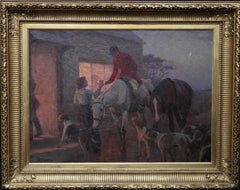
s oil painting hunting scene inn hounds horses
By John Charlton
Located in Hagley, England
A large fine oil on canvas which dates to circa 1900 by noted British artist John Charlton. This is one of the best large romantic works that I have seen by this artist. It depicts The End of the Day for a huntsman and his hounds as they stop for a drink under the glowing evening of a cresupular moon. A stunning painting. Signed lower left.
Provenance. Christies London
Framed in a fine gallery frame 41 by 34 inches.
John Charlton was a very successful British artist known for his powerful military scenes, detailed and accurate animal and figure paintings, and vivid landscapes. He debuted at the Royal Academy in 1870 and exhibited there until 1904, contributing 53 works.
He was born in a county in North East England and received his first drawing lessons from his father. Due to his family’s financial misfortunes, Charlton was enrolled in Dr. Sharp’s charity school, but a short time later was forced to quit and find employment. His first job was at a bookstore, which gave the promising artist a chance to copy the master’s work. Years later, while working as a draughtsman, his employers noticed his extraordinary talent and regularly granted him time to practice his art. At the suggestion of Mr. Joseph Crawhill, a notable British illustrator, Charlton began to attend evening classes at the Newcastle School of Arts under William Bell Scott. It was during this time that Charlton developed a reputation as a skilled painter of horses and dogs, and began receiving commissions to portray family pets.
In 1874, realizing that his best chance for advancement lay in the London art world, he ventured south and took classes at the South Kensington Museum, now the Victoria and Albert Museum. To earn a living Charlton became an illustrator for The Graphic, and his sketches of the Egyptian Campaign of 1882 were often reproduced in the popular weekly illustrated British newspaper. Experiencing the wealth of military illustration, he decided to try his hand at creating a large war-themed painting, and in 1883 exhibited British artillery entering the enemy’s lines at Tel-el-Kebir, 13 September 1882. The critics praised the canvas calling it a “vigorous and vividly realistic rendering.” Spurred on by the success, he chose another military scene for his 1887 academy piece. Based on a sketch by a Royal Navy surgeon, Charlton painted Bad News from the Front, a scene from the Suakim campaign of 1885. For his 1893 piece, Placing the Guns, he returned to the Sudan campaign. His next military subject was from the Zulu War, After the Charge: 17th Lancers, Ulundi, 4 July 1879, which was shown at Burlington House in 1888. Charlton exhibited several paintings from the Crimean War, including An Incident in The Charge of the Light Brigade...
Category
19th Century Realist John Charlton Art
Materials
Oil
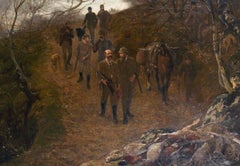
Return of the Guns Victorian Shooting Party signed oil painting
By John Charlton
Located in Cirencester, Gloucestershire
Very fine, large scale original Victorian oil painting on canvas, depicting a traditional shooting party, "The Return of the Guns". The painting is ...
Category
Late 19th Century Victorian John Charlton Art
Materials
Oil
H 30 in W 44 in D 1 in
John Charlton art for sale on 1stDibs.
Find a wide variety of authentic John Charlton art available for sale on 1stDibs. You can also browse by medium to find art by John Charlton in oil paint, paint and more. Not every interior allows for large John Charlton art, so small editions measuring 44 inches across are available. Customers who are interested in this artist might also find the work of Alfred de Breanski Sr., John Emms, and Charles Jones (b.1836). John Charlton art prices can differ depending upon medium, time period and other attributes. On 1stDibs, the price for these items starts at $15,484 and tops out at $15,484, while the average work can sell for $15,484.