John Edward Costigan Art
American, 1888-1972
An American Painter Compositional painter of figures and country animals; watercolor painter Costigan was a largely self-taught artist. He moved from Providence, Rhode Island to New York City as an orphaned teenager in 1904 to work for a commercial poster company. It was here that he learned the rudiments of drawing and painting, skills he furthered with informal study at New York's Kit Kat Club, a popular artists' hangout. Costigan achieved national fame as a painter and printmaker in the1920s and 30s. He won numerous prestigious awards and, despite his lack of formal artistic training, was elected a full member of the National Academy of Design. In 1937 the Smithsonian Institution held a one-person exhibition of his graphic works. Famed American printmaker John Taylor Arms praised Costigan as "a brilliant etcher, particularly noted for his interpretation of life on the American farmstead." Today prints by Costigan can be found in private and public collections around the nation, including the Prints and Photographs Division of the Library of Congress in Washington, which owns twenty-two. The Swope exhibition is the largest devoted to Costigan's work since the late 1960s. Many of the forty-five prints in the exhibition are from the Swope's own extensive holdings of Costigan's works. Other are being lent by private collectors from around the country.to
1
5
2
1
1
Overall Width
to
Overall Height
to
10
2
1
2
4
1
1
10
8
6
6
5
2
1
1
1
6
5
3
1
1
11
10,225
2,785
2,504
1,382
6
10
Artist: John Edward Costigan
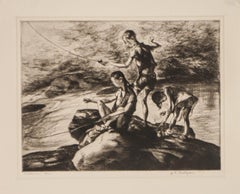
Fisherman Three 1939 original signed etching by John E. Costigan
By John Edward Costigan
Located in Paonia, CO
Fisherman Three is an original 1939 signed etching by the American artist John E. Costigan
( 1888-1972 ) a self-taught painter and printmaker. The locale for Costigan...
Category
Mid-20th Century Other Art Style John Edward Costigan Art
Materials
Etching
John Edward Costigan Painting, circa 1950
s - Carnival
By John Edward Costigan
Located in Phoenix, AZ
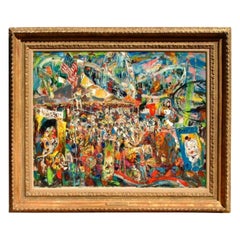
John Costigan (1888-1972) oil on canvas, circa: 1950s. In excellent condition.
Exciting Expressionist Painting of a lively Carnival Scene. Signed lower right: ''J.E. Costigan",
Title...
Category
Mid-20th Century John Edward Costigan Art
Materials
Paint
Woman and Child
By John Edward Costigan
Located in Sheffield, MA
John Edward Costigan, N.A.
American, 1888-1972
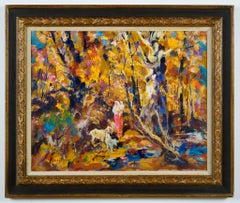
Woman and Child
Oil on canvas
Signed ‘J.E. Costigan N.A.’ lower left
24 by 30 in. W/frame 32 by 38 in.
John Costigan was born of Irish-American parents in Providence, Rhode Island, February 29, 1888. He was a cousin of the noted American showman, George M. Cohan, whose parents brought the young Costigan to New York City and was instrumental in starting him on a career in the visual arts. They were less successful in encouraging him to pursue formal studies at the Art Students League (where, however, he later taught) than in exposing him to the commercial art world through the job they had gotten him with the New York lithographing firm that made their theatrical posters.
At the H. C. Miner Lithographing Company, Costigan worked his way up from his entry job as a pressroom helper, through various apprenticeships, to the position of sketch artist. In the latter capacity he was an uncredited designer of posters for the Ziegfeld Follies and for numerous silent films. Meanwhile, he had supplemented his very meager formal studies in the fine arts with a self-teaching discipline that led to his first professional recognition in 1920 with the receipt of prizes for an oil painting and watercolor in separate New York exhibitions.
A year earlier, Costigan had wed professional model Ida Blessin, with whom he established residence and began raising a family in the sleepy little rural New York hamlet of Orangeburg, the setting for the many idyllic farm landscapes and wood interiors with which he was to become identified in a career that would span half a century.
John Costigan’s first national recognition came in 1922 with his winning of the coveted Peterson Purchase prize of the Art Institute of Chicago for an oil on canvas, “Sheep at the Brook.” It marked the start of an unbroken winning streak that would gain him at least one important prize per year for the remainder of the decade. The nation’s art journalists and critics began to take notice, making him the recurring subject of newspaper features and magazine articles. The eminent author and critic Edgar Holger Cahill was just a fledgling reporter when he wrote his first feature, “John Costigan Carries the Flame,” for Shadowland Magazine in 1922. Costigan had his first one-man show of paintings at the Rehn Gallery on New York’s 5th Avenue in November, 1924, to be followed less than three years later by another at the Art Institute of Chicago. In addition, Costigan’s work has been—and continues to be included, side-by-side with that of some of America’s most high-profile artists, in museum and gallery exhibitions throughout the country. His renown had peaked in the early 1930s, by which time his work had been honored with nearly every major award then being bestowed in the fine arts and had been acquired for the permanent collections of several prestigious American museums, including New York’s Metropolitan (which only recently, in 1997, deaccessioned his “Wood Interior,” acquired in 1934).
Although Costigan’s celebrity had ebbed by the late 1930s, the Smithsonian Institution saw fit in 1937 to host an exhibition exclusively of his etchings. And, in 1941, the Corcoran Gallery (also Washington, D.C.) similarly honored him for his watercolors. (Another Washington institution, the Library of Congress, today includes 22 Costigan etchings and lithographs in its permanent print collection.)
During World War II, Costigan returned briefly to illustrating, mainly for Bluebook, a men’s pulp adventure magazine. A gradual revival of interest in his more serious work began at the end of the war, culminating in 1968 with the mounting of a 50-year Costigan retrospective at the Paine Art Center and Arboretum in Oshkosh, Wisconsin. Oils, watercolors and prints were borrowed from museums and private collections throughout the country, and the exhibition was subsequently toured nationally by the Smithsonian Institution.
John Costigan died of pneumonia in Nyack, NY, August 5, 1972, just months after receiving his final prestigious award —the Benjamin West Clinedinst Medal of the Artist’s Fellowship, Inc., presented in general recognition of his “...achievement of exceptional artistic merit...” in the various media he had mastered in the course of his career.
This painting depicts one of the artist's favorite themes --the farm family bathing...
Category
1940s Post-Impressionist John Edward Costigan Art
Materials
Oil
Bathing Group
By John Edward Costigan
Located in Sheffield, MA
John Edward Costigan, N.A.
American, 1888-1972
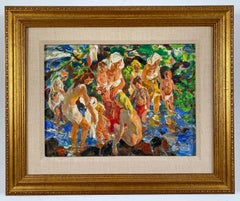
Bathing Group
Oil on canvas board
Signed ‘J.E. Costigan N.A.’ lower left
12 by 16 in. W/frame 20 by 24 i...
Category
1950s Post-Impressionist John Edward Costigan Art
Materials
Oil
Group of Workers
By John Edward Costigan
Located in San Francisco, CA
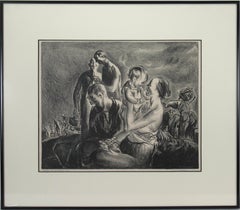
This artwork titled "Group of Workers" 1943, is an original lithograph on paper by noted American artist John Edward Costigan, 1888-1972. It is hand signed and titled in pencil by th...
Category
Mid-20th Century Realist John Edward Costigan Art
Materials
Lithograph
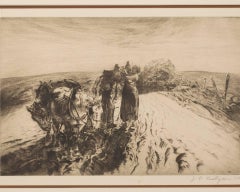
"When Day is Done, " an Original Etching signed by John Edward Costigan
By John Edward Costigan
Located in Milwaukee, WI
"When Day is Done" is an original etching and aquatint signed lower right in pencil by the artist John Edward Costigan. It depicts a man and a woman with their young child at the end...
Category
1930s Post-Impressionist John Edward Costigan Art
Materials
Etching, Aquatint
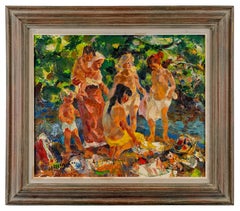
Bathing Group
By John Edward Costigan
Located in Sheffield, MA
John Edward Costigan
American, 1888-1972
Bathers
Oil on canvas
20 by 24 in, w/ frame 26 by 30 in
Signed "J.E. Costigan N.A." lower left
John Costigan was born of Irish-American par...
Category
Mid-20th Century Impressionist John Edward Costigan Art
Materials
Canvas, Oil
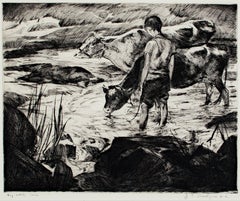
20th century drypoint etching figurative animal print black and white signed
By John Edward Costigan
Located in Milwaukee, WI
"Boy With Cows" is an original drypoint etching by John Edward Costigan. It depicts a young boy with three cows standing in a watering hole. The artist si...
Category
1930s American Realist John Edward Costigan Art
Materials
Drypoint, Etching
Bathers
By John Edward Costigan
Located in Sheffield, MA
John Edward Costigan, N.A.
American, 1888-1972
Bathers
Oil on canvas
Signed ‘J.E. Costigan N.A.’ lower left
20 by 24 in. W/frame 26 by 30 in.
John Costigan was born of Irish-American parents in Providence, Rhode Island, February 29, 1888. He was a cousin of the noted American showman, George M. Cohan, whose parents brought the young Costigan to New York City and was instrumental in starting him on a career in the visual arts. They were less successful in encouraging him to pursue formal studies at the Art Students League (where, however, he later taught) than in exposing him to the commercial art world through the job they had gotten him with the New York lithographing firm that made their theatrical posters.
At the H. C. Miner Lithographing Company, Costigan worked his way up from his entry job as a pressroom helper, through various apprenticeships, to the position of sketch artist. In the latter capacity he was an uncredited designer of posters for the Ziegfeld Follies and for numerous silent films. Meanwhile, he had supplemented his very meager formal studies in the fine arts with a self-teaching discipline that led to his first professional recognition in 1920 with the receipt of prizes for an oil painting and watercolor in separate New York exhibitions.
A year earlier, Costigan had wed professional model Ida Blessin, with whom he established residence and began raising a family in the sleepy little rural New York hamlet of Orangeburg, the setting for the many idyllic farm landscapes and wood interiors with which he was to become identified in a career that would span half a century.
John Costigan’s first national recognition came in 1922 with his winning of the coveted Peterson Purchase prize of the Art Institute of Chicago for an oil on canvas, “Sheep at the Brook.” It marked the start of an unbroken winning streak that would gain him at least one important prize per year for the remainder of the decade. The nation’s art journalists and critics began to take notice, making him the recurring subject of newspaper features and magazine articles. The eminent author and critic Edgar Holger Cahill was just a fledgling reporter when he wrote his first feature, “John Costigan Carries the Flame,” for Shadowland Magazine in 1922. Costigan had his first one-man show of paintings at the Rehn Gallery on New York’s 5th Avenue in November, 1924, to be followed less than three years later by another at the Art Institute of Chicago. In addition, Costigan’s work has been—and continues to be included, side-by-side with that of some of America’s most high-profile artists, in museum and gallery exhibitions throughout the country. His renown had peaked in the early 1930s, by which time his work had been honored with nearly every major award then being bestowed in the fine arts and had been acquired for the permanent collections of several prestigious American museums, including New York’s Metropolitan (which only recently, in 1997, deaccessioned his “Wood Interior,” acquired in 1934).
Although Costigan’s celebrity had ebbed by the late 1930s, the Smithsonian Institution saw fit in 1937 to host an exhibition exclusively of his etchings. And, in 1941, the Corcoran Gallery (also Washington, D.C.) similarly honored him for his watercolors. (Another Washington institution, the Library of Congress, today includes 22 Costigan etchings and lithographs in its permanent print collection.)
During World War II, Costigan returned briefly to illustrating, mainly for Bluebook, a men’s pulp adventure magazine. A gradual revival of interest in his more serious work began at the end of the war, culminating in 1968 with the mounting of a 50-year Costigan retrospective at the Paine Art Center and Arboretum in Oshkosh, Wisconsin. Oils, watercolors and prints were borrowed from museums and private collections throughout the country, and the exhibition was subsequently toured nationally by the Smithsonian Institution.
John Costigan died of pneumonia in Nyack, NY, August 5, 1972, just months after receiving his final prestigious award —the Benjamin West Clinedinst Medal of the Artist’s Fellowship, Inc., presented in general recognition of his “...achievement of exceptional artistic merit...” in the various media he had mastered in the course of his career.
This painting depicts one of the artist's favorite themes --the farm family bathing...
Category
1950s Post-Impressionist John Edward Costigan Art
Materials
Oil
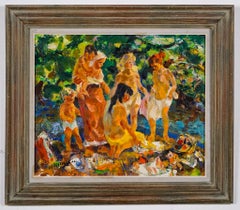
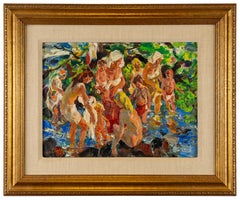
Bathing Group
By John Edward Costigan
Located in Sheffield, MA
John Edward Costigan
American, 1888-1972
Bathing Group
Oil on canvas board
12 by 16 in, w/ frame 19 by 23 in
Signed ‘J.E. Costigan N.A.’ lower left
John Costigan was born of Irish-...
Category
Mid-20th Century Modern John Edward Costigan Art
Materials
Oil
Related Items
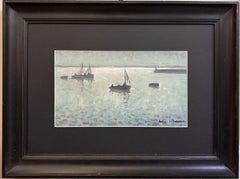
"Solitudine" paesaggio con barche a vela francia del nord cm. 37 x 21
By Henry Maurice CAHOURS
Located in Torino, IT
Lanscape France,Ocean, France , grey, blue, azure, Normandy
signed lower right
Henry Maurice CAHOURS (Paris, 1889 – Vence, 1974)
He was born in Paris but spent his childhood and ...
Category
1930s Post-Impressionist John Edward Costigan Art
Materials
Wood, Oil

$7,155
H 18.12 in W 23.63 in
1960
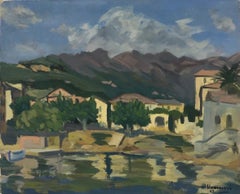
s French Post Impressionist Oil Painting South of France Coastal Town Sea
Located in Cirencester, Gloucestershire
Artist/ School: French School, circa 1960's, signed and dated lower right
Title: Sleepy coastal town, South of France, painted in soft muted green tones.
Medium: oil painting on b...
Category
Mid-20th Century Fauvist John Edward Costigan Art
Materials
Oil
French School1960
s French Post Impressionist Oil Painting South of France Coastal Town Sea, c. 1967
$849 Sale Price
20% Off
H 15 in W 18 in
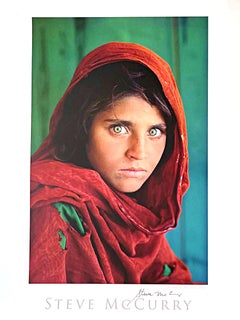
Afghan Girl iconic poster: Sharbat Gula, Pakistan (Hand Signed by Steve McCurry)
By Steve McCurry
Located in New York, NY
Steve McCurry
Sharbat Gula, Afghan Girl, Pakistan (Hand Signed), 1984
Offset Lithograph poster
Hand signed by the photographer in black felt pen on the front
24 × 20 inches
Unframed...
Category
1980s Realist John Edward Costigan Art
Materials
Felt Pen, Lithograph, Offset
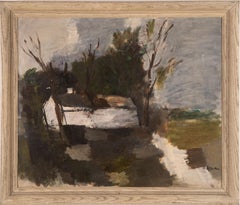
Antique American School Modernist Winter Landscape Signed Framed Oil Painting
By Rosario Urbino Gerbino
Located in Buffalo, NY
Antique American modernist landscape abstraction. Oil on board, circa 1940. Signed. Image size 30L x 25H. Housed in a period modern frame.
Category
1930s Modern John Edward Costigan Art
Materials
Canvas, Oil
$1,196 Sale Price
20% Off
H 29 in W 34 in D 2 in
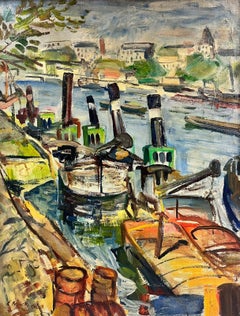
River Seine Paris Tug Boats Moored 1960’s French Post Impressionist Oil
Located in Cirencester, Gloucestershire
The Banks of the Seine
signed by Édouard Righetti (1924-2001)
dated 1959 or 1960
framed oil painted on canvas, beautifully painted.
very good conditio...
Category
Mid-20th Century Post-Impressionist John Edward Costigan Art
Materials
Oil
$1,419 Sale Price
20% Off
H 30 in W 23 in D 1 in
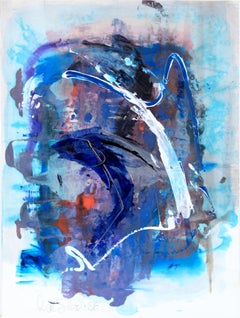
A Case of the Blues - Abstract Expressionism
Located in Soquel, CA
A Case of the Blues - Abstract Expressionism
An abstract expressionist painting in vibrant hues of blue swimming in multiple layers and colors, creating a work that is defined by d...
Category
21st Century and Contemporary Abstract Expressionist John Edward Costigan Art
Materials
Paper, Acrylic, Gouache, Latex
$1,320 Sale Price
20% Off
H 29.5 in W 21.75 in
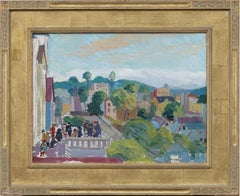
Antique American School Impressionist Landscape Nicely Framed Oil Painting
Located in Buffalo, NY
Impressive early American impressionist landscape painting. Oil on board. Housed in a period impressionist giltwood frame. Excellent condition.
Category
1910s Impressionist John Edward Costigan Art
Materials
Canvas, Oil
$1,980 Sale Price
20% Off
H 18 in W 22 in D 2 in
1930
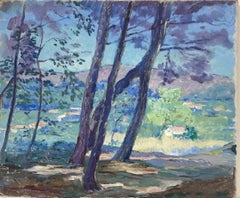
s French Post Impressionist Oil Painting - Summer Provence Landscape
Located in Cirencester, Gloucestershire
Artist/ School: French School, circa 1930's, inscribed verso.
Title: Summer in Provence
Medium: oil painting on canvas board, unframed,
board: 1...
Category
Early 20th Century Fauvist John Edward Costigan Art
Materials
Oil
$959 Sale Price
20% Off
H 15 in W 18 in
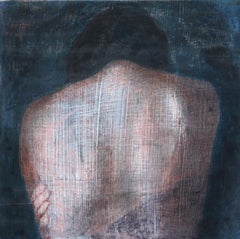
Fragment 9 (dreamy woman back skin female figurative painting soft Earth tones)
By Rudolf Kosow
Located in Quebec, Quebec
"Fragment 9" by Rudolf Kosow is a striking miniature painting that employs a minimalist yet impactful use of color and form to convey deep emotional and psychological states. The art...
Category
2010s Post-Impressionist John Edward Costigan Art
Materials
Canvas, Oil, Acrylic, Wood Panel
$860
H 7.88 in W 7.88 in D 0.99 in
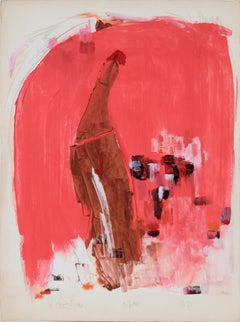
Mindbender - Abstract Expressionism
Located in Soquel, CA
Mindbender - Abstract Expressionism "G.D."
A painting in vivid red that revels in a harmonious balance between gestural abstraction, geometric ...
Category
21st Century and Contemporary Abstract Expressionist John Edward Costigan Art
Materials
Paper, Acrylic, Gouache
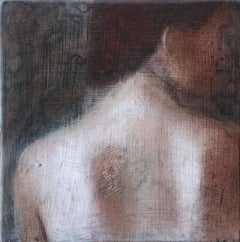
Fragment 10 (dreamy woman back skin female figurative painting soft Earth tones)
By Rudolf Kosow
Located in Quebec, Quebec
"Fragment" by Rudolf Kosow is a deeply introspective miniature painting on wood that subtly plays with shadow and light to evoke a sense of hidden depths within the human form. This ...
Category
2010s Post-Impressionist John Edward Costigan Art
Materials
Canvas, Oil, Acrylic, Wood Panel
$790
H 7.88 in W 7.88 in D 0.99 in
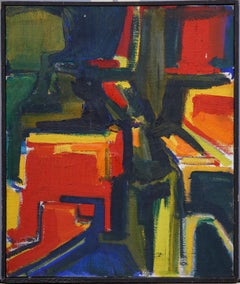
Early American Modernist Abstract Expressionist Framed Mid Century Oil Painting
Located in Buffalo, NY
Impressive early American modernist abstract oil painting. Framed. Oil on canvas.
Category
1960s Abstract John Edward Costigan Art
Materials
Canvas, Oil
$540 Sale Price
20% Off
H 18.5 in W 16 in D 2 in
Previously Available Items
Cutting Foddor original 1938 etching by John Costigan
By John Edward Costigan
Located in Paonia, CO
Cutting Fodder, also known as Family in the Field, is an original signed 1938 etching by the American artist John E. Costigan ( 1888-1972 )a self-taught painter and printmaker. ...
Category
Mid-20th Century Other Art Style John Edward Costigan Art
Materials
Etching

H 11.25 in W 15.75 in
John Edward Costigan art for sale on 1stDibs.
Find a wide variety of authentic John Edward Costigan art available for sale on 1stDibs. You can also browse by medium to find art by John Edward Costigan in etching, oil paint, paint and more. Much of the original work by this artist or collective was created during the 20th century and is mostly associated with the Post-Impressionist style. Not every interior allows for large John Edward Costigan art, so small editions measuring 15 inches across are available. Customers who are interested in this artist might also find the work of Charles Picart le Doux, Henri Riviere, and Edwin Georgi. John Edward Costigan art prices can differ depending upon medium, time period and other attributes. On 1stDibs, the price for these items starts at $600 and tops out at $9,850, while the average work can sell for $2,100.