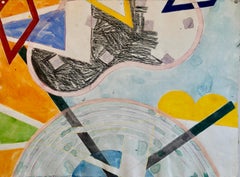
John Sennhauser Art

American, Swiss, 1907-1978

John Sennhauser was born in Switzerland but raised in Italy, where he studied at the Royal Academy in Venice for two years and then in 1928, immigrated to the United States, first earning a living as an architectural draftsman. He studied at the Cooper Union from 1930–33 and then taught at the Leonardo da Vinci Art School from 1936–42 followed by teaching at the Contemporary School of Art in New York. In the late 30s, he began expressing his strong leanings towards Abstraction. In 1943, he took a job at the Solomon R. Guggenheim Foundation, working for Hilla Rebay, who became director of the Guggenheim Museum. Sennhauser was known to belong to groups supporting non-objective painting. He was a member of the American Abstract Artists and Federation of Modern Painters and Sculptors.

to
1
2
Overall Width
to
Overall Height
to
3
1
1
2
2
1
3
1
1
1
3
10,355
2,785
2,504
1,384
1
3
Artist: John Sennhauser
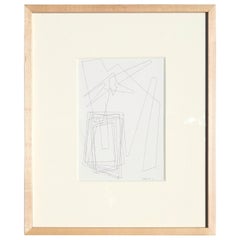
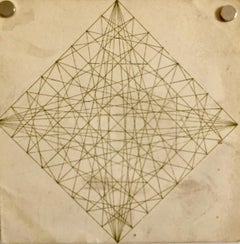
John Sennhauser Geometric Abstract Pen and Ink Drawing, 1944
By John Sennhauser
Located in Phoenix, AZ
Original pen and ink drawing by New York Abstract Artist, John Sennhauser (1907-1978) Signed lower right "J. Sennhauser" and dated '44. Titled and dated on the verso: "Line in Motion...
Category

Mid-20th Century John Sennhauser Art

Materials

Paper

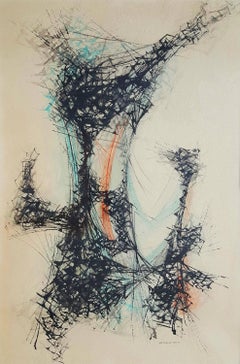
MPROVISATION No. 3" 1952
By John Sennhauser
Located in Miami, FL
Early abstraction from 1952, recalling the masterful brushwork in Asian calligraphy, with its cursive scripts and variations in fluidity and character. Yet Sennhauser departs from t...
Category

1950s Abstract Expressionist John Sennhauser Art

Materials

Watercolor, Paper

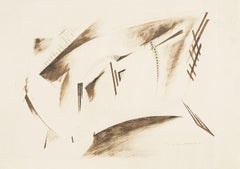
Untitled
By John Sennhauser
Located in New York, NY
Ink and wash on paper. Signed and dated in ink lower right. John Sennhauser became known for his nononjective paintings in the early 1940's. Per teh Smithsonian Institute, "In 194...
Category

1940s Abstract John Sennhauser Art

Materials

Ink, Paper

Related Items
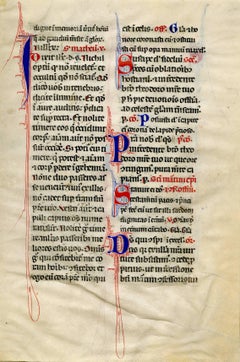
Folio from Communion of Saints, Reading from the Book of St. Matthew.
Located in Fairlawn, OH
Readings from the "Communion of Saints": folio from an Italian Missal Pigment on vellum Mid 17th century Provenance: Otto F. Ege (1888-1951) Phillip Duechnes Bookseller, New York, c. 1948 References And Exhibitions: Otto F. Ege Box Folio 27 Ege describes these folios as: Epistolary (Epistolarium), Italy, Middle 15th century Latin Text: Rotunda or Round Gothic Script, square rhetorical neumes Sister folio are in the following rare book libraries: Case Western Reserve University Cincinnati Public Library Cleveland Institute of Art Cleveland Public Library Denison University Kent State University Kenyon College...
Category

15th Century and Earlier Old Masters John Sennhauser Art

Materials

Ink, Vellum

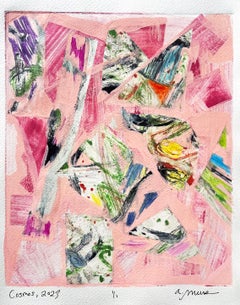
Pink Cosmos Monotype Print, Abstract Art, 2023, Hand-Pulled by the Artist
By a.muse
Located in New york, NY
In the artist's abstract print series, Cosmos, 2023 by a.muse represents an imaginary cosmos - the universe as a place of longing, dreams, wonder, and ethereal beauty. A 13.75" x 11"...
Category

2010s Abstract John Sennhauser Art

Materials

Ink, Rag Paper, Monotype, Gouache

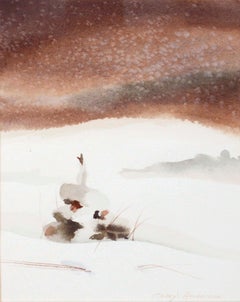
Snowy Pine - Minimal Winter Landscape
Located in Soquel, CA
Minimal winter landscape bordering on abstraction in earthy neutral tones of a pine tree in the snow, which the artist depicts using negative space, under a dark winter sky by Cheryl...
Category

Late 20th Century American Impressionist John Sennhauser Art

Materials

Paper, Watercolor

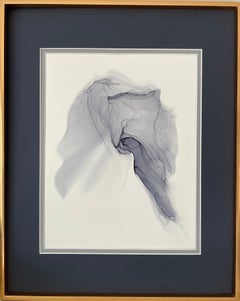
Mystery - abstract painting, made in grey, blue color
By Mila Akopova
Located in Fort Lee, NJ
Interior design paintings. The work was done with alcoholic ink in grey, blue color on Yupo paper. The work is 11 by 14 inches in size, framed (gold or black) with a styrene face on ...
Category

2010s Abstract Expressionist John Sennhauser Art

Materials

Paper, Ink

Improvisation abstract African-American artist painting.
By Roland Ayers
Located in Wilton Manors, FL
Roland Ayers (1932-2017). Improvisation, 2nd Series, #5. Ink on paper, measures 19 x 24 inches. Unframed and unmounted. Signed and dated lower right, titled lower left. There are a few minor areas of loss in margins as depicted in close-up photos. Additionally, there a a few minor tears in margins. Ayers holds the distinction of having participated in the first important survey of African-Americans, Contemporary Black Artists in America, a 1971 show at The Whitney. Biography: Artist and art educator, Roland Ayers was born on July 2, 1932, the only child of Alice and Lorenzo Ayers, and grew up in the Germantown district of Philadelphia. Ayers served in the US Army (stationed in Germany) before studying at the Philadelphia College of Art (currently University of the Arts). He graduated with a BFA in Art Education, 1954. He traveled Europe 1966-67, spending time in Amsterdam and Greece in particular. During this period, he drifted away from painting to focus on linear figurative drawings of a surreal nature. His return home inaugurated the artist’s most prolific and inspired period (1968-1975). Shorty before his second major trip abroad in 1971-72 to West Africa, Ayers began to focus on African themes, and African American figures populated his work almost exclusively. In spite of Ayers’ travel and exploration of the world, he gravitated back to his beloved Germantown, a place he endowed with mythological qualities in his work and literature. His auto-biographical writing focuses on the importance of place during his childhood. Ayers’ journals meticulously document the ethnic and cultural make-up of Germantown, and tell a compelling story of class marginalization that brought together poor families despite racial differences. The distinctive look and design of Germantown inform Ayers’ visual vocabulary. It is a setting with distinctive Gothic Revival architecture and haunting natural beauty. These characteristics are translated and recur in the artist’s imagery. During his childhood, one of the only books in the Ayers household was an illustrated Bible. The images within had a profound effect on the themes and subjects that would appear in his adult work. Figures in an Ayers’ drawing often seem trapped in a narrative of loss and redemption. Powerful women loom large in the drawings: they suggest the female role models his journals record in early life. The drawings can sometimes convey a strong sense of conflict, and at other times, harmony. Nature and architecture seem to have an antagonistic relationship that is, ironically, symbiotic. A critical turning point in the artist’s career came in 1971 when he was included in the extremely controversial Whitney Museum show, Contemporary Black Artists in America. The exhibition gave Ayers an international audience and served as a calling card for introductions he would soon make in Europe. Ayers is a particularly compelling figure in a period when black artists struggled with the idea of authenticity. A questioned often asked was “Is your work too black, or not black enough?” Abstractionists were considered by some peers to be sell-outs, frauds or worse. Figurative* work was accused of being either sentimental or politically radical depending on the critical source. Ayers made the choice early on to be a figurative artist, but considered his work devoid of political content. Organizations such as Chicago’ s Afri-Cobra in the late 1960‘s asserted that the only true black art of any relevance must depict the black man and woman...
Category

1980s Abstract John Sennhauser Art

Materials

Paper, Ink

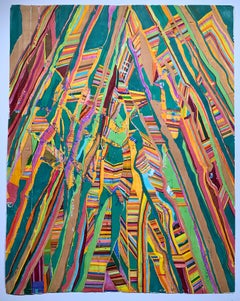
Colorful painting on paper, Unique piece, Abstract Expressionist
Located in Carballo, ES
TUSET (1997, A Coruña, España) Mixed media painting on paper Ready to frame One-of-a-kind Signed on back Includes certificate of authenticity 2021 65 x 50 cm. It belongs to the ser...
Category

21st Century and Contemporary Abstract Geometric John Sennhauser Art

Materials

Paper, Oil Crayon, Ink, Mixed Media, Acrylic, Pencil
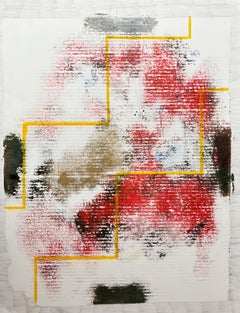
Untitled
By Roland Ayers
Located in Wilton Manors, FL
Roland Ayers (1932-2017). Untitled, 1983. Ink on paper, measures 17 x 23 inches. Unframed and unmounted. Signed and dated lower left. Ayers holds the distinction of having participated in the first important survey of African-Americans, Contemporary Black Artists in America, a 1971 show at The Whitney. Biography: Artist and art educator, Roland Ayers was born on July 2, 1932, the only child of Alice and Lorenzo Ayers, and grew up in the Germantown district of Philadelphia. Ayers served in the US Army (stationed in Germany) before studying at the Philadelphia College of Art (currently University of the Arts). He graduated with a BFA in Art Education, 1954. He traveled Europe 1966-67, spending time in Amsterdam and Greece in particular. During this period, he drifted away from painting to focus on linear figurative drawings of a surreal nature. His return home inaugurated the artist’s most prolific and inspired period (1968-1975). Shorty before his second major trip abroad in 1971-72 to West Africa, Ayers began to focus on African themes, and African American figures populated his work almost exclusively. In spite of Ayers’ travel and exploration of the world, he gravitated back to his beloved Germantown, a place he endowed with mythological qualities in his work and literature. His auto-biographical writing focuses on the importance of place during his childhood. Ayers’ journals meticulously document the ethnic and cultural make-up of Germantown, and tell a compelling story of class marginalization that brought together poor families despite racial differences. The distinctive look and design of Germantown inform Ayers’ visual vocabulary. It is a setting with distinctive Gothic Revival architecture and haunting natural beauty. These characteristics are translated and recur in the artist’s imagery. During his childhood, one of the only books in the Ayers household was an illustrated Bible. The images within had a profound effect on the themes and subjects that would appear in his adult work. Figures in an Ayers’ drawing often seem trapped in a narrative of loss and redemption. Powerful women loom large in the drawings: they suggest the female role models his journals record in early life. The drawings can sometimes convey a strong sense of conflict, and at other times, harmony. Nature and architecture seem to have an antagonistic relationship that is, ironically, symbiotic. A critical turning point in the artist’s career came in 1971 when he was included in the extremely controversial Whitney Museum show, Contemporary Black Artists in America. The exhibition gave Ayers an international audience and served as a calling card for introductions he would soon make in Europe. Ayers is a particularly compelling figure in a period when black artists struggled with the idea of authenticity. A questioned often asked was “Is your work too black, or not black enough?” Abstractionists were considered by some peers to be sell-outs, frauds or worse. Figurative* work was accused of being either sentimental or politically radical depending on the critical source. Ayers made the choice early on to be a figurative artist, but considered his work devoid of political content. Organizations such as Chicago’ s Afri-Cobra in the late 1960‘s asserted that the only true black art of any relevance must depict the black man and woman...
Category

1980s Abstract John Sennhauser Art

Materials

Paper, Ink

Untitled
Untitled
$960 Sale Price
20% Off
H 19 in W 23 in
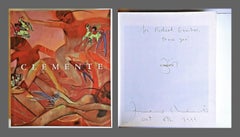
Monograph, Hand Signed by Francesco Clemente and inscribed with a small drawing
By Francesco Clemente
Located in New York, NY
Francesco Clemente Clemente (Hand Signed by Francesco Clemente and inscribed with a small drawing), 1998 Large Illustrated Softback Exhibition Catalogue. (Hand signed and inscribed t...
Category

1990s Contemporary John Sennhauser Art

Materials

Paper, Ink, Mixed Media, Lithograph, Offset
Geometric Line Studies — Charcoal by Murray Duncan
By Murray Duncan
Located in Toronto, Ontario
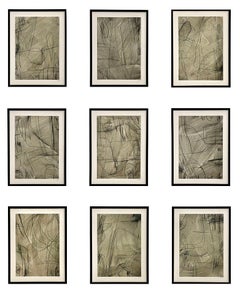
Geometric Line Studies —Charcoal - Nine-Piece Series is an exceptional collection of original mixed-media works on paper by Toronto artist Murray Duncan, presented as a cohesive gri...
Category

21st Century and Contemporary Abstract Geometric John Sennhauser Art

Materials

Paint, Paper, Ink, Pencil

1967 Abstract Geometric Expressionist NYC MoMA Silkscreen Card, Stable Gallery
By Alvin Dickstein
Located in Surfside, FL
Al Dickstein New York school Abstract Geometric work. Came in with small collection of his work including signed letters and a signed card and some monogrammed pieces. Signed and inscribed by artist. Showed at New York's Stable Gallery...
Category

1960s Abstract Geometric John Sennhauser Art

Materials

Paper, Ink

Teal and Orange Abstract Painting with Chine Colle and Watercolor
By Michael Pauker
Located in Soquel, CA
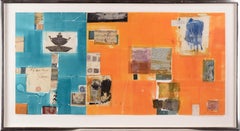
A vibrant contemporary teal and orange painting (Monotype) and found object collage composition of stamps, money, various types of paper, and watercolor by Michael Pauker (American, ...
Category

2010s Contemporary John Sennhauser Art

Materials

Paper, Watercolor

Abstract Modernist Colorful Mixed Media Painting Handmade Paper
By Sandy Kinnee
Located in Surfside, FL
Sandy Kinnee is known for paper making, printmaking and collage. This has the artists stamp verso and is signed, titled and dated verso. Sandy Kinnee lives and works in Colorado Sp...
Category

1980s Abstract Expressionist John Sennhauser Art

Materials

Paint, Ink, Handmade Paper

John Sennhauser art for sale on 1stDibs.

Find a wide variety of authentic John Sennhauser art available for sale on 1stDibs. You can also browse by medium to find art by John Sennhauser in paint, watercolor, paper and more. Much of the original work by this artist or collective was created during the 1950s and is mostly associated with the abstract style. Not every interior allows for large John Sennhauser art, so small editions measuring 16 inches across are available. Customers who are interested in this artist might also find the work of William Gear, John von Wicht, and Hans Hofmann. John Sennhauser art prices can differ depending upon medium, time period and other attributes. On 1stDibs, the price for these items starts at $19,000 and tops out at $35,000, while the average work can sell for $27,000.

Artists Similar to John Sennhauser