Joseph Mallord William Turner Paintings
to
1
Overall Width
to
Overall Height
to
1
1
1
1
1
1
1
2
781
713
712
689
1
Artist: Joseph Mallord William Turner
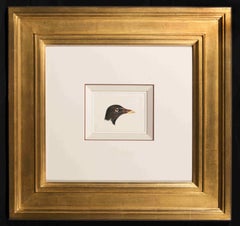
Study of the Head of a Moorhen
By Joseph Mallord William Turner
Located in Belgravia, London, London
Watercolour on paper
Paper size: 4 x 5 inches
Framed size: 19 x 19.75 inches
PROVENANCE
A gift from Joseph Mallord William Turner to Miss Amelia Hawksworth (later Mrs Hotham), niece of Walter Fawkes. The watercolour descended through the ownership of Amelia Hawksworth, daughter of Francis Fawkes ( Walter Fawkes's brother) who was the main compiler of the Ornithological Collection (Miss Hawksworth owned five other bird studies by Turner).
Private collection, London
LITERATURE:
For similar works by J M W Turner see Anne Lyles, The Tate catalogue for the exhibition 'Turner and Natural History, The Farnley Project', 1988.
The present watercolour was drawn circa 1815-1820 for Walter Fawkes of Farnley Hall, for his Ornithological Collection Volume IV.
Between 1808 and 1824, Turner visited Farnley Hall in Yorkshire to stay with the Fawkes family. Turner felt at home at Farnley - the Fawkes daughters reminded him of his own. He helped illustrate a five volume ornithological scrap book for the Fawkes children, making watercolour studies of the birds for the children to stick in opposite the pages on which feathers from similar birds were attached. His bird portraits were most effective, most "life-like", when in fact the bird was dead ! His watercolours of a live robin and goldfinch have a more hesitant touch.
At this time Turner enjoyed the patronage first of Edward Lascelles, the heir to Harewood, and after 1808, of the radical landlord Walter Fawkes of Farnley Hall, near Otley. He became a close friend of the Fawkes family with whom he stayed for most summers until 1824.
The last owner of Old Farnley Hall was Francis Fawkes, a rich widower with no direct heirs. When Francis Fawkes died in 1786 he left the house to Walter Beaumont Hawksworth of Hawksworth Hall, on condition that Hawksworth adopt the Fawkes name by Royal Licence. Walter Fawkes brought in architect John Carr of York to make extensions to the house, but he died before the work was completed, and Farnley Hall was passed on to his son, also called Walter who also took the Fawkes name and was known as Walter Ramsden Fawkes. It was this Walter who was a great friend of J M W Turner.
Anne Lyles has confirmed the attribution and writes:
"Everything fits in relation to the style of the watercolour and most especially the provenance - in the Turner and Natural History exhibition catalogue of 1988 we know that Amelia Hawksworth (Mrs Hotham) owned three studies of birds' heads by J M W Turner (previously with the Maas Gallery, and numbers 36, 37 and 61 in that catalogue) as well as two studies of dead game by the artist (catalogue numbers 59 and 63, the latter untraced in 1988). Interestingly, catalogue numbers 36 and 37 (the Merganser and the Smew) seem also originally to have been intended for Volume IV of the Ornithological Collection - it is likely that the "Study of the Head of a Moorhen...
Category
19th Century Joseph Mallord William Turner Paintings
Materials
Paper, Watercolor
Related Items
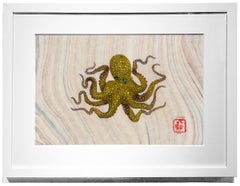
Lemon Meringue - Gyotaku Style Sumi Ink Painting of a Multi-Colored Octopus
By Jeff Conroy
Located in Chicago, IL
A small octopus is inked in the Japanese style of Gyo-Taku print making. Using sumi ink to "print" the octopus, the artist then embellishes it with colored pencil to convey an extraordinary dimensionality. By printing it on Mulberry paper, which mimics the swirl of water, the artist achieves a beautiful aesthetic. The artwork is matted and framed in a simple white wooden frame measuring 18.25h x 24.25w x 1d inches.
Jeff Conroy
Lemon Meringue
sumi ink and colored pencil on mulberry paper
12.50h x 18.25w in
31.75h x 46.35w cm
JEC118
Gyotaku - A Japanese word translated from "gyo" meaning fish and "taku" meaning stone impression and is believed to get its inspiration from Chinese stone rubbings...
Category
21st Century and Contemporary Contemporary Joseph Mallord William Turner Paintings
Materials
Sumi Ink, Watercolor, Mulberry Paper, Color Pencil

$975
H 12.5 in W 18.25 in
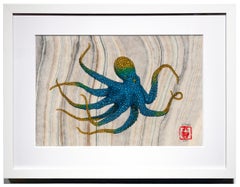
Cobalt Canary - Gyotaku Style Sumi Ink Painting, Multi-Colored Octopus, Framed
By Jeff Conroy
Located in Chicago, IL
A small octopus is inked in the Japanese style of Gyo-Taku print making. Using sumi ink to "print" the octopus, the artist then embellishes it with colored pencil to convey an extraordinary dimensionality. By printing it on Mulberry paper, which mimics the swirl of water, the artist achieves a beautiful aesthetic. The artwork is matted and framed in a white wooden frame measuring 18.25h x 24.25w x 1d inches.
Jeff Conroy
Cobalt Canary
sumi ink and colored pencil on mulberry paper
12.50h x 18.25w in
31.75h x 46.35w cm
JEC122
Gyotaku - A Japanese word translated from "gyo" meaning fish and "taku" meaning stone impression and is believed to get its inspiration from Chinese stone rubbings...
Category
21st Century and Contemporary Contemporary Joseph Mallord William Turner Paintings
Materials
Sumi Ink, Watercolor, Mulberry Paper, Color Pencil
$975
H 12.5 in W 18.25 in
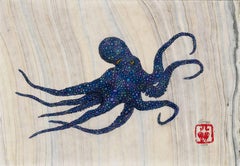
Boo Berry - Gyotaku Style Sumi Ink Painting of a Multi-Colored Octopus
By Jeff Conroy
Located in Chicago, IL
A small octopus is inked in the Japanese style of Gyo-Taku print making. Using sumi ink to "print" the octopus, the artist then embellishes it with colored pencil to convey an extraordinary dimensionality. By printing it on Mulberry paper, which mimics the swirl of water, the artist achieves a beautiful aesthetic. The artwork is unframed. Please contact the gallery for framing options.
Jeff Conroy
Boo Berry
sumi ink and colored pencil on mulberry paper
12.50h x 18.25w in
31.75h x 46.35w cm
JEC116
Gyotaku - A Japanese word translated from "gyo" meaning fish and "taku" meaning stone impression and is believed to get its inspiration from Chinese stone rubbings...
Category
21st Century and Contemporary Contemporary Joseph Mallord William Turner Paintings
Materials
Sumi Ink, Watercolor, Mulberry Paper, Color Pencil
$640 Sale Price
20% Off
H 12.5 in W 18.25 in
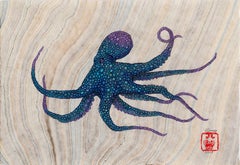
Blue Blood - Gyotaku Style Sumi Ink Painting of a Multi-Colored Octopus
By Jeff Conroy
Located in Chicago, IL
A small octopus is inked in the Japanese style of Gyo-Taku print making. Using sumi ink to "print" the octopus, the artist then embellishes it with colored pencil to convey an extraordinary dimensionality. By printing it on Mulberry paper, which mimics the swirl of water, the artist achieves a beautiful aesthetic. The artwork is unframed. Please contact the gallery for framing options.
Jeff Conroy
Blue Blood...
Category
21st Century and Contemporary Contemporary Joseph Mallord William Turner Paintings
Materials
Sumi Ink, Watercolor, Mulberry Paper, Color Pencil
$640 Sale Price
20% Off
H 12.5 in W 18.25 in
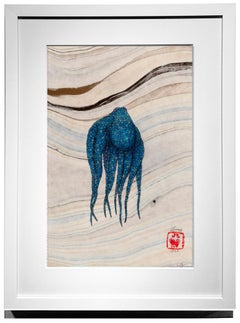
Fontainebleau - Gyotaku Style Sumi Ink Painting of a Multi-Colored Octopus
By Jeff Conroy
Located in Chicago, IL
A small octopus is inked in the Japanese style of Gyo-Taku print making. Using sumi ink to "print" the octopus, the artist then embellishes it with colored pencil to convey an extraordinary dimensionality. By printing it on Mulberry paper, which mimics the swirl of water, the artist achieves a beautiful aesthetic. The artwork is matted and framed in a simple white wooden frame measuring 24.25h x 18.25w x 1d inches.
Jeff Conroy
Fontainebleau
sumi ink and colored pencil on mulberry paper
12.50h x 18.25w in
31.75h x 46.35w cm
JEC120
Gyotaku - A Japanese word translated from "gyo" meaning fish and "taku" meaning stone impression and is believed to get its inspiration from Chinese stone rubbings...
Category
21st Century and Contemporary Contemporary Joseph Mallord William Turner Paintings
Materials
Sumi Ink, Watercolor, Mulberry Paper, Color Pencil
$975
H 12.5 in W 18.25 in
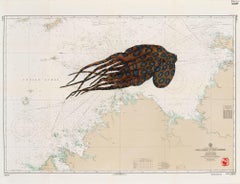
The Blue Ring of Cape Fourcroy - Gyotaku Painting of Octopus on Nautical Chart
By Jeff Conroy
Located in Chicago, IL
An octopus is inked in the Japanese style of Gyo-Taku print making. Using sumi ink to "print" the octopus, the artist then embellishes it with colored pencil to convey an extraordin...
Category
21st Century and Contemporary Contemporary Joseph Mallord William Turner Paintings
Materials
Sumi Ink, Watercolor, Mulberry Paper, Color Pencil
$2,240 Sale Price
20% Off
H 36 in W 47.5 in
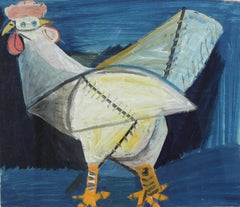
The French Rooster
By Raymond Debieve
Located in London, GB
'The French Rooster', gouache on art paper, by Raymond Debiève (circa 1960s). A Mid-Century modern depiction of the French coq, or rooster. The origin o...
Category
1960s Modern Joseph Mallord William Turner Paintings
Materials
Paper, Gouache
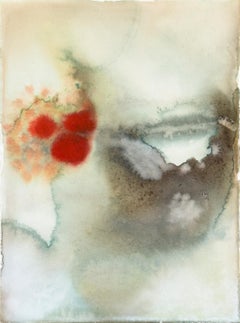
June
Located in Columbia, MO
John Selburg was born and raised in Peoria, Illinois. He holds a BFA in Drawing, Sculpture, and Graphic Design from Bradley University (2006), and an MFA from the University of Misso...
Category
21st Century and Contemporary Contemporary Joseph Mallord William Turner Paintings
Materials
Ink, Watercolor, Archival Paper
Dippin
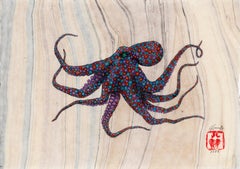
Dotopus - Gyotaku Style Sumi Ink Painting of a Multi-Colored Octopus
By Jeff Conroy
Located in Chicago, IL
A small octopus is inked in the Japanese style of Gyo-Taku print making. Using sumi ink to "print" the octopus, the artist then embellishes it with colored pencil to convey an extra...
Category
21st Century and Contemporary Contemporary Joseph Mallord William Turner Paintings
Materials
Sumi Ink, Watercolor, Mulberry Paper, Color Pencil
$640 Sale Price
20% Off
H 12.5 in W 18.25 in
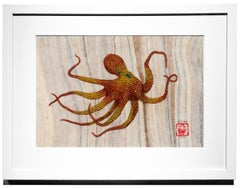
Stay Golden Pony Boy - Gyotaku Style Sumi Ink Painting of an Octopus, Framed
By Jeff Conroy
Located in Chicago, IL
A small octopus is inked in the Japanese style of Gyo-Taku print making. Using sumi ink to "print" the octopus, the artist then embellishes it with colored pencil to convey an extraordinary dimensionality. By printing it on Mulberry paper, which mimics the swirl of water, the artist achieves a beautiful aesthetic. The artwork is matted and framed in a white wooden frame measuring 18.25h x 24.25w x 1d inches.
Jeff Conroy
Stay Golden Pony Boy
sumi ink and colored pencil on mulberry paper
12.50h x 18.25w in
31.75h x 46.35w cm
JEC123
Gyotaku - A Japanese word translated from "gyo" meaning fish and "taku" meaning stone impression and is believed to get its inspiration from Chinese stone rubbings...
Category
21st Century and Contemporary Contemporary Joseph Mallord William Turner Paintings
Materials
Sumi Ink, Watercolor, Mulberry Paper, Color Pencil
$975
H 12.5 in W 18.25 in
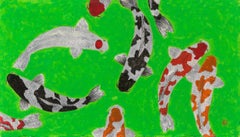
Koi Pond Conclave - Japanese Style Gyotaku Painting on Archival Kraft Paper
By Jeff Conroy
Located in Chicago, IL
In Japan they are known as Nishikigoi, or living jewels. These brilliantly colored varieties of the Amur carp have been selectively bred by family owned fisheries for generations. When I began this series of Gyotaku (Japanese fish printing) I studied the many varieties of Koi, each with their own unique colors and patterns. My particular favorites are the Tanchos which can be identified by the distinct red spot on their heads. To create these pieces I print common carp I catch myself with sumi ink using traditional techniques used by Japanese fisherman...
Category
21st Century and Contemporary Contemporary Joseph Mallord William Turner Paintings
Materials
Sumi Ink, Watercolor, Archival Paper
$2,800 Sale Price
43% Off
H 35.5 in W 63 in
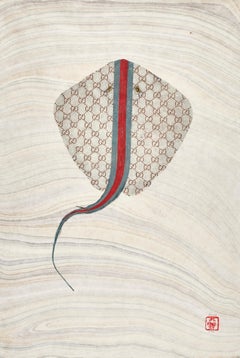
Gucci Ray - Sumi Ink on Mulberry Paper, Original Artwork, Gyotaku Style
By Jeff Conroy
Located in Chicago, IL
Designers have an wide reach through out the world but have yet to reach the depths of the ocean. Artist Jeff Conroy has created this Gyotaku print of large ray entitled simply "Gucci Ray" to fill that void. To achieve this remarkable painting, the artist applies sumi ink to a sting ray he caught himself on Florida's Gulf Coast, then "prints" it onto Marbled Mulberry paper - a soft, handmade paper. He then embellishes the details with watercolor to give extraordinary dimension and interest to its overall aesthetic. The artwork is unframed. Please contact the gallery for framing options.
Jeff Conroy
Gucci Ray
sumi ink and watercolor on mulberry paper
37h x 25w in
93.98h x 63.50w cm
JEC088
Gyotaku - A Japanese word translated from "gyo" meaning fish and "taku" meaning stone impression and is believed to get its inspiration from Chinese stone rubbings of calligraphy, which then gave rise to printing . This tradition dates back to the mid-1800s and was used by fishermen to record their catches, but has also become an art form of its own. Prints were made using Sumi ink and Washi paper. It is rumored that Samurai would settle fishing competitions using Gyotaku prints. This original form of Gyotaku is still utilized today, and can be seen hanging in fish and tackle shops all...
Category
21st Century and Contemporary Contemporary Joseph Mallord William Turner Paintings
Materials
Sumi Ink, Watercolor, Mulberry Paper
$1,440 Sale Price
34% Off
H 37 in W 25 in
Joseph Mallord William Turner paintings for sale on 1stDibs.
Find a wide variety of authentic Joseph Mallord William Turner paintings available for sale on 1stDibs. You can also browse by medium to find art by Joseph Mallord William Turner in paint, paper, watercolor and more. Not every interior allows for large Joseph Mallord William Turner paintings, so small editions measuring 20 inches across are available. Joseph Mallord William Turner paintings prices can differ depending upon medium, time period and other attributes. On 1stDibs, the price for these items starts at $179,627 and tops out at $179,627, while the average work can sell for $179,627.