Joseph Stella Abstract Drawings and Watercolors

American, Italian, 1877-1946

Joseph Stella was a visionary artist who painted what he saw, an idiosyncratic and individual experience of his time and place. Stella arrived in New York in 1896, part of a wave of Italian immigrants from poverty-stricken Southern Italy. But Stella was not a child of poverty. His father was a notary and respected citizen in Muro Lucano, a small town in the southern Apennines. The five Stella brothers were all properly educated in Naples. Stella’s older brother, Antonio, was the first of the family to come to America. Antonio Stella trained as a physician in Italy, and was a successful and respected doctor in the Italian community centered in Greenwich Village. He sponsored and supported his younger brother, Joseph, first sending him to medical school in New York, then to study pharmacology, and then sustaining him through the early days of his artistic career. Antonio Stella specialized in the treatment of tuberculosis and was active in social reform circles. His connections were instrumental in Joseph Stella’s early commissions for illustrations in reform journals.

Joseph Stella, from the beginning, was an outsider. He was of the Italian-American community, but did not share its overwhelming poverty and general lack of education. He went back to Italy on several occasions, but was no longer an Italian. His art incorporated many influences. At various times his work echoed the concerns and techniques of the so-called Ashcan School, of New York Dada, of Futurism and, of Cubism, among others. These are all legitimate influences, but Stella never totally committed himself to any group. He was a convivial, but ultimately solitary figure, with a lifelong mistrust of any authority external to his own personal mandate. He was in Europe during the time that Alfred Stieglitz established his 291 Gallery. When Stella returned he joined the international coterie of artists who gathered at the West Side apartment of the art patron Conrad Arensberg. It was here that Stella became close friends with Marcel Duchamp.

Stella was 19 when he arrived in America and studied in the early years of the century at the Art Students League, and with William Merritt Chase, under whose tutelage he received rigorous training as a draftsman. His love of line, and his mastery of its techniques, is apparent early in his career in the illustrations he made for various social reform journals. Stella, whose later work as a colorist is breathtakingly lush, never felt obliged to choose between line and color. He drew throughout his career, and unlike other modernists, whose work evolved inexorably to more and more abstract form, Stella freely reverted to earlier realist modes of representation whenever it suited him. This was because, in fact, his “realist” work was not “true to nature,” but true to Stella’s own unique interpretation. Stella began to draw flowers, vegetables, butterflies, and birds in 1919, after he had finished the Brooklyn Bridge series of paintings, which are probably his best-known works. These drawings of flora and fauna were initially coincidental with his fantastical, nostalgic and spiritual vision of his native Italy which he called Tree of My Life (Mr. and Mrs. Barney A. Ebsworth Foundation and Windsor, Inc., St. Louis, illus. in Barbara Haskell, Joseph Stella, exh. cat. [New York: Whitney Museum of American Art, 1994], p. 111 no. 133).

(Biography provided by Hirschl Adler)

to
1
Overall Width
to
Overall Height
to
1
1
1
1
1
32
137
110
94
77
1
Artist: Joseph Stella
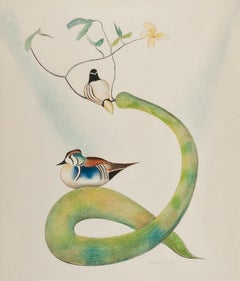
Two Wood Ducks on a Flowering Branch
By Joseph Stella
Located in New York, NY
Joseph Stella was a visionary artist who painted what he saw, an idiosyncratic and individual experience of his time and place. Stella arrived in New York in 1896, part of a wave of Italian immigrants from poverty-stricken Southern Italy. But Stella was not a child of poverty. His father was a notary and respected citizen in Muro Locano, a small town in the southern Appenines. The five Stella brothers were all properly educated in Naples. Stella’s older brother, Antonio, was the first of the family to come to America. Antonio Stella trained as a physician in Italy, and was a successful and respected doctor in the Italian community centered in Greenwich Village. He sponsored and supported his younger brother, Joseph, first sending him to medical school in New York, then to study pharmacology, and then sustaining him through the early days of his artistic career. Antonio Stella specialized in the treatment of tuberculosis and was active in social reform circles. His connections were instrumental in Joseph Stella’s early commissions for illustrations in reform journals. Joseph Stella, from the beginning, was an outsider. He was of the Italian-American community, but did not share its overwhelming poverty and general lack of education. He went back to Italy on several occasions, but was no longer an Italian. His art incorporated many influences. At various times his work echoed the concerns and techniques of the so-called Ashcan School, of New York Dada, of Futurism and, of Cubism, among others. These are all legitimate influences, but Stella never totally committed himself to any group. He was a convivial, but ultimately solitary figure, with a lifelong mistrust of any authority external to his own personal mandate. He was in Europe during the time that Alfred Stieglitz established his 291 Gallery. When Stella returned he joined the international coterie of artists who gathered at the West Side apartment of the art patron Conrad Arensberg. It was here that Stella became close friends with Marcel Duchamp. Stella was nineteen when he arrived in America and studied in the early years of the century at the Art Students League, and with William Merritt Chase, under whose tutelage he received rigorous training as a draftsman. His love of line, and his mastery of its techniques, is apparent early in his career in the illustrations he made for various social reform journals. Stella, whose later work as a colorist is breathtakingly lush, never felt obliged to choose between line and color. He drew throughout his career, and unlike other modernists, whose work evolved inexorably to more and more abstract form, Stella freely reverted to earlier realist modes of representation whenever it suited him. This was because, in fact, his “realist” work was not “true to nature,” but true to Stella’s own unique interpretation. Stella began to draw flowers, vegetables, butterflies, and birds in 1919, after he had finished the Brooklyn Bridge series of paintings, which are probably his best-known works. These drawings of flora and fauna were initially coincidental with his fantastical, nostalgic and spiritual vision of his native Italy which he called Tree of My Life (Mr. and Mrs. Barney A. Ebsworth Foundation and Windsor, Inc., St. Louis, illus. in Barbara Haskell, Joseph Stella, exh. cat. [New York: Whitney Museum of American Art, 1994], p. 111 no. 133). Two Wood Ducks...
Category

20th Century American Modern Joseph Stella Abstract Drawings and Watercolors

Materials

Color Pencil

Related Items
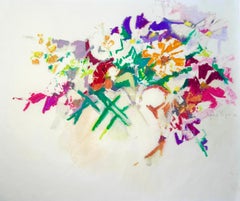
Untitled Floral Still Life
Located in Wilton Manors, FL
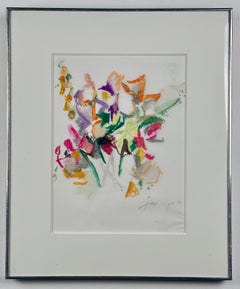
Beautiful floral still life by American artist Jane Piper (1916-1991) . Pastel, oil crayon and pencil on tracing paper. Image measuring 13 x 15.5 inches in ...
Category

1980s Abstract Joseph Stella Abstract Drawings and Watercolors

Materials

Parchment Paper, Crayon, Pastel, Pencil
Untitled Floral Still Life
$1,200 Sale Price
40% Off
H 20 in W 24 in D 1 in
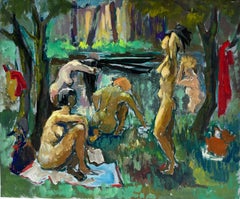
Nude Bathers by the River French Modern Oil Painting by Guy Nicod
Located in Cirencester, Gloucestershire
Title: Nude Bathers by the River French Modern Oil Painting by Guy Nicod Guy Nicod (French 1923 - 2021) Oil on artist paper attached to a board, unframed Size: 16.5 x 19.75 inches (...
Category

Mid-20th Century Modern Joseph Stella Abstract Drawings and Watercolors

Materials

Oil

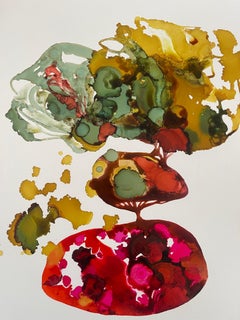
Underworld
Located in San Francisco, CA
Paula Valenzuela Underworld, 2025 Alcohol ink and watercolor ink on Yupo paper 14 x 11 inches This one-of-a-kind work on paper comes unframed. External, visible frame and glass in s...
Category

21st Century and Contemporary Contemporary Joseph Stella Abstract Drawings and Watercolors

Materials

Paper, Ink, Watercolor

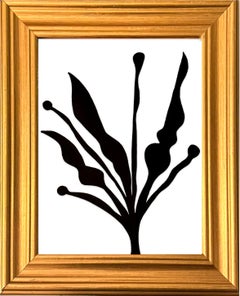
Bountiful
Located in Brooklyn, NY
This black and white abstract drawing features a beautiful floral. Framed in a vintage gold frame, wired and ready to hang, 11 in. wide x 13 in. high
Category

2010s Abstract Joseph Stella Abstract Drawings and Watercolors

Materials

Archival Ink

Bountiful
Bountiful
$540 Sale Price
20% Off
H 13 in W 11 in D 2 in
Untitled Floral Still Life
Located in Wilton Manors, FL
Beautiful floral still life by American artist Jane Piper (1916-1991) . Untitled. 1980. Pastel, oil crayon and pencil on tracing paper. Image measuring 9 x 12 inches in original ...
Category

1980s Abstract Joseph Stella Abstract Drawings and Watercolors

Materials

Parchment Paper, Crayon, Pastel, Pencil

Untitled Floral Still Life
$1,200 Sale Price
40% Off
H 17 in W 15 in D 1 in
Untitled (Rose) Unique original signed graphite drawing from MOCA Detroit Framed
By Donald Baechler
Located in New York, NY
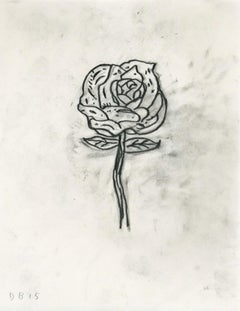
Donald Baechler Untitled (Rose), 2015 Original Graphite drawing on archival bond paper. Framed, with museum provenance Signed and dated in graphite pencil on the front Provenance: Do...
Category

2010s Pop Art Joseph Stella Abstract Drawings and Watercolors

Materials

Charcoal, Pencil, Graphite

Pencil Automobile Car Drawing
By Jacques Villon
Located in Fredericksburg, VA
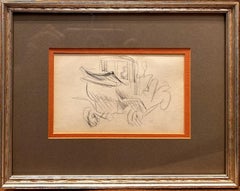
Jacques Villon, born Gaston Émile Duchamp on July 31, 1875, in Damville, France, was a pivotal figure in the development of modern art. As the elder brother of Marcel Duchamp, Raymond Duchamp-Villon, and Suzanne Duchamp-Crotti, Villon was part of a family that profoundly influenced 20th-century art. He adopted the pseudonym Jacques Villon to distinguish himself from his siblings, and began his career as a cartoonist and illustrator. Villon's contributions to modern art were acknowledged internationally, with exhibitions at prestigious venues such as the Salon d'Automne, the Salon des Indépendants, and the Armory Show in New York in 1913. His work influenced the trajectory of abstract art, and his legacy is celebrated in numerous museums and collections worldwide. While this drawing isnt common of his bolder cubist style, it shows his skill in sketching and shapes which add a dimension to the abstract nature of this automobile drawing...
Category

Early 20th Century Ashcan School Joseph Stella Abstract Drawings and Watercolors

Materials

Paper, Graphite

Surrealistic flower - Original Colour Pencil Drawing
By André Masson
Located in Paris, IDF
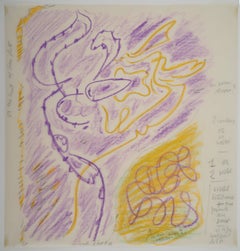
André Masson (1896-1987) Surrealistic flower Original colour pencil drawing Signed with the artist's stamp on the back (see photo) On 30.5 x 29 cm tracing paper (11.8 x 11.4 inche...
Category

Mid-20th Century Modern Joseph Stella Abstract Drawings and Watercolors

Materials

Pencil, Carbon Pencil

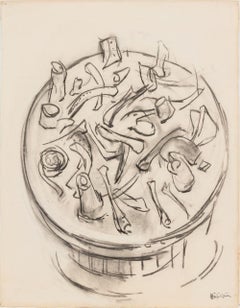
Still Life of a Waste Bin
By Manfred Schwartz
Located in Astoria, NY
Manfred Schwartz (American, b. Poland, 1909-1970), Still Life of a Waste Bin, Charcoal on Paper, with the artist's signature stamped lower right, unframed. 25.75" H x 20" W. Provenan...
Category

Mid-20th Century Modern Joseph Stella Abstract Drawings and Watercolors

Materials

Paper, Charcoal

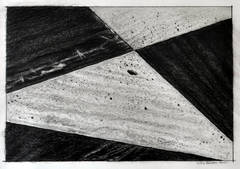
Floor
By Nikos Kanarelis
Located in New York, NY
floor, 2014, Graphite on paper 15.75 x 20.1 inches / 40 x 51 cm (framed) Nikos Kanarelis was born in Athens, Greece in 1975 where he now lives and works. Βetween 1999 and 2004 ...
Category

21st Century and Contemporary Contemporary Joseph Stella Abstract Drawings and Watercolors

Materials

Pencil

Floor
Floor
$2,400
H 15.75 in W 20.08 in
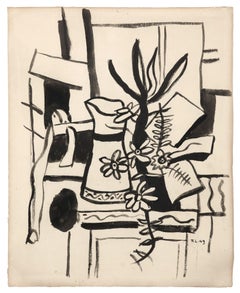
Nature morte au pot
By Fernand Léger
Located in Ottikon, CH
Provenance: -Galerie Louise Leiris, Paris (stock number 09874, photo number 30356 according to the label on the back) -Finarte auction Milan, March 9, 1971, lot 81 Purchased by the f...
Category

Mid-20th Century Joseph Stella Abstract Drawings and Watercolors

Materials

Paper, Ink

Nature morte au pot
Nature morte au pot
$95,000
H 16.03 in W 12.8 in
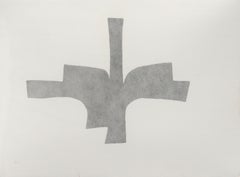
Condor, Minimalist Abstract Pencil Drawing by Lou Fink
By Lou Fink
Located in Long Island City, NY
Artist: Lou Fink, American (1925 - 1980) Title: Condor Year: 1976 Medium: Pencil on paper, signed and dated l.l. Size: 30 in. x 40 in. (76.2 cm x 50.8 cm)
Category

1970s Minimalist Joseph Stella Abstract Drawings and Watercolors

Materials

Pencil

Joseph Stella abstract drawings and watercolors for sale on 1stDibs.

Find a wide variety of authentic Joseph Stella abstract drawings and watercolors available for sale on 1stDibs. You can also browse by medium to find art by Joseph Stella in color pencil, pencil and more. Much of the original work by this artist or collective was created during the 20th century and is mostly associated with the modern style. Not every interior allows for large Joseph Stella abstract drawings and watercolors, so small editions measuring 23 inches across are available. Customers who are interested in this artist might also find the work of Abraham Walkowitz, Pawel Kontny, and Andre Delfau. Joseph Stella abstract drawings and watercolors prices can differ depending upon medium, time period and other attributes. On 1stDibs, the price for these items starts at $77,500 and tops out at $77,500, while the average work can sell for $77,500.
Questions About Joseph Stella Abstract Drawings and Watercolors
  • 1stDibs ExpertOctober 15, 2024
    Joseph Stella is known for his work as an artist. He was a visionary artist who painted what he saw: an idiosyncratic and individual experience of his time and place. Stella was 19 when he arrived in the United States and studied in the early years of the century at the Art Students League and with William Merritt Chase, under whose tutelage he received rigorous training as a draftsman. His love of line and his mastery of its techniques are apparent in his early illustrations for various social reform journals. Stella, whose later work as a colorist is breathtakingly lush, never felt obliged to choose between line and color. He drew throughout his career, and unlike other modernists, whose work evolved to more and more abstract forms, Stella freely reverted to earlier realist modes of representation whenever it suited him. Some of his most famous works include Battle of Lights, Coney Island, Mardi Gras; The Brooklyn Bridge: Variation on an Old Theme and Flowers, Italy. Shop a selection of Joseph Stella art on 1stDibs.
  • 1stDibs ExpertAugust 29, 2024
    No, Frank Stella was not related to Joseph Stella. While it's possible that in-depth genealogical research may uncover a shared ancestor many generations ago, the two artists are not currently believed to be related. Joseph Stella was born in 1877 in Muro Lucano, Italy, while Frank Stella was born in 1936 in Malden, Massachusetts. On 1stDibs, shop a diverse assortment of Frank Stella and Joseph Stella art.
  • 1stDibs ExpertAugust 29, 2024
    Opinions differ about what kind of artist Joseph Stella was. At various times, his work echoed the concerns and techniques of the so-called Ashcan School, New York Dada, Futurism and Cubism, among others. These are all legitimate influences, but Stella never totally committed himself to any group. Some people also associate him with the American Precisionist movement, which emerged after World War I and explored industrialization and urbanization themes. Shop a diverse assortment of Joseph Stella art on 1stDibs.
  • 1stDibs ExpertAugust 29, 2024
    Joseph Stella first painted the Brooklyn Bridge in 1918. He actually returned to the subject numerous times, completing additional paintings of the landmark in 1918, 1920, 1939 and 1941. Examining these paintings side by side shows how Stella's style became more and more abstract over the course of his career. Explore an assortment of Joseph Stella art on 1stDibs.

Still Thinking About These?

All Recently Viewed