Joseph Wolf Prints and Multiples
German, 1820-1899
Joseph Wolf was the most prominent ornithological artist to contribute illustrations to John Gould’s bird books. While growing up on a farm in Germany, Wolf roamed the countryside and developed a strong interest in observing and sketching the wildlife. In 1836 his father reluctantly permitted him to become an apprentice at a lithographic firm in nearby Coblenz (Jackson 1975, 63).
After spending three years there improving his drawing skills and learning how to copy drawings onto the limestone blocks used for lithographic printing, Wolf returned to the family farm, but only for a year. Scientific contacts led him first to Darmstadt and then to Leiden in the Netherlands, where he progressed from illustrating ornithological books to become a painter of birds and animals. He improved his artistic skills still more by attending art school.
He developed the idea of depicting birds in motion, such as the dramatic scene of a Capercaillie escaping a fox that he drew for the publisher, Kern, in 1846 (Jackson 1975, 64). When revolution disrupted life on the European continent in 1848, Wolf took up the invitation of David William Mitchell, secretary of the Zoological Society of London, and assisted Mitchell in illustrating George Robert Gray’s book, Genera of Birds (1844-1849).
In 1849 Wolf also began to provide John Gould with illustrations for The Birds of Great Britain (1862-1873), his approach being especially suitable for birds of prey (Jackson 1975, 67). For example, he shows the Hooded Crow stealing an egg from a nest (Figs. 2 and 3). Rather than commit to working full-time for Gould, Wolf retained his independence as a free-lance artist.
Wolf’s biographer, Samuel Palmer, recounted that Gould enticed Wolf to visit and make charcoal drawings of birds for him by setting out Wolf’s favorite cigars and drawing materials. Whether that story is true or not, it is also recorded that Wolf objected to the overly bright tints chosen by Gould for coloring the lithographic prints (Jackson 1975, 67).
The drawings made by Wolf for The Birds of Asia (1850-1883) were his last for Gould Gould’s text about Bulwer’s Pheasant thanks the British Museum for loaning him the unique type specimen, “which has enabled me to prepare the accompanying Plate from the talented pencil of Mr. Wolf’ (Figs. 4 and 5).
Wolf’s drawings were rendered on stone by Henry Constantine Richter, another Gould artist who had earlier worked on illustrations for Gray’s Genera of Birds. It must have been an oversight that Wolf’who had drawn the Painted Spurfowl for Gould, was not credited on the published plate.
Source:
Website of University of Kansas Libraries: Gould History and Backgroundto
4
Overall Width
to
Overall Height
to
4
1,220
972
913
839
2
2
3
1
4
4
4
2
2
2
1
4
2
2
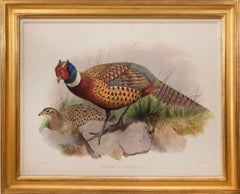
Artist: Joseph Wolf
Four Pheasants
By Joseph Wolf
Located in London, London
WOLF, Joseph (artist)
Four Pheasants
London, For the author, Red Lion Court, Fleet Street, 1871
Four original hand-coloured lithographic plates by Joseph Smit after Joseph Wo...
Category
1870s Naturalistic Joseph Wolf Prints and Multiples
Materials
Watercolor, Gouache, Lithograph
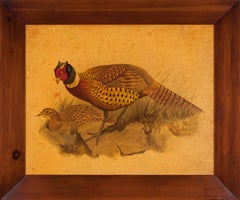
Phasianus colchicus
By Joseph Wolf
Located in Columbia, MO
Joseph Wolf
Lithograph
c.1940
Category
Mid-20th Century Naturalistic Joseph Wolf Prints and Multiples
Materials
Lithograph
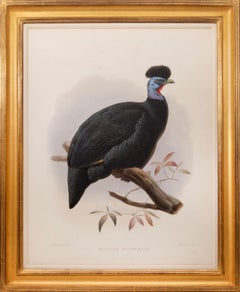
Two Guinea Fowl
By Joseph Wolf
Located in London, London
WOLF, Joseph (artist).
Two Guinea Fowl
London For the author, Red Lion Court, Fleet Street 1871
Two original hand-coloured lithographic plates by Joseph Smit after Joseph Wolf. ...
Category
1870s Joseph Wolf Prints and Multiples
Materials
Paper, Watercolor, Gouache, Lithograph
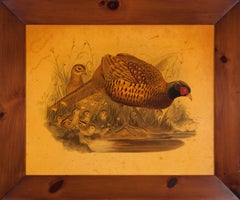
Phasianus torquatus
By Joseph Wolf
Located in Columbia, MO
Joseph Wolf
Lithograph
c.1940
Category
Mid-20th Century Naturalistic Joseph Wolf Prints and Multiples
Materials
Lithograph
Related Items
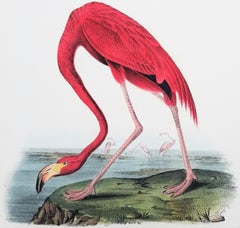
American Flamingo /// John James Audubon Natural History Ornithology Bird Litho
By John James Audubon
Located in Saint Augustine, FL
Artist: John James Audubon (American, 1785-1851)
Title: "American Flamingo" (Plate 375, No. 75)
Portfolio: The Birds of America, First Royal Octavo E...
Category
1840s Victorian Joseph Wolf Prints and Multiples
Materials
Watercolor, Lithograph
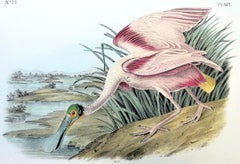
Roseate Spoonbill /// John James Audubon Natural History Ornithology Water Bird
By John James Audubon
Located in Saint Augustine, FL
Artist: John James Audubon (American, 1785-1851)
Title: "Roseate Spoonbill" (Plate 362, No. 73)
Portfolio: The Birds of America, First Royal Octavo Edition
Year: 1840-1844
Medium: Original Hand-Colored Lithograph on wove paper
Limited edition: approx. 1,200
Printer: John T. Bowen, Philadelphia, PA
Publisher: John James Audubon and J.B. Chevalier, New York, NY and Philadelphia, PA
Sheet size: 6.75" x 10.44"
Image size: 5" x 7.63"
Condition: In excellent condition
Very rare
The "Roseate Spoonbill" is one of the very top, absolute most desirable birds from Audubon's famous "Birds of America" series
Notes:
Provenance: private collection - Fleming Island, FL. Lithography and hand-coloring by American artist John T. Bowen (1801-c.1856). Comes from Audubon's famous seven volume portfolio "The Birds of America", First Royal Octavo Edition (1840-1844), which consists of 500 hand-colored lithographs.
Based on a composition painted in Florida in 1831 or 1832. "This beautiful and singular bird" was prized for its wings and tail feathers which were made into fans in St. Augustine.
The roseate spoonbill is a gregarious wading bird of the ibis and spoonbill family, Threskiornithidae. It is a resident breeder in both South and North America. The roseate spoonbill's pink color is diet-derived, consisting of the carotenoid pigment canthaxanthin, like the American flamingo.
To make 'The Birds of America' more affordable and widely available, in 1839 John James Audubon began the first octavo edition, a smaller version of the folio which was printed and hand-colored by J. T. Bowen in Philadelphia. Employing a new invention, the camera lucida, the images were reduced in size, rendered in intermediate drawings by John James Audubon and his son John Woodhouse, and then drawn onto lithographic stones. These miniatures exhibit a remarkable amount of attention to quality and detail, as well as a meticulous fidelity to the larger works. Some compositional changes were made in order to accommodate the smaller format. Like the Havell edition, John James Audubon’s first...
Category
1840s Victorian Joseph Wolf Prints and Multiples
Materials
Watercolor, Lithograph
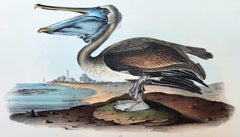
Brown Pelican /// John James Audubon New Orleans Ornithology Animal Bird Art
By John James Audubon
Located in Saint Augustine, FL
Artist: John James Audubon (American, 1785-1851)
Title: "Brown Pelican" (Plate 424, No. 85)
Portfolio: The Birds of America, First Royal Octavo Edition
Year: 1840-1844
Medium: Origin...
Category
1840s Victorian Joseph Wolf Prints and Multiples
Materials
Watercolor, Lithograph
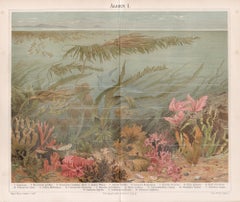
Seaweeds, German antique underwater botanical chromolithograph print
Located in Melbourne, Victoria
'Algen I'
(Seaweeds)
German chromolithograph, circa 1895. Central vertical fold as issued.
240mm by 305mm (sheet)
Category
Late 19th Century Naturalistic Joseph Wolf Prints and Multiples
Materials
Lithograph

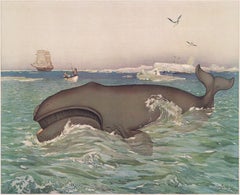
Whaling – Vintage Monumental Zoology Lithograph
Located in Myrtle Beach, SC
Joseph Fleischmann, 'Whaling' (Hartingers Wandtafeln: Zoologie T. XXXII), monumental vintage color lithograph, 1900. Signed in the matrix, lower right. A superb, beautifully nuanced impression, on cream wove paper, the full sheet with margins (1 1/2 to 2 3/16 inches), in very good condition. Sheet size 28 x 38 1/2 inches (711 x 978 mm). The full sheet, unmounted and unmatted—shipped carefully rolled and protected.
Rendering by A. Berger after Joseph Fleischmann. Published by Carl Gerold’s Son, Vienna, 1900.
This Artic whaling scene depicts a Greenland whale in the foreground pursued by whalers. A whaling ship is seen in the background and at right, another whale among icebergs with seagulls overhead. The print by Albert Berger...
Category
Early 1900s Naturalistic Joseph Wolf Prints and Multiples
Materials
Lithograph
$1,125 Sale Price
25% Off
H 28 in W 38.5 in
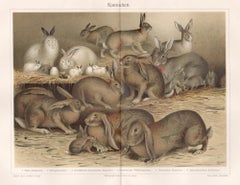
Rabbits, German antique animal chromolithograph print.
Located in Melbourne, Victoria
'Kaninchen'
(Rabbits)
German chromolithograph, circa 1910. Key in German to the types of rabbits at the bottom of the image. Central vertical fold as issued.
245mm by 305mm (shee...
Category
Early 20th Century Naturalistic Joseph Wolf Prints and Multiples
Materials
Lithograph
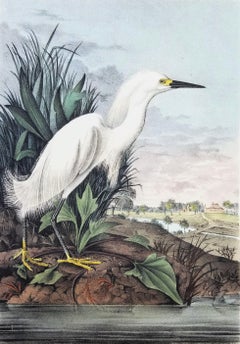
Snowy Heron /// John James Audubon Natural History Ornithology Snowy Egret Bird
By John James Audubon
Located in Saint Augustine, FL
Artist: John James Audubon (American, 1785-1851)
Title: "Snowy Heron" (Plate 374, No. 75)
Portfolio: The Birds of America, First Royal Octavo Edition
Year: 1840-1844
Medium: Original...
Category
1840s Victorian Joseph Wolf Prints and Multiples
Materials
Watercolor, Lithograph
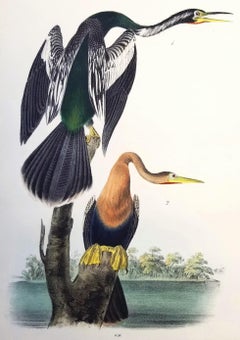
American Anhinga - Snake Bird /// John James Audubon Ornithology Natural History
By John James Audubon
Located in Saint Augustine, FL
Artist: John James Audubon (American, 1785-1851)
Title: "American Anhinga - Snake Bird" (Plate 420, No. 84)
Portfolio: The Birds of America, First Royal Octavo Edition
Year: 1840-1844
Medium: Original Hand-Colored Lithograph on wove paper
Limited edition: approx. 1,200
Printer: John T. Bowen, Philadelphia, PA
Publisher: John James Audubon and J.B. Chevalier, New York, NY and Philadelphia, PA
Sheet size: 10" x 6.69"
Image size: 6.63" x 4.63"
Condition: Minor toning to sheet and some faint discoloration in margins. Old glue staining along right binding edge as normal. It is otherwise in very good condition with strong colors
Notes:
Provenance: private collection - Cleveland, OH. Lithography and hand-coloring by American artist John T. Bowen (1801-c.1856). Comes from Audubon's famous seven volume portfolio "The Birds of America", First Royal Octavo Edition (1840-1844), which consists of 500 hand-colored lithographs. The preceding 1836 Havell edition of this work has a different title: "Black-bellied Darter", (Plate: CCCXVI - 396, No. 64).
Based on a drawing inscribed "New Orleans 1822 - redrawn ... 1836". This conspicuous bird had various names including "water turkey" and "Bec à Lancette".
The Anhinga, sometimes called snakebird, darter, American darter, or water turkey, is a water bird of the warmer parts of the Americas. The word anhinga comes from a'ñinga in the Brazilian Tupi language and means "devil bird" or "snake bird".
To make 'The Birds of America' more affordable and widely available, in 1839 John James Audubon began the first octavo edition, a smaller version of the folio which was printed and hand-colored by J. T. Bowen in Philadelphia. Employing a new invention, the camera lucida, the images were reduced in size, rendered in intermediate drawings by John James Audubon and his son John Woodhouse, and then drawn onto lithographic stones. These miniatures exhibit a remarkable amount of attention to quality and detail, as well as a meticulous fidelity to the larger works. Some compositional changes were made in order to accommodate the smaller format. Like the Havell edition, John James Audubon’s first...
Category
1840s Victorian Joseph Wolf Prints and Multiples
Materials
Watercolor, Lithograph
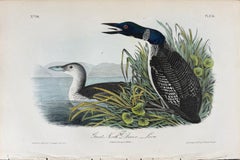
Great North Diver Bird: Original 19th C. 1st Ed. Audubon Hand-colored Lithograph
By John James Audubon
Located in Alamo, CA
This is an original rare and extremely collectible first edition John James Audubon hand-colored royal octavo lithograph entitled "Great North Diver or Loon", No. 96, Plate 476, from...
Category
Mid-19th Century Naturalistic Joseph Wolf Prints and Multiples
Materials
Lithograph
$1,875
H 6.63 in W 10.13 in
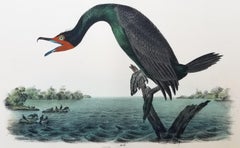
Florida Cormorant /// John James Audubon Ornithology Bird Art Natural History
By John James Audubon
Located in Saint Augustine, FL
Artist: John James Audubon (American, 1785-1851)
Title: "Florida Cormorant" (Plate 417, No. 84)
Portfolio: The Birds of America, First Royal Octavo Edition
Year: 1840-1844
Medium: Original Hand-Colored Lithograph on wove paper
Limited edition: approx. 1,200
Printer: John T. Bowen, Philadelphia, PA
Publisher: John James Audubon and J.B. Chevalier, New York, NY and Philadelphia, PA
Sheet size: 6.5" x 10.44"
Image size: 3.75" x 6.25"
Condition: Some minor discoloration upper center in margin. In excellent condition with strong colors
Notes:
Provenance: private collection - Cleveland, OH. Lithography and hand-coloring by American artist John T. Bowen (1801-c.1856). Comes from Audubon's famous seven volume portfolio "The Birds of America", First Royal Octavo Edition (1840-1844), which consists of 500 hand-colored lithographs.
Based on a composition painted in the Florida Keys on April 26, 1832, Audubon's forty-seventh birthday.
The double-crested cormorant (Nannopterum auritum) is a member of the cormorant family of water birds. It is found near rivers and lakes and in coastal areas and is widely distributed across North America, from the Aleutian Islands in Alaska down to Florida and Mexico. Measuring 70–90 cm (28–35 in) in length, it is entirely black except for a bare patch of orange-yellow facial skin and some extra plumage that it exhibits in the breeding season when it grows a double crest in which black feathers are mingled with white. Five subspecies are recognized. It mainly eats fish and hunts by swimming and diving. Its feathers, like all cormorants, are not waterproof, and it must dry them out after spending time in the water. Once threatened by the use of DDT, the numbers of this bird have increased markedly in recent years.
To make 'The Birds of America' more affordable and widely available, in 1839 John James Audubon began the first octavo edition, a smaller version of the folio which was printed and hand-colored by J. T. Bowen in Philadelphia. Employing a new invention, the camera lucida, the images were reduced in size, rendered in intermediate drawings by John James Audubon and his son John Woodhouse, and then drawn onto lithographic stones. These miniatures exhibit a remarkable amount of attention to quality and detail, as well as a meticulous fidelity to the larger works. Some compositional changes were made in order to accommodate the smaller format. Like the Havell edition, John James Audubon’s first...
Category
1840s Victorian Joseph Wolf Prints and Multiples
Materials
Watercolor, Lithograph
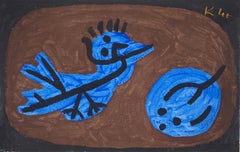
Blue Bird, Squash - Lithograph and Stencil
By Paul Klee
Located in Paris, IDF
Paul KLEE (after)
Blue, Bird, Squash
Lithograph and stencil (Jacomet process)
Signed in the board
On vellum 50 x 38.2 cm (19.6 x 14.9 in)
INFORMATION : This lithograph was edited i...
Category
1960s Surrealist Joseph Wolf Prints and Multiples
Materials
Watercolor, Lithograph
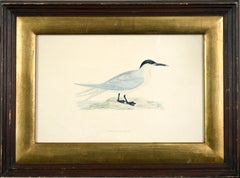
"Sandwich Tern
Antique Hand Colored Lithograph
Located in Soquel, CA
"Sandwich Tern' Antique Hand Colored Lithograph
Delicately rendered naturalist drawing of a sandwich tern from the 1903 edition of "A History of British Birds" by F.O. Morris. This...
Category
Early 1900s Naturalistic Joseph Wolf Prints and Multiples
Materials
Paper, Watercolor, Lithograph
Previously Available Items
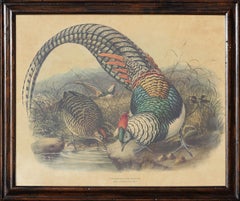
"Lady Amherst Pheasant (Thaumalea Amherstiae)" Naturalistic Bird Lithograph
By Joseph Wolf
Located in Houston, TX
Naturalistic lithograph of birds by German artist Joseph Wolf and lithographer John Gerard Keulemans. Earth toned lithographic print depicting a female and...
Category
1870s Naturalistic Joseph Wolf Prints and Multiples
Materials
Lithograph
H 20.5 in W 24.5 in D 1 in
Joseph Wolf prints and multiples for sale on 1stDibs.
Find a wide variety of authentic Joseph Wolf prints and multiples available for sale on 1stDibs. You can also browse by medium to find art by Joseph Wolf in gouache, lithograph, paint and more. Not every interior allows for large Joseph Wolf prints and multiples, so small editions measuring 24 inches across are available. Customers who are interested in this artist might also find the work of Ohara Koson, Johan Christoph Volkhamer, and Harry Rogers. Joseph Wolf prints and multiples prices can differ depending upon medium, time period and other attributes. On 1stDibs, the price for these items starts at $7,008 and tops out at $15,927, while the average work can sell for $15,927.
Artists Similar to Joseph Wolf
John Gould and Henry Constantine Richter