Karl Schwetz Art
to
1
Overall Width
to
Overall Height
to
1
1
1
1
1
1
1
9,962
2,753
1,376
1,373
1
Artist: Karl Schwetz
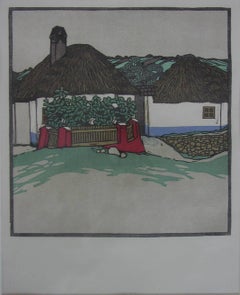
Slowakisches Bauernhaus,
By Karl Schwetz
Located in New York, NY
Schweiz, Karl. Slowakisches Bauernhaus, Ca 1911. Color linoleum cut.
Framed.
Provenance: Galerie Michael Pabst, Munich.
Noted artist, painter, illustr...
Category
1910s Vienna Secession Karl Schwetz Art
Materials
Linocut
Related Items
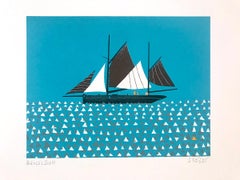
Excelsior by Simon Tozer, Limited edition, Sailing, Landscape, Figurative art
By Simon Tozer
Located in Deddington, GB
Excelsior by Simon Tozer [2021]
limited_edition and hand signed by the artist
Screenprint on Paper
Edition number of 30
Image size: H:23 cm x W:30 cm
...
Category
21st Century and Contemporary Expressionist Karl Schwetz Art
Materials
Paper, Screen

$129
H 13.78 in W 19.69 in D 0.04 in
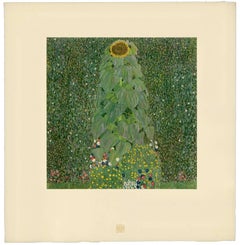
H.O. Miethke Das Werk folio "Sunflower" collotype print
By Gustav Klimt
K.K. Hof-und Staatsdruckerei
Located in Palm Beach, FL
Sunflower, no. 10 from the third installment of Das Werk Gustav Klimts
Created during his residency in Litzlberg on Attersee, where Klimt and the Floge family summered from 1900-1907, Klimt explores nature’s transcendental qualities. His single sunflower is human-like, it’s golden halo is like a ring of sun-kissed hair surrounding a bald pate. It’s known that at the same time Klimt was creating this image, he was also at work on a photo essay about the Floge sisters’ clothing from their fashion salon. Their fashion house was best known for its “reform dresses” which featured loose-fitting long robes which billowed at the arms and torso. Viewed with this in mind, it is not a hard leap to imagine the lone sunflower as a self-portrait from reverse. Klimt’s balding head crowned in a golden corona forms the apex of a pyramidal flowing gown of foliage and flowers. By orienting the anthropomorphic flower at the garden’s central foreground and adorning it with repetitive motifs of round flowers of varying sizes, Klimt’s sunflower...
Category
Early 1900s Vienna Secession Karl Schwetz Art
Materials
Paper
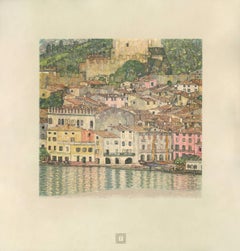
Max Eisler Eine Nachlese folio “Malcesine on Lake Garda" collotype print
By (after) Gustav Klimt
Located in Palm Beach, FL
After Gustav Klimt, Max Eisler #7, Malcesine am Gardasee; multi-color collotype after 1913 painting in oil on canvas. The original was destroyed by fire ...
Category
1930s Vienna Secession Karl Schwetz Art
Materials
Paper
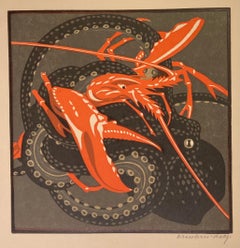
LOBSTER and OCTOPUS (KAMPF - BATTLE)
By Norbertine Bresslern-Roth
Located in Santa Monica, CA
NORBERTINE VON BRESSLERN-ROTH (1891 1978)
KAMPF (BATTLE - LOBSTER and OCTOPUS) c. 1928
Color linoleum cut Signed in pencil. Image 8 5/8 x 8 11/16”
In excellent condition and full ...
Category
1920s Vienna Secession Karl Schwetz Art
Materials
Linocut
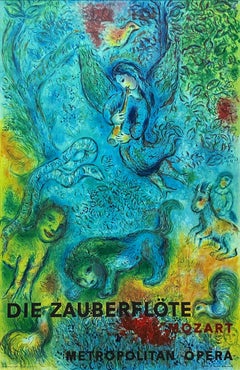
Chagall, Die Zauberflöte (Mourlot CS. 38), The Metropolitan Opera (after)
By Marc Chagall
Located in Fairfield, CT
Title: Die Zauberflöte (Mourlot CS. 38), The Metropolitan Opera
Year: 1973
Medium: Lithograph on wove paper
Size: 39.5 x 25.75 inches
Notes: From the opening of Mozart's 'The Magic F...
Category
1970s Expressionist Karl Schwetz Art
Materials
Lithograph
$716 Sale Price
20% Off
H 39.5 in W 25.75 in
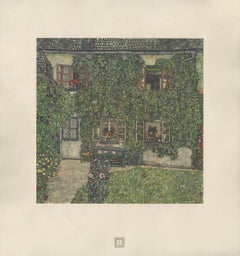
Max Eisler Eine Nachlese folio “House in a Garden” collotype print
By (after) Gustav Klimt
Located in Palm Beach, FL
After Gustav Klimt, Max Eisler #9, Haus Im Garten; aka Forester’s House in Weissenbach II; multi-color collotype after 1914 painting in oil on canvas.
GUSTAV KLIMT EINE NACHLESE (GU...
Category
1930s Vienna Secession Karl Schwetz Art
Materials
Paper
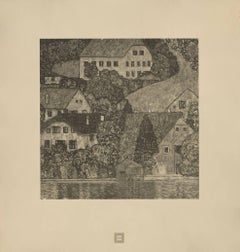
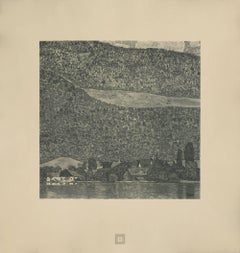
Max Eisler Eine Nachlese folio "Houses in Unterach on Lake Attersee" collotype
By (after) Gustav Klimt
Located in Palm Beach, FL
After Gustav Klimt, Max Eisler Plate #29, Am Attersee; brown-toned monochrome collotype after the 1915-16 painting in oil on canvas.
GUSTAV KLIMT EINE NACHLESE (GUSTAV KLIMT AN AFTERMATH), a portfolio of 30 collotypes prints, 15 are multi-color and 15 are monochrome, on chine colle paper laid down on heavy cream-wove paper with deckled edges; Max Eisler, Editor-Publisher; Osterreichischer Staatsdruckerei (Austrian State Printing Office), Printer; in a limited edition of 500 numbered examples of which: 200 were printed in German, 150 were printed in French and 150 were printed in English; Vienna, 1931.
2018 marks the 100th anniversary of Gustav Klimt’s death. It is a fitting time to reflect upon the enduring legacy and deep impact of his art. Recognizing this need for posterity with uncanny foresight, the publication of Gustav Klimt: An Aftermath (Eine Nachlese) provides a rare collection of work after Klimt which has proven to be an indispensable tool for Klimt scholarship as well as a source for pure visual delight.
Approximately 25 percent of the original works featured in the Aftermath portfolio have since been lost. Of those 30, six were destroyed by fire on 8 May 1945. On that fateful final day of WWII, the retreating Feldherrnhalle, a tank division of the German Army, set fire to the Schloss Immendorf which was a 16th century castle in Lower Austria used between 1942-1945 to store objects of art. All three of Klimt’s Faculty Paintings: Philosophy, Medicine and Jurisprudence (1900-1907), originally created for the University of Vienna, were on premises at that time. Also among the inventory of Klimt paintings in storage there was art which had been confiscated by the Nazis. One of the most significant confiscated collections was the Lederer collection which featured many works by Gustav Klimt such as Girlfriends II and Garden Path with Chickens. In many instances, Aftermath is our only link to these lost treasures.
Max Eisler (1881-1937), the publisher of the 1931 Aftermath portfolio, was an art historian at Vienna University specializing in modern and contemporary arts and crafts whose 1920 book on Klimt was the first Klimt monograph. He saw An Aftermath as filling-in important gaps left by the earlier print portfolios which had only featured Klimt up to 1913 and which had glossed over major art projects such as the Tree of Life frieze for the Palais Stoclet. And whereas only 10 of the 50 prints from the earlier portfolios published by H.O. Miethke were made in intricate multi-color images, Eisler augmented the earlier format by featuring half of the 30 images in stunning multi-colored collotypes. Understanding the fragile nature of the collotype printing process also reinforces this project’s distinctive and exceptional characteristics. Fragile collotype plates can not be reused. As such, this necessitates the completion of a run on the first go and also dictates a limited production number. Printed by hand, the collotypes required deft handling by the printer, Osterreichische Staatsdruckerei. A complicated and lengthy process involving gelatin colloids mixed with dichromates, the creation of 16 color separation thin glass filters to achieve the light-sensitive internegative images which could faithfully capture all of the painting’s tonal gradations and colors, exposure to actinic light, and delicate chine collie papers which allowed for greater color saturation, the printer’s collaborative role in capturing and transmitting Klimt’s nuanced paint strokes is nothing short of remarkable.
The Österreichische Staatsdruckerei (Austrian State Printing Office), was the successor to the KK Hof -und Staatsdruckerei which was founded by Emperor Franz I in 1804 and whose collotype printing innovations of Klimt’s art...
Category
1930s Vienna Secession Karl Schwetz Art
Materials
Archival Paper
Max Eisler Eine Nachlese folio "Litzlberg on Lake Attersee" collotype
By (after) Gustav Klimt
Located in Palm Beach, FL
After Gustav Klimt, Max Eisler Plate #8, Litzlberg on Lake Attersee; blue monochrome collotype after the 1915 painting in oil on canvas.
GUSTAV KLIMT EINE NACHLESE (GUSTAV KLIMT AN ...
Category
1930s Vienna Secession Karl Schwetz Art
Materials
Paper
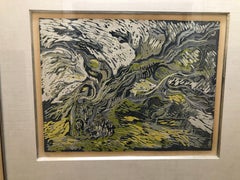
Mid century Israeli Expressionist
Located in San Francisco, CA
Bit of a mystery here. Really well done colored Linocut A very expressionistic style of a landscape with trees. I’m pretty sure it’s signed in Hebrew but cannot translate. A very low...
Category
Mid-20th Century Expressionist Karl Schwetz Art
Materials
Linocut
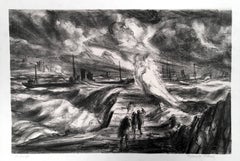
St. Jean de Luz
By Reginald Marsh
Located in New York, NY
Reginald Marsh (1898-1954), St. Jean de Luz, lithograph, c. 1928, signed in pencil lower right and inscribed “40 proofs” lower left [also signed in the plate lo...
Category
1920s Expressionist Karl Schwetz Art
Materials
Lithograph
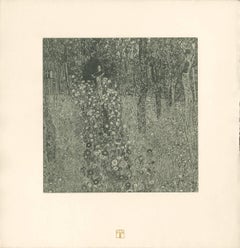
H.O. Miethke Das Werk folio "Cottage Garden with Crucifix" collotype print
By Gustav Klimt
K.K. Hof-und Staatsdruckerei
Located in Palm Beach, FL
DAS WERK GUSTAV KLIMTS, a portfolio of 50 prints, ten of which are multicolor collotypes on chine colle paper laid down on hand-made heavy cream wove paper with deckled edges; under ...
Category
Early 1900s Vienna Secession Karl Schwetz Art
Materials
Paper
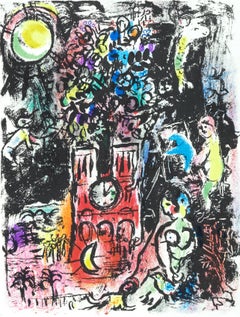
Marc Chagall, The Tree of Jesse, from Derriere le Miroir, 1960
By Marc Chagall
Located in Southampton, NY
This exquisite lithograph by Marc Chagall (1887–1985), titled L’Arbre de Jesse (The Tree of Jesse), originates from the 1960 folio Derriere le Miroir, No. 119, Poetes, peintres, sculpteurs (Poets, Painters, Sculptors), published by Maeght Editeur, Paris, under the direction of Aime Maeght, and printed by Mourlot Freres, Paris. This lyrical composition exemplifies Chagall’s visionary fusion of faith, memory, and color, uniting biblical symbolism with the artist’s poetic sensibility. In L’Arbre de Jesse, Chagall reimagines a sacred theme as a vibrant allegory of spiritual lineage, evoking the mystical harmony between heaven and earth that defines his most celebrated works.
Executed on velin paper, this lithograph measures 15 x 11 inches (38.1 x 27.9 cm), as issued. Unsigned and unnumbered, as issued. The edition reflects the exceptional quality and craftsmanship of the Maeght and Mourlot collaborations, which brought Chagall’s radiant imagery to print with unparalleled fidelity.
Artwork Details:
Artist: Marc Chagall (1887–1985)
Title: L’Arbre de Jesse (The Tree of Jesse), from Derriere le Miroir, No. 119, Poetes, peintres, sculpteurs (Poets, Painters, Sculptors), 1960
Medium: Lithograph on velin paper
Dimensions: 15 x 11 inches (38.1 x 27.9 cm), as issued
Inscription: Unsigned and unnumbered, as issued
Date: 1960
Publisher: Maeght Editeur, Paris
Printer: Mourlot Freres, Paris
Catalogue raisonne references: Mourlot, Fernand, and Marc Chagall. “Chagall Lithographe, Volume II, 1957–1962.” Chagall Lithographe, Sauret, 1963, illustration 297. Cramer, Patrick, and Meret Meyer. Marc Chagall: Catalogue Raisonné Des Livres Illustrés. P. Cramer ed., 1995, illustration 40
Condition: Well preserved, consistent with age and medium
Provenance: From the 1960 folio Derriere le Miroir, No. 119, Poetes, peintres, sculpteurs (Poets, Painters, Sculptors), published by Maeght Editeur, Paris
About the Publication:
Derriere le Miroir (translated as "Behind the Mirror") was an iconic French art periodical published from 1946 to 1982 by Maeght Editeur, one of the most influential art publishers of the 20th century. Founded by Aime Maeght in Paris, the publication was conceived as a visual and literary collaboration between leading modern artists, poets, and critics. Each issue functioned as both an exhibition catalogue and a work of art in itself—featuring original lithographs printed directly from the artists' stones or plates, alongside essays, poems, and critical commentary. Over the course of 36 years, Derriere le Miroir produced more than 250 issues and showcased an extraordinary roster of artists including Henri Matisse, Marc Chagall, Joan Miro, Georges Braque, Alexander Calder, Fernand Leger, Pierre Bonnard, Alberto Giacometti, Eduardo Chillida, Ellsworth Kelly, Francis Bacon, Paul Rebeyrolle, Claude Garache, Antoni Tapies, Bram van Velde, Pierre Alechinsky, Pol Bury, Shusaku Arakawa, and Gerard Titus-Carmel. Printed in the ateliers of Mourlot, Arte, and Imprimerie Moderne du Lion, the periodical set new standards for quality in color lithography, combining fine art printing with elegant typography and poetic text. Beyond its visual brilliance, Derriere le Miroir also became a cultural chronicle of postwar European modernism. Each issue coincided with exhibitions held at Galerie Maeght, providing a collectible and widely accessible record of groundbreaking shows. Its integration of image, text, and philosophy created a dialogue between art and literature that elevated the modern art book to new aesthetic heights. Today, Derriere le Miroir remains one of the most sought-after and historically significant art publications, prized by collectors and scholars alike for its craftsmanship, influence, and its role in defining the visual language of 20th-century modernism. The Maeght Foundation in Saint-Paul-de-Vence continues to honor this legacy through exhibitions and archival preservation of the series, affirming Derriere le Miroir's enduring place in the history of modern art and fine art publishing.
About the Artist:
Marc Chagall (1887–1985) was a Belarus-born French painter, printmaker, and designer whose visionary use of color and poetic symbolism made him one of the most beloved and influential artists of the 20th century. Rooted in the rich imagery of his Jewish heritage and childhood in Vitebsk, Chagall’s dreamlike compositions fused memory, folklore, faith, and romance with the expressive innovations of modern art. His work evolved alongside and in dialogue with the great modern masters—Pablo Picasso, Henri Matisse, Alexander Calder, Salvador Dali, Joan Miro, Georges Braque, Wassily Kandinsky, Marcel Duchamp, and Man Ray—artists who, like Chagall, redefined artistic language for a new century. Spanning painting, printmaking, stained glass, ceramics, stage design, and illustration, Chagall’s career reflected both his deep spirituality and his boundless imagination. His works are held in major museum collections worldwide, including the Museum of Modern Art, the Guggenheim, the Tate, and the Centre Pompidou. The highest price ever paid for a Marc Chagall artwork is approximately $28.5 million USD, achieved in 2017 at Sotheby’s New York for Les Amoureux (1928).
Marc Chagall L’Arbre de Jesse, Chagall Derriere le Miroir, Chagall Maeght...
Category
1960s Expressionist Karl Schwetz Art
Materials
Lithograph
$1,196 Sale Price
20% Off
H 15 in W 11 in
Karl Schwetz art for sale on 1stDibs.
Find a wide variety of authentic Karl Schwetz art available for sale on 1stDibs. You can also browse by medium to find art by Karl Schwetz in linocut and more. Much of the original work by this artist or collective was created during the 1910s and is mostly associated with the Expressionist style. Not every interior allows for large Karl Schwetz art, so small editions measuring 12 inches across are available. Customers who are interested in this artist might also find the work of Gustav Klimt
K.K. Hof-und Staatsdruckerei, Carl Otto Czeschka, and Gustav Klimt. Karl Schwetz art prices can differ depending upon medium, time period and other attributes. On 1stDibs, the price for these items starts at $1,500 and tops out at $1,500, while the average work can sell for $1,500.