Kiyoshi Saitō Art

Japanese, 1907-1997

Kiyoshi Saito was born in Fukushima Prefecture in 1907. At the age of five, he moved to Otaru in Hokkaido, where he would come to serve as an apprentice to a sign painter. Saito became infatuated with art after studying drawing with Gyokusen Narita and moved to Tokyo in 1932 to study Western-style painting at the Hongo Painting Institute. He began experimenting with woodblock prints and exhibiting his works with Nihon Hanga Kyōkai in 1936. Saito mainly worked in oil painting until his invitation from Tadashige Ono to join the Zokei Hanga Kyokai in 1938, at which time Saito made the woodblock print his primary medium. He worked with the Asahi Newspaper Company in 1943, where he met Kōshirō Onchi. This chance encounter led to an invitation to Ichimoku Kai and membership to Nihon Hanga Kyōkai in 1944. 

Saito’s printmaking career was put on hold due to the war. During the occupation, he sold his first print in an exhibit with fellow artists Un’ichi Hiratsuka and Hide Kawanishi. In 1948, Saito exhibited at the Salon Printemps, an event sponsored by Americans for Japanese Artists. At the Sao Paulo Biennale of 1951, Saito won first place for his print Steady Gaze. In competition with Japanese oil painting and sculpture, this was a turning point for Japanese printmakers: For the first time in Japanese history, prints overtook painting. This achievement roused the Japanese art establishment. In 1956, Saito was sponsored by the state department and the Asia Foundation to travel and exhibit around the United States and Europe. As a sōsaku-hangaartist, Saito’s prints are self-drawn, self-carved and self-printed. His early works are distinguished by an attention to realism and three-dimensionality. As his style evolved, his prints became flattened and two-dimensional, featuring strong and refined designs with color and texture. Kiyoshi Saito passed away in 1997.

to
1
6
3
Overall Width
to
Overall Height
to
10
2
4
6
2
1
6
4
5
5
3
2
2
2
2
1
1
1
1
1
1
1
1
1
1
1
10
2
36
10,164
2,784
1,378
1,375
3
10
Artist: Kiyoshi Saitō
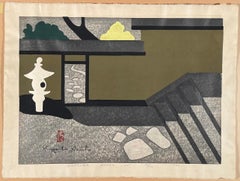
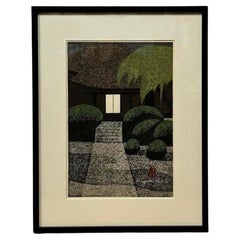
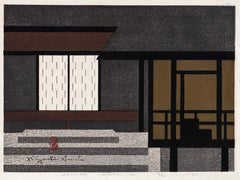
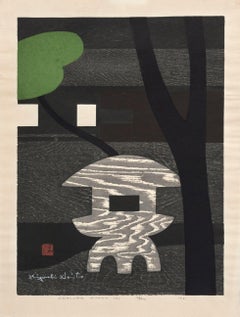
KATSURA KYOTO I
By Kiyoshi Saitō
Located in Portland, ME
Saito, Kiyoshi. KATSURA KYOTO I. Color Woodblock, 1962. Edition of 200. Titled, dated and numbered 84/200 in pencil. Signed in the block (prints from thi...
Category

1960s Kiyoshi Saitō Art

Materials

Adhesive, Woodcut

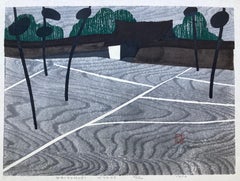
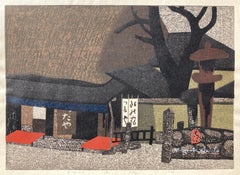
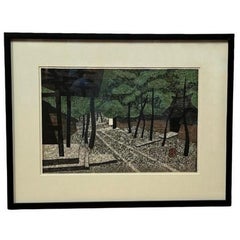
DAITOKUJI KYOTO
By Kiyoshi Saitō
Located in Santa Monica, CA
KIYOSHI SAITO (Japanese 1907 - 1997) DAITIKUJI KYOTO, 1957 Color woodcut, signed, titled, dated and no. 42/100 in pencil. Edition 100. Image 15 x 20 5/8 inches. Full margins with de...
Category

1950s Modern Kiyoshi Saitō Art

Materials

Woodcut

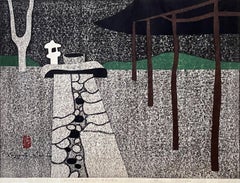
Katsura Kyoto (L)
By Kiyoshi Saitō
Located in San Francisco, CA
Artist: Kiyoshi Saito – Japanese – (1907-1997) Title: Katsura, Kyoto (L) Year: 1964 Medium: Woodblock Image size: 18 x 24 inches. Sheet size: 21.5x 28.5 inches. Signature: Signed, ...
Category

1960s Modern Kiyoshi Saitō Art

Materials

Paper, Woodcut

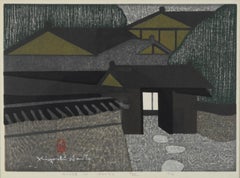
House in Kyoto
By Kiyoshi Saitō
Located in Fairlawn, OH
House in Kyoto Color woodcut, 1963 Signed in white brush bottom left of image, along with the artist's red stamp (see photo) Titled, dated and numbered in pencil bottom margin (see p...
Category

1960s Contemporary Kiyoshi Saitō Art

Materials

Woodcut

KYOTO (B)
By Kiyoshi Saitō
Located in Santa Monica, CA
KIYOSHI SAITO (Japanese 1907 - 1997) KYOTO (B) 1966 Color woodcut, signed, titled, dated and no. 5/100 in pencil. Edition 100. Image 14 3/4 x 20 5/8 inches. Full margins with deckle...
Category

1960s Modern Kiyoshi Saitō Art

Materials

Woodcut, Color

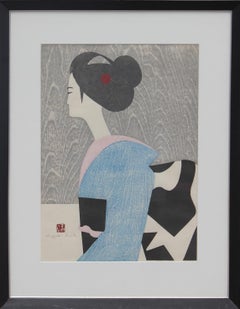
"Maiko Kyoto" Japanese Figurative Woodblock Print
By Kiyoshi Saitō
Located in Houston, TX
Kiyoshi Saitō (1907 – 1997) Maiko Kyoto (B) 1959, portrait of a girl facing left, with black and white obi; strong woodgrain texture background. Signature and artist’s seal lower left. Margins are covered with mat board possibly concealing title, date and edition. Visible Area: H 20.75 in. x W 15 in. Artist Biography: Kiyoshi Saito was born in Fukushima prefecture in 1907. At the age of five he moved to Otaru in Hokkaido, where he would come to serve as an apprentice to a sign painter. Saito became infatuated with art after studying drawing with Gyokusen Narita and moved to Tokyo in 1932 to study Western-style painting at the Hongo Painting Institute. He began experimenting with woodblock prints and exhibiting his works with Nihon Hanga Kyokai in 1936. Saito mainly worked in oil painting until his invitation from Tadashige Ono...
Category

20th Century Modern Kiyoshi Saitō Art

Materials

Woodcut

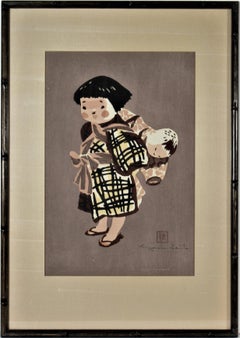
Boy from Aizu
By Kiyoshi Saitō
Located in San Francisco, CA
Artist: Kiyoshi Saito – Japanese – (1907-1997) Title: Boy from Aizu Year: circa 1950s Medium: Woodblock Image size: 15 x 10 inches. Sheet size: 16.5x 11 inches. Signature: Signed, ...
Category

1950s Modern Kiyoshi Saitō Art

Materials

Paper, Woodcut

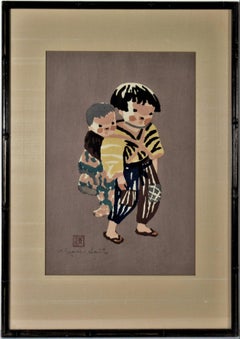
Children
By Kiyoshi Saitō
Located in San Francisco, CA
Artist: Kiyoshi Saito (Japanese, 1907-1997) Title: Children Year: Circa 1960 Medium: Color woodcut Edition: Unknown Paper: Japan Image (block mark) size: 9.5 x 4.25 inches...
Category

Mid-20th Century Abstract Impressionist Kiyoshi Saitō Art

Materials

Woodcut

Children II
By Kiyoshi Saitō
Located in San Francisco, CA
Artist: Kiyoshi Saito (Japanese, 1907-1997) Title: Children II Year: Circa 1960 Medium: Color woodcut Edition: Unknown Paper: Japan Image (block mark) size: 9.85 x 5.35 inc...
Category

Mid-20th Century Abstract Impressionist Kiyoshi Saitō Art

Materials

Woodcut

"Nara" Japanese Townscape
By Kiyoshi Saitō
Located in Houston, TX
Landscape print of small Japanese city, Nara (A). Signature and seal lower right. Mat board covers the margins which may have date, title and edition. Non-glare glass makes inspection and photography difficult. Visible Area: H 15 in. x W 20.5 in. Artist Biography: Kiyoshi Saito was born in Fukushima prefecture in 1907. At the age of five he moved to Otaru in Hokkaido, where he would come to serve as an apprentice to a sign painter. Saito became infatuated with art after studying drawing with Gyokusen Narita and moved to Tokyo in 1932 to study Western-style painting at the Hongo Painting Institute. He began experimenting with woodblock prints and exhibiting his works with Nihon Hanga Kyokai in 1936. Saito mainly worked in oil painting until his invitation from Tadashige Ono...
Category

20th Century Modern Kiyoshi Saitō Art

Materials

Woodcut

Related Items
High Tide
By Hiroki Morinoue
Located in Lyons, CO
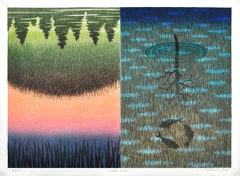
Color woodcut, Edition 30 The left panel of High Tide captures the reflections of the edge of a pond and surrounding trees and hills. The right panel depi...
Category

21st Century and Contemporary Contemporary Kiyoshi Saitō Art

Materials

Woodcut

High Tide
$2,500
H 22 in W 30 in
The House of Naiads - Woodcut Print by G. Verna - 1946
By Claudio Verna
Located in Roma, IT
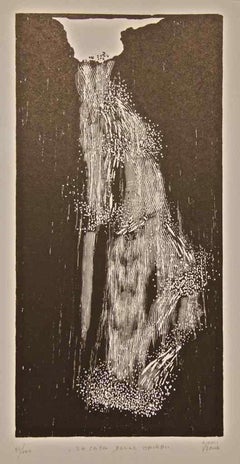
Image dimension 36.5 x 18 cm. Hand Signed. Edition of 100 pieces.
Category

1940s Contemporary Kiyoshi Saitō Art

Materials

Woodcut

Karst Morning - Woodcut print by L. Spacal - 1940
Located in Roma, IT
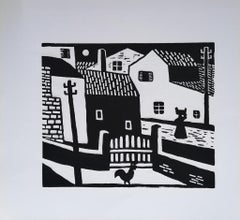
Karst Morning is a Modern artwork realized by Luigi Spacal (Trieste, 1907 - Trieste, 2000) in the half of the XX Century. Original B/W woodcut print. Excellent conditions. Lojz...
Category

1940s Kiyoshi Saitō Art

Materials

Woodcut

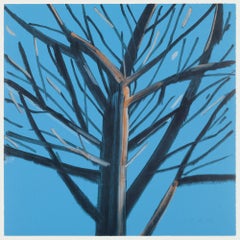
Tree 8
By Alex Katz
Located in Miami, FL
Technical Information: Alex Katz Tree 8 2022 Woodcut and Lithograph 39 3/4 x 39 1/4 in. Edition of 60 Pencil signed and numbered
Category

21st Century and Contemporary Contemporary Kiyoshi Saitō Art

Materials

Lithograph, Woodcut

Tree 8
$28,000
H 39.75 in W 39.25 in
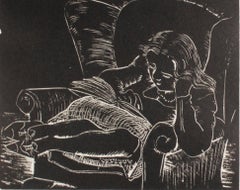
"Untitled (Girl Reading), " Wood Engraving by Stella Emma Harlos
Located in Milwaukee, WI
"Untitled (Girl Reading)" is an original wood engraving by the artist Stella Emma Harlos. A young girl rests on a large armchair, head resting on one hand as she reads a book. Image: 4" x 5" Frame: 12.12" x 13.18" Stella Harlos...
Category

1930s Modern Kiyoshi Saitō Art

Materials

Woodcut

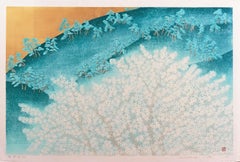
Cherry Blossoms at Dusk , Japanese color woodblock, Musashino College of Art
Located in Santa Cruz, CA
Signed lower right, 'Morihiro Sato' (Japanese, born 1943), with artist chop mark, and dated 1985; titled, lower left, in English and Kanji 'Cherry Trees (Dusk)' with number and limitation, '3/55'. Paper dimensions: 24.25 x 35.5 inches A fresh and unfaded woodblock print showing a view of cherry tree boughs heavy with glowing blossoms before a vista of rolling hills with stylized Japanese pine beneath a luminous, golden sunset. Morihiro Sato graduated from Musashino College of Fine Art before studying under the printmaker Joichi Hoshi (1913-1979). Sato’s work focuses on the beauty of nature, particularly that of trees. Through the medium of woodblock with inclusion of metallic pigments, his delicately atmospheric prints evoke a sense of gentle sense of wonder. *With thanks to Ronin Gallery
Category

1980s Modern Kiyoshi Saitō Art

Materials

Gold Leaf

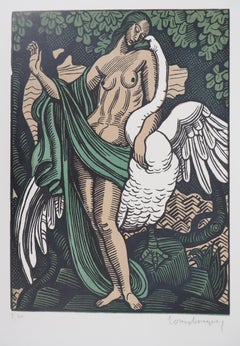
Mythology : Leda and the Swann - Original wooodcut, Handsigned Numbered
Located in Paris, IDF
Louis BOUQUET (1885-1952) Mythology : Leda and the Swann, 1929 Original woodcut Handsigned in pencil Numbered /160 On vellum 32.5 x 25.5 cm (c. 13 x 10 in) Bears the blind stamp of ...
Category

1920s Modern Kiyoshi Saitō Art

Materials

Woodcut

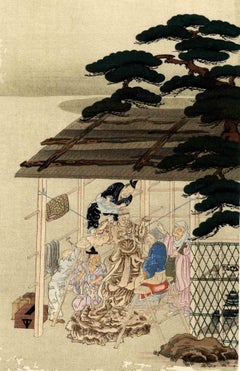
Sculptor at Work - Woodcut after Takakane Fujiwara - 1950s
Located in Roma, IT
Sculptor at work is an artwork realized in the Early 20th Century after Takakane Fujiwara. Sheet dimensions: 30 x 19.5 cm. Reprint. Good conditions.
Category

1950s Modern Kiyoshi Saitō Art

Materials

Paper, Woodcut

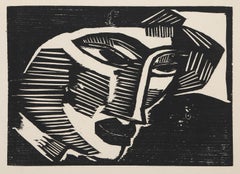
Kopf, Modern Woodcut by Karl Schmidt-Rottluff
By Karl Schmidt-Rottluff
Located in Long Island City, NY
Karl Schmidt-Rottluff, German (1884 -1976) - Kopf, Year: 1915, Medium: Woodcut on wove paper, Image Size: 6.75 x 9.5 inches, Size: 10.25 x 13.75 in. (26.04 x 34.93 cm), Descripti...
Category

1910s Modern Kiyoshi Saitō Art

Materials

Woodcut

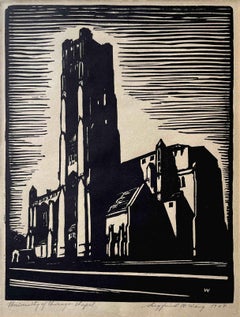
A Handsome Woodcut on Paper of the Univ. of Chicago Chapel by Siegfried Weng
Located in Chicago, IL
A handsome woodcut on paper of the University of Chicago Chapel by artist Siegfried Weng. A perfect gift for your U of C grad! Arwork size: 9 3/4" x 7 1/2". Archivally matted to...
Category

1920s American Modern Kiyoshi Saitō Art

Materials

Paper, Woodcut

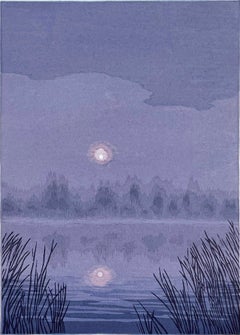
Moon At Dawn
By Micah Schwaberow
Located in Palm Springs, CA
Signed and numbered from the edition of 88. This tranquil scene of the moon at night by the waters' edge shows Schwaberow's technicque at its best. The grain of each piece of wood plays into the image perfectly. Micah Schwaberow was born in Eugene, Oregon and currently resides In Santa Rosa, California. The rolling hillsides, cloudscapes and coastline of Sonoma County are a major motif in his woodcuts. Seascape with light reflecting on the water just after sunset. Micah learned the art of Japanese woodblock art...
Category

2010s Contemporary Kiyoshi Saitō Art

Materials

Woodcut

Scissortails
By David Everett
Located in Dallas, TX
David Everett was born in Beaumont, Texas, and received both his B.F.A. and M.F.A. from The University of Texas in Austin. In 1978, Everett was awarded a Faculty Travel Grant from So...
Category

1990s Contemporary Kiyoshi Saitō Art

Materials

Paper, Woodcut

Scissortails
Scissortails
$550
H 7.25 in W 13.75 in
Previously Available Items
Kaminoyama Jokoji Temple by Kiyoshi Saito- Limited Edition
By Kiyoshi Saitō
Located in Pasadena, CA
What if art was simply the mirror of life, a reflection of the multitude of our existence and perception of our environment? Around the world, printing has become an essential part o...
Category

Mid-20th Century Kiyoshi Saitō Art

Materials

Woodcut

Daitokuji Temple Wood Block by Kiyoshi Saito - Limited Edition
By Kiyoshi Saitō
Located in Pasadena, CA
As a component of the broader ukiyo-e tradition, woodblock prints (known as Hanga) showcase an evolution from craft to a significant art form. Among the myriad printmakers, Kiyoshi S...
Category

Mid-20th Century Kiyoshi Saitō Art

Materials

Woodcut

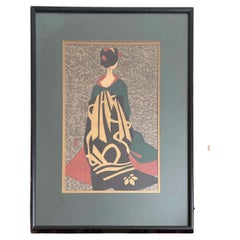
Kiyoshi Saito, Japanese Woodblock Print Maiko Kyoto Geisha Signed
By Kiyoshi Saitō
Located in Pasadena, CA
A beautiful print of a Geisha girl sitting with the back of her kimono displayed. This is a Japanese woodblock circa the 1960s. Pencil signed lower left...
Category

1960s Other Art Style Kiyoshi Saitō Art

Materials

Paper, Ink, Color, Woodcut

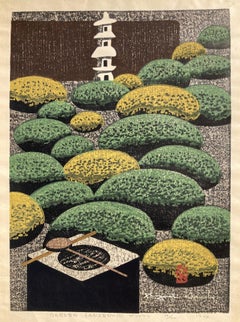
GARDEN SANZEN - IN KYOTO
By Kiyoshi Saitō
Located in Santa Monica, CA
KYOSHI SAITO (1907 – 1997) GARDEN SANZEN - IN KYOTO, 1964 Color woodcut signed in the image in white, and titled, numbered 57/100 and dated 1964 in pencil. Image 20 7/8 x 15 1...
Category

1960s Modern Kiyoshi Saitō Art

Materials

Woodcut

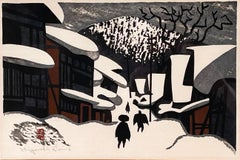
AIZU IN WINTER
By Kiyoshi Saitō
Located in Portland, ME
Saito, Kiyoshi (Japanese, 1907-1997). AIZU IN WINTER. Color woodblock, not dated. Signed, lower left. 10 1/2 x 15 5/8 inches, framed to 19 1/4 x 24 1/2 inches. In excellent condition.
Category

Mid-20th Century Kiyoshi Saitō Art

Materials

Woodcut

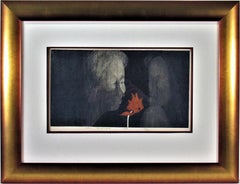
"Red Flower" Rare color woodcut
By Kiyoshi Saitō
Located in San Francisco, CA
Artist: Kiyoshi Saito (Japanese, 1907-1997) Title: Red Flower Year: 1968 Medium: Color woodcut with remark Signature: Hand signed in pencil by the artist Edition: Numbered ...
Category

Mid-20th Century Abstract Impressionist Kiyoshi Saitō Art

Materials

Woodcut

Kiyoshi Saito "Katsura Kyoto" Japanese Woodblock Print, 1962
By Kiyoshi Saitō
Located in Washington, DC
Woodblock print by Kiyoshi Saito (1907-1997). Titled in pencil with edition 139/200 and dated 1962.
Category

1960s Contemporary Kiyoshi Saitō Art

Materials

Paper, Ink

Kiyoshi Saito "Katsura Kyoto" Woodblock Print, 1961
By Kiyoshi Saitō
Located in Washington, DC
Woodblock print by Kiyoshi Saito (1907-1997). Titled in pencil with edition 149/200 and dated 1961. Signed in white pigment Kiyoshi Saito with seal Kiy...
Category

1960s Contemporary Kiyoshi Saitō Art

Materials

Archival Paper

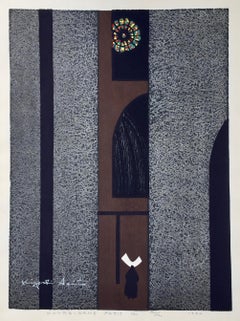
NOTRE - DAME, PARIS (A)
By Kiyoshi Saitō
Located in Santa Monica, CA
KIOSHI SAITO (Japanese 1907 - 1997) NOTRE - DAME PARIS (A) 1960 Color woodcut, signed with brush in the image, titled and numbered in pencil., 1960, Edition 105 / 120, Image 20 1...
Category

1960s Modern Kiyoshi Saitō Art

Materials

Woodcut

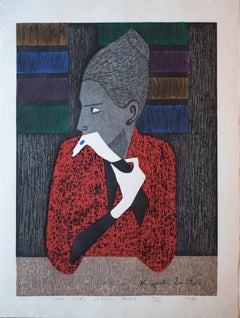
Shop Girl, Cardin, Paris
By Kiyoshi Saitō
Located in Burbank, CA
Chic design of a seated Frenchwoman, her white hands pensive against her boldly patterned red top. Her hair is in an updo, and a blue cabochon ring stands in contrast on her left hand. Behind her are windows that seem to be stained glass. Numbered 55/120 from a limited edition. Saito traveled to Paris and created some surprising and delightful designs, as here. Perfect for the midcentury modern bedroom or living room. Signed: Kiyoshi Saito in ink. Affixed with Saito's "Self-carved, Self-printed" paper seal on back. Saito was an innovative giant in the sosaku hanga tradition of 20th century Japanese woodblock...
Category

1960s Modern Kiyoshi Saitō Art

Materials

Woodcut

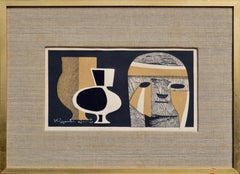
Haniwa (1) Woodblock
By Kiyoshi Saitō
Located in Soquel, CA
Woodcut print of a mask and vases Haniwa (1) (Funerary objects meant to be seen) by Kiyoshi Saito (Japanese, 1907-1997). Signed by the artist in white gouache in the lower left corner, and titled under the bottom edge of the print. Artist's stamp (chop) on verso. Below the mat, there are instructions for framing and matting the piece, possibly written by the artist. Presented in a loosely woven tan mat and simple gilt frame. Image size 9.5"H x 14.75"W. Haniwa: "Funerary objects meant to be seen": Haniwa (“clay cylinder” or “circle of clay” in Japanese) are large hollow, earthenware funerary objects found in Japan. Massive quantities of haniwa—many nearly life sized—were carefully placed on top of colossal, mounded tombs, known as kofun (“old tomb” in Japanese). During the Kofun Period (c. 250 to c. 600 C.E.), haniwa evolved in many ways—their shape, the way they were placed on the mounded tombs and, presumably, their specific function or ritual use. Japanese artist Kiyoshi Saito did not have it easy. Nature endowed him with an impulse for art and the drive to make the impossible possible. Saito studied European artists to recognize the qualities in the Japanese tradition itself, for which the modern international trends strive. His woodblock prints using traditional Japanese technique are among the most sought after pieces in the art market. Kiyoshi Saito was born in 1907 in a small village named Bange in the Kawanuma District of the Fukushima prefecture in the northern part of Honshu, the main Japanese island. When he was five years old, his father lost his business in Fukushima and the family moved further north to the island of Hokkaido, where his father worked in the coal mines in Otaru. When Kiyoshi Saito was thirteen years old, his mother died and he himself was sent away to become the guardian of a buddhist temple. He tried to escape but failed. Nevertheless the priests allowed him to return home. Saito then went to Hokkaido, where he took on a sign painting apprenticeship, which could have provided him a living for several years. At that time he dreamed of becoming a painter and he began to sketch gypsum casts at night. He founded his first sign painting business before his twentieth birthday and ensured himself a living and modest financial success. He reluctantly abandoned it, however, to study art in Tokyo. For the time being he was content with studying illustrations in western newspapers and collecting animations. While visiting Tokyo in 1932, he boldly decided to surrender himself to the big city life. He first worked as a sign painter and then later from 1944 until 1954 as an employee of the Asahi Newspaper Company. The job however was a secondary matter. More importantly, Saito became a close contact to Shiko Munakata through the job. He then decided to become familiar in the technique of woodcutting, and was not the least impressed by the color wood block prints of the western-oriented painter Yasui Sotaro (1888-1955). Saito continued to paint with oil and taught himself the techniques of wood block printing. In 1937 he presented both types of work for the first time in the famous Kokugakai Exhibition and was highly motivated. When he met Ono Tadashige at the Ginza Exhibition in 1939, he became a member of his artists group, which preceded the outside group Sosaku Hanga. There he discovered the possibilities of color woodcuts with multiple printing plates and his distinctive personal style began to take form. The acquaintance with mentor Koshiro Onchi soon opened doors to famous galleries, where most notably American purchasers took an interest in Saito's work. Kiyoshi Saito emerged as Japan's most productive woodblock print artist, whose editions soon found worldwide markets. Sosaku Hanga artists were, however, first dismissed in the Japanese art world and their works were considered concessions to American tastes. This abruptly changed, however, in 1951 at the first Sao Paulo Art Biennial, when a panel of judges gave prizes not to distinguished artists for oil paintings...
Category

1950s Cubist Kiyoshi Saitō Art

Materials

Paper, Woodcut

Terracotta, Haniwa Figure - Kofun Period Woodcut
By Kiyoshi Saitō
Located in Soquel, CA
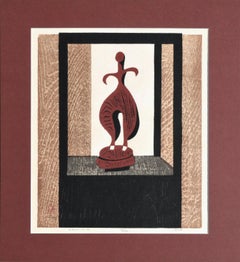
Bold lithograph of a red Funerary statue (Haniwa) displayed in a black box or case by Kiyoshi Saito (Japanese, 1907-1997). The statue appears as if it is displayed in a museum case, against a brown wood grain background. Dated, signed in gouache lower left, titled in pencil, and numbered (34/100) by the artist. Also includes the artist's "chop" (seal). Saito has produced several pieces with the title "Haniwa" and this appears to be an earlier work, as it does not contain a number in the title. Presented in a complimenting red mat. Print size: 20.5"H x 15"W; Paper size: 23.5"H x 18"W. Saito did a series of Haniwa images of the funerary Terracotta Kofun era vessels used as decoration on burial Mounds during the Kofun (250 to c. 600 C.E.) period in Japan. Japanese artist Kiyoshi Saito did not have it easy. Nature endowed him with an impulse for art and the drive to make the impossible possible. Saito studied European artists to recognize the qualities in the Japanese tradition itself, for which the modern international trends strive. His woodblock prints using traditional Japanese techniques are among the most sought after pieces in the art market. Kiyoshi Saito was born in 1907 in a small village named Bange in the Kawanuma District of the Fukushima prefecture in the northern part of Honshu, the main Japanese island. When he was five years old, his father lost his business in Fukushima and the family moved further north to the island of Hokkaido, where his father worked in the coal mines in Otaru. When Kiyoshi Saito was thirteen years old, his mother died and he himself was sent away to become the guardian of a Buddhist temple. He tried to escape but failed. Nevertheless, the priests allowed him to return home. Saito then went to Hokkaido, where he took on a sign painting apprenticeship, which could have provided him a living for several years. At that time he dreamed of becoming a painter and he began to sketch gypsum casts at night. He founded his first sign painting business before his twentieth birthday and ensured himself a living and modest financial success. He reluctantly abandoned it, however, to study art in Tokyo. For the time being, he was content with studying illustrations in western newspapers and collecting animations. While visiting Tokyo in 1932, he boldly decided to surrender himself to the big city life. He first worked as a sign painter and then later from 1944 until 1954 as an employee of the Asahi Newspaper Company. The job, however, was a secondary matter. More importantly, Saito became a close contact to Shiko Munakata through the job. He then decided to become familiar with the technique of woodcutting and was not the least impressed by the color woodblock prints of the western-oriented painter Yasui Sotaro (1888-1955). Saito continued to paint with oil and taught himself the techniques of woodblock printing. In 1937 he presented both types of work for the first time in the famous Kokugakai Exhibition and was highly motivated. When he met Ono Tadashige at the Ginza Exhibition in 1939, he became a member of his artist's group, which preceded the outside group Sosaku Hanga. There he discovered the possibilities of color woodcuts with multiple printing plates and his distinctive personal style began to take form. The acquaintance with mentor Koshiro Onchi soon opened doors to famous galleries, where most notably American purchasers took an interest in Saito's work. Kiyoshi Saito emerged as Japan's most productive woodblock print artist, whose editions soon found worldwide markets. Sosaku Hanga artists were, however, first dismissed in the Japanese art world and their works were considered concessions to American tastes. This abruptly changed, however, in 1951 at the first Sao Paulo Art Biennial, when a panel of judges gave prizes not to distinguished artists for oil paintings...
Category

1950s Abstract Impressionist Kiyoshi Saitō Art

Materials

Paper, Woodcut

Kiyoshi Saitō art for sale on 1stDibs.

Find a wide variety of authentic Kiyoshi Saitō art available for sale on 1stDibs. You can also browse by medium to find art by Kiyoshi Saitō in woodcut print and more. Much of the original work by this artist or collective was created during the 20th century and is mostly associated with the modern style. Not every interior allows for large Kiyoshi Saitō art, so small editions measuring 15 inches across are available. Customers who are interested in this artist might also find the work of Sadao Watanabe., Utagawa Yoshitora, and Keisei Eisen. Kiyoshi Saitō art prices can differ depending upon medium, time period and other attributes. On 1stDibs, the price for these items starts at $1,000 and tops out at $2,250, while the average work can sell for $1,300.

Artists Similar to Kiyoshi Saitō

Still Thinking About These?

All Recently Viewed