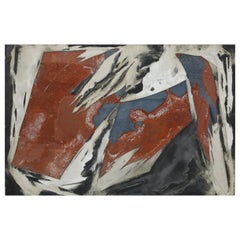
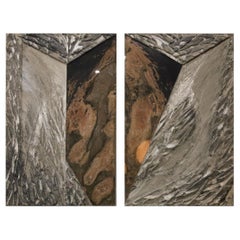
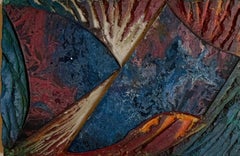
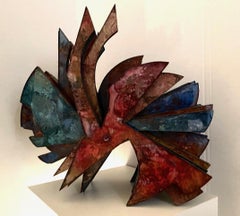
Laddie John Dill Art

American, b. 1943

Laddie John Dill was born in Long Beach, California, in 1943. He graduated from the Chouinard Art Institute in 1968 with a BFA. After graduating, Dill became a printing apprentice and worked closely with established artists such as Robert Rauschenberg, Claes Oldenburg, Roy Lichtenstein and Jasper Johns.

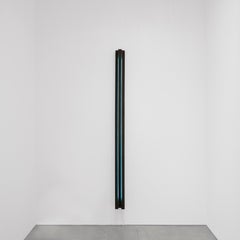
A Los Angeles artist, Dill had his first solo exhibition in New York City with Sonnabend Gallery in 1971. He was one of the first Los Angeles artists to exhibit Light and Space work in New York. He exhibited the “Light Sentences” and “Light Plains” sculptures in institutions across the United States and globally, and has enjoyed a resurgence of interest in these pieces in the last decade as well, including an acquisition of a “Light Plains” sculpture by the Museum of Modern Art in New York. It is currently on view in the Museum of Modern Art in Manhattan.

Dill has been crafting light and earthly materials like concrete, glass, sand, and metal into luminous sculptures, wall pieces, and installations since the 1970s. Referring to his choice of materials, Dill explains: “I was influenced by (Robert) Rauschenberg, Keith Sonnier, Robert Smithson, Dennis Oppenheim and Robert Irwin, who were working with earth materials, light and space as an alternative to easel painting.” When Dill does use canvas, he paints with pigments derived from cement and natural oxides.

Dill’s works are in the permanent collections of national and international institutions such as the Museum of Modern Art, New York; the Los Angeles County Museum of Art, California; the Museum of Contemporary Art, California; the San Francisco Museum of Modern Art, California; the High Museum, Atlanta; and elsewhere. He currently lives and works in Venice, California, where he maintains a studio.

Find original Laddie John Dill art on 1stDibs.

to
2
15
11
8
4
4
3
1
1
1
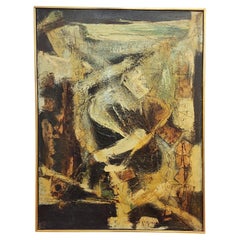
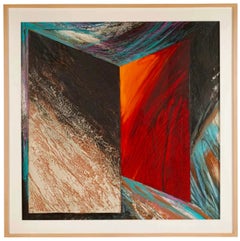
Large California Modernist Abstract Laddie John Dill Abstract Oil Painting Art
By Laddie John Dill
Located in Surfside, FL
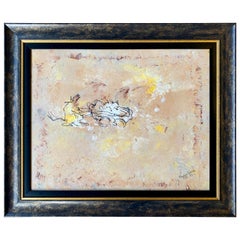
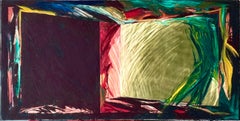
Laddie John Dill (American, b. 1943) Untitled Oil painting on canvas mounted on panel Hand signed Laddie Dill (verso) 36 x 72 inches. (with frame 37 X 73) Laddie John Dill was born ...
Category

1980s Post-Modern Laddie John Dill Art

Materials

Canvas, Oil, Board

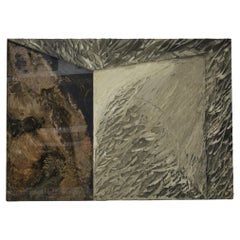
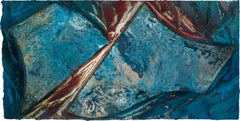
Abstract Expressionist Glass, Cement, and Polymer Painting by Laddie Dill
By Laddie John Dill
Located in Long Island City, NY
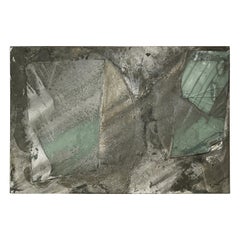
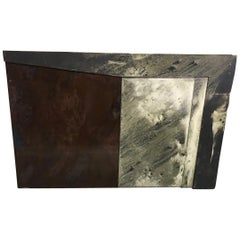
Artist: Laddie John Dill, American (1943 - ) Title: untitled Year: 1984 Medium: Glass, Cement and Polymer on panel Size: 30 x 50 x 2.5 in. (76.2 x 127 x 6.35 cm)
Category

1980s Abstract Expressionist Laddie John Dill Art

Materials

Cement

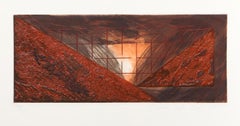
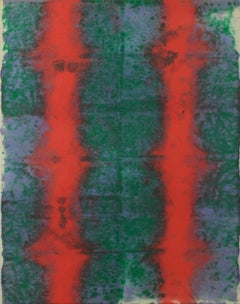
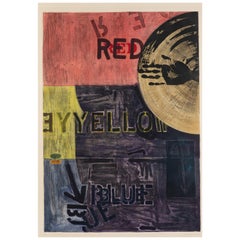
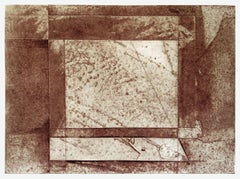
Untitled (Red), Abstract Aquatint Etching by Laddie John Dill
By Laddie John Dill
Located in Long Island City, NY
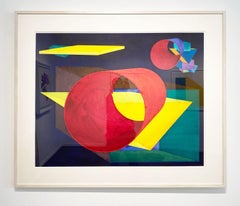
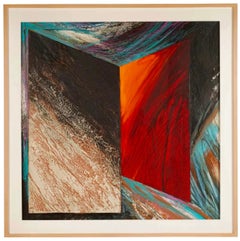
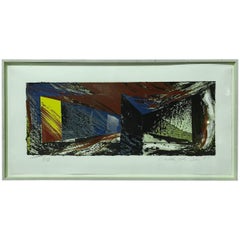
Laddie John Dill, American (1943) Date: 1988 Etching with Aquatint on Rives BFK, signed, numbered and dated in pencil Edition of 74/75 Image Size: 9 x 22.5 inches Size: 22.5 x 30 in....
Category

1980s Abstract Expressionist Laddie John Dill Art

Materials

Etching, Aquatint

Laddie John Dill B. 1943 Volcanic Portal, Dtd, 1999
By Laddie John Dill
Located in Dallas, TX
A beautiful large scale work of art by Laddie John Dill. Work is composed of cement, glass, wood and pigment applied to canvas. Signed and dated verso. From the artist's website: La...
Category

20th Century American Organic Modern Laddie John Dill Art

Materials

Cement

Untitled
By Laddie John Dill
Located in Fairlawn, OH
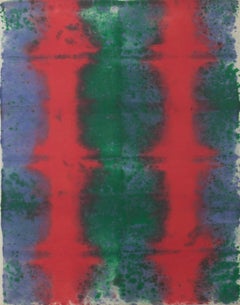
Untitled Watercolor on paper. 1971 Unsigned Sheet size: 24 x 19 inches Condition: Excellent From the collection of Ileana Sonnabend (1914-2007) Laddie John Dill, a Los Angeles artist...
Category

1970s Abstract Laddie John Dill Art

Materials

Watercolor

Laddie John Dill, B. 1943, Abstract Mixed Media, Dtd, 1981
By Laddie John Dill
Located in Dallas, TX
A beautiful large scale work of art by Laddie John Dill. Work is composed of cement, glass, wood and pigment applied to canvas. Signed and dated verso. From the artist's website: La...
Category

20th Century American Mid-Century Modern Laddie John Dill Art

Materials

Cement

Laddie John Dill B. 1943 Untitled Large Scale Diptych, Dtd, 1995
By Laddie John Dill
Located in Dallas, TX
A beautiful large scale work of art by Laddie John Dill. Each panel measures 42.5" W x 66" H. Work is composed of cement, glass, wood and pigment applied to canvas. Signed and dated ...
Category

20th Century American Organic Modern Laddie John Dill Art

Materials

Cement

Laddie John Dill, Robert Rauschenberg protege signed mixed media painting Unique
By Laddie John Dill
Located in New York, NY
Laddie John Dill Untitled Mixed Media painting, 2011 Cement, polymer, wood, mixed media on board 12 × 18 × 1 1/2 inches Signed and dated on the back Unique work This exquisite unique...
Category

2010s Abstract Expressionist Laddie John Dill Art

Materials

Wood, Acrylic Polymer, Mixed Media, Permanent Marker

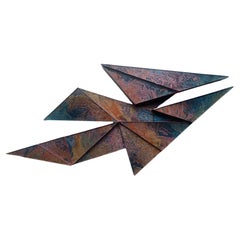
Untitled contemporary sculpture
By Laddie John Dill
Located in Palm Desert, CA
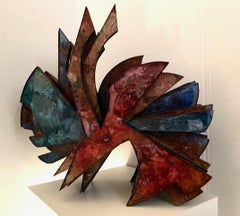
A central figure in the California Light and Space movement, Laddie John Dill has been crafting light and earthy materials like concrete, glass, sand, and metal into luminous sculptu...
Category

21st Century and Contemporary Abstract Laddie John Dill Art

Materials

Glass, Wood, Pigment

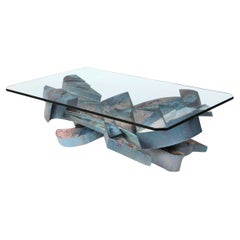
Laddie John Dill Cement Glass Oxide Sculptural Coffee Table, c 1980
By Laddie John Dill
Located in Los Angeles, CA
An intriguing sculptural art coffee table by Laddie John Dill, part of his 'Cement Glass Oxide' series. Can be used as a stand alone sculpture or as a coffee table with optional glas...
Category

1980s American Organic Modern Vintage Laddie John Dill Art

Materials

Cement

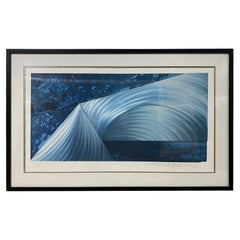
Laddie John Dill Signed California Artist Limited Edition Large Lithograph Print
By Laddie John Dill
Located in Studio City, CA
A fantastic work by American/California artist Laddie John Dill (1943- ). This rather large color offset lithograph print is pencil signed, dated (2002), and numbered (66/250) by the artist. It has also been custom framed. Provenance: from the UCLA Medical Center Art Collection (there appear to be collection accession numbers on the paper frame backing). Would be a great addition to collectors of Dill's work or California artists or an eye-catching stand-alone modern art accent piece in about any setting. Laddie John Dill’s work can be found in such permanent collections as: Museum of Modern Art, NY Los Angeles County Museum of Art, CA Museum of Contemporary Art, CA; San Francisco Museum of Modern Art, CA High Museum, GA The Phillips Collection...
Category

Early 2000s American Modern Laddie John Dill Art

Materials

Plexiglass, Wood, Paper

Untitled
By Laddie John Dill
Located in Fairlawn, OH
Untitled Watercolor on paper, c. 1971 Unsigned Provenance: From the collection of Ileana Sonnabend (1914-2007) Laddie John Dill, a Los Angeles artist, had his first solo exhibition i...
Category

1970s Abstract Laddie John Dill Art

Materials

Watercolor

Laddie John Dill abstract wall sculpture , pigment and glass mount art .
By Laddie John Dill
Located in Los Angeles, CA
Amazing abstract work by the well known artist Laddie John Dill. signed in back and date .
Category

1990s American Post-Modern Laddie John Dill Art

Materials

Glass

Untitled
By Laddie John Dill
Located in Fairlawn, OH
Untitled Watercolor on paper, c. 1971 Unsigned From the collection of Ileana Sonnabend (1914-2007) Laddie John Dill, a Los Angeles artist, had his first solo exhibition in New York C...
Category

1970s Abstract Laddie John Dill Art

Materials

Watercolor

Untitled beautiful colorful abstract contemporary sculpture
By Laddie John Dill
Located in Palm Desert, CA
A central figure in the California Light and Space movement, Laddie John Dill has been crafting light and earthy materials like concrete, glass, sand, and metal into luminous sculptures, wall pieces, and installations since the 1970s. Referring to his choice of materials, Dill explains: “I was influenced by [Robert] Rauschenberg, Keith Sonnier, Robert Smithson...
Category

21st Century and Contemporary Abstract Laddie John Dill Art

Materials

Glass, Wood, Pigment

Related Items
Funny Comedienne Phyllis Diller Original Oil Painting on Canvas with 2 Titles
Located in Tustin, CA
Humorous original oil on canvas with black ink, painting by deceased American comedienne, Phyllis Diller (1917-2012), which she titled, “Two Idiots On A...
Category

1980s American Modern Vintage Laddie John Dill Art

Materials

Canvas, Paint

RUSSELL S WAY
By Al Held
Located in Three Oaks, MI
In excellent condition from an edition of 50, this piece is beautifully framed in museum-quality materials. Al Held is best remembered for his large-scale paintings of bright, hard-e...
Category

1880s Abstract Expressionist Laddie John Dill Art

Materials

Archival Paper, Etching, Aquatint

RUSSELL
S WAY
RUSSELL
S WAY
$7,500
H 35.25 in W 44.5 in D 0.2 in
Signed, 1981, Jasper Johns Aquatint
By Jasper Johns
Located in Los Angeles, CA
Signed, dated and numbered, 1981 aquatint and color etching on Rives BFK paper- Periscope, by iconic American artist, Jasper Johns (b. 1930). Marked 22 /88 on the lower left. Signed ...
Category

1980s American Vintage Laddie John Dill Art

Materials

Paper

Signed, 1981, Jasper Johns Aquatint
$40,000
H 45 in W 32.75 in D 2 in
Jean Miotte - Abstract Composition - Original Signed Lithograph
By Jean Miotte
Located in Collonge Bellerive, Geneve, CH
Jean Miotte - Rare Original Signed Lithograph Title: Abstract Composition Dimensions: 76 x 56 cm Edition: 64/99 Signed and Numbered in pencil Jean Miotte, 1926 - 2016 Miotte came o...
Category

1990s Abstract Expressionist Laddie John Dill Art

Materials

Aquatint

Framed Photograph by John Patrick Dugdale
By John Dugdale
Located in Atlanta, GA
Artist: John Patrick Dugdale (New York, b. 1960) Title: The Spirit Eye Medium: Cyanotype Year: 1998 Edition: number 3/12 Measurement: H 14", W 11"...
Category

1990s American Modern Laddie John Dill Art

Materials

Wood, Paper

Framed Photograph by John Patrick Dugdale
$6,800
H 20.25 in W 19.5 in D 2 in
John David Rigsby Abstract Mixed Media on Canvas, American 1960
Located in Hudson, NY
A handsome and sophisticated mixed media on canvas by American artist John Rigsby. Found in a original state of preservation. His works are few and far between. The following biography was submitted by John David Rigsby, Jr., son of the artist. The author is Lisa Rigsby Peterson, daughter of the artist, and owner of the copyright of the biography. John David Rigsby was born on October 10, 1934, the seventh child of an Alabama Depression-era sharecropper's son. He and his family moved frequently, from one one-room structure to another, often with no running water, no plumbing, no heat but the stove. His father was killed in a car accident when Rigsby was just 9 years old. Life for the remaining eight family members proved tumultuous and difficult -- food wasn't plentiful, nor money. The family moved from place to place, following work -- Rigsby attended 30 different schools before graduating from high school. Despite living in poverty, Rigsby demonstrated academic and artistic aptitude at a young age. Two oil paintings on covers ripped off of old books that he painted when he was eight years old show the promise of an imaginative and gifted eye. Rigsby was drafted by the U.S. Army in 1953. As he later wrote, "When basic training at Fort Jackson, South Carolina, was over, I was told to go out and find a job. Jasper Johns was painting visual aids for the 28th Regimental Headquarters. He suggested the Band Training Unit." Rigsby played the clarinet in that unit, and after 2 years of service, he enrolled at the University of Alabama on the G.I. Bill to study art. After just two years, he left school and followed his mentor (and one of the greatest and longest-lasting influences on his art), Japanese artist and U of A art instructor Tatsu Heima, to New York City. Heima introduced him to Isamu Noguchi and suggested that Rigsby work as Noguchi's assistant. Instead, Rigsby chose a job as a guard at the Metropolitan Museum of Art, since "the notion of seeing all of that art appealed more to me than the boring task of studio assistant." The opportunity was a rich one for Rigsby. He had a chance to study the masters, and cited Rembrandt with his simplicity and elegance as another of the most important influences on his work. In the years between 1957 and 1963, when Rigsby eventually earned his BFA in sculpture, the artist traveled back and forth between New York and Tuscaloosa, alternating study with forays into the fertile New York art scene. Rigsby exhibited some of his early sculpture work in 1958 at a small New York gallery, which was also exhibiting the work of Willem and Elaine de Kooning and Theodore Stamos. Shortly thereafter, searching for an educational venue closer to New York City, Rigsby visited New Haven, Connecticut, and spent an afternoon speaking with Josef Albers at Yale. Albers agreed to accept Rigsby into the Yale program on the condition that he take freshman drawing all over again. A brilliant opportunity, but, in Rigsby's words, "When it was time to register, I was hitchhiking back to Alabama, looking for food and shelter." Rigsby had his first one-man show at the University of Alabama in 1959. A visiting critic from New York, J.F. Goosen, reviewed the show and wrote "here is a talent which produces art because that is the thing for a gifted person to do. In his effortless ease of conception and execution, he has already achieved a goal that eludes many artists for a lifetime." Finally, in 1963, Rigsby received his degree in sculpture, dissolved a short-lived marriage, visited his family, packed up his car and headed permanently for New York. That year, his work was included in a group show at the Delgado Museum in New Orleans - which led to a one-man exhibit at the Delgado in 1964. During 1964, Rigsby took drawing classes at Columbia University, and worked at the General Post Office at night. He met his future wife, Linda Palmieri, and married. In 1965, his daughter Lisa was born, followed in 1966 by the birth of his son, John David Jr. In 1966, Rigsby had a successful one-man show at the Pietrantonio Gallery in New York. Shortly thereafter, he and the family moved to Tunis, Tunisia at the suggestion of a colleague, who urged him to "come paint by the light of Klee." Rigsby worked for the United States Information Agency as a teacher, and he spent the next year and a half painting over ninety paintings inspired by the smells, light, and Phoenician and Roman art surrounding him. He also executed a number of character and landscape drawings, capturing the Tunisian way of life. During his time in Tunisia, Rigsby's work was shown there in two major exhibits. Upon the family's return to the U.S. in 1968, Rigsby once again exhibited at the Pietrantonio Gallery. Later that year, Rigsby enrolled in Southern Connecticut State College's Urban Studies program, earning a master's degree in 1970. During his time at SCSU, Rigsby worked as the city of Bridgeport's Curator of Exhibits, driving a mobile art gallery from schools to neighborhood fairs and housing projects. After completing his degree, Rigsby had an exhibit at the Telfair Museum in Savannah, Georgia. This exhibit caught the attention of a member of the search committee looking to hire an artist for a newly-developed program in neighboring South Carolina. In 1970, Rigsby was selected as the first Artist-in-Residence in the state of South Carolina for the National Endowment for the Arts Artists in Schools program. His work with the newly-integrated students at Beaufort (SC) High School over the term of his residency precluded substantial work on his own art. He did, however, set up a studio in downtown Beaufort, and was able to create a modest number of paintings, which were included in exhibits at the Columbia Museum in South Carolina in 1971 and Yale University in 1973. At the end of his residency in 1974, Rigsby was named the National Visual Arts Coordinator of the Artists in Schools program for the NEA, a post he held for two years. In this position, Rigsby traveled the country, reviewing grant applications, meeting with state leaders in government, education and the arts to promote program concepts and explore local opportunities. The message he repeated over and over again echoed that of one of the other major influences on Rigsby as an artist - Ruth Asawa Lanier, whose words taught him that all of the work that the artist does is the artist's work, not simply the paintings he creates. In his capacity as National Coordinator, as well as many times in the future, Rigsby stressed that artists function in the same way as any other person in society, and deserved the same respect and place for their work as did all other professions. After two years traveling the country, Rigsby was ready for a change, saying "for the first time in my adult life, there was not a body of paintings to show for the years put into my work." In 1976, a summer retreat to the mountain community of Central City, Colorado, led to a permanent relocation. Eventually settling in the small town of Evergreen, Rigsby followed his own advice about artists becoming actively involved in their communities, and he established the Evergreen Visual Arts Center. The Center provided working space for artists, classes for adults and children, and, most importantly, a place for Rigsby to create his own work. Buoyed by the opportunity to concentrate once again on his art, and inspired by his new surroundings, Rigsby entered an extremely prolific period in his career. In 1977, he organized a traveling exhibition of his paintings, which showed at the Kimball Arts Center in Utah, the Kennedy Center in Washington, D.C., and the Arvada Center in Colorado. 1978 brought more exhibits, notably in Aspen and Denver, as Rigsby's work continued. He took an extended trip to visit his mentor, Tatsu Heima, in Japan, where he climbed Mt. Fuji, followed by travels to Tehran, Delhi, and several European countries. He chronicled his impressions from his travels in a small collection of paintings upon his return to the U.S. - the beginning of a practice which would continue through the rest of his life. In 1979, Rigsby's marriage failed, and at the same time he lost the lease to his Evergreen studio to redevelopment plans. In response to the personal chaos around him, Rigsby began a series of what he called "hard-nosed process paintings," the watercolor paintings of dots which marked his work from this period. The paintings gained him an NEA Individual Artist grant in 1980, as well as a Yaddo fellowship in 1981. The polka dot paintings were followed by a series of cupcake-like images, again examining space and color. During the early 1980s, Rigsby lived in a suite of old dentists' offices in a rundown part of Denver, with a studio in an area that reminded him of the Bowery in New York. In 1984, Rigsby founded the Progreso Gallery in the building where he lived, using the space both to show his own work and also to mount shows of the work of many Colorado artists. The gallery also served as a focal point for Denver's local arts community, hosting weekly discussion groups and classes. In 1984, Rigsby traveled to the Baja Peninsula and then in 1985 to Yugoslavia. After each sojourn, Rigsby returned to create vibrant and explosive paintings based on his experiences, showing them at his Progreso gallery and another alternative gallery in Denver, the Edge Gallery. The economic recession of the mid-eighties hit the art market and Rigsby hard, however, and although he continued to create new works of art, major exhibitions were difficult to come by. In 1987, Rigsby decided to leave Denver and spent six months in Barcelona, Spain. It was an electrifying trip for him. Rigsby wrote of that time: "The streets alone are a visual feast, and the additions of museums from Saarinen, Picasso and Miro to 12th century icons produced artistic indigestion. My paintings are always about the way things look and feel. Barcelona was a time machine extending those sensory and emotional concerns back to the Middle Ages. I felt the need to reduce my work to essential elements of color, scale, drawing and format. The [resulting] color studies speak eloquently for themselves, and in doing so, redefine all of the work I've done in the past 35 years of painting." Rigsby completed over a hundred paintings while in Barcelona - color studies, street portraits of the characters he encountered on a daily basis, and a number of dark landscape paintings. He found time to run with the bulls in Pamplona, and began writing stories about his adventures that were later published. Upon his return to Denver in 1988, Rigsby continued to explore the alter egos of the color studies - he concentrated on a series of dark paintings, all prominently featuring back. He commented about these black paintings that he " decided it was time to explore the perception of the eye and physical space as defined by low -light conditions…I find these paintings elegant, joyous and light-filled, with no feeling of heaviness at all." In mid-1988, Rigsby moved permanently to Houston, Texas, where he would spend the last five years of his life. Once in Houston, Rigsby made a discovery that would serve as the inspiration and material for some of the last works of his career. In 1989, he discovered a salvage yard filled with scrap rubber, and he began working on black rubber sculptures, as well as paintings with rubber elements incorporated. He made strong connections in the Houston alternative arts scene, and became a regular contributor and art critic for a local weekly newspaper, The Public News. From 1989 through 1992, he exhibited his sculptures and paintings at Houston's Brent Gallery, Fountainhead Gallery, and Blaffer Gallery. He also produced an installation of his rubber sculptures on the roof of the Diverse Works Gallery in Houston. 1992 also marked Rigsby's return to Denver when he exhibited his sculptures at the Payton-Rule Gallery in Denver, leading to an Absolut Rigsby commission by Carillon Importers. The 1990s were a tremendous struggle for Rigsby, with financial crises compounded by physical trauma (he accidentally sawed off the top joint of the index finger of his left hand while working in his studio). Although his work was being shown, it wasn't selling, and the tremendous financial pressure he felt weighed heavily upon him. He spent an increasing proportion of his time going to flea markets and garage sales, rehabilitating and repairing the things he bought there, and then re-selling them simply to raise enough money to keep a roof over his head. He had little time to paint or sculpt, the things in life that had always, no matter what the circumstances, brought him joy. Rigsby's final works were a series of intricate paintings and drawings on used books that he purchased at the flea market. Most of these drawings, which he referred to as sculptural form drawings, were executed on page after page of science texts, music books, and a Korean bible and fill hundreds of pages. Additionally, Rigsby created an exquisite book he titled 28 de los Angeles, in which his twenty-eight simple and elegant drawings of angels resonated with the influence of Rembrandt he had so admired in his early days. In a sense, Rigsby's final works, art created on used books which were the only materials he could afford, brought his work and life full circle from his childhood days. Rigsby's life, though begun and ended in adversity, was nonetheless illuminated and enriched by the irresistible impulse he had to create art and beauty. John David Rigsby was killed in a one-car accident in Colorado in August, 1993. Biography from the Archives of askART Following is a review by Michael Paglia of the artist's July 2004 retrospective at the Denver Museum of Contemporary Art. It was submitted by John Rigsby, Jr., son of the artist. There's a magnificent retrospective at Denver's Museum of Contemporary Art devoted to the work of the late John David Rigsby, who was a major powerhouse in Colorado's art scene. "Dots, Blobs and Angels" surveys more than forty years' worth of the remarkable artist's paintings and sculptures. The year 1993 was strange, and by that I mean terrible. Many of the city's galleries closed because of bad economic times, and then the artists started dying. In a matter of a few months, Denver lost three significant artists: Rigsby, experimental photographer Wes Kennedy...
Category

1960s American Mid-Century Modern Vintage Laddie John Dill Art

Materials

Canvas, Paint

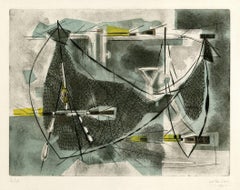
Nets – Mid-Century Modernism, Atelier 17
By Sigismond Kolos-Vari
Located in Myrtle Beach, SC
Sigismond Kolos-Vari, 'Nets', color etching with soft-ground and aquatint, edition 200 (1 of 60 artist's proofs), 1952. Signed and dated in pencil. Numbered L/LX in pencil. A superb, richly-inked impression, on heavy, off-white, Arches wove paper; the full sheet with margins (1 3/8 to 3 1/2 inches), in excellent condition. Published by the Guide de la Gravure, Switzerland, with their blindstamp in the bottom left sheet corner. Matted to museum standards, unframed. Image size 11 3/4 x 15 5/8 inches (298 x 397 mm); sheet size 15 x 22 1/4 inches (381 x 565 mm). ABOUT THE ARTIST Sigismund Kolos-Vari was born in Hungary and attended the School of Applied Arts in Budapest from 1915 to 1918 and then the School of Decorative Arts until 1925. The artist settled in Paris, and his first one-person show in 1928 at Galerie Miromesnil, which was highly successful, led to numerous subsequent exhibitions, including with the prestigious Galerie Bonaparte in 1929 and Galerie Povolosky in 1930. Kolos-Vari’s early success was abruptly interrupted by the outbreak of WWII when he was arrested by the Gestapo and imprisoned in the Gurs internment camp. During this period, he created a sketchbook for a little girl, which is now preserved at the Centre de Documentation Juive Contemporaine at the Mémorial de la Shoah in Paris. He managed to escape after two years, crossing the border into Switzerland. After the war, he returned to Paris with a renewed dedication to his painting, producing increasingly powerful compositions. His work was highly acclaimed when shown at an important 1946 exhibition at the Musée National d’Art Moderne de Paris, organized by Jean Cassou. The artist was then approached by the eminent art dealer Jean Bucher, who gave Kolos-Vary a major one-person show at his gallery in 1948. During this post-war period, Kolos-Vary participated in the radical Salon de Mai, 1949-1958, the Salon des Réalités Nouvelles, 1956-1961, and the Salon des Comparaisons, 1960-1962. Supported by his association with Stanley William Hayter and the landmark printmaking workshop Atelier 17...
Category

Mid-20th Century Abstract Expressionist Laddie John Dill Art

Materials

Etching, Aquatint

Confused Man Walking His Dogs by John Alexander
Located in Dallas, TX
Lithograph "Confused Man Walking His Dogs" by John Alexander, 1995 edition of 60. 59/60 Framed and signed lower right. John Alexander (1945-) is an American artist form...
Category

Late 20th Century American Modern Laddie John Dill Art

Materials

Paper

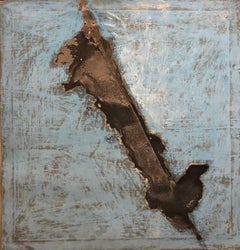
Confused Man Walking His Dogs by John Alexander
$3,850
H 41.5 in W 35 in D 1.25 in
Contemporary Abstract Mixed-Media Work by John Fraser
By John Fraser
Located in Chicago, IL
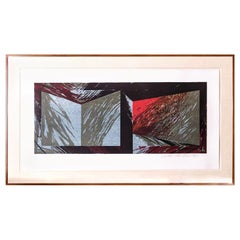
John Fraser (1952-), three dimensional art collage on board with an open and pageless book, tape, acrylic paint and multilayered paper. Nicely backed and mounted. Titled "Interior with Blue Highlights." Measures: 18" x 18". Galleries with John Fraser permanent collections and select permanent collections. The Cincinnati Art Museum, Cincinnati, OH. The Delaware Art Museum, Wilmington, DE. The New Mexico Museum of Art, Santa, Fe, NM. The Contemporary Museum, Honolulu, HI. The McNay Art Museum, San Antonio, TX. Museo de Arte Contemporaneo Esteban Vincente...
Category

21st Century and Contemporary American Laddie John Dill Art

Materials

Acrylic, Paper, Wood

Bold Abstract and Figurative Composition in Blue and red Acrylic on Paper
Located in Soquel, CA
Bold Abstract and Figurative Composition in Blue and red Acrylic on Paper Bright and colorful abstracted figural painting by California-based artist, Ricardo de Silva (American/Bra...
Category

1980s Abstract Expressionist Laddie John Dill Art

Materials

Acrylic, Watercolor, Archival Paper

Large Mod Abstract Expressionist Modernist Edward Avedisian Color Field Painting
By Edward Avedisian
Located in Surfside, FL
Edward Avedisian (American, 1936-2007) Abstract Large Painting Acrylic on panel heavily textured with a 3D effect. Dimensions: 48"h x 75"w Circa late 1970s, early 1980s Provenance: ...
Category

1970s Abstract Expressionist Laddie John Dill Art

Materials

Acrylic, Wood Panel

Our Prayer - Large Contemporary Cubist Monochrome Painting, Affordable Art
Located in Los Angeles, CA
Harrison Gilman's large original artworks begin with a layer of fast-paced gestural abstraction followed by organic shapes and geometric structures. Some of his paintings remain in t...
Category

2010s Abstract Laddie John Dill Art

Materials

Canvas, Oil

Previously Available Items
Construction by Laddie John Dill
By Laddie John Dill
Located in Dallas, TX
Laddie John Dill (American, b. 1943) graduated from the prestigious Chouinard Art Institute (later to be absorbed into the California Institute of the Arts, aka CalArts). He began hi...
Category

1970s American Vintage Laddie John Dill Art

Materials

Cement

Construction by Laddie John Dill
H 32 in W 48 in D 2 in
Laddie John Dill, A Sculptural Construction in Cement, Glass and Natural Oxides
By Laddie John Dill
Located in Peabody, MA
A sculptural construction in cement, glass and natural oxides by the important Los Angeles sculptor and artist Laddie John Dill, ca. 1970s. Dill was a founding member of the fascinating “Light and Space” movement, which was related to op art, minimalism and geometric abstraction, but originating in Southern California in the 1960s. The term "Light and Space" derives from a 1971 exhibition at the UCLA University Art Gallery, titled Transparency, Reflection, Light, Space. It reflected the uniquely West Coast ideals of sun, cars, surf, and sand and these young artists eagerly experimented with many of the latest technologies developed for the Southern California based aviation engineering and aerospace industries. Their work was recognizable for a hard edged brutalist aesthetic which incorporated geometric themes in glass, neon, fluorescent tubes, poured resins and cast acrylic as common materials. Dill was a close friend of the artist Robert Rauschenberg and the two staged a joint exhibition in 1970 titled “The Light Show”. Rauschenberg arranged a solo show for the younger artist at the famed Ileana Sonnabend Gallery in New York, making Dill the first Light and Space artist...
Category

1970s American Mid-Century Modern Vintage Laddie John Dill Art

Materials

Cement

LA Modernist Laddie John Dill 1987 Mixed Media Abstract Painting California Art
By Laddie John Dill
Located in Surfside, FL
Mixed media on panel Hand signed and dated lower left, 1987 Matted and framed under acrylic 41 1/2 x 41 1/2 inches sight; 49 x 49 inches framed Laddie John Dill was born in Long Beach, CA in 1943. He graduated from Chouinard Art Institute in 1968 with a BFA. After graduating, Dill became a printing apprentice and worked closely with established artists, like Robert Rauschenberg, Claes Oldenburg, Roy Lichtenstein, and Jasper Johns. Laddie John Dill’s work is in the permanent collections of national and international institutions such as Museum of Modern Art, NY; Los Angeles County Museum of Art, CA; Museum of Contemporary Art, CA; San Francisco Museum of Modern Art, CA; High Museum, GA; The Phillips Collection, DC; Chicago Art Institute, IL; Smithsonian, DC; Louisiana Museum of Modern Art, Denmark; Pio Monte della Misericordia, Italy; Museum of Contemporary Art San Diego, CA; and Museo Jumex, Mexico. He currently lives and works in Venice, CA where he maintains a studio. This is the same color palette as the Memphis Milano works and Peter Shire Sculpture. A central figure in the California Light and Space movement, Laddie John Dill has been crafting light and earthy materials like concrete, glass, sand, and metal into luminous sculptures, wall pieces, and installations since the 1970s. Referring to his choice of materials, Dill explains: “I was influenced by [Robert] Rauschenberg, Keith Sonnier, Robert Smithson, Dennis Oppenheim, and Robert Irwin, who were working with earth materials, light, and space as an alternative to easel painting.” Among his most celebrated works is an untitled installation from 1971, for which Dill filled a gallery with mounds of pale sand, topped with precisely arranged glass panels illuminated by the soft, green glow of argon lighting set just beneath the surface. When he does use canvas, he paints with pigments derived from cement and natural oxides. His work bears a relationship to the Light & Space Movement and Minimalism artists James Turrell, Larry Bell, Robert Irwin, Craig Kauffman, Billy Al Bengston, Joe Novak, Peter Alexander and Lita Albuquerque.
Category

1980s Post-Modern Laddie John Dill Art

Materials

Oil Pastel, Mixed Media, Acrylic

LA Modernist Laddie John Dill 1987 Mixed Media Abstract Painting California Art
By Laddie John Dill
Located in Surfside, FL
Mixed media on panel Hand signed and dated lower left, 1987 Matted and framed under acrylic 41 1/2 x 41 1/2 inches sight; 49 x 49 inches framed Laddie John Dill was born in Long Beach, CA in 1943. He graduated from Chouinard Art Institute in 1968 with a BFA. After graduating, Dill became a printing apprentice and worked closely with established artists, like Robert Rauschenberg, Claes Oldenburg, Roy Lichtenstein, and Jasper Johns. Laddie John Dill’s work is in the permanent collections of national and international institutions such as Museum of Modern Art, NY; Los Angeles County Museum of Art, CA; Museum of Contemporary Art, CA; San Francisco Museum of Modern Art, CA; High Museum, GA; The Phillips Collection, DC; Chicago Art Institute, IL; Smithsonian, DC; Louisiana Museum of Modern Art, Denmark; Pio Monte della Misericordia, Italy; Museum of Contemporary Art San Diego, CA; and Museo Jumex, Mexico. He currently lives and works in Venice, CA where he maintains a studio. This is the same color palette as the Memphis Milano works and Peter Shire Sculpture. A central figure in the California Light and Space movement, Laddie John Dill has been crafting light and earthy materials like concrete, glass, sand, and metal into luminous sculptures, wall pieces, and installations since the 1970s. Referring to his choice of materials, Dill explains: “I was influenced by [Robert] Rauschenberg, Keith Sonnier, Robert Smithson, Dennis Oppenheim, and Robert Irwin, who were working with earth materials, light, and space as an alternative to easel painting.” Among his most celebrated works is an untitled installation from 1971, for which Dill filled a gallery with mounds of pale sand, topped with precisely arranged glass panels illuminated by the soft, green glow of argon lighting set just beneath the surface. When he does use canvas, he paints with pigments derived from cement and natural oxides. His work bears a relationship to the Light & Space Movement and Minimalism artists James Turrell, Larry Bell, Robert Irwin, Craig Kauffman, Billy Al Bengston, Joe Novak, Peter Alexander and Lita Albuquerque.
Category

1980s Post-Modern Laddie John Dill Art

Materials

Mixed Media, Acrylic, Oil Pastel

Tempered Glass, Cement Poly, Minerals, Oxides Wall Sculpture by Laddie John Dill
By Laddie John Dill
Located in Encino, CA
Untitled, an original wall relief sculpture, made from tempered glass, cement polymer, and ground minerals and oxides, by Laddie John Dill, is a piece for the true collector. Dill's ...
Category

Early 2000s Contemporary Laddie John Dill Art

Materials

Glass, Polymer

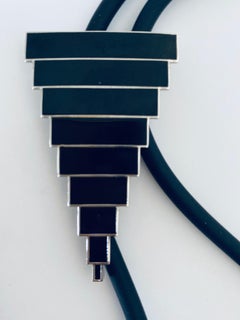
LA Modernist Laddie John Dill Acme Studios Vintage Cloisonne Enamel Art Necklace
By Laddie John Dill
Located in Surfside, FL
This is worn around the neck like a bolo tie. It can also be worn as a brooch. (there is no pin) This is new old stock vintage Jewelry from the legendary Acme Studio collection, whic...
Category

20th Century Pop Art Laddie John Dill Art

Materials

Metal, Enamel

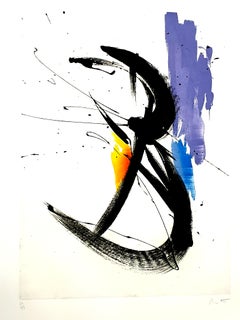
Abstract, by Laddie John Dill
By Laddie John Dill
Located in Palm Springs, CA
Signed and numbered in pencil from the edition of 10. An early work by this California artist known for his Light and Space installations. Laddie John Dill was born in Long Beach, C...
Category

1970s Abstract Laddie John Dill Art

Materials

Etching, Aquatint

Untitled
By Laddie John Dill
Located in Laguna Beach, CA
A central figure in the California Light and Space movement, Laddie John Dill has been crafting light and earthy materials like concrete, glass, sand, and metal into luminous sculptu...
Category

2010s Contemporary Laddie John Dill Art

Materials

Stainless Steel

Untitled
Untitled
H 100 in W 6.5 in D 6.5 in
Laddie John Dill Original Large Mixed Media Ceramic, Wood, Glass Sculpture Panel
By Laddie John Dill
Located in Studio City, CA
Stunning original work by American/ California artist Laddie John Dill. Heavy and substantial. Signed and dated (1978) on the verso by the artist. Two experts of his work that we hav...
Category

1970s American Modern Vintage Laddie John Dill Art

Materials

Cement

1970s California Artist Large Mixed Media Abstract Painting
By Laddie John Dill
Located in Surfside, FL
Blue carpenters chalk and concrete on paper board. there is a label with artists name, date and materials verso. . Laddie John Dill was born in Long Beach, CA in 1943. He graduated ...
Category

1970s American Modern Laddie John Dill Art

Materials

Mixed Media

Laddie John Dill Large Lithograph and Woodcut on Wove Paper, 1985
By Laddie John Dill
Located in Downingtown, PA
Laddie John Dill large lithograph and woodcut on wove paper, Untitled, signed, dated and numbered 25/35, 1985. Dimensions: 37 inches x 64 1/2 inches wide (sight 28 inches x 55 1.2 inches) Reference: From the artist's own bio. Laddie John Dill, a Los Angeles artist, had his first solo exhibition in New York City with Illeanna Sonnabend Gallery in 1971. He was one of the first Los Angeles artists to exhibit. Light and...
Category

1980s American Modern Vintage Laddie John Dill Art

Materials

Paper

Laddie John Dill Limited Edition Nine Color Silkscreen Print
By Laddie John Dill
Located in Studio City, CA
Fantastic piece by American artist Laddie John Dill. The rather large print is pencil signed, stamped, dated (1987) and numbered (73/150) by the artist. It is has also been custom fr...
Category

1980s American Modern Vintage Laddie John Dill Art

Materials

Paper

Laddie John Dill art for sale on 1stDibs.

Find a wide variety of authentic Laddie John Dill art available for sale on 1stDibs. You can also browse by medium to find art by Laddie John Dill in paint, watercolor, glass and more. Much of the original work by this artist or collective was created during the 20th century and is mostly associated with the abstract style. Not every interior allows for large Laddie John Dill art, so small editions measuring 18 inches across are available. Customers who are interested in this artist might also find the work of Katherine Porter, Seymour Lipton, and Lawrence Kupferman. Laddie John Dill art prices can differ depending upon medium, time period and other attributes. On 1stDibs, the price for these items starts at $675 and tops out at $9,200, while the average work can sell for $2,150.

Artists Similar to Laddie John Dill