Leon Loughridge Prints and Multiples
to
2
1
Overall Width
to
Overall Height
to
2
5
1,227
960
911
841
3
2
1
2
1
1
1
1
1
1
1
3
3
3
Artist: Leon Loughridge
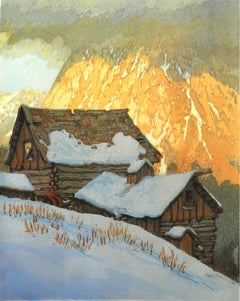
Aglow
By Leon Loughridge
Located in Colorado Springs, CO
Original Woodblock Print signed by the Artist with an edition number.
9/16
Category
21st Century and Contemporary Realist Leon Loughridge Prints and Multiples
Materials
Woodcut
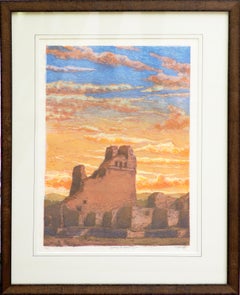
Spirits of Abo Mission
By Leon Loughridge
Located in Colorado Springs, CO
Original Woodblock Print signed by the Artist in the lower right corner.
7/12
Category
21st Century and Contemporary Impressionist Leon Loughridge Prints and Multiples
Materials
Woodcut
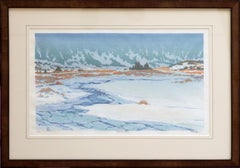
Freezing Over
By Leon Loughridge
Located in Colorado Springs, CO
Original Wood Block Print signed by the Artist in the lower right corner.
12/12
Category
21st Century and Contemporary Impressionist Leon Loughridge Prints and Multiples
Materials
Woodcut
Related Items
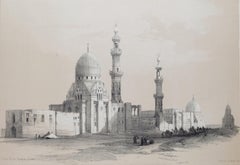
Mosque of Ayed Bey, Suez, Egypt: Original 19th C. Lithograph by D. Roberts
By David Roberts
Located in Alamo, CA
This is an original 19th century duotone lithograph entitled "Mosque of Ayed Bey, in the Desert of Suez" by David Roberts, from his Egypt and Nubia volumes of the large folio edition...
Category
1840s Realist Leon Loughridge Prints and Multiples
Materials
Lithograph

$575
H 16.75 in W 23.75 in
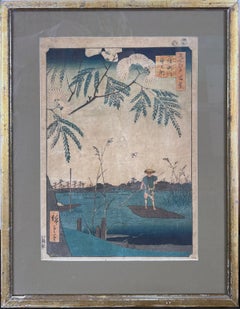
The Ayase River and Kanegafuchi, Summer, One Hundred Famous Views of Edo
By Utagawa Hiroshige (Ando Hiroshige)
Located in Soquel, CA
The Ayase River and Kanegafuchi, Summer, One Hundred Famous Views of Edo
Summer on the Ayase River by Hiroshige (Ando) Utagawa (Japan, 1797 - 1858 ). Woodcut circa 1856.
Ima...
Category
1850s Realist Leon Loughridge Prints and Multiples
Materials
Ink, Woodcut
$1,350
H 19.5 in W 14.13 in D 0.38 in
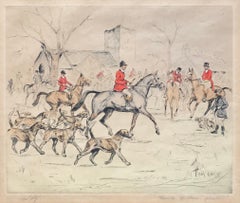
Hounds Gentlemen Please by Tom Carr - Engraving 26x31 cm
Located in Geneva, CH
Work on paper
Ed: 63/75
Category
Mid-20th Century Realist Leon Loughridge Prints and Multiples
Materials
Engraving
$360 Sale Price
28% Off
H 10.24 in W 12.21 in D 0.08 in
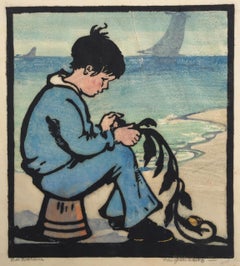
SEA TREASURES
By Frances H. Gearhart
Located in Santa Monica, CA
FRANCES H. GEARHART and Sisters (THE GEARHARTS)
SEA TREASURES...
Category
1920s American Impressionist Leon Loughridge Prints and Multiples
Materials
Woodcut
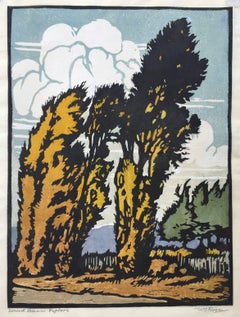
Wind Blown Poplars
By William Seltzer Rice
Located in Santa Monica, CA
WILLIAM SELTZER RICE (1873 – 1963)
WIND BLOWN POPLARS c. 1915-20
Color woodcut, Signed and titled in pencil. 9 x 12”. On thin paper....
Category
1910s American Impressionist Leon Loughridge Prints and Multiples
Materials
Woodcut
SAN JACINTO
By Frances H. Gearhart
Located in Santa Monica, CA
FRANCES H. GEARHART (1869-1958)
(Mt.) SAN JACINTO c. 1926
Color block print. Signed in pencil. Unknown edition but uncommon. Image 6 5/8 x 4 1/8 inches. On Gearhart's typical fibrous japan paper. Sheet 10 ½ x 5 7/8 inches. Generally fresh with her usual pinholes along right margin for printing, slight bit of discoloration in the margins
Provenance: Whitmore - Print Corner, Hingham MA. Their Gearhart inventory no. They were Gearhart's principal East coast dealer in the 30's. Obtained from the Whitmore Collection’s grandson in 1995. Old Print Shop...
Category
1920s American Impressionist Leon Loughridge Prints and Multiples
Materials
Woodcut
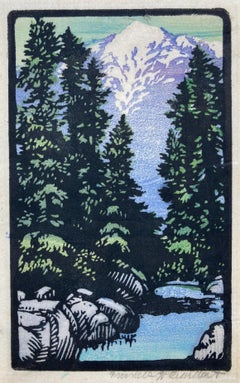
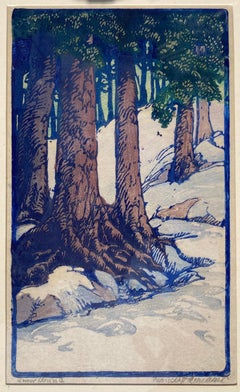
SNOWBOUND
By Frances H. Gearhart
Located in Santa Monica, CA
FRANCES H. GEARHART (1869-1958)
SNOWBOUND c.1928
Color block print, Signed and titled in pencil. 11 x 6 ½” sheet c. 14 x 9”
Laid down on backing board. The usual slight browning a...
Category
1920s American Impressionist Leon Loughridge Prints and Multiples
Materials
Color, Linocut, Woodcut
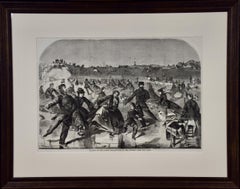
"Skating on Ladies
Pond Central Park": Winslow Homer 19th C. Woodcut Engraving
By Winslow Homer
Located in Alamo, CA
This Winslow Homer woodcut engraving entitled "Skating on the Ladies' Skating-Pond in Central Park, New York", was published in Harper's Weekly in the January 28, 1860 edition. It depicts a large number of men, women and children skating on a recently opened pond in Central Park. At the time of publication of this engraving, Central Park was in the early stages of construction. This engraving documents the very early appearance of Frederick Law Olmstead and Calvert Vaux's masterpiece of landscape design. According to Olmsted, the park was "of great importance as the first real Park made in this century – a democratic development of the highest significance". The people of New York were very proud of the plans for their park. It was stated at the time: "Our Park, which is progressing very satisfactorily under the management of the Commissioners, will undoubtedly be, one of these days, one of the finest place of the kind in the world...Those who saw the Park before the engineers went to work on it are amazed at the beautiful sites which have been contrived with such unpromising materials; all fair persons believe that the enterprise is managed with honesty and good taste."
Skating was rapidly rising in national popularity in part due to the opening of Central Park’s lake to skaters on a Sunday in December 1858 with 300 participants. The following Sunday it attracted ten thousand skaters. By Christmas Day, a reported 50,000 people came to the park, most of them to skate. There were rules governing who could use the skating pond. “The Ladies’ Pond...
Category
1870s American Impressionist Leon Loughridge Prints and Multiples
Materials
Engraving, Woodcut
$1,175
H 23.13 in W 29.5 in D 1.13 in
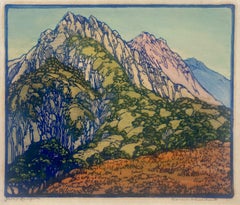
VALLEY RAMPARTS -
By Frances H. Gearhart
Located in Santa Monica, CA
FRANCES H. GEARHART (1869-1958)
VALLEY RAMPARTS 1933
Color block print, signed and titled in pencil. 10 1/8 x 12 inches. Very large and good impression In generally good condition. ...
Category
1930s Impressionist Leon Loughridge Prints and Multiples
Materials
Woodcut
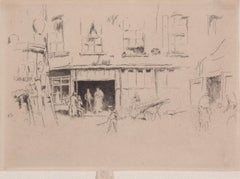
Little Court, from A Set of Twenty-Six Etchings by James A. McN. Whistler”, 1880
By James Abbott McNeill Whistler
Located in Philadelphia, PA
James Abbott McNeill Whistler
(American, 1834-1903)
Little Court, 1880-1
Etching and drypoint, printed in black ink on ivory laid paper; first state of two (Glasgow), 4 3/4 x 6 3/4 ...
Category
Late 19th Century Realist Leon Loughridge Prints and Multiples
Materials
Paper, Etching
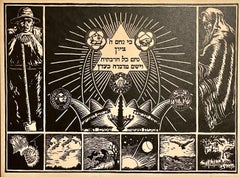
Rare 1922 German Jewish Judaica Zion Woodcut Woodblock Print Hermann Fechenbach
By Hermann Israel Fechenbach
Located in Surfside, FL
Title: Zion
Subject: Various biblical images depicting Creation and prayer
1922
Medium: woodcut
Frame: 14" x 18"
Image: 12.5" x 16.75"
Provenance: owned and signed verso by Peter Keil.
Central panel shows the Jewish star over a crown, with inscription in Hebrew: "When God comforts Zion, He will comfort all its ruins and make its deserts look like Eden," and "You have sanctified the seventh day, the goal of creation of Heaven and Earth." This is flanked by a Palestinian farmer pioneer on the left and a Jew praying on the right. The lower tier shows six vignettes of the days of creation from Genesis.
Hermann Fechenbach was born in 1897 in Württemberg, Germany. He grew up in Bad Mergentheim where his parents had an inn, which served as a meeting place for the local Jewish community.
He left school early and through family connections with clothing retailers received training in window dressing. His skill with brush writing was quickly recognised by a big firm in Dortmund where he was responsible for the displays in 10 large windows. He received his conscription papers in 1916 and recalls “being as patriotic as any other fool”. In August 1917 he was involved in a grenade attack in which he was the sole survivor. With serious injuries to both legs he struggled to safety and was eventually transported to a front line “slaughterhouse” where the first of a series of amputations was performed which led to the loss of his left leg.
As a result of his injuries his father dropped his opposition to him becoming an artist. His formal art education started in 1918 with training at a Stuttgart handcraft school for invalids. He attended the Academies in Stuttgart and Munich to learn painting and restoration for 3 years. He was influenced at this time by Max Liebermann. He has been compared to Kathe Kollwitz and was a contemporary of Jakob Steinhardt and hermann Struck. In 1923 he went to Florence for a year. While in Florence he started to produce a series of miniature wood engravings to illustrate the stories of Genesis. This was followed by periods in Pisa, Venice, Vienna and Amsterdam. In 1924 he returned to Stuttgart to paint in the contemporary style “Die Neue Sachlichkeit”. (The New Objectivity was a movement in German art that arose during the 1920s Weimar republic as a reaction against expressionism. The term was coined by Gustav Friedrich Hartlaub, the director of the Kunsthalle in Mannheim, who used it as the title of an art exhibition staged in 1925 to showcase artists who were working in a post-expressionist spirit. These artists—who included Max Beckmann, Otto Dix, George Grosz, Christian Schad, Rudolf Schlichter and Jeanne Mammen) Every spring and autumn he exhibited at the “Kunstgebit” which served as the showcase for all serious artists of the period.
His professional status “Kunstmaler und Grafiker” was recognised by Berlin in 1926. Practically all his work from this period was sold following exhibition.
In 1926 he collaborated with an architect friend to build a bungalow in Hohenheim, a non-Jewish area and a suburb of Stuttgart. Hermann alternately lived in his country bungalow and his town studio, producing portraits for sale or barter and wood engravings for his own pleasure.
In 1930 he married a non-Jewish professional photographer – Greta Batze. They had a studio in Stuttgart, which was used to teach art to a group of 12 students.
In 1933 the Nazi influence removed his name from the official state register together with the right to exhibit. By spending most of his time in his bungalow out of the Jewish quarter the Fechenbachs escaped being registered by the Nazis for some years. They were ostracised and abused by their non-Jewish neighbours. Hermann made weekly visits to friends in town to teach them the practical skills they would need assuming they were to escape from Germany. His energies were directed towards protection and survival.
Ultimately the Nazi persecution forced the Fechenbachs to flee their homeland. They moved to Palestine for 3 months in 1938, but found the political and physical environment unsustainable.
Greta arrived in England penniless in January 1939 to work as a domestic servant and to find a guarantor for her husband. Hermann arrived in May 1939. They moved to Blackheath a few months later. Hermann resumed his painting and engraving as a means of earning a living. He raised enough money to get his parents out of Germany to join his brothers in Argentina but was unable to save his twin sister Rosa who died in a Nazi concentration camp. In 1940 Hermann was interned in Bury as a suspect alien. He protested about his treatment by starting a hunger strike. Because of his persistence he was moved to a prison in Liverpool. From Liverpool he was moved to the Hutchinson Camp in the Isle of Man with fellow artist Kurt Schwitters. Arrangements were made for Greta to be accommodated near by. While interned he commenced work on “Refugee Impressions”, a series of linocut prints (no wood was available).
In 1941 when released from internment the Fechenbachs came under the sponsorship of Dr. Bela Horovitz, the Austrian art publisher who in turn made an introduction to Professor Tancred Borenius.
They were offered lodgings with a family in Oxford. Hermann had his first public exhibition for many years in a small gallery in Oxford in 1942. A second exhibition of oils, pencil drawings, coloured linocut and woodblock prints held later in the year was opened by the mayor of Oxford and critically acclaimed.
In 1944 the first London exhibition took place at the Anglo-Palestinian club in Piccadilly. There were two exhibitions at the Ben Uri Art gallery during this period.
In 1948 a second exhibition at the Anglo Palestinian club was inaugurated by a member of the Rothschild family and several members of Parliament. This was a great success.
In 1944 the Fechenbachs moved to a top floor studio flat in Colet Gardens. Open exhibitions were held each Spring at the Embankment from 1946 to 1951. Movietone News produced a short feature on the artist, which was shown in cinemas in England and Germany.
In 1969 he published the Genesis story in a hard back volume containing 137 prints. He started to research the fate of the entire Jewish community of Bad Mergentheim during the period of the second world war, liaising with historian Dr. Paul Sauer and Professor Max Miller, historian and theologian. In 1972 Kohlhammer published his partly autobiographical book “The last Jews of Mergentheim”. He exhibited at the Anglo-Palestinian Club & the Ben Uri Gallery in the 1940s. His works only came to prominence during the last year of his life when he exhibited at Blond Fine Art.
Peter Keil part of the Junge Wilde. In 1978, the Junge Wilde painting style arose in the German-speaking world in opposition to established avant garde, minimal art and conceptual art. It was linked to the similar Transavanguardia movement in Italy, USA (neo-expressionism) and France (Figuration Libre). They were also known as the Neue Wilde. Artists included; Austria: Siegfried Anzinger, Erwin Bohatsch, Herbert Brandl, Gunter Damisch, Hubert Scheibl, Hubert Schmalix...
Category
1980s Impressionist Leon Loughridge Prints and Multiples
Materials
Woodcut
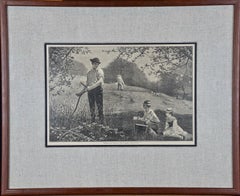
Winslow Homer 19th Century Woodcut Engraving "Making Hay"
By Winslow Homer
Located in Alamo, CA
This Winslow Homer woodcut engraving entitled "Making Hay", was published in Harper's Weekly in the July 6, 1872 edition. It depicts a two men hand cutting high grass on a hill. The man in the foreground is looking at a young boy and a girl (presumably his children), who are sitting on the ground with a picnic basket.
This beautiful Homer woodcut engraving is presented in a brown wood frame and a light beige fabric mat with a black inner mat. The print is in excellent condition.
There are two other Homer woodcut engravings in identical frames and mats that are listed on 1stdibs. See LU117326148332 and LU117326148272. These would make a wonderful display grouping. A discount is available for the purchase of two or all three of these prints.
This Winslow Homer engraving...
Category
1870s American Impressionist Leon Loughridge Prints and Multiples
Materials
Engraving, Woodcut
Leon Loughridge prints and multiples for sale on 1stDibs.
Find a wide variety of authentic Leon Loughridge prints and multiples available for sale on 1stDibs.