Louis Majorelle Serveware, Ceramics, Silver and Glass
French, 1859-1926

Louis-Jean-Sylvestre Majorelle, more commonly known as Louis Majorelle, was a French artist, metalworker and Art Nouveau designer celebrated for his bedroom furniture, cabinets, chairs and decorative objects

In 1877, Majorelle moved to Paris from the town of Nancy where he began his studies in painting under Jean-François Millet at the École de Beaux Arts. Following the death of his father, a furniture designer, he returned to Nancy and took over the family workshop. Parisian architect Henri Sauvage designed Majorelle’s house in Nancy, Villa Majorelle, which featured stained glass by Jacques Gruber. 

In order to increase productivity and reduce costs — as well as shift the family business’s focus from reproductions of 18th-century furniture such as Louis XV chairs to instead working in the era’s Art Nouveau style — Majorelle integrated modern techniques and processes at his atelier (these changes were in part inspired by innovative glassmaker Emile Gallé). 

The workshop became known for Majorelle’s distinctive designs and the pronounced craftsmanship of its offerings. There were tables made from mahogany and ormolu that featured handsome bronze mounts and marquetry, table lamps that shared common ground with the prized designs associated with Tiffany Studios, and decorative pieces that Majorelle produced in partnership with Daum, a revered manufacturer of French art glass. 

The work was very much characterized by the botanical motifs and curvaceous silhouettes of Art Nouveau design, and the business was successful. Majorelle produced a range of items during the early 1900s and was a participant in the 1900 Paris Exposition as well as the Exposition de l'Ecole de Nancy in 1903.

In 1916, a devastating fire broke out in Majorelle’s factory on the rue du Vieil-Aître in Nancy. It destroyed all of the company’s awards, sketches, molds, equipment and archives of Majorelle’s work. In 1917, destruction again shook his business when his shop on the rue Saint-Georges was bombed by German aircraft. The designer marched on — he relocated to Paris where he shared a workspace and created vases and other vessels in the Art Deco style before he moved back to Nancy. Majorelle designed the Nancy Pavilion at the International Exhibition of Modern Decorative and Industrial Arts in 1925 with Alfred Lévy. He died in 1926.

Find antique Louis Majorelle cabinets, seating and decorative objects on 1stDibs.

to
1
1
1
1
1
1
1
1
1
1
1
1
20
596
468
436
399
Creator: Louis Majorelle
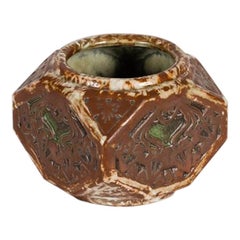
Louis Majorelle, Art Nouveau Geometric Vase, France, Early 20th Century
By Louis Majorelle
Located in New York, NY
An artist working in the Art Nouveau style, Majorelle made a splash at the 1900 Exposition Universelle in Paris and was one of the founders of the E´cole de Nancy. This intricately p...
Category

Early 20th Century French Art Nouveau Louis Majorelle Serveware, Ceramics, Silver and Glass
Materials

Stoneware

Related Items
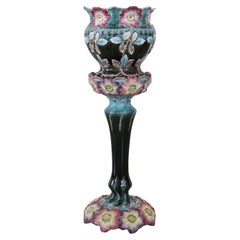
Early 20th Century Art Nouveau Column with Ceramic Vase
Located in Casale Monferrato, IT
We present this splendid column vase, made in Italy, dating back to the early 20th century. The vase is crafted from polychrome glazed ceramic. The eye-catching decoration captures t...
Category

Early 20th Century Italian Art Nouveau Louis Majorelle Serveware, Ceramics, Silver and Glass
Materials

Ceramic

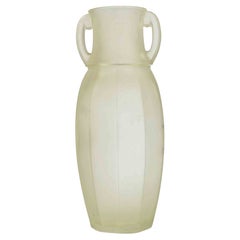
Art Nouveau Opaline Glass Vase, Early 20th Century
Located in Roma, IT
Art Nouveau Opaline glass vase realized in the early 20th Century. Excellent condition.
Category

Early 20th Century French Art Nouveau Louis Majorelle Serveware, Ceramics, Silver and Glass

Materials

Opaline Glass

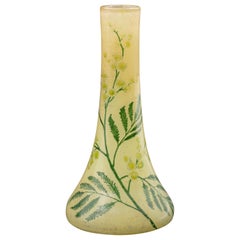
Art Nouveau Opaline Glass Vase, Early 20th Century
$526 Sale Price
20% Off
H 8.67 in W 2.37 in D 2.37 in
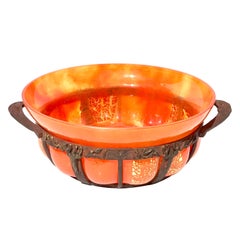
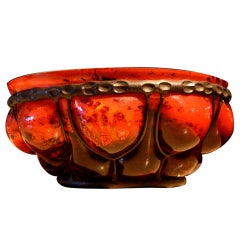
Daum Nancy Glass and Louis Majorelle iron Art Nouveau Bowl
By Louis Majorelle, Daum
Located in Dallas, TX
Daum Nancy Louis Majorelle Glass mold blown and Cast iron Cache pot or planter Bowl Circa: 1910 Nancy, France Condition: Excellent Diameter: 13.5 Inches Height: 4.8 inches A lovely...
Category

Early 1900s French Art Nouveau Antique Louis Majorelle Serveware, Ceramics, Silver and Glass

Materials

Iron

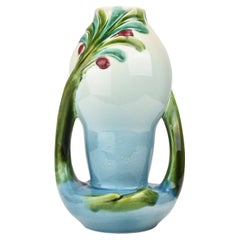
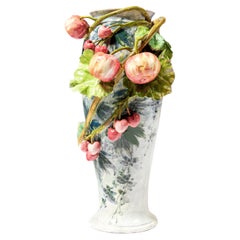
Art Nouveau Majolica Vase by Sarreguemines, France
By Sarreguemines
Located in Bad Säckingen, DE
This antique Art Nouveau double-handled majolica ceramic vase features a beautifully embossed floral motif and was made by the famous French manu...
Category

Early 1900s French Art Nouveau Antique Louis Majorelle Serveware, Ceramics, Silver and Glass

Materials

Ceramic

Art Nouveau Majolica Vase by Sarreguemines, France
$659 Sale Price
20% Off
H 9.85 in Dm 5.71 in
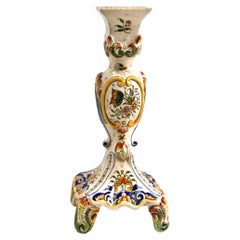
Early 20th Century French Hand-Painted Faience Candlestick from Rouen
By Rouen
Located in Verviers, BE
The designs on this French faience group is typical of pottery made in Rouen. Early 20th Century French Hand-Painted Faience Candlestick from Rouen Marking on the bottom: " Rouen Fa...
Category

Early 20th Century French Louis Majorelle Serveware, Ceramics, Silver and Glass

Materials

Faience

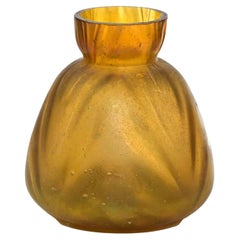
Art Nouveau Bohemian Glass Vase, Early 20th Century
Located in Roma, IT
Art Nouveau bohemian iridescent orange vase, realized in the early 20th Century. Excellent condition.
Category

Early 20th Century Czech Louis Majorelle Serveware, Ceramics, Silver and Glass

Materials

Glass

Art Nouveau Bohemian Glass Vase, Early 20th Century
$430 Sale Price
20% Off
H 3.75 in Dm 3.94 in
Glazed Ceramic vase, Art Nouveau Period, France, Early 20th Century.
Located in Buenos Aires, Buenos Aires
Glazed Ceramic vase, Art Nouveau Period, France, Early 20th Century.
Category

Early 20th Century French Art Nouveau Louis Majorelle Serveware, Ceramics, Silver and Glass

Materials

Ceramic

Glazed Ceramic Vase, Italy, Early 20th Century
Located in Buenos Aires, Buenos Aires
Glazed ceramic vase, Italy, early 20th century. Signed Faenza Di Napoli.
Category

Early 20th Century Italian Art Nouveau Louis Majorelle Serveware, Ceramics, Silver and Glass

Materials

Ceramic

Glazed Ceramic Vase, Italy, Early 20th Century
$7,000
H 22.45 in W 11.82 in D 11.82 in
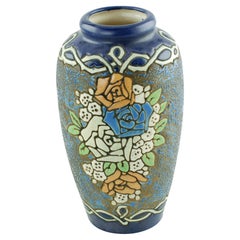
Early 20th Century Amphora Enameled Pottery Vase
Located in Cincinnati, OH
This striking enameled pottery vase was made by Amphora and is decorated with stylized floral decoration set against a textured ground made up of variegated blue enamel paint on a me...
Category

Early 20th Century Czech Art Deco Louis Majorelle Serveware, Ceramics, Silver and Glass

Materials

Pottery

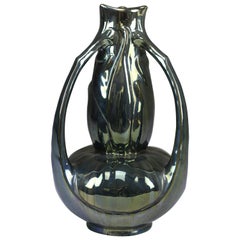
Early 20th Century Art Nouveau Vase by Alphonse Cytère, 1910
By Jean-Baptiste Alphonse Cytère 1
Located in Paris, FR
A beautiful antique ceramic vase handcrafted by Alphonse Cytère known for developing this metallic finish. Typical Art Nouveau style. This model with...
Category

20th Century French Art Nouveau Louis Majorelle Serveware, Ceramics, Silver and Glass

Materials

Ceramic

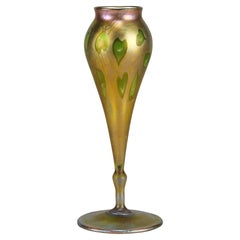
Early 20th Century Art Nouveau Glass "Hearts and Vines Vase" by Louis Tiffany
By Louis Comfort Tiffany
Located in London, GB
An impressive early 20th Century American iridescent glass vase of slender form with green hearts shining through an attractive golden iridescence, signed L C Tiffany Favrile and numbered to base. ADDITIONAL INFORMATION Height: 23 cm Condition: Very Good Condition Circa: 1905 Materials: Iridescent Coloured Glass SKU: 6667 ABOUT Louis Comfort Tiffany Louis Comfort Tiffany (February 18, 1848 – January 17, 1933) was an American artist and designer who worked in the decorative arts and is best known for his work in stained glass. He is the American artist most associated with the Art Nouveau and Aesthetic movements. Tiffany was affiliated with a prestigious collaborative of designers known as the Associated Artists, which included Lockwood de Forest, Candace Wheeler, and Samuel Colman. Tiffany designed stained glass windows and lamps, glass mosaics, blown glass, ceramics, jewellery, enamels and metalwork. Early Life He was born in New York City, New York, the son of Charles Lewis Tiffany, founder of Tiffany and Company; and Harriet Olivia Avery Young. He attended school at Pennsylvania Military Academy in West Chester, Pennsylvania, and Eagleswood Military Academy in Perth Amboy, New Jersey. His first artistic training was as a painter, studying under George Inness in Eagleswood, New Jersey and Samuel Colman in Irvington, New York. He also studied at the National Academy of Design in New York City in 1866-67 and with salon painter Leon-Adolphe-Auguste Belly in 1868-69. Belly’s landscape paintings had a great influence on Tiffany. Career Louis started out as a painter, but became interested in glassmaking from about 1875 and worked at several glasshouses in Brooklyn between then and 1878. In 1879, he joined with Candace Wheeler, Samuel Colman and Lockwood de Forest to form Louis Comfort Tiffany and Associated American Artists. The business was short-lived, lasting only four years. The group made designs for wallpaper, furniture, and textiles. He later opened his own glass factory in Corona, New York, determined to provide designs that improved the quality of contemporary glass. Tiffany’s leadership and talent, as well as his father’s money and connections, led this business to thrive. In 1881 Tiffany did the interior design of the Mark Twain House in Hartford, Connecticut, which still remains, but the new firm’s most notable work came in 1882 when President Chester Alan Arthur refused to move into the White House until it had been redecorated. He commissioned Tiffany, who had begun to make a name for himself in New York society for the firm’s interior design work, to redo the state rooms, which Arthur found charmless. He worked on the East Room, the Blue Room, the Red Room, the State Dining Room and the Entrance Hall, refurnishing, repainting in decorative patterns, installing newly designed mantelpieces, changing to wallpaper with dense patterns and, of course, adding Tiffany glass to gaslight fixtures, windows and adding an opalescent floor-to-ceiling glass screen in the Entrance Hall. The Tiffany screen and other Victorian additions were all removed in the Roosevelt renovations of 1902, which restored the White House interiors to Federal style in keeping with its architecture. A desire to concentrate on art in glass led to the breakup of the firm in 1885 when Tiffany chose to establish his own glassmaking firm that same year. The first Tiffany Glass Company was incorporated December 1, 1885 and in 1902 became known as the Tiffany Studios. In the beginning of his career, he used cheap jelly jars and bottles because they had the mineral impurities that finer glass lacked. When he was unable to convince fine glassmakers to leave the impurities in, he began making his own glass. Tiffany used opalescent glass in a variety of colors and textures to create a unique style of stained glass. He developed the “copper foil” technique, which, by edging each piece of cut glass in copper foil and soldering the whole together to create his windows and lamps, made possible a level of detail previously unknown. This can be contrasted with the method of painting in enamels or glass paint on colorless glass, and then setting the glass pieces in lead channels, that had been the dominant method of creating stained glass for hundreds of years in Europe. (The First Presbyterian Church building of 1905 in Pittsburgh, Pennsylvania is unique in that it uses Tiffany windows that partially make use of painted glass.) Use of the colored glass itself to create stained glass pictures was motivated by the ideals of the Arts and Crafts movement and its leader William Morris in England. Fellow artists and glassmakers Oliver Kimberly and Frank Duffner, founders of the Duffner and Kimberly Company and John La Farge were Tiffany’s chief competitors in this new American style of stained glass. Tiffany, Duffner and Kimberly, along with La Farge, had learned their craft at the same glasshouses in Brooklyn in the late 1870s. In 1889 at the Paris Exposition, he is said to have been “Overwhelmed” by the glass work of Émile Gallé, French Art Nouveau artisan. He also met artist Alphonse Mucha. In 1893, Tiffany built a new factory called the Stourbridge Glass Company, later called Tiffany Glass Furnaces, which was located in Corona, Queens, New York, hiring the Englishman Arthur J. Nash to oversee it. In 1893, his company also introduced the term Favrilein conjunction with his first production of blown glass at his new glass factory. Some early examples of his lamps were exhibited in the 1893 World’s Fair in Chicago. At the Exposition Universelle (1900) in Paris, he won a gold medal with his stained glass windows The Four Seasons He trademarked Favrile (from the old French word for handmade) on November 13, 1894. He later used this word to apply to all of his glass, enamel and pottery. His first commercially produced lamps date from around 1895. Much of his company’s production was in making stained glass windows and Tiffany lamps, but his company designed a complete range of interior decorations. At its peak, his factory employed more than 300 artisans. Recent scholarship led by Rutgers professor Martin Eidelberg suggests that a team of talented single women designers – sometimes referred to as the “Tiffany Girls” – led by Clara Driscoll played a big role in designing many of the floral patterns on the famous Tiffany...
Category

Early 20th Century American Art Nouveau Louis Majorelle Serveware, Ceramics, Silver and Glass

Materials

Glass

Art Nouveau Vase by Legras Cie, France, Early 20th Century
By Legras Cie
Located in Roma, IT
Art Nouveau vase - France early 20th century is an original decorative object realized in France between the 1900 and the 1914. Realized by Legras & Cie, made in France. Origin...
Category

Early 20th Century French Art Deco Louis Majorelle Serveware, Ceramics, Silver and Glass

Materials

Glass

Previously Available Items
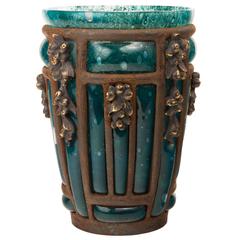
French Art Deco Daum Nancy Louis Majorelle Wrought Iron and Glass Vase
By Daum, Louis Majorelle
Located in Englewood, NJ
A French Art Deco wrought iron and blown glass vase by Daum Nancy and Louis Majorelle with aqua / green blown out controlled bubble decorated glass blown out with in decorated wrough...
Category

1920s French Art Deco Vintage Louis Majorelle Serveware, Ceramics, Silver and Glass

Materials

Wrought Iron

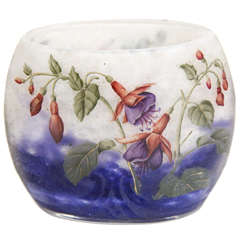
Art Nouveau Fuchsia Purple Acid Etched Glass Cameo Vase signed by Daum
By Louis Majorelle
Located in New York, NY
Art Nouveau double-overlaid and acid etched glass vase adorned with Fuchsia Magellanica blossoms signed by the prestigious Nancy Daum. Works by Daum, especially of such superior craf...
Category

20th Century French Art Nouveau Louis Majorelle Serveware, Ceramics, Silver and Glass

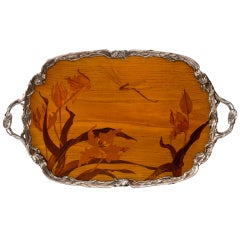
Louis Majorelle French Marquetry Tray
By Louis Majorelle
Located in New York, NY
A French Art Nouveau marquetry tray with silver plated bronze decoration by Louis Majorelle. The tray features dragonflies and a tulip motif. (MG Inventory #F15042)
Category

Early 20th Century French Art Nouveau Louis Majorelle Serveware, Ceramics, Silver and Glass

An Art Deco Glass and Wrought Iron Bowl by Daum L. Majorelle
By Louis Majorelle
Located in Austin, TX
NOTE: THIS ITEM WAS STOLEN FROM OUR GALLERY ON 5/28/2012 A French Art Deco glass and wrought iron bowl by Daum and Majorelle. Internally decorated glass of sunset orange and bl...
Category

Early 20th Century French Louis Majorelle Serveware, Ceramics, Silver and Glass

Louis Majorelle serveware, ceramics, silver and glass for sale on 1stDibs.

Louis Majorelle serveware, ceramics, silver and glass are available for sale on 1stDibs. These distinctive items are frequently made of stoneware and are designed with extraordinary care. There are many options to choose from in our collection of Louis Majorelle serveware, ceramics, silver and glass, although brown editions of this piece are particularly popular. Many of the original serveware, ceramics, silver and glass by Louis Majorelle were created in the Art Nouveau style in france during the early 20th century. If you’re looking for additional options, many customers also consider serveware, ceramics, silver and glass by Emile Gallé, Georges De Feure, and Muller Frères. Prices for Louis Majorelle serveware, ceramics, silver and glass can differ depending upon size, time period and other attributes — on 1stDibs, these items begin at $1,294 and can go as high as $4,800, while a piece like these, on average, fetch $3,047.

Still Thinking About These?

All Recently Viewed