Lucien Clergue Portrait Photography

French, 1934-2014
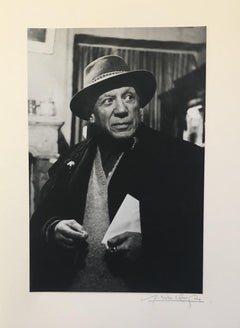
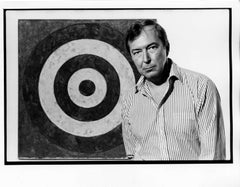
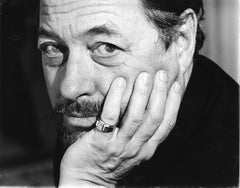
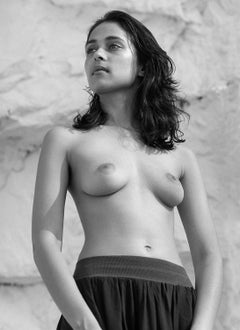
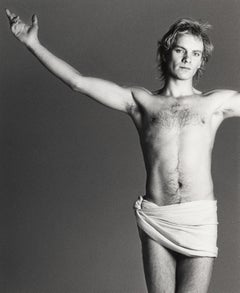
French photographer Lucien Clergue’s work is deeply rooted in his home city of Arles. Picking up a camera as a young man in post-war Provence, he took a different route than other artists of his generation, turning his lens on the rubble and destruction of France after the war, often shooting in low-lit, decimated homes. In addition to his scenes of the city, Clergue’s oeuvre includes incisive images of peers such as Pablo Picasso, Jean Cocteau, and other iconic figures in the south of France. It is his faceless female nudes, however—from the subtle eroticism of his beachside scenes to the chic geometries of his black-and-white “Nu Zebre” series—that have become the artist’s signature.
to
7
1
Overall Width
to
Overall Height
to
8
2
6
6
2
3
3
3
2
2
2
1
1
1
1
7
1
1
17
2,353
1,361
221
212
1
1
7
1
Artist: Lucien Clergue
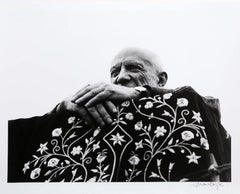
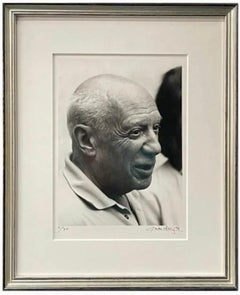
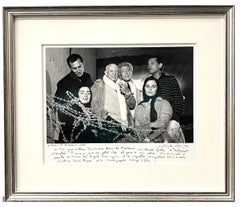
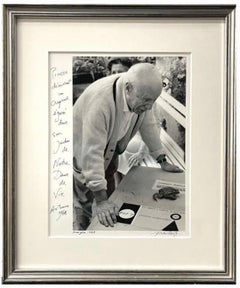
Picasso, President de la Comida, Frejus
By Lucien Clergue
Located in Carmel, CA
Excellent Condition, Framed upon purchase, Purchased from Photography West Gallery, Carmel CA. Print by artist 1988 Copyright The silver metalframe is 20.25" x 16.25"
Category

1960s Lucien Clergue Portrait Photography

Materials

Silver Gelatin

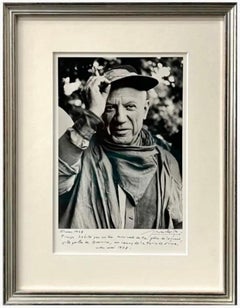
Silver Gelatin Photograph Hand Signed Photo Pablo Picasso Profile Lucien Clergue
By Lucien Clergue
Located in Surfside, FL
Lucien Clergue (FRENCH, 1934 - 2014) Gelatin silver photographic print depicting Pablo Picasso with a frog or turtle. Mougins, 1968 Hand signed by the artist with hand written descr...
Category

20th Century Modern Lucien Clergue Portrait Photography

Materials

Silver Gelatin

Silver Gelatin Photograph Hand Signed Photo Pablo Picasso w Baby Lucien Clergue
By Lucien Clergue
Located in Surfside, FL
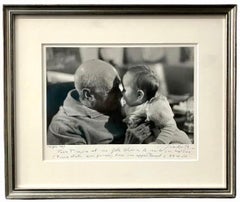
Lucien Clergue (FRENCH, 1934 - 2014) Gelatin silver photographic print depicting Pablo Picasso holding a baby. Picasso et sa filleule Olivia (Picasso et bébé) Mougins, 1967 Hand sig...
Category

20th Century Modern Lucien Clergue Portrait Photography

Materials

Silver Gelatin

Silver Gelatin Photograph Hand Signed Photo Pablo Picasso Feria Lucien Clergue
By Lucien Clergue
Located in Surfside, FL
Lucien Clergue (FRENCH, 1934 - 2014) Gelatin silver photographic print depicting a portrait of a costumed Pablo Picasso. During the Feria de Nîmes festival, Picasso dressed...
Category

20th Century Modern Lucien Clergue Portrait Photography

Materials

Silver Gelatin

5 Photographies (Picasso s portraits) by Lucien Clergue - 30 copies
By Lucien Clergue
Located in Paris, IDF
"De cape qui caresse et d'épée qui foudroie l'oeuvre de Picasso" With 5 originals photographies (Picasso's portraits) by Lucien Clergue. All are signed by the photographer. Edition ...
Category

20th Century Lucien Clergue Portrait Photography

Materials

Photographic Film

Silver Gelatin Photograph Hand Signed Photo Pablo Picasso Arles Lucien Clergue
By Lucien Clergue
Located in Surfside, FL
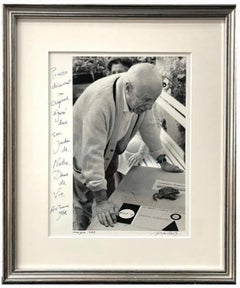
Lucien Clergue (FRENCH, 1934 - 2014) Gelatin silver photographic print depicting Pablo Picasso Picasso Après la Corrida, Arles, 1962. Hand signed by the artist and numbered 4/30 (e...
Category

20th Century Modern Lucien Clergue Portrait Photography

Materials

Silver Gelatin

Silver Gelatin Photograph Hand Signed Photo Pablo Picasso Lucien Clergue
By Lucien Clergue
Located in Surfside, FL
Lucien Clergue (FRENCH, 1934 - 2014) Gelatin silver photographic print depicting Pablo Picasso titled "Mougins". Jacqueline et Pablo Picasso écoutant Manitas de Plata, circa 1968. H...
Category

20th Century Modern Lucien Clergue Portrait Photography

Materials

Silver Gelatin

Picasso Preside la Corrida - Frejus, 1962
By Lucien Clergue
Located in Long Island City, NY
Artist: Lucien Clergue, French (1934 - 2014) Title: Picasso Preside la Corrida - Frejus, 1962 Year: 1962 (printed 1992) Medium: Gelatin Silver Print, Sig...
Category

1960s Modern Lucien Clergue Portrait Photography

Materials

Silver Gelatin

Related Items
Couple Sharing a Chair at Party - Romantic Couple Silver Gelatin Print
Located in Brighton, GB
Couple Sharing a Chair at Party - Romantic Couple Silver Gelatin Photograph An amorous couple embraces intensely at a party, almost catching the attention of nearby partygoers... Th...
Category

20th Century Modern Lucien Clergue Portrait Photography

Materials

Photographic Paper, Black and White, Silver Gelatin

Couple at Party - Black and White Romantic Couple Silver Gelatin Photograph
Located in Brighton, GB
Couple at Party - Black and White Romantic Couple Silver Gelatin Photograph A couple relaxes and laughs on a spacious sofa on the terrace of a villa. The party is still in full swin...
Category

20th Century Modern Lucien Clergue Portrait Photography

Materials

Photographic Paper, Black and White, Silver Gelatin

Dining Out - New York Dinner Portrait Couple Dining Black and White Photograph
Located in Brighton, GB
Dining Out - New York Dinner Portrait Couple Dining Black and White Photograph A couple dining out at an elegant hotel in New York is caught momentarily distracted by the floor show...
Category

20th Century Modern Lucien Clergue Portrait Photography

Materials

Photographic Paper, Black and White, Silver Gelatin

Fire Hydrant, Harlem, Portrait Photography of African American Children 1960s
By Leonard Freed
Located in New york, NY
Punctuated by documentary photo essays such as Black in White America, Fire Hydrant is one of Leonard Freed's most iconic in the Harlem series. In the image of Fire Hydrant, two chil...
Category

1960s Contemporary Lucien Clergue Portrait Photography

Materials

Photographic Film, Archival Paper, Digital, Archival Pigment, Digital Pi...

Spectre HQ - James Bond Thunderball Hollywood Movie Film Ken Adam Set Design
Located in Brighton, GB
A view of the vast and extensive film set of the James Bond film 'You Only Live Twice' (1966). The set was designed by Ken Adam and structured to represent the inside secret base o...
Category

20th Century Modern Lucien Clergue Portrait Photography

Materials

Photographic Paper, Black and White, Silver Gelatin

Diana Vreeland Wearing a Cowboy Hat
By Andy Warhol
Located in Beverly Hills, CA
This is a unique photographic work taken by Andy Warhol on February 25, 1978 at a dinner for Cecil Beaton at Diana Vreeland's with Peter Beard, Carole Bouquet, Cecil Beaton and other...
Category

1970s Pop Art Lucien Clergue Portrait Photography

Materials

Silver Gelatin

James Dean - American Cultural Icon Hollywood Actor Silver Gelatin Photograph
Located in Brighton, GB
James Dean - American Cultural Icon Hollywood Actor Silver Gelatin Photograph The iconic American actor James Dean poses for a photograph at a dinner. He wears a tuxedo and has a so...
Category

20th Century Modern Lucien Clergue Portrait Photography

Materials

Photographic Paper, Black and White, Silver Gelatin

Botero in his Studio, Paris, Photograph of Artist Fernando Botero, Edition
By Jean-Michel Voge
Located in New york, NY
Fernando Botero in his Studio, Paris, 1992 by Jean-Michel Voge is a 13" x 19" archival pigment print in an edition of 5, printed by the photographer on handmade Japanese Awagami pape...
Category

1990s Contemporary Lucien Clergue Portrait Photography

Materials

Photographic Film, Archival Ink, Archival Paper, Rag Paper, Digital, Arc...

Chestnut Vendor, Depression by John Albok, 1933, Silver Gelatin Print
By John Albok
Located in Denton, TX
Chestnut Vendor, Depression by John Albok depicts a man selling chestnuts on the street. The man looks down at his hands as he cracks open the chestnut. To his left sits a bowl of ch...
Category

1930s Modern Lucien Clergue Portrait Photography

Materials

Silver Gelatin

Nicola (Nicky) Weymouth, unique acetate positive of British socialite provenance
By Andy Warhol
Located in New York, NY
Andy Warhol Nicola (Nicky) Weymouth, ca. 1976 Acetate positive, acquired directly from Chromacomp, Inc. Andy Warhol's printer in the 1970s. Accompanied by a Letter of Provenance from the representative of Chromacomp Unique Frame included: Elegantly framed in a museum quality white wood frame with UV plexiglass: Measurements: Frame: 18 x 15.5 x 1.5 inches Acetate: 11 x 8 inches This is the original, unique photographic acetate positive taken by Andy Warhol as the basis for his portrait of Nicky Weymouth, that came from Andy Warhol's studio, The Factory to his printer. It was acquired directly from Chromacomp, Inc. Andy Warhol's printer in the 1970s. It is accompanied by a Letter of Provenance from the representative of Chromacomp. This is one of the images used by Andy Warhol to create his iconic portrait of the socialite Nicola Samuel Weymouth, also called Nicky Weymouth, Nicky Waymouth, Nicky Lane Weymouth or Nicky Samuel. Weymouth (nee Samuel) was a British socialite, who went on to briefly marry the jewelry designer Kenneth Lane, whom she met through Warhol. This acetate positive is unique, and was sent to Chromacomp because Warhol was considering making a silkscreen out of this portrait. As Bob Colacello, former Editor in Chief of Interview magazine (and right hand man to Andy Warhol), explained, "many hands were involved in the rather mechanical silkscreening process... but only Andy in all the years I knew him, worked on the acetates." An acetate is a photographic negative or positive transferred to a transparency, allowing an image to be magnified and projected onto a screen. As only Andy worked on the acetates, it was the last original step prior to the screenprinting of an image, and the most important element in Warhol's creative process for silkscreening. Warhol realized the value of his unique original acetates like this one, and is known to have traded the acetates for valuable services. This acetate was brought by Warhol to Eunice and Jackson Lowell, owners of Chromacomp, a fine art printing studio in NYC, and was acquired directly from the Lowell's private collection. During the 1970s and 80s, Chromacomp was the premier atelier for fine art limited edition silkscreen prints; indeed, Chromacomp was the largest studio producing fine art prints in the world for artists such as Andy Warhol, Leroy Neiman, Erte, Robert Natkin, Larry Zox, David Hockney and many more. All of the plates were done by hand and in some cases photographically. Famed printer Alexander Heinrici worked for Eunice Jackson Lowell at Chromacomp and brought Andy Warhol in as an account. Shortly after, Warhol or his workers brought in several boxes of photographs, paper and/or acetates and asked Jackson Lowell to use his equipment to enlarge certain images or portions of images. Warhol made comments and or changes and asked the Lowells to print some editions; others were printed elsewhere. Chromacomp Inc. ended up printing Warhol's Mick Jagger Suite and the Ladies Gentlemen Suite, as well as other works, based on the box of photographic acetates that Warhol brought to them. The Lowell's allowed the printer to be named as Alexander Heinrici rather than Chromacomp, since Heinrici was the one who brought the account in. Other images were never printed by Chromacomp- they were simply being considered by Warhol. Warhol left the remaining acetates with Eunice and Jackson Lowell. After the Lowells closed the shop, the photographs were packed away where they remained for nearly a quarter of a century. This work is exactly as it was delivered from the factory. Unevenly cut by Warhol himself. This work is accompanied by a signed letter of provenance from the representative of Chromacomp, Andy Warhol's printer for many of his works in the 1970s. About Andy Warhol: Isn’t life a series of images that change as they repeat themselves? —Andy Warhol Andy Warhol’s (1928–1987) art encapsulates the 1960s through the 1980s in New York. By imitating the familiar aesthetics of mass media, advertising, and celebrity culture, Warhol blurred the boundaries between his work and the world that inspired it, producing images that have become as pervasive as their sources. Warhol grew up in a working-class suburb of Pittsburgh. His parents were Slovak immigrants, and he was the only member of his family to attend college. He entered the Carnegie Institute of Technology (now Carnegie Mellon University) in 1945, where he majored in pictorial design. After graduation, he moved to New York with fellow student Philip Pearlstein and found steady work as a commercial illustrator at several magazines, including Vogue, Harper’s Bazaar, and the New Yorker. Throughout the 1950s Warhol enjoyed a successful career as a commercial artist, winning several commendations from the Art Directors Club and the American Institute of Graphic Arts. He had his first solo exhibition at the Hugo Gallery in 1952, showing drawings based on the writings of Truman Capote; three years later his work was included in a group show at the Museum of Modern Art for the first time. The year 1960 marked a turning point in Warhol’s prolific career. He painted his first works based on comics and advertisements, enlarging and transferring the source images onto canvas using a projector. In 1961 Warhol showed these hand-painted works, including Little King (1961) and Saturday’s Popeye (1961), in a window display at the department store Bonwit Teller; in 1962 he painted his famous Campbell’s Soup Cans, thirty-two separate canvases, each depicting a canned soup of a different flavor. Soon after, Warhol began to borrow not only the subject matter of printed media, but the technology as well. Incorporating the silkscreen technique, he created grids of stamps, Coca-Cola bottles, shipping and handling labels, dollar bills, coffee labels...
Category

1970s Pop Art Lucien Clergue Portrait Photography

Materials

Photographic Film

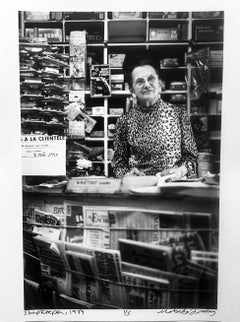
Paris, France, Cities, Documentary Portrait Photography, Parisian Shopkeeper
By Roberta Fineberg
Located in New york, NY
A black-and-white photograph (analog) of a Parisian magazine/newspaper shopkeeper who exhibits a unique brand of French quirkiness and expressiveness in Paris of the 1980s. Shot on film, Shopkeeper, 1989 by Roberta Fineberg is a 14” x 11” gelatin silver print in an edition of 5. Signed, dated, and titled on recto (photo front) by the artist. Provenance: RF Studio *** Artist's Bio: As a visual artist, Roberta Fineberg (RF) focuses on the themes of serendipity, inventiveness, the development of ideas and color fields for her mixed media works. Drawn to experimentation, she explores diverse mediums and concepts such as the ephemeral (Butterfly Series), stolen moments (documentary), play, timelessness, the enduring, and the significance of matter. RF’s selected exhibitions: Women of Spirit Zurcher Gallery New York (2025); Sojourner Gallery New York (2022); Phyllis Harriman Gallery New York studio shows (2020, 2022); CADAF online art...
Category

1980s Contemporary Lucien Clergue Portrait Photography

Materials

Silver Gelatin, Photographic Film, Photographic Paper

Photography 1950s, John Huston, Film Director of The Misfits, Photo History
By Burt Glinn
Located in New york, NY
A black and white photograph from 1956 that captures John Huston, celebrated film director during the filming of The Misfits featuring Marilyn Monroe. John Huston, 1956 by Burt Gli...
Category

1950s Contemporary Lucien Clergue Portrait Photography

Materials

Photographic Film, Photographic Paper, Silver Gelatin

Previously Available Items
Silver Gelatin Photograph Hand Signed Photo Pablo Picasso Arles Lucien Clergue
By Lucien Clergue
Located in Surfside, FL
Lucien Clergue (FRENCH, 1934 - 2014) Gelatin silver photographic print depicting Pablo Picasso Picasso Après la Corrida, Arles, 1962. Hand signed by the artist and numbered 4/30 (edition of 30) to lower left in ink. Mounted in a silver painted wooden frame with mat behind acrylic screen. Paper measures approx. 10 1/2" height x 7 1/2" width to sight. Measures approx. 16" height x 13 1/4" width Hand signed by the artist with hand written description. Titled and dated lower left. Mounted in a silver painted wooden frame with mat behind acrylic screen. Paper measures approx. 11 3/4" height x 9" width to sight. Framed measures approx. 17 1/4" height x 14 3/4" width. Lucien Clergue (French: 1934 – 2014) was a French photographer. He was Chairman of the Academy of Fine Arts, Paris for 2013. Lucien Clergue was born in Arles, France. At the age of 7 he began learning to play the violin, and after several years of study his teacher admitted that he had nothing more to teach him. Clergue was from a family of shopkeepers and could not afford to pursue further studies in a college or university school of music, such as a conservatory. In 1949, he learned the basics of photography. Four years later, at a corrida in Arles, he showed his photographs to Spanish painter Pablo Picasso who, though subdued, asked to see more of his work. Within a year and a half, young Clergue worked on his photography with the goal of sending more images to Picasso. During this period, he worked on a series of photographs of travelling entertainers, acrobats and harlequins, the Saltimbanques. He also worked on a series whose subject was carrion. On 4 November 1955 Lucien Clergue visited Picasso in Cannes, France. Their friendship lasted nearly 30 years until Picasso's death. Clergue's autobiographical book, Picasso My Friend, looks back on important moments of their relationship. In 1968, and with his friend Michel Tournier, Clergue founded the Rencontres d’Arles photography festival which is held annually in July in Arles. He exhibited his work at the festival during the years 1971–1973, 1975, 1979, 1982–1986, 1989, 1991, 1993, 1994, 2000, 2003 and 2007. Clergue also illustrated books, among them a book by writer Yves Navarre. Clergue took many photographs of the gypsies of southern France, and was instrumental in propelling the guitarist Manitas de Plata to fame. Clergue is perhaps most remembered and respected for his black-and-white studies of light, shadow, and form, featuring sinuous nude female bodies, zebra stripes of light, dynamic sand dunes, and seascapes extracted from the coast of the Camargue. Clergue's photographs are in the collections of numerous well-known museums and private collectors. His vintage photographs have been exhibited in over 100 solo exhibitions worldwide, with noted exhibitions such as in 1961, at the Museum of Modern Art New York, the last exhibition organized by Edward Steichen with Lucien Clergue, Bill Brandt and Yasuhiro Ishimoto. Museums with large collections of his work include The Fogg Museum at Harvard University and the Museum of Fine Arts, Boston. His work, Fontaines du Grand Palais (Fountains of the Grand Palais), is in Museo cantonale d'arte [de] of Lugano. His vintage photographs of Jean Cocteau are on permanent display at the Jean Cocteau Museum in Menton, France. In the U.S., an exhibition of the Cocteau photographs was premiered at Westwood Gallery, New York City. In 2007, the city of Arles honored Lucien Clergue and dedicated a retrospective collection of 360 of his photographs dating from 1953 to 2007. He also received the 2007 Lucie Award. He was named Knight of the Légion d'honneur in 2003 and elected member of the Academy of Fine Arts of the Institute of France on 31 May 2006, at the same time as a new section dedicated to photography was created. Clergue was the first photographer to enter the Academy to a position devoted specifically to photography. He was Chairman of the Academy of Fine Arts for 2013. Lucien Clergue was married to the art curator Yolande Clergue, founder of The Fondation Vincent van Gogh Arles. He was the father of two daughters: Anne Clergue, a curator of contemporary art who has worked at Leo Castelli Gallery, and Olivia Clergue, a handbag fashion designer whose godfather was Pablo Picasso. Pablo Picasso (1881 –1973) was a Spanish painter, sculptor, printmaker, ceramic artist and theatre designer who spent most of his adult life in France. Regarded as one of the most influential artists of the 20th century, he is known for co-founding the Cubist movement, the invention of constructed sculpture, the co-invention of collage, and for the wide variety of styles that he helped develop and explore. Among his most famous works are the proto-Cubist Les Demoiselles d'Avignon (1907), and Guernica (1937), a dramatic portrayal of the bombing of Guernica by German and Italian air forces during the Spanish Civil War. After 1906, the Fauvist work of the slightly older artist Henri Matisse motivated Picasso to explore more radical styles, beginning a fruitful rivalry between the two artists, who subsequently were often paired by critics as the leaders of modern art. In 1897, his realism began to show a Symbolist influence, for example, in a series of landscape paintings rendered in non-naturalistic violet and green tones. What some call his Modernist period (1899–1900) followed. His exposure to the work of Rossetti, Steinlen, Toulouse-Lautrec and Edvard Munch, combined with his admiration for favourite old masters such as El Greco, led Picasso to a personal version of modernism in his works of this period. Picasso made his first trip to Paris, then the art capital of Europe, in 1900. There, he met his first Parisian friend, journalist and poet Max Jacob, who helped Picasso learn the language and its literature. Soon they shared an apartment; Max slept at night while Picasso slept during the day and worked at night. These were times of severe poverty, cold, and desperation. Much of his work was burned to keep the small room warm. In 1907, Picasso joined an art gallery that had recently been opened in Paris by Daniel-Henry Kahnweiler, a German art historian and art collector who became one of the premier French art dealers of the 20th century. He was among the first champions of Pablo Picasso, Georges Braque and the Cubism that they jointly developed. Kahnweiler promoted burgeoning artists such as André Derain, Kees van Dongen, Fernand Léger, Juan Gris, Maurice de Vlaminck and several others who had come from all over the globe to live and work in Montparnasse at the time. Towards the end of World War I, Picasso became involved with Serge Diaghilev's Ballets Russes. Among his friends during this period were Jean Cocteau, Jean Hugo, Juan Gris, and others. In the summer of 1918, Picasso married Olga Khokhlova, a ballerina with Sergei Diaghilev's troupe, for whom Picasso was designing a ballet, Erik Satie's Parade, in Rome; they spent their honeymoon near Biarritz in the villa of glamorous Chilean art...
Category

20th Century Modern Lucien Clergue Portrait Photography

Materials

Silver Gelatin

Silver Gelatin Photograph Hand Signed Photo Pablo Picasso Profile Lucien Clergue
By Lucien Clergue
Located in Surfside, FL
Lucien Clergue (FRENCH, 1934 - 2014) Gelatin silver photographic print depicting Pablo Picasso with a frog or turtle. Mougins, 1968 Hand signed by the artist with hand written description. Titled and dated lower left. Mounted in a silver painted wooden frame with mat behind acrylic screen. Paper measures approx. 11 3/4" height x 9" width to sight. Framed measures approx. 17 1/4" height x 14 3/4" width. Lucien Clergue (French: 1934 – 2014) was a French photographer. He was Chairman of the Academy of Fine Arts, Paris for 2013. Lucien Clergue was born in Arles, France. At the age of 7 he began learning to play the violin, and after several years of study his teacher admitted that he had nothing more to teach him. Clergue was from a family of shopkeepers and could not afford to pursue further studies in a college or university school of music, such as a conservatory. In 1949, he learned the basics of photography. Four years later, at a corrida in Arles, he showed his photographs to Spanish painter Pablo Picasso who, though subdued, asked to see more of his work. Within a year and a half, young Clergue worked on his photography with the goal of sending more images to Picasso. During this period, he worked on a series of photographs of travelling entertainers, acrobats and harlequins, the Saltimbanques. He also worked on a series whose subject was carrion. On 4 November 1955 Lucien Clergue visited Picasso in Cannes, France. Their friendship lasted nearly 30 years until Picasso's death. Clergue's autobiographical book, Picasso My Friend, looks back on important moments of their relationship. In 1968, and with his friend Michel Tournier, Clergue founded the Rencontres d’Arles photography festival which is held annually in July in Arles. He exhibited his work at the festival during the years 1971–1973, 1975, 1979, 1982–1986, 1989, 1991, 1993, 1994, 2000, 2003 and 2007. Clergue also illustrated books, among them a book by writer Yves Navarre. Clergue took many photographs of the gypsies of southern France, and was instrumental in propelling the guitarist Manitas de Plata to fame. Clergue is perhaps most remembered and respected for his black-and-white studies of light, shadow, and form, featuring sinuous nude female bodies, zebra stripes of light, dynamic sand dunes, and seascapes extracted from the coast of the Camargue. Clergue's photographs are in the collections of numerous well-known museums and private collectors. His vintage photographs have been exhibited in over 100 solo exhibitions worldwide, with noted exhibitions such as in 1961, at the Museum of Modern Art New York, the last exhibition organized by Edward Steichen with Lucien Clergue, Bill Brandt and Yasuhiro Ishimoto. Museums with large collections of his work include The Fogg Museum at Harvard University and the Museum of Fine Arts, Boston. His work, Fontaines du Grand Palais (Fountains of the Grand Palais), is in Museo cantonale d'arte [de] of Lugano. His vintage photographs of Jean Cocteau are on permanent display at the Jean Cocteau Museum in Menton, France. In the U.S., an exhibition of the Cocteau photographs was premiered at Westwood Gallery, New York City. In 2007, the city of Arles honored Lucien Clergue and dedicated a retrospective collection of 360 of his photographs dating from 1953 to 2007. He also received the 2007 Lucie Award. He was named Knight of the Légion d'honneur in 2003 and elected member of the Academy of Fine Arts of the Institute of France on 31 May 2006, at the same time as a new section dedicated to photography was created. Clergue was the first photographer to enter the Academy to a position devoted specifically to photography. He was Chairman of the Academy of Fine Arts for 2013. Lucien Clergue was married to the art curator Yolande Clergue, founder of The Fondation Vincent van Gogh Arles. He was the father of two daughters: Anne Clergue, a curator of contemporary art who has worked at Leo Castelli Gallery, and Olivia Clergue, a handbag fashion designer whose godfather was Pablo Picasso. Pablo Picasso (1881 –1973) was a Spanish painter, sculptor, printmaker, ceramic artist and theatre designer who spent most of his adult life in France. Regarded as one of the most influential artists of the 20th century, he is known for co-founding the Cubist movement, the invention of constructed sculpture, the co-invention of collage, and for the wide variety of styles that he helped develop and explore. Among his most famous works are the proto-Cubist Les Demoiselles d'Avignon (1907), and Guernica (1937), a dramatic portrayal of the bombing of Guernica by German and Italian air forces during the Spanish Civil War. After 1906, the Fauvist work of the slightly older artist Henri Matisse motivated Picasso to explore more radical styles, beginning a fruitful rivalry between the two artists, who subsequently were often paired by critics as the leaders of modern art. In 1897, his realism began to show a Symbolist influence, for example, in a series of landscape paintings...
Category

20th Century Modern Lucien Clergue Portrait Photography

Materials

Silver Gelatin

Silver Gelatin Photograph Hand Signed Photo Pablo Picasso Profile Lucien Clergue
By Lucien Clergue
Located in Surfside, FL
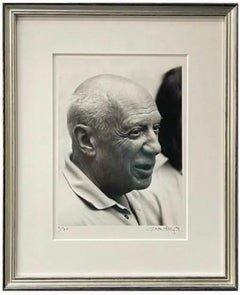
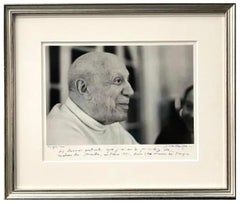
Lucien Clergue (FRENCH, 1934 - 2014) Gelatin silver photographic print depicting Pablo Picasso in profile. "The last portrait" This is the last picture Lucien Clergue took of Picasso, on his 90th birthday in Mougins, 1971 Hand signed by the artist with hand written description. Titled and dated lower left. Mounted in a silver painted wooden frame with mat behind acrylic screen. Paper measures approx. 11 3/4" height x 9" width to sight. Framed measures approx. 17 1/4" height x 14 3/4" width. Lucien Clergue (French: 1934 – 2014) was a French photographer. He was Chairman of the Academy of Fine Arts, Paris for 2013. Lucien Clergue was born in Arles, France. At the age of 7 he began learning to play the violin, and after several years of study his teacher admitted that he had nothing more to teach him. Clergue was from a family of shopkeepers and could not afford to pursue further studies in a college or university school of music, such as a conservatory. In 1949, he learned the basics of photography. Four years later, at a corrida in Arles, he showed his photographs to Spanish painter Pablo Picasso who, though subdued, asked to see more of his work. Within a year and a half, young Clergue worked on his photography with the goal of sending more images to Picasso. During this period, he worked on a series of photographs of travelling entertainers, acrobats and harlequins, the Saltimbanques. He also worked on a series whose subject was carrion. On 4 November 1955 Lucien Clergue visited Picasso in Cannes, France. Their friendship lasted nearly 30 years until Picasso's death. Clergue's autobiographical book, Picasso My Friend, looks back on important moments of their relationship. In 1968, and with his friend Michel Tournier, Clergue founded the Rencontres d’Arles photography festival which is held annually in July in Arles. He exhibited his work at the festival during the years 1971–1973, 1975, 1979, 1982–1986, 1989, 1991, 1993, 1994, 2000, 2003 and 2007. Clergue also illustrated books, among them a book by writer Yves Navarre. Clergue took many photographs of the gypsies of southern France, and was instrumental in propelling the guitarist Manitas de Plata to fame. Clergue is perhaps most remembered and respected for his black-and-white studies of light, shadow, and form, featuring sinuous nude female bodies, zebra stripes of light, dynamic sand dunes, and seascapes extracted from the coast of the Camargue. Clergue's photographs are in the collections of numerous well-known museums and private collectors. His vintage photographs have been exhibited in over 100 solo exhibitions worldwide, with noted exhibitions such as in 1961, at the Museum of Modern Art New York, the last exhibition organized by Edward Steichen with Lucien Clergue, Bill Brandt and Yasuhiro Ishimoto. Museums with large collections of his work include The Fogg Museum at Harvard University and the Museum of Fine Arts, Boston. His work, Fontaines du Grand Palais (Fountains of the Grand Palais), is in Museo cantonale d'arte [de] of Lugano. His vintage photographs of Jean Cocteau are on permanent display at the Jean Cocteau Museum in Menton, France. In the U.S., an exhibition of the Cocteau photographs was premiered at Westwood Gallery, New York City. In 2007, the city of Arles honored Lucien Clergue and dedicated a retrospective collection of 360 of his photographs dating from 1953 to 2007. He also received the 2007 Lucie Award. He was named Knight of the Légion d'honneur in 2003 and elected member of the Academy of Fine Arts of the Institute of France on 31 May 2006, at the same time as a new section dedicated to photography was created. Clergue was the first photographer to enter the Academy to a position devoted specifically to photography. He was Chairman of the Academy of Fine Arts for 2013. Lucien Clergue was married to the art curator Yolande Clergue, founder of The Fondation Vincent van Gogh Arles. He was the father of two daughters: Anne Clergue, a curator of contemporary art who has worked at Leo Castelli Gallery, and Olivia Clergue, a handbag fashion designer whose godfather was Pablo Picasso. Pablo Picasso (1881 –1973) was a Spanish painter, sculptor, printmaker, ceramic artist and theatre designer who spent most of his adult life in France. Regarded as one of the most influential artists of the 20th century, he is known for co-founding the Cubist movement, the invention of constructed sculpture, the co-invention of collage, and for the wide variety of styles that he helped develop and explore. Among his most famous works are the proto-Cubist Les Demoiselles d'Avignon (1907), and Guernica (1937), a dramatic portrayal of the bombing of Guernica by German and Italian air forces during the Spanish Civil War. After 1906, the Fauvist work of the slightly older artist Henri Matisse motivated Picasso to explore more radical styles, beginning a fruitful rivalry between the two artists, who subsequently were often paired by critics as the leaders of modern art. In 1897, his realism began to show a Symbolist influence, for example, in a series of landscape paintings...
Category

20th Century Modern Lucien Clergue Portrait Photography

Materials

Silver Gelatin

Silver Gelatin Photograph Hand Signed Photo Pablo Picasso w Baby Lucien Clergue
By Lucien Clergue
Located in Surfside, FL
Lucien Clergue (FRENCH, 1934 - 2014) Gelatin silver photographic print depicting Pablo Picasso holding a baby. Picasso et sa filleule Olivia (Picasso et bébé) Mougins, 1967 Hand signed by the artist with hand written description. Titled and dated lower left. Mounted in a silver painted wooden frame with mat behind acrylic screen. Paper measures approx. 11 3/4" height x 9" width to sight. Framed measures approx. 17 1/4" height x 14 3/4" width. Lucien Clergue (French: 1934 – 2014) was a French photographer. He was Chairman of the Academy of Fine Arts, Paris for 2013. Lucien Clergue was born in Arles, France. At the age of 7 he began learning to play the violin, and after several years of study his teacher admitted that he had nothing more to teach him. Clergue was from a family of shopkeepers and could not afford to pursue further studies in a college or university school of music, such as a conservatory. In 1949, he learned the basics of photography. Four years later, at a corrida in Arles, he showed his photographs to Spanish painter Pablo Picasso who, though subdued, asked to see more of his work. Within a year and a half, young Clergue worked on his photography with the goal of sending more images to Picasso. During this period, he worked on a series of photographs of travelling entertainers, acrobats and harlequins, the Saltimbanques. He also worked on a series whose subject was carrion. On 4 November 1955 Lucien Clergue visited Picasso in Cannes, France. Their friendship lasted nearly 30 years until Picasso's death. Clergue's autobiographical book, Picasso My Friend, looks back on important moments of their relationship. In 1968, and with his friend Michel Tournier, Clergue founded the Rencontres d’Arles photography festival which is held annually in July in Arles. He exhibited his work at the festival during the years 1971–1973, 1975, 1979, 1982–1986, 1989, 1991, 1993, 1994, 2000, 2003 and 2007. Clergue also illustrated books, among them a book by writer Yves Navarre. Clergue took many photographs of the gypsies of southern France, and was instrumental in propelling the guitarist Manitas de Plata to fame. Clergue is perhaps most remembered and respected for his black-and-white studies of light, shadow, and form, featuring sinuous nude female bodies, zebra stripes of light, dynamic sand dunes, and seascapes extracted from the coast of the Camargue. Clergue's photographs are in the collections of numerous well-known museums and private collectors. His vintage photographs have been exhibited in over 100 solo exhibitions worldwide, with noted exhibitions such as in 1961, at the Museum of Modern Art New York, the last exhibition organized by Edward Steichen with Lucien Clergue, Bill Brandt and Yasuhiro Ishimoto. Museums with large collections of his work include The Fogg Museum at Harvard University and the Museum of Fine Arts, Boston. His work, Fontaines du Grand Palais (Fountains of the Grand Palais), is in Museo cantonale d'arte [de] of Lugano. His vintage photographs of Jean Cocteau are on permanent display at the Jean Cocteau Museum in Menton, France. In the U.S., an exhibition of the Cocteau photographs was premiered at Westwood Gallery, New York City. In 2007, the city of Arles honored Lucien Clergue and dedicated a retrospective collection of 360 of his photographs dating from 1953 to 2007. He also received the 2007 Lucie Award. He was named Knight of the Légion d'honneur in 2003 and elected member of the Academy of Fine Arts of the Institute of France on 31 May 2006, at the same time as a new section dedicated to photography was created. Clergue was the first photographer to enter the Academy to a position devoted specifically to photography. He was Chairman of the Academy of Fine Arts for 2013. Lucien Clergue was married to the art curator Yolande Clergue, founder of The Fondation Vincent van Gogh Arles. He was the father of two daughters: Anne Clergue, a curator of contemporary art who has worked at Leo Castelli Gallery, and Olivia Clergue, a handbag fashion designer whose godfather was Pablo Picasso. Pablo Picasso (1881 –1973) was a Spanish painter, sculptor, printmaker, ceramic artist and theatre designer who spent most of his adult life in France. Regarded as one of the most influential artists of the 20th century, he is known for co-founding the Cubist movement, the invention of constructed sculpture, the co-invention of collage, and for the wide variety of styles that he helped develop and explore. Among his most famous works are the proto-Cubist Les Demoiselles d'Avignon (1907), and Guernica (1937), a dramatic portrayal of the bombing of Guernica by German and Italian air forces during the Spanish Civil War. After 1906, the Fauvist work of the slightly older artist Henri Matisse motivated Picasso to explore more radical styles, beginning a fruitful rivalry between the two artists, who subsequently were often paired by critics as the leaders of modern art. In 1897, his realism began to show a Symbolist influence, for example, in a series of landscape...
Category

20th Century Modern Lucien Clergue Portrait Photography

Materials

Silver Gelatin

Silver Gelatin Photograph Hand Signed Photo Pablo Picasso Feria Lucien Clergue
By Lucien Clergue
Located in Surfside, FL
Lucien Clergue (FRENCH, 1934 - 2014) Gelatin silver photographic print depicting a portrait of a costumed Pablo Picasso. During the Feria de Nîmes festival, Picasso dressed...
Category

20th Century Modern Lucien Clergue Portrait Photography

Materials

Silver Gelatin

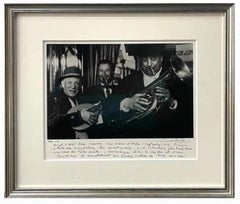
Silver Gelatin Photograph Hand Signed Photo Pablo Picasso Music Lucien Clergue
By Lucien Clergue
Located in Surfside, FL
Lucien Clergue (FRENCH, 1934 - 2014) Gelatin silver photographic print depicting Pablo Picasso, Arles, 1959. Picasso, l'antiquaire et Paco Munoz (les trois musiciens), Arles A jazz or gypsy trio. Hand signed by the artist with hand written description. Titled and dated lower left. Mounted in a silver painted wooden frame with mat behind acrylic screen. Paper measures approx. 11 3/4" height x 9" width to sight. Framed measures approx. 17 1/4" height x 14 3/4" width. Lucien Clergue (French: 1934 – 2014) was a French photographer. He was Chairman of the Academy of Fine Arts, Paris for 2013. Lucien Clergue was born in Arles, France. At the age of 7 he began learning to play the violin, and after several years of study his teacher admitted that he had nothing more to teach him. Clergue was from a family of shopkeepers and could not afford to pursue further studies in a college or university school of music, such as a conservatory. In 1949, he learned the basics of photography. Four years later, at a corrida in Arles, he showed his photographs to Spanish painter Pablo Picasso who, though subdued, asked to see more of his work. Within a year and a half, young Clergue worked on his photography with the goal of sending more images to Picasso. During this period, he worked on a series of photographs of travelling entertainers, acrobats and harlequins, the Saltimbanques. He also worked on a series whose subject was carrion. On 4 November 1955 Lucien Clergue visited Picasso in Cannes, France. Their friendship lasted nearly 30 years until Picasso's death. Clergue's autobiographical book, Picasso My Friend, looks back on important moments of their relationship. In 1968, and with his friend Michel Tournier, Clergue founded the Rencontres d’Arles photography festival which is held annually in July in Arles. He exhibited his work at the festival during the years 1971–1973, 1975, 1979, 1982–1986, 1989, 1991, 1993, 1994, 2000, 2003 and 2007. Clergue also illustrated books, among them a book by writer Yves Navarre. Clergue took many photographs of the gypsies of southern France, and was instrumental in propelling the guitarist Manitas de Plata to fame. Clergue is perhaps most remembered and respected for his black-and-white studies of light, shadow, and form, featuring sinuous nude female bodies, zebra stripes of light, dynamic sand dunes, and seascapes extracted from the coast of the Camargue. Clergue's photographs are in the collections of numerous well-known museums and private collectors. His vintage photographs have been exhibited in over 100 solo exhibitions worldwide, with noted exhibitions such as in 1961, at the Museum of Modern Art New York, the last exhibition organized by Edward Steichen with Lucien Clergue, Bill Brandt and Yasuhiro Ishimoto. Museums with large collections of his work include The Fogg Museum at Harvard University and the Museum of Fine Arts, Boston. His work, Fontaines du Grand Palais (Fountains of the Grand Palais), is in Museo cantonale d'arte [de] of Lugano. His vintage photographs of Jean Cocteau are on permanent display at the Jean Cocteau Museum in Menton, France. In the U.S., an exhibition of the Cocteau photographs was premiered at Westwood Gallery, New York City. In 2007, the city of Arles honored Lucien Clergue and dedicated a retrospective collection of 360 of his photographs dating from 1953 to 2007. He also received the 2007 Lucie Award. He was named Knight of the Légion d'honneur in 2003 and elected member of the Academy of Fine Arts of the Institute of France on 31 May 2006, at the same time as a new section dedicated to photography was created. Clergue was the first photographer to enter the Academy to a position devoted specifically to photography. He was Chairman of the Academy of Fine Arts for 2013. Lucien Clergue was married to the art curator Yolande Clergue, founder of The Fondation Vincent van Gogh Arles. He was the father of two daughters: Anne Clergue, a curator of contemporary art who has worked at Leo Castelli Gallery, and Olivia Clergue, a handbag fashion designer whose godfather was Pablo Picasso. Pablo Picasso (1881 –1973) was a Spanish painter, sculptor, printmaker, ceramic artist and theatre designer who spent most of his adult life in France. Regarded as one of the most influential artists of the 20th century, he is known for co-founding the Cubist movement, the invention of constructed sculpture, the co-invention of collage, and for the wide variety of styles that he helped develop and explore. Among his most famous works are the proto-Cubist Les Demoiselles d'Avignon (1907), and Guernica (1937), a dramatic portrayal of the bombing of Guernica by German and Italian air forces during the Spanish Civil War. After 1906, the Fauvist work of the slightly older artist Henri Matisse motivated Picasso to explore more radical styles, beginning a fruitful rivalry between the two artists, who subsequently were often paired by critics as the leaders of modern art. In 1897, his realism began to show a Symbolist influence, for example, in a series of landscape...
Category

20th Century Modern Lucien Clergue Portrait Photography

Materials

Silver Gelatin

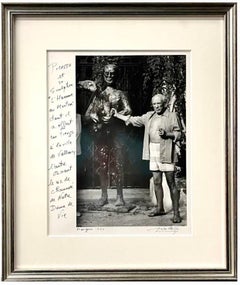
Silver Gelatin Photograph Hand Signed Photo Pablo Picasso Garden Lucien Clergue
By Lucien Clergue
Located in Surfside, FL
Lucien Clergue (FRENCH, 1934 - 2014) Gelatin silver photographic print depicting Pablo Picasso in the garden with a large bronze sculpture. Mougins, 1965. Hand signed by the artist with hand written description. Titled and dated lower left. Mounted in a silver painted wooden frame with mat behind acrylic screen. Paper measures approx. 11 3/4" height x 9" width to sight. Framed measures approx. 17 1/4" height x 14 3/4" width. Lucien Clergue (French: 1934 – 2014) was a French photographer. He was Chairman of the Academy of Fine Arts, Paris for 2013. Lucien Clergue was born in Arles, France. At the age of 7 he began learning to play the violin, and after several years of study his teacher admitted that he had nothing more to teach him. Clergue was from a family of shopkeepers and could not afford to pursue further studies in a college or university school of music, such as a conservatory. In 1949, he learned the basics of photography. Four years later, at a corrida in Arles, he showed his photographs to Spanish painter Pablo Picasso who, though subdued, asked to see more of his work. Within a year and a half, young Clergue worked on his photography with the goal of sending more images to Picasso. During this period, he worked on a series of photographs of travelling entertainers, acrobats and harlequins, the Saltimbanques. He also worked on a series whose subject was carrion. On 4 November 1955 Lucien Clergue visited Picasso in Cannes, France. Their friendship lasted nearly 30 years until Picasso's death. Clergue's autobiographical book, Picasso My Friend, looks back on important moments of their relationship. In 1968, and with his friend Michel Tournier, Clergue founded the Rencontres d’Arles photography festival which is held annually in July in Arles. He exhibited his work at the festival during the years 1971–1973, 1975, 1979, 1982–1986, 1989, 1991, 1993, 1994, 2000, 2003 and 2007. Clergue also illustrated books, among them a book by writer Yves Navarre. Clergue took many photographs of the gypsies of southern France, and was instrumental in propelling the guitarist Manitas de Plata to fame. Clergue is perhaps most remembered and respected for his black-and-white studies of light, shadow, and form, featuring sinuous nude female bodies, zebra stripes of light, dynamic sand dunes, and seascapes extracted from the coast of the Camargue. Clergue's photographs are in the collections of numerous well-known museums and private collectors. His vintage photographs have been exhibited in over 100 solo exhibitions worldwide, with noted exhibitions such as in 1961, at the Museum of Modern Art New York, the last exhibition organized by Edward Steichen with Lucien Clergue, Bill Brandt and Yasuhiro Ishimoto. Museums with large collections of his work include The Fogg Museum at Harvard University and the Museum of Fine Arts, Boston. His work, Fontaines du Grand Palais (Fountains of the Grand Palais), is in Museo cantonale d'arte [de] of Lugano. His vintage photographs of Jean Cocteau are on permanent display at the Jean Cocteau Museum in Menton, France. In the U.S., an exhibition of the Cocteau photographs was premiered at Westwood Gallery, New York City. In 2007, the city of Arles honored Lucien Clergue and dedicated a retrospective collection of 360 of his photographs dating from 1953 to 2007. He also received the 2007 Lucie Award. He was named Knight of the Légion d'honneur in 2003 and elected member of the Academy of Fine Arts of the Institute of France on 31 May 2006, at the same time as a new section dedicated to photography was created. Clergue was the first photographer to enter the Academy to a position devoted specifically to photography. He was Chairman of the Academy of Fine Arts for 2013. Lucien Clergue was married to the art curator Yolande Clergue, founder of The Fondation Vincent van Gogh Arles. He was the father of two daughters: Anne Clergue, a curator of contemporary art who has worked at Leo Castelli Gallery, and Olivia Clergue, a handbag fashion designer whose godfather was Pablo Picasso. Pablo Picasso (1881 –1973) was a Spanish painter, sculptor, printmaker, ceramic artist and theatre designer who spent most of his adult life in France. Regarded as one of the most influential artists of the 20th century, he is known for co-founding the Cubist movement, the invention of constructed sculpture, the co-invention of collage, and for the wide variety of styles that he helped develop and explore. Among his most famous works are the proto-Cubist Les Demoiselles d'Avignon (1907), and Guernica (1937), a dramatic portrayal of the bombing of Guernica by German and Italian air forces during the Spanish Civil War. After 1906, the Fauvist work of the slightly older artist Henri Matisse motivated Picasso to explore more radical styles, beginning a fruitful rivalry between the two artists, who subsequently were often paired by critics as the leaders of modern art. In 1897, his realism began to show a Symbolist influence, for example, in a series of landscape paintings...
Category

20th Century Modern Lucien Clergue Portrait Photography

Materials

Silver Gelatin

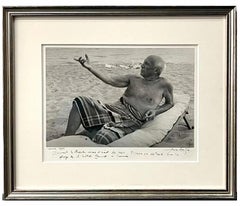
Silver Gelatin Photograph Hand Signed Photo Pablo Picasso, Beach Lucien Clergue
By Lucien Clergue
Located in Surfside, FL
Lucien Clergue (FRENCH, 1934 - 2014) Gelatin silver photographic print depicting Pablo Picasso at the beach on the French Riviera. Picasso En La playa, 1965 by Lucien Clergue. "Pic...
Category

20th Century Modern Lucien Clergue Portrait Photography

Materials

Silver Gelatin

Silver Gelatin Photograph Hand Signed Photo Pablo Picasso Friends Lucien Clergue
By Lucien Clergue
Located in Surfside, FL
Lucien Clergue (FRENCH, 1934 - 2014) Gelatin silver photographic print depicting Pablo Picasso, Jean Cocteau, Jacqueline Picasso, Spanish actress Lucia Bose, her husband the famed matador Luis Miguel Dominguin, and the Russian dancer Serge Lifar pendant le tournage du Testament d'Orphée, Les baux de Provence, 1959 by Lucien Clergue. Hand signed by the artist with hand written description. Titled and dated lower left. Mounted in a silver painted wooden frame with mat behind acrylic screen. Paper measures approx. 11 3/4" height x 9" width to sight. Framed measures approx. 17 1/4" height x 14 3/4" width. Lucien Clergue (French: 1934 – 2014) was a French photographer. He was Chairman of the Academy of Fine Arts, Paris for 2013. Lucien Clergue was born in Arles, France. At the age of 7 he began learning to play the violin, and after several years of study his teacher admitted that he had nothing more to teach him. Clergue was from a family of shopkeepers and could not afford to pursue further studies in a college or university school of music, such as a conservatory. In 1949, he learned the basics of photography. Four years later, at a corrida in Arles, he showed his photographs to Spanish painter Pablo Picasso who, though subdued, asked to see more of his work. Within a year and a half, young Clergue worked on his photography with the goal of sending more images to Picasso. During this period, he worked on a series of photographs of travelling entertainers, acrobats and harlequins, the Saltimbanques. He also worked on a series whose subject was carrion. On 4 November 1955 Lucien Clergue visited Picasso in Cannes, France. Their friendship lasted nearly 30 years until Picasso's death. Clergue's autobiographical book, Picasso My Friend, looks back on important moments of their relationship. In 1968, and with his friend Michel Tournier, Clergue founded the Rencontres d’Arles photography festival which is held annually in July in Arles. He exhibited his work at the festival during the years 1971–1973, 1975, 1979, 1982–1986, 1989, 1991, 1993, 1994, 2000, 2003 and 2007. Clergue also illustrated books, among them a book by writer Yves Navarre. Clergue took many photographs of the gypsies of southern France, and was instrumental in propelling the guitarist Manitas de Plata to fame. Clergue is perhaps most remembered and respected for his black-and-white studies of light, shadow, and form, featuring sinuous nude female bodies, zebra stripes of light, dynamic sand dunes, and seascapes extracted from the coast of the Camargue. Clergue's photographs are in the collections of numerous well-known museums and private collectors. His vintage photographs have been exhibited in over 100 solo exhibitions worldwide, with noted exhibitions such as in 1961, at the Museum of Modern Art New York, the last exhibition organized by Edward Steichen with Lucien Clergue, Bill Brandt and Yasuhiro Ishimoto. Museums with large collections of his work include The Fogg Museum at Harvard University and the Museum of Fine Arts, Boston. His work, Fontaines du Grand Palais (Fountains of the Grand Palais), is in Museo cantonale d'arte [de] of Lugano. His vintage photographs of Jean Cocteau are on permanent display at the Jean Cocteau Museum in Menton, France. In the U.S., an exhibition of the Cocteau photographs was premiered at Westwood Gallery, New York City. In 2007, the city of Arles honored Lucien Clergue and dedicated a retrospective collection of 360 of his photographs dating from 1953 to 2007. He also received the 2007 Lucie Award. He was named Knight of the Légion d'honneur in 2003 and elected member of the Academy of Fine Arts of the Institute of France on 31 May 2006, at the same time as a new section dedicated to photography was created. Clergue was the first photographer to enter the Academy to a position devoted specifically to photography. He was Chairman of the Academy of Fine Arts for 2013. Lucien Clergue was married to the art curator Yolande Clergue, founder of The Fondation Vincent van Gogh Arles. He was the father of two daughters: Anne Clergue, a curator of contemporary art who has worked at Leo Castelli Gallery, and Olivia Clergue, a handbag fashion designer whose godfather was Pablo Picasso. Pablo Picasso (1881 –1973) was a Spanish painter, sculptor, printmaker, ceramic artist and theatre designer who spent most of his adult life in France. Regarded as one of the most influential artists of the 20th century, he is known for co-founding the Cubist movement, the invention of constructed sculpture, the co-invention of collage, and for the wide variety of styles that he helped develop and explore. Among his most famous works are the proto-Cubist Les Demoiselles d'Avignon (1907), and Guernica (1937), a dramatic portrayal of the bombing of Guernica by German and Italian air forces during the Spanish Civil War. After 1906, the Fauvist work of the slightly older artist Henri Matisse motivated Picasso to explore more radical styles, beginning a fruitful rivalry between the two artists, who subsequently were often paired by critics as the leaders of modern art. In 1897, his realism began to show a Symbolist influence, for example, in a series of landscape paintings rendered in non-naturalistic violet and green tones. What some call his Modernist period (1899–1900) followed. His exposure to the work of Rossetti, Steinlen, Toulouse-Lautrec and Edvard Munch, combined with his admiration for favourite old masters such as El Greco, led Picasso to a personal version of modernism in his works of this period. Picasso made his first trip to Paris, then the art capital of Europe, in 1900. There, he met his first Parisian friend, journalist and poet Max Jacob, who helped Picasso learn the language and its literature. Soon they shared an apartment; Max slept at night while Picasso slept during the day and worked at night. These were times of severe poverty, cold, and desperation. Much of his work was burned to keep the small room warm. In 1907, Picasso joined an art gallery that had recently been opened in Paris by Daniel-Henry Kahnweiler, a German art historian and art collector who became one of the premier French art dealers of the 20th century. He was among the first champions of Pablo Picasso, Georges Braque and the Cubism that they jointly developed. Kahnweiler promoted burgeoning artists such as André Derain, Kees van Dongen, Fernand Léger, Juan Gris, Maurice de Vlaminck and several others who had come from all over the globe to live and work in Montparnasse at the time. Towards the end of World War I, Picasso became involved with Serge Diaghilev's Ballets Russes. Among his friends during this period were Jean Cocteau, Jean Hugo, Juan Gris, and others. In the summer of 1918, Picasso married Olga Khokhlova, a ballerina with Sergei Diaghilev's troupe, for whom Picasso was designing a ballet, Erik Satie's Parade, in Rome; they spent their honeymoon near Biarritz in the villa of glamorous Chilean art...
Category

20th Century Modern Lucien Clergue Portrait Photography

Materials

Silver Gelatin

Silver Gelatin Photograph Hand Signed Photo Pablo Picasso Studio Lucien Clergue
By Lucien Clergue
Located in Surfside, FL
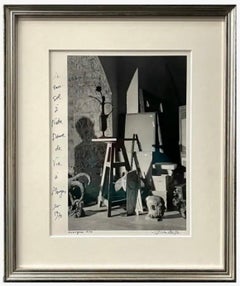
Lucien Clergue (FRENCH, 1934 - 2014) Gelatin silver photographic print depicting the workshop sculptures, present-absent, Notre Dame de Vie, 1970 Architectural study of Picasso's at...
Category

20th Century Modern Lucien Clergue Portrait Photography

Materials

Silver Gelatin

Silver Gelatin Photograph Hand Signed Photo Pablo Picasso Studio, Lucien Clergue
By Lucien Clergue
Located in Surfside, FL
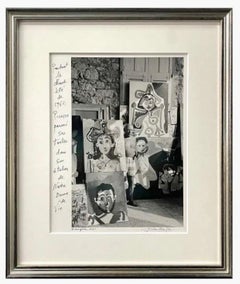
Lucien Clergue (FRENCH, 1934 - 2014) Gelatin silver photographic print depicting Pablo Picasso titled "Mougins". Picasso in his studio with oil paintings circa 1965. Hand signed by ...
Category

20th Century Modern Lucien Clergue Portrait Photography

Materials

Silver Gelatin

Silver Gelatin Photograph Hand Signed Photo Pablo Picasso Lucien Clergue
By Lucien Clergue
Located in Surfside, FL
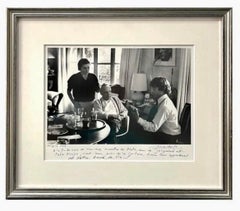
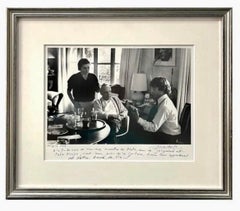
Lucien Clergue (FRENCH, 1934 - 2014) Gelatin silver photographic print depicting Pablo Picasso titled "Mougins". Jacqueline et Pablo Picasso écoutant Manitas de Plata, circa 1968. Hand signed by the artist with hand written description. Titled and dated lower left. Mounted in a silver painted wooden frame with mat behind acrylic screen. Paper measures approx. 9" height x 11 1/2" width to sight. Framed measures approx. 14 3/4" height x 17 1/4" width. Lucien Clergue (French: 1934 – 2014) was a French photographer. He was Chairman of the Academy of Fine Arts, Paris for 2013. Lucien Clergue was born in Arles, France. At the age of 7 he began learning to play the violin, and after several years of study his teacher admitted that he had nothing more to teach him. Clergue was from a family of shopkeepers and could not afford to pursue further studies in a college or university school of music, such as a conservatory. In 1949, he learned the basics of photography. Four years later, at a corrida in Arles, he showed his photographs to Spanish painter Pablo Picasso who, though subdued, asked to see more of his work. Within a year and a half, young Clergue worked on his photography with the goal of sending more images to Picasso. During this period, he worked on a series of photographs of travelling entertainers, acrobats and harlequins, the Saltimbanques. He also worked on a series whose subject was carrion. On 4 November 1955 Lucien Clergue visited Picasso in Cannes, France. Their friendship lasted nearly 30 years until Picasso's death. Clergue's autobiographical book, Picasso My Friend, looks back on important moments of their relationship. In 1968, and with his friend Michel Tournier, Clergue founded the Rencontres d’Arles photography festival which is held annually in July in Arles. He exhibited his work at the festival during the years 1971–1973, 1975, 1979, 1982–1986, 1989, 1991, 1993, 1994, 2000, 2003 and 2007. Clergue also illustrated books, among them a book by writer Yves Navarre. Clergue took many photographs of the gypsies of southern France, and was instrumental in propelling the guitarist Manitas de Plata to fame. Clergue is perhaps most remembered and respected for his vintage black-and-white studies of light, shadow, and form, featuring sinuous nude female bodies, zebra stripes of light, dynamic sand dunes, and seascapes extracted from the coast of the Camargue. Clergue's photographs are in the collections of numerous well-known museums and private collectors. His vintage photographs have been exhibited in over 100 solo exhibitions worldwide, with noted exhibitions such as in 1961, at the Museum of Modern Art New York, the last exhibition organized by Edward Steichen with Lucien Clergue, Bill Brandt and Yasuhiro Ishimoto. Museums with large collections of his work include The Fogg Museum at Harvard University and the Museum of Fine Arts, Boston. His work, Fontaines du Grand Palais (Fountains of the Grand Palais), is in Museo cantonale d'arte [de] of Lugano. His photographs of Jean Cocteau are on permanent display at the Jean Cocteau Museum in Menton, France. In the U.S., an exhibition of the Cocteau photographs was premiered at Westwood Gallery, New York City. In 2007, the city of Arles honored Lucien Clergue and dedicated a retrospective collection of 360 of his photographs dating from 1953 to 2007. He also received the 2007 Lucie Award. He was named Knight of the Légion d'honneur in 2003 and elected member of the Academy of Fine Arts of the Institute of France on 31 May 2006, at the same time as a new section dedicated to photography was created. Clergue was the first photographer to enter the Academy to a position devoted specifically to photography. He was Chairman of the Academy of Fine Arts for 2013. Lucien Clergue was married to the art curator Yolande Clergue, founder of The Fondation Vincent van Gogh Arles. He was the father of two daughters: Anne Clergue, a curator of contemporary art who has worked at Leo Castelli Gallery, and Olivia Clergue, a handbag fashion designer whose godfather was Pablo Picasso. Pablo Picasso (1881 –1973) was a Spanish painter, sculptor, printmaker, ceramic artist and theatre designer who spent most of his adult life in France. Regarded as one of the most influential artists of the 20th century, he is known for co-founding the Cubist movement, the invention of constructed sculpture, the co-invention of collage, and for the wide variety of styles that he helped develop and explore. Among his most famous works are the proto-Cubist Les Demoiselles d'Avignon (1907), and Guernica (1937), a dramatic portrayal of the bombing of Guernica by German and Italian air forces during the Spanish Civil War. After 1906, the Fauvist work of the slightly older artist Henri Matisse motivated Picasso to explore more radical styles, beginning a fruitful rivalry between the two artists, who subsequently were often paired by critics as the leaders of modern art. In 1897, his realism began to show a Symbolist influence, for example, in a series of landscape...
Category

20th Century Modern Lucien Clergue Portrait Photography

Materials

Silver Gelatin

Lucien Clergue portrait photography for sale on 1stDibs.

Find a wide variety of authentic Lucien Clergue portrait photography available for sale on 1stDibs. You can also browse by medium to find art by Lucien Clergue in silver gelatin print, film, photographic film and more. Much of the original work by this artist or collective was created during the 20th century and is mostly associated with the modern style. Not every interior allows for large Lucien Clergue portrait photography, so small editions measuring 12 inches across are available. Customers who are interested in this artist might also find the work of Harold Feinstein, Leo Matiz, and Jesse Alexander. Lucien Clergue portrait photography prices can differ depending upon medium, time period and other attributes. On 1stDibs, the price for these items starts at $3,600 and tops out at $12,000, while the average work can sell for $4,161.

Still Thinking About These?

All Recently Viewed