Lyonel Feininger Figurative Prints
American, 1871-1956
Lionel Feininger (1871–1956), a German-American painter, graphic artist, and caricaturist, developed a distinctive style influenced by Cubism and Expressionism. Born in New York City but raised in Germany, Feininger honed his skills at the Hamburg School of Arts and Crafts before studying under renowned artists in Berlin. Initially associated with the avant-garde group "Die Brücke" (The Bridge), Feininger's style evolved over time, gravitating towards Cubism after being inspired by artists like Picasso and Braque. His participation in the "Der Blaue Reiter" (The Blue Rider) exhibition in 1911 further solidified his reputation as an essential figure in the Expressionist movement. Returning to the United States during World War I, Feininger became associated with the American avant-garde, though the Nazis later targeted his works in the "Degenerate Art" exhibition. Feininger experimented with various mediums throughout his career, producing bold and vibrant works depicting urban landscapes and architectural motifs. His legacy as a pioneer of modern art continues to resonate, with his contributions to Cubism, Expressionism, and abstract art celebrated worldwide. Feininger passed away in 1956, leaving behind a rich and influential body of work.to
1
7
1
Overall Width
to
Overall Height
to
1
1
18
890
385
373
310
8
2
5
1
5
2
1
5
4
3
3
2
2
2
1
1
1
1
6
1
1
1
1
7
1
Artist: Lyonel Feininger
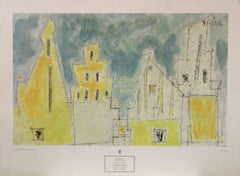
"Gothic Gables" New York Graphic Society 1966, Printed in Switzerland
By Lyonel Feininger
Located in Chesterfield, MI
"Gothic Gables" Poster/Print by LYONEL FEININGER (American-German, 1871-1956). The print measures approximately 20 x 27 inches and is unframed. Published by New York Graphic Society 1966. Printed in Switzerland...
Category
1960s Lyonel Feininger Figurative Prints
Materials
Lithograph
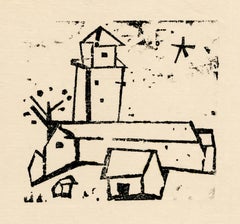
Church with Star
– Artist
s Personal Letterhead, Bauhaus Modernism
By Lyonel Feininger
Located in Myrtle Beach, SC
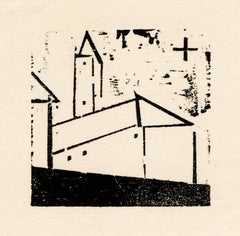
Lyonel Feininger, 'Church with Star (Kirche mit Stern)', woodcut, 1936, one of a small but unknown number of letterhead proofs; Prasse W265. Annotated 'W 265' (Feininger catalogue number) and inventory no. '2808' in pencil, in the bottom right sheet corner. A fine impression, on cream, laid letterhead stock; hinge remains on the left and right top sheet edges, verso, in excellent condition. Very scarce.
Image size 2 3/8 x 2 3/8 inches; sheet size 10 1/16 x 7 1/16 inches. Archivally sleeved, unmatted.
ABOUT THE ARTIST
Lyonel Feininger (1871-1956) was born in New York City into a musical family—his father was a violinist and composer, his mother was a singer and pianist. He studied violin with his father, and by the age of 12, he was performing in public, but he also drew incessantly, most notably the steamboats and sailing ships on the Hudson and East Rivers, and the landscape around Sharon, Conn., where he spent time on a farm owned by a family friend. At the age of 16 he left New York to study music and art in Germany, from where his parents emigrated. Drawn more to the visual arts, he attended schools in Hamburg, Berlin, and Paris from 1887 to 1892.
After completing his studies, Feininger began his artistic career as a cartoonist and illustrator, his originality leading him to great success. In 1906, after working for a dozen years in Germany, he was offered a job as a cartoonist at the Chicago Tribune, the largest circulation newspaper in the Midwest. He worked there for a year, inventing what became the standard design for the comic strip: in the words of John Carlin, “an overall pattern. . . that allowed the page to be read both as a series of elements one after the other, like language and as a group of juxtaposed images, like visual art.” His originality did not end there: he went on to become one of the great abstract painters. Like Kandinsky, music was his model, but Kandinsky only knew music from the outside—as a listener (inspired initially by Wagner, then by Schoenberg)—while Feininger knew it from the inside. He lived in Paris from 1906 to 1908, during which time he met and was influenced by the work of progressive painters Robert Delaunay and Jules Pascin, as well as that of Paul Cezanne and Vincent van Gogh. He began painting full-time, developing his distinctive Iyrical style based on Cubist and Expressionist idioms and a concern for the emotive qualities of light and color. He exhibited with the Der Blaue Reiter group in 1913, and in 1917, he had his first solo exhibition at Galerie Der Sturm in Berlin.
One year after his solo exhibition, in 1918, Feininger began making woodcuts. He became enamored with the medium, producing an impressive 117 in his first year of exploring the printmaking medium. In 1919 at the invitation of the architect Walter Gropius, he was appointed the first master at the newly formed Staatliches Bauhaus in Weimar. His woodcut of a cathedral crowned...
Category
1930s Bauhaus Lyonel Feininger Figurative Prints
Materials
Woodcut
Stehkragen (rare hand signed woodcut)
By Lyonel Feininger
Located in Aventura, FL
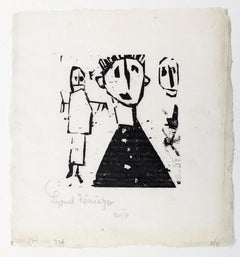
Woodcut print on paper. Hand signed and dated by Lyonel Feininger. Unknow edition. Image size approx 3.9 x 3.9 inches. Sheet size 7 x 6.5 inches.
Artwork is in excellent conditio...
Category
1920s Contemporary Lyonel Feininger Figurative Prints
Materials
Silk, Screen

$6,750 Sale Price
25% Off
Little Locomotive
– Artist
s Personal Letterhead, Bauhaus Modernism
By Lyonel Feininger
Located in Myrtle Beach, SC
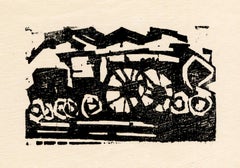
Lyonel Feininger, 'Little Locomotive (Kleine Lokomotive)', woodcut, 1936, one of a small but unknown number of letterhead proofs; Prasse W158. Annotated 'W 158' (Feininger catalogue number) and '1936' in pencil, in the bottom right sheet corner.
A fine impression, on cream, laid letterhead stock; hinge remains on the left and right top sheet edges, verso, in excellent condition. Very scarce.
Image size 2 1/4 x 3 5/16 inches; sheet size 10 x 7 inches. Archivally sleeved, unmatted.
Exhibited: 'Lyonel Feininer, Woodcuts Used As Letterheads'; Associated American Artists; Feb 4 - March 2, 1974; New York, NY.
Collections: Cleveland Museum of Art, Museum of Modern Art, Staatliche Museen zu Berlin (East Berlin KK).
ABOUT THE ARTIST
Lyonel Feininger (1871-1956) was born in New York City into a musical family—his father was a violinist and composer, his mother was a singer and pianist. He studied violin with his father, and by the age of 12, he was performing in public, but he also drew incessantly, most notably the steamboats and sailing ships on the Hudson and East Rivers, and the landscape around Sharon, Conn., where he spent time on a farm owned by a family friend. At the age of 16 he left New York to study music and art in Germany, from where his parents emigrated. Drawn more to the visual arts, he attended schools in Hamburg, Berlin, and Paris from 1887 to 1892.
After completing his studies, Feininger began his artistic career as a cartoonist and illustrator, his originality leading him to great success. In 1906, after working for a dozen years in Germany, he was offered a job as a cartoonist at the Chicago Tribune, the largest circulation newspaper in the Midwest. He worked there for a year, inventing what became the standard design for the comic strip: in the words of John Carlin, “an overall pattern. . . that allowed the page to be read both as a series of elements one after the other, like language and as a group of juxtaposed images, like visual art.” His originality did not end there: he went on to become one of the great abstract painters. Like Kandinsky, music was his model, but Kandinsky only knew music from the outside—as a listener (inspired initially by Wagner, then by Schoenberg)—while Feininger knew it from the inside. He lived in Paris from 1906 to 1908, during which time he met and was influenced by the work of progressive painters Robert Delaunay and Jules Pascin, as well as that of Paul Cezanne and Vincent van Gogh. He began painting full-time, developing his distinctive Iyrical style based on Cubist and Expressionist idioms and a concern for the emotive qualities of light and color. He exhibited with the Der Blaue Reiter group in 1913, and in 1917, he had his first solo exhibition at Galerie Der Sturm in Berlin.
One year after his solo exhibition, in 1918, Feininger began making woodcuts. He became enamored with the medium, producing an impressive 117 in his first year of exploring the printmaking medium. In 1919 at the invitation of the architect Walter Gropius, he was appointed the first master at the newly formed Staatliches Bauhaus in Weimar. His woodcut of a cathedral crowned...
Category
1930s Bauhaus Lyonel Feininger Figurative Prints
Materials
Woodcut
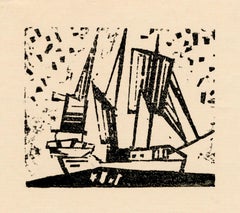
Three Masted Ship, 2
– Artist
s Personal Letterhead, Bauhaus Modernism
By Lyonel Feininger
Located in Myrtle Beach, SC
Lyonel Feininger, 'Three Masted Ship, 2 (Dreimastiges Schiff, 2)', woodcut, 1937, one of a small but unknown number of letterhead proofs; Prasse W296. Feininger estate stamp and inventory no. 'W 865' in pencil, bottom left sheet corner. Annotated 'W 296' and 'on block : 3702a' in pencil, bottom right sheet corner.
A fine impression, on cream, laid, letterhead stock; hinge remains on the left and right top sheet edges, verso, in excellent condition. Very scarce.
Image size 2 1/4 x 2 11/16 inches; sheet size 10 x 6 3/4 inches. Archivally sleeved, unmatted.
Exhibited: 'Lyonel Feininer, Woodcuts Used As Letterheads'; Associated American Artists; Feb 4 - March 2, 1974; New York, NY.
ABOUT THE ARTIST
Lyonel Feininger (1871-1956) was born in New York City into a musical family—his father was a violinist and composer, his mother was a singer and pianist. He studied violin with his father, and by the age of 12, he was performing in public, but he also drew incessantly, most notably the steamboats and sailing ships on the Hudson and East Rivers, and the landscape around Sharon, Conn., where he spent time on a farm owned by a family friend. At the age of 16 he left New York to study music and art in Germany, from where his parents emigrated. Drawn more to the visual arts, he attended schools in Hamburg, Berlin, and Paris from 1887 to 1892.
After completing his studies, Feininger began his artistic career as a cartoonist and illustrator, his originality leading him to great success. In 1906, after working for a dozen years in Germany, he was offered a job as a cartoonist at the Chicago Tribune, the largest circulation newspaper in the Midwest. He worked there for a year, inventing what became the standard design for the comic strip: in the words of John Carlin, “an overall pattern. . . that allowed the page to be read both as a series of elements one after the other, like language and as a group of juxtaposed images, like visual art.” His originality did not end there: he went on to become one of the great abstract painters. Like Kandinsky, music was his model, but Kandinsky only knew music from the outside—as a listener (inspired initially by Wagner, then by Schoenberg)—while Feininger knew it from the inside. He lived in Paris from 1906 to 1908, during which time he met and was influenced by the work of progressive painters Robert Delaunay and Jules Pascin, as well as that of Paul Cezanne and Vincent van Gogh. He began painting full-time, developing his distinctive Iyrical style based on Cubist and Expressionist idioms and a concern for the emotive qualities of light and color. He exhibited with the Der Blaue Reiter group in 1913, and in 1917, he had his first solo exhibition at Galerie Der Sturm in Berlin.
One year after his solo exhibition, in 1918, Feininger began making woodcuts. He became enamored with the medium, producing an impressive 117 in his first year of exploring the printmaking medium. In 1919 at the invitation of the architect Walter Gropius, he was appointed the first master at the newly formed Staatliches Bauhaus in Weimar. His woodcut of a cathedral crowned...
Category
1930s Bauhaus Lyonel Feininger Figurative Prints
Materials
Woodcut
Church with House and Tree
– Artist
s Personal Letterhead, Bauhaus Modernism
By Lyonel Feininger
Located in Myrtle Beach, SC
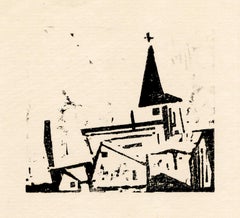
Lyonel Feininger, 'Church with House and Tree (Kirche mit Haus und Baum)', woodcut, 1936, one of a small but unknown number of letterhead proofs; Prasse W290 V. Inscribed 'J. F. note paper', in pencil, in the artist’s hand; with the Feininger estate stamp and catalog no. 'W 859' in pencil. Annotated 'W.290 V state 3609' in pencil, in the bottom right sheet corner.
A fine impression, on cream, laid letterhead stock; hinge remains on the left and right top sheet edges, verso, in excellent condition. Very scarce.
Image size 2 3/8 x 2 3/4 inches; sheet size 10 x 7 5/16 inches. Archivally sleeved, unmatted.
Exhibited: 'Lyonel Feininer, Woodcuts Used As Letterheads'; Associated American Artists; Feb 4 - March 2, 1974; NY, NY.
ABOUT THE ARTIST
Lyonel Feininger (1871-1956) was born in New York City into a musical family—his father was a violinist and composer, his mother was a singer and pianist. He studied violin with his father, and by the age of 12, he was performing in public. Still, he also drew incessantly, most notably the steamboats and sailing ships on the Hudson and East Rivers, and the landscape around Sharon, Conn., where he spent time on a farm owned by a family friend. At the age of 16 he left New York to study music and art in Germany, from where his parents emigrated. Drawn more to the visual arts, he attended schools in Hamburg, Berlin, and Paris from 1887 to 1892.
After completing his studies, Feininger began his artistic career as a cartoonist and illustrator, his originality leading him to great success. In 1906, after working for a dozen years in Germany, he was offered a job as a cartoonist at the Chicago Tribune, the largest circulation newspaper in the Midwest. He worked there for a year, inventing what became the standard design for the comic strip: in the words of John Carlin, “an overall pattern. . . that allowed the page to be read both as a series of elements one after the other, like language and as a group of juxtaposed images, like visual art.” His originality did not end there: he went on to become one of the great abstract painters. Like Kandinsky, music was his model, but Kandinsky only knew music from the outside—as a listener (inspired initially by Wagner, then by Schoenberg)—while Feininger knew it from the inside. He lived in Paris from 1906 to 1908, during which time he met and was influenced by the work of progressive painters Robert Delaunay and Jules Pascin, as well as that of Paul Cezanne and Vincent van Gogh. He began painting full-time, developing his distinctive Iyrical style based on Cubist and Expressionist idioms and a concern for the emotive qualities of light and color. He exhibited with the Der Blaue Reiter group in 1913, and in 1917, he had his first solo exhibition at Galerie Der Sturm in Berlin.
One year after his solo exhibition, in 1918, Feininger began making woodcuts. He became enamored with the medium, producing an impressive 117 in his first year of exploring the printmaking medium. In 1919 at the invitation of the architect Walter Gropius, he was appointed the first master at the newly formed Staatliches Bauhaus in Weimar. His woodcut of a cathedral crowned...
Category
1930s Bauhaus Lyonel Feininger Figurative Prints
Materials
Woodcut
Church with House and Tree
– Artist
s Personal Letterhead, 1940s Modernism
By Lyonel Feininger
Located in Myrtle Beach, SC
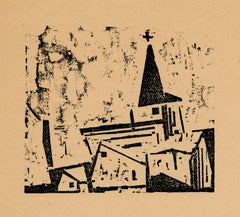
Lyonel Feininger, 'Church with House and Tree (Kirche mit Haus und Baum)', woodcut, 1936, one of a small but unknown number of letterhead proofs; Prasse W290 IV. Annotated 'PW 290 state IV / IV 3669', in pencil, in the bottom right sheet corner. With the artist's typed address and date adjacent to the letterhead image: 'Falls Village, Connecticut September 26th, 1940'.
A fine impression, on buff, wove letterhead stock; several small losses, and tears, in the sheet edges (not affecting the image area); a crease in the bottom right sheet edge, otherwise in good condition. Very scarce.
Image size: 2 3/8 x 2 3/4 inches; sheet size 11 x 8 5/8 inches. Archivally sleeved, unmatted.
Feininger moved from Germany to New York City in 1938 and began spending his summers in Falls Village in 1940.
Exhibited: 'Lyonel Feininer, Woodcuts Used As Letterheads'; Associated American Artists; Feb 4 - March 2, 1974; New York, NY.
ABOUT THE ARTIST
Lyonel Feininger (1871-1956) was born in New York City into a musical family—his father was a violinist and composer, his mother was a singer and pianist. He studied violin with his father, and by the age of 12, he was performing in public, but he also drew incessantly, most notably the steamboats and sailing ships on the Hudson and East Rivers, and the landscape around Sharon, Conn., where he spent time on a farm owned by a family friend. At the age of 16 he left New York to study music and art in Germany, from where his parents emigrated. Drawn more to the visual arts, he attended schools in Hamburg, Berlin, and Paris from 1887 to 1892.
After completing his studies, Feininger began his artistic career as a cartoonist and illustrator, his originality leading him to great success. In 1906, after working for a dozen years in Germany, he was offered a job as a cartoonist at the Chicago Tribune, the largest circulation newspaper in the Midwest. He worked there for a year, inventing what became the standard design for the comic strip: in the words of John Carlin, “an overall pattern. . . that allowed the page to be read both as a series of elements one after the other, like language and as a group of juxtaposed images, like visual art.” His originality did not end there: he went on to become one of the great abstract painters. Like Kandinsky, music was his model, but Kandinsky only knew music from the outside—as a listener (inspired initially by Wagner, then by Schoenberg)—while Feininger knew it from the inside. He lived in Paris from 1906 to 1908, during which time he met and was influenced by the work of progressive painters Robert Delaunay and Jules Pascin, as well as that of Paul Cezanne and Vincent van Gogh. He began painting full-time, developing his distinctive Iyrical style based on Cubist and Expressionist idioms and a concern for the emotive qualities of light and color. He exhibited with the Der Blaue Reiter group in 1913, and in 1917, he had his first solo exhibition at Galerie Der Sturm in Berlin.
One year after his solo exhibition, in 1918, Feininger began making woodcuts. He became enamored with the medium, producing an impressive 117 in his first year of exploring the printmaking medium. In 1919 at the invitation of the architect Walter Gropius, he was appointed the first master at the newly formed Staatliches Bauhaus in Weimar. His woodcut of a cathedral crowned...
Category
1930s Bauhaus Lyonel Feininger Figurative Prints
Materials
Woodcut
On the Quay Wall Auf der Quaimauer, 1921
By Lyonel Feininger
Located in London, GB
LYONEL FEININGER 1871-1956
1871 - New York - 1956 (American/German)
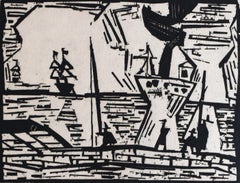
Title: On the Quay Wall Auf der Quaimauer, 1921
Technique: Original Hand Signed Woodcut on Wove Paper
Paper...
Category
1920s Expressionist Lyonel Feininger Figurative Prints
Materials
Woodcut
Related Items
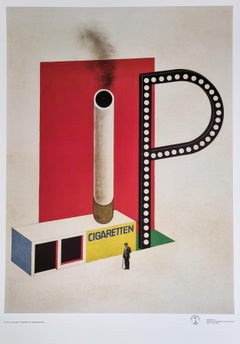
Sale and Marketing Kiosk for P Cigarettes (Bauhaus) (20% OFF + Free Shipping)
By Herbert Bayer
Located in Kansas City, MO
Herbert Bayer
Sale and Marketing Kiosk for P Cigarettes (Verkauf- und Werbekiosk, Zigarettenmarke P ), 1924
Offset Lithograph
Year: 1994
Size: 33.2 × 23.2 inches
Publisher: Bauhaus A...
Category
1920s Bauhaus Lyonel Feininger Figurative Prints
Materials
Lithograph
$120 Sale Price
20% Off
H 33.2 in W 23.2 in
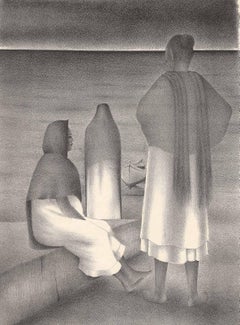
La Espera (The Wait -- Three Women by the sea)
By Francisco Dosamantes
Located in New Orleans, LA
The Wait. Three native Mexican women wait by the sea. This impression is #31/100. An impression of this lithograph is in the permanent collectio...
Category
Mid-20th Century Modern Lyonel Feininger Figurative Prints
Materials
Lithograph
Conceptual art photo engraving and screenprint 2005 27x33in hrs min kcal fat
Located in Miami, FL
Raul Cordero (Cuba, 1971)
'32 hrs 53 min kcal: 783 fat: 35%', 2005
photo engraving and screenprint on paper Guarro Biblos 250g.
26.8 x 33.3 in. (68 x 84.5...
Category
Early 2000s Contemporary Lyonel Feininger Figurative Prints
Materials
Screen, Engraving, Aquatint

$2,300
H 26.8 in W 33.3 in
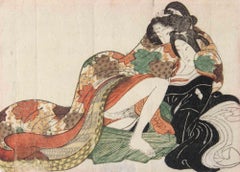
Shunga - Woodcut attr. Keisai Eisen - Mid-19th Century
By Keisai Eisen
Located in Roma, IT
Woodcut shunga print attributed to Keisai Eisen and realized in the early 19th century.
Good condition except for some signs of time.
Category
Mid-19th Century Modern Lyonel Feininger Figurative Prints
Materials
Woodcut
$355
H 3.55 in W 4.73 in D 0.04 in
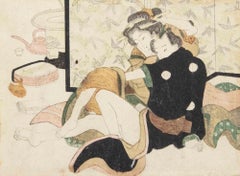
Shunga - Woodcut attr. Keisai Eisen - Mid-19th Century
By Keisai Eisen
Located in Roma, IT
Woodcut shunga print attributed to Keisai Eisen and realized in the early 19th century.
Good condition except for some signs of time.
Category
Mid-19th Century Modern Lyonel Feininger Figurative Prints
Materials
Woodcut
$356
H 3.55 in W 4.73 in D 0.04 in
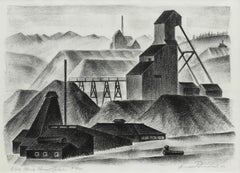
Arnold Ronnebeck Lithograph "Silver Mine, Russell Gulch" Colorado Scene
By Arnold Rönnebeck
Located in Denver, CO
"Silver Mine, Russell Gulch (12/25)" is a striking black-and-white lithograph by German-born American Modernist Arnold Ronnebeck (1885–1947). This rare print depicts a historic minin...
Category
1930s American Modern Lyonel Feininger Figurative Prints
Materials
Lithograph
$2,750
H 20.5 in W 26.5 in D 0.5 in
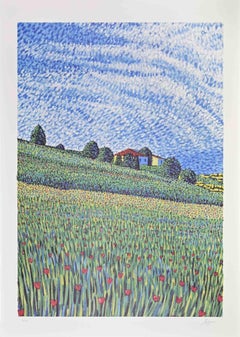
Countryside - Lithograph by Lucio Rofrano - 1990s
Located in Roma, IT
Lithograph realized by Lucio Rofrano in 1990s.
Edition of 150, numbered and hand signed.
Excellent condition.
Category
1990s Contemporary Lyonel Feininger Figurative Prints
Materials
Lithograph
$237
H 27.56 in W 19.69 in D 0.04 in
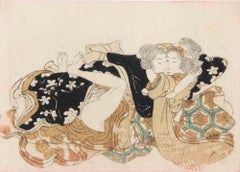
Shunga - Woodcut attr. Keisai Eisen - Mid-19th Century
By Keisai Eisen
Located in Roma, IT
Woodcut shunga print attributed to Keisai Eisen and realized in the early 19th century.
Good condition except for some signs of time.
Category
Mid-19th Century Modern Lyonel Feininger Figurative Prints
Materials
Woodcut
$356
H 3.55 in W 4.73 in D 0.04 in
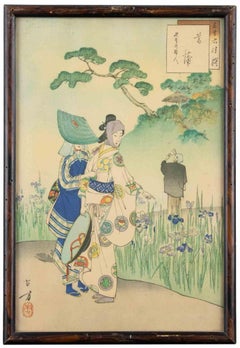
Sanjûroku Kasen ... - Woodcut by Mizuno Toshikata - 1893
By Mizuno Toshikata
Located in Roma, IT
Nishiki-e (woodcut print), in vertical oban format (31x20.5) realized by Mizuno Toshikata in 1893 (Meiji 26).
Belongs to the Series "Sanjûroku Kasen" (Thirty-Six Beauties in Compari...
Category
1890s Modern Lyonel Feininger Figurative Prints
Materials
Woodcut
$380
H 12.21 in W 8.08 in D 0.04 in
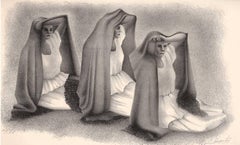
Mujeres Veracruzans (three seated women from Vera Cruz Mexico in shawls)
By Francisco Dosamantes
Located in New Orleans, LA
Three native Mexican women all similarly dressed in traditional, flowing white dresses covered in dark, fringed shawls raise their heads as if the...
Category
Mid-20th Century Modern Lyonel Feininger Figurative Prints
Materials
Lithograph
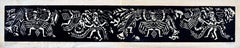
"Rainbow-Man" - Abstracted Mexican Figurative Woodblock Print
By Pedro Puesta
Located in Soquel, CA
"Rainbow-man," an abstracted Mexican figurative woodblock by Pedro Puerta (Mexican, 20th Century), 1974. Titled "Rainbow-Man" lower left and "from a Michoacan Pot" "Reproduced with a...
Category
1970s Other Art Style Lyonel Feininger Figurative Prints
Materials
Paper, Ink, Woodcut
$1,195
H 11 in W 59 in D 1 in
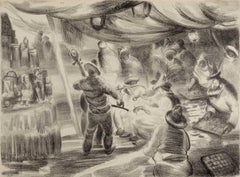
Mexican Orchestra (joy of the people is captured in this celebratory festival)
By George Overbury Hart
Located in New Orleans, LA
"Mexican Orchestra" is one of the George Overbury Hart's largest pieces. It is #14 from a limited edition of 50. The image captures a festive event with hanging lanterns, an orches...
Category
1920s American Modern Lyonel Feininger Figurative Prints
Materials
Lithograph
Previously Available Items
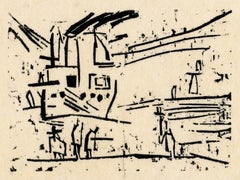
Ausfahrender Dampfer Odin (Outboard Steamer Odin)
— German Expressionism
By Lyonel Feininger
Located in Myrtle Beach, SC
Lyonel Feininger, 'Ausfahrender Dampfer Odin (Outboard Steamer Odin)', woodcut, 1918, proofs only. Prasse W75. Signed in pencil and annotated '1860', the artist’s inventory number. A...
Category
1910s Bauhaus Lyonel Feininger Figurative Prints
Materials
Woodcut
Church with Houses
— Artist
s Personal Letterhead, Bauhaus Modernism
By Lyonel Feininger
Located in Myrtle Beach, SC
Lyonel Feininger, 'Church with Houses' also 'Tree and Star' ('Kirche mit Hausern', 'Baum und Stern'), woodcut, 1933, one of a small but unknown number of letterhead proofs; Prasse W275. Annotated 'W 275' (Feininger catalogue number) and inventory number '3033' in pencil, in the bottom right sheet corner. A fine, richly-inked impression, on cream, laid letterhead paper, in excellent condition. Very scarce.
Image size 2 7/16 x 2 5/8 inches; sheet size 10 x 6 7/8 inches. Archivally sleeved, unmatted.
Exhibited: 'Lyonel Feininer, Woodcuts Used As Letterheads'; Associated American Artists; Feb 4 - March 2, 1974; New York, NY.
ABOUT THE ARTIST
Lyonel Feininger (1871-1956) was born in New York City into a musical family—his father was a violinist and composer, his mother was a singer and pianist. He studied violin with his father, and by the age of 12, he was performing in public, but he also drew incessantly, most notably the steamboats and sailing ships on the Hudson and East Rivers, and the landscape around Sharon, Conn., where he spent time on a farm owned by a family friend. At the age of 16 he left New York to study music and art in Germany, from where his parents emigrated. Drawn more to the visual arts, he attended schools in Hamburg, Berlin, and Paris from 1887 to 1892.
After completing his studies, Feininger began his artistic career as a cartoonist and illustrator, his originality leading him to great success. In 1906, after working for a dozen years in Germany, he was offered a job as a cartoonist at the Chicago Tribune, the largest circulation newspaper in the Midwest. He worked there for a year, inventing what became the standard design for the comic strip: in the words of John Carlin, “an overall pattern. . . that allowed the page to be read both as a series of elements one after the other, like language and as a group of juxtaposed images, like visual art.” His originality did not end there: he went on to become one of the great abstract painters. Like Kandinsky, music was his model, but Kandinsky only knew music from the outside—as a listener (inspired initially by Wagner, then by Schoenberg)—while Feininger knew it from the inside. He lived in Paris from 1906 to 1908, during which time he met and was influenced by the work of progressive painters Robert Delaunay and Jules Pascin, as well as that of Paul Cezanne and Vincent van Gogh. He began painting full-time, developing his distinctive Iyrical style based on Cubist and Expressionist idioms and a concern for the emotive qualities of light and color. He exhibited with the Der Blaue Reiter group in 1913, and in 1917, he had his first solo exhibition at Galerie Der Sturm in Berlin.
One year after his solo exhibition, in 1918, Feininger began making woodcuts. He became enamored with the medium, producing an impressive 117 in his first year of exploring the printmaking medium. In 1919 at the invitation of the architect Walter Gropius, he was appointed the first master at the newly formed Staatliches Bauhaus in Weimar. His woodcut of a cathedral crowned...
Category
1930s Bauhaus Lyonel Feininger Figurative Prints
Materials
Woodcut
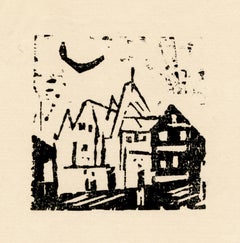
Buildings with Crescent Moon (Gebaude mit Mondsichel) – Artist
s letterhead
By Lyonel Feininger
Located in Myrtle Beach, SC
Lyonel Feininger, 'Buildings with Crescent Moon (Gebaude mit Mondsichel)', woodcut, 1936, one of a small but unknown number of letterhead proofs; Prasse W214 III. Annotated 'W 214 II...
Category
1930s Bauhaus Lyonel Feininger Figurative Prints
Materials
Woodcut
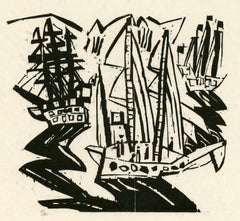
Ships (Three Sailing Ships)
By Lyonel Feininger
Located in Myrtle Beach, SC
Lyonel Feininger, 'Ships (Three Sailing Ships)', woodcut, 1919, proofs only; posthumous edition 100 (1964), Prasse W151 II. Numbered '55/100' in pencil; F...
Category
1910s Bauhaus Lyonel Feininger Figurative Prints
Materials
Woodcut
Lyonel Feininger figurative prints for sale on 1stDibs.
Find a wide variety of authentic Lyonel Feininger figurative prints available for sale on 1stDibs. You can also browse by medium to find art by Lyonel Feininger in woodcut print, lithograph and more. Much of the original work by this artist or collective was created during the 20th century and is mostly associated with the Expressionist style. Not every interior allows for large Lyonel Feininger figurative prints, so small editions measuring 3 inches across are available. Lyonel Feininger figurative prints prices can differ depending upon medium, time period and other attributes. On 1stDibs, the price for these items starts at $200 and tops out at $9,400, while the average work can sell for $900.