Maison Gripoix Dangle Earrings
to
6
2
1
1
1
8
8
6
2
74
970
926
708
283
6
1
6
2
8
Creator: Maison Gripoix
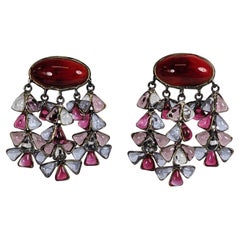
Unique Maison Gripoix Poured Glass Drop Earrings
By Maison Gripoix
Located in New York, NY
Unique Maison Gripoix Intricate Poured Glass Drop Earrings from the 1980's. Completely handmade by Maision Gripoix with intricate petals of amythest , ruby and pink poured glass whic...
Category
1980s French Artisan Vintage Maison Gripoix Dangle Earrings
Materials
Bronze
Maison Gripoix Anglo Indian Floral Cascade Earclips
By Maison Gripoix
Located in New York, NY
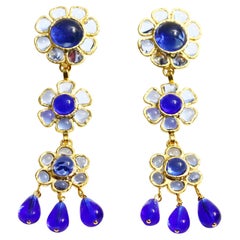
Exceptional Maison Gripoix Anglo Indian inspired long floral cascade ear clips. Of faux emerald, ruby, and pale sapphire poured glass enamel graduated fl...
Category
1980s French Anglo-Indian Vintage Maison Gripoix Dangle Earrings
Materials
Gold Plate, Bronze, Enamel, Gilt Metal

Maison Gripoix Vintage Blue and Light Blue Flower Dangling Earrings Circa 1980s
By Maison Gripoix
Located in New York, NY
Maison Gripoix Vintage Blue and Light Blue Flower Dangling Earrings Set in Gold Tone Clip On. Always In Style. Very Classic Chic. These are so spectacular. I have them in red as well. The prices differ because they were purchased at different exchange rates. These are stunning. They will never go out of style!!
Guy de Maupassant wrote a famous story about a necklace. The story is about a young, attractive, intelligent, well-educated, but under-endowed bride who must marry a petty official and thus suffers from the limitations of living with a husband who lacks refined qualities. One day, to entertain his dejected spouse, her husband receives an invitation to a ball and gives his wife the 400 francs he had saved for a hunting rifle, so that she can order an appropriate dress.
However, when the dress is ready, it becomes clear that it is lacking jewelry, and it would be impossible to attend the ball while looking so poor. The protagonist approaches her wealthy childhood friend, with whom she was raised at the monastery, and borrows a diamond necklace from her. The ball is a great success; she is the center of attention. However, when the woman returns home, she discovers she has lost the necklace. To conceal her faux pas from her friend, she buys a new necklace identical to the one she lost. To pay it off, the woman gets into a huge debt, which, over the years, gradually drags her down the social ladder from the bourgeoisie to poverty. Ten years later, having lost her good looks, the woman encounters her friend on the Champs Elysees, who still looks young, beautiful, and rich. The protagonist reveals the entire story about the necklace to her friend, but her friend replies in amazement that the diamonds are fake and would “cost 500 francs at most.”
Maison Gripoix starts with a dramatic story. According to other sources, in 1869 (or a year earlier), Paris master glass-maker Augustina Gripoix began making replicas of pearls and crystals, casting glass into different shapes and colors and inserting them into the most sophisticated settings. She used the pâte de verre (glass paste) technique, whereby a traditional ceramic or gypsum form was filled with a multi-color piece of glass and special gluing substances and then baked in a furnace, resulting in objects featuring fantastical hues. Only Augustina made her crystals by pouring the melted glass paste into the press molds, skipping the furnace step, allowing her to achieve purity of color, transparency, and shine. She found a simple method to make beautiful jewelry, and thus Marquises, Duchesses, and Princesses qued up ... so Madame Gripoix would make them replicas of their jewelry in case of robbery or loss, or some unusual jewelry pieces for their new wraps, neckpieces, or boas. The so-called ‘costume jewelry’ emerged to a large extent thanks to the work of Maison Gripoix.
Augustina Gripoix earned her fame in the 1890s when she began creating necklaces for Sarah Bernhardt to wear on stage and later designed costume jewelry for Charles Frederick Worth's first high-fashion house. Later, Paul Poiret, the leading couturier of the 1910s, contacted her, and she created sophisticated, Oriental-style jewelry to match his famous Oriental costumes, based on the aesthetic of Diaghilev’s initial Russian seasons.
The value of costume jewelry was now being recognized in its own right and not just for imitation purposes. The taste of emancipated young girls, who were gaining more and more freedom and opportunities, was best met with bijouterie. So in 1920, when Augustina’s daughter Susan became the head of the House, Gripoix's prospects became even more exciting—girls with short-cropped hair in short dresses zoomed by in open-top cars wearing bijou rather than diamonds. Everyone ordered bijouterie from Madam Gripoix during this period, from Jeanne Lanvin to Jean Piguet...
Category
1980s French Modern Vintage Maison Gripoix Dangle Earrings
Materials
Mixed Metal
Maison Gripoix Vintage Red and Green Flower Dangling Earrings Circa 1980s
By Maison Gripoix
Located in New York, NY
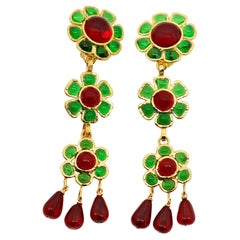
Maison Gripoix Vintage Red and Green Flower Dangling Earrings Set in Gold Tone. These are some of the most stunning earrings in my collection. The colors, of course, and the way they are made. They are just exceptional. They will always be relevant. They are well-made and make a statement. They are just classy and chic. Clip On. Always In Style. Clip on.
I also have them in blue. Acquired in Paris.
Guy de Maupassant wrote a famous story about a necklace. The story is about a young, pretty, intelligent, well-educated, but poorly endowed bride who has to marry a petty official; thus, suffering from the limitations of living a life with a husband who lacks any exquisite qualities. One day, to entertain his dejected spouse, her husband receives an invitation to a ball and gives his wife the 400 francs he had saved for a hunting rifle so that she can order an appropriate dress.
However, when the dress is ready, it becomes clear that it is lacking jewelry, and it would be impossible to attend the ball while looking so poor. The protagonist approaches her wealthy childhood friend, with whom she was raised at the monastery, and borrows a diamond necklace from her. The ball is a great success, and she is the centre of attention. However, when the woman returns home, she discovers that she has lost the necklace. To conceal her faux pas from her friend, she buys a new necklace identical to the one she lost. To pay it off, the woman becomes mired in massive debt, which, over the years, gradually drags her down the social ladder from the bourgeoisie to poverty. Ten years later, having lost her good looks, the woman encounters her friend on the Champs-Élysées, who still looks young, beautiful, and rich. The protagonist reveals to her friend the entire story about the necklace, but her friend replies in amazement that the diamonds were fake and would “cost 500 francs at most.”
Maison Gripoix starts with a dramatic story. In 1869 (or a year earlier, according to other sources), Paris master glassmaker Augustina Gripoix began creating replicas of pearls and crystals, casting glass into various shapes and colors and setting them in the most sophisticated settings. She used the pâte de verre (glass paste) technique, whereby a traditional ceramic or gypsum form was filled with a multi-colour piece of glass and special gluing substances and then baked in a furnace, resulting in objects featuring fantastical hues. Only Augustina made her crystals by pouring the melted glass paste into the press moulds, skipping the furnace step, allowing her to achieve the purity of colour, transparency, and shine. She found a simple method to create beautiful jewelry, and thus, Marquises, Duchesses, and Princesses queued up. Madame Gripoix would then create replicas of their jewelry in case of robbery, loss, or for unusual pieces to be used in their new wraps, neckpieces, or boas. The so-called ‘costume jewelry’ emerged to a large extent thanks to the work of Maison Gripoix.
Augustina Gripoix earned her fame in the 1890s when she began creating necklaces for Sarah Bernhardt to wear on stage and later designed costume jewelry for the first high-fashion house, founded by Charles Frederick Worth. Later, Paul Poiret, the leading couturier of 1910, contacted her, and she created sophisticated Oriental-style jewelry for him to match his famous Oriental costumes, based on the aesthetic of Diaghilev’s initial Russian seasons.
The value of costume jewelry was now being recognized in its own right and not just for imitation purposes. The taste of emancipated young girls, who were gaining more and more freedom and opportunities, was best met with bijouterie. So in the 1920s, when Augustina’s daughter Susan became the head of the House, Gripoix prospects became even more exciting. Girls with short-cropped hair in short dresses zoomed by in open-top cars wearing bijou rather than diamonds. Everyone ordered bijouterie from Madam Gripoix during this period, from Jeanne Lanvin to Jean Piguet; however, the best relationship Gripoix had was with Gabrielle Chanel.
It is well-known that Chanel, a fan of large jewelry with large stones, made bijouterie super fashionable. Chanel brought copies of Byzantine jewelry to Susanne Gripoix. She asked her to create the pieces in that same style, requesting, “Let everyone think that this jewelry is not new, but found somewhere on an excavation site nearby Rue Camborne.” She was so satisfied with the result of her order that she remained a faithful client of Gripoix for several decades. This was how the famous Byzantine style of Chanel jewelry was brought to life, featuring golden Maltese crosses with large multicolor stones and matching bracelets, cabochons, and massive brooches, all of which have become a part of the Gripoix .
Chanel liked to combine both natural and imitation stones in a single item; for example, she would pair natural and imitation pearls in a single necklace. Gripoix made them in such a way that it was impossible to distinguish between them. Susanne Gripoix created exceptional, irregularly shaped pearls from glass for Chanel, imitating the baroque pearls. They were enameled in her workshops with mother-of-pearl to obtain some of the soft shine characteristic of natural pearls
..
As the leading supplier to the couturier houses in Paris, Gripoix collaborated with many renowned designers, including Cristóbal Balenciaga, Pierre Balmain, and Christian Dior, as well as Yves Saint Laurent and, later, Christian Lacroix and Marc Jacobs. However, it was the cooperation with Chanel that was the most significant, both for Chanel and for Gripoix.
Today, Gripoix is no longer a family-owned company, but the House continues to craft jewelry, although the style has undergone considerable changes over the last few years. The jewelry has become more straightforward, more graphical, and even minimalistic. In 2011, however, Gripoix and Catherine Baba...
Category
1980s French Modern Vintage Maison Gripoix Dangle Earrings
Materials
Mixed Metal
Maison Gripoix Vintage Faux Pearl and Red Dangling Earrings Circa 1980s
By Maison Gripoix
Located in New York, NY
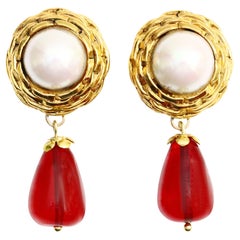
Maison Gripoix Vintage Faux Pearl and Red Dangling Earrings. Wrapped in woven gold around the Pearl in the typical 1980s style of Chanel. Clip on. So classic, and you always look good no matter what you are wearing when you have these on. Clip on.
Very much the colors of Chanel.
Guy de Maupassant wrote a famous story about a necklace. The story is about a young, pretty, intelligent, well-educated but poorly endowed bride who has to marry a petty official; thus, suffering from the limitations of living a life with a husband that lacked any exquisite qualities. One day, to entertain his dejected spouse, her husband receives an invitation to a ball and gives his wife the 400 francs he had saved for a hunting rifle so that she can order an appropriate dress.
However, when the dress is ready, it becomes clear that it is lacking jewelry, and it would be impossible to attend the ball while looking so poor. The protagonist approaches her wealthy childhood friend, with whom she was raised at the monastery, and borrows a diamond necklace from her. The ball is a great success, and she is the centre of attention. However, when the woman returns home, she discovers that she has lost the necklace. To conceal her faux pas from her friend, she buys a new necklace identical to the one she lost. To pay it off, the woman gets into a huge debt, which, over the years, gradually drags her down the social ladder from the bourgeoisie to poverty. Ten years later, having lost her good looks, the woman encounters her friend on the Champs Elysees, who still looks young, beautiful, and rich. The protagonist reveals to her friend the entire story about the necklace, but her friend replies in amazement that the diamonds were fake and would “cost 500 francs at most.”
Maison Gripoix starts out with a dramatic story. In 1869 (or a year earlier, according to other sources), Paris master glassmaker Augustina Gripoix began creating replicas of pearls and crystals, casting glass into various shapes and colors and inserting them into the most sophisticated settings. She used the pâte de verre (glass paste) technique, whereby a traditional ceramic or gypsum form was filled with a multi-colour piece of glass and special gluing substances and then baked in a furnace, resulting in objects featuring fantastical hues. Only Augustina made her crystals by pouring the melted glass paste into the press moulds, skipping the furnace step, allowing her to achieve the purity of colour, transparency, and shine. She found a simple method to create beautiful jewelry, and thus, Marquises, Duchesses, and Princesses queued up. Madame Gripoix would then create replicas of their jewelry in case of robbery or loss or unusual pieces for their new wraps, neckpieces, or boas. The so-called ‘costume jewelry’ emerged to a large extent thanks to the work of Maison Gripoix.
Augustina Gripoix earned her fame in the 1890s when she began creating necklaces for Sarah Bernhardt to wear on stage and later designed costume jewelry for the first high fashion house of Charles Frederick Worth. Later, Paul Poiret, the leading couturier of 1910, contacted her, and she created sophisticated Oriental-style jewelry for him to match his famous Oriental costumes, based on the aesthetic of Diaghilev’s initial Russian seasons.
The value of costume jewelry was now being recognized in its own right and not just for imitation purposes. The taste of emancipated young girls, who were gaining more and more freedom and opportunities, was best met with bijouterie. So in the 1920s, when Augustina’s daughter Susan became the head of the House, Gripoix prospects became even more exciting. Girls with short-cropped hair in short dresses zoomed by in open-top cars wearing bijou rather than diamonds. Everyone ordered bijouterie from Madam Gripoix during this period, from Jeanne Lanvin to Jean Piguet...
Category
1980s French Modern Vintage Maison Gripoix Dangle Earrings
Materials
Mixed Metal
Maison Gripoix Vintage White and Purple Dangling Earrings Circa 1980s
By Maison Gripoix
Located in New York, NY
Maison Gripoix Vintage White and Light Purple Dangling Earrings. These will always be in style. The Chanel look has never left. It is classic and timeless, conveying a sense of class. It is an elevated look. No matter what you wear, these will look right. A Chanel suit or jeans and a white t-shirt with a blazer. You look stunning and done. These are all you need. Clip on. This look will always walk down the Chanel runway in one form or another.
I will send you Velcro dots to hold them on, and you can do cartwheels in these earrings. The models in Paris wear them, and you can quickly wear them for 20 hours. Please ask for them.
Guy de Maupassant wrote a famous story about a necklace. The story is about a young, pretty, intelligent, well-educated but poorly endowed bride who has to marry a petty official; thus, suffering from the limitations of living a life with a husband that lacked any exquisite qualities. One day, to entertain his dejected spouse, her husband receives an invitation to a ball and gives his wife the 400 francs he had saved for a hunting rifle so that she can order an appropriate dress.
However, when the dress is ready, it becomes clear that it is lacking jewelry, and it would be impossible to attend the ball while looking so poor. The protagonist approaches her wealthy childhood friend, with whom she was raised at the monastery, and borrows a diamond necklace from her. The ball is a great success, and she is the centre of attention. However, when the woman returns home, she discovers that she has lost the necklace. To conceal her faux pas from her friend, she buys a new necklace identical to the one she lost. To pay it off, the woman gets into a huge debt, which, over the years, gradually drags her down the social ladder from the bourgeoisie to poverty. Ten years later, having lost her good looks, the woman encounters her friend on the Champs Elysees, who still looks young, beautiful, and rich. The protagonist reveals to her friend the entire story about the necklace, but her friend replies in amazement that the diamonds were fake and would “cost 500 francs at most.”
Maison Gripoix starts out with a dramatic story. In 1869 (or a year earlier, according to other sources), Paris master glassmaker Augustina Gripoix began creating replicas of pearls and crystals, casting glass into various shapes and colors and inserting them into the most sophisticated settings. She used the pâte de verre (glass paste) technique, whereby a traditional ceramic or gypsum form was filled with a multi-colour piece of glass and special gluing substances and then baked in a furnace, resulting in objects featuring fantastical hues. Only Augustina made her crystals by pouring the melted glass paste into the press moulds, skipping the furnace step, allowing her to achieve the purity of colour, transparency, and shine. She found a simple method to create beautiful jewelry, and thus, Marquises, Duchesses, and Princesses queued up. Madame Gripoix would then create replicas of their own jewelry in case of robbery or loss, or unusual pieces for their new wraps, neckpieces, or boas. The so-called ‘costume jewelry’ emerged to a large extent thanks to the work of Maison Gripoix.
Augustina Gripoix earned her fame in the 1890s when she began creating necklaces for Sarah Bernhardt to wear on stage and later designed costume jewelry for the first high fashion house of Charles Frederick Worth. Later on, Paul Poiret, the leading couturier of 1910, contacted her, and she created sophisticated Oriental-style jewelry for him to match his famous Oriental costumes, based on the aesthetic of Diaghilev’s initial Russian seasons.
The value of costume jewelry was now being recognized in its own right and not just for imitation purposes. The taste of emancipated young girls, who were gaining more and more freedom and opportunities, was best met with bijouterie. So in the 1920s, when Augustina’s daughter Susan became the head of the House, Gripoix prospects became even more exciting. Girls with short-cropped hair in short dresses zoomed by in open-top cars wearing bijou rather than diamonds. Everyone ordered bijouterie from Madam Gripoix during this period, from Jeanne Lanvin to Jean Piguet; however, the best relationship Gripoix had was with Gabrielle Chanel.
It is well-known that Chanel, a fan of large jewelry with large stones, made bijouterie super fashionable. Chanel brought copies of Byzantine jewelry to Susanne Gripoix. She asked her to create the pieces in that same style, requesting, “Let everyone think that this jewelry is not new, but found somewhere on an excavation site nearby Rue Camborne.” She was so satisfied with the result of her order that she remained a faithful client of Gripoix for several decades. This was how the famous byzantine style of Chanel jewelry was brought to life, fancying golden Maltese crosses with large multicolor stones and matching bracelets, cabochons, and massive brooches, all of which have become a part of the Gripoix
Chanel liked to combine both natural and imitation stones in a single item; for example, she would pair natural and imitation pearls in a single necklace. Gripoix made them in such a way that it was impossible to distinguish between them. Susanne Gripoix created unique, irregularly shaped glass pearls for Chanel, imitating baroque pearls. They were enameled in her workshops with mother-of-pearl to obtain some of the soft shine characteristic of natural pearls
.
As the leading supplier to the couturier houses in Paris, Gripoix collaborated with many renowned designers, including Cristóbal Balenciaga, Pierre Balmain, and Christian Dior, as well as Yves Saint Laurent and, later, Christian Lacroix and Marc Jacobs. However, it was the cooperation with Chanel that was the most significant, both for Chanel and for Gripoix.
Today, Gripoix is no longer a family-owned company, but the House still crafts jewelry, although the style has undergone considerable changes over the last few years. The jewelry has become more straightforward, more graphical, and even minimalistic. In 2011, however, Gripoix and Catherine Baba...
Category
1980s French Modern Vintage Maison Gripoix Dangle Earrings
Materials
Mixed Metal
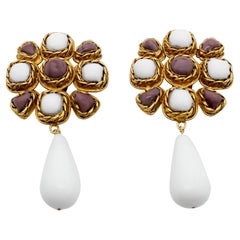
Vintage Gripoix Translucent Pate De Verre Earrings Circa 1980s
By Maison Gripoix
Located in New York, NY
Vintage Gripoix Translucent Earrings with Pieces Of Gold. Dangling Earrings With Pieces of Gold and Stones. Long Necklace/Sautoir on Site to Match. So Gorgeous! Clip On.
Guy de Maupassant wrote a famous story about a necklace. The story revolves around a young, attractive, and intelligent woman who struggles with the limitations of living with a husband who lacks exceptional qualities. One day, to entertain his dejected spouse, her husband receives an invitation to a ball and gives his wife the 400 francs he had saved for a hunting rifle so that she can order an appropriate dress.
However, when the dress is ready, it becomes clear that it is lacking jewelry, and it would be impossible to attend the ball while looking so poor. The protagonist approaches her wealthy childhood friend, with whom she was raised at the monastery, and borrows a diamond necklace from her. The ball is a great success, and she is the centre of attention. However, when the woman returns home, she discovers that she has lost the necklace. To conceal her faux pas from her friend, she buys a new necklace identical to the one she lost. To pay it off, the woman becomes mired in massive debt, which, over the years, gradually drags her down the social ladder from the bourgeoisie to poverty. Ten years later, having lost her good looks, the woman encounters her friend on the Champs-Élysées, who still looks young, beautiful, and rich. The protagonist reveals to her friend the entire story about the necklace, but her friend replies in amazement that the diamonds were fake and would “cost 500 francs at most.”
Maison Gripoix starts with a dramatic story. In 1869 (or a year earlier, according to other sources), Paris master glassmaker Augustina Gripoix began making replicas of pearls and crystals, casting glass into various shapes and colors and inserting them into the most sophisticated settings. She used the pâte de verre (glass paste) technique, whereby a traditional ceramic or gypsum form was filled with a multi-colour piece of glass and special gluing substances and then baked in a furnace, resulting in objects featuring fantastical hues. Only Augustina made her crystals by pouring the melted glass paste into the press moulds, skipping the furnace step, allowing her to achieve the purity of colour, transparency, and shine. She found a simple method to make beautiful jewelry and thus Marquises, Duchesses, and Princesses queued up ... so Madame Gripoix would make them replicas of their jewelry in case of robbery or loss, or some unusual jewelry pieces for their new wraps, neckpieces, or boas. The so-called ‘costume jewelry’ emerged to a large extent thanks to the work of Maison Gripoix.
Augustina Gripoix earned her fame in the 1890s when she began creating necklaces for Sarah Bernhardt to wear on stage and later designed costume jewelry for the first high-fashion house, founded by Charles Frederick Worth. Later, Paul Poiret, the leading couturier of 1910, contacted her, and she created sophisticated Oriental-style jewelry for him to match his famous Oriental costumes, based on the aesthetic of Diaghilev’s initial Russian seasons.
The value of costume jewelry was now being recognized in its own right and not just for imitation purposes. The taste of emancipated young girls, who were gaining more and more freedom and opportunities, was best met with bijouterie. So in the 1920s, when Augustina’s daughter Susan became the head of the House, Gripoix prospects became even more exciting. Girls with short-cropped hair in short dresses zoomed by in open-top cars wearing bijou rather than diamonds. Everyone ordered bijouterie from Madam Gripoix during this period, from Jeanne Lanvin to Jean Piguet...
Category
1980s French Modern Vintage Maison Gripoix Dangle Earrings
Materials
Mixed Metal
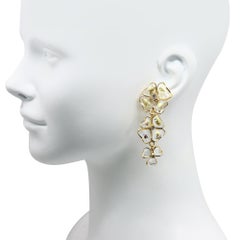
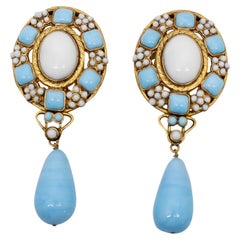
Vintage Maison Gripoix Faux Turquoise and White Dangling Earrings Circa 1980s
By Maison Gripoix
Located in New York, NY
Maison Gripoix Vintage Faux Turquoise and White Layered Dangling Earrings. There are three layers to this, all wrapped in an offset gold tone and then a long, dangling piece. These are so stunning and look good with many colors. Clip On. These are proper statement earrings in that they are so well-made. These can also be worn in the winter against dark colors.
Guy de Maupassant wrote a famous story about a necklace. The story is about a young, attractive, intelligent, well-educated, but under-endowed bride who must marry a petty official and thus suffers from the limitations of living with a husband who lacks refined qualities. One day, to entertain his dejected spouse, her husband receives an invitation to a ball and gives his wife the 400 francs he had saved for a hunting rifle so that she can order an appropriate dress.
However, when the dress is ready, it becomes clear that it is lacking jewelry, and it would be impossible to attend the ball while looking so poor. The protagonist approaches her wealthy childhood friend, with whom she was raised at the monastery, and borrows a diamond necklace from her. The ball is a great success; she is the center of attention. However, when the woman returns home, she discovers she has lost the necklace. To conceal her faux pas from her friend, she buys a new necklace identical to the one she lost. To pay it off, the woman gets into a huge debt, which, over the years, gradually drags her down the social ladder from the bourgeoisie to poverty. Ten years later, having lost her good looks, the woman encounters her friend on the Champs Elysees, who still looks young, beautiful, and rich. The protagonist reveals the entire story about the necklace to her friend, but her friend replies in amazement that the diamonds are fake and would “cost 500 francs at most.”
Maison Gripoix starts with a dramatic story. According to other sources, in 1869 (or a year earlier), Paris master glass-maker Augustina Gripoix began making replicas of pearls and crystals, casting glass into different shapes and colors and inserting them into the most sophisticated settings. She used the pâte de verre (glass paste) technique, whereby a traditional ceramic or gypsum form was filled with a multi-color piece of glass and special gluing substances and then baked in a furnace, resulting in objects featuring fantastical hues. Only Augustina made her crystals by pouring the melted glass paste into the press molds, skipping the furnace step, allowing her to achieve purity of color, transparency, and shine. She found a simple method to make beautiful jewelry, and thus Marquises, Duchesses, and Princesses qued up ... so Madame Gripoix would make them replicas of their jewelry in case of robbery or loss, or some unusual jewelry pieces for their new wraps, neckpieces, or boas. The so-called ‘costume jewelry’ emerged to a large extent thanks to the work of Maison Gripoix.
Augustina Gripoix earned her fame in the 1890s when she began creating necklaces for Sarah Bernhardt to wear on stage and later designed costume jewelry for Charles Frederick Worth's first high-fashion house. Later, Paul Poiret, the leading couturier of the 1910s, contacted her, and she created sophisticated, Oriental-style jewelry to match his famous Oriental costumes, based on the aesthetic of Diaghilev’s initial Russian seasons.
The value of costume jewelry was now being recognized in its own right and not just for imitation purposes. The taste of emancipated young girls, who were gaining more and more freedom and opportunities, was best met with bijouterie. So in 1920, when Augustina’s daughter Susan became the head of the House, Gripoix's prospects became even more exciting—girls with short-cropped hair in short dresses zoomed by in open-top cars wearing bijou rather than diamonds. Everyone ordered bijouterie from Madam Gripoix during this period, from Jeanne Lanvin to Jean Piguet...
Category
1980s French Modern Vintage Maison Gripoix Dangle Earrings
Materials
Mixed Metal
Related Items
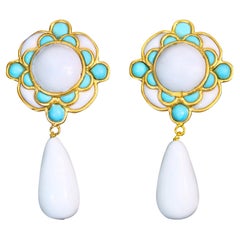
Filigree Faux Emerald Green Earrings
By Meghna Jewels
Located in Hoffman Estates, IL
The handmade filigree faux emerald green earrings is ornate and lovely, it is further enhanced by sparkling CZ stones. Earrings ha...
Category
21st Century and Contemporary Artisan Maison Gripoix Dangle Earrings
Materials
Crystal, Zircon, Base Metal, Brass
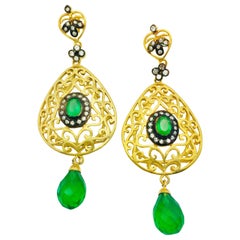
Turquoise Hand brushed Camilla Meghna Jewels Earrings
By Meghna Jewels
Located in Hoffman Estates, IL
Two-tones: silver and gold, coexist in harmony, enhanced by dozens of twinkling CZ stones in flower shaped turquoise and CZ drop earrings. These earri...
Category
21st Century and Contemporary Maison Gripoix Dangle Earrings
Materials
Turquoise, Zircon, Gold Plate, Brass
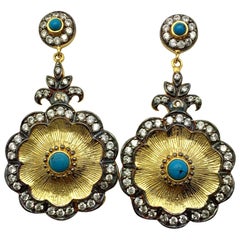
Resin Red Leaf Earrings
By Meghna Jewels
Located in Hoffman Estates, IL
Strut your stuff in these red resin leaf earrings. As you can see, the novel creation features a standout design that incorporates some super stylish elements. These earrings fasten ...
Category
21st Century and Contemporary Modern Maison Gripoix Dangle Earrings
Materials
Zircon, Base Metal
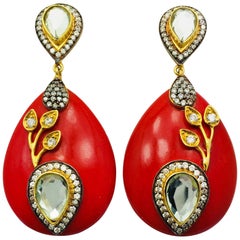

Chanel Anglo Indian Moghul Earrings, Maison Gripoix
By Chanel
Located in New York, NY
Elegant Chanel Anglo Indian Moghul Earrings from the 1990's made by Maison Gripoix. Dimensional design with hand poured glass in pale emerald and dee...
Category
1990s French Anglo-Indian Maison Gripoix Dangle Earrings
Materials
Bronze, Gilt Metal
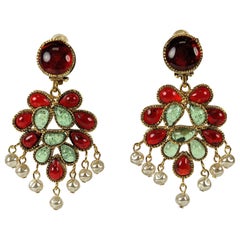
14K Gold Hoop Earrings circa 1980s
Located in Scottsdale, AZ
Timeless and chic 14k gold dangle earrings. The earrings feature three circles stacked on top of one another in a beautiful textured gold metal. Balance them out with your gold Cartier love rings or create a contrast by styling them with your favorite Louis Vuitton padlock necklace...
Category
1980s Unknown Vintage Maison Gripoix Dangle Earrings
Materials
14k Gold
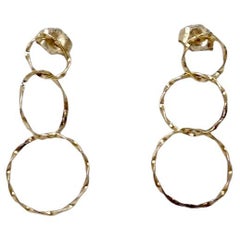
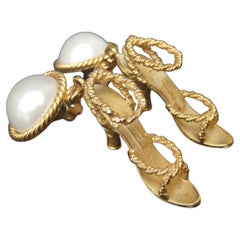
SALVATORE FERRAGAMO Italian Dangling Shoe Clip on Statement Earrings c 1980s
By Salvatore Ferragamo
Located in University City, MO
SALVATORE FERRAGAMO Rare Italian clip-on dangling shoe earrings c 1980s
The unique statement clip on earrings are designed with dangling gold plated
shoes; suspended from a resin ena...
Category
1980s Italian Vintage Maison Gripoix Dangle Earrings
Materials
Gilt Metal
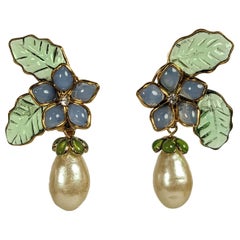
Chanel Maison Gripoix Romantic Flower Ear Clips
By Maison Gripoix for Chanel
Located in New York, NY
Chanel Maison Gripoix romantic flower ear clips of corn flower opal blue poured glass with emerald and pale lime poured glass enamel. Set in gilt bronze with handmade Gripoix glass t...
Category
1990s French Romantic Maison Gripoix Dangle Earrings
Materials
Gold Plate, Brass, Bronze, Enamel, Gilt Metal
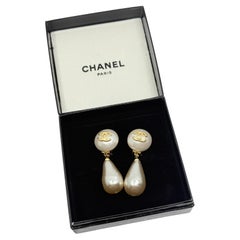
Chanel Vintage Gold CC Faux Pearl Dangle Clip On Earrings
By Chanel
Located in Bellevue, WA
DETAILS:
Hallmark: CHANEL
Made in France
Collection 23
The earrings are in good condition showing minimal wear
Comes with box
IMPORTANT INFORMATION:
This item is a pre-owned vintage...
Category
Early 20th Century Maison Gripoix Dangle Earrings
Materials
Gold
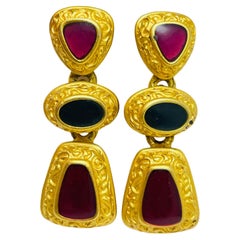
ANNE KLEIN vintage gold gripoix etruscan designer runway dangle earrings
By Anne Klein
Located in Palos Hills, IL
DETAILS
• signed AK ANNE KLEIN
• gold tone with poured glass
• vintage designer earrings
MEASUREMENTS
•
CONDITION
• very good vintage condition with minimal signs of wear ...
Category
1980s Vintage Maison Gripoix Dangle Earrings
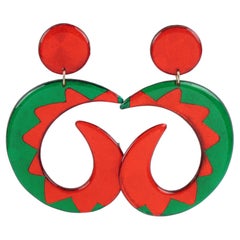
Space Age Dangle Red and Green Lucite Pierced Earrings
Located in Atlanta, GA
These impressive Lucite dangling pierced earrings feature an oversized chandelier shape with a free-form open hoop design in bright green and neon red colors, accented with a glitter...
Category
1980s Italian Modernist Vintage Maison Gripoix Dangle Earrings
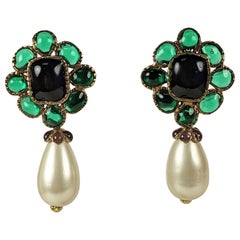
Chanel Moghul Pearl Drop Earrings, Maison Gripoix
By Maison Gripoix for Chanel
Located in New York, NY
Lovely Chanel Moghul Pearl Drop Earrings from the 1980's by Maison Gripoix. Poured glass construction in amythest and emerald with large faux pearl drops...
Category
1980s French Anglo-Indian Vintage Maison Gripoix Dangle Earrings
Materials
Bronze, Gilt Metal
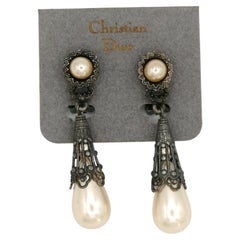
CHRISTIAN DIOR Vintage Victorian Insipred Faux Pearl Dangling Earrings
By Christian Dior
Located in Nice, FR
CHRISTIAN DIOR vintage oxidized gun patina dangling earrings (clip-on) embellished with faux pearls.
Marked CHR. DIOR Germany.
Indicative measurements : height approx. 6.1 cm (2.40...
Category
20th Century French Maison Gripoix Dangle Earrings
Previously Available Items
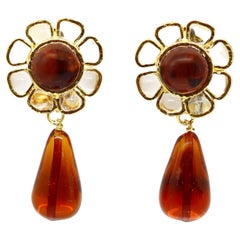
Vintage Maison Gripoix Clear and Muted Red/Orange Flower Earrings Circa 1980s
By Maison Gripoix
Located in New York, NY
Maison Gripoix Vintage Clear and Muted Red/Orange Flower Dangling Earrings set in gold tone. Always a Classic and will always be relevant in your wardrobe. These are so classic but with an edge!
Guy de Maupassant wrote a famous story about a necklace. The story is about a young, pretty, intelligent, well educated but poorly endowed bride who has to marry a petty official; and thus suffering from the limitations of living a life with a husband that lacked any exquisite qualities. In order to entertain his dejected spouse, one day her husband gets an invitation to a ball and gives his wife 400 francs he had saved for a hunting rifle so that she would be able to order an appropriate dress.
However, when the dress is ready it becomes clear that it is lacking jewelry; and it would be impossible to attend the ball while looking so poor. The protagonist approaches her rich childhood friend with whom she was raised together at the monastery and borrows a diamond necklace from her. The ball is a great success and she is the centre of attention. However when the woman returns home, she discovers that she has lost the necklace. In order to conceal her faux pas from her friend, she buys a new necklace identical to the one she lost, and to pay it off the woman gets into a huge debt which over the years gradually drags her down the social ladder from bourgeoisie to poverty. Ten years later, having lost her good looks, the woman encounters her friend on the Champs Elysees, who still looks young, beautiful and rich. The protagonist reveals to her friend the whole story about the necklace, but her friend replies in amazement that the diamonds were fake and would “cost 500 francs at most”.
Maison Gripoix starts out with a dramatic story. In 1869 (or a year earlier, according to other sources), Paris master glass-maker Augustina Gripoix began making replicas of pearls and crystals; casting glass into different shapes and colours and inserting them into most sophisticated settings. She used the pâte de verre (glass paste) technique, whereby a traditional ceramic or qypsum form was filled with a multi-colour pieces of glass and special gluing substances and then baked in a furnace, resulting in objects featuring fantastical hues. Only Augustina made her crystals by pouring the melted glass paste into the press moulds skipping the furnace step, allowing her to achieve the purity of colour, transparency and shine. She found a simple method to make beautiful jewelry and thus Marquises, Duchesses and Princesses qued up ... so Madame Gripoix would make them replicas of their own jewelry in case of robbery or loss, or some unusual jewelry pieces for their new wraps, neckpieces, or boas. The so-called ‘costume jewelry’ emerged to a large extent thanks to the work of Maison Gripoix.
Augustina Gripoix earned her fame in the 1890’s when she started making necklaces for Sarah Bernhardt to wear on stage; and later the costume jewelry for the first high fashion house of Charles Frederick Worth. Later on, Paul Poiret, the leading couturier of the 1910’s contacted her and she created sophisticated oriental style jewelry for him to match his famous oriental costumes based on the aesthetic of Diaghilev’s initial Russian seasons.
The value of costume jewelry was now being recognized in its own right; and not just for imitation purposes. The taste of emancipated young girls, who were gaining more and more freedom and opportunities, was best met with bijouterie. So in the 1920, when Augustina’s daughter Susan became the head of the House; Gripoix prospects became even more exciting. Girls with short-cropped hair in short dresses zoomed by in open-top cars wearing bijou rather than diamonds. Everyone ordered bijouterie from Madam Gripoix during this period, from Jeanne Lanvin to Jean Piguet, but certainly the best relationship Gripoix had was with Gabriel Chanel.
It is well-known that Chanel, a fan of large jewelry with large stones, made bijouterie super fashionable. Chanel brought copies of byzantine jewelry to Susanne Gripoix; and asked her to make the pieces in that same style, requesting: “Let everyone think that this jewelry is not new, but found somewhere on an excavation site nearby Rue Camborne”. She was so satisfied with the result of her order that she remained a faithful client of Gripoix for several decades. This was how the famous byzantine style of Chanel jewelry was brought to life, fancying golden Maltese crosses with large multicolor stones and matching bracelets; cabochons and massive brooches all of which have become a part of the Gripoix
Chanel liked to combine both natural and imitation stones in one item, for example she would combine natural and imitation pearls in one necklace. Gripoix made them in such a way that it was impossible to tell the difference between the either of them. Susanne Gripoix made special irregular shape pearls from glass for Chanel; imitating the baroque pearls. They were enameled in her workshops with mother-of-pearl to obtain some of the soft shine characteristic of natural pearls
.
As the main Paris supplier to the couturier houses, Gripoix worked for many designers: from Cristobal Balenciaga, Pierre Balmain and Christian Dior to Yves Saint Laurent; and later for Christian Lacroix and Marc Jacobs. However it was the cooperation with Chanel that was the most significant, both for Chanel and for Gripoix.
Today Gripoix is no longer a family affair/company but the House still makes jewelry, although the style has changed considerably over the last few years. The jewelry has become simpler, more graphical and even minimalistic. In 2011, however, Gripoix and Catherine Baba...
Category
1980s French Artist Vintage Maison Gripoix Dangle Earrings
Materials
Gold Plate
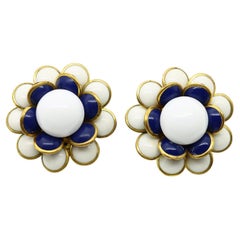
Vintage Gripoix Navy, White and Gold Flower Earrings
By Maison Gripoix
Located in New York, NY
Vintage Gripoix Navy, White and Gold Flower Earrings. Layered upward and 3D. Clip On.
Guy de Maupassant wrote a famous story about a necklace. The story is about a young, pretty, intelligent, well educated but poorly endowed bride who has to marry a petty official; and thus suffering from the limitations of living a life with a husband that lacked any exquisite qualities. In order to entertain his dejected spouse, one day her husband gets an invitation to a ball and gives his wife 400 francs he had saved for a hunting rifle so that she would be able to order an appropriate dress.
However, when the dress is ready it becomes clear that it is lacking jewelry; and it would be impossible to attend the ball while looking so poor. The protagonist approaches her rich childhood friend with whom she was raised together at the monastery and borrows a diamond necklace from her. The ball is a great success and she is the centre of attention. However when the woman returns home, she discovers that she has lost the necklace. In order to conceal her faux pas from her friend, she buys a new necklace identical to the one she lost, and to pay it off the woman gets into a huge debt which over the years gradually drags her down the social ladder from bourgeoisie to poverty. Ten years later, having lost her good looks, the woman encounters her friend on the Champs Elysees, who still looks young, beautiful and rich. The protagonist reveals to her friend the whole story about the necklace, but her friend replies in amazement that the diamonds were fake and would “cost 500 francs at most”.
Maison Gripoix starts out with a dramatic story. In 1869 (or a year earlier, according to other sources), Paris master glass-maker Augustina Gripoix began making replicas of pearls and crystals; casting glass into different shapes and colours and inserting them into most sophisticated settings. She used the pâte de verre (glass paste) technique, whereby a traditional ceramic or qypsum form was filled with a multi-colour pieces of glass and special gluing substances and then baked in a furnace, resulting in objects featuring fantastical hues. Only Augustina made her crystals by pouring the melted glass paste into the press moulds skipping the furnace step, allowing her to achieve the purity of colour, transparency and shine. She found a simple method to make beautiful jewelry and thus Marquises, Duchesses and Princesses qued up ... so Madame Gripoix would make them replicas of their own jewelry in case of robbery or loss, or some unusual jewelry pieces for their new wraps, neckpieces, or boas. The so-called ‘costume jewelry’ emerged to a large extent thanks to the work of Maison Gripoix.
Augustina Gripoix earned her fame in the 1890’s when she started making necklaces for Sarah Bernhardt to wear on stage; and later the costume jewelry for the first high fashion house of Charles Frederick Worth. Later on, Paul Poiret, the leading couturier of the 1910’s contacted her and she created sophisticated oriental style jewelry for him to match his famous oriental costumes based on the aesthetic of Diaghilev’s initial Russian seasons.
The value of costume jewelry was now being recognized in its own right; and not just for imitation purposes. The taste of emancipated young girls, who were gaining more and more freedom and opportunities, was best met with bijouterie. So in the 1920, when Augustina’s daughter Susan became the head of the House; Gripoix prospects became even more exciting. Girls with short-cropped hair in short dresses zoomed by in open-top cars wearing bijou rather than diamonds. Everyone ordered bijouterie from Madam Gripoix during this period, from Jeanne Lanvin to Jean Piguet, but certainly the best relationship Gripoix had was with Gabriel Chanel...
Category
1960s French Artist Vintage Maison Gripoix Dangle Earrings
Maison Gripoix Vintage Faux Turquoise and White Dangling Earrings Circa 1980s
By Maison Gripoix
Located in New York, NY
Maison Gripoix Vintage Faux Turquoise and White Dangling Earrings set in Gold Tone. These just ooze class and style. They will always be in style. They look very Palm Beach or the Hamptons or the South of France or any amazing place that you can insert yourself into. Maybe we should go to Portofino?? A day spent having a lovely dinner. Clip On. So Bright and Fesh Looking.
Guy de Maupassant wrote a famous story about a necklace. The story is about a young, pretty, intelligent, well educated but poorly endowed bride who has to marry a petty official; and thus suffering from the limitations of living a life with a husband that lacked any exquisite qualities. In order to entertain his dejected spouse, one day her husband gets an invitation to a ball and gives his wife 400 francs he had saved for a hunting rifle so that she would be able to order an appropriate dress.
However, when the dress is ready it becomes clear that it is lacking jewelry; and it would be impossible to attend the ball while looking so poor. The protagonist approaches her rich childhood friend with whom she was raised together at the monastery and borrows a diamond necklace from her. The ball is a great success and she is the centre of attention. However when the woman returns home, she discovers that she has lost the necklace. In order to conceal her faux pas from her friend, she buys a new necklace identical to the one she lost, and to pay it off the woman gets into a huge debt which over the years gradually drags her down the social ladder from bourgeoisie to poverty. Ten years later, having lost her good looks, the woman encounters her friend on the Champs Elysees, who still looks young, beautiful and rich. The protagonist reveals to her friend the whole story about the necklace, but her friend replies in amazement that the diamonds were fake and would “cost 500 francs at most”.
Maison Gripoix starts out with a dramatic story. In 1869 (or a year earlier, according to other sources), Paris master glass-maker Augustina Gripoix began making replicas of pearls and crystals; casting glass into different shapes and colours and inserting them into most sophisticated settings. She used the pâte de verre (glass paste) technique, whereby a traditional ceramic or qypsum form was filled with a multi-colour pieces of glass and special gluing substances and then baked in a furnace, resulting in objects featuring fantastical hues. Only Augustina made her crystals by pouring the melted glass paste into the press moulds skipping the furnace step, allowing her to achieve the purity of colour, transparency and shine. She found a simple method to make beautiful jewelry and thus Marquises, Duchesses and Princesses qued up ... so Madame Gripoix would make them replicas of their own jewelry in case of robbery or loss, or some unusual jewelry pieces for their new wraps, neckpieces, or boas. The so-called ‘costume jewelry’ emerged to a large extent thanks to the work of Maison Gripoix.
Augustina Gripoix earned her fame in the 1890’s when she started making necklaces for Sarah Bernhardt to wear on stage; and later the costume jewelry for the first high fashion house of Charles Frederick Worth. Later on, Paul Poiret, the leading couturier of the 1910’s contacted her and she created sophisticated oriental style jewelry for him to match his famous oriental costumes based on the aesthetic of Diaghilev’s initial Russian seasons.
The value of costume jewelry was now being recognized in its own right; and not just for imitation purposes. The taste of emancipated young girls, who were gaining more and more freedom and opportunities, was best met with bijouterie. So in the 1920, when Augustina’s daughter Susan became the head of the House; Gripoix prospects became even more exciting. Girls with short-cropped hair in short dresses zoomed by in open-top cars wearing bijou rather than diamonds. Everyone ordered bijouterie from Madam Gripoix during this period, from Jeanne Lanvin to Jean Piguet, but certainly the best relationship Gripoix had was with Gabriel Chanel.
It is well-known that Chanel, a fan of large jewelry with large stones...
Category
1980s French Artist Vintage Maison Gripoix Dangle Earrings
Materials
Mixed Metal
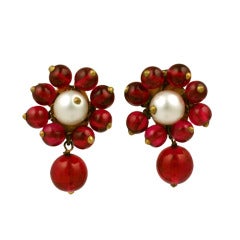
Chanel Maison Gripoix Pearl and Ruby Earclips 1930s
By Maison Gripoix
Located in New York, NY
Early Maison Gripoix for Chanel ruby and pearl byzantine style ear clips of pate de verre handmade beads and gilt metal. Clip back fittings. Unsigned. 1930's France.
Excellent condi...
Category
1930s French Vintage Maison Gripoix Dangle Earrings
Materials
Gilt Metal
Maison Gripoix dangle earrings for sale on 1stDibs.
Find a range of Maison Gripoix dangle earrings available on 1stDibs. Each of these unique items was designed with extraordinary care, often using mixed metal. We have 9 pieces in this collection as well as a number of other designs by this jeweler.