Marylyn Dintenfass Still-life Paintings
to
2
Overall Width
to
Overall Height
to
2
2
2
2
2
2
13
133
78
74
69
2
Artist: Marylyn Dintenfass
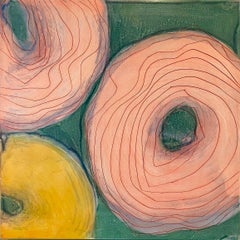
"AKEE" Oil Painting, Marylyn Dintenfass Modernist Abstract Expressionist Pop Art
By Marylyn Dintenfass
Located in Surfside, FL
Provenance: Babcock Galleries (bears their label verso.) signed verso with artists monogram signature.
Marylyn Dintenfass (born 1943) is an American painter, printmaker, and sculptor. She is primarily known for her oil paintings, which use a dynamic color palette and lexicon of gestural imagery to explore dualities in the human experience and everyday sensual pleasures.
Marylyn Dintenfass was born in 1943 in Brooklyn, New York and spent most of her early years in Brooklyn and then Long Island. She attended Queens College, and graduated in 1965 with a bachelor's degree in Fine Arts. During this time, the artist worked with Abstract Expressionist painter John Ferren and muralist Barse Miller. Marilyn Dintenfass explored new media and developed her own reaction to abstract expressionism with color, line, and gesture. Dintenfass acquired an appreciation for a broad range of materials that led to major sculpture installations composed of ceramic materials, steel, lead, wood, wax and a variety of pigments and epoxies.
Following a tour of museums in Amsterdam, Paris and Rome, the artist made her way to Jerusalem in 1966. During this journey, the artist worked with painter Ruth Bamberger, studied etching and mingled with the artists and intellectuals of the city. The result was Dintenfass's first architectural commission, to design the “Pop Op Disco,” Jerusalem's first disco. This commission allowed her to work with an array of materials to employ shapes, surfaces, textures, colors, and lights, all of which coalesced in her consciousness that would become important components of her mature personal visual vocabulary. Dintenfass also married and started her family during these years.
Art critic Meredith Mendelsohn writes, “Dintenfass uses luscious colors, repetitive forms, and a gestural intensity that combines Abstract Expressionism and Pop Art.”
Dintenfass often works with oil paint on wooden panels fragmented into parts of a grid. "After completing a painting," writes curator and critic Lilly Wei in a study of Dintenfass' work, "Dintenfass literally takes it apart, treating each panel as a discrete entity, exchanging panels between works in an aesthetic mix and match as she searches for interactions and relationships of color and form that satisfy her sense of visual excitement, sparked by the frisson of the dissonant." In an interview with critic Irving Sandler, Dintenfass speaks of the grid as a necessary, formal restraint for the passion of the gestural marks it contains. Joyce Robinson illuminates; “Dintenfass is at heart, though, a painter, and the grid, with its reference to and notion of modular parts, has remained central to her artistic enterprise, functioning as a kind of Apollonian matrix holding in check the exuberant, vividly colored abstractions of this essentially Dionysian artist.”
Lilly Wei adds, "Ultimately, however, Dintenfass is more sensualist than theorist, and her paintings owe much of their allure to their materiality and the dazzle of color. Her array of ripe, radiant, saturated hues—a palette of gorgeous diversity—can be silkily smooth and nuanced; boldly exuberant; or edgily, feverishly discordant."
The artist's abstract imagery usually appears in her work as various forms of stripes or circles arranged across translucent layers of alternating matte and high gloss textures. In a conversation with gallery owner, John Driscoll, Dintenfass likens these symbols to language that predates the written word, saying her "work relates to communication through the visceral channel." Rooted in autobiography, the artist's paintings also examine the contrast between what she calls the “micro” and the “macro.” At times the shapes simultaneously resemble cells under a microscope and visions of the cosmos. Dintenfass' themes explore the dualities of everyday pleasures; depending on the focus of a series, her symbols might conjure characters, candies, car wheels, or paint itself.
Although known for her paintings, Dintenfass was first recognized for her sculptural installations. Her innovative use of mixed media (ceramics, epoxies, wax, pigments, steel, lead, wood, etc.) transformed understanding of what a “ceramic” work of art could be and firmly fixed her position and influence among a generation of mixed media artists expanding the traditional definitions and boundaries of object and materials to create modern art. The results came as architectural reliefs and installation sculpture unique to her organic but structural personal style. Similar to her paintings, Dintenfass developed a modular language of symbols, amalgams of line and curve, which she would combine to create detailed pictographic languages all her own, what she has called “organic alphabets.” As Ted Castle relates, “Ideas are furtive elements, stolen from the matrix, so as to be reformed by human genius into something unforeseen—a poem, a painting, a game of dominoes, a television set, a brick, a tile, a cup. Marylyn Dintenfass is a master of the transformation of ideas into palpable form.”
Dintenfass has also been commissioned to create many large-scale installations, including works for the State of Connecticut Superior Courthouse; the Port Authority of NY 42nd Street Bus Terminal; IBM in Atlanta, Charlotte, and San Jose; The Baltimore Federal...
Category
Early 2000s Abstract Marylyn Dintenfass Still-life Paintings
Materials
Oil, Panel
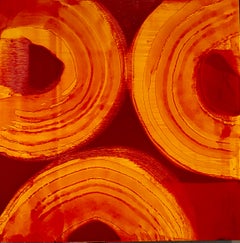
Abstract Red Persimmon Oil Painting on Panel Marylyn Dintenfass Modernist
By Marylyn Dintenfass
Located in Surfside, FL
Provenance: Babcock Galleries (bears their label verso. signed verso with artists monogram signature.
Marylyn Dintenfass (born 1943) is an American painter, printmaker, and sculptor. She is primarily known for her oil paintings, which use a dynamic color palette and lexicon of gestural imagery to explore dualities in the human experience and everyday sensual pleasures.
Marylyn Dintenfass was born in 1943 in Brooklyn, New York and spent most of her early years in Brooklyn and then Long Island. She attended Queens College, and graduated in 1965 with a bachelor's degree in Fine Arts. During this time, the artist worked with Abstract Expressionist painter John Ferren and muralist Barse Miller. Marilyn Dintenfass explored new media and developed her own reaction to abstract expressionism with color, line, and gesture. Dintenfass acquired an appreciation for a broad range of materials that led to major sculpture installations composed of ceramic materials, steel, lead, wood, wax and a variety of pigments and epoxies.
Following a tour of museums in Amsterdam, Paris and Rome, the artist made her way to Jerusalem in 1966. During this journey, the artist worked with painter Ruth Bamberger, studied etching and mingled with the artists and intellectuals of the city. The result was Dintenfass's first architectural commission, to design the “Pop Op Disco,” Jerusalem's first disco. This commission allowed her to work with an array of materials to employ shapes, surfaces, textures, colors, and lights, all of which coalesced in her consciousness that would become important components of her mature personal visual vocabulary. Dintenfass also married and started her family during these years.
Art critic Meredith Mendelsohn writes, “Dintenfass uses luscious colors, repetitive forms, and a gestural intensity that combines Abstract Expressionism and Pop Art.”
Dintenfass often works with oil paint on wooden panels fragmented into parts of a grid. "After completing a painting," writes curator and critic Lilly Wei in a study of Dintenfass' work, "Dintenfass literally takes it apart, treating each panel as a discrete entity, exchanging panels between works in an aesthetic mix and match as she searches for interactions and relationships of color and form that satisfy her sense of visual excitement, sparked by the frisson of the dissonant." In an interview with critic Irving Sandler, Dintenfass speaks of the grid as a necessary, formal restraint for the passion of the gestural marks it contains. Joyce Robinson illuminates; “Dintenfass is at heart, though, a painter, and the grid, with its reference to and notion of modular parts, has remained central to her artistic enterprise, functioning as a kind of Apollonian matrix holding in check the exuberant, vividly colored abstractions of this essentially Dionysian artist.”
Lilly Wei adds, "Ultimately, however, Dintenfass is more sensualist than theorist, and her paintings owe much of their allure to their materiality and the dazzle of color. Her array of ripe, radiant, saturated hues—a palette of gorgeous diversity—can be silkily smooth and nuanced; boldly exuberant; or edgily, feverishly discordant."
The artist's abstract imagery usually appears in her work as various forms of stripes or circles arranged across translucent layers of alternating matte and high gloss textures. In a conversation with gallery owner, John Driscoll, Dintenfass likens these symbols to language that predates the written word, saying her "work relates to communication through the visceral channel." Rooted in autobiography, the artist's paintings also examine the contrast between what she calls the “micro” and the “macro.” At times the shapes simultaneously resemble cells under a microscope and visions of the cosmos. Dintenfass' themes explore the dualities of everyday pleasures; depending on the focus of a series, her symbols might conjure characters, candies, car wheels, or paint itself.
Although known for her paintings, Dintenfass was first recognized for her sculptural installations. Her innovative use of mixed media (ceramics, epoxies, wax, pigments, steel, lead, wood, etc.) transformed understanding of what a “ceramic” work of art could be and firmly fixed her position and influence among a generation of mixed media artists expanding the traditional definitions and boundaries of object and materials to create modern art. The results came as architectural reliefs and installation sculpture unique to her organic but structural personal style. Similar to her paintings, Dintenfass developed a modular language of symbols, amalgams of line and curve, which she would combine to create detailed pictographic languages all her own, what she has called “organic alphabets.” As Ted Castle relates, “Ideas are furtive elements, stolen from the matrix, so as to be reformed by human genius into something unforeseen—a poem, a painting, a game of dominoes, a television set, a brick, a tile, a cup. Marylyn Dintenfass is a master of the transformation of ideas into palpable form.”
Dintenfass has also been commissioned to create many large-scale installations, including works for the State of Connecticut Superior Courthouse; the Port Authority of NY 42nd Street Bus Terminal; IBM in Atlanta, Charlotte, and San Jose; The Baltimore Federal...
Category
Early 2000s Abstract Marylyn Dintenfass Still-life Paintings
Materials
Oil, Panel
Related Items
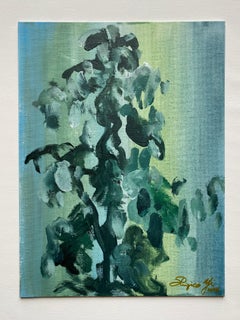
Original-Magic Bell in the Night-UK Awarded Artist-Botanical Abstract Expression
Located in London, GB
In her latest series, "The Weaver," Shizico explores forms, layers, and time onto canvases. Applying the format of diptychs and triptychs, she creates lyrical narratives, capturing t...
Category
2010s Abstract Expressionist Marylyn Dintenfass Still-life Paintings
Materials
Gesso, Canvas, Oil, Acrylic, Wood Panel

$459 Sale Price
20% Off
H 15.75 in W 11.82 in D 0.12 in
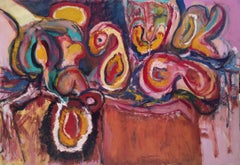
Mid-Century Modern Abstract Expressionist Still Life Oil Painting
By Toma Yovanovich
Located in Buffalo, NY
An original mid century modern abstract expressionist painting by American artist Toma Yovanovich.
Toma Yovanovich (1931-2016)
Yovanovich was a painter/printmaker whose work i...
Category
1960s Abstract Expressionist Marylyn Dintenfass Still-life Paintings
Materials
Illustration Board, Oil
$720 Sale Price
20% Off
H 18 in W 25 in
Coralcello, richly colorful music themed abstraction
By C. Dimitri
Located in Brooklyn, NY
The artist began this painting in 2010. Oil and resin on wood panel. Dedicated to David Lynch and coral reefs.
Rich brushwork in image of stringed musical instrument within the abst...
Category
2010s Abstract Marylyn Dintenfass Still-life Paintings
Materials
Resin, Mixed Media, Oil, Wood Panel
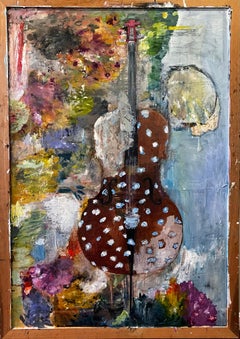
Fruit Cluster
By James Koenig
Located in Buffalo, NY
An original modern abstract by American artist James Koenig. This work created in 1954 is featured in the Draw Near exhibition currently on view at Benjaman Gallery.
Category
1950s Abstract Marylyn Dintenfass Still-life Paintings
Materials
Canvas, Oil
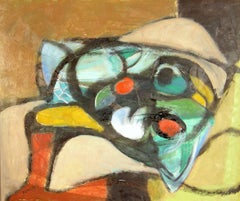
“Mr. Melville’s Kitchen” Contemporary Pastel Toned Abstract Still Life Painting
Located in Houston, TX
Contemporary pastel toned abstract painting by Houston based artist Kristen Anton. The work features grey, pink, brown, and orange blocks of color accented with layers of brushwork. ...
Category
2010s Abstract Marylyn Dintenfass Still-life Paintings
Materials
Acrylic, Panel
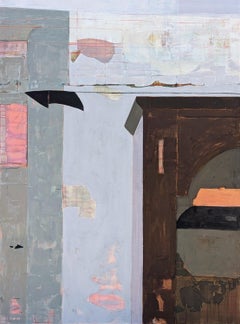
"Nowhere to Land IV" Abstract Painting 83" x 87" inch by Carole Baines
Located in Culver City, CA
"Nowhere to Land IV" Abstract Painting 83" x 87" inch by Carole Baines
Carole Baines is a self-taught, London-born artist based between Townsville and Brisbane, Queensland, Australi...
Category
21st Century and Contemporary Abstract Expressionist Marylyn Dintenfass Still-life Paintings
Materials
Canvas, Oil, Acrylic
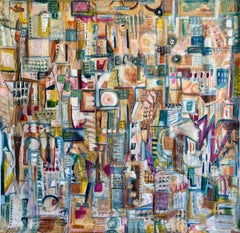
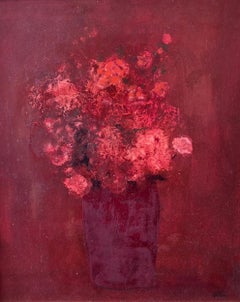
Carnations
Rose Buds
Located in Summit, NJ
Gorgeous oil on panel by Harold Cohn. Beautiful reds - the photo does not do the painting justice. The texture of the flowers is stunning. The piece is fra...
Category
1950s Abstract Impressionist Marylyn Dintenfass Still-life Paintings
Materials
Oil, Panel, Board
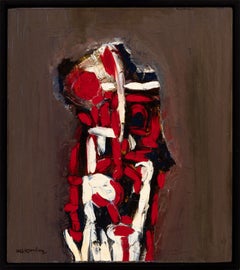
Ralph Rosenborg "Rock Flowers" Signed Abstract Expressionist Oil, Framed 1965
By Ralph Rosenborg
Located in Miami, FL
RALPH ROSENBORG – "ROCK FLOWERS"
Oil on Canvas ⚜ Signed & Dated Lower Left & Verso ⚜ Float Frame
A VIBRANT EXPRESSIONIST WORK FROM A TRUE AMERICAN MODERNIST
In Rock Flowers, painted...
Category
1960s Abstract Expressionist Marylyn Dintenfass Still-life Paintings
Materials
Oil
$8,000
H 27.75 in W 24.625 in D 2.375 in
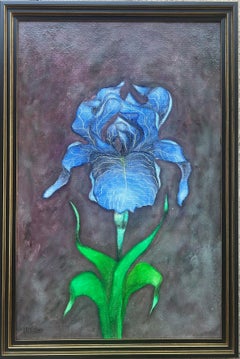
"The Blue Iris" framed oil on panel original abstract painting by Steve McElroy
By Steve McElroy
Located in Dallas, TX
"The Blue Iris" original oil on textured panel by known artist Steve McElroy. Search his name for current articles including a brand new article searched as Bold Journey Steve McElr...
Category
2010s Abstract Marylyn Dintenfass Still-life Paintings
Materials
Oil, Panel
$1,600
H 36 in W 25 in D 2 in
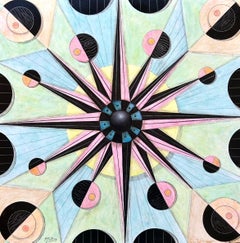
Original abstract oil painting by easily searchable artist Steve McElroy.
By Steve McElroy
Located in Dallas, TX
This artist's butterfly work is in the current Veranda magazine with Jan Showers.
"Kaleidoscope" by Steve McElroy original oil on panel painting. Remember Kaleidoscopes from child...
Category
2010s Abstract Marylyn Dintenfass Still-life Paintings
Materials
Oil, Panel
$950
H 20 in W 20 in D 2 in
Antique American Modernist Abstract Expressionist Skull Mid Century Oil Painting
Located in Buffalo, NY
Antique American modernist oil painting by Victor De Pauw (1902 - 1971). Oil on board, circa 1950. Framing available. Image size, 24L x 27H. Signed.
Category
1950s Abstract Marylyn Dintenfass Still-life Paintings
Materials
Canvas, Oil
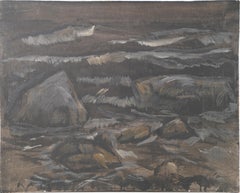
Victor De PauwAntique American Modernist Abstract Expressionist Skull Mid Century Oil Painting, 1950
$636 Sale Price
20% Off
H 27 in W 24 in D 2 in
Original oil painting by prominent
searchable artist Steve McElroy.
By Steve McElroy
Located in Dallas, TX
This artist's butterfly work is in the current Veranda Magazine with Jan Showers.
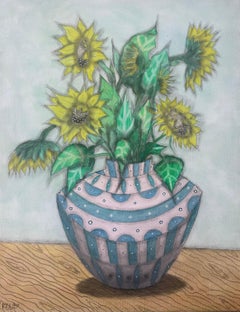
"Sunflowers" oil on canvas original painting by Steve McElroy. 16 x 20...
Category
2010s Abstract Marylyn Dintenfass Still-life Paintings
Materials
Canvas, Oil
$600
H 20 in W 16 in D 1.5 in
Previously Available Items
Abstract Red Persimmon Oil Painting on Panel Marylyn Dintenfass Modernist
By Marylyn Dintenfass
Located in Surfside, FL
Provenance: Babcock Galleries (bears their label verso. signed verso with artists monogram signature.
Marylyn Dintenfass (born 1943) is an American painter, printmaker, and sculptor. She is primarily known for her oil paintings, which use a dynamic color palette and lexicon of gestural imagery to explore dualities in the human experience and everyday sensual pleasures.
Marylyn Dintenfass was born in 1943 in Brooklyn, New York and spent most of her early years in Brooklyn and then Long Island. She attended Queens College, and graduated in 1965 with a bachelor's degree in Fine Arts. During this time, the artist worked with Abstract Expressionist painter John Ferren and muralist Barse Miller. Marilyn Dintenfass explored new media and developed her own reaction to abstract expressionism with color, line, and gesture. Dintenfass acquired an appreciation for a broad range of materials that led to major sculpture installations composed of ceramic materials, steel, lead, wood, wax and a variety of pigments and epoxies.
Following a tour of museums in Amsterdam, Paris and Rome, the artist made her way to Jerusalem in 1966. During this journey, the artist worked with painter Ruth Bamberger, studied etching and mingled with the artists and intellectuals of the city. The result was Dintenfass's first architectural commission, to design the “Pop Op Disco,” Jerusalem's first disco. This commission allowed her to work with an array of materials to employ shapes, surfaces, textures, colors, and lights, all of which coalesced in her consciousness that would become important components of her mature personal visual vocabulary. Dintenfass also married and started her family during these years.
Art critic Meredith Mendelsohn writes, “Dintenfass uses luscious colors, repetitive forms, and a gestural intensity that combines Abstract Expressionism and Pop Art.”
Dintenfass often works with oil paint on wooden panels fragmented into parts of a grid. "After completing a painting," writes curator and critic Lilly Wei in a study of Dintenfass' work, "Dintenfass literally takes it apart, treating each panel as a discrete entity, exchanging panels between works in an aesthetic mix and match as she searches for interactions and relationships of color and form that satisfy her sense of visual excitement, sparked by the frisson of the dissonant." In an interview with critic Irving Sandler, Dintenfass speaks of the grid as a necessary, formal restraint for the passion of the gestural marks it contains. Joyce Robinson illuminates; “Dintenfass is at heart, though, a painter, and the grid, with its reference to and notion of modular parts, has remained central to her artistic enterprise, functioning as a kind of Apollonian matrix holding in check the exuberant, vividly colored abstractions of this essentially Dionysian artist.”
Lilly Wei adds, "Ultimately, however, Dintenfass is more sensualist than theorist, and her paintings owe much of their allure to their materiality and the dazzle of color. Her array of ripe, radiant, saturated hues—a palette of gorgeous diversity—can be silkily smooth and nuanced; boldly exuberant; or edgily, feverishly discordant."
The artist's abstract imagery usually appears in her work as various forms of stripes or circles arranged across translucent layers of alternating matte and high gloss textures. In a conversation with gallery owner, John Driscoll, Dintenfass likens these symbols to language that predates the written word, saying her "work relates to communication through the visceral channel." Rooted in autobiography, the artist's paintings also examine the contrast between what she calls the “micro” and the “macro.” At times the shapes simultaneously resemble cells under a microscope and visions of the cosmos. Dintenfass' themes explore the dualities of everyday pleasures; depending on the focus of a series, her symbols might conjure characters, candies, car wheels, or paint itself.
Although known for her paintings, Dintenfass was first recognized for her sculptural installations. Her innovative use of mixed media (ceramics, epoxies, wax, pigments, steel, lead, wood, etc.) transformed understanding of what a “ceramic” work of art could be and firmly fixed her position and influence among a generation of mixed media artists expanding the traditional definitions and boundaries of object and materials to create modern art. The results came as architectural reliefs and installation sculpture unique to her organic but structural personal style. Similar to her paintings, Dintenfass developed a modular language of symbols, amalgams of line and curve, which she would combine to create detailed pictographic languages all her own, what she has called “organic alphabets.” As Ted Castle relates, “Ideas are furtive elements, stolen from the matrix, so as to be reformed by human genius into something unforeseen—a poem, a painting, a game of dominoes, a television set, a brick, a tile, a cup. Marylyn Dintenfass is a master of the transformation of ideas into palpable form.”
Dintenfass has also been commissioned to create many large-scale installations, including works for the State of Connecticut Superior Courthouse; the Port Authority of NY 42nd Street Bus Terminal; IBM in Atlanta, Charlotte, and San Jose; The Baltimore Federal...
Category
Early 2000s Abstract Marylyn Dintenfass Still-life Paintings
Materials
Oil, Panel

"AKEE" Oil Painting, Marylyn Dintenfass Modernist Abstract Expressionist Pop Art
By Marylyn Dintenfass
Located in Surfside, FL
Provenance: Babcock Galleries (bears their label verso.) signed verso with artists monogram signature.
Marylyn Dintenfass (born 1943) is an American painter, printmaker, and sculptor. She is primarily known for her oil paintings, which use a dynamic color palette and lexicon of gestural imagery to explore dualities in the human experience and everyday sensual pleasures.
Marylyn Dintenfass was born in 1943 in Brooklyn, New York and spent most of her early years in Brooklyn and then Long Island. She attended Queens College, and graduated in 1965 with a bachelor's degree in Fine Arts. During this time, the artist worked with Abstract Expressionist painter John Ferren and muralist Barse Miller. Marilyn Dintenfass explored new media and developed her own reaction to abstract expressionism with color, line, and gesture. Dintenfass acquired an appreciation for a broad range of materials that led to major sculpture installations composed of ceramic materials, steel, lead, wood, wax and a variety of pigments and epoxies.
Following a tour of museums in Amsterdam, Paris and Rome, the artist made her way to Jerusalem in 1966. During this journey, the artist worked with painter Ruth Bamberger, studied etching and mingled with the artists and intellectuals of the city. The result was Dintenfass's first architectural commission, to design the “Pop Op Disco,” Jerusalem's first disco. This commission allowed her to work with an array of materials to employ shapes, surfaces, textures, colors, and lights, all of which coalesced in her consciousness that would become important components of her mature personal visual vocabulary. Dintenfass also married and started her family during these years.
Art critic Meredith Mendelsohn writes, “Dintenfass uses luscious colors, repetitive forms, and a gestural intensity that combines Abstract Expressionism and Pop Art.”
Dintenfass often works with oil paint on wooden panels fragmented into parts of a grid. "After completing a painting," writes curator and critic Lilly Wei in a study of Dintenfass' work, "Dintenfass literally takes it apart, treating each panel as a discrete entity, exchanging panels between works in an aesthetic mix and match as she searches for interactions and relationships of color and form that satisfy her sense of visual excitement, sparked by the frisson of the dissonant." In an interview with critic Irving Sandler, Dintenfass speaks of the grid as a necessary, formal restraint for the passion of the gestural marks it contains. Joyce Robinson illuminates; “Dintenfass is at heart, though, a painter, and the grid, with its reference to and notion of modular parts, has remained central to her artistic enterprise, functioning as a kind of Apollonian matrix holding in check the exuberant, vividly colored abstractions of this essentially Dionysian artist.”
Lilly Wei adds, "Ultimately, however, Dintenfass is more sensualist than theorist, and her paintings owe much of their allure to their materiality and the dazzle of color. Her array of ripe, radiant, saturated hues—a palette of gorgeous diversity—can be silkily smooth and nuanced; boldly exuberant; or edgily, feverishly discordant."
The artist's abstract imagery usually appears in her work as various forms of stripes or circles arranged across translucent layers of alternating matte and high gloss textures. In a conversation with gallery owner, John Driscoll, Dintenfass likens these symbols to language that predates the written word, saying her "work relates to communication through the visceral channel." Rooted in autobiography, the artist's paintings also examine the contrast between what she calls the “micro” and the “macro.” At times the shapes simultaneously resemble cells under a microscope and visions of the cosmos. Dintenfass' themes explore the dualities of everyday pleasures; depending on the focus of a series, her symbols might conjure characters, candies, car wheels, or paint itself.
Although known for her paintings, Dintenfass was first recognized for her sculptural installations. Her innovative use of mixed media (ceramics, epoxies, wax, pigments, steel, lead, wood, etc.) transformed understanding of what a “ceramic” work of art could be and firmly fixed her position and influence among a generation of mixed media artists expanding the traditional definitions and boundaries of object and materials to create modern art. The results came as architectural reliefs and installation sculpture unique to her organic but structural personal style. Similar to her paintings, Dintenfass developed a modular language of symbols, amalgams of line and curve, which she would combine to create detailed pictographic languages all her own, what she has called “organic alphabets.” As Ted Castle relates, “Ideas are furtive elements, stolen from the matrix, so as to be reformed by human genius into something unforeseen—a poem, a painting, a game of dominoes, a television set, a brick, a tile, a cup. Marylyn Dintenfass is a master of the transformation of ideas into palpable form.”
Dintenfass has also been commissioned to create many large-scale installations, including works for the State of Connecticut Superior Courthouse; the Port Authority of NY 42nd Street Bus Terminal; IBM in Atlanta, Charlotte, and San Jose; The Baltimore Federal...
Category
Early 2000s Abstract Marylyn Dintenfass Still-life Paintings
Materials
Oil, Panel
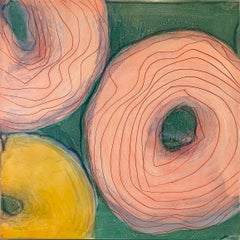
Marylyn Dintenfass still-life paintings for sale on 1stDibs.
Find a wide variety of authentic Marylyn Dintenfass still-life paintings available for sale on 1stDibs. If you’re browsing the collection of still-life paintings to introduce a pop of color in a neutral corner of your living room or bedroom, you can find work that includes elements of red and other colors. You can also browse by medium to find art by Marylyn Dintenfass in oil paint, paint, panel and more. Much of the original work by this artist or collective was created during the 21st century and contemporary and is mostly associated with the abstract style. Not every interior allows for large Marylyn Dintenfass still-life paintings, so small editions measuring 12 inches across are available. Customers who are interested in this artist might also find the work of KOKO HOVAGUIMIAN, Robert Petrick, and Patricia Zinsmeister Parker. Marylyn Dintenfass still-life paintings prices can differ depending upon medium, time period and other attributes. On 1stDibs, the price for these items starts at $4,500 and tops out at $4,500, while the average work can sell for $4,500.