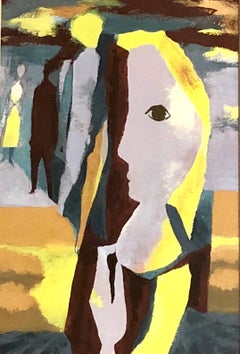
Mathieu Rosianu Art

French, Romanian, 1897-1969

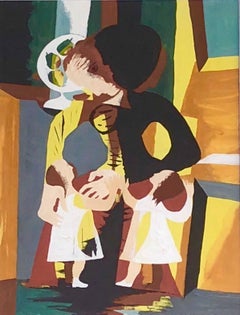
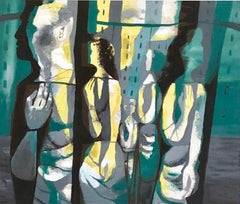
Mathieu Rosianu, a painter with a humanist backbone, wanted to give Art the power of a fighting weapon and bring it to the people. Therefore, it is no coincidence that the years before the advent of the Popular Front in France in 1936 are among the most active of his life. Born in 1897, in Bucharest, Rosianu, the son of an officer in the National Guard, settled in Paris in 1918. He studied at the École Nationale des Beaux-Arts and at the École des Arts Decoratifs under the tutelage of Ernest Laurent until 1924. More than his academic training, however, the example of Cézanne seemed to have been decisive for him. Indeed, we find in Rosianu early works the affirmation of volumes, a strong taste for stable forms and the choice of powerfully illuminated motifs reminiscent of the compositions of the famous pre-cubist master. Rosianu's favorite subject matters: bathers, humble still-lives, were also those of Cézanne, Picasso and Braque. Rosianu then shared with many young artists of the postwar period the need to reinvest the reality from which the most extreme tendencies of the avant-garde Art moved away. Another defining influence for Rosianu is Roger Bissière, who was presented at the time by critics as his professor/mentor. The qualities of stability and understatement of BBissière's Art, inherited from Cubism and sensitive to the charm of a discrete and reassuring everyday life, will confirm Rosianu's own choice to express the values of the world. He settled in a studio rented by Bissière and exhibited at the Salon of the Société Nationale des Beaux-Arts, the Salon des Tuileries and the Salon d'Automne until the 30s. It is from 1926 that Rosianu appears as one of the few equivalents of proletarian literature for the art of painting that commits to depicting the dignity of the working classes beyond their condition. This is evidenced by Rosianu's paintings of men at work or sharing moments of family life. The years 1929–30 marked the start of his political commitment to the Communist Party, where he met artists like Jean Hélion. The heated debates led by the party on the social role of Art gradually drove him to join the A.E.A.R. (Association of the Revolutionary Artists and Writers) alongside Jean  Lurçat and Edouard Pignon. He then bent his way again to go for a style combining a form of purism (sometimes tinged with fantasy) with the lyricism of themes calling for social revolution. Rosianu diversified his incisive interventions by designing covers for books, magazines, but also posters and wall decoration projects. Most importantly, he managed in 1934 to unite the artists of the A.E.A.R. for the Exhibition of the Revolutionary Artists gathering around the famous painter Fernand Léger, the sculptor Jacques Lipchitz, the poet Louis Aragon and the novelist André Malraux, the strongest supporters of political Art. Rosianu wrote himself the preface of this major exhibition catalog proclaiming that "a revolutionary ideology cannot communicate with outdated means of expression." Soon after, he renewed the experience with the Exhibition “Warning” in support to the incarcerated antifascists and that Rosianu organized at the Galerie Vignon in Paris where his work was presented alongside with the most renowned surrealistic masters Jean Arp, Salvador Dalí, Max Ernst, Victor Brauner, Giacometti, Tanguy, etc. First propelled to the frontline, the artist abruptly decided in 1935 to withdraw from his political engagement to concentrate on the foundation of a paper and fabric design studio under the pseudonym of Emile Arbour. It was under this name that he was awarded a Grand Prix for his participation at the 1937 World's Fair in Paris. World War II, unfortunately, wiped out the renown that Rosianu earned in the 30s. Drafted into the army, he came back traumatized. Entrenched in self-denied isolation, Rosianu nevertheless kept creating color-rich works as an antidote to his existential loneliness. The production of this artist, very appreciated in the 30s, is being recently rediscovered and actively sought after by collectors of cubist art. Most of it comes directly from the artist's studio itself. Rosianu, being the populist artist that he was, did not believe in having a commercial career and distrusted controlling gallery owners and sponsors.

to
3
1
1
Overall Width
to
Overall Height
to
5
3
3
2
3
2
3
3
2
2
1
3
2
2
2
5
10,222
2,785
2,504
1,384
3
5
Artist: Mathieu Rosianu
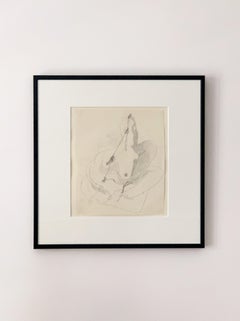
Surrealist composition, ca. 1935, pencil on paper
By Mathieu Rosianu
Located in PARIS, FR
Mathieu (Matei) ROSIANU (1897-1969) Surrealist composition, ca. 1935 Pencil on paper Studio stamp on verso 6,7 x 5,5 inch. Frame : 12 x 12 inch. Born in Bucharest in 1897 to an offi...
Category

1930s Surrealist Mathieu Rosianu Art

Materials

Pencil

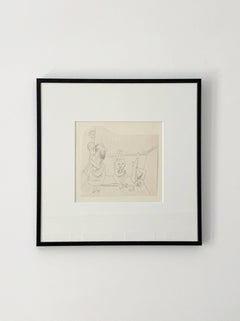
Surrealist composition, ca. 1935, pencil on paper
By Mathieu Rosianu
Located in PARIS, FR
Mathieu (Matei) ROSIANU (1897-1969) Surrealist composition, ca. 1935 Pencil on paper Studio stamp on verso 5 x 5,5 inch. Frame : 12 x 12 inch (30 x 30 cm) Born in Bucharest in 1897...
Category

1930s Surrealist Mathieu Rosianu Art

Materials

Pencil

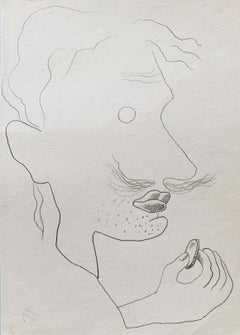
Man with coin, ca. 1930, pencil on paper
By Mathieu Rosianu
Located in PARIS, FR
Mathieu (Matei) ROSIANU (1897-1969) Man with coin Pencil on paper Workshop stamp on reverse 8 x 5,5 inch Born in Bucharest in 1897 to an officer in the Romanian National Guard and ...
Category

1930s Surrealist Mathieu Rosianu Art

Materials

Pencil

Untitled
By Mathieu Rosianu
Located in Miami, FL
Mathieu Rosianu, a painter with a humanist backbone, wanted to give Art the power of a fighting weapon and bring it to the people. Therefore, it is no coincidence that the years befo...
Category

Mid-20th Century Abstract Mathieu Rosianu Art

Materials

Acrylic

Untitled
By Mathieu Rosianu
Located in Miami, FL
Mathieu Rosianu, a painter with a humanist backbone, wanted to give Art the power of a fighting weapon and bring it to the people. Therefore, it is no coincidence that the years befo...
Category

20th Century Abstract Mathieu Rosianu Art

Materials

Acrylic

Related Items
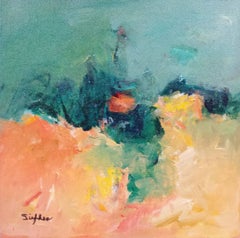
A Green Moment
By Mary Lou Siefker
Located in West Palm Beach, FL
acrylic on canvas Mary Lou Siefker is 87 year old Broward County Artist that has been exhibiting her work since 1977. She has won numerous awards and fellowships. “Her canvases often...
Category

21st Century and Contemporary Abstract Mathieu Rosianu Art

Materials

Acrylic

A Green Moment
A Green Moment
$800
H 12 in W 12 in D 1.75 in
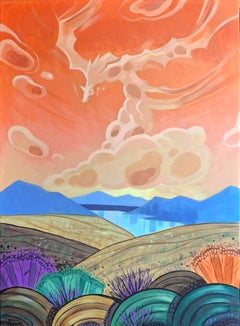
Heavenly Sentinel
Located in Zofingen, AG
Series: Between light and silence A majestic dragon emerges from a vast sky of clouds — a guardian not of places, but of memories and silence. This work is the emotional anchor of th...
Category

2010s Abstract Mathieu Rosianu Art

Materials

Canvas, Acrylic

Heavenly Sentinel
Heavenly Sentinel
$1,186
H 27.56 in W 19.69 in D 0.79 in
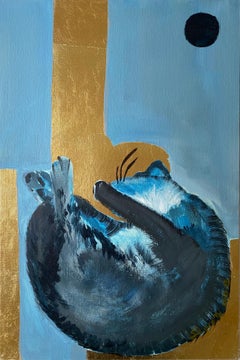
Original-Blue Cat-Gold Leaf- British Awarded Artist-surreal-expression-abstract
Located in London, GB
Primary Colour Series- Blue Cat is inspired by Japanese woodblock Print and the a nod to calligraphy tradition. With strokes of gilded gold leaves, gesso and acrylic, Shizico Yi pain...
Category

2010s Abstract Expressionist Mathieu Rosianu Art

Materials

Gold Leaf

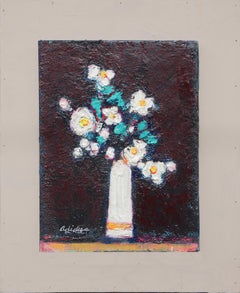
"White Flowers, White Vase" Modern Abstract Floral Still Life Painting of Daises
Located in Houston, TX
Modern abstract floral still life by Houston, TX artist David Adickes. The work features a central vase of white flowers that appear to be daises arranged on a table and set against ...
Category

Late 20th Century Abstract Mathieu Rosianu Art

Materials

Acrylic

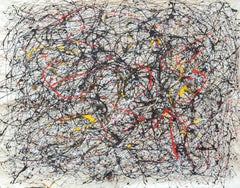
Iron Man, Large Abstract Expressionist Painting by William Hewes
By William Hewes
Located in Long Island City, NY
A large, dramatic abstract oil painting by Contemporary artist Bill Hewes. William (Bill) Hewes is an American self-taught artist. Hewes was born in Easthampton, Massachusetts in 19...
Category

2010s Abstract Expressionist Mathieu Rosianu Art

Materials

Enamel

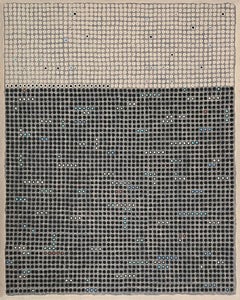
Consolidated Details, Abstract Painting
Located in San Francisco, CA

Artist Comments
Artist Terri Bell arranges organic circular shapes in a two-part composition. Subtle pops of color punctuate the predominantly monochromatic grid in unpredict...

Category

21st Century and Contemporary Abstract Mathieu Rosianu Art

Materials

Acrylic

White Lace and Ribbons Collotype
By Patricia A. Pearce
Located in Soquel, CA
Delicate and layered collotype on heavy bond paper by Patricia A. Pearce (American, b. 1948). The background of this piece is a collotype, whereas the lace, strings, and shadows are ...
Category

Late 20th Century Abstract Mathieu Rosianu Art

Materials

Paper, Ink, Pencil, Lithograph, Acrylic
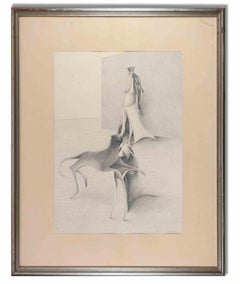
Untitled - Surrealist Scene - Drawing by Albert Debois - 1973
Located in Roma, IT
Untitled - Surrealist Scene is an original contemporary artwork realized by Albert Debois in 1973. Mixed colored pastel on paper. Hand signed and dated on the lower right margin. ...
Category

1970s Surrealist Mathieu Rosianu Art

Materials

Pastel, Pencil

Op Art Hard Edged Abstract Geometric Mod Painting John Pearson
Located in Surfside, FL
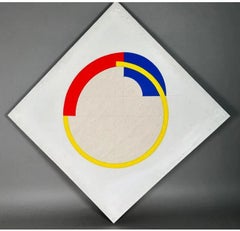
John Pearson (American born 1940) "Study for Circus" 1985 Acrylic on canvas painting Hand signed verso, hangs from corner of canvas. Provenance: The New Gallery of Contemporary Art, Cleveland, Ohio. Bearing label verso: Dimensions: 19 x 19 in (it hangs in diamond shape which measures point to point 26.87 X 26.87 inches) Red, White, Blue, and Yellow abstract geometric painting. Circle and ellipse. John Pearson (British, 1940-was born in Yorkshire, England, and studied at the Harrogate School of Art, Yorkshire (National Diploma of Design, 1960), the Royal Academy Schools, London (Certificate, R.A.S 1963), the Akademie der Bildenden Kunst, Munich (1963–64, research fellow), and Northern Illinois University (M.F.A. 1966). He is known for hard edged, mod abstract oil painting on shaped canvas in geometric, curvilinear forms. For many years, Pearson has made paintings and low-relief sculpture, predominantly wall pieces, which use color, form, and various degrees of abstraction to modify the space of entire rooms. With work exhibited nationally and internationally in both solo and group shows, Pearson has also been sought for many site-specific commissions, both public and private. These are typically highly abstract, simplified, and nuanced; they’re often witty, too. Pearson early on became a devotee of the Dutch artist Piet Mondrian, a chief proponent of De Stijl (The Style), Pearson’s style has evolved from intense system-based abstract compositions to one more attuned to the spiritual influences of the natural environment. Pearson’s early style reflects the European reaction to expressionism and artistic emotionalism in the form of a rational, systematic approach to art (often called the “New Tendency”). An heir to the tenets of Constructivism, he investigated color within a predetermined linear or grid system that eliminated options after the artist’s initial choices. He was drawn to Cleveland in 1970 because of its reputation at the time for having a rich environment for abstract art, as two of the chief proponents of Kinetic art and op art, Julian Stanczak and Richard Anuszkeiwicz, worked there. Students of Josef Albers, the grand master of color theory who taught these two primary practitioners of the “Color Function” school of abstract art at Yale in the 1950s. Pearson’s early style reflects a European reaction to abstract expressionism that manifested itself in a rational, systematic approach to art.Since his emergence in 1960s London, John Pearson has been using mathematical systems and computer programs to generate hard-edged geometric compositions. His work is of the same genre as the artists of the Denise Rene Gallery in Paris, similar to Vasarely, Agam, Cruz Diez and Soto. His most recent work, with its circles and ellipses superimposed on patterns of wavy lines, brings a more easygoing approach to his particular breed of rule-based art. Pearson has received grants from the National Endowment for the Arts and the Canada Council, and has had solo exhibitions at institutions including the Akron Art Museum, the Cleveland Center for Contemporary Art, and the Museum of Modern Art in Rijeka, Croatia. Pearson was born in Yorkshire (Britain) and studied art at the Royal Academy Schools in London, did advanced work in Munich (Germany), and earned the M.F.A. (Master of Fine Arts) degree from Northern Illinois University. Before arriving to teach at Oberlin College in 1972, he taught at the University of New Mexico, the Nova Scotia College of Art and Design, and the Cleveland Institute of Art. At Oberlin, he served as the Young-Hunter Professor of Art. John retired from teaching in 2014 but still occasionally works with students and lives in Oberlin where he educated several generations of appreciative liberal arts students. He also served as department chair and held the Young-Hunter endowed professorship from 1987 onward, until his retirement. Pearson travelled widely to paint, exhibit, and teach and received support from the Ohio Arts Council and the National Endowment for the Arts, among others. His career received recognition via the Cleveland Arts Prize in 1975, while most recently he was recognized as a Special Honoree by the same organization. His paintings and sculptures are held in many public and private collections in the U.S., Canada, Europe, China, and Japan, as well as by museums, such as the Allen Art Museum (Oberlin), the Cleveland Museum of Art, the Museum of Modern Art (New York), and the Art Institute of Chicago. Hard-Edged Select Group Exhibitions Abstract, Constructive, Concrete Mondrian huis, Amersfoort, Holland Chronologic Planet Art...
Category

1980s Abstract Geometric Mathieu Rosianu Art

Materials

Acrylic, Canvas

Dripping Wildflowers Supreme /// Contemporary Abstract Expressionist Huge Art
By Jack Graves III
Located in Saint Augustine, FL
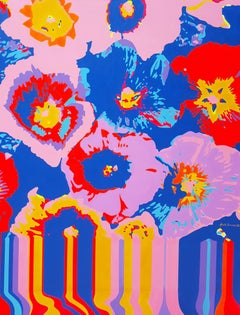
Artist: Jack Graves III (American, 1988-) Title: "Dripping Wildflowers Supreme" Series: Eclecticism *Signed by Graves lower right. It is also signed, titled, and dated on verso Year:...
Category

2010s Abstract Expressionist Mathieu Rosianu Art

Materials

Canvas, Paint, Acrylic

Portrait - Ink on Paper Unique Signed Drawing Surrealist Woman Painter, c. 1960
By Leonor Fini
Located in New York, NY
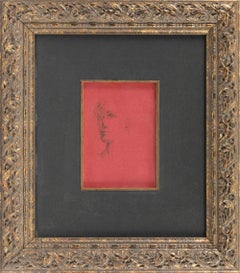
Leonor Fini Portrait, ca. 1960 Ink on paper 14.5 x 10 cm 5 1/2 x 4 in. 37.5 x 33 cm 14 1/2 x 13 in. (Frame included) Unique work Exhibition history: Leonor Fini: Small Faces, Apri...
Category

1960s Surrealist Mathieu Rosianu Art

Materials

Paper, Ink, Graphite

Re-Coiling, Psychedelic Pencil Drawing by Dimitri Petrov
By Dimitri Petrov
Located in Long Island City, NY
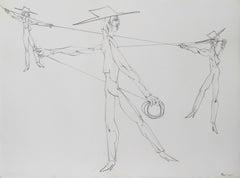
Dimitri Petrov, American (1919 - 1986) - Re-Coiling, Year: 1977, Medium: Pencil on Paper, signed and dated, Size: 22 x 30 in. (55.88 x 76.2 cm)
Category

1970s Surrealist Mathieu Rosianu Art

Materials

Pencil

Previously Available Items
Untitled
By Mathieu Rosianu
Located in Miami, FL
Mathieu Rosianu, a painter with a humanist backbone, wanted to give Art the power of a fighting weapon and bring it to the people. Therefore, it is no coincidence that the years befo...
Category

Mid-20th Century Abstract Mathieu Rosianu Art

Materials

Acrylic

Untitled
Untitled
H 20.48 in W 15.36 in

Mathieu Rosianu art for sale on 1stDibs.

Find a wide variety of authentic Mathieu Rosianu art available for sale on 1stDibs. You can also browse by medium to find art by Mathieu Rosianu in acrylic paint, paint, synthetic resin paint and more. Much of the original work by this artist or collective was created during the 20th century and is mostly associated with the abstract style. Not every interior allows for large Mathieu Rosianu art, so small editions measuring 22 inches across are available. Customers who are interested in this artist might also find the work of Diana Torje, Wayne Timm, and Rene Couturier. Mathieu Rosianu art prices can differ depending upon medium, time period and other attributes. On 1stDibs, the price for these items starts at $2,000 and tops out at $3,000, while the average work can sell for $2,500.

Artists Similar to Mathieu Rosianu