Max Bill Landscape Prints

Swiss, 1908-1994

Max Bill was born in Winterthur, Switzerland. After an apprenticeship as a silversmith during 1924–27, he took up studies at the Bauhaus in Dessau under many teachers including Wassily Kandinsky, Paul Klee and Oskar Schlemmer from 1927 to 1929, after which he moved to Zurich.

After working on graphic designs for the few modern buildings being constructed, Bill built his first work, his own house and studio (1932–3) in Zurich-Höngg. From 1937 onward he was a prime mover behind the Allianz group of Swiss artists.

Bill is widely considered the single most decisive influence on Swiss graphic design beginning in the 1950s with his theoretical writing and progressive work. His connection to the days of modernism gave him special authority. As an industrial designer, his work is characterized by a clarity of design and precise proportions. Examples are the elegant clocks and watches designed for Junghans, a long-term client. Among Bill's most notable product designs is the Ulmer Hocker of 1954, a stool that can also be used as a shelf element, a speaker's desk, a tablet or a side table. Although the stool was a creation of both Bill's and Ulm School designer Hans Gugelot's, it is often called "Bill Hocker" because the first sketch of it on a cocktail napkin was Bill's work.

As a designer and artist, Bill sought to create forms which visually represent the New Physics of the early 20th century. He sought to create objects so that the new science of form could be understood by the senses: that is as a concrete art. Thus Bill is not a rationalist – as is typically thought – but rather a phenomenologist. He made spare geometric paintings, prints and spherical sculptures, some based on the Möbius strip, in stone, wood, metal and plaster. His architectural work included an office building in Germany, a radio studio in Zurich, and a bridge in eastern Switzerland.

Bill continued to produce architectural designs, such as those for a museum of contemporary art (1981) in Florence and for the Bauhaus Archive (1987) in Berlin. In 1982 he also entered a competition for an addition to the Neue Nationalgalerie in Berlin, built to a design by Ludwig Mies van der Rohe. Pavillon-Skulptur, a large granite sculpture, was installed adjacent to the Bahnhofstrasse, Zürich in 1983. As is often the case with modern art in public places, the installation generated some controversy. Endlose Treppe, a sculpture made of North American granite, was designed for the philosopher Ernst Bloch.

In 1982 he was awarded the Sir Misha Black award and was added to the College of Medallists.

Bill executed many public sculptures in Europe and exhibited extensively in galleries and museums, including a retrospective at the Kunsthaus Zürich in 1968–69. He was the subject of retrospectives at the Albright-Knox Art Gallery in Buffalo and the Los Angeles County Museum of Art in 1974, and the Solomon R. Guggenheim Museum in New York City in 1988.

Find vintage Max Bill stools, lighting, and other furniture on 1stDibs.

to
2
2
Overall Width
to
Overall Height
to
24
179
169
142
130
2
1
1
2
2
2
Artist: Max Bill
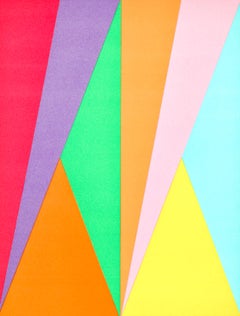
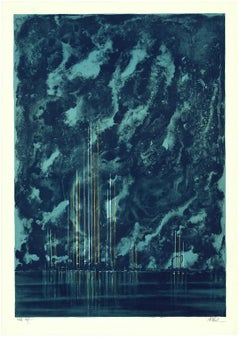
Max Bill, Variation 13, from XXe siecle, 1938
By Max Bill
Located in Southampton, NY
This exquisite lithograph by Max Bill (1908–1994), titled Variation 13, from the album XXe siecle, Chroniques du jour, 13 rue Valette (5e), Directeur G. di San Lazzaro, Sommaire du n...
Category

1930s Constructivist Max Bill Landscape Prints

Materials

Lithograph

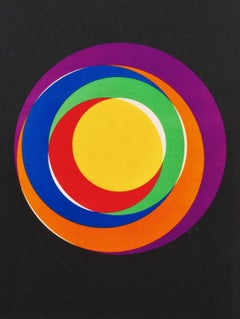
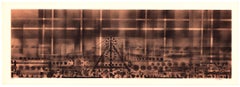
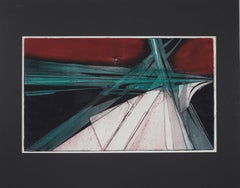
Max Bill, Prism, from San Lazzaro et ses Amis, 1975
By Max Bill
Located in Southampton, NY
This exquisite lithograph by Max Bill (1908–1994), titled Prisma (Prism), from the album San Lazzaro et ses Amis, Hommage au fondateur de la revue XXe siecle (San Lazzaro and His Fri...
Category

1970s Constructivist Max Bill Landscape Prints

Materials

Lithograph

Related Items
1975 Andrew Dasburg Color Lithograph, "Trees in Ranchitos II" Taos Modernist
By Andrew Michael Dasburg
Located in Denver, CO
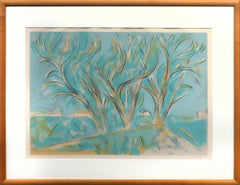
"Trees in Ranchitos II" is a striking 1975 color lithograph by acclaimed modernist artist Andrew Michael Dasburg (1887–1979). This collectible artwork, initialed in the lower right, beautifully captures the serene landscapes of New Mexico, reflecting Dasburg’s signature fusion of Post-Impressionism and Cubist influences. The composition conveys the tranquil rhythm of trees and desert terrain, combining geometric abstraction with lyrical naturalism. The lithograph is presented in a custom frame measuring 30 ½ x 36 ¼ inches, with an image size of 16 ½ x 23 ¼ inches, making it a sophisticated and visually compelling addition to any collection of Taos Modernist art, American modernism, or Southwestern landscape prints. About Andrew Michael Dasburg (1887–1979): Born in Paris, France, Dasburg immigrated to New York City in 1892, where his early talent was recognized. He trained at the Art Students League of New York under notable instructors including Robert Henri, Kenyon Cox, and Birge Harrison. In 1908, he returned to Paris and encountered the works of Henri Matisse and Paul Cézanne, experiences that ignited his lifelong commitment to modernism. After settling in Woodstock, NY, Dasburg immersed himself in the avant-garde scene, collaborating with Morgan Russell...
Category

1970s American Modern Max Bill Landscape Prints

Materials

Lithograph

Miami Art Deco Pool, Blue Cyanotype on Paper, Abstract Shapes Water Reflections
By Kind of Cyan
Located in Barcelona, ES
This is an exclusive handprinted limited edition cyanotype. "Miami Art Deco Pool" shows the movements of water over a tiled swimming pool floor. Details: + Title: Miami Art Deco Poo...
Category

2010s Abstract Geometric Max Bill Landscape Prints

Materials

Emulsion, Watercolor, Photographic Paper, C Print, Lithograph, Other Medium

Pool Patterns, Nautical Abstract Seascape Triptych, Blue Cyanotype Print
By Kind of Cyan
Located in Barcelona, ES
This is an exclusive handprinted limited edition of a cyanotype. This beautiful triptych is called "Fresh California Pool patterns", which shows the semi-abstract movements of light reflecting in a California swimming pool. Details: + Edition Size: only 20 + Medium: Cyanotype Print on Watercolor Paper + Stamped and Certificate of Authenticity provided. + Measurements : 100x210 cm (40 x 84 in.) Each paper measures 100cm x 70cm (about 40 in. x 28 in.) each. , a standard frame size. + All cyanotype prints...
Category

2010s Modern Max Bill Landscape Prints

Materials

Lithograph

Fête du Jubilé de la Reine à Bedford Park, Londres
By Camille Pissarro
Located in New York, NY
A superb, dark and evenly-printed impression of this very scarce lithograph by Camille Pissarro and George W. Thornley. Printed in light brown on Chine appliqué. The deluxe edition o...
Category

1890s Impressionist Max Bill Landscape Prints

Materials

Lithograph

Flasher, Brian Rice
By Brian Rice
Located in Fairfield, CT
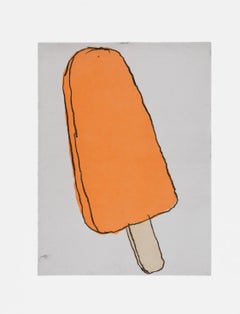
Artist: Brian Rice (1936) Title: Flasher Year: 1967 Edition: 67/175, plus proofs Medium: Lithograph on wove paper Size: 28.5 x 25 inches Condition: Excellent Inscription: Signed and ...
Category

1960s Pop Art Max Bill Landscape Prints

Materials

Lithograph

Flasher, Brian Rice
Flasher, Brian Rice
$2,000 Sale Price
20% Off
H 28.5 in W 25 in
Plate 1, from Derriere Le Miroir #156
By Alexander Calder
Located in Washington, DC
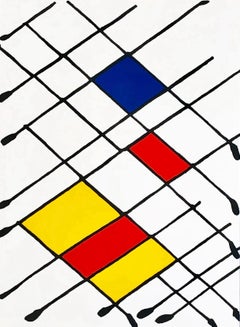
Alexander Calder Derriere le Miroir #156 (Plate 1) Artist: Alexander Calder Title: (Plate 1) Derriere le Miroir #156 Portfolio: Derriere le Miroir #156 Medium: Original lithograph Ye...
Category

1960s Max Bill Landscape Prints

Materials

Lithograph

Cover, Derriere le Miroir #201
By Alexander Calder
Located in Washington, DC
Artist: Alexander Calder Medium: Lithograph Title: Cover Portfolio: Derriere le Miroir #201 Year: 1973 Edition: Unnumbered Framed Size: 21 1/2" x 17 1/2" Sheet Size: 15" x 11" Signe...
Category

1960s Max Bill Landscape Prints

Materials

Lithograph

Coral 19: Peach Pink, Blue Green, Signed Lithograph, Nature Abstract Coral Reef
By Joan Melnick
Located in Union City, NJ
Coral 19 is an original hand drawn lithograph by the NY woman artist, Joan Melnick. Inspired by the fragile beauty of reefs with their exotic forms and vibrant colors, Coral 19 is an...
Category

1970s Contemporary Max Bill Landscape Prints

Materials

Lithograph

RARE Yvon Lambert Gallery mailer (Hand Signed and Addressed by Dennis Oppenheim)
By Dennis A. Oppenheim
Located in New York, NY
Dennis Oppenheim Directed Seeding -Wheat, Historic Yvon Lambert Gallery Poster (Hand Signed and Addressed by Dennis Oppenheim), 1969 Offset lithograph poster. Hand signed, inscribed. Postmarked and addressed to Oppenheim's dealer, John Gibson 23 × 16 inches Hand Signed and inscribed by Dennis Oppenheim lower right in blue marker in 2006, hand addressed by Dennis Oppenheim in 1969 in red marker Unframed This is an extremely uncommon vintage poster/mailer announcing the May 20th, 1969 opening reception (Vernissage) for the exhibition of works by American conceptual art pioneer Dennis Oppenheim at the Yvon Lambert Gallery in Paris. The poster is historic in that it was originally mailed to John Gibson, the East 67th Street dealer, who famously gave Dennis Oppenheim his first New York exhibition in 1968, and it is hand addressed to Gibson, bearing the original Paris, France postmark of 1969. It is, exceptionally, hand signed and dedicated by Dennis Oppenheim to a collector who acquired the poster from John Gibson's collection, and then secured Dennis Oppenheim's autograph in 2006, making this an especially valuable collectors item. More information about the project from the Tate Gallery archives, which acquired the work: This work brings together two interventions Oppenheim created on a field owned by farmer Albert Waalken in Finsterwolde, north-eastern Holland, in 1969. It comprises four distinct elements mounted on board: a colour photograph of a wheatfield being sowed by a tractor in parallel curving lines seen from high up; a negative image in black and white of a map of the area of Finsterwolde onto which two sections of text have been collaged; and two black and white aerial photographs of the same field being traversed by a tractor cutting an X into the wheat. The first two elements relate to the action Directed Seeding. For this the field was seeded according to a line plotted by following the road from the village of Finsterwolde, the location of the field, to Nieuweschans, another village where the farmer’s storage silo for wheat was located. Oppenheim reduced this curved line by a factor of six in order to direct the trajectory of seeding. The tractor then carved a series of curved parallel lines on the surface of the field as it dug up earth and scattered seed. From an aerial perspective the patterning of parallel lines may be viewed as a form of line drawing on the landscape. The precise location of the field and the silo are indicated on the map, showing the trajectory of the road. The two sections of text collaged onto the upper portion of the map briefly describe the two interventions. Explaining the action Cancelled Crop, the artist wrote: In September the field was harvested in the form of an X. The grain was isolated in its raw state, further processing was withheld. This project poses an interaction upon media during the early stages of processing. Planting and cultivating my own material is like mining ones own pigment (for paint) – I can direct the later stages of development at will. In this case the material is planted and cultivated for the sole purpose of withholding it from a product-oriented system. Isolating this grain from further processing (production of food stuffs) becomes like stopping raw pigment from becoming an illusionistic force on canvas. The esthetic is in the raw material prior to refinement, and since no organization is imposed through refinement, the material’s destiny is bred with its origin. (Quoted from artist’s statement in Tate acquisition file.) Directed Seeding and Cancelled Crop are two separate works, brought together in several different versions of which Tate’s is one. The collage presents three ways in which human action may marks the land. For the first two, agricultural machinery is used to create straight lines, in the process of harvesting as in the X of Cancelled Crop, or curved lines, during the process of planting seed in the contours photographed for Directed Seeding. The map shows a third (and more ancient) way of marking the land, through the construction of roads. The use of the landscape – natural, industrial or urban – as a canvas on which to act is typical of Oppenheim’s work in the late 1960s and early 1970s. In a related action, Directed Harvest, 1966 (Tate T07590) and Directed Harvest 1968 (Kröller-Müller Museum, Otterlo, Netherlands), the artist caused a field to be harvested in linear patterns which he then had photographed in its progressive stages. In Reverse Processing: Cement Transplant, East River, NY, 1970, 1978 (Tate T07591) Oppenheim drew large crosses on the roofs of barges transporting raw cement that he found moored on the New York East River banks. All these works centre on process as an agent of change and utilise materials, elements and locations on which the artist can have no permanent claim, making them deliberately ephemeral. Such actions as seeding a crop and harvesting it several months later operate within time parameters dependent on the cycles of the seasons rather than the will of man, mixing human processes with those of nature. Oppenheim’s analogy between the prevention of a crop from entering the food chain and the halting of the expressive, ‘illusionistic’ force of paint deconstructs the sophisticated processes of art-making and the food industry to the elemental notion of making simple marks on the environment. In this way, the artist highlights contemporary man’s dependency on complex chains...
Category

1960s Conceptual Max Bill Landscape Prints

Materials

Offset, Lithograph

Artist s Society Salon Poster by Raoul Dufy, French Modernist Lithograph, 1959
By Raoul Dufy
Located in Chicago, IL
"29th Salon de la Société des Artistes Décorateurs et Salon de la Lumière" depicts a Parisian city scene. Created by Raoul Dufy as the poster for the combination exhibition of works ...
Category

1930s Max Bill Landscape Prints

Materials

Lithograph

Lullaby Sketches: black white drawing based on Auden poetry and Yorkshire lands
By Henry Moore
Located in New York, NY
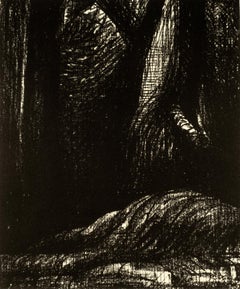
One of a series of 18 lithographs drawn by the artist for the Auden Poems/Moore Lithographs 1974 book and portfolio. This work is from an edition of 25 printed on vellum aside from the portfolio (edition of 75) and the book. Signed by the artist and numbered 1/25 lower left in pencil. This print features small sketches of heads resting on forearms. Moore experimented with different angles, appearing to practice for the composition for Lullaby: Sleeping Head, which depicts a shadowy figure supporting the head of a sleeping woman. Lullaby: Sketches is a rare window into Moore’s process of composing an image. Delicate, single-line arms and hair reveal the sculptor’s equal talent as a draftsman. The imagery for Lullaby Sketches was inspired by Auden’s poem Lullaby. Lullaby was the first poem Moore read for this project, which begins: “Lay your sleeping head, my love / Human on my faithless arm; / Time and fevers burn away Individual beauty from / Thoughtful children, and the grave / Proves the child ephemeral: / But in my arms till break of day / Let the living creature lie, / Mortal, guilty, but to me / The entirely beautiful.” The Auden/Moore limited edition book and portfolio were exhibited on publication at the British Museum, London, with an accompanying catalogue. Lullaby Sketches is one of a group of lithographs...
Category

Late 20th Century Modern Max Bill Landscape Prints

Materials

Lithograph

Tree Root . Hand colored lithogarph circa 1959.
By Jack Coutu
Located in Frome, Somerset
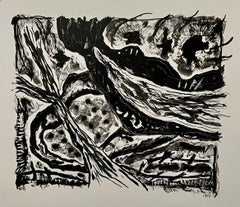
A fine Raymond John 'Jack' Coutu (1924-2017) ARE, ARCA. color lithograph/ engraving. 'Tree Root'. 6th of a 50 handmade edition by the artist.. circa 1959. Well listed Modern Artist. Signed and presented in the original framing. Raymond John "Jack" Coutu ARE ARCA (13 September 1924 – 17 May 2017) was an English printmaker, sculptor, etcher, engraver, carver, watercolourist and teacher. He was influenced by Oriental art.Jack Coutu was born Raymond John Coutu at Farnham, Surrey, England, and was educated at Farnham Grammar School.[ On leaving school in 1940, he worked at Abbott of Farnham, a coachbuilding company in Farnham, where his father Bert Coutu was also employed painting coats of arms and heraldic shields. In 1942, at the age of 18 during World War II, he joined the Royal Corps of Signals, where after training he served in Ceylon (now Sri Lanka), India, and Singapore. At the end of WWII, he was in Kure, Japan, in the Hiroshima Prefecture. From 1947 to 1951, Coutu studied at the Farnham School of Art, followed by the Royal College of Art in London from 1951 to 1954 and the Central School of Art from 1951 to 1955. At the Central School of Art, Merlin Evans was an influence on Coutu's printmaking. Coutu taught printmaking at the Central School of Art from 1957 to 1965 and then at the West Surrey College of Art and Design in Farnham from 1965 to 1985. In 1968, he started to carve netsuke (as practised in Japan) and he joined the Netsuke Kenkyukai Society, based in the United StatesHe is also a member of the Royal Society of Painter-Etchers and Engravers and the Printmakers Council. Jack Coutu has exhibited at the Royal Academy in London, netsuke conventions, jointly with Michael Rothenstein...
Category

1950s Modern Max Bill Landscape Prints

Materials

Lithograph


Tree Root
 . Hand colored lithogarph circa 1959.

Tree Root
 . Hand colored lithogarph circa 1959.
$707 Sale Price
20% Off
H 25.6 in W 34.26 in D 1.19 in

Max Bill landscape prints for sale on 1stDibs.

Find a wide variety of authentic Max Bill landscape prints available for sale on 1stDibs.
Questions About Max Bill Landscape Prints
  • 1stDibs ExpertMarch 22, 2022
    Max Bill created many types of items during his career. The Swiss artist worked as a graphic designer creating many compositions indicative of the modern style of the time. In addition, he was an industrial designer who made a variety of decorative objects and furnishings. He is best known for the clocks produced for Junghans, the Ulmer Hocker stool, the Atomic chandelier and the Tulip floor lamp. On 1stDibs, shop a variety of Max Bill art, furniture and decorative objects.

Recently Viewed

View All