Meghan Howland Art
to
3
3
Union
By Meghan Howland
Located in Denver, CO
Union
Category
21st Century and Contemporary Meghan Howland Art
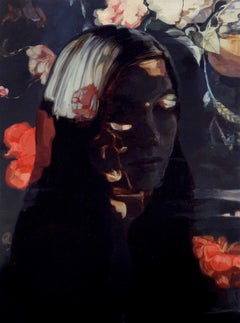
$3,000
The Glow II
By Meghan Howland
Located in Denver, CO
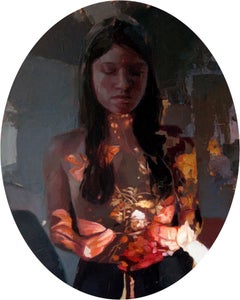
The Glow II
Category
21st Century and Contemporary Meghan Howland Art
The Glow I
By Meghan Howland
Located in Denver, CO
The Glow I
Category
21st Century and Contemporary Meghan Howland Art
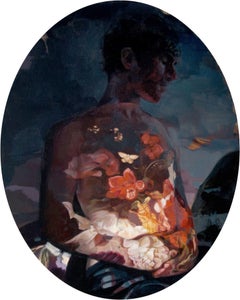
$2,800
Related Items
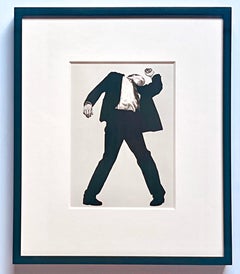
Robert Longo - Men in the Cities 1984 Signed artist-certified photograph, unique
By Robert Longo
Located in New York, NY
Robert Longo, Men in the Cities (Rick) , 1984 - unique artist-certified photographic document, 1992
Vintage photographic print on Kodak paper, with unique artist inscription and cert...
Category
1980s Pop Art Meghan Howland Art
Materials
Photographic Paper, Pencil, Graphite
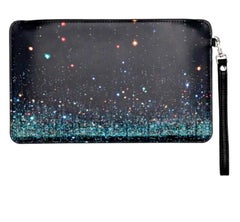
Yayoi Kusama - Limited Edition leather clutch (bag) famed Infinity Mirrored Room
By Yayoi Kusama
Located in New York, NY
Yayoi Kusama
Infinity Mirrored Room: The Souls of Millions of Light Years Away: Leather Clutch Purse in Original Box, 2017
Leather outside; polyester inside
6 × 10 × 2 inches
This le...
Category
2010s Pop Art Meghan Howland Art
Materials
Leather, Polyester, Mixed Media
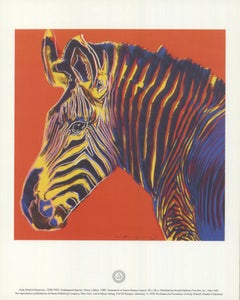
Endangered Species: Grevy
s Zebra By Andy Warhol
By Andy Warhol
Located in Dubai, Dubai
Endangered Species: Grevy's Zebra
By Andy Warhol
1992
Medium: Offset Lithograph
Paper Size: 11.75 x 9.5 inches ( 30 x 24 cm )
Image Size: 8.25 x 8.25 inches ( 21 x 21 cm )
Edi...
Category
1990s Contemporary Meghan Howland Art
Materials
Lithograph, Offset

Portrait of lady, Mary Hammond in Rich Attire, Jewels, Lace c.1618-22 Historical
By Cornelius Johnson
Located in London, GB
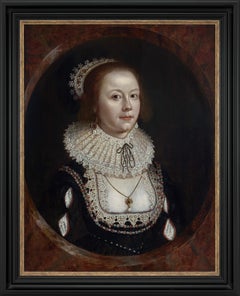
Portrait of Mary Hammond in Sumptuous Attire, Jewels and Lace c.1618-22
Circle of Cornelius Johnson (1593-1661)
This portrait of a lady, presented by Titan Fine Art, is an exquisite example of early seventeenth-century portraiture, remarkable both for the lavishness of its subject’s attire and for the distinguished provenance that has accompanied it across four centuries that adds a rich layer of historical significance. It was once part of the notable collection of Sir William Temple, 1st Baronet (1628–1699) at Moor Park, a stately mansion in Hertfordshire. Temple was a diplomat, essayist, philosopher, and the patron of Jonathan Swift. He was a key participate at an important period in English history, helping not only to negotiate the Triple Alliance, but also the marriage between William of Orange and Princess Mary. His collection at Moor Park was well known in its day, reflecting both his cultivated taste in art and literature and his international connections.
Its fabulous attire, rendered with almost microscopic attention, is not merely decorative but emblematic of a world in which visual display was a language of power. Its provenance, stretching from the English country house and Enlightenment scholarship to modernist circles, forms a microcosm of cultural exchange across four centuries. Thus, the portrait of Mary Hammond stands as both a masterpiece of early seventeenth-century craftsmanship and a witness to the grand narrative of collecting and connoisseurship—a testament to the enduring fascination of beauty, status, and history intertwined.
By tradition the portrait depicts Mary Hammond (born c.1602), who was Sir William Temple’s mother, and the daughter of the royal physician who served James I, Dr John Hammond (c.1555–1617) and whose family owned Chertsey Abbey in Surrey. The woman appears between 18 and 25 years old, and Mary would be about 18–20 when the portrait was painted circa 1620, therefore this matches the apparent age of the sitter and the fashion perfectly.
Mary stood at the intersection of learned/courtly and gentry worlds. On 22 June 1627 she married her first cousin (a common practice for consolidating family wealth and influence during that era.) Sir John Temple (1600-1677) at St Michael, Cornhill in the City of London. The couple resided nearby, at Blackfriars. Her marriage to Sir Temple placed her at the heart of the social and political circles that shaped British history.
The couple had at least five children, and they became highly significant historical figures:
The eldest son, Sir William Temple, 1st Baronet, became a distinguished diplomat, statesman, and essayist, famous for his role in the Triple Alliance and as a patron and mentor to the writer Jonathan Swift – our portrait was in his collection. Their daughter, Martha Temple, later Lady Giffard, was a notable figure in her own right. She became her brother William's first biographer and a respected letter-writer, providing a rare female perspective on the events and high society of the time. Another son, also named Sir John Temple, became Attorney General for Ireland and was involved in the turbulent politics surrounding the English Civil War and the Act of Settlement in Ireland.
Mary died in November 1638 after giving birth to twins and was buried at Penshurst, Kent. The family's connection to Penshurst Place is a major point of interest as this historic manor was the seat of the Sidney family, a major aristocratic and literary dynasty.
The portrait was in the collection of the Mary’s son, Sir William Temple. From there it descended to his daughter, and then to her nephew, the Reverend Nicholas Bacon of Spixworth Park, Norfolk (his mother was Dorothy Temple who died in 1758). Indeed, by this time, many Temple relics were in the collection at Spixworth including the engagement ring of the illustrious Dorothy Osborne, Lady Temple, wife of Sir William Temple. The portrait thus linked two prominent English families—the Temples and the Bacons—for generations. It is listed in a Spixworth Park inventory of 27 October 1910 by the local collector and art historian, Prince Duleep Singh. He described it with characteristic precision as: “No. 69. Lady Half Length, body and face turned towards the sinister, hazel eyes upwards to the dexter, red hair dressed low and over the ears, a jewelled coronet behind, pearl ear-rings tied with black strings. Dress: black, bodice cut low and square, with lace all round the opening and over shoulders, sleeves with double slashes showing red lining and lace under, falling thin pleated lace collar, black strings tied behind it, a jewel suspended on a black string round the neck, and a double row of agate and silver beads all round to the shoulders. M. In brown veined stone frame. Age 30. Date c.1620. It is called ‘Dutch portrait from Moor Park, mentioned by Nicholas Bacon of Coddenham and Shrubland as a very valuable painting.’
A few years later, when Robert Bacon Longe’s executors sold the contents of Spixworth Park (19–22 May 1912), the portrait appeared as lot 262, described as: “A very valuable half-length portrait on panel, ‘Dutch Lady, with deep lace collar and pearl and amethyst necklace, pendant, and ear-rings, and auburn hair, with coronet’ Early Dutch School 1620.” Following this sale the painting entered the collection of David and Constance Garnett, prominent literary figures of the early twentieth century, before being gifted to Andre Vladimervitch Tchernavin by 1949, and subsequently passed by him to the present owners in 1994.
The two great houses associated with the painting, Moor Park and Spixworth Park, further underscore its pedigree. Moor Park, in Hertfordshire, was among the grandest country estates of seventeenth-century England—its gardens famously redesigned by Sir William Temple himself and later influencing landscape design across Europe. Sir William's Temple's secretary was Jonathan Swift, who lived at Moor Park between 1689 and 1699. Swift began to write "A Tale of the Tub" and "The Battle of the Books" at Moor Park.
Spixworth Park, near Norwich, was an Elizabethan country house in Spixworth, Norfolk, located just north of the city of Norwich. It was home to successive generations of the Bacon family, one of Norfolk’s most distinguished dynasties (later, the Bacon Longe family), who were considerable land owners (owning Reymerston Hall, Norfolk, Hingham Hall, Norfolk, Dunston Hall, Norfolk, Abbot's Hall, Stowmarket, and Yelverton Hall, Norfolk). Spixworth Hall and the surrounding parkland remained in the Longe family for 257 years until 1952, when it was demolished.
Rendered with meticulous precision and sumptuous detail, the painting depicts an elegantly dressed woman—her poise, costume, and jewels all communicating a message of wealth, refinement, and social rank. Every brushstroke conveys an artist deeply attuned to the textures of luxury and the nuances of feminine dignity.
The sitter’s attire is nothing short of magnificent. Her bodice and sleeves are fashioned from the finest black silk or satin, the fabric absorbing and reflecting light in equal measure, suggesting both depth and lustre. Around her shoulders lies an opulent lace ruff—a deep, radiating lace collar worked in such intricate detail that it testifies to both the artist’s technical skill and the sitter’s extravagant taste. Lace of this quality, especially Venetian or Flemish bobbin lace, was one of the costliest materials available in early seventeenth-century Europe, its weight worth more than gold, and was a marker of prestige that rivalled jewels in value. The painter has taken great care to delineate every loop and scallop of the lace, achieving an almost tactile realism. Pale skin was also a desired beauty standard, sometimes accentuated with contrasting black ribbons or strings.
Her jewels amplify this display of affluence. Matching earrings and a delicate coronet or jewelled hair ornament with a feather adorn her hair, which is styled in the modest yet fashionable manner of the time. These details are far from decorative excess—they serve as visual emblems of social standing, refinement, and lineage. Portraits of this kind were statements of both identity and aspiration, intended to project a family’s prosperity and moral virtue to posterity.
The portrait was most likely painted in London around 1618-1622. The low-cut, décolletage-revealing neckline was fashionable in the courts of England and France during the late Elizabethan and Jacobean eras (c. 1590s-1610s), this style did not prevail in the public fashion of the Low Countries at this time. This style of lace ruff — delicate needle lace with geometric openwork — was fashionable from c.1615 to 1622, and the jewelled caul (hair net) and lace edging over a stiffened coif are consistent with high-status English women’s portraiture between 1610–1620. The puffed sleeve slash and the use of pink satin beneath black velvet belong squarely to the late Jacobean...
Category
17th Century Old Masters Meghan Howland Art
Materials
Oil, Panel
$19,668
H 33.47 in W 27.17 in D 2.37 in
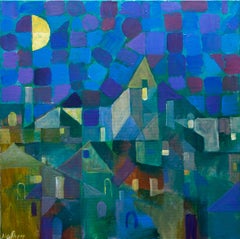
Night Lights, Original Painting
By Robert Hofherr
Located in San Francisco, CA
Artist Comments
Simplified shapes and colors form a fragmented image of a village and night sky. Accents of warm colors from the moon and houses balance the dominant blue and g...
Category
21st Century and Contemporary Expressionist Meghan Howland Art
Materials
Acrylic
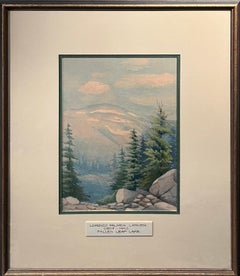
Fallen Leaf Lake; Lake Tahoe Region, c. 1916
By Lorenzo Palmer Latimer
Located in Pasadena, CA
Consigned to the gallery, Pasadena, California; From a private collector, Encino, California, by descent; Acquired in 1997 by a private collector, Palo Alto, California; From Sean's Antiques, San Francisco, California.
Signed "L.P. Latimer" on lower right
Description
This intimate watercolor captures Fallen Leaf Lake, a serene alpine lake in El Dorado County, California, situated just south of Lake Tahoe—an area celebrated each autumn for the Kokanee Salmon trail runs. Latimer invites the viewer onto a rocky slope, framed by stately evergreens, guiding the gaze across the lake’s glassy blue surface toward the snow-capped Sierra Nevada peaks beyond. His delicate washes and masterful color transitions—pale rose and gold in the drifting clouds, soft greens in the foliage, and muted blue-grays in the distant mountains—reflect his refined command of the watercolor medium. The composition conveys the quietude of early morning or late afternoon light in the high country, capturing a timeless sense of place that has long inspired artists of the Lake Tahoe region.
Historical Significance
Lorenzo Palmer Latimer (1857–1941) was a foundational figure in early 20th-century California plein air painting, especially known for his evocative watercolors of Lake Tahoe, the Sierra Nevada, and Northern California landscapes. He taught at the San Francisco Mechanics’ Institute and later founded the Latimer Art Club in Reno (1921), shaping an entire generation of regional artists. His deep connection to Fallen Leaf Lake is well-documented—he first painted there in 1914 and led annual summer workshops at the site, drawn by its pristine beauty and the opportunity to work directly from nature. Today, Latimer’s mastery is celebrated in the beautifully illustrated book The Latimer School: Lorenzo Latimer...
Category
1910s Impressionist Meghan Howland Art
Materials
Watercolor, Archival Paper
$3,000
H 17 in W 0.5 in D 13.5 in
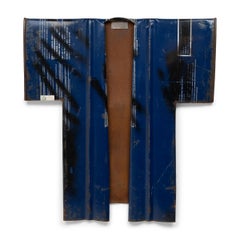
"Royal Blue Jacket, " Steel Sculpture
By Gordon Chandler
Located in Chicago, IL
Upon discovering a weathered steel drum that had been warped to resemble the sleeve of a garment, artist Gordon Chandler was inspired to embark on a series of kimono sculptures forme...
Category
21st Century and Contemporary Modern Meghan Howland Art
Materials
Steel
Masterpiece Contemporary Australian Blown and Carved Glass Sculpture Vase
By Ben Edols
Kathy Elliott
Located in Surfside, FL
Provenance: Part of an important collection that had work Both Benjamin Edols and Kathy Elliott were born in Sydney. The two began working together as recent graduates from the Canbe...
Category
Early 2000s Post-Modern Meghan Howland Art
Materials
Blown Glass

$3,000
H 5 in W 11.5 in D 7.5 in
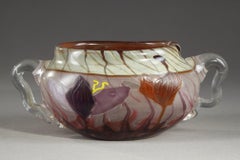
Bowl "Marquetry with Crocus"
By Émile Gallé
Located in PARIS, FR
Bowl "Marquetry with Crocus"
by Emile GALLE (1846-1904)
An elongated form bowl,
with hot-applied handles.
Multi-layered blown-molded glass,
with an inlaid decor of purple and orang...
Category
1890s Art Nouveau Meghan Howland Art
Materials
Blown Glass
Above the Beach, Original Painting
By Janet Dyer
Located in San Francisco, CA
Artist Comments
Artist Janet Dyer captures the fleeting beauty of the sky in this coastal scene. Soft clouds drift above the horizon, golden sunset light receding in the distan...
Category
21st Century and Contemporary Impressionist Meghan Howland Art
Materials
Acrylic

Rare "Why I am a Vegetarian" Kim Dingle Art Plate
By Kim Dingle
Located in Surfside, FL
Kim Dingle, Pop artist and social commentator, was born in Pomona, California in 1951. She is known for cartoon-related images of little girls in surreal situations that explore both...
Category
1990s Contemporary Meghan Howland Art
Materials
Mixed Media

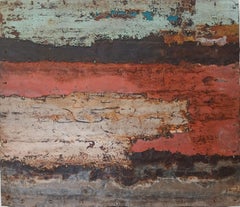
Earthy Abstract Rusted Metal Landscape Composition "Beach Sunset"
Located in Cape Town, ZA
Nyasha Mashumba, having been the apprentice of Mark Hilltout, has now carved out a career for himself as artist and designer, utilizing the medium and craft he has mastered over the ...
Category
2010s Contemporary Meghan Howland Art
Materials
Metal, Steel, Iron
$1,613
H 29.93 in W 34.26 in D 1.19 in
Previously Available Items
Loran
By Meghan Howland
Located in Denver, CO
Loran
Category
21st Century and Contemporary Meghan Howland Art
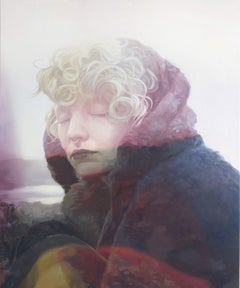
Meghan Howland art for sale on 1stDibs.
Find a wide variety of authentic Meghan Howland art available for sale on 1stDibs. Not every interior allows for large Meghan Howland art, so small editions measuring 16 inches across are available. Meghan Howland art prices can differ depending upon medium, time period and other attributes. On 1stDibs, the price for these items starts at $2,800 and tops out at $3,000, while the average work can sell for $2,800.