Meissen Porcelain Paintings

German

Meissen Porcelain (Staatliche Porzellan-Manufaktur Meissen) is one of the preeminent porcelain factories in Europe and was the first to produce true porcelain outside of Asia. It was established in 1710 under the auspices of King Augustus II “the Strong” of Saxony-Poland (1670–1733), a keen collector of Asian ceramics, particularly Ming porcelain.

In pursuing his passion, which he termed his “maladie de porcelaine,” Augustus spent vast sums, amassing some 20,000 pieces of Japanese and Chinese ceramics. These, along with examples of early Meissen, comprise the Porzellansammlung, or porcelain collection, of the Zwinger Palace, in Dresden.

The king was determined, however, to free the European market from its dependence on Asian imports and to give European artisans the freedom to create their own porcelain designs. To this end, he charged the scientist Ehrenfried Walther von Tschirnhaus and aspiring alchemist Johann Friedrich Böttger with the task of using local materials to produce true, hard-paste porcelain (as opposed to the soft-paste variety European ceramists in the Netherlands, Germany, France, Italy and Spain had been producing since the late Renaissance). In 1709, the pair succeeded in doing just that, employing kaolin, or “china clay.” A year later, the Meissen factory was born.

In its first decades, Meissen mostly looked to Asian models, producing wares based on Japanese Kakiemon ceramics and pieces with Chinese-inflected decorations called chinoiserie. During the 1720s its painters drew inspiration from the works of Watteau, and the scenes of courtly life, fruits and flowers that adorned fashionable textiles and wallpaper. It was in this period that Meissen introduced its famous cobalt-blue crossed swords logo — derived from the arms of the Elector of Saxony as Arch-Marshal of the Holy Roman Empire — to distinguish its products from those of competing factories that were beginning to spring up around Europe.

By the 1730s, Meissen’s modelers and decorators had mastered the style of Asian ceramics, and Augustus encouraged them to develop a new, original aesthetic. The factory’s director, Count Heinrich von Brühl, used Johann Wilhelm Weinmann’s botanical drawings as the basis for a new line of wares with European-style surface decoration. The Blue Onion pattern (Zwiebelmuster), first produced in 1739, melded Asian and European influences, closely following patterns used in Chinese underglaze-blue porcelain, but replacing exotic flora and fruits with Western varieties (likely peaches and pomegranates, not onions) along with peonies and asters.

During the same period, head modeler Joachim Kändler (1706–75) began crafting delicate porcelain figures derived from the Italian commedia dell’arte. Often used as centerpieces on banquet tables and decorated to reflect the latest fashions in courtly dress for men and women, these figurines were popular in their day, and are still considered among Meissen’s most iconic creations. Kändler also created the Swan Service, which, with its complex low-relief surface design and minimal decoration is considered a masterpiece of Baroque ceramics.

The rise of Neoclassicism in the latter half of the 18th century forced Meissen to change artistic direction and begin producing monumental vases, clocks, chandeliers and candelabra. In the 20th century, Meissen added to its 18th-century repertoire decidedly modern designs, including ones in the Art Nouveau style. The 1920s saw the introduction of numerous animal figures, such as the popular sea otter (Fischotter), which graced an East German postage stamp in the 1960s. Starting in 1933, artistic freedom was limited at the factory under the Nazi regime, and after World War II, when the region became part of East Germany, it struggled to reconcile its elite past with the values of the Communist government. In 1969, however, new artistic director Karl Petermann reintroduced the early designs and fostered a new degree of artistic license. Meissen became one of the few companies to prosper in East Germany.

Owned by the State of Saxony since reunification, in 1990, Meissen continues to produce its classic designs together with new ones developed collaboratively with artists from all over the world. In addition, through its artCAMPUS program, the factory has invited distinguished ceramic artists, such as Chris Antemann and Arlene Shechet, to work in its studios in collaboration with its skilled modelers and painters. The resulting works of contemporary sculpture are inspired by Meissen’s rich and complex legacy.

Find a collection of authentic Meissen Porcelain on 1stDibs.

to
1
5
1
6
Height
to
Width
to
2
1
6
6
6
2
1
6
6
6
6
6
323
94
81
50
40
Creator: Meissen Porcelain
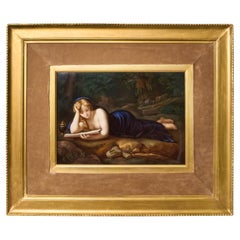
Meissen Porcelain Plaque Depicting Mary Magdalene
By Meissen Porcelain
Located in Tarzana, CA
A large 19th century German Meissen rectangular porcelain plaque depicting Mary Magdalene reclining reading from a book. After Antonio Allegri (Ita...
Category

1870s German Antique Meissen Porcelain Paintings

Materials

Porcelain

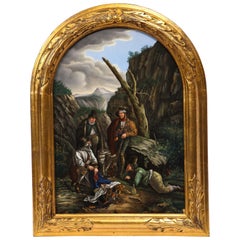
Meissen Plaque Depicting Four Royals Hunting in the Woods with a Dog and Rifles
By Meissen Porcelain
Located in New York, NY
An exceptionally fine and quite larege Meissen hand-painted porcelain plaque depicting four royals hunting in the woods with a hunting dog and rifles. This is the finest quality of a...
Category

Mid-19th Century German Louis XVI Antique Meissen Porcelain Paintings

Materials

Porcelain, Wood

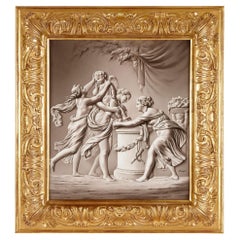
Rare and Large Classical Trompe-L oeil Meissen Porcelain Plaque
By Meissen Porcelain
Located in London, GB
Rare and large classical Trompe-l'oeil meissen porcelain plaque. German, 19th century. Measures: frame: height 60 cm, width 55 cm, depth 5 cm. plaque: height 45 cm, width 40 cm. ...
Category

19th Century German Classical Roman Antique Meissen Porcelain Paintings

Materials

Porcelain, Giltwood

19th C. Meissen Porcelain Plaque of the Banishment of Ishmael and Hager
By Adriaen van der Werff, Meissen Porcelain
Located in New York, NY
A 19th Century Meissen Porcelain Plaque of 'The Banishment of Ishmael and Hager', in its Original Frame. This fantastic Meissen porcelain plaque depicts...
Category

1870s German Baroque Antique Meissen Porcelain Paintings

Materials

Porcelain

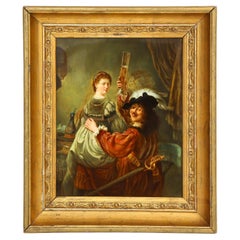
19th C. Meissen Porcelain Plaque Depicting Rembrandt and Saskia in the Tavern
By Rembrandt van Rijn, Meissen Porcelain
Located in New York, NY
An incredible and very rare 19th Century Meissen porcelain plaque depicting Rembrandt and Saskia in the Tavern. Meissen plaques are incredibly rar...
Category

1860s German Baroque Antique Meissen Porcelain Paintings

Materials

Porcelain

19th Century Meissen Porcelain Plaque
By Meissen Porcelain
Located in Tarzana, CA
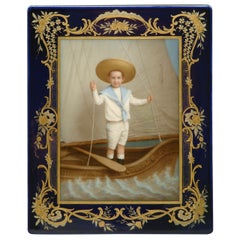
This exceptional and rare Meissen porcelain painted plaque depicts a young boy wearing white outfit with blue cape and a yellow oxide braided ...
Category

19th Century German Antique Meissen Porcelain Paintings

Materials

Porcelain

Related Items
18th Century Italian Neoclassical Oil on Canvas Screen with Trompe L’œil
Located in IT
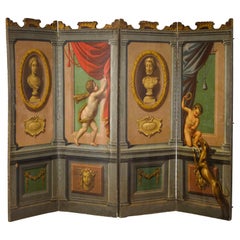
18th century, large Italian neoclassical oil on canvas four panels screen with Trompe L’œil These large screen is composed of four panels in oil on canvas painted. Neoclassical, dating to the second half of the 18th century. Each panel represents a trompe l'oeil, with a classical architecture with square section marble columns and large clogging. Inside the pink space of the first and third panels are painted, as inserted in a niche with bronze frame, ancient busts...
Category

Late 18th Century Italian Neoclassical Antique Meissen Porcelain Paintings

Materials

Canvas

Four Meissen Porcelain Plaques Depicting the Four Seasons
By Meissen Porcelain
Located in London, GB
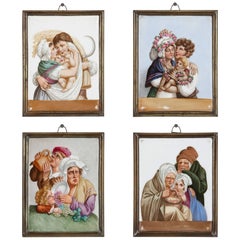
This delicately detailed set of four allegorical porcelain plaques portrays family scenes within the theme of the four seasons: Spring, Summer, Autumn and Winter. Spring can be ide...
Category

Early 19th Century German Folk Art Antique Meissen Porcelain Paintings

Materials

Metal

Four Meissen Porcelain Plaques Depicting the Four Seasons
$10,323 / set
H 4.73 in W 3.94 in D 2.37 in
Pair of 19th Century French Porcelain Plaques in Gilt Frames Signed L. Levy
Located in Dallas, TX
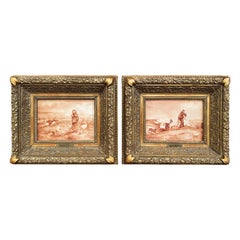
Crafted in France circa 1890, and set in the original carved giltwood frames, both antique porcelain plaques depict a hand painted pastoral scene in the beige and white palette. One ...
Category

Late 19th Century French Antique Meissen Porcelain Paintings

Materials

Porcelain, Giltwood

19th Century Signed Meissen Porcelain Artwork
By Meissen Porcelain
Located in Roma, IT
A wonderful late 19th-Century Meissen blue onion square hand painted porcelain dish. Printed and impressed "Meissen" mark on reverse. This fine blue onion platter exhibits excellen...
Category

Late 19th Century German Louis XV Antique Meissen Porcelain Paintings

Materials

Porcelain

19th Century Signed Meissen Porcelain Artwork
$539
H 2.37 in W 7.88 in D 8.67 in
Antique Painted Porcelain Plaque Depicting an Orientalist Beauty, Signed Vienna
By Royal Vienna Porcelain
Located in New York, NY
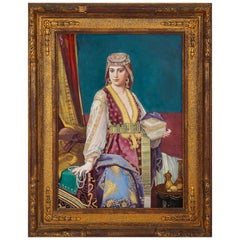
A very large and magnificent antique painted porcelain plaque depicting an orientalist beauty dressed in silk, jewelry, pearls, and 24-karat raised gold and enamel, signed Vienna. Th...
Category

Early 19th Century Austrian Chinoiserie Antique Meissen Porcelain Paintings

Materials

Enamel

Louis XVI Style Trumeau Panel with Trompe L oeil Mirror Panel
Located in Nashville, TN
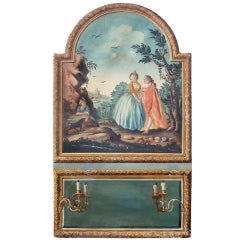
Possibly late 18th century but most likely 19th century painted arched painted panel. Either a panel intended for a trumeau or to be inset into wall boiserie as a trumeau. The upper ...
Category

1830s French Louis XVI Antique Meissen Porcelain Paintings

Materials

Canvas, Paint

Louis XVI Style Trumeau Panel with Trompe L
oeil Mirror Panel
Louis XVI Style Trumeau Panel with Trompe L
oeil Mirror Panel
$1,440 Sale Price
20% Off
H 54 in W 30 in D 0.5 in
Erblüth a Large 19th Century Berlin KPM Porcelain Plaque
By Königliche Porzellan-Manufaktur (KPM)
Located in Brighton, West Sussex
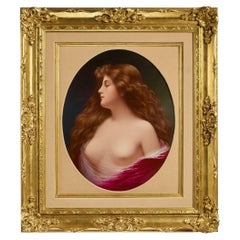
'Erblüth' a large and very fine Berlin (KPM) Porcelain plaque, after Angelo Asti. In a giltwood and composition shadow box frame. Signed 'Weigel', impr...
Category

19th Century German Antique Meissen Porcelain Paintings

Materials

Porcelain, Giltwood

Pair 19th Century Meissen Figural Porcelain Centerpiece Baskets
By Meissen Porcelain
Located in New York, NY
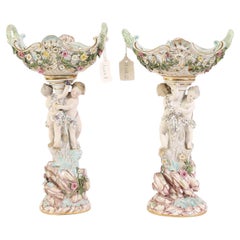
Pair of antique (late 19th century) reticulated porcelain baskets supported by putti around a tree stump, and encrusted with raised flowers. Each 16 inches tall. Each with the Meiss...
Category

Late 19th Century German Antique Meissen Porcelain Paintings

Materials

Porcelain

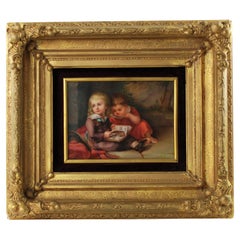
19th Century KPM Porcelain Plaque after Portrait by Christian Leberecht Vogel
By Christian Leberecht Vogel, KPM Porcelain
Located in Cincinnati, OH
This charming 19th century KPM porcelain plaque depicts a painting after German artist Christian Leberecht Vogel's popular work Die Söhne des Künstlers, executed in 1793. The beautif...
Category

1860s German Romantic Antique Meissen Porcelain Paintings

Materials

Porcelain

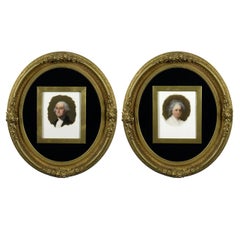
Fine Pair of 19th Century Porcelain Plaques of George and Martha Washington
By KPM Porcelain
Located in Los Angeles, CA
A fine pair of Continental 19th century porcelain plaques each depicting George Washington, the first President of the United States and his wife Martha Washington within an ornate V...
Category

Late 19th Century German American Colonial Antique Meissen Porcelain Paintings

Materials

Porcelain, Gesso, Giltwood

Fine Pair of 19th Century Porcelain Plaques of George and Martha Washington
$5,785 Sale Price / set
22% Off
H 31.5 in W 27.5 in D 4.25 in
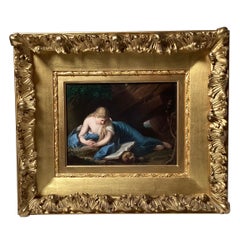
A 19th Century KPM Porcelain Plaque of Mary Magdalene
By KPM Porcelain
Located in Lambertville, NJ
A beautifully painted porcelain plaque in original giltwood frame. The image of Mary Magdalene after the original Italian artist, Pompeo Batoni. The measurements framed are 16 inch...
Category

19th Century German Antique Meissen Porcelain Paintings

Materials

Porcelain, Giltwood

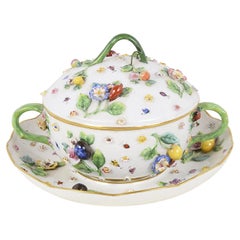
19th Century Meissen Tureen
By Meissen Porcelain
Located in Brighton, Sussex
A fine quality 19th century Meissen Porcelain lidded tureen, having wonderful bold coloured raised floral decoration, berries and insects. Underg...
Category

Late 19th Century German Antique Meissen Porcelain Paintings

Materials

Porcelain

19th Century Meissen Tureen
$3,028
H 6.7 in Dm 8.67 in
Previously Available Items
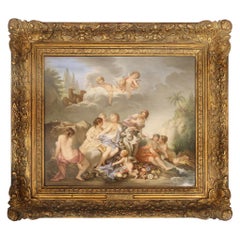
19th Century Meissen Porcelain Plaque “Rape of Europa” after François Boucher
By Meissen Porcelain
Located in Long Island City, NY
Late 19th century large Meissen Porcelain Plaque Entitled “Rape of Europa” after François Boucher Ovid’s ‘Metamorphoses’ (II, 835–875) tells of the a...
Category

Late 19th Century German Belle Époque Antique Meissen Porcelain Paintings

Materials

Giltwood, Porcelain

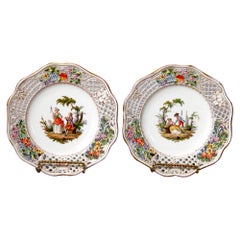
Antique Pair of German Meissen Pictorial Reticulated Porcelain Plates
By Meissen Porcelain
Located in Big Flats, NY
An antique pair of German porcelain plates by Meissen offer central hand painted courting scenes in countryside settings with scalloped and re...
Category

19th Century German Victorian Antique Meissen Porcelain Paintings

Materials

Porcelain

Meissen Porcelain paintings for sale on 1stDibs.

Meissen porcelain paintings are available for sale on 1stDibs. These distinctive items are frequently made of porcelain and are designed with extraordinary care. There are many options to choose from in our collection of Meissen Porcelain paintings, although brown editions of this piece are particularly popular. Many of the original paintings by Meissen Porcelain were created in the Baroque style in germany during the 19th century. Prices for Meissen Porcelain paintings can differ depending upon size, time period and other attributes — on 1stDibs, these items begin at $1,400 and can go as high as $88,500, while a piece like these, on average, fetch $31,650.
Questions About Meissen Porcelain Paintings
  • 1stDibs ExpertApril 5, 2022
    To spot a fake Meissen, first, check the maker’s mark, generally found on the bottom of the porcelain. Meissen used a simple mark, so if you spot one that appears too embellished, it may be a fake. Shop a collection of properly vetted Meissen porcelain from some of the world’s top dealers on 1stDibs.

Still Thinking About These?

All Recently Viewed