Paul Jeffay Art
to
9
9
1
1
Judaica Jewish Shtetl Etching Hasidic Rabbi, Meditation Vintage Chassidic Print
By Paul Jeffay
Located in Surfside, FL
"Le ciel est ouvert"
Older Chassidic rabbi learning with open book, Judaica, Jewish scenes from a ghetto.
Saul Yaffie, a.k.a. Paul Jeffay, (1898–1957) was a Scottish Jewish artist...
Category
20th Century Expressionist Paul Jeffay Art
Materials
Etching
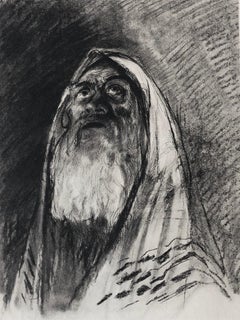
Judaica Jewish Rabbi Etching Hasidic Rebbe Admur Shlita Vintage Chassidic Print
By Paul Jeffay
Located in Surfside, FL
"Sabbat." Sabbath. the piece is marked in the plate Admur Shlita (this might be the Munkatcher Rebbe or the Belzer Rebbe from before the war)
Chassidic Rebbe, with open book. Judai...
Category
20th Century Expressionist Paul Jeffay Art
Materials
Etching
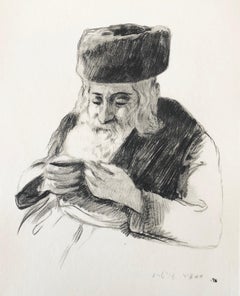
Judaica Jewish Shtetl Etching Hasidic Rabbi "Difficult Problem" Chassidic Print
By Paul Jeffay
Located in Surfside, FL
"Probleme ardu."
Chassidic boy, Yeshiva student with open book. Judaica, Jewish scenes from a ghetto.
Saul Yaffie, a.k.a. Paul Jeffay, (1898–1957) was a Scottish Jewish artist. Know...
Category
20th Century Expressionist Paul Jeffay Art
Materials
Etching
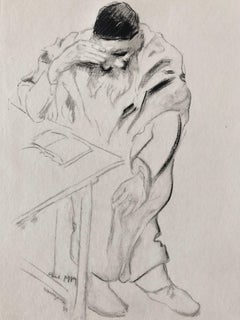
Judaica Jewish Shtetl Etching Reading the Newspaper Vintage Chassidic Art Print
By Paul Jeffay
Located in Surfside, FL
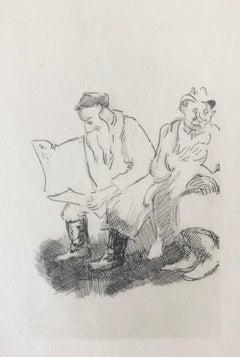
9. "Ouvriers au repos."
Chassidic boy, Yeshiva student with open book. Judaica, Jewish scenes from a ghetto.
Saul Yaffie, a.k.a. Paul Jeffay, (1898–1957) was a Scottish Jewish arti...
Category
20th Century Expressionist Paul Jeffay Art
Materials
Etching
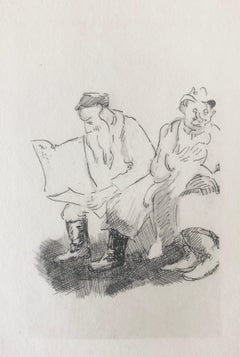
Judaica Jewish Shtetl Etching Hasidic Rabbi in Prayer Vintage Chassidic Print
By Paul Jeffay
Located in Surfside, FL
. "La priere."
Chassidic Rabbi, Rabbi praying with open book. Judaica, Jewish scenes from a ghetto.
Saul Yaffie, a.k.a. Paul Jeffay, (1898–1957) was a Scottish Jewish artist. Known...
Category
20th Century Expressionist Paul Jeffay Art
Materials
Etching
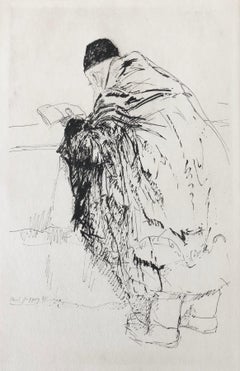
Judaica Jewish Etching Hasidic Rabbi, Gaon, Genius, Vintage Chassidic Art Print
By Paul Jeffay
Located in Surfside, FL
"Un savant."
Chassidic scholar, Rosh Yeshiva with open book. Judaica, Jewish scenes from a shtetl ghetto.
Saul Yaffie, a.k.a. Paul Jeffay, (1898–1957) was a Scottish Jewish artist. Known for his charming French street scenes as well as his judaica work. This is signed in the plate and dated 1931 in the print. This is done in a style similar to the works of the early Bezalel School artists Hermann Struck and Jakob Steinhardt.
This lithograph, by artist Paul Jeffay depicts a Judaic Shtetl interior scene with great charm and sensitivity.
Saul Yaffie was born in Blythswood, Glasgow on 29 April 1898. His mother was Kate Yaffie (née Karkonoski), and his father, Bernard Yaffie, was a master tailor. Like many Russian Jews...
Category
20th Century Expressionist Paul Jeffay Art
Materials
Etching
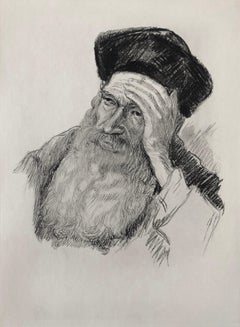
Judaica Jewish Shtetl Etching Hasidic Rabbi Meditation Vintage Chassidic Print
By Paul Jeffay
Located in Surfside, FL
"Meditation."
Chassidic boy, Yeshiva student with open book. Judaica, Jewish scenes from a ghetto.
Saul Yaffie, a.k.a. Paul Jeffay, (1898–1957) was a Scottish Jewish artist. Known ...
Category
20th Century Expressionist Paul Jeffay Art
Materials
Etching
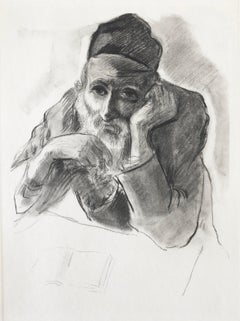
Judaica Jewish Shtetl Etching Hasidic Yeshiva Student Chassidic Print
By Paul Jeffay
Located in Surfside, FL
"Mendel"
Chassidic boy, Yeshiva student with open book. Judaica, Jewish scenes from a ghetto.
Saul Yaffie, a.k.a. Paul Jeffay, (1898–1957) was a Scottish Jewish artist. Known for...
Category
20th Century Expressionist Paul Jeffay Art
Materials
Etching
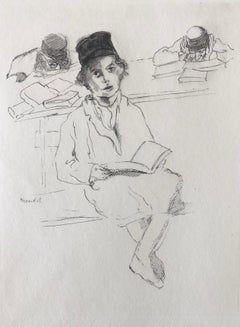
Judaica Jewish Shtetl Etching Hasidic Youth at Study Vintage Chassidic Art Print
By Paul Jeffay
Located in Surfside, FL
"Tristesse." (a state of melancholy sadness. "lamenting a lost love, he leaves us poised at the lip of a chasm of tristesse")
Chassidic boy, Yeshiva student with open book. Judaica, Jewish scenes from a ghetto.
Saul Yaffie, a.k.a. Paul Jeffay, (1898–1957) was a Scottish Jewish artist. Known for his charming French street scenes as well as his judaica work. This is signed in the plate and dated 1931 in the print. This is done in a style similar to the works of the early Bezalel School artists Hermann Struck and Jakob Steinhardt.
This lithograph, by artist Paul Jeffay depicts a Judaic Shtetl interior scene with great charm and sensitivity.
Saul Yaffie was born in Blythswood, Glasgow on 29 April 1898. His mother was Kate Yaffie (née Karkonoski), and his father, Bernard Yaffie, was a master tailor. Like many Russian Jews...
Category
1930s Expressionist Paul Jeffay Art
Materials
Etching
Related Items
Auction
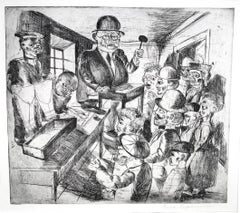
By Bernhard Kretzschmar
Located in New York, NY
Bernard Kretzschmar (1889-1972), Auction, etching, drypoint, and burnished aquatint, 1921, signed and dated (’20) in pencil lower right [also initialed in the plate lower left] Refe...
Category
1920s Expressionist Paul Jeffay Art
Materials
Drypoint, Etching, Aquatint
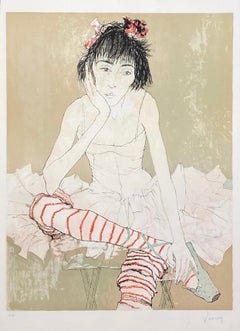
Sophie aux bas rouges, 1993, original lithograph by Jean Jansem
By Jean Jansem
Located in Les Acacias GE, GE
Jean Jansem (1920-2013)
Sophie aux bas rouges, 1993
Lithographie sur papier Arches, justifiée E/A
Signée en bas à droite
66 x 50 cm / 76 x 56 cm
Bibliographie:
CR Jansem, 2000, n°...
Category
Late 20th Century Expressionist Paul Jeffay Art
Materials
Lithograph

$1,305
H 29.93 in W 22.05 in
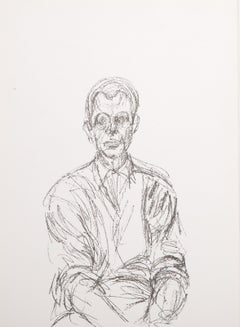
Head of A Man, Expressionist Lithograph by Alberto Giacometti
By Alberto Giacometti
Located in Long Island City, NY
Alberto Giacometti, Swiss (1901 - 1966) - Head of A Man from Derriere Le Miroir no. 127, Year: 1961, Medium: Lithograph, Edition: ~2500, Size: 15 x 11 in. (38.1 x 27.94 cm), Publ...
Category
1960s Expressionist Paul Jeffay Art
Materials
Lithograph
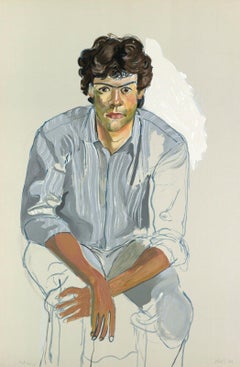
The Youth (John Cheim), Alice Neel
By Alice Neel
Located in Fairfield, CT
Artist: Alice Neel (1900-1984)
Title: The Youth (John Cheim)
Year: 1982
Medium: Lithograph on Arches paper
Edition: 20/25 A.P.
Size: 38 x 24 inches
Condition: Good
Inscription: Signe...
Category
1980s Expressionist Paul Jeffay Art
Materials
Lithograph
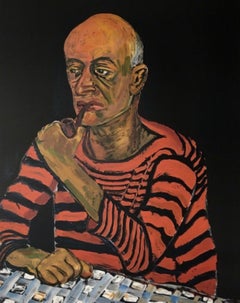
Man with Pipe (John Rothschild), Alice Neel
By Alice Neel
Located in Fairfield, CT
Artist: Alice Neel (1900-1984)
Title: Man with Pipe (John Rothschild)
Year: 1979
Medium: Lithograph on Arches paper
Edition: XXXVIII/L; 150 Arabic Numerals, 50 Roman Numerals, plus p...
Category
1970s Expressionist Paul Jeffay Art
Materials
Lithograph
$4,800 Sale Price
20% Off
H 28.5 in W 21.5 in
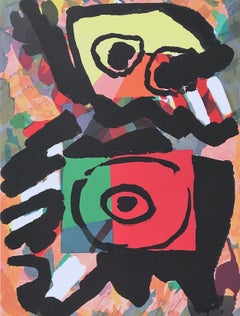
MULTI PERSONAGE Signed Lithograph, Abstract Collage Portrait, CoBrA Artist
By Karel Appel
Located in Union City, NJ
MULTI PERSONAGE is an original limited edition lithograph by the Dutch artist Karel Appel, printed using hand lithography techniques on archival Arches paper, 100% acid free. MULTI PERSONAGE is a lively abstract color collage portrait expressed in vibrant shades of red, blue, pink, green, purple, yellow with hints of multi color pastel tones and white creating an abstracted body and face. Bold black paint strokes define the face with its zany black eyes, head, body and limbs; collage effect torn paper bits fill in the body form. MULTI PERSONAGE is a very unique, fantastically playful and wild composition by Karel Appel, one of the founders of the avant-garde art movement CoBrA active during the late 1940's thru early 1950's. His paintings are known for incorporating applications of vibrant, violent colors often possessing a primal, childlike quality.
Print size - 30 x 20 inches, unframed, excellent condition, hand signed in pencil by Karel Appel
Edition size - 175, plus proofs
Year published - 1980
Printer - JK Fine Art Editions Co., NY
Karel Appel was one of the founders of the avant-garde art movement CoBrA, active during the late 1940's thru early 1950's. His paintings are known for incorporating applications of vibrant, violent colors often possessing a primal, childlike quality.
Karel Appel, (born April 25, 1921, Amsterdam, Netherlands—died May 3, 2006, Zürich, Switzerland), Dutch painter of turbulent, colorful, and semi-abstract compositions, who was a co-founder (1948) of the CoBRA group of northern European Expressionists. He was also a noted sculptor and graphic artist.
Appel attended the Royal Academy of Fine Arts, Amsterdam (1940–43), and helped found the “Reflex” group, which became known as CoBRA (for Copenhagen, Brussels, and Amsterdam), in 1948. He moved to Paris in 1950 and by the 1960s had settled in New York City; he later lived in Italy and Switzerland. Partly in reaction against what they perceived as the sterile academicism of the de Stijl movement, the CoBRA artists...
Category
1980s Expressionist Paul Jeffay Art
Materials
Lithograph
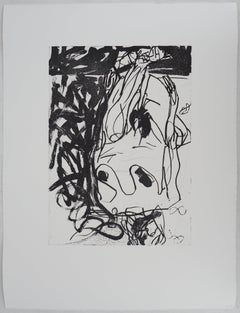
Elke Up Side Down : Tribute to Woman - Original etching
By Georg Baselitz
Located in Paris, IDF
Georg Baselitz (1938)
Elke Up Side Down : Tribute to Woman
Original etching
On Rives vellum 66 x 50 cm (c. 26 x 20 in)
Authenticated with Chalcographie of Louvre Museum blind stamp
...
Category
21st Century and Contemporary Expressionist Paul Jeffay Art
Materials
Etching
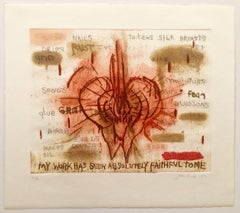
My Work
By Joan Snyder
Located in New York, NY
Joan Snyder has been called an autobiographical, even confessional artist, who draws from her experiences and surroundings to create her paintings. While her subjects vary widely, Sn...
Category
1990s Expressionist Paul Jeffay Art
Materials
Etching, Woodcut
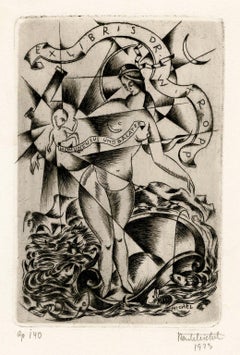
Ex Libris Dr. Witropp
— German Expressionism
By Karl Michel
Located in Myrtle Beach, SC
Karl Michel, 'Ex Libris Dr. Witropp - Homunculus und Galatee', etching, 1923, edition not stated. Signed, dated, and numbered 'Op. 140' (the artist's inventory number) in pencil. Si...
Category
1920s Expressionist Paul Jeffay Art
Materials
Etching
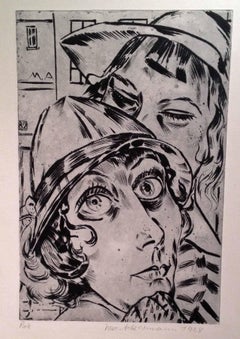
DIE SCHAUSPIELERIN HILDE KORBER
By Max Ackermann
Located in Portland, ME
Ackermann, Max (German, 1887-1975). DIE SCHAUSPIELERIN HILDE KORBER. Etching, 1928. A proof before, or in addition to the edition of 200. Signed and dated "Max Ackermann 1928" in pen...
Category
1920s Expressionist Paul Jeffay Art
Materials
Etching
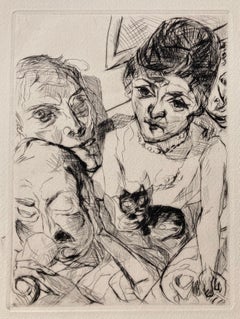
EVENING (SELF PORTRAIT with the Battenbergs)
By Max Beckmann
Located in Santa Monica, CA
MAX BECKMANN (German 1884 - 1950)
EVENING (Self-Portrait with the Battenbergs) 1916, (Hofmaier 90: Gallwitz 67)
Etching and drypoint, Plate 10 from the portfolio Gesichter (Faces)...
Category
1910s Expressionist Paul Jeffay Art
Materials
Drypoint, Etching
Kopf (Erstaunen), 1923/2014, Expressionist Etching, Posthumous Limited Edition
By Alexej Jawlensky
Located in Eltville am Rhein, DE
Alexej von Jawlensky
Torschok 1864 - 1941 Wiesbaden
Head (astonishment), circa 1923.
Etching in umber, hand-printed.
Catalogue raisonné Rosenbach 41.
Monogrammed in the plate.
With t...
Category
1920s Blue Rider Paul Jeffay Art
Materials
Etching
Previously Available Items
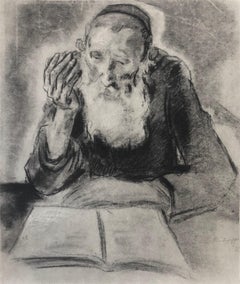
Judaica Jewish Shtetl Etching Hasidic Rabbi at Study Vintage Chassidic Print
By Paul Jeffay
Located in Surfside, FL
Older Chassidic rabbi learning with open book, Judaica, Jewish scenes from a ghetto.
Saul Yaffie, a.k.a. Paul Jeffay, (1898–1957) was a Scottish Jewish artist. Known for his charmin...
Category
20th Century Expressionist Paul Jeffay Art
Materials
Paper, Etching
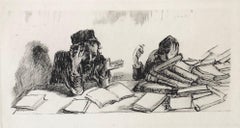
Judaica Jewish Shtetl Etching Yeshiva Talmudic Study Vintage Chassidic Art Print
By Paul Jeffay
Located in Surfside, FL
"Qui a raison?"
Chassidic boy, Yeshiva student with open book. Judaica, Jewish scenes from a ghetto.
Saul Yaffie, a.k.a. Paul Jeffay, (1898–1957) was a Scottish Jewish artist. Kno...
Category
20th Century Expressionist Paul Jeffay Art
Materials
Etching
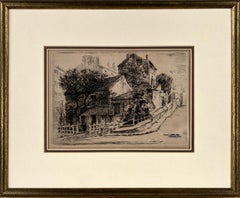
Caberet du Lapin Agile, Montmartre, Paris 1920
By Paul Jeffay
Located in Soquel, CA
Caberet du Lapin Agile, Montmartre, Paris - 13/250
This charming etching depicts a French residential street scene by Saul Yaffie a.k.a., Paul Jeffay (Scotland, 1898–1957) in varying shades of lights and darks with intricately made hash marks.
Frame Size: 12.25"H x 14.88"W.
Image size: 6"H x 8.75"W.
Signed lower right Paul Jaffay and lower left "13 of 250" (impressions)
Saul Yaffie, a.k.a. Paul Jeffay, (1898–1957) was a Scottish Jewish artist. Known for his charming French street scenes as well as his Judaica work. Saul Yaffie is listed in the Glasgow School of Art's World War One Roll of Honor. After (1918) the armistice Saul returned briefly to Glasgow, before ‘try[ing] his luck in Paris’ (Schotz, pg. 64). It is around this time that Saul began to sign his work with the pseudonym ‘Paul Jeffay’.He later went by the name Paul Jeffay, and much of his work is signed under this name.
Saul Yaffie was born in Blythswood, Glasgow on 29 April 1898. His mother was Kate Yaffie (née Karkonoski), and his father, Bernard Yaffie, was a master tailor. Like many Russian Jews, Kate and Bernard Yaffie fled persecution in Russia during a wave of anti-Jewish pogroms triggered by the assassination of Tsar Alexander II in 1881. Saul's father was naturalised as a British citizen by the time that Saul himself was three; a Bernard Yaffie is recorded as living at Abbotsford Place in the old Gorbals, where the young Saul spent the early years of his childhood. The Yaffies were not unique in their situation: the Gorbals was the centre of Scotland's Jewish community and home to a large proportion of Glasgow's immigrants throughout the early 20th century. Over time, there was a movement to some of the more affluent communities in Glasgow, such as Pollokshields and Garnethill, as many Jewish families gradually improved their social and economic situation. Like these, the Yaffies also experienced a time of good fortune, moving to a more agreeable address on Sinclair Drive, Cathcart as Bernard's tailoring business prospered.
Saul attended day classes in drawing and painting, modelling, and life drawing at The Glasgow School of Art from 1912 to 1919. During the First World War, he was required to interrupt his studies to serve in the King's Own Scottish Borderers in 1916/17. Although subject to military conscription, Yaffie reached the rank of corporal during his service. Prior to his conscription Yaffie engaged in munitions work, something that was recorded in the GSA's student registers.
The post-war economic depression that affected the country during the 1920s, also affected the Yaffie family directly: Bernard Yaffie's business suffered greatly, and the family eventually emigrated to Canada. Saul did not emigrate with his family, choosing instead to stay in Europe, and relocate to jazz age Paris where he continued his artistic practice. Now married, Saul sought to escape persecution in Europe by returning to the UK before the Second World War with his wife, Estusia. The two settled in Manchester, but returned to France after the war.
In his memoires ‘Bronze in My Blood’, German-born sculptor Benno Schotz describes a Saul ‘Yaffe’, one of only three other Jewish students who attended The Glasgow School of Art at the time. (Schotz himself was exempt from joining the forces because he was ‘not yet a British subject’, and was engaged in war work in the drawing office of John Brown’s shipyards). On the outbreak of the war, Schotz writes, Yaffie won a poster competition to be displayed in Glasgow tramcars at the beginning of the 1914-18 war – his winning design depicted a woman with a child in her arms, fleeing from a fire behind her. While on leave from service, the young Saul told Schotz he had briefly been stationed in the same unit as Jewish American sculptor Jacob Epstein. This was most likely the 38th Battalion of the Royal Fusiliers...
Category
Mid-20th Century Post-War Paul Jeffay Art
Materials
Etching, Paper, Drypoint
H 12.25 in W 14.88 in D 1.63 in
Judaica Jewish Shtetl Etching Hasidic Youth at Study Vintage Chassidic Art Print
By Paul Jeffay
Located in Surfside, FL
"Tristesse." (a state of melancholy sadness. "lamenting a lost love, he leaves us poised at the lip of a chasm of tristesse")
Chassidic boy, Yeshiva student with open book. Judaica, Jewish scenes from a ghetto.
Saul Yaffie, a.k.a. Paul Jeffay, (1898–1957) was a Scottish Jewish artist. Known for his charming French street scenes as well as his judaica work. This is signed in the plate and dated 1931 in the print. This is done in a style similar to the works of the early Bezalel School artists Hermann Struck and Jakob Steinhardt.
This lithograph, by artist Paul Jeffay depicts a Judaic Shtetl interior scene with great charm and sensitivity.
Saul Yaffie was born in Blythswood, Glasgow on 29 April 1898. His mother was Kate Yaffie (née Karkonoski), and his father, Bernard Yaffie, was a master tailor. Like many Russian Jews, Kate and Bernard Yaffie fled persecution in Russia during a wave of anti-Jewish pogroms triggered by the assassination of Tsar Alexander II in 1881. Saul's father was naturalised as a British citizen by the time that Saul himself was three; a Bernard Yaffie is recorded as living at Abbotsford Place in the old Gorbals, where the young Saul spent the early years of his childhood. The Yaffies were not unique in their situation: the Gorbals was the centre of Scotland's Jewish community and home to a large proportion of Glasgow's immigrants throughout the early 20th century. Over time, there was a movement to some of the more affluent communities in Glasgow, such as Pollokshields and Garnethill, as many Jewish families gradually improved their social and economic situation. Like these, the Yaffies also experienced a time of good fortune, moving to a more agreeable address on Sinclair Drive, Cathcart as Bernard's tailoring business prospered.
Saul attended day classes in drawing and painting, modelling, and life drawing at The Glasgow School of Art from 1912 to 1919. During the First World War, he was required to interrupt his studies to serve in the King's Own Scottish Borderers in 1916/17. Although subject to military conscription, Yaffie reached the rank of corporal during his service. Prior to his conscription Yaffie engaged in munitions work, something that was recorded in the GSA's student registers.
The post-war economic depression that affected the country during the 1920s, also affected the Yaffie family directly: Bernard Yaffie's business suffered greatly, and the family eventually emigrated to Canada. Saul did not emigrate with his family, choosing instead to stay in Europe, and relocate to jazz age Paris where he continued his artistic practice. Now married, Saul sought to escape persecution in Europe by returning to the UK before the Second World War with his wife, Estusia. The two settled in Manchester, but returned to France after the war. In his memoires ‘Bronze in My Blood’, German-born sculptor Benno Schotz...
Category
1930s Expressionist Paul Jeffay Art
Materials
Etching
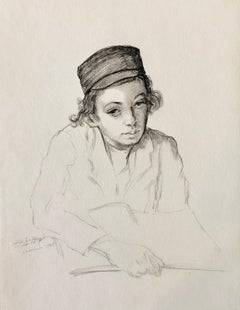
Judaica Jewish Etching Hasidic Rabbi, Gaon, Genius, Vintage Chassidic Art Print
By Paul Jeffay
Located in Surfside, FL
"Un savant."
Chassidic scholar, Rosh Yeshiva with open book. Judaica, Jewish scenes from a shtetl ghetto.
Saul Yaffie, a.k.a. Paul Jeffay, (1898–1957) was a Scottish Jewish artist. Known for his charming French street scenes as well as his judaica work. This is signed in the plate and dated 1931 in the print. This is done in a style similar to the works of the early Bezalel School artists Hermann Struck and Jakob Steinhardt.
This lithograph, by artist Paul Jeffay depicts a Judaic Shtetl interior scene with great charm and sensitivity.
Saul Yaffie was born in Blythswood, Glasgow on 29 April 1898. His mother was Kate Yaffie (née Karkonoski), and his father, Bernard Yaffie, was a master tailor. Like many Russian Jews, Kate and Bernard Yaffie fled persecution in Russia during a wave of anti-Jewish pogroms triggered by the assassination of Tsar Alexander II in 1881. Saul's father was naturalised as a British citizen by the time that Saul himself was three; a Bernard Yaffie is recorded as living at Abbotsford Place in the old Gorbals, where the young Saul spent the early years of his childhood. The Yaffies were not unique in their situation: the Gorbals was the centre of Scotland's Jewish community and home to a large proportion of Glasgow's immigrants throughout the early 20th century. Over time, there was a movement to some of the more affluent communities in Glasgow, such as Pollokshields and Garnethill, as many Jewish families gradually improved their social and economic situation. Like these, the Yaffies also experienced a time of good fortune, moving to a more agreeable address on Sinclair Drive, Cathcart as Bernard's tailoring business prospered.
Saul attended day classes in drawing and painting, modelling, and life drawing at The Glasgow School of Art from 1912 to 1919. During the First World War, he was required to interrupt his studies to serve in the King's Own Scottish Borderers in 1916/17. Although subject to military conscription, Yaffie reached the rank of corporal during his service. Prior to his conscription Yaffie engaged in munitions work, something that was recorded in the GSA's student registers.
The post-war economic depression that affected the country during the 1920s, also affected the Yaffie family directly: Bernard Yaffie's business suffered greatly, and the family eventually emigrated to Canada. Saul did not emigrate with his family, choosing instead to stay in Europe, and relocate to jazz age Paris where he continued his artistic practice. Now married, Saul sought to escape persecution in Europe by returning to the UK before the Second World War with his wife, Estusia. The two settled in Manchester, but returned to France after the war. In his memoires ‘Bronze in My Blood’, German-born sculptor Benno Schotz...
Category
20th Century Expressionist Paul Jeffay Art
Materials
Etching
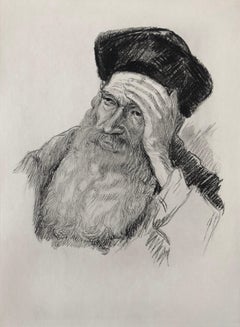
Judaica Jewish Shtetl Etching Hasidic Rabbi "Difficult Problem" Chassidic Print
By Paul Jeffay
Located in Surfside, FL
"Probleme ardu."
Chassidic boy, Yeshiva student with open book. Judaica, Jewish scenes from a ghetto.
Saul Yaffie, a.k.a. Paul Jeffay, (1898–1957) was a Scottish Jewish artist. Know...
Category
20th Century Expressionist Paul Jeffay Art
Materials
Etching
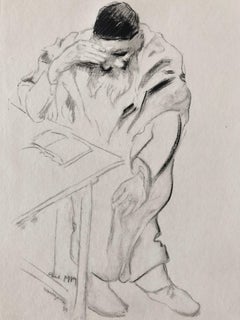
Judaica Jewish Etching Hasidic Rabbi Mendelson Portrait Vintage Chassidic Print
By Paul Jeffay
Located in Surfside, FL
"Le Rabbin Mendelson."
Chassidic boy, Yeshiva student with open book. Judaica, Jewish scenes from a ghetto.
Saul Yaffie, a.k.a. Paul Jeffay, (1898–1957) was a Scottish Jewish artis...
Category
1930s Expressionist Paul Jeffay Art
Materials
Etching
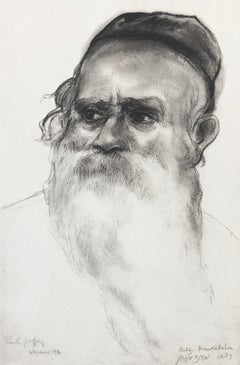
Judaica Jewish Shtetl Etching Hasidic Rabbi Meditation Vintage Chassidic Print
By Paul Jeffay
Located in Surfside, FL
"Meditation."
Chassidic boy, Yeshiva student with open book. Judaica, Jewish scenes from a ghetto.
Saul Yaffie, a.k.a. Paul Jeffay, (1898–1957) was a Scottish Jewish artist. Known for his charming French street scenes as well as his judaica work. This is signed in the plate and dated 1931 in the print. This is done in a style similar to the works of the early Bezalel School artists Hermann Struck and Jakob Steinhardt.
This lithograph, by artist Paul Jeffay depicts a Judaic Shtetl interior scene with great charm and sensitivity.
Saul Yaffie was born in Blythswood, Glasgow on 29 April 1898. His mother was Kate Yaffie (née Karkonoski), and his father, Bernard Yaffie, was a master tailor. Like many Russian Jews, Kate and Bernard Yaffie fled persecution in Russia during a wave of anti-Jewish pogroms triggered by the assassination of Tsar Alexander II in 1881. Saul's father was naturalised as a British citizen by the time that Saul himself was three; a Bernard Yaffie is recorded as living at Abbotsford Place in the old Gorbals, where the young Saul spent the early years of his childhood. The Yaffies were not unique in their situation: the Gorbals was the centre of Scotland's Jewish community and home to a large proportion of Glasgow's immigrants throughout the early 20th century. Over time, there was a movement to some of the more affluent communities in Glasgow, such as Pollokshields and Garnethill, as many Jewish families gradually improved their social and economic situation. Like these, the Yaffies also experienced a time of good fortune, moving to a more agreeable address on Sinclair Drive, Cathcart as Bernard's tailoring business prospered.
Saul attended day classes in drawing and painting, modelling, and life drawing at The Glasgow School of Art from 1912 to 1919. During the First World War, he was required to interrupt his studies to serve in the King's Own Scottish Borderers in 1916/17. Although subject to military conscription, Yaffie reached the rank of corporal during his service. Prior to his conscription Yaffie engaged in munitions work, something that was recorded in the GSA's student registers.
The post-war economic depression that affected the country during the 1920s, also affected the Yaffie family directly: Bernard Yaffie's business suffered greatly, and the family eventually emigrated to Canada. Saul did not emigrate with his family, choosing instead to stay in Europe, and relocate to jazz age Paris where he continued his artistic practice. Now married, Saul sought to escape persecution in Europe by returning to the UK before the Second World War with his wife, Estusia. The two settled in Manchester, but returned to France after the war. In his memoires ‘Bronze in My Blood’, German-born sculptor Benno Schotz...
Category
20th Century Expressionist Paul Jeffay Art
Materials
Etching
Judaica Jewish Shtetl Etching Yeshiva Talmudic Study Vintage Chassidic Art Print
By Paul Jeffay
Located in Surfside, FL
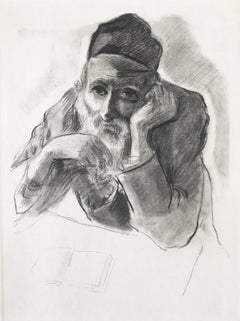
"Qui a raison?"
Chassidic boy, Yeshiva student with open book. Judaica, Jewish scenes from a ghetto.
Saul Yaffie, a.k.a. Paul Jeffay, (1898–1957) was a Scottish Jewish artist. Known for his charming French street scenes as well as his judaica work. This is signed in the plate and dated 1931 in the print. This is done in a style similar to the works of the early Bezalel School artists Hermann Struck and Jakob Steinhardt.
This lithograph, by artist Paul Jeffay depicts a Judaic Shtetl interior scene with great charm and sensitivity.
Saul Yaffie was born in Blythswood, Glasgow on 29 April 1898. His mother was Kate Yaffie (née Karkonoski), and his father, Bernard Yaffie, was a master tailor. Like many Russian Jews, Kate and Bernard Yaffie fled persecution in Russia during a wave of anti-Jewish pogroms triggered by the assassination of Tsar Alexander II in 1881. Saul's father was naturalised as a British citizen by the time that Saul himself was three; a Bernard Yaffie is recorded as living at Abbotsford Place in the old Gorbals, where the young Saul spent the early years of his childhood. The Yaffies were not unique in their situation: the Gorbals was the centre of Scotland's Jewish community and home to a large proportion of Glasgow's immigrants throughout the early 20th century. Over time, there was a movement to some of the more affluent communities in Glasgow, such as Pollokshields and Garnethill, as many Jewish families gradually improved their social and economic situation. Like these, the Yaffies also experienced a time of good fortune, moving to a more agreeable address on Sinclair Drive, Cathcart as Bernard's tailoring business prospered.
Saul attended day classes in drawing and painting, modelling, and life drawing at The Glasgow School of Art from 1912 to 1919. During the First World War, he was required to interrupt his studies to serve in the King's Own Scottish Borderers in 1916/17. Although subject to military conscription, Yaffie reached the rank of corporal during his service. Prior to his conscription Yaffie engaged in munitions work, something that was recorded in the GSA's student registers.
The post-war economic depression that affected the country during the 1920s, also affected the Yaffie family directly: Bernard Yaffie's business suffered greatly, and the family eventually emigrated to Canada. Saul did not emigrate with his family, choosing instead to stay in Europe, and relocate to jazz age Paris where he continued his artistic practice. Now married, Saul sought to escape persecution in Europe by returning to the UK before the Second World War with his wife, Estusia. The two settled in Manchester, but returned to France after the war. In his memoires ‘Bronze in My Blood’, German-born sculptor Benno Schotz describes a Saul ‘Yaffe’, one of only three other Jewish students who attended The Glasgow School of Art at the time. (Schotz himself was exempt from joining the forces because he was ‘not yet a British subject’, and was engaged in war work in the drawing office of John Brown’s shipyards). On the outbreak of the war, Schotz writes, Yaffie won a poster competition to be displayed in Glasgow tramcars at the beginning of the 1914-18 war – his winning design depicted a woman with a child in her arms, fleeing from a fire behind her. While on leave from service, the young Saul told Schotz he had briefly been stationed in the same unit as Jewish American sculptor Jacob Epstein. This was most likely the 38th Battalion of the Royal Fusiliers, also known as ‘the Jewish Legion’, one of five Jewish battalions raised during WW1. ‘He told me how incongruous it was’, remembers Schotz, ‘to See Epstein scrubbing the floor of their hut, with a large diamond ring on his finger’. His work is included in the collection of the Ben Uri Museum in London along with Lucian Freud, David Bomberg, Mark Gertler, Josef Herman, Jankel Adler, Feliks Topolski...
Category
20th Century Expressionist Paul Jeffay Art
Materials
Etching
Judaica Jewish Rabbi Etching Hasidic Rebbe Admur Shlita Vintage Chassidic Print
By Paul Jeffay
Located in Surfside, FL
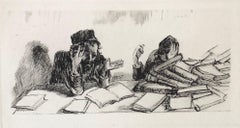
"Sabbat." Sabbath. the piece is marked in the plate Admur Shlita (this might be the Munkatcher Rebbe or the Belzer Rebbe from before the war)
Chassidic Rebbe, with open book. Judaica, Jewish scenes from a Shtetl.
Saul Yaffie, a.k.a. Paul Jeffay, (1898–1957) was a Scottish Jewish artist. Known for his charming French street scenes as well as his judaica work. This is signed in the plate and dated 1931 in the print. This is done in a style similar to the works of the early Bezalel School artists Hermann Struck and Jakob Steinhardt.
This lithograph, by artist Paul Jeffay depicts a Judaic Shtetl interior scene with great charm and sensitivity.
Saul Yaffie was born in Blythswood, Glasgow on 29 April 1898. His mother was Kate Yaffie (née Karkonoski), and his father, Bernard Yaffie, was a master tailor. Like many Russian Jews, Kate and Bernard Yaffie fled persecution in Russia during a wave of anti-Jewish pogroms triggered by the assassination of Tsar Alexander II in 1881. Saul's father was naturalised as a British citizen by the time that Saul himself was three; a Bernard Yaffie is recorded as living at Abbotsford Place in the old Gorbals, where the young Saul spent the early years of his childhood. The Yaffies were not unique in their situation: the Gorbals was the centre of Scotland's Jewish community and home to a large proportion of Glasgow's immigrants throughout the early 20th century. Over time, there was a movement to some of the more affluent communities in Glasgow, such as Pollokshields and Garnethill, as many Jewish families gradually improved their social and economic situation. Like these, the Yaffies also experienced a time of good fortune, moving to a more agreeable address on Sinclair Drive, Cathcart as Bernard's tailoring business prospered.
Saul attended day classes in drawing and painting, modelling, and life drawing at The Glasgow School of Art from 1912 to 1919. During the First World War, he was required to interrupt his studies to serve in the King's Own Scottish Borderers in 1916/17. Although subject to military conscription, Yaffie reached the rank of corporal during his service. Prior to his conscription Yaffie engaged in munitions work, something that was recorded in the GSA's student registers.
The post-war economic depression that affected the country during the 1920s, also affected the Yaffie family directly: Bernard Yaffie's business suffered greatly, and the family eventually emigrated to Canada. Saul did not emigrate with his family, choosing instead to stay in Europe, and relocate to jazz age Paris where he continued his artistic practice. Now married, Saul sought to escape persecution in Europe by returning to the UK before the Second World War with his wife, Estusia. The two settled in Manchester, but returned to France after the war. In his memoires ‘Bronze in My Blood’, German-born sculptor Benno Schotz...
Category
20th Century Expressionist Paul Jeffay Art
Materials
Etching
Judaica Jewish Shtetl Etching Hasidic Rabbi in Prayer Vintage Chassidic Print
By Paul Jeffay
Located in Surfside, FL
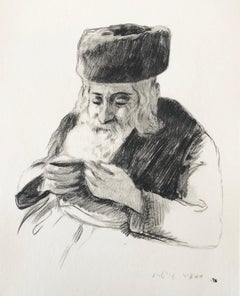
. "La priere."
Chassidic Rabbi, Rabbi praying with open book. Judaica, Jewish scenes from a ghetto.
Saul Yaffie, a.k.a. Paul Jeffay, (1898–1957) was a Scottish Jewish artist. Known for his charming French street scenes as well as his judaica work. This is signed in the plate and dated 1931 in the print. This is done in a style similar to the works of the early Bezalel School artists Hermann Struck and Jakob Steinhardt.
This lithograph, by artist Paul Jeffay depicts a Judaic Shtetl interior scene with great charm and sensitivity.
Saul Yaffie was born in Blythswood, Glasgow on 29 April 1898. His mother was Kate Yaffie (née Karkonoski), and his father, Bernard Yaffie, was a master tailor. Like many Russian Jews, Kate and Bernard Yaffie fled persecution in Russia during a wave of anti-Jewish pogroms triggered by the assassination of Tsar Alexander II in 1881. Saul's father was naturalised as a British citizen by the time that Saul himself was three; a Bernard Yaffie is recorded as living at Abbotsford Place in the old Gorbals, where the young Saul spent the early years of his childhood. The Yaffies were not unique in their situation: the Gorbals was the centre of Scotland's Jewish community and home to a large proportion of Glasgow's immigrants throughout the early 20th century. Over time, there was a movement to some of the more affluent communities in Glasgow, such as Pollokshields and Garnethill, as many Jewish families gradually improved their social and economic situation. Like these, the Yaffies also experienced a time of good fortune, moving to a more agreeable address on Sinclair Drive, Cathcart as Bernard's tailoring business prospered.
Saul attended day classes in drawing and painting, modelling, and life drawing at The Glasgow School of Art from 1912 to 1919. During the First World War, he was required to interrupt his studies to serve in the King's Own Scottish Borderers in 1916/17. Although subject to military conscription, Yaffie reached the rank of corporal during his service. Prior to his conscription Yaffie engaged in munitions work, something that was recorded in the GSA's student registers.
The post-war economic depression that affected the country during the 1920s, also affected the Yaffie family directly: Bernard Yaffie's business suffered greatly, and the family eventually emigrated to Canada. Saul did not emigrate with his family, choosing instead to stay in Europe, and relocate to jazz age Paris where he continued his artistic practice. Now married, Saul sought to escape persecution in Europe by returning to the UK before the Second World War with his wife, Estusia. The two settled in Manchester, but returned to France after the war. In his memoires ‘Bronze in My Blood’, German-born sculptor Benno Schotz...
Category
20th Century Expressionist Paul Jeffay Art
Materials
Etching
Judaica Jewish Shtetl Etching Reading the Newspaper Vintage Chassidic Art Print
By Paul Jeffay
Located in Surfside, FL
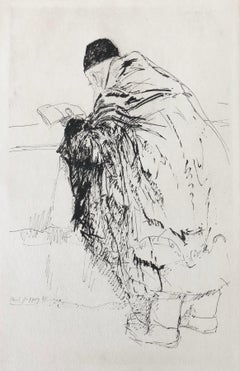
9. "Ouvriers au repos."
Chassidic boy, Yeshiva student with open book. Judaica, Jewish scenes from a ghetto.
Saul Yaffie, a.k.a. Paul Jeffay, (1898–1957) was a Scottish Jewish artist. Known for his charming French street scenes as well as his judaica work. This is signed in the plate and dated 1931 in the print. This is done in a style similar to the works of the early Bezalel School artists Hermann Struck and Jakob Steinhardt.
This lithograph, by artist Paul Jeffay depicts a Judaic Shtetl interior scene with great charm and sensitivity.
Saul Yaffie was born in Blythswood, Glasgow on 29 April 1898. His mother was Kate Yaffie (née Karkonoski), and his father, Bernard Yaffie, was a master tailor. Like many Russian Jews, Kate and Bernard Yaffie fled persecution in Russia during a wave of anti-Jewish pogroms triggered by the assassination of Tsar Alexander II in 1881. Saul's father was naturalised as a British citizen by the time that Saul himself was three; a Bernard Yaffie is recorded as living at Abbotsford Place in the old Gorbals, where the young Saul spent the early years of his childhood. The Yaffies were not unique in their situation: the Gorbals was the centre of Scotland's Jewish community and home to a large proportion of Glasgow's immigrants throughout the early 20th century. Over time, there was a movement to some of the more affluent communities in Glasgow, such as Pollokshields and Garnethill, as many Jewish families gradually improved their social and economic situation. Like these, the Yaffies also experienced a time of good fortune, moving to a more agreeable address on Sinclair Drive, Cathcart as Bernard's tailoring business prospered.
Saul attended day classes in drawing and painting, modelling, and life drawing at The Glasgow School of Art from 1912 to 1919. During the First World War, he was required to interrupt his studies to serve in the King's Own Scottish Borderers in 1916/17. Although subject to military conscription, Yaffie reached the rank of corporal during his service. Prior to his conscription Yaffie engaged in munitions work, something that was recorded in the GSA's student registers.
The post-war economic depression that affected the country during the 1920s, also affected the Yaffie family directly: Bernard Yaffie's business suffered greatly, and the family eventually emigrated to Canada. Saul did not emigrate with his family, choosing instead to stay in Europe, and relocate to jazz age Paris where he continued his artistic practice. Now married, Saul sought to escape persecution in Europe by returning to the UK before the Second World War with his wife, Estusia. The two settled in Manchester, but returned to France after the war. In his memoires ‘Bronze in My Blood’, German-born sculptor Benno Schotz describes a Saul ‘Yaffe’, one of only three other Jewish students who attended The Glasgow School of Art at the time. (Schotz himself was exempt from joining the forces because he was ‘not yet a British subject’, and was engaged in war work in the drawing office of John Brown’s shipyards). On the outbreak of the war, Schotz writes, Yaffie won a poster competition to be displayed in Glasgow tramcars at the beginning of the 1914-18 war – his winning design depicted a woman with a child in her arms, fleeing from a fire behind her. While on leave from service, the young Saul told Schotz he had briefly been stationed in the same unit as Jewish American sculptor Jacob Epstein. This was most likely the 38th Battalion of the Royal Fusiliers, also known as ‘the Jewish Legion’, one of five Jewish battalions raised during WW1. ‘He told me how incongruous it was’, remembers Schotz, ‘to See Epstein scrubbing the floor of their hut, with a large diamond ring on his finger’. His work is included in the collection of the Ben Uri Museum in London along with Lucian Freud, David Bomberg, Mark Gertler, Josef Herman, Jankel Adler, Feliks Topolski...
Category
20th Century Expressionist Paul Jeffay Art
Materials
Etching
Paul Jeffay art for sale on 1stDibs.
Find a wide variety of authentic Paul Jeffay art available for sale on 1stDibs. You can also browse by medium to find art by Paul Jeffay in etching, paper, drypoint and more. Much of the original work by this artist or collective was created during the 20th century and is mostly associated with the Expressionist style. Not every interior allows for large Paul Jeffay art, so small editions measuring 12 inches across are available. Customers who are interested in this artist might also find the work of Paul Klee, Auguste Louis Lepère, and Emil Nolde. Paul Jeffay art prices can differ depending upon medium, time period and other attributes. On 1stDibs, the price for these items starts at $500 and tops out at $650, while the average work can sell for $500.