Pawel Kontny Art

Polish, 1923-2002
A painter of subjects from many parts of the world, Pawel Kontny began with wartime sketches and changed to a technique combining abstraction and realism. He was born in Laurahuette, Poland, the son of a wealthy pastry shop owner. He studied architecture, but was interrupted by World War II. Traveling in many countries as a soldier, he sketched various landscapes but in 1945, he was captured and held as a prisoner of war in Italy. After the war, he studied at the Union of Nuremberg Architects to help design buildings to replace ones destroyed in the war. He also married Irmgard, a dancer with the Nuremberg Opera Company and began having well received exhibitions of his work throughout Europe. His primary subject became architecture which he built up on heavy weight masonite panels into structures with marble dust. In 1969, the Kotnys moved to Denver, Colorado where he began painting the American West. In February, 1974, "American Artist" magazine had a feature article by John Jellico on Pawel Kontny.
to
1
15
15
8
3
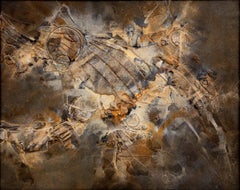
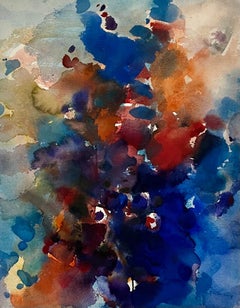
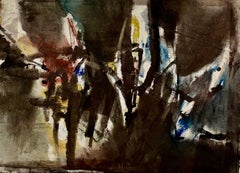
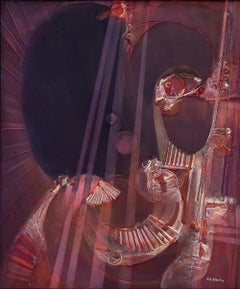
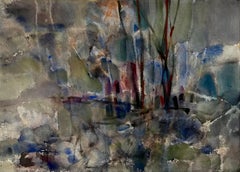
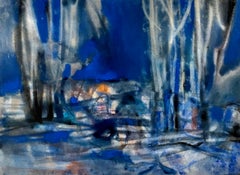
Cosmos, 1960s Mid-Century Abstract Mixed Media Art in Brown and Blue Tones
By Pawel Kontny
Located in Denver, CO
Cosmos is an original mid-century abstract painting by Polish-American artist Pawel Kontny (also known as Paul Kontny), created in the 1960s. This striking mixed media work is compos...
Category

1960s Abstract Expressionist Pawel Kontny Art

Materials

Marble

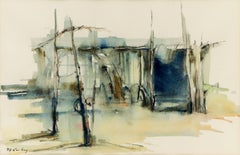
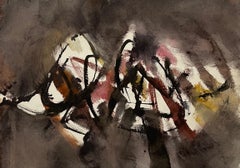
Pawel Kontny “New Mexico” 20th-Century Southwestern Modernist Watercolor
By Pawel Kontny
Located in Denver, CO
This 20th-century watercolor painting, “New Mexico,” by Polish-American artist Pawel Kontny, captures the enduring architecture and serene spirit of the American Southwest. The work ...
Category

Mid-20th Century American Modern Pawel Kontny Art

Materials

Watercolor

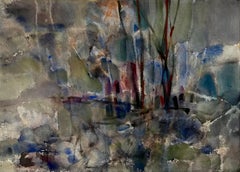
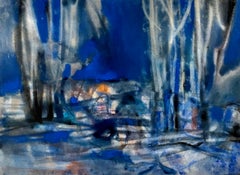
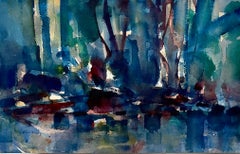
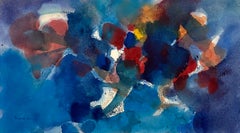
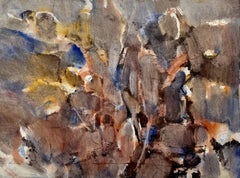
Pawel August Kontny Blue Gray Mauve Abstract Oil Painting, Contemporary Art
By Pawel Kontny
Located in Denver, CO
This original abstract painting by Pawel August Kontny features a refined and atmospheric composition rendered in harmonious shades of blue, gray, and mauve. Subtle tonal transitions...
Category

Mid-20th Century Abstract Expressionist Pawel Kontny Art

Materials

Fabric, Oil

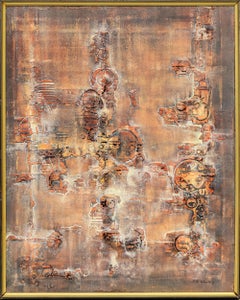
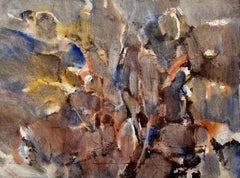
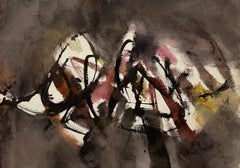
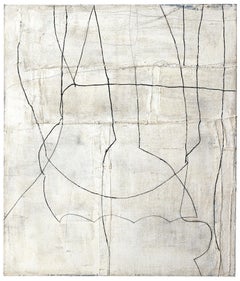
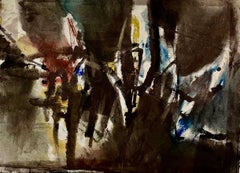
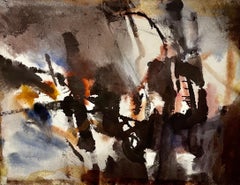
Mid-Century Abstract Mixed Media Transfiguration Composition with Marble Dust
By Pawel Kontny
Located in Denver, CO
"Transfiguration" is a captivating original abstract painting by the talented artist Pawel Kontny (also known as Paul Kontny), created during the mid-20th century. This unique composition was crafted using a combination of marble dust, gesso, and oil glaze on masonite, resulting in a striking raised texture that adds depth and dimension to the artwork. The use of marble dust and gesso gives the piece a rich, tactile quality, making it visually stunning. The painting is rendered in a harmonious palette of neutral tones, including shades of brown, beige, yellow, and grey, creating a subtle yet powerful interplay of light and shadow. These muted hues evoke a sense of calm and contemplation, allowing the viewer to immerse themselves in the abstract forms and textures that dominate the canvas. This piece is presented in its original black and gold frame, which enhances its vintage charm and complements the sophisticated color palette. "Transfiguration" is an exceptional work of art, perfect for collectors of mid-century abstract art...
Category

1960s Abstract Pawel Kontny Art

Materials

Marble

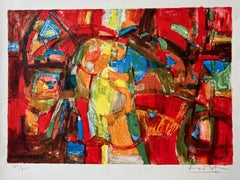
colorful landscape abstract Landschaftsszene
By Pawel Kontny
Located in Belgrade, MT
Pawel Kontny was born in Poland, he began with sketching wartime scenes combining abstract with realism. He exhibited throughout Europe. This piece is a part of my private collection...
Category

Mid-20th Century Realist Pawel Kontny Art

Materials

Lithograph

Large Modernist Abstract Expressionist Watercolor Painting Bauhaus Weimar Artist
By Pawel Kontny
Located in Surfside, FL
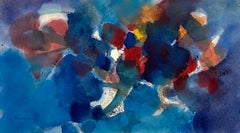
Abstract watercolor composition bearing the influence of the earlier color-block compositions of Paul Klee. Pawel August Kontny, (Polish-German-American artist) He was born in Laurahuette, Poland, in 1923, the son of a wealthy pastry shop owner. In 1939 he began studying architecture in Breslau where he was introduced to the European masters and to the work of some of the German Expressionists, soon afterward banned as "degenerate artists" and removed from museums throughout Germany by the Nazi regime. His studies were interrupted by World War II. Drafted into the German army, traveling in many countries as a soldier, he sketched various landscapes but in 1945, he was captured and held as a prisoner of war in Italy. After the war, he studied at the Union of Nuremberg Architects to help design buildings to replace ones destroyed in the war. He recorded his impressions of the local population and the landscapes through his watercolors and drawings. Pawel Kontny thereafter moved to Nuremberg, Germany, becoming a member of the Union of Nuremberg Architects and helping to rebuild the city's historic center. He soon decided to concentrate on his professional art career. He married Irmgard Laurer, a dancer with the Nuremberg Opera. Pavel Kontny 's career as an artist was launched with his participation in an all German exhibition, held at the Dusseldorf Museum in 1952. He held one-man shows in Germany, Switzerland and the United States. During his trip to the United States in 1960, Kontny became instantly enamored with Colorado, and decided to relocate to Cherry Hills with his wife and two children. He quickly established himself in the local art community, being affiliated for a time with Denver Art Galleries and Saks Galleries. His subject matter became the Southwest. During this time he received the Prestigious Gold Medal of the Art Academy of Rome. His extensive travel provided material for the paintings he did using his hallmark marble dust technique. he also worked equally in pastel, watercolor, charcoal and pencil-and-ink. in a style which merged abstraction and realist styles, influenced by Abstract Expressionist painting and South Western American landscapes. In the early 1960s he was one of only a few European-born professional artists in the state, a select group that included Herbert Bayer (1900-1985), a member of the prewar Bauhaus in Weimar and Dessau, Germany, and Roland Detre...
Category

Mid-20th Century Abstract Expressionist Pawel Kontny Art

Materials

Watercolor, Archival Paper

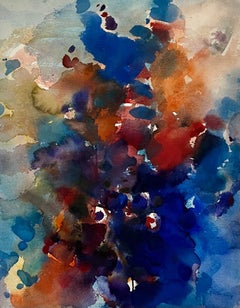
Modernist Abstract Expressionist Watercolor Painting Bauhaus Weimar Pawel Kontny
By Pawel Kontny
Located in Surfside, FL
Abstract watercolor composition bearing the influence of the earlier color-block compositions of Paul Klee. Pawel August Kontny, (Polish-German-American artist) He was born in Laurahuette, Poland, in 1923, the son of a wealthy pastry shop owner. In 1939 he began studying architecture in Breslau where he was introduced to the European masters and to the work of some of the German Expressionists, soon afterward banned as "degenerate artists" and removed from museums throughout Germany by the Nazi regime. His studies were interrupted by World War II. Drafted into the German army, traveling in many countries as a soldier, he sketched various landscapes but in 1945, he was captured and held as a prisoner of war in Italy. After the war, he studied at the Union of Nuremberg Architects to help design buildings to replace ones destroyed in the war. He recorded his impressions of the local population and the landscapes through his watercolors and drawings. Pawel Kontny thereafter moved to Nuremberg, Germany, becoming a member of the Union of Nuremberg Architects and helping to rebuild the city's historic center. He soon decided to concentrate on his professional art career. He married Irmgard Laurer, a dancer with the Nuremberg Opera. Pavel Kontny 's career as an artist was launched with his participation in an all German exhibition, held at the Dusseldorf Museum in 1952. He held one-man shows in Germany, Switzerland and the United States. During his trip to the United States in 1960, Kontny became instantly enamored with Colorado, and decided to relocate to Cherry Hills with his wife and two children. He quickly established himself in the local art community, being affiliated for a time with Denver Art Galleries and Saks Galleries. His subject matter became the Southwest. During this time he received the Prestigious Gold Medal of the Art Academy of Rome. His extensive travel provided material for the paintings he did using his hallmark marble dust technique. he also worked equally in pastel, watercolor, charcoal and pencil-and-ink. in a style which merged abstraction and realist styles, influenced by Abstract Expressionist painting and South Western American landscapes. This one bears the influence of Sam Francis. In the early 1960s he was one of only a few European-born professional artists in the state, a select group that included Herbert Bayer (1900-1985), a member of the prewar Bauhaus in Weimar and Dessau, Germany, and Roland Detre...
Category

20th Century American Modern Pawel Kontny Art

Materials

Watercolor, Archival Paper

Modernist Abstract Expressionist Watercolor Painting Bauhaus Weimar Artist
By Pawel Kontny
Located in Surfside, FL
Abstract watercolor composition bearing the influence of the earlier color-block compositions of Paul Klee and Abstract Expressionist master Sam Francis. Pawel August Kontny, (Polish-German-American artist) He was born in Laurahuette, Poland, in 1923, the son of a wealthy pastry shop owner. In 1939 he began studying architecture in Breslau where he was introduced to the European masters and to the work of some of the German Expressionists, soon afterward banned as "degenerate artists" and removed from museums throughout Germany by the Nazi regime. His studies were interrupted by World War II. Drafted into the German army, traveling in many countries as a soldier, he sketched various landscapes but in 1945, he was captured and held as a prisoner of war in Italy. After the war, he studied at the Union of Nuremberg Architects to help design buildings to replace ones destroyed in the war. He recorded his impressions of the local population and the landscapes through his watercolors and drawings. Pawel Kontny thereafter moved to Nuremberg, Germany, becoming a member of the Union of Nuremberg Architects and helping to rebuild the city's historic center. He soon decided to concentrate on his professional art career. He married Irmgard Laurer, a dancer with the Nuremberg Opera. Pavel Kontny 's career as an artist was launched with his participation in an all German exhibition, held at the Dusseldorf Museum in 1952. He held one-man shows in Germany, Switzerland and the United States. During his trip to the United States in 1960, Kontny became instantly enamored with Colorado, and decided to relocate to Cherry Hills with his wife and two children. He quickly established himself in the local art community, being affiliated for a time with Denver Art Galleries and Saks Galleries. His subject matter became the Southwest. During this time he received the Prestigious Gold Medal of the Art Academy of Rome. His extensive travel provided material for the paintings he did using his hallmark marble dust technique. he also worked equally in pastel, watercolor, charcoal and pencil-and-ink. in a style which merged abstraction and realist styles, influenced by Abstract Expressionist painting and South Western American landscapes. In the early 1960s he was one of only a few European-born professional artists in the state, a select group that included Herbert Bayer (1900-1985), a member of the prewar Bauhaus in Weimar and Dessau, Germany, and Roland Detre...
Category

20th Century Abstract Expressionist Pawel Kontny Art

Materials

Watercolor, Archival Paper

Modernist Abstract Expressionist Watercolor Painting Bauhaus Weimar Pawel Kontny
By Pawel Kontny
Located in Surfside, FL
Abstract watercolor composition bearing the influence of the earlier color-block compositions of Paul Klee. Pawel August Kontny, (Polish-German-American artist) He was born in Laurahuette, Poland, in 1923, the son of a wealthy pastry shop owner. In 1939 he began studying architecture in Breslau where he was introduced to the European masters and to the work of some of the German Expressionists, soon afterward banned as "degenerate artists" and removed from museums throughout Germany by the Nazi regime. His studies were interrupted by World War II. Drafted into the German army, traveling in many countries as a soldier, he sketched various landscapes but in 1945, he was captured and held as a prisoner of war in Italy. After the war, he studied at the Union of Nuremberg Architects to help design buildings to replace ones destroyed in the war. He recorded his impressions of the local population and the landscapes through his watercolors and drawings. Pawel Kontny thereafter moved to Nuremberg, Germany, becoming a member of the Union of Nuremberg Architects and helping to rebuild the city's historic center. He soon decided to concentrate on his professional art career. He married Irmgard Laurer, a dancer with the Nuremberg Opera. Pavel Kontny 's career as an artist was launched with his participation in an all German exhibition, held at the Dusseldorf Museum in 1952. He held one-man shows in Germany, Switzerland and the United States. During his trip to the United States in 1960, Kontny became instantly enamored with Colorado, and decided to relocate to Cherry Hills with his wife and two children. He quickly established himself in the local art community, being affiliated for a time with Denver Art Galleries and Saks Galleries. His subject matter became the Southwest. During this time he received the Prestigious Gold Medal of the Art Academy of Rome. His extensive travel provided material for the paintings he did using his hallmark marble dust technique. he also worked equally in pastel, watercolor, charcoal and pencil-and-ink. in a style which merged abstraction and realist styles, influenced by Abstract Expressionist painting and South Western American landscapes. This one bears the influence of Sam Francis. In the early 1960s he was one of only a few European-born professional artists in the state, a select group that included Herbert Bayer (1900-1985), a member of the prewar Bauhaus in Weimar and Dessau, Germany, and Roland Detre...
Category

20th Century American Modern Pawel Kontny Art

Materials

Watercolor, Archival Paper

Modernist Abstract Expressionist Watercolor Painting Bauhaus Weimar Artist
By Pawel Kontny
Located in Surfside, FL
Abstract watercolor composition bearing the influence of the earlier color-block compositions of Paul Klee. Pawel August Kontny, (Polish-German-American artist) He was born in Laurahuette, Poland, in 1923, the son of a wealthy pastry shop owner. In 1939 he began studying architecture in Breslau where he was introduced to the European masters and to the work of some of the German Expressionists, soon afterward banned as "degenerate artists" and removed from museums throughout Germany by the Nazi regime. His studies were interrupted by World War II. Drafted into the German army, traveling in many countries as a soldier, he sketched various landscapes but in 1945, he was captured and held as a prisoner of war in Italy. After the war, he studied at the Union of Nuremberg Architects to help design buildings to replace ones destroyed in the war. He recorded his impressions of the local population and the landscapes through his watercolors and drawings. Pawel Kontny thereafter moved to Nuremberg, Germany, becoming a member of the Union of Nuremberg Architects and helping to rebuild the city's historic center. He soon decided to concentrate on his professional art career. He married Irmgard Laurer, a dancer with the Nuremberg Opera. Pavel Kontny 's career as an artist was launched with his participation in an all German exhibition, held at the Dusseldorf Museum in 1952. He held one-man shows in Germany, Switzerland and the United States. During his trip to the United States in 1960, Kontny became instantly enamored with Colorado, and decided to relocate to Cherry Hills with his wife and two children. He quickly established himself in the local art community, being affiliated for a time with Denver Art Galleries and Saks Galleries. His subject matter became the Southwest. During this time he received the Prestigious Gold Medal of the Art Academy of Rome. His extensive travel provided material for the paintings he did using his hallmark marble dust technique. he also worked equally in pastel, watercolor, charcoal and pencil-and-ink. in a style which merged abstraction and realist styles, influenced by Abstract Expressionist painting and South Western American landscapes. In the early 1960s he was one of only a few European-born professional artists in the state, a select group that included Herbert Bayer (1900-1985), a member of the prewar Bauhaus in Weimar and Dessau, Germany, and Roland Detre...
Category

Mid-20th Century American Modern Pawel Kontny Art

Materials

Watercolor, Archival Paper

Large Modernist Abstract Expressionist Gouache Painting Bauhaus Weimar Artist
By Pawel Kontny
Located in Surfside, FL
Abstract watercolor or gouache composition bearing the influence of the earlier color-block compositions of Paul Klee. Pawel August Kontny, (Polish-German-American artist) He was born in Laurahuette, Poland, in 1923, the son of a wealthy pastry shop owner. In 1939 he began studying architecture in Breslau where he was introduced to the European masters and to the work of some of the German Expressionists, soon afterward banned as "degenerate artists" and removed from museums throughout Germany by the Nazi regime. His studies were interrupted by World War II. Drafted into the German army, traveling in many countries as a soldier, he sketched various landscapes but in 1945, he was captured and held as a prisoner of war in Italy. After the war, he studied at the Union of Nuremberg Architects to help design buildings to replace ones destroyed in the war. He recorded his impressions of the local population and the landscapes through his watercolors and drawings. Pawel Kontny thereafter moved to Nuremberg, Germany, becoming a member of the Union of Nuremberg Architects and helping to rebuild the city's historic center. He soon decided to concentrate on his professional art career. He married Irmgard Laurer, a dancer with the Nuremberg Opera. Pavel Kontny 's career as an artist was launched with his participation in an all German exhibition, held at the Dusseldorf Museum in 1952. He held one-man shows in Germany, Switzerland and the United States. During his trip to the United States in 1960, Kontny became instantly enamored with Colorado, and decided to relocate to Cherry Hills with his wife and two children. He quickly established himself in the local art community, being affiliated for a time with Denver Art Galleries and Saks Galleries. His subject matter became the Southwest. During this time he received the Prestigious Gold Medal of the Art Academy of Rome. His extensive travel provided material for the paintings he did using his hallmark marble dust technique. he also worked equally in pastel, watercolor, charcoal and pencil-and-ink. in a style which merged abstraction and realist styles, influenced by Abstract Expressionist painting and South Western American landscapes. In the early 1960s he was one of only a few European-born professional artists in the state, a select group that included Herbert Bayer (1900-1985), a member of the prewar Bauhaus in Weimar and Dessau, Germany, and Roland Detre...
Category

20th Century American Modern Pawel Kontny Art

Materials

Watercolor, Archival Paper

Modernist Abstract Expressionist Watercolor Painting Bauhaus Weimar Pawel Kontny
By Pawel Kontny
Located in Surfside, FL
Abstract watercolor composition bearing the influence of the earlier color-block compositions of Paul Klee. Pawel August Kontny, (Polish-German-American artist) He was born in Laurahuette, Poland, in 1923, the son of a wealthy pastry shop owner. In 1939 he began studying architecture in Breslau where he was introduced to the European masters and to the work of some of the German Expressionists, soon afterward banned as "degenerate artists" and removed from museums throughout Germany by the Nazi regime. His studies were interrupted by World War II. Drafted into the German army, traveling in many countries as a soldier, he sketched various landscapes but in 1945, he was captured and held as a prisoner of war in Italy. After the war, he studied at the Union of Nuremberg Architects to help design buildings to replace ones destroyed in the war. He recorded his impressions of the local population and the landscapes through his watercolors and drawings. Pawel Kontny thereafter moved to Nuremberg, Germany, becoming a member of the Union of Nuremberg Architects and helping to rebuild the city's historic center. He soon decided to concentrate on his professional art career. He married Irmgard Laurer, a dancer with the Nuremberg Opera. Pavel Kontny 's career as an artist was launched with his participation in an all German exhibition, held at the Dusseldorf Museum in 1952. He held one-man shows in Germany, Switzerland and the United States. During his trip to the United States in 1960, Kontny became instantly enamored with Colorado, and decided to relocate to Cherry Hills with his wife and two children. He quickly established himself in the local art community, being affiliated for a time with Denver Art Galleries and Saks Galleries. His subject matter became the Southwest. During this time he received the Prestigious Gold Medal of the Art Academy of Rome. His extensive travel provided material for the paintings he did using his hallmark marble dust technique. he also worked equally in pastel, watercolor, charcoal and pencil-and-ink. in a style which merged abstraction and realist styles, influenced by Abstract Expressionist painting and South Western American landscapes. This one bears the influence of Sam Francis. In the early 1960s he was one of only a few European-born professional artists in the state, a select group that included Herbert Bayer (1900-1985), a member of the prewar Bauhaus in Weimar and Dessau, Germany, and Roland Detre...
Category

20th Century American Modern Pawel Kontny Art

Materials

Watercolor, Archival Paper

Modernist Abstract Expressionist Watercolor Painting Bauhaus Weimar Pawel Kontny
By Pawel Kontny
Located in Surfside, FL
Abstract watercolor composition bearing the influence of the earlier color-block compositions of Paul Klee. Pawel August Kontny, (Polish-German-American artist) He was born in Laurahuette, Poland, in 1923, the son of a wealthy pastry shop owner. In 1939 he began studying architecture in Breslau where he was introduced to the European masters and to the work of some of the German Expressionists, soon afterward banned as "degenerate artists" and removed from museums throughout Germany by the Nazi regime. His studies were interrupted by World War II. Drafted into the German army, traveling in many countries as a soldier, he sketched various landscapes but in 1945, he was captured and held as a prisoner of war in Italy. After the war, he studied at the Union of Nuremberg Architects to help design buildings to replace ones destroyed in the war. He recorded his impressions of the local population and the landscapes through his watercolors and drawings. Pawel Kontny thereafter moved to Nuremberg, Germany, becoming a member of the Union of Nuremberg Architects and helping to rebuild the city's historic center. He soon decided to concentrate on his professional art career. He married Irmgard Laurer, a dancer with the Nuremberg Opera. Pavel Kontny 's career as an artist was launched with his participation in an all German exhibition, held at the Dusseldorf Museum in 1952. He held one-man shows in Germany, Switzerland and the United States. During his trip to the United States in 1960, Kontny became instantly enamored with Colorado, and decided to relocate to Cherry Hills with his wife and two children. He quickly established himself in the local art community, being affiliated for a time with Denver Art Galleries and Saks Galleries. His subject matter became the Southwest. During this time he received the Prestigious Gold Medal of the Art Academy of Rome. His extensive travel provided material for the paintings he did using his hallmark marble dust technique. he also worked equally in pastel, watercolor, charcoal and pencil-and-ink. in a style which merged abstraction and realist styles, influenced by Abstract Expressionist painting and South Western American landscapes. This one is influenced by California Abstract Expressionist artist Sam Francis. In the early 1960s he was one of only a few European-born professional artists in the state, a select group that included Herbert Bayer (1900-1985), a member of the prewar Bauhaus in Weimar and Dessau, Germany, and Roland Detre...
Category

20th Century Abstract Expressionist Pawel Kontny Art

Materials

Watercolor, Archival Paper

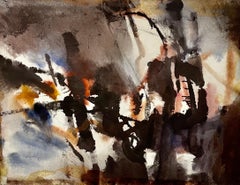
"Metamorphosis" Mid-Century Abstract Painting by Pawel Kontny, Textured 1960s
By Pawel Kontny
Located in Denver, CO
Discover the striking beauty of “Metamorphosis,” an original abstract painting by celebrated mid-century artist Pawel Kontny (also known as Paul Kontny). Created in the late 1960s to...
Category

1960s Abstract Pawel Kontny Art

Materials

Marble

Modernist Abstract Expressionist Watercolor Painting Bauhaus Weimar Pawel Kontny
By Pawel Kontny
Located in Surfside, FL
Abstract watercolor composition bearing the influence of the earlier color-block compositions of Paul Klee. Pawel August Kontny, (Polish-German-American artist) He was born in Laurahuette, Poland, in 1923, the son of a wealthy pastry shop owner. In 1939 he began studying architecture in Breslau where he was introduced to the European masters and to the work of some of the German Expressionists, soon afterward banned as "degenerate artists" and removed from museums throughout Germany by the Nazi regime. His studies were interrupted by World War II. Drafted into the German army, traveling in many countries as a soldier, he sketched various landscapes but in 1945, he was captured and held as a prisoner of war in Italy. After the war, he studied at the Union of Nuremberg Architects to help design buildings to replace ones destroyed in the war. He recorded his impressions of the local population and the landscapes through his watercolors and drawings. Pawel Kontny thereafter moved to Nuremberg, Germany, becoming a member of the Union of Nuremberg Architects and helping to rebuild the city's historic center. He soon decided to concentrate on his professional art career. He married Irmgard Laurer, a dancer with the Nuremberg Opera. Pavel Kontny 's career as an artist was launched with his participation in an all German exhibition, held at the Dusseldorf Museum in 1952. He held one-man shows in Germany, Switzerland and the United States. During his trip to the United States in 1960, Kontny became instantly enamored with Colorado, and decided to relocate to Cherry Hills with his wife and two children. He quickly established himself in the local art community, being affiliated for a time with Denver Art Galleries and Saks Galleries. His subject matter became the Southwest. During this time he received the Prestigious Gold Medal of the Art Academy of Rome. His extensive travel provided material for the paintings he did using his hallmark marble dust technique. he also worked equally in pastel, watercolor, charcoal and pencil-and-ink. in a style which merged abstraction and realist styles, influenced by Abstract Expressionist painting and South Western American landscapes. In the early 1960s he was one of only a few European-born professional artists in the state, a select group that included Herbert Bayer (1900-1985), a member of the prewar Bauhaus in Weimar and Dessau, Germany, and Roland Detre...
Category

20th Century American Modern Pawel Kontny Art

Materials

Canvas, Oil

Related Items
Rick Lewis - The Parade, Painting 2023
By Rick Lewis
Located in Stamford, CT
The Parade Oil, bitumen, graphite, marble powder, burlap on canvas 72" X 60" I am a visual artist whose work investigates small and large -scale abstraction primarily in the medium ...
Category

2010s Abstract Pawel Kontny Art

Materials

Marble

1950s "Landscape with Boulder" Donald Stacy Gouache Landscape Painting
By Donald Stacy
Located in Arp, TX
Donald Stacy "Landscape wit Boulder" c.1950s Gouache paint on paper 24"x18'" unframed Unsigned Came from artist's estate *Custom framing available for ad...
Category

Mid-20th Century Abstract Expressionist Pawel Kontny Art

Materials

Paper, Gouache

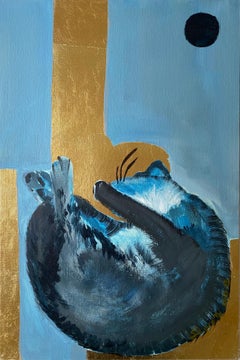
Original-Blue Cat-Gold Leaf- British Awarded Artist-surreal-expression-abstract
Located in London, GB
Primary Colour Series- Blue Cat is inspired by Japanese woodblock Print and the a nod to calligraphy tradition. With strokes of gilded gold leaves, gesso and acrylic, Shizico Yi pain...
Category

2010s Abstract Expressionist Pawel Kontny Art

Materials

Gold Leaf

"Symphony" - Stunning Dynamic Abstract Expressionist Painting in Cool Palette
By Masri Hayssam
Located in Carmel, CA
Masri Hayssam (Lebanese, Italian, born 1965) "Symphony" 2019 Oil Paint, Acrylic Paint, Mixed Media, Canvas, Stretcher Bars The artist signed the bottom left and the back of the paint...
Category

2010s Abstract Expressionist Pawel Kontny Art

Materials

Canvas, Mixed Media, Oil, Acrylic, Stretcher Bars
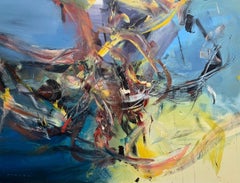
Original-Magic Bell Morning Light-UK Awarded Artist-Botanic- Abstract Expression
Located in London, GB
In her latest series, "The Weaver," Shizico explores forms, layers, and time onto canvases. Applying the format of diptychs and triptychs, she creates lyrical narratives, capturing t...
Category

2010s Abstract Expressionist Pawel Kontny Art

Materials

Gesso, Canvas, Oil, Acrylic, Wood Panel
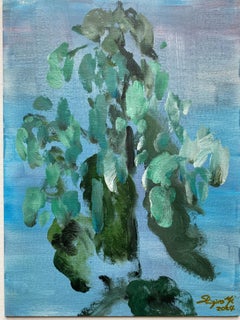
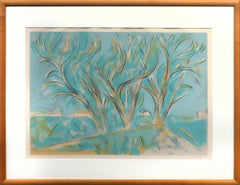
1975 Andrew Dasburg Color Lithograph, "Trees in Ranchitos II" Taos Modernist
By Andrew Michael Dasburg
Located in Denver, CO
"Trees in Ranchitos II" is a striking 1975 color lithograph by acclaimed modernist artist Andrew Michael Dasburg (1887–1979). This collectible artwork, initialed in the lower right, beautifully captures the serene landscapes of New Mexico, reflecting Dasburg’s signature fusion of Post-Impressionism and Cubist influences. The composition conveys the tranquil rhythm of trees and desert terrain, combining geometric abstraction with lyrical naturalism. The lithograph is presented in a custom frame measuring 30 ½ x 36 ¼ inches, with an image size of 16 ½ x 23 ¼ inches, making it a sophisticated and visually compelling addition to any collection of Taos Modernist art, American modernism, or Southwestern landscape prints. About Andrew Michael Dasburg (1887–1979): Born in Paris, France, Dasburg immigrated to New York City in 1892, where his early talent was recognized. He trained at the Art Students League of New York under notable instructors including Robert Henri, Kenyon Cox, and Birge Harrison. In 1908, he returned to Paris and encountered the works of Henri Matisse and Paul Cézanne, experiences that ignited his lifelong commitment to modernism. After settling in Woodstock, NY, Dasburg immersed himself in the avant-garde scene, collaborating with Morgan Russell...
Category

1970s American Impressionist Pawel Kontny Art

Materials

Lithograph

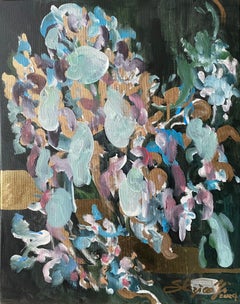
Midnight Jasmine-Original Oil with Gold Leaf-British Awarded Artist-Expression
Located in London, GB
This painting is a part of the Summer Bloom Series. Night Bloom Jasmine, commonly known as Lady of the Night, has the sweetest scent and attracts moths and bats in the wild, though i...
Category

2010s Abstract Expressionist Pawel Kontny Art

Materials

Gold Leaf

Original-La Vie en Rose-Awarded Artist-British School-Expression-Summer Bloom
Located in London, GB
Summer Bloom series began in 2022, where Shizico Yi celebrating the season by painting en plein air in her garden. In 2024, she embarks on a fresh chapter with her new rose garden. T...
Category

2010s Abstract Expressionist Pawel Kontny Art

Materials

Gesso, Cotton Canvas, Oil, Acrylic

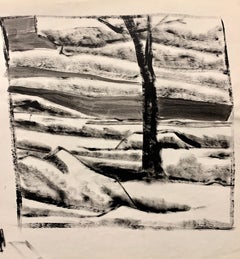
Mid Century Bay Area Abstract Expressionist -- Oak Woodlands of Golden Gate Park
By Honora Berg
Located in Soquel, CA
Bay Area Abstract Expressionist -- Oak Woodlands of San Francisco Golden Gate Park This mid-century painting by Honora Berg (American, 1897-1985) depicts coastal live oaks of Golden...
Category

1950s Abstract Expressionist Pawel Kontny Art

Materials

Archival Paper, Oil Crayon, Watercolor
Original Diptych -Sunlit Series: Red and Blue-British Awarded Artist-Gold Leaf
Located in London, GB
This stunning Original Set of two paintings by Shizico Yi on Canvas includes: Sunlit-Primary Colour Series- Blue Sunlit-Primary Colour Series- Red these are a part of Shizico Yi's Su...
Category

2010s Abstract Expressionist Pawel Kontny Art

Materials

Gold Leaf

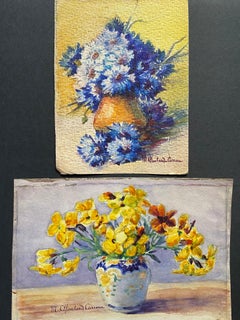
Early 1900 s French Impressionist Signed Flower Watercolours Marie Carreau
Located in Cirencester, Gloucestershire
"Flowers" by Marie-Amelie Chautard-Carreau (French, 19th/20th century) set of 2 watercolour on paper, unframed top painting : 6 x 4.5 inches, signed bottom right bottom painting: 5 ...
Category

Early 20th Century Impressionist Pawel Kontny Art

Materials

Watercolor

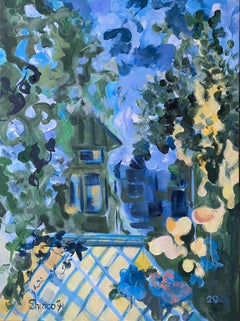
Original Oil-Having aCigarette amongst LimeTrees-British Awarded Artist-Framed
Located in London, GB
* Frame included, gallery team will guide you to select the frame that suits your deco and colour scheme of the space. Also Free Shipping worldwide ! About: Summer 2024, the avenue of 130-year-old Lime trees surrounding Shizico’s new cottage Garden captivated and inspired Shizico Yi to...
Category

2010s Abstract Expressionist Pawel Kontny Art

Materials

Gesso, Canvas, Oil, Acrylic

Previously Available Items
Modernist Colorado Oil Painting Abstract Cityscape Harbor Scene Pawel Kontny
By Pawel Kontny
Located in Surfside, FL
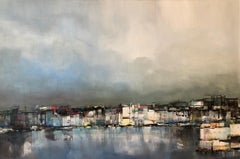
Urban landscape of city harbor, marine scene, (North Africa?) bearing the influence of the earlier color-block compositions of Paul Klee. Modernist Cityscape 24" x 36" sight. oil on canvas signed lower left Pawel August Kontny, (Polish-German-American artist) He was born in Laurahuette, Poland, in 1923, the son of a wealthy pastry shop owner. In 1939 he began studying architecture in Breslau where he was introduced to the European masters and to the work of some of the German Expressionists, soon afterward banned as "degenerate artists" and removed from museums throughout Germany by the Nazi regime. His studies were interrupted by World War II. Drafted into the German army, traveling in many countries as a soldier, he sketched various landscapes but in 1945, he was captured and held as a prisoner of war in Italy. After the war, he studied at the Union of Nuremberg Architects to help design buildings to replace ones destroyed in the war. He recorded his impressions of the local population and the landscapes through his watercolors and drawings. Pawel Kontny thereafter moved to Nuremberg, Germany, becoming a member of the Union of Nuremberg Architects and helping to rebuild the city's historic center. He soon decided to concentrate on his professional art career. He married Irmgard Laurer, a dancer with the Nuremberg Opera. Pavel Kontny 's career as an artist was launched with his participation in an all German exhibition, held at the Dusseldorf Museum in 1952. He held one-man shows in Germany, Switzerland and the United States. During his trip to the United States in 1960, Kontny became instantly enamored with Colorado, and decided to relocate to Cherry Hills with his wife and two children. He quickly established himself in the local art community, being affiliated for a time with Denver Art Galleries and Saks Galleries. His subject matter became the Southwest. During this time he received the Prestigious Gold Medal of the Art Academy of Rome. His extensive travel provided material for the paintings he did using his hallmark marble dust technique. he also worked equally in pastel, watercolor, charcoal and pencil-and-ink. in a style which merged abstraction and realist styles, influenced by Abstract Expressionist painting and South Western American landscapes. In the early 1960s he was one of only a few European-born professional artists in the state, a select group that included Herbert Bayer (1900-1985), a member of the prewar Bauhaus in Weimar and Dessau, Germany, and Roland Detre...
Category

20th Century American Modern Pawel Kontny Art

Materials

Canvas, Oil

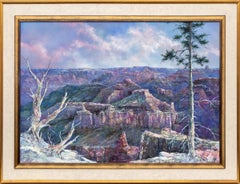
Grand Canyon, Arizona - 1980s Vintage Southwestern Landscape Oil Painting
By Pawel Kontny
Located in Denver, CO
This striking original painting by renowned artist Pawel (Paul) Kontny beautifully captures the awe-inspiring grandeur of the Grand Canyon in Arizona during an evening sunset. The se...
Category

1980s American Impressionist Pawel Kontny Art

Materials

Gesso, Mixed Media, Oil

Modernist Abstract Expressionist Watercolor Painting Bauhaus Weimar Pawel Kontny
By Pawel Kontny
Located in Surfside, FL
Abstract watercolor composition bearing the influence of the earlier color-block compositions of Paul Klee. Pawel August Kontny, (Polish-German-American artist) He was born in Laurahuette, Poland, in 1923, the son of a wealthy pastry shop owner. In 1939 he began studying architecture in Breslau where he was introduced to the European masters and to the work of some of the German Expressionists, soon afterward banned as "degenerate artists" and removed from museums throughout Germany by the Nazi regime. His studies were interrupted by World War II. Drafted into the German army, traveling in many countries as a soldier, he sketched various landscapes but in 1945, he was captured and held as a prisoner of war in Italy. After the war, he studied at the Union of Nuremberg Architects to help design buildings to replace ones destroyed in the war. He recorded his impressions of the local population and the landscapes through his watercolors and drawings. Pawel Kontny thereafter moved to Nuremberg, Germany, becoming a member of the Union of Nuremberg Architects and helping to rebuild the city's historic center. He soon decided to concentrate on his professional art career. He married Irmgard Laurer, a dancer with the Nuremberg Opera. Pavel Kontny 's career as an artist was launched with his participation in an all German exhibition, held at the Dusseldorf Museum in 1952. He held one-man shows in Germany, Switzerland and the United States. During his trip to the United States in 1960, Kontny became instantly enamored with Colorado, and decided to relocate to Cherry Hills with his wife and two children. He quickly established himself in the local art community, being affiliated for a time with Denver Art Galleries and Saks Galleries. His subject matter became the Southwest. During this time he received the Prestigious Gold Medal of the Art Academy of Rome. His extensive travel provided material for the paintings he did using his hallmark marble dust technique. he also worked equally in pastel, watercolor, charcoal and pencil-and-ink. in a style which merged abstraction and realist styles, influenced by Abstract Expressionist painting and South Western American landscapes. This one bears the influence of Sam Francis. In the early 1960s he was one of only a few European-born professional artists in the state, a select group that included Herbert Bayer (1900-1985), a member of the prewar Bauhaus in Weimar and Dessau, Germany, and Roland Detre (1903-2001), a Hungarian modernist painter. As a Denver, Colorado resident, Pavel Kontny exhibited at galleries and museums throughout the United States, Germany and Japan. There, he was inspired by frequent trips to Native American pueblos in the Southwest, as well as by the study of the Plains Indians of Montana and Wyoming. Over the years Kontny had a number of students and generously helped young artist by hosting exhibitions at his Cherry Hills home. For many years he generously donated his paintings to support charitable causes in Denver. Influences during his European years included German pastelist C.O. Muller, German Informel painter Karl Dahmen and Swiss artist, Hans Erni. In the early 1950s his painting style showed the influence of the Die Brücke (The Bridge), a group of German expressionist artists formed in Dresden in 1905 who had a major impact on the evolution of modern art in the twentieth century in Germany. By the middle of the decade his style incorporated more referential abstraction and total abstraction, resulting in part from his study of Hans Hartung, a German artist based in Paris who exhibited his gestural abstract work in Germany. The American moon landing in 1969 inspired Paul Kontny...
Category

20th Century American Modern Pawel Kontny Art

Materials

Watercolor, Archival Paper

Modernist Abstract Expressionist Watercolor Painting Bauhaus Weimar Pawel Kontny
By Pawel Kontny
Located in Surfside, FL
Abstract watercolor composition bearing the influence of the earlier color-block compositions of Paul Klee. Pawel August Kontny, (Polish-German-American artist) He was born in Laurahuette, Poland, in 1923, the son of a wealthy pastry shop owner. In 1939 he began studying architecture in Breslau where he was introduced to the European masters and to the work of some of the German Expressionists, soon afterward banned as "degenerate artists" and removed from museums throughout Germany by the Nazi regime. His studies were interrupted by World War II. Drafted into the German army, traveling in many countries as a soldier, he sketched various landscapes but in 1945, he was captured and held as a prisoner of war in Italy. After the war, he studied at the Union of Nuremberg Architects to help design buildings to replace ones destroyed in the war. He recorded his impressions of the local population and the landscapes through his watercolors and drawings. Pawel Kontny thereafter moved to Nuremberg, Germany, becoming a member of the Union of Nuremberg Architects and helping to rebuild the city's historic center. He soon decided to concentrate on his professional art career. He married Irmgard Laurer, a dancer with the Nuremberg Opera. Pavel Kontny 's career as an artist was launched with his participation in an all German exhibition, held at the Dusseldorf Museum in 1952. He held one-man shows in Germany, Switzerland and the United States. During his trip to the United States in 1960, Kontny became instantly enamored with Colorado, and decided to relocate to Cherry Hills with his wife and two children. He quickly established himself in the local art community, being affiliated for a time with Denver Art Galleries and Saks Galleries. His subject matter became the Southwest. During this time he received the Prestigious Gold Medal of the Art Academy of Rome. His extensive travel provided material for the paintings he did using his hallmark marble dust technique. he also worked equally in pastel, watercolor, charcoal and pencil-and-ink. in a style which merged abstraction and realist styles, influenced by Abstract Expressionist painting and South Western American landscapes. This one bears the influence of Sam Francis. In the early 1960s he was one of only a few European-born professional artists in the state, a select group that included Herbert Bayer (1900-1985), a member of the prewar Bauhaus in Weimar and Dessau, Germany, and Roland Detre (1903-2001), a Hungarian modernist painter. As a Denver, Colorado resident, Pavel Kontny exhibited at galleries and museums throughout the United States, Germany and Japan. There, he was inspired by frequent trips to Native American pueblos in the Southwest, as well as by the study of the Plains Indians of Montana and Wyoming. Over the years Kontny had a number of students and generously helped young artist by hosting exhibitions at his Cherry Hills home. For many years he generously donated his paintings to support charitable causes in Denver. Influences during his European years included German pastelist C.O. Muller, German Informel painter Karl Dahmen and Swiss artist, Hans Erni. In the early 1950s his painting style showed the influence of the Die Brücke (The Bridge), a group of German expressionist artists formed in Dresden in 1905 who had a major impact on the evolution of modern art in the twentieth century in Germany. By the middle of the decade his style incorporated more referential abstraction and total abstraction, resulting in part from his study of Hans Hartung, a German artist based in Paris who exhibited his gestural abstract work in Germany. The American moon landing in 1969 inspired Paul Kontny...
Category

20th Century American Modern Pawel Kontny Art

Materials

Watercolor, Archival Paper

Modernist Abstract Expressionist Watercolor Painting Bauhaus Weimar Pawel Kontny
By Pawel Kontny
Located in Surfside, FL
Abstract watercolor composition bearing the influence of the earlier color-block compositions of Paul Klee. Pawel August Kontny, (Polish-German-American artist) He was born in Laurahuette, Poland, in 1923, the son of a wealthy pastry shop owner. In 1939 he began studying architecture in Breslau where he was introduced to the European masters and to the work of some of the German Expressionists, soon afterward banned as "degenerate artists" and removed from museums throughout Germany by the Nazi regime. His studies were interrupted by World War II. Drafted into the German army, traveling in many countries as a soldier, he sketched various landscapes but in 1945, he was captured and held as a prisoner of war in Italy. After the war, he studied at the Union of Nuremberg Architects to help design buildings to replace ones destroyed in the war. He recorded his impressions of the local population and the landscapes through his watercolors and drawings. Pawel Kontny thereafter moved to Nuremberg, Germany, becoming a member of the Union of Nuremberg Architects and helping to rebuild the city's historic center. He soon decided to concentrate on his professional art career. He married Irmgard Laurer, a dancer with the Nuremberg Opera. Pavel Kontny 's career as an artist was launched with his participation in an all German exhibition, held at the Dusseldorf Museum in 1952. He held one-man shows in Germany, Switzerland and the United States. During his trip to the United States in 1960, Kontny became instantly enamored with Colorado, and decided to relocate to Cherry Hills with his wife and two children. He quickly established himself in the local art community, being affiliated for a time with Denver Art Galleries and Saks Galleries. His subject matter became the Southwest. During this time he received the Prestigious Gold Medal of the Art Academy of Rome. His extensive travel provided material for the paintings he did using his hallmark marble dust technique. he also worked equally in pastel, watercolor, charcoal and pencil-and-ink. in a style which merged abstraction and realist styles, influenced by Abstract Expressionist painting and South Western American landscapes. This one is influenced by California Abstract Expressionist artist Sam Francis. In the early 1960s he was one of only a few European-born professional artists in the state, a select group that included Herbert Bayer (1900-1985), a member of the prewar Bauhaus in Weimar and Dessau, Germany, and Roland Detre (1903-2001), a Hungarian modernist painter. As a Denver, Colorado resident, Pavel Kontny exhibited at galleries and museums throughout the United States, Germany and Japan. There, he was inspired by frequent trips to Native American pueblos in the Southwest, as well as by the study of the Plains Indians of Montana and Wyoming. Over the years Kontny had a number of students and generously helped young artist by hosting exhibitions at his Cherry Hills home. For many years he generously donated his paintings to support charitable causes in Denver. Influences during his European years included German pastelist C.O. Muller, German Informel painter Karl Dahmen and Swiss artist, Hans Erni. In the early 1950s his painting style showed the influence of the Die Brücke (The Bridge), a group of German expressionist artists formed in Dresden in 1905 who had a major impact on the evolution of modern art in the twentieth century in Germany. By the middle of the decade his style incorporated more referential abstraction and total abstraction, resulting in part from his study of Hans Hartung, a German artist based in Paris who exhibited his gestural abstract work in Germany. The American moon landing in 1969 inspired Paul Kontny...
Category

20th Century Abstract Expressionist Pawel Kontny Art

Materials

Watercolor, Archival Paper

Modernist Abstract Expressionist Watercolor Painting Bauhaus Weimar Artist
By Pawel Kontny
Located in Surfside, FL
Abstract watercolor composition bearing the influence of the earlier color-block compositions of Paul Klee and Abstract Expressionist master Sam Francis. Pawel August Kontny, (Polish-German-American artist) He was born in Laurahuette, Poland, in 1923, the son of a wealthy pastry shop owner. In 1939 he began studying architecture in Breslau where he was introduced to the European masters and to the work of some of the German Expressionists, soon afterward banned as "degenerate artists" and removed from museums throughout Germany by the Nazi regime. His studies were interrupted by World War II. Drafted into the German army, traveling in many countries as a soldier, he sketched various landscapes but in 1945, he was captured and held as a prisoner of war in Italy. After the war, he studied at the Union of Nuremberg Architects to help design buildings to replace ones destroyed in the war. He recorded his impressions of the local population and the landscapes through his watercolors and drawings. Pawel Kontny thereafter moved to Nuremberg, Germany, becoming a member of the Union of Nuremberg Architects and helping to rebuild the city's historic center. He soon decided to concentrate on his professional art career. He married Irmgard Laurer, a dancer with the Nuremberg Opera. Pavel Kontny 's career as an artist was launched with his participation in an all German exhibition, held at the Dusseldorf Museum in 1952. He held one-man shows in Germany, Switzerland and the United States. During his trip to the United States in 1960, Kontny became instantly enamored with Colorado, and decided to relocate to Cherry Hills with his wife and two children. He quickly established himself in the local art community, being affiliated for a time with Denver Art Galleries and Saks Galleries. His subject matter became the Southwest. During this time he received the Prestigious Gold Medal of the Art Academy of Rome. His extensive travel provided material for the paintings he did using his hallmark marble dust technique. he also worked equally in pastel, watercolor, charcoal and pencil-and-ink. in a style which merged abstraction and realist styles, influenced by Abstract Expressionist painting and South Western American landscapes. In the early 1960s he was one of only a few European-born professional artists in the state, a select group that included Herbert Bayer (1900-1985), a member of the prewar Bauhaus in Weimar and Dessau, Germany, and Roland Detre (1903-2001), a Hungarian modernist painter. As a Denver, Colorado resident, Pavel Kontny exhibited at galleries and museums throughout the United States, Germany and Japan. There, he was inspired by frequent trips to Native American pueblos in the Southwest, as well as by the study of the Plains Indians of Montana and Wyoming. Over the years Kontny had a number of students and generously helped young artist by hosting exhibitions at his Cherry Hills home. For many years he generously donated his paintings to support charitable causes in Denver. Influences during his European years included German pastelist C.O. Muller, German Informel painter Karl Dahmen and Swiss artist, Hans Erni. In the early 1950s his painting style showed the influence of the Die Brücke (The Bridge), a group of German expressionist artists formed in Dresden in 1905 who had a major impact on the evolution of modern art in the twentieth century in Germany. By the middle of the decade his style incorporated more referential abstraction and total abstraction, resulting in part from his study of Hans Hartung, a German artist based in Paris who exhibited his gestural abstract work in Germany. The American moon landing in 1969 inspired Paul Kontny...
Category

20th Century Abstract Expressionist Pawel Kontny Art

Materials

Watercolor, Archival Paper

Large Modernist Abstract Expressionist Gouache Painting Bauhaus Weimar Artist
By Pawel Kontny
Located in Surfside, FL
Abstract watercolor or gouache composition bearing the influence of the earlier color-block compositions of Paul Klee. Pawel August Kontny, (Polish-German-American artist) He was born in Laurahuette, Poland, in 1923, the son of a wealthy pastry shop owner. In 1939 he began studying architecture in Breslau where he was introduced to the European masters and to the work of some of the German Expressionists, soon afterward banned as "degenerate artists" and removed from museums throughout Germany by the Nazi regime. His studies were interrupted by World War II. Drafted into the German army, traveling in many countries as a soldier, he sketched various landscapes but in 1945, he was captured and held as a prisoner of war in Italy. After the war, he studied at the Union of Nuremberg Architects to help design buildings to replace ones destroyed in the war. He recorded his impressions of the local population and the landscapes through his watercolors and drawings. Pawel Kontny thereafter moved to Nuremberg, Germany, becoming a member of the Union of Nuremberg Architects and helping to rebuild the city's historic center. He soon decided to concentrate on his professional art career. He married Irmgard Laurer, a dancer with the Nuremberg Opera. Pavel Kontny 's career as an artist was launched with his participation in an all German exhibition, held at the Dusseldorf Museum in 1952. He held one-man shows in Germany, Switzerland and the United States. During his trip to the United States in 1960, Kontny became instantly enamored with Colorado, and decided to relocate to Cherry Hills with his wife and two children. He quickly established himself in the local art community, being affiliated for a time with Denver Art Galleries and Saks Galleries. His subject matter became the Southwest. During this time he received the Prestigious Gold Medal of the Art Academy of Rome. His extensive travel provided material for the paintings he did using his hallmark marble dust technique. he also worked equally in pastel, watercolor, charcoal and pencil-and-ink. in a style which merged abstraction and realist styles, influenced by Abstract Expressionist painting and South Western American landscapes. In the early 1960s he was one of only a few European-born professional artists in the state, a select group that included Herbert Bayer (1900-1985), a member of the prewar Bauhaus in Weimar and Dessau, Germany, and Roland Detre (1903-2001), a Hungarian modernist painter. As a Denver, Colorado resident, Pavel Kontny exhibited at galleries and museums throughout the United States, Germany and Japan. There, he was inspired by frequent trips to Native American pueblos in the Southwest, as well as by the study of the Plains Indians of Montana and Wyoming. Over the years Kontny had a number of students and generously helped young artist by hosting exhibitions at his Cherry Hills home. For many years he generously donated his paintings to support charitable causes in Denver. Influences during his European years included German pastelist C.O. Muller, German Informel painter Karl Dahmen and Swiss artist, Hans Erni. In the early 1950s his painting style showed the influence of the Die Brücke (The Bridge), a group of German expressionist artists formed in Dresden in 1905 who had a major impact on the evolution of modern art in the twentieth century in Germany. By the middle of the decade his style incorporated more referential abstraction and total abstraction, resulting in part from his study of Hans Hartung, a German artist based in Paris who exhibited his gestural abstract work in Germany. The American moon landing in 1969 inspired Paul Kontny...
Category

20th Century American Modern Pawel Kontny Art

Materials

Watercolor, Archival Paper

Modernist Abstract Expressionist Watercolor Painting Bauhaus Weimar Artist
By Pawel Kontny
Located in Surfside, FL
Abstract watercolor composition bearing the influence of the earlier color-block compositions of Paul Klee. Pawel August Kontny, (Polish-German-American artist) He was born in Laurahuette, Poland, in 1923, the son of a wealthy pastry shop owner. In 1939 he began studying architecture in Breslau where he was introduced to the European masters and to the work of some of the German Expressionists, soon afterward banned as "degenerate artists" and removed from museums throughout Germany by the Nazi regime. His studies were interrupted by World War II. Drafted into the German army, traveling in many countries as a soldier, he sketched various landscapes but in 1945, he was captured and held as a prisoner of war in Italy. After the war, he studied at the Union of Nuremberg Architects to help design buildings to replace ones destroyed in the war. He recorded his impressions of the local population and the landscapes through his watercolors and drawings. Pawel Kontny thereafter moved to Nuremberg, Germany, becoming a member of the Union of Nuremberg Architects and helping to rebuild the city's historic center. He soon decided to concentrate on his professional art career. He married Irmgard Laurer, a dancer with the Nuremberg Opera. Pavel Kontny 's career as an artist was launched with his participation in an all German exhibition, held at the Dusseldorf Museum in 1952. He held one-man shows in Germany, Switzerland and the United States. During his trip to the United States in 1960, Kontny became instantly enamored with Colorado, and decided to relocate to Cherry Hills with his wife and two children. He quickly established himself in the local art community, being affiliated for a time with Denver Art Galleries and Saks Galleries. His subject matter became the Southwest. During this time he received the Prestigious Gold Medal of the Art Academy of Rome. His extensive travel provided material for the paintings he did using his hallmark marble dust technique. he also worked equally in pastel, watercolor, charcoal and pencil-and-ink. in a style which merged abstraction and realist styles, influenced by Abstract Expressionist painting and South Western American landscapes. In the early 1960s he was one of only a few European-born professional artists in the state, a select group that included Herbert Bayer (1900-1985), a member of the prewar Bauhaus in Weimar and Dessau, Germany, and Roland Detre (1903-2001), a Hungarian modernist painter. As a Denver, Colorado resident, Pavel Kontny exhibited at galleries and museums throughout the United States, Germany and Japan. There, he was inspired by frequent trips to Native American pueblos in the Southwest, as well as by the study of the Plains Indians of Montana and Wyoming. Over the years Kontny had a number of students and generously helped young artist by hosting exhibitions at his Cherry Hills home. For many years he generously donated his paintings to support charitable causes in Denver. Influences during his European years included German pastelist C.O. Muller, German Informel painter Karl Dahmen and Swiss artist, Hans Erni. In the early 1950s his painting style showed the influence of the Die Brücke (The Bridge), a group of German expressionist artists formed in Dresden in 1905 who had a major impact on the evolution of modern art in the twentieth century in Germany. By the middle of the decade his style incorporated more referential abstraction and total abstraction, resulting in part from his study of Hans Hartung, a German artist based in Paris who exhibited his gestural abstract work in Germany. His work also bears the influence of Sam Francis. The American moon landing in 1969 inspired Paul Kontny...
Category

Mid-20th Century American Modern Pawel Kontny Art

Materials

Watercolor, Archival Paper

Large Modernist Abstract Expressionist Watercolor Painting Bauhaus Weimar Artist
By Pawel Kontny
Located in Surfside, FL
Abstract watercolor composition bearing the influence of the earlier color-block compositions of Paul Klee. Pawel August Kontny, (Polish-German-American artist) He was born in Laurahuette, Poland, in 1923, the son of a wealthy pastry shop owner. In 1939 he began studying architecture in Breslau where he was introduced to the European masters and to the work of some of the German Expressionists, soon afterward banned as "degenerate artists" and removed from museums throughout Germany by the Nazi regime. His studies were interrupted by World War II. Drafted into the German army, traveling in many countries as a soldier, he sketched various landscapes but in 1945, he was captured and held as a prisoner of war in Italy. After the war, he studied at the Union of Nuremberg Architects to help design buildings to replace ones destroyed in the war. He recorded his impressions of the local population and the landscapes through his watercolors and drawings. Pawel Kontny thereafter moved to Nuremberg, Germany, becoming a member of the Union of Nuremberg Architects and helping to rebuild the city's historic center. He soon decided to concentrate on his professional art career. He married Irmgard Laurer, a dancer with the Nuremberg Opera. Pavel Kontny 's career as an artist was launched with his participation in an all German exhibition, held at the Dusseldorf Museum in 1952. He held one-man shows in Germany, Switzerland and the United States. During his trip to the United States in 1960, Kontny became instantly enamored with Colorado, and decided to relocate to Cherry Hills with his wife and two children. He quickly established himself in the local art community, being affiliated for a time with Denver Art Galleries and Saks Galleries. His subject matter became the Southwest. During this time he received the Prestigious Gold Medal of the Art Academy of Rome. His extensive travel provided material for the paintings he did using his hallmark marble dust technique. he also worked equally in pastel, watercolor, charcoal and pencil-and-ink. in a style which merged abstraction and realist styles, influenced by Abstract Expressionist painting and South Western American landscapes. In the early 1960s he was one of only a few European-born professional artists in the state, a select group that included Herbert Bayer (1900-1985), a member of the prewar Bauhaus in Weimar and Dessau, Germany, and Roland Detre (1903-2001), a Hungarian modernist painter. As a Denver, Colorado resident, Pavel Kontny exhibited at galleries and museums throughout the United States, Germany and Japan. There, he was inspired by frequent trips to Native American pueblos in the Southwest, as well as by the study of the Plains Indians of Montana and Wyoming. Over the years Kontny had a number of students and generously helped young artist by hosting exhibitions at his Cherry Hills home. For many years he generously donated his paintings to support charitable causes in Denver. Influences during his European years included German pastelist C.O. Muller, German Informel painter Karl Dahmen and Swiss artist, Hans Erni. In the early 1950s his painting style showed the influence of the Die Brücke (The Bridge), a group of German expressionist artists formed in Dresden in 1905 who had a major impact on the evolution of modern art in the twentieth century in Germany. By the middle of the decade his style incorporated more referential abstraction and total abstraction, resulting in part from his study of Hans Hartung, a German artist based in Paris who exhibited his gestural abstract work in Germany. The American moon landing in 1969 inspired Paul Kontny...
Category

Mid-20th Century Abstract Expressionist Pawel Kontny Art

Materials

Watercolor, Archival Paper

Modernist Abstract Expressionist Watercolor Painting Bauhaus Weimar Pawel Kontny
By Pawel Kontny
Located in Surfside, FL
Abstract watercolor composition bearing the influence of the earlier color-block compositions of Paul Klee. Pawel August Kontny, (Polish-German-American artist) He was born in Laurahuette, Poland, in 1923, the son of a wealthy pastry shop owner. In 1939 he began studying architecture in Breslau where he was introduced to the European masters and to the work of some of the German Expressionists, soon afterward banned as "degenerate artists" and removed from museums throughout Germany by the Nazi regime. His studies were interrupted by World War II. Drafted into the German army, traveling in many countries as a soldier, he sketched various landscapes but in 1945, he was captured and held as a prisoner of war in Italy. After the war, he studied at the Union of Nuremberg Architects to help design buildings to replace ones destroyed in the war. He recorded his impressions of the local population and the landscapes through his watercolors and drawings. Pawel Kontny thereafter moved to Nuremberg, Germany, becoming a member of the Union of Nuremberg Architects and helping to rebuild the city's historic center. He soon decided to concentrate on his professional art career. He married Irmgard Laurer, a dancer with the Nuremberg Opera. Pavel Kontny 's career as an artist was launched with his participation in an all German exhibition, held at the Dusseldorf Museum in 1952. He held one-man shows in Germany, Switzerland and the United States. During his trip to the United States in 1960, Kontny became instantly enamored with Colorado, and decided to relocate to Cherry Hills with his wife and two children. He quickly established himself in the local art community, being affiliated for a time with Denver Art Galleries and Saks Galleries. His subject matter became the Southwest. During this time he received the Prestigious Gold Medal of the Art Academy of Rome. His extensive travel provided material for the paintings he did using his hallmark marble dust technique. he also worked equally in pastel, watercolor, charcoal and pencil-and-ink. in a style which merged abstraction and realist styles, influenced by Abstract Expressionist painting and South Western American landscapes. This one bears the influence of Sam Francis. In the early 1960s he was one of only a few European-born professional artists in the state, a select group that included Herbert Bayer (1900-1985), a member of the prewar Bauhaus in Weimar and Dessau, Germany, and Roland Detre (1903-2001), a Hungarian modernist painter. As a Denver, Colorado resident, Pavel Kontny exhibited at galleries and museums throughout the United States, Germany and Japan. There, he was inspired by frequent trips to Native American pueblos in the Southwest, as well as by the study of the Plains Indians of Montana and Wyoming. Over the years Kontny had a number of students and generously helped young artist by hosting exhibitions at his Cherry Hills home. For many years he generously donated his paintings to support charitable causes in Denver. Influences during his European years included German pastelist C.O. Muller, German Informel painter Karl Dahmen and Swiss artist, Hans Erni. In the early 1950s his painting style showed the influence of the Die Brücke (The Bridge), a group of German expressionist artists formed in Dresden in 1905 who had a major impact on the evolution of modern art in the twentieth century in Germany. By the middle of the decade his style incorporated more referential abstraction and total abstraction, resulting in part from his study of Hans Hartung, a German artist based in Paris who exhibited his gestural abstract work in Germany. The American moon landing in 1969 inspired Paul Kontny...
Category

20th Century American Modern Pawel Kontny Art

Materials

Watercolor, Archival Paper

Modernist Abstract Expressionist Watercolor Painting Bauhaus Weimar Pawel Kontny
By Pawel Kontny
Located in Surfside, FL
Abstract watercolor composition bearing the influence of the earlier color-block compositions of Paul Klee. Pawel August Kontny, (Polish-German-American artist) He was born in Laurahuette, Poland, in 1923, the son of a wealthy pastry shop owner. In 1939 he began studying architecture in Breslau where he was introduced to the European masters and to the work of some of the German Expressionists, soon afterward banned as "degenerate artists" and removed from museums throughout Germany by the Nazi regime. His studies were interrupted by World War II. Drafted into the German army, traveling in many countries as a soldier, he sketched various landscapes but in 1945, he was captured and held as a prisoner of war in Italy. After the war, he studied at the Union of Nuremberg Architects to help design buildings to replace ones destroyed in the war. He recorded his impressions of the local population and the landscapes through his watercolors and drawings. Pawel Kontny thereafter moved to Nuremberg, Germany, becoming a member of the Union of Nuremberg Architects and helping to rebuild the city's historic center. He soon decided to concentrate on his professional art career. He married Irmgard Laurer, a dancer with the Nuremberg Opera. Pavel Kontny 's career as an artist was launched with his participation in an all German exhibition, held at the Dusseldorf Museum in 1952. He held one-man shows in Germany, Switzerland and the United States. During his trip to the United States in 1960, Kontny became instantly enamored with Colorado, and decided to relocate to Cherry Hills with his wife and two children. He quickly established himself in the local art community, being affiliated for a time with Denver Art Galleries and Saks Galleries. His subject matter became the Southwest. During this time he received the Prestigious Gold Medal of the Art Academy of Rome. His extensive travel provided material for the paintings he did using his hallmark marble dust technique. he also worked equally in pastel, watercolor, charcoal and pencil-and-ink. in a style which merged abstraction and realist styles, influenced by Abstract Expressionist painting and South Western American landscapes. In the early 1960s he was one of only a few European-born professional artists in the state, a select group that included Herbert Bayer (1900-1985), a member of the prewar Bauhaus in Weimar and Dessau, Germany, and Roland Detre (1903-2001), a Hungarian modernist painter. As a Denver, Colorado resident, Pavel Kontny exhibited at galleries and museums throughout the United States, Germany and Japan. There, he was inspired by frequent trips to Native American pueblos in the Southwest, as well as by the study of the Plains Indians of Montana and Wyoming. Over the years Kontny had a number of students and generously helped young artist by hosting exhibitions at his Cherry Hills home. For many years he generously donated his paintings to support charitable causes in Denver. Influences during his European years included German pastelist C.O. Muller, German Informel painter Karl Dahmen and Swiss artist, Hans Erni. In the early 1950s his painting style showed the influence of the Die Brücke (The Bridge), a group of German expressionist artists formed in Dresden in 1905 who had a major impact on the evolution of modern art in the twentieth century in Germany. By the middle of the decade his style incorporated more referential abstraction and total abstraction, resulting in part from his study of Hans Hartung, a German artist based in Paris who exhibited his gestural abstract work in Germany. The American moon landing in 1969 inspired Paul Kontny...
Category

20th Century American Modern Pawel Kontny Art

Materials

Canvas, Oil

Expressionist Landscape by Pawel Kontny
By Pawel Kontny
Located in Pasadena, CA
Artist Pawel August Kontny (1923-2002) Stunning and expressive landscape. This artist had a minimal approach with the paint, giving us transparency and texture. Thick lines create building outlines. To get to the desired texture, Kontny used a mix of dust marble with oil paint. An earlier piece by Kontny. Made before he moved out of Germany into Denver. In 1960, Pawel Kontny decided to relocate to the Mile High City from Nuremberg, Germany. He had enjoyed a successful career thereafter World War II but, like many artists before him, he quickly became enamored of Colorado’s healthful and sunny climate, the freedom of its wide-open spaces, and the Rocky Mountains that reminded him of the Bavarian Alps. In the early 1960s, he was one of only a few European-born professional artists in the state, a select group that included Herbert Bayer (1900-1985), a member of the prewar Bauhaus in Weimar and Dessau, Germany, and Roland Detre...
Category

Mid-20th Century German Pawel Kontny Art

Materials

Canvas

Expressionist Landscape by Pawel Kontny
H 30.75 in W 38.5 in D 3 in

Pawel Kontny art for sale on 1stDibs.

Find a wide variety of authentic Pawel Kontny art available for sale on 1stDibs. If you’re browsing the collection of art to introduce a pop of color in a neutral corner of your living room or bedroom, you can find work that includes elements of blue and other colors. You can also browse by medium to find art by Pawel Kontny in paint, archival paper, paper and more. Much of the original work by this artist or collective was created during the 20th century and is mostly associated with the modern style. Not every interior allows for large Pawel Kontny art, so small editions measuring 11 inches across are available. Customers who are interested in this artist might also find the work of Sandra Phipps MacDiarmid, Katherine Librowicz, and Charles Pebworth. Pawel Kontny art prices can differ depending upon medium, time period and other attributes. On 1stDibs, the price for these items starts at $900 and tops out at $5,500, while the average work can sell for $1,200.

Artists Similar to Pawel Kontny