Pawel Kontny Prints and Multiples
Polish, 1923-2002
A painter of subjects from many parts of the world, Pawel Kontny began with wartime sketches and changed to a technique combining abstraction and realism.
He was born in Laurahuette, Poland, the son of a wealthy pastry shop owner. He studied architecture, but was interrupted by World War II. Traveling in many countries as a soldier, he sketched various landscapes but in 1945, he was captured and held as a prisoner of war in Italy.
After the war, he studied at the Union of Nuremberg Architects to help design buildings to replace ones destroyed in the war. He also married Irmgard, a dancer with the Nuremberg Opera Company and began having well received exhibitions of his work throughout Europe.
His primary subject became architecture which he built up on heavy weight masonite panels into structures with marble dust.
In 1969, the Kotnys moved to Denver, Colorado where he began painting the American West. In February, 1974, "American Artist" magazine had a feature article by John Jellico on Pawel Kontny.to
1
1
Overall Width
to
Overall Height
to
14
1,195
952
937
829
1
1
1
1
1
1
1
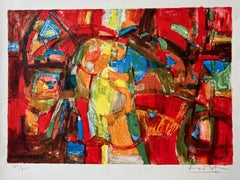
Artist: Pawel Kontny
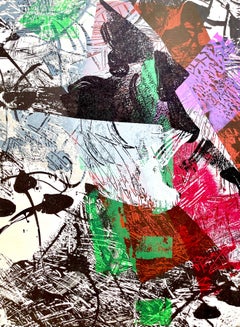
colorful landscape abstract Landschaftsszene
By Pawel Kontny
Located in Belgrade, MT
Pawel Kontny was born in Poland, he began with sketching wartime scenes combining abstract with realism. He exhibited throughout Europe. This piece is a part of my private collection...
Category
Mid-20th Century Realist Pawel Kontny Prints and Multiples
Materials
Lithograph

$450 Sale Price
25% Off
Related Items
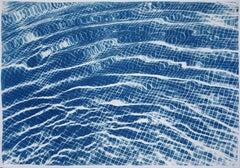
Miami Art Deco Pool, Blue Cyanotype on Paper, Abstract Shapes Water Reflections
By Kind of Cyan
Located in Barcelona, ES
This is an exclusive handprinted limited edition cyanotype.
"Miami Art Deco Pool" shows the movements of water over a tiled swimming pool floor.
Details:
+ Title: Miami Art Deco Poo...
Category
2010s Abstract Geometric Pawel Kontny Prints and Multiples
Materials
Emulsion, Watercolor, Photographic Paper, C Print, Lithograph, Other Medium
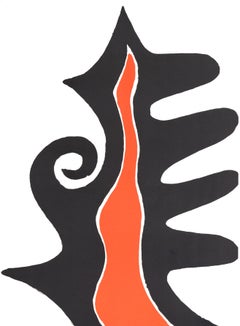
Alexander Calder, Black and Red Form, from Derriere le Miroir, 1973
By Alexander Calder
Located in Southampton, NY
This exquisite lithograph by Alexander Calder (1898–1976), titled Formulaire noir et rouge (Black and Red Form), originates from the historic 1973 folio Derriere le Miroir, No. 201. ...
Category
1970s Modern Pawel Kontny Prints and Multiples
Materials
Lithograph
$716 Sale Price
20% Off
H 15 in W 11 in
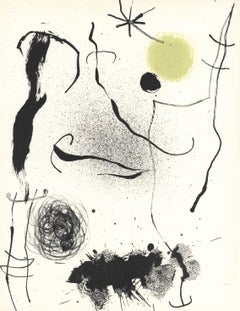
Joan Miro, Bouquet of Dreams for Leila, from XXe siecle, 1964
By Joan Miró
Located in Southampton, NY
This exquisite lithograph by Joan Miro (1893–1983), titled Bouquet de reves pour Leila, Poemes d'Yvan Goll (Bouquet of Dreams for Leila, Poems by Yvan Goll), from the album XXe siecl...
Category
1960s Surrealist Pawel Kontny Prints and Multiples
Materials
Lithograph
$716 Sale Price
20% Off
H 12.4 in W 9.65 in
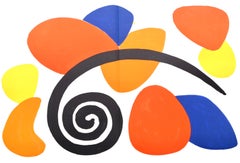
Alexander Calder, Composition with Spirals, from Derriere le miroir, 1968
By Alexander Calder
Located in Southampton, NY
This exquisite lithograph by Alexander Calder (1898–1976), titled Composition aux Spirales (Composition with Spirals), from the folio Derriere le miroir, No. 173, originates from the 1968 edition published by Maeght Editeur, Paris, and printed by Mourlot Freres, Paris, 1968. Composition aux Spirales exemplifies Calder’s mastery of rhythm and form, translating his sculptural language of balance and motion into vivid, dynamic compositions on paper that capture his signature sense of energy and harmony.
Executed as a lithograph on velin paper, this work measures 15 x 22 inches, with centerfold, as issued. Unsigned and unnumbered as issued. The edition exemplifies the superb craftsmanship of Mourlot Freres, Paris.
Artwork Details:
Artist: Alexander Calder (1898–1976)
Title: Composition aux Spirales (Composition with Spirals), from the folio Derriere le miroir, No. 173
Medium: Lithograph on velin paper
Dimensions: 15 x 22 inches (38.1 x 55.88 cm), with centerfold, as issued
Inscription: Unsigned and unnumbered as issued
Date: 1968
Publisher: Maeght Editeur, Paris
Printer: Mourlot Freres, Paris
Condition: Well preserved, consistent with age and medium
Provenance: From the folio Derriere le miroir, No. 173, published by Maeght Editeur, Paris; printed by Mourlot Freres, Paris, 1968
Notes:
Excerpted from the folio (translated from French), The illustrations in this issue are original lithographs by Alexander Calder drawn in the workshops of the Arte printing shop. This issue of "Behind the Mirror" has a luxury edition drawn on velin de Lana and limited to CL examples numbered and signed by the artist on the colophon. The text of G. Carandente was translated from Italian by Alain Veinstein.
About the Publication:
Derriere le miroir (Behind the Mirror) was one of the most important art publications of the 20th century, created and published by Maeght Editeur in Paris from 1946 to 1982. Founded by the visionary art dealer and publisher Aime Maeght, the series served as both an exhibition catalogue and a work of art in its own right, uniting original lithographs by leading modern and contemporary artists with critical essays, poetry, and design of the highest quality. Printed by master lithographers such as Mourlot Freres and Arte, Derriere le miroir became synonymous with the artistic vanguard of postwar Europe. Each issue was devoted to a single artist or theme and published to accompany exhibitions at the Galerie Maeght in Paris, featuring works by Pablo Picasso, Henri Matisse, Georges Braque, Joan Miro, Marc Chagall, Alexander Calder, Fernand Leger, and Alberto Giacometti, among others. The publication reflected Maeght’s belief that art should be both accessible and elevated—an ideal realized through its luxurious production values, meticulous printing, and collaboration with the greatest creative minds of its time.
About the Artist:
Alexander Calder (1898–1976) was an American sculptor, painter, and printmaker whose pioneering innovations in kinetic art revolutionized 20th-century sculpture and transformed modern visual language. Born in Lawnton, Pennsylvania, into a family of artists, Calder initially trained as a mechanical engineer at the Stevens Institute of Technology before turning to art at the Art Students League in New York—a combination of technical precision and creative imagination that defined his career. Moving to Paris in 1926, he immersed himself in the avant-garde and formed friendships with Pablo Picasso, Alberto Giacometti, Joan Miro, Wassily Kandinsky, Salvador Dali, Marcel Duchamp, and Man Ray, whose ideas profoundly shaped his artistic philosophy. From Picasso, he absorbed structural invention; from Miro, lyrical abstraction; from Kandinsky, spiritual geometry; and from Duchamp and Man Ray, the courage to merge intellect and play. In Paris, Calder created his famous Cirque Calder, a miniature mechanical circus that introduced motion and performance as central components of sculpture, and by the early 1930s, he invented the mobile—a term coined by Duchamp—to describe his delicately balanced, moving sculptures that responded to air currents. Later, Jean Arp would name his stationary counterparts stabiles. These two inventions—sculptures that could either float and spin gracefully or stand monumentally still—transformed art into a dynamic dialogue between movement, balance, and space. Calder’s signature forms, painted in vivid reds, blacks, blues, and yellows, embodied both joy and precision, creating an art that was at once abstract, organic, and deeply human. Like Kandinsky and Miro, he viewed art as a form of rhythm and emotion; like Duchamp, he embraced innovation and humor; and like Giacometti and Dali, he was fascinated by perception, structure, and the unseen forces of motion. His monumental public sculptures—such as La Grande Vitesse (1969) in Grand Rapids and Flamingo (1973) in Chicago—redefined public art as a symbol of civic optimism and modern progress. A key bridge between European modernism and American abstraction, Calder’s influence extended to artists including Jean Tinguely, George Rickey, Donald Judd, Ellsworth Kelly, Richard Serra, and Olafur Eliasson, whose works in kinetic and spatial art continue to echo his vision. His gouaches, prints, and jewelry carried the same balance and movement as his sculptures, revealing a unified language of rhythm across media. Represented in every major modern museum—including MoMA, the Guggenheim, the Tate, and the Centre Pompidou—Calder remains celebrated for merging engineering, color, and poetry into an art of pure equilibrium. Standing alongside Pablo Picasso, Alexander Calder, Alberto Giacometti, Salvador Dali, Joan Miro, Wassily Kandinsky, Marcel Duchamp, and Man Ray, he remains one of the cornerstones of modern art—a visionary whose works breathe with motion, grace, and joy. His highest auction record was achieved by Poisson Volant (Flying Fish) (1957), which sold for $25.9 million at Christie’s, New York, on May 15, 2014, reaffirming Alexander Calder’s enduring legacy as one of the most inventive, dynamic, and collectible artists in the history of modern art.
Alexander Calder Composition...
Category
1960s Surrealist Pawel Kontny Prints and Multiples
Materials
Lithograph
$716 Sale Price
20% Off
H 15 in W 22 in
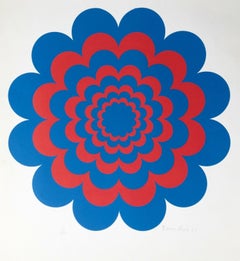
Flasher, Brian Rice
By Brian Rice
Located in Fairfield, CT
Artist: Brian Rice (1936)
Title: Flasher
Year: 1967
Edition: 67/175, plus proofs
Medium: Lithograph on wove paper
Size: 28.5 x 25 inches
Condition: Excellent
Inscription: Signed and ...
Category
1960s Pop Art Pawel Kontny Prints and Multiples
Materials
Lithograph
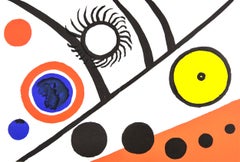
Alexander Calder, Composition with Circles, from Derriere le miroir, 1976
By Alexander Calder
Located in Southampton, NY
This exquisite lithograph by Alexander Calder (1898–1976), titled Composition aux Cercles (Composition with Circles), from the folio Derriere le miroir, No. 221, originates from the 1976 edition published by Maeght Editeur, Paris, and printed by Mourlot Freres, Paris, 1976. Composition aux Cercles reflects Calder’s mastery of rhythm, motion, and form—translating the dynamic energy of his sculptural works into bold, abstract compositions on paper, rich with color and movement.
Executed as a lithograph on velin paper, this work measures 15 x 22 inches, with centerfold as issued. Unsigned and unnumbered as issued. The edition exemplifies the superb craftsmanship of Mourlot Freres, Paris.
Artwork Details:
Artist: Alexander Calder (1898–1976)
Title: Composition aux Cercles (Composition with Circles), from the folio Derriere le miroir, No. 221
Medium: Lithograph on velin paper
Dimensions: 15 x 22 inches (38.1 x 55.88 cm), with centerfold as issued
Inscription: Unsigned and unnumbered as issued
Date: 1976
Publisher: Maeght Editeur, Paris
Printer: Mourlot Freres, Paris
Condition: Well preserved, consistent with age and medium
Provenance: From the folio Derriere le miroir, No. 221, published by Maeght Editeur, Paris; printed by Mourlot Freres, Paris, 1976
Notes:
Excerpted from the folio (translated from French), The illustrations on the cover and pages 3, 4-5, 6, 9, 12-13 and 16 of this issue of "Behind the Mirror" are original lithographs by Calder printed at l'imprimerie Arte, Adrien Maeght. It was printed a luxury edition on velin d'Arches in CL numbered examples.
About the Publication:
Derriere le miroir (Behind the Mirror) was one of the most important art publications of the 20th century, created and published by Maeght Editeur in Paris from 1946 to 1982. Founded by the visionary art dealer and publisher Aime Maeght, the series served as both an exhibition catalogue and a work of art in its own right, uniting original lithographs by leading modern and contemporary artists with critical essays, poetry, and design of the highest quality. Printed by master lithographers such as Mourlot Freres and Arte, Derriere le miroir became synonymous with the artistic vanguard of postwar Europe. Each issue was devoted to a single artist or theme and published to accompany exhibitions at the Galerie Maeght in Paris, featuring works by Pablo Picasso, Henri Matisse, Georges Braque, Joan Miro, Marc Chagall, Alexander Calder, Fernand Leger, and Alberto Giacometti, among others. The publication reflected Maeght’s belief that art should be both accessible and elevated—an ideal realized through its luxurious production values, meticulous printing, and collaboration with the greatest creative minds of its time.
About the Artist:
Alexander Calder (1898–1976) was an American sculptor, painter, and printmaker whose pioneering innovations in kinetic art revolutionized 20th-century sculpture and transformed modern visual language. Born in Lawnton, Pennsylvania, into a family of artists, Calder initially trained as a mechanical engineer at the Stevens Institute of Technology before turning to art at the Art Students League in New York—a combination of technical precision and creative imagination that defined his career. Moving to Paris in 1926, he immersed himself in the avant-garde and formed friendships with Pablo Picasso, Alberto Giacometti, Joan Miro, Wassily Kandinsky, Salvador Dali, Marcel Duchamp, and Man Ray, whose ideas profoundly shaped his artistic philosophy. From Picasso, he absorbed structural invention; from Miro, lyrical abstraction; from Kandinsky, spiritual geometry; and from Duchamp and Man Ray, the courage to merge intellect and play. In Paris, Calder created his famous Cirque Calder, a miniature mechanical circus that introduced motion and performance as central components of sculpture, and by the early 1930s, he invented the mobile—a term coined by Duchamp—to describe his delicately balanced, moving sculptures that responded to air currents. Later, Jean Arp would name his stationary counterparts stabiles. These two inventions—sculptures that could either float and spin gracefully or stand monumentally still—transformed art into a dynamic dialogue between movement, balance, and space. Calder’s signature forms, painted in vivid reds, blacks, blues, and yellows, embodied both joy and precision, creating an art that was at once abstract, organic, and deeply human. Like Kandinsky and Miro, he viewed art as a form of rhythm and emotion; like Duchamp, he embraced innovation and humor; and like Giacometti and Dali, he was fascinated by perception, structure, and the unseen forces of motion. His monumental public sculptures—such as La Grande Vitesse (1969) in Grand Rapids and Flamingo (1973) in Chicago—redefined public art as a symbol of civic optimism and modern progress. A key bridge between European modernism and American abstraction, Calder’s influence extended to artists including Jean Tinguely, George Rickey, Donald Judd, Ellsworth Kelly, Richard Serra, and Olafur Eliasson, whose works in kinetic and spatial art continue to echo his vision. His gouaches, prints, and jewelry carried the same balance and movement as his sculptures, revealing a unified language of rhythm across media. Represented in every major modern museum—including MoMA, the Guggenheim, the Tate, and the Centre Pompidou—Calder remains celebrated for merging engineering, color, and poetry into an art of pure equilibrium. Standing alongside Pablo Picasso, Alexander Calder, Alberto Giacometti, Salvador Dali, Joan Miro, Wassily Kandinsky, Marcel Duchamp, and Man Ray, he remains one of the cornerstones of modern art—a visionary whose works breathe with motion, grace, and joy. His highest auction record was achieved by Poisson Volant (Flying Fish) (1957), which sold for $25.9 million at Christie’s, New York, on May 15, 2014, reaffirming Alexander Calder’s enduring legacy as one of the most inventive, dynamic, and collectible artists in the history of modern art.
Alexander Calder Composition...
Category
1970s Modern Pawel Kontny Prints and Multiples
Materials
Lithograph
$716 Sale Price
20% Off
H 15 in W 22 in
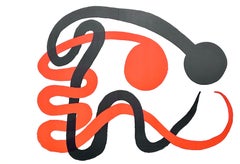
Alexander Calder, Serpent and Sun, from Derriere le Miroir, 1973
By Alexander Calder
Located in Southampton, NY
This exquisite lithograph by Alexander Calder (1898–1976), titled Serpent et Soleil (Serpent and Sun), originates from the historic 1973 folio Derriere le Miroir, No. 201. Published ...
Category
1970s Modern Pawel Kontny Prints and Multiples
Materials
Lithograph
$716 Sale Price
20% Off
H 15 in W 22 in
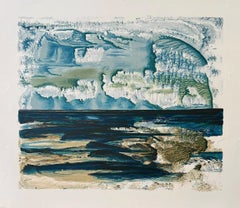
ABSTRACT ARCTIC LANDSCAPE Original Hand Drawn Lithograph Blue, Green, Tan, Black
Located in Union City, NJ
OLD STONE BRIDGE II is an original, hand drawn stone lithograph printed using hand lithography techniques on archival Arches paper 100% acid free paper, by the artist Ido Ben-Porat. ...
Category
1970s Realist Pawel Kontny Prints and Multiples
Materials
Lithograph
$448 Sale Price
25% Off
H 20.5 in W 24 in
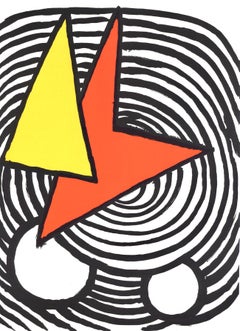
Alexander Calder, Spirals and Sunbursts, from Derriere le Miroir, 1973
By Alexander Calder
Located in Southampton, NY
This exquisite lithograph by Alexander Calder (1898–1976), titled Spirales et eclats de soleil (Spirals and Sunbursts), originates from the historic 1973 folio Derriere le Miroir, No...
Category
1970s Modern Pawel Kontny Prints and Multiples
Materials
Lithograph
$716 Sale Price
20% Off
H 15 in W 11 in
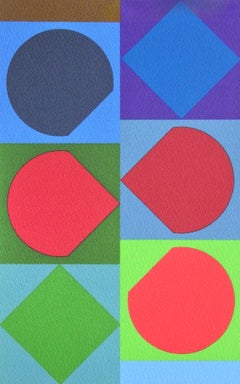
Victor Vasarely, Beryll, from Memories and Portraits of Artists, 1972
By Victor Vasarely
Located in Southampton, NY
This exquisite lithograph by Victor Vasarely (1906–1997), titled Beryll, originates from the 1972 edition published by Editions A. C. Mazo et Cie., Paris, in collaboration with Leon ...
Category
1970s Op Art Pawel Kontny Prints and Multiples
Materials
Lithograph
$956 Sale Price
20% Off
H 12.81 in W 9.81 in
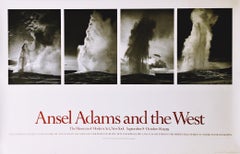
Ansel Adams and the West
By Ansel Adams
Located in New York, NY
Ansel Adams and the West, 1979
Offset Lithograph Poster
23 × 36 inches
Unframed
This offset lithograph poster was created on the occasion of the Ansel Adams exhibition, Ansel Adams and the West, at the Museum of Modern Art in New York from September 8 - October 28, 1979. The photograph featured in this poster is Old Faithful...
Category
1970s Realist Pawel Kontny Prints and Multiples
Materials
Lithograph, Offset
Jean-Paul Riopelle, Composition, L
édition de tête (after)
By Jean-Paul Riopelle
Located in Southampton, NY
Lithograph on vélin de Lana paper. Inscription: Unsigned and unnumbered, as issued. Good condition. Notes: From the folio, tête edition, Consacré à Jean-Paul Riopelle, Derrière le mi...
Category
1960s Modern Pawel Kontny Prints and Multiples
Materials
Lithograph
$1,036 Sale Price
20% Off
H 15 in W 11 in
Pawel Kontny prints and multiples for sale on 1stDibs.
Find a wide variety of authentic Pawel Kontny prints and multiples available for sale on 1stDibs.