Philip Guston Abstract Prints
American, 1913-1980
Philip Guston (1913–1980) was an influential American artist whose career evolved from social realism to abstract expressionism and finally to a unique form of figurative painting. Born in Montreal, Canada, to Russian-Jewish immigrant parents, Guston grew up in Los Angeles, where he was introduced to art and politics at a young age. His early years were marked by personal tragedy, including his father’s suicide, an event that profoundly influenced his later work.
In the 1930s, Guston began his artistic career as a muralist under the Federal Art Project, inspired by the social realism of Mexican muralists like Diego Rivera. During this time, his work conveyed strong political and social messages, reflecting the struggles of the working class and the political tensions of the era. By the 1940s, Guston moved to New York, where he became associated with the burgeoning Abstract Expressionist movement alongside artists like Jackson Pollock and Willem de Kooning. His abstract works from this period were characterized by lush, painterly surfaces and a focus on emotional resonance.
Despite his success as an Abstract Expressionist, Guston grew increasingly dissatisfied with abstraction’s limitations in addressing personal and societal concerns. In the late 1960s, he made a dramatic shift back to representational imagery, a move that shocked the art world. His later works incorporated cartoonish, symbolic figures—hooded Ku Klux Klan-like characters, shoes, lightbulbs, and disembodied heads—depicting themes of existential angst, political corruption, and personal reflection. These provocative images, such as in The Studio (1969), addressed racism, violence, and the complexities of human identity with biting humour and raw emotion.
Critics initially derided Guston’s return to figuration, but his bold departure from abstraction ultimately cemented his legacy as a pioneering figure who challenged conventions and explored deeply personal and political themes. His work resonates with an unflinching honesty and continues to influence contemporary artists grappling with societal issues and the human condition.
Guston died in 1980, leaving behind a body of work that defies categorization yet remains profoundly impactful. Today, he is celebrated as an artist who pushed boundaries and redefined what painting could be, inspiring generations with his fearless creativity and commitment to authenticity.to
1
1
Overall Width
to
Overall Height
to
2
5
660
214
169
165
2
1
1
2
2
2
1
1
1
2
Artist: Philip Guston
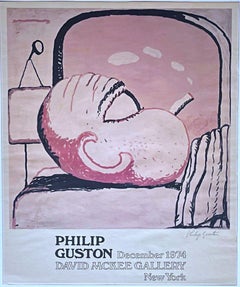
Rare 1970s offset lithograph exhibition poster (pencil signed by Philip Guston)
By Philip Guston
Located in New York, NY
Philip Guston at David McKee Gallery (pencil signed by Philip Guston), 1974
Lithograph and offset lithograph poster
Signed in graphite pencil under the image
24 1/2 × 20 inches
Unframed, unnumbered
Rare vintage lithographic poster of 1974 Guston exhibition at David McKee Gallery
Signed under the image in graphite pencil by Philip Guston
Another hand signed edition is in the permanent collection of Vassar College; otherwise we haven't seen another besides the present work; a true collectors item when hand signed by the artist.
Philip Guston Biography
Philip Guston (1913 – 1980) is one of the great luminaries of twentieth-century art. His commitment to producing work from genuine emotion and lived experience ensures its enduring impact. Guston’s legendary career spanned a half century, from 1930 to 1980. His paintings—particularly the liberated and instinctual forms of his late work—continue to exert a powerful influence on younger generations of contemporary painters. Born in Montreal, Canada, in 1913 to poor Russian Jewish émigrés, Guston moved with his family to California in 1919. Briefly attending the Otis Art Institute in Los Angeles in 1930, he was otherwise completely self-taught.
Guston’s first precocious work, Mother and Child, was completed when he was only seventeen years of age. Influenced by the social and political landscape of the 1930s, his earliest works evoked the stylized forms of Giorgio de Chirico and Pablo Picasso, social realist motifs of the Mexican muralists, and classical properties of Italian Renaissance frescoes of Piero della Francesca and Masaccio that he had seen only in reproduction. Painted in Mexico with another young artist, the huge fresco The Struggle Against War and Fascism drew national attention in the US. Guston’s success continued in the WPA, a Depression-era government program that commissioned American artists to create murals in public buildings. While not widely known today, the young artist’s early experiences as a mural painter allowed a development of narrative and scale that he would draw upon in his late figurative work. In the early 1940s, as the WPA program was ending, Guston found work teaching at universities in the Midwestern United States. In his studio, he was working in oils on easel paintings that were more personal and smaller in scale, focusing on portraits and allegories, like Martial Memory and If This Be Not I. His first solo exhibition in Iowa was well received and, within a few years, he was offered his first solo show in New York City. Guston was awarded a Prix de Rome, allowing him to leave teaching and spend a year in Italy, studying firsthand the Italian masters he loved.
By the time he had finished The Tormentors, Guston’s move to abstraction was all but complete. On his return from Italy, he continued dividing his time between the artists’ colony of Woodstock in Upstate New York and New York City, which was then emerging as the center of the postwar art world. He rented a studio on 10th Street, where abstract expressionists Jackson Pollock, Willem de Kooning and Mark Rothko also worked. For Guston, success was never what mattered most. He was already impatient with the language of pure abstraction and experimenting with larger forms, using a limited palette of grays, pinks and blacks. As his forms became still more reduced, he stopped painting altogether and embarked on a series of simplified abstract “pure drawings” in brush or charcoal. At this juncture, Guston removed himself from the art scene in New York, living and working in Woodstock for the remainder of his life.
Guston’s move was hardly a withdrawal. Freed from the distractions and formal constraints of the art world and the opinions of critics, he was able to experiment with new forms and to engage more deeply with the issues that mattered to him.
The 1960s was a period of great social upheaval in the United States, characterized by assassinations and violence, civil rights and anti-war protests. “When the 1960s came along I was feeling split, schizophrenic,” Guston later said. “The war, what was happening to America, the brutality of the world. What kind of man am I, sitting at home, reading magazines...
Category
1970s Abstract Expressionist Philip Guston Abstract Prints
Materials
Lithograph, Offset
Monograph: Philip Guston (Hand signed, inscribed and dated to a major collector)
By Philip Guston
Located in New York, NY
Philip Guston
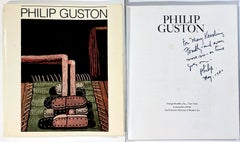
Monograph: Philip Guston (Hand signed and inscribed to major collector by Philip Guston), 1980
Softback monograph (hand signed, inscribed and dated by Philip Guston to Mary Keesling)
Warmly signed and inscribed by Philip Guston to Mary Keesling on the title page
10 1/4 × 9 × 3/4 inches
If you're reading this description, then we hardly need to tell you, dear collector and Guston enthusiast, that autographed books...
Category
1980s Abstract Expressionist Philip Guston Abstract Prints
Materials
Paper, Ink, Mixed Media, Lithograph, Offset
Related Items
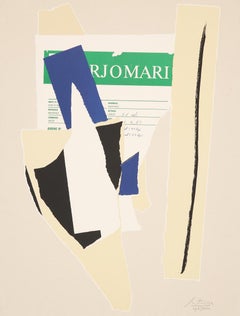
America - La France Variations IX - Modern, Expressionism, Collage, Lithograph
By Robert Motherwell
Located in Köln, DE
Collage and lithograph in colours "America - La France Variantions IX" by Robert Motherwell from 1983-1984.
The edition on handmade paper comprises 78 copies.
The present copy is...
Category
1980s Abstract Expressionist Philip Guston Abstract Prints
Materials
Mixed Media, Handmade Paper, Lithograph
$11,303
H 28.75 in W 21.78 in
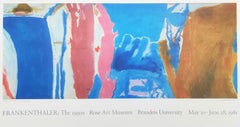
Rose Art Museum (Open Wall) Poster /// Helen Frankenthaler Female Abstract Art
By Helen Frankenthaler
Located in Saint Augustine, FL
Artist: (after) Helen Frankenthaler (American, 1928-2011)
Title: "Rose Art Museum (Open Wall)"
Year: 1981
Medium: Original Offset-Lithograph, Exhibition Poster on light wove paper
Li...
Category
1980s Abstract Expressionist Philip Guston Abstract Prints
Materials
Lithograph, Offset

$400
H 20.07 in W 37.57 in
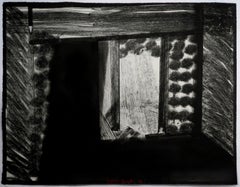
All Alone in the Museum of Modern Art Howard Hodgkin abstract black painting
By Howard Hodgkin
Located in New York, NY
Large scale black and white abstract interior scene with dots, lines, brushstrokes, paint daubs, fingerprints, squares and rectangles, and hand painting in grey. Hang in contemporary, modern and minimalist spaces. While British pop artists such as David Hockney and Patrick Caulfield numbered amongst Howard Hodgkin's circle of friends, Hodgkin's work is painterly, emotional, expressionist, and abstract.
Paper: 29.5 x 38.75 in. / 74.7 x 98.2 cm.
Soft-ground etching with hand coloring in black gouache on grey BFK Rives mould made paper. Signed by the artist, dated 79, and numbered 59/100 lower center in red crayon. Printed from the same plate as 'Thinking Aloud in the Museum of Modern Art', this print was previously titled "Not Quite Alone in the Museum of Modern Art," suggesting an erotic dalliance in the museum.
This print depicts an abstracted scene, perhaps a window and a door, in Hodgkin's signature painterly style. The expressive mark-making in this print is an example of the artist’s movement in the late 70s towards pronounced gestures. Beside bold black strokes, his fingerprints form areas of texture. Always seeking greater richness in his prints, Hodgkin layered ink and hand coloring in this print, rendering each print in the edition unique.
Howard Hodgkin was introduced to the etching technique used in 'All Alone in the Museum of Modern Art' at Petersburg Press, where this print was produced and where he would become a long-time collaborator. This technique allowed him to work fluidly and spontaneously, creating the moody interior scenes that mark Hodgkin’s work from the late 70s and early 80s.
Part of a series of four prints reflecting on a visit to the Museum...
Category
Late 20th Century Abstract Philip Guston Abstract Prints
Materials
Etching
$2,250
H 29.5 in W 38.75 in
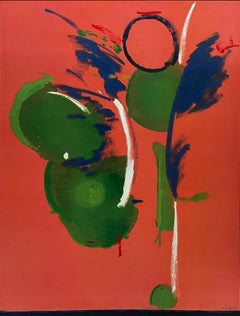
Frankenthaler, Mary Mary 1991, New York City, Lincoln Center
By Helen Frankenthaler
Located in Fairfield, CT
Artist: After Helen Frankenthaler (1928-2011)
Title: Mary Mary (Lincoln Center Honorary)
Year: 1991
Medium: Offset lithograph poster on extra thick Somerset paper
Edition: 2000
Size...
Category
1990s Abstract Expressionist Philip Guston Abstract Prints
Materials
Lithograph, Offset
$1,036 Sale Price
20% Off
H 49 in W 32 in
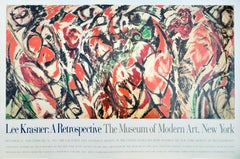
Lee Krasner: A Retrospective - The Museum of Modern Art (Celebration) Poster
By Lee Krasner
Located in Saint Augustine, FL
Artist: (after) Lee Krasner (American, 1908-1984)
Title: "Lee Krasner: A Retrospective - The Museum of Modern Art (Celebration)"
*Signed and dated in the plate (printed signature) lo...
Category
1980s Abstract Expressionist Philip Guston Abstract Prints
Materials
Lithograph, Offset
$900
H 24.07 in W 36 in
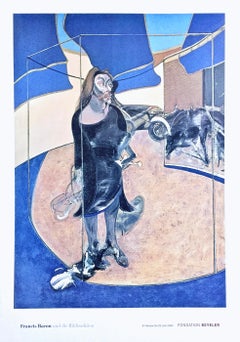
Bacon, Portrait Isabel Rawsthorne, 2003 (after)
By Francis Bacon
Located in Fairfield, CT
Artist: Francis Bacon (1909-1992)
Title: Portrait Isabel Rawsthorne
Year: 2003
Medium: Offset Lithograph on premium paper
Size: 39.25 x 27.5 inches
Condition: Excellent
Notes: Publis...
Category
Early 2000s Abstract Expressionist Philip Guston Abstract Prints
Materials
Lithograph, Offset
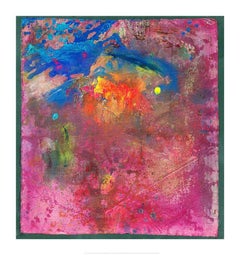
Hothead - Contemporary Art, Abstract Art
By Frank Bowling
Located in London, GB
Hothead, 2016
Giclée print on 330gsm Somerset Velvet cotton rag paper with an embossed publisher stamp
82 x 78 cm - Framed
80 x 75 cm - Sheet
Edition of 250
It comes with COA from t...
Category
2010s Abstract Philip Guston Abstract Prints
Materials
Giclée
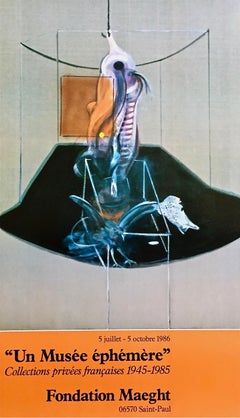
Bacon, Le Boeuf, 1986
By Francis Bacon
Located in Fairfield, CT
Artist: After Francis Bacon (1909-1992)
Title: Le Boeuf, exhibition poster
Year: 1986
Medium: Offset Lithograph on premium paper
Size: 30.75 x 18 inches
Condition: Excellent
Notes: Published by Foundation Maeght
FRANCIS BACON (1909-1992) Francis Bacon has a distinctive style as a figure painter. In his mature style, developed in the 1950s, the paintings include images of either friends or lovers, or images of people found in movie stills...
Category
1980s Abstract Expressionist Philip Guston Abstract Prints
Materials
Lithograph, Offset
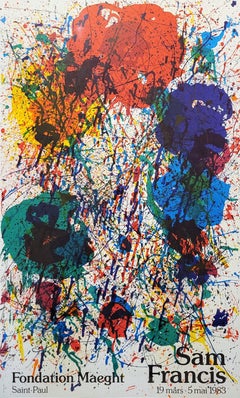
Untitled (SF-229P) (Fondation Maeght) Poster /// Sam Francis Abstract Expression
By Sam Francis
Located in Saint Augustine, FL
Artist: Sam Francis (American, 1923-1994)
Title: "Untitled (SF-229P) (Fondation Maeght)"
Year: 1983
Medium: Original Offset-Lithograph, Exhibition Poster on light wove paper
Limited ...
Category
1980s Abstract Expressionist Philip Guston Abstract Prints
Materials
Lithograph, Offset
$600
H 39.13 in W 25.13 in
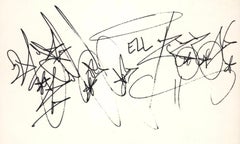
Rammellzee Annina Nosei Gallery 1983 (Rammellzee Gothic Futurism announcement)
Located in NEW YORK, NY
Rammellzee Annina Nosei Gallery, New York, 1983 (Rammellzee Gothic Futurism, Rammellzee Ikonoklast Panzerism):
RARE Rammellzee illustrated announcement card published by Annina Nosei...
Category
1980s Abstract Expressionist Philip Guston Abstract Prints
Materials
Paper, Lithograph, Offset
$1,100
H 4.25 in W 5.5 in
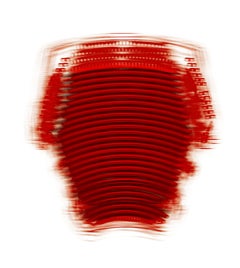
"Alice Tully Hall" by Guillermo Kuitca (Abstract, Red, Architecture, Design)
By Guillermo Kuitca
Located in New York, NY
One screen print on wove paper titled, Alice Tully Hall by Guillermo Kuitca, 2009. It is hand signed in pencil, dated and numbered from the edition of 117 (total edition includes 18 artist's proofs) The sheet size is 22 1/4 by 20 inches, with the blindstamp of the printer, Brand X Editions, New York. Published by Lincoln Center for the Performing Arts, Inc., New York.
This impression has a rich, bold red color on bright white paper.
Guillermo Kuitca, whose paintings and prints are often inspired by seating arrangements in theater interiors, recreates the seating chart...
Category
Early 2000s Abstract Philip Guston Abstract Prints
Materials
Screen
$1,440 Sale Price
20% Off
H 19.5 in W 19.5 in
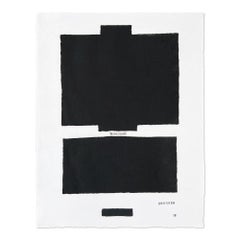
Jenny Holzer, Water Board 0000090: 2012, Signed Print, Contemporary Art
By Jenny Holzer
Located in Hamburg, DE
Jenny Holzer (American, b. 1950)
Water Board 0000090, 2012
Medium: Template reservage technique, on 350 g/qm wove paper
Dimensions: 90.5 × 70 cm (35 3/5 × 27 3/5 in)
Edition: From th...
Category
21st Century and Contemporary Abstract Philip Guston Abstract Prints
Materials
Paper
$3,331
H 35.63 in W 27.56 in
Previously Available Items
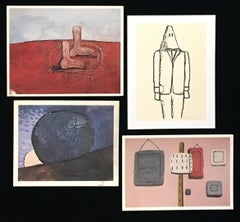
Philip Guston exhibition announcements set of four (vintage Philip Guston)
By Philip Guston
Located in NEW YORK, NY
A set of four vintage Philip Guston announcement cards for 1982, 1983 and 1985 shows at Mckee Gallery, New York
Each: Offset print on cardstock; dimensions: 7 x 9 (2), 8.5 x 6.5 and...
Category
1960s Contemporary Philip Guston Abstract Prints
Materials
Offset
H 9 in W 6 in D 0.1 in
Philip Guston abstract prints for sale on 1stDibs.
Find a wide variety of authentic Philip Guston abstract prints available for sale on 1stDibs. You can also browse by medium to find art by Philip Guston in ink, lithograph, mixed media and more. Much of the original work by this artist or collective was created during the 1980s and is mostly associated with the abstract style. Not every interior allows for large Philip Guston abstract prints, so small editions measuring 9 inches across are available. Customers who are interested in this artist might also find the work of Sam Gilliam, Sam Francis, and Robert Motherwell. Philip Guston abstract prints prices can differ depending upon medium, time period and other attributes. On 1stDibs, the price for these items starts at $7,500 and tops out at $7,500, while the average work can sell for $7,500.
Artists Similar to Philip Guston
Questions About Philip Guston Abstract Prints
- 1stDibs ExpertApril 5, 2022Yes. Philip Guston, a Canadian American artist, is considered a contemporary artist. Contemporary art is generally defined as art produced during the late 20th and early 21st centuries. Guston, who lived from 1913 to 1980, was a founding artist of the mid-century New York School movement and later helped pioneer the neo-expressionism movement. Shop a collection of Philip Guston art from some of the world’s top sellers on 1stDibs.
- 1stDibs ExpertMarch 22, 2022Philip Guston is associated with two art movements. At the start of his career, his work reflected the characteristics of Social Realism, but he later shifted his focus to produce pieces that better fit the definition of Abstract Expressionism. You'll find a selection of Philip Guston art on 1stDibs.