R.C. Gorman Prints and Multiples

American, 1931-2005

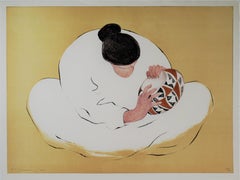
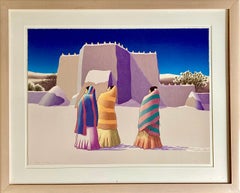
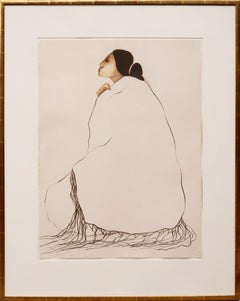
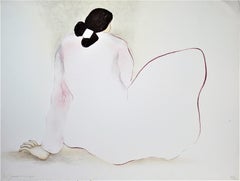
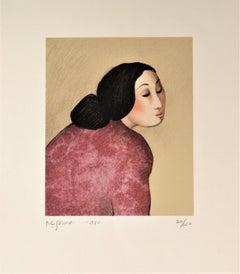
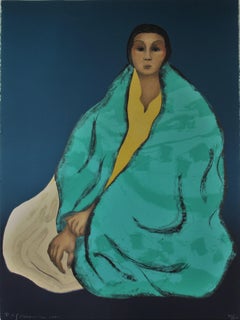
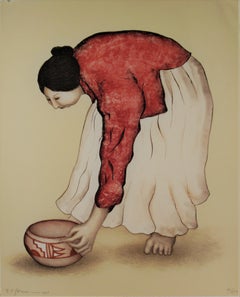
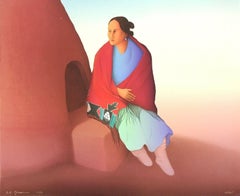
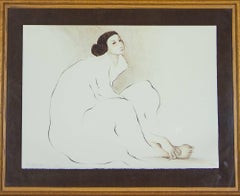
Rudolph Carl Gorman was an American artist, born on July 26, 1931, in Canyon de Chelly, Arizona. He was raised in a traditional hogan, on the Navajo Reservation. He became one of the Southwest USA's most famous and celebrated Native American artists. His signature works were Navajo women in a variety of poses. Referred to as the Picasso of American Indian Artists by The New York Times, his paintings are primarily of Native American women and characterized by fluid forms and vibrant colors, though he also worked in sculpture, ceramics and stone lithography. In 1973, the Metropolitan Museum of Art included several Rudolph’s works in an exhibition on Native American art and in 1986, Harvard University honored him for his notable contributions to American art and Native American culture. His admirers included Andy Warhol, who painted him on several occasions and who was among the many celebrities, who collected his art. He was also the author of a series of popular cookbooks. Gorman died on November 3, 2005, in Albuquerque, New Mexico.

to
3
9
3
12
Overall Width
to
Overall Height
to
4
1
44
1,221
970
913
840
27
3
3
4
16
11
18
15
15
3
3
3
2
1
1
1
1
1
1
1
1
1
1
1
1
1
23
3
2
2
16
4
27
Artist: R.C. Gorman
Hana
By R.C. Gorman
Located in San Francisco, CA
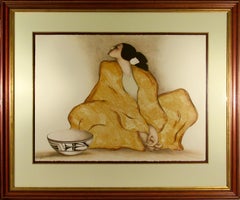
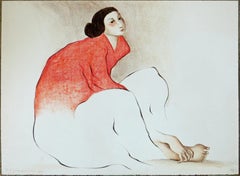
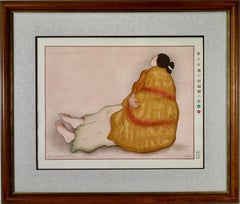
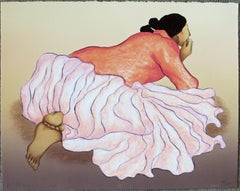
This artwork titled "Hana" 1982 Is an original lithograph by renown Navajo artist Rudolph Carl Gorman, 1932-2005. It is signed, dated and numbered 199/250 in pencil by the artist. With the blind stamp of the artist and printer. The image size is 19.5 x 26 inches, the sheet size is 22 x 30 inches, framed size is 33 x 41 inches. Custom framed in a dark wood frame, with fabric matting. the artwork is in excellent condition, the frame is in very good condition, it has minor restorations, barely visible. About the artist: Born in Canyon de Chelly, Arizona and raised in a hogan on the Navajo Reservation, R.C. Gorman became one of the Southwest's best known late 20th-century artists. His signature works were Navajo women in a variety of poses. Many persons have been fascinated by the fact that he, an Indian artist, became famous in the white man's world with some calling him the "Picasso of Indian artists". Of this kind of attention, he said: "I wish people would quit pushing my being Indian. The only time I was interviewed as If I were a normal person was by the Jewish Press in Tucson. It was the first time I felt international and almost white". (Samuels 222) His parents were Carl Nelson...
Category

Late 20th Century Realist R.C. Gorman Prints and Multiples

Materials

Lithograph

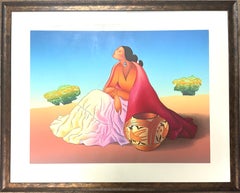
“Luz de Oro”
By R.C. Gorman
Located in Warren, NJ
R.C Gorman original lithograph “Chamisa” signed and numbered In good condition Measures 43x34
Category

20th Century R.C. Gorman Prints and Multiples

Materials

Lithograph

“Secrets”
By R.C. Gorman
Located in Warren, NJ
R.C. Gorman "Secrets". Lithograph Pencil Signed And Dated . In good condition measures 63x48. Buyer must cover delivery service to designation due to size.
Category

20th Century R.C. Gorman Prints and Multiples

Materials

Lithograph

Women from Salt River, Folk Art Lithograph by R.C. Gorman
By R.C. Gorman
Located in Long Island City, NY
An original hand-signed lithograph by Native American artist, RC Gorman. Numbered AP 15.
Category

1990s Folk Art R.C. Gorman Prints and Multiples

Materials

Lithograph

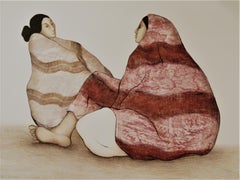
Navajo Women, state #2
By R.C. Gorman
Located in San Francisco, CA
This artwork "Two Native American Women" 1980 Is an original lithograph on creme Arches paper by renown Navajo artist Rudolph Carl Gorman, 1932-2005. It is signed, dated and numbere...
Category

Late 20th Century Realist R.C. Gorman Prints and Multiples

Materials

Lithograph

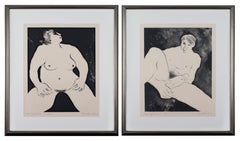
Nude Male and Nude Female, original lithograph pair signed by R.C. Gorman
By R.C. Gorman
Located in Milwaukee, WI
R. C. Gorman is better known for his images of colorful and elegant Navajo figures. This pair of prints, however, offers a view into his personal life. The pair of nude figures in th...
Category

1970s Contemporary R.C. Gorman Prints and Multiples

Materials

Lithograph

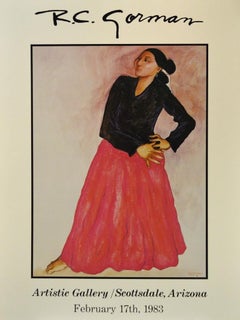
Artistic Gallery/Scottsdale, Arizona-February 17th, 1983
By R.C. Gorman
Located in Chesterfield, MI
R.C. GORMAN (Native American, 1931-2005). Artistic Gallery/Scottsdale, Arizona-February 17th, 1983 Event Poster. Poster measures 32 x 24 inches and i...
Category

1980s R.C. Gorman Prints and Multiples

Materials

Lithograph

“Chamisa”
By R.C. Gorman
Located in Warren, NJ
R.C Gorman original lithograph “Chamisa” signed and numbered In good condition Measures 46x38
Category

20th Century R.C. Gorman Prints and Multiples

Materials

Lithograph

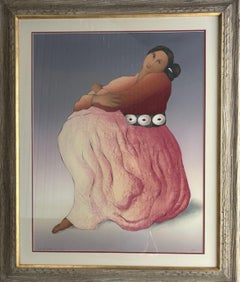
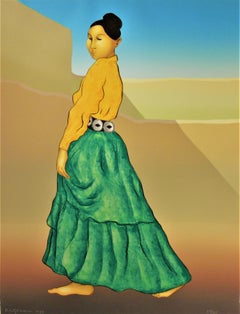
" Khisani s Belt "
By R.C. Gorman
Located in Warren, NJ
Rc Gorman " Khisani's Belt " signed and numbered . The number is ctp meaning color trail proof. Measures 46x39
Category

20th Century R.C. Gorman Prints and Multiples

Materials

Lithograph

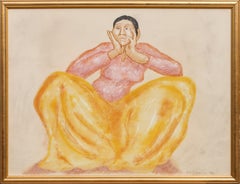
Natural Beauty, Framed Modern Lithograph by RC Gorman
By R.C. Gorman
Located in Long Island City, NY
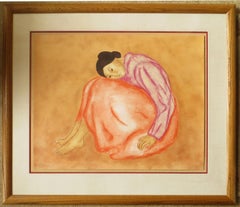
A woman in a pink shirt and yellow skirt crouches to fit within the frame of the image, her hands tenderly holding up her face as she looks off to the left. Gorman has caught this fi...
Category

1980s R.C. Gorman Prints and Multiples

Materials

Lithograph

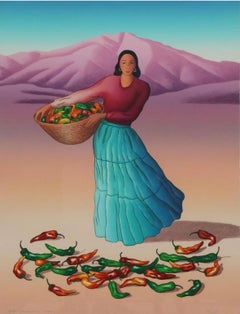
“Taos Harvest"
By R.C. Gorman
Located in Warren, NJ
R.C Gorman original lithograph “ ” signed and numbered In good condition Measures 47x38
Category

20th Century R.C. Gorman Prints and Multiples

Materials

Lithograph

“Santa Fe Woman”
By R.C. Gorman
Located in Warren, NJ
Rc Gorman 1978 lithograph “Santa Fe Woman” printers proof only 3 made. in excellent condition. 37 x 31
Category

1970s R.C. Gorman Prints and Multiples

Materials

Lithograph

Zia, State II
By R.C. Gorman
Located in San Francisco, CA
This artwork titled "Zia" State II, 1979 Is an original colors lithograph on Buff Arches paper by renown Navajo artist Rudolph Carl Gorman, 1932-2005. It is signed, dated and number...
Category

Late 20th Century Realist R.C. Gorman Prints and Multiples

Materials

Lithograph

Rudolph Carlo Gorman, "Sora, " original color woodcut, hand singed
By R.C. Gorman
Located in Chatsworth, CA
Rudolph Carl "R.C." Gorman (1932-2005) "Sora" 1981 Original color woodcut print Hand signed and dated "1981" in pencil by the artist Numbered XV/XXV in Roman numerals 23 x 19 inches ...
Category

1980s Modern R.C. Gorman Prints and Multiples

Materials

Woodcut

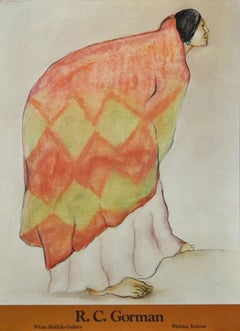
White Buffalo Gallery-Wichita, Kansas
By R.C. Gorman
Located in Chesterfield, MI
R.C. GORMAN (Native American, 1931-2005). White Buffalo Gallery-Wichita, Kansas Event Poster. Print measures 29 x 21 inches and is Unframed. Plate signed. The date of creation is 197...
Category

1970s R.C. Gorman Prints and Multiples

Materials

Lithograph

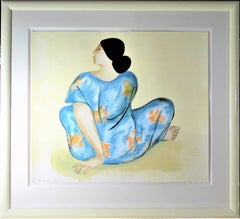
"Woman from Maui" Large original color serigraph.
By R.C. Gorman
Located in San Francisco, CA
This artwork titled "Woman from Maui" 1983 Is an original color serigraph by renown Navajo artist Rudolph Carl Gorman, 1932-2005. It is hand signed and inscribed E.P.I in pencil by the artist. With the blind stamp of the artist and the printer, Editions Press, San Francisco. The sheet size is 28.5 x 33.35 inches, framed size is 41.25 x 45.25 inches. Custom framed in a wooden off white frame, with off white matting and bevel. the artwork is in excellent condition, the frame is in very good condition, it has minor restorations, practically invisible About the artist: Born in Canyon de Chelly, Arizona and raised in a hogan on the Navajo Reservation, R.C. Gorman became one of the Southwest's best known late 20th-century artists. His signature works were Navajo women in a variety of poses. Many persons have been fascinated by the fact that he, an Indian artist, became famous in the white man's world with some calling him the "Picasso of Indian artists". Of this kind of attention, he said: "I wish people would quit pushing my being Indian. The only time I was interviewed as If I were a normal person was by the Jewish Press in Tucson. It was the first time I felt international and almost white". (Samuels 222) His parents were Carl Nelson...
Category

Late 20th Century Realist R.C. Gorman Prints and Multiples

Materials

Screen

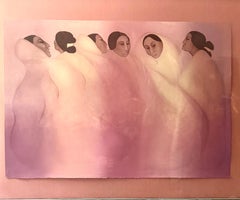
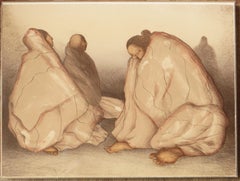
Waiting Women
By R.C. Gorman
Located in San Francisco, CA
This artwork, titled "Waiting Women", 1976 is an original color lithograph by renown Navajo artist Rudolph Carl Gorman, 1932-2005. It is hand-signed, dated and numbered 63/120 in pencil by the artist, also dedicated "To Purificacion Ramirez" With the blindstamp of the artist and another blindstamp. The sheet size is 22 x 30 inches, framed size is 22.5 x 30.5 inches. Custom framed in a clear acrylic box. It is in excellent condition. The acrylic box is in good condition with a few very faint scratches. Artist: R.C. Gorman (1932-2005) Title: Waiting Women Medium: Lithograph on Paper Sheet Size: 22" x 30" Framed size: 22.5" x 30.5" Year Produced: 1976 Edition Size: 120 plus proofs (25 proofs) This one: 63/120 About the artist: Born in Canyon de Chelly, Arizona and raised in a hogan on the Navajo Reservation, R.C. Gorman became one of the Southwest's best known late 20th-century artists. His signature works were Navajo women in a variety of poses. Many persons have been fascinated by the fact that he, an Indian artist, became famous in the white man's world with some calling him the "Picasso of Indian artists". Of this kind of attention, he said: "I wish people would quit pushing my being Indian. The only time I was interviewed as If I were a normal person was by the Jewish Press in Tucson. It was the first time I felt international and almost white". (Samuels 222) His parents were Carl Nelson...
Category

Late 20th Century Realist R.C. Gorman Prints and Multiples

Materials

Lithograph

Benita
By R.C. Gorman
Located in San Francisco, CA
This artwork titled "Benita" first state, 1981 Is an original lithograph on Wove paper by renown Navajo artist Rudolph Carl Gorman, 1932-2005. It is signed, dated and numbered 122/180 in pencil by the artist. With the blind stamp of the artist and printer. The image size is 22 x 30 inches, the sheet size is 24 x 31.75 inches. It is in excellent condition, has never been framed, the colors are fresh bright. About the artist: Born in Canyon de Chelly, Arizona and raised in a hogan on the Navajo Reservation, R.C. Gorman became one of the Southwest's best known late 20th-century artists. His signature works were Navajo women in a variety of poses. Many persons have been fascinated by the fact that he, an Indian artist, became famous in the white man's world with some calling him the "Picasso of Indian artists". Of this kind of attention, he said: "I wish people would quit pushing my being Indian. The only time I was interviewed as If I were a normal person was by the Jewish Press in Tucson. It was the first time I felt international and almost white". (Samuels 222) His parents were Carl Nelson...
Category

Late 20th Century Realist R.C. Gorman Prints and Multiples

Materials

Lithograph

Woman From Paris
By R.C. Gorman
Located in San Francisco, CA
This artwork, "Woman From Paris" 1979 (State I) is an original lithograph on creme Arches paper by renowned Navajo artist Rudolph Carl (R.C.) Gorman, 1932-2005. It is signed, dated and numbered 129/150 in pencil by the artist. The sheet size is 21.75 x 29 inches. It is in excellent condition, has never been framed, the colors are fresh and bright. About the artist: Born in Canyon de Chelly, Arizona and raised in a hogan on the Navajo Reservation, R.C. Gorman became one of the Southwest's best known late 20th-century artists. His signature works were Navajo women in a variety of poses. Many persons have been fascinated by the fact that he, an Indian artist, became famous in the white man's world with some calling him the "Picasso of Indian artists". Of this kind of attention, he said: "I wish people would quit pushing my being Indian. The only time I was interviewed as If I were a normal person was by the Jewish Press in Tucson. It was the first time I felt international and almost white". (Samuels 222) His parents were Carl Nelson...
Category

Late 20th Century Realist R.C. Gorman Prints and Multiples

Materials

Paper, Lithograph

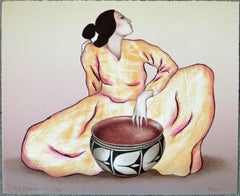
Woman With Tulip Bowl
By R.C. Gorman
Located in San Francisco, CA
This artwork, "Woman With Tulip Bowl" 1981 (State I) is an original lithograph on heavy paper by renowned Navajo artist Rudolph Carl (R.C.) Gorman, 1932-20...
Category

Late 20th Century Realist R.C. Gorman Prints and Multiples

Materials

Paper, Lithograph

Yuyake
By R.C. Gorman
Located in San Francisco, CA
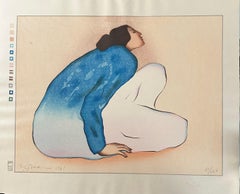
This artwork titled "Yuyake" 1981 Is an original colors woodcut by renown Navajo artist Rudolph Carl Gorman, 1932-2005. It is signed, dated and numbered 197/210 in pencil by the artist. This artwork was printed in Tokyo, Japan. The image size is 14.5 x 19.5 inches, framed size is 26.5 x 31 inches. Custom framed in a light wood and gold frame, with fabric matting. It is in excellent condition, the frame have a minor black spot at the lower right corner, see picture #1 About the artist: Born in Canyon de Chelly, Arizona and raised in a hogan on the Navajo Reservation, R.C. Gorman became one of the Southwest's best known late 20th-century artists. His signature works were Navajo women in a variety of poses. Many persons have been fascinated by the fact that he, an Indian artist, became famous in the white man's world with some calling him the "Picasso of Indian artists". Of this kind of attention, he said: "I wish people would quit pushing my being Indian. The only time I was interviewed as If I were a normal person was by the Jewish Press in Tucson. It was the first time I felt international and almost white". (Samuels 222) His parents were Carl Nelson...
Category

Late 20th Century Realist R.C. Gorman Prints and Multiples

Materials

Woodcut

La Rosa
By R.C. Gorman
Located in San Francisco, CA
This artwork titled "La Rosa" 1984 Is an original colors lithograph on Wove paper by renown Navajo artist Rudolph Carl Gorman, 1932-2005. It is hand signed, dated and numbered 29/200 in white pencil by the artist. With the blind stamp of the Publisher/printer, Houston Fine Art Press, Houston at the lower right corner. The size is 30 x 23 inches inches. It is in excellent condition, the colors are fresh and bright, Hanging tape remaining in the back across the upper sheet, and 2 small skinned area at the lower back of the sheet. all these not visible from the front. About the artist: Born in Canyon de Chelly, Arizona and raised in a hogan on the Navajo Reservation, R.C. Gorman became one of the Southwest's best known late 20th-century artists. His signature works were Navajo women in a variety of poses. Many persons have been fascinated by the fact that he, an Indian artist, became famous in the white man's world with some calling him the "Picasso of Indian artists". Of this kind of attention, he said: "I wish people would quit pushing my being Indian. The only time I was interviewed as If I were a normal person was by the Jewish Press in Tucson. It was the first time I felt international and almost white". (Samuels 222) His parents were Carl Nelson...
Category

Late 20th Century Realist R.C. Gorman Prints and Multiples

Materials

Lithograph

Lila
By R.C. Gorman
Located in San Francisco, CA
This artwork, "Lila" 1981 (State I) is an original lithograph on heavy paper by renowned Navajo artist Rudolph Carl (R.C.) Gorman, 1932-2005. It is signed, dated and numbered 90/150 in pencil by the artist. With the blind stamp of the artist and printer. The sheet size is 17.75 x 22.5 inches. It is in excellent condition, has never been framed, the colors are fresh and bright. About the artist: Born in Canyon de Chelly, Arizona and raised in a hogan on the Navajo Reservation, R.C. Gorman became one of the Southwest's best known late 20th-century artists. His signature works were Navajo women in a variety of poses. Many persons have been fascinated by the fact that he, an Indian artist, became famous in the white man's world with some calling him the "Picasso of Indian artists". Of this kind of attention, he said: "I wish people would quit pushing my being Indian. The only time I was interviewed as If I were a normal person was by the Jewish Press in Tucson. It was the first time I felt international and almost white". (Samuels 222) His parents were Carl Nelson...
Category

Late 20th Century Realist R.C. Gorman Prints and Multiples

Materials

Paper, Lithograph

The Turquoise Suite complete portfolio of lithographs by Rudolph Carl Gorman
By R.C. Gorman
Located in Milwaukee, WI
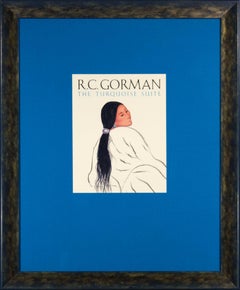
'The Turquoise Suite' is a portfolio of three original color lithograph by the renown printmaker R.C. Gorman. From Arizona, the artist's later works fo...
Category

1990s Contemporary R.C. Gorman Prints and Multiples

Materials

Lithograph

Fatima original lithograph in colors signed by Rudolph Carl Gorman
By R.C. Gorman
Located in Milwaukee, WI
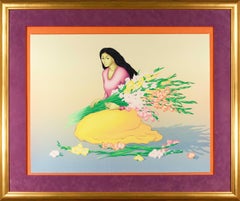
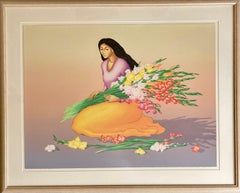
'Fatima' is an original color lithograph by the renown printmaker R.C. Gorman. from Arizona, the artist's later works focus almost entirely on the female figure and take Native American and Southwestern imagery as a source of inspiration. Here, a single woman sits in a colorful yet undefined space. The form of her yellow dress as she kneels is repeated in the delicately drawn bunches gladiolus flowers...
Category

1990s Contemporary R.C. Gorman Prints and Multiples

Materials

Lithograph

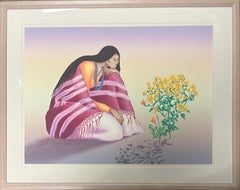
Gladia original lithograph in colors signed by Rudolph Carl Gorman
By R.C. Gorman
Located in Milwaukee, WI
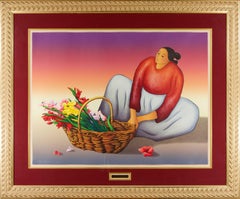
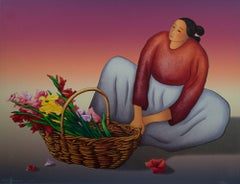
'Gladia' is an original color lithograph by the renown printmaker R.C. Gorman. from Arizona, the artist's later works focus almost entirely on the female figure and take Native American and Southwestern imagery as a source of inspiration. Here, a single woman sits in a colorful yet undefined space. The oval shape of her broad seated form is repeated in the delicately drawn shape of the flower basket at her feet. The basket contains a bundle of multicolor gladiolus flowers...
Category

1990s Contemporary R.C. Gorman Prints and Multiples

Materials

Lithograph

"Doreen" - Large original color serigraph
By R.C. Gorman
Located in San Francisco, CA
This artwork, titled "Doreen", done in 1983, is an original color serigraph by renown Navajo artist Rudolph Carl Gorman, 1932-2005. It is hand signed and numbered E.P.I. in pencil by the artist ( E.P.I. refers to "Editions Press Impression", one of ten impressions done for the publisher.) With the blind stamp of the artist and the printer, Editions Press, San Francisco. The edition size was 150 plus proofs (a total of 45 proofs). The sheet size is 26.25 x 33.25 inches, framed size is 39.25 x 45.25 inches. Custom framed in a wooden oak frame, it is floating, with a deep red liner and with natural linen matting. The artwork is in excellent condition. The frame is in very good condition, it has minor restorations, practically invisible. Medium: Serigraph on Paper Dimensions: 26 1/4" x 33 1/4" Year Produced: 1983 Edition Size: 150 plus proofs (45 proofs) About the artist: Born in Canyon de Chelly, Arizona and raised in a hogan on the Navajo Reservation, R.C. Gorman became one of the Southwest's best known late 20th-century artists. His signature works were Navajo women in a variety of poses. Many persons have been fascinated by the fact that he, an Indian artist, became famous in the white man's world with some calling him the "Picasso of Indian artists". Of this kind of attention, he said: "I wish people would quit pushing my being Indian. The only time I was interviewed as If I were a normal person was by the Jewish Press in Tucson. It was the first time I felt international and almost white". (Samuels 222) His parents were Carl Nelson...
Category

Late 20th Century Realist R.C. Gorman Prints and Multiples

Materials

Screen

Related Items
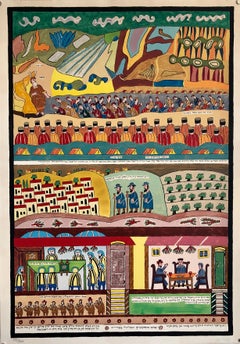
Israeli Folk Art Hebrew Naive Judaica Lithograph Jewish Holiday Shavuot
By Shalom Moskovitz
Located in Surfside, FL
Vintage pencil signed and numbered limited edition lithograph on deckle edged Arches paper. Shalom of Sefad (Shulem der Zeigermacher in Yiddish Shalom Moskowitz) Shalom of Tzfat lived for over seventeen years in his native town of Safed in the hills of the Galilee. There he worked as a watchmaker, stonemason and silversmith, during the 50's. Since then this self-taught artist has achieved an international reputation. Shalom is a naive painter, but not a rustic one, he expresses a very elaborate way of thinking in his own way. While belonging to Hasidism, Shalom of Safed uses his artistic talents positively. 'I don't paint', he explains, 'to tell the story of the Bible in color and lines. His works have been exhibited in prominent museums and galleries in Europe and the United States, and are included in the collections of the Museums of Modern Art in Paris and New York, the Israel Museum in Jerusalem, the Stedelijk Museum in Amsterdam, the Modern Museum in Stockholm and the Jewish Museum in New York He has exhibited alongside all of the Israeli great artists. Israel has had a Vibrant Folk Art, Naive art scene for a long time now artists like Yisrael Paldi, Nahum Guttman, Reuven Rubin and even Yefim Ladizhinsky had naive periods. The most well know if the strict naive artists are Shalom of Safed, Irene Awret...
Category

20th Century Folk Art R.C. Gorman Prints and Multiples

Materials

Lithograph

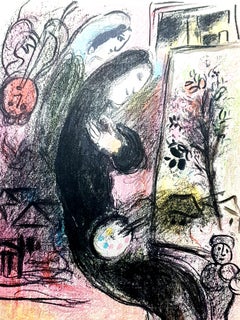
Marc Chagall - Inspiration - Original Lithograph from "Chagall Lithographe" v. 2
By Marc Chagall
Located in Collonge Bellerive, Geneve, CH
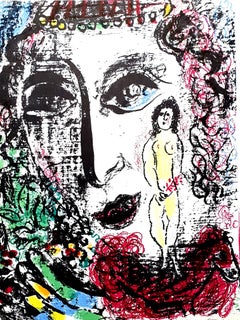
Marc Chagall Original Lithograph from Chagall Lithographe 1957-1962. VOLUME II. 1963 Dimensions: 32 x 24 cm From the unsigned edition of 10000 copies without margins Reference: Mourlot 398 Condition : Excellent Marc Chagall (born in 1887) Marc Chagall was born in Belarus in 1887 and developed an early interest in art. After studying painting, in 1907 he left Russia for Paris, where he lived in an artist colony on the city’s outskirts. Fusing his own personal, dreamlike imagery with hints of the fauvism and cubism popular in France at the time, Chagall created his most lasting work—including I and the Village (1911)—some of which would be featured in the Salon des Indépendants exhibitions. After returning to Vitebsk for a visit in 1914, the outbreak of WWI trapped Chagall in Russia. He returned to France in 1923 but was forced to flee the country and Nazi persecution during WWII. Finding asylum in the U.S., Chagall became involved in set and costume design before returning to France in 1948. In his later years, he experimented with new art forms and was commissioned to produce numerous large-scale works. Chagall died in St.-Paul-de-Vence in 1985. The Village Marc Chagall was born in a small Hassidic community on the outskirts of Vitebsk, Belarus, on July 7, 1887. His father was a fishmonger, and his mother ran a small sundries shop in the village. As a child, Chagall attended the Jewish elementary school, where he studied Hebrew and the Bible, before later attending the Russian public school. He began to learn the fundamentals of drawing during this time, but perhaps more importantly, he absorbed the world around him, storing away the imagery and themes that would feature largely in most of his later work. At age 19 Chagall enrolled at a private, all-Jewish art school and began his formal education in painting, studying briefly with portrait artist Yehuda Pen. However, he left the school after several months, moving to St. Petersburg in 1907 to study at the Imperial Society for the Protection of Fine Arts. The following year, he enrolled at the Svanseva School, studying with set designer Léon Bakst, whose work had been featured in Sergei Diaghilev's Ballets Russes. This early experience would prove important to Chagall’s later career as well. Despite this formal instruction, and the widespread popularity of realism in Russia at the time, Chagall was already establishing his own personal style, which featured a more dreamlike unreality and the people, places and imagery that were close to his heart. Some examples from this period are his Window Vitebsk (1908) and My Fianceé with Black Gloves (1909), which pictured Bella Rosenfeld, to whom he had recently become engaged. The Beehive Despite his romance with Bella, in 1911 an allowance from Russian parliament member and art patron Maxim Binaver enabled Chagall to move to Paris, France. After settling briefly in the Montparnasse neighborhood, Chagall moved further afield to an artist colony known as La Ruche (“The Beehive”), where he began to work side by side with abstract painters such as Amedeo Modigliani and Fernand Léger as well as the avant-garde poet Guillaume Apollinaire. At their urging, and under the influence of the wildly popular fauvism and cubism, Chagall lightened his palette and pushed his style ever further from reality. I and the Village (1911) and Homage to Apollinaire (1912) are among his early Parisian works, widely considered to be his most successful and representative period. Though his work stood stylistically apart from his cubist contemporaries, from 1912 to 1914 Chagall exhibited several paintings at the annual Salon des Indépendants exhibition, where works by the likes of Juan Gris, Marcel Duchamp and Robert Delaunay were causing a stir in the Paris art world. Chagall’s popularity began to spread beyond La Ruche, and in May 1914 he traveled to Berlin to help organize his first solo exhibition, at Der Sturm Gallery. Chagall remained in the city until the highly acclaimed show opened that June. He then returned to Vitebsk, unaware of the fateful events to come. War, Peace and Revolution In August 1914 the outbreak of World War I precluded Chagall’s plans to return to Paris. The conflict did little to stem the flow of his creative output, however, instead merely giving him direct access to the childhood scenes so essential to his work, as seen in paintings such as Jew in Green (1914) and Over Vitebsk (1914). His paintings from this period also occasionally featured images of the war’s impact on the region, as with Wounded Soldier (1914) and Marching (1915). But despite the hardships of life during wartime, this would also prove to be a joyful period for Chagall. In July 1915 he married Bella, and she gave birth to a daughter, Ida, the following year. Their appearance in works such as Birthday (1915), Bella and Ida by the Window (1917) and several of his “Lovers” paintings give a glimpse of the island of domestic bliss that was Chagall’s amidst the chaos. To avoid military service and stay with his new family, Chagall took a position as a clerk in the Ministry of War Economy in St. Petersburg. While there he began work on his autobiography and also immersed himself in the local art scene, befriending novelist Boris Pasternak, among others. He also exhibited his work in the city and soon gained considerable recognition. That notoriety would prove important in the aftermath of the 1917 Russian Revolution when he was appointed as the Commissar of Fine Arts in Vitebsk. In his new post, Chagall undertook various projects in the region, including the 1919 founding of the Academy of the Arts. Despite these endeavors, differences among his colleagues eventually disillusioned Chagall. In 1920 he relinquished his position and moved his family to Moscow, the post-revolution capital of Russia. In Moscow, Chagall was soon commissioned to create sets and costumes for various productions at the Moscow State Yiddish Theater...
Category

1960s Surrealist R.C. Gorman Prints and Multiples

Materials

Lithograph

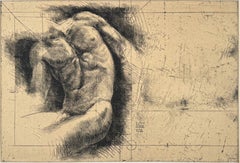
Heart Cry, male nude lithograph by Trevor Southey
By Trevor Southey
Located in Palm Springs, CA
Medium: Etching Year: 1985 Edition of 60 Image Size: 16 x 24 inches A powerful, intimate etching/drypoint of a nude male by Trevor Southey titled "Heartcry." Rendered with lively, e...
Category

1980s Contemporary R.C. Gorman Prints and Multiples

Materials

Lithograph

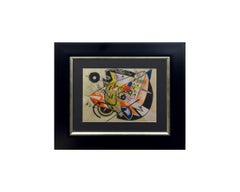
Abstract Lithograph After Wassily Kandinsky, Framed
By (after) Wassily Kandinsky
Located in Plainview, NY
This abstract lithograph after Wassily Kandinsky( Russian 1866 -1944) is a striking homage to the pioneering master of abstract art. Rendered with vivid dynamism, the composition em...
Category

20th Century Abstract R.C. Gorman Prints and Multiples

Materials

Lithograph

Abstract Lithograph After Wassily Kandinsky, Framed
$550 Sale Price
26% Off
H 21.5 in W 24.5 in D 1 in
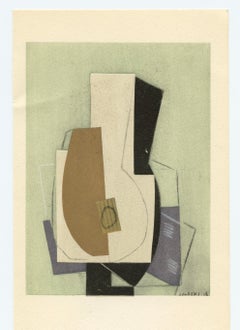
(after) Henri Laurens "La mandoline" pochoir
By Henri Laurens
Located in Henderson, NV
Medium: pochoir (after the watercolor and collage). Printed in Paris in 1955 at the Daniel Jacomet atelier and published the Berggruen Gallery for a rare catalogue. Image size: 5 1/4...
Category

1950s R.C. Gorman Prints and Multiples

Materials

Lithograph, Stencil

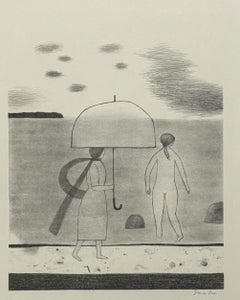
Modernist FOLK ART Original Pencil Lithograph "GRAY DAY AT THE BEACH"
By Doris Lee
Located in New York, NY
Doris Lee Lithograph 1964 Edition Size: 250 Image Size: 12 x 9.5 inches Sheet Size: 16.75 x 13 inches Reference: AAA 1532 Signed lower left Condition: Good Provenance: ASA Doris Emrick Lee...
Category

1960s Folk Art R.C. Gorman Prints and Multiples

Materials

Lithograph, Archival Pigment

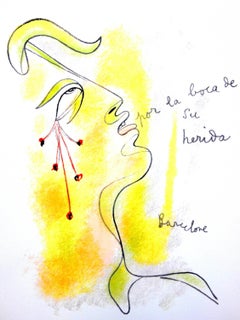
Jean Cocteau - Profile - Original Lithograph
By Jean Cocteau
Located in Collonge Bellerive, Geneve, CH
Original Lithograph by Jean Cocteau Title: Taureaux Signed in the plate Dimensions: 40 x 30 cm Edition: 200 Luxury print edition from the portfolio of Trinckvel 1965 Jean Cocteau W...
Category

1960s Modern R.C. Gorman Prints and Multiples

Materials

Lithograph

Marc Chagall - Original Lithograph
By Marc Chagall
Located in Collonge Bellerive, Geneve, CH
Marc Chagall Original Lithograph 1963 Dimensions: 32 x 24 cm Reference: Chagall Lithographe 1957-1962. VOLUME II. Condition : Excellent Marc Chagall (born in 1887) Marc Chagall was born in Belarus in 1887 and developed an early interest in art. After studying painting, in 1907 he left Russia for Paris, where he lived in an artist colony on the city’s outskirts. Fusing his own personal, dreamlike imagery with hints of the fauvism and cubism popular in France at the time, Chagall created his most lasting work—including I and the Village (1911)—some of which would be featured in the Salon des Indépendants exhibitions. After returning to Vitebsk for a visit in 1914, the outbreak of WWI trapped Chagall in Russia. He returned to France in 1923 but was forced to flee the country and Nazi persecution during WWII. Finding asylum in the U.S., Chagall became involved in set and costume design before returning to France in 1948. In his later years, he experimented with new art forms and was commissioned to produce numerous large-scale works. Chagall died in St.-Paul-de-Vence in 1985. The Village Marc Chagall was born in a small Hassidic community on the outskirts of Vitebsk, Belarus, on July 7, 1887. His father was a fishmonger, and his mother ran a small sundries shop in the village. As a child, Chagall attended the Jewish elementary school, where he studied Hebrew and the Bible, before later attending the Russian public school. He began to learn the fundamentals of drawing during this time, but perhaps more importantly, he absorbed the world around him, storing away the imagery and themes that would feature largely in most of his later work. At age 19 Chagall enrolled at a private, all-Jewish art school and began his formal education in painting, studying briefly with portrait artist Yehuda Pen. However, he left the school after several months, moving to St. Petersburg in 1907 to study at the Imperial Society for the Protection of Fine Arts. The following year, he enrolled at the Svanseva School, studying with set designer Léon Bakst, whose work had been featured in Sergei Diaghilev's Ballets Russes. This early experience would prove important to Chagall’s later career as well. Despite this formal instruction, and the widespread popularity of realism in Russia at the time, Chagall was already establishing his own personal style, which featured a more dreamlike unreality and the people, places and imagery that were close to his heart. Some examples from this period are his Window Vitebsk (1908) and My Fianceé with Black Gloves (1909), which pictured Bella Rosenfeld, to whom he had recently become engaged. The Beehive Despite his romance with Bella, in 1911 an allowance from Russian parliament member and art patron Maxim Binaver enabled Chagall to move to Paris, France. After settling briefly in the Montparnasse neighborhood, Chagall moved further afield to an artist colony known as La Ruche (“The Beehive”), where he began to work side by side with abstract painters such as Amedeo Modigliani and Fernand Léger as well as the avant-garde poet Guillaume Apollinaire. At their urging, and under the influence of the wildly popular fauvism and cubism, Chagall lightened his palette and pushed his style ever further from reality. I and the Village (1911) and Homage to Apollinaire (1912) are among his early Parisian works, widely considered to be his most successful and representative period. Though his work stood stylistically apart from his cubist contemporaries, from 1912 to 1914 Chagall exhibited several paintings at the annual Salon des Indépendants exhibition, where works by the likes of Juan Gris, Marcel Duchamp and Robert Delaunay were causing a stir in the Paris art world. Chagall’s popularity began to spread beyond La Ruche, and in May 1914 he traveled to Berlin to help organize his first solo exhibition, at Der Sturm Gallery. Chagall remained in the city until the highly acclaimed show opened that June. He then returned to Vitebsk, unaware of the fateful events to come. War, Peace and Revolution In August 1914 the outbreak of World War I precluded Chagall’s plans to return to Paris. The conflict did little to stem the flow of his creative output, however, instead merely giving him direct access to the childhood scenes so essential to his work, as seen in paintings such as Jew in Green (1914) and Over Vitebsk (1914). His paintings from this period also occasionally featured images of the war’s impact on the region, as with Wounded Soldier (1914) and Marching (1915). But despite the hardships of life during wartime, this would also prove to be a joyful period for Chagall. In July 1915 he married Bella, and she gave birth to a daughter, Ida, the following year. Their appearance in works such as Birthday (1915), Bella and Ida by the Window (1917) and several of his “Lovers” paintings give a glimpse of the island of domestic bliss that was Chagall’s amidst the chaos. To avoid military service and stay with his new family, Chagall took a position as a clerk in the Ministry of War Economy in St. Petersburg. While there he began work on his autobiography and also immersed himself in the local art scene, befriending novelist Boris Pasternak, among others. He also exhibited his work in the city and soon gained considerable recognition. That notoriety would prove important in the aftermath of the 1917 Russian Revolution when he was appointed as the Commissar of Fine Arts in Vitebsk. In his new post, Chagall undertook various projects in the region, including the 1919 founding of the Academy of the Arts. Despite these endeavors, differences among his colleagues eventually disillusioned Chagall. In 1920 he relinquished his position and moved his family to Moscow, the post-revolution capital of Russia. In Moscow, Chagall was soon commissioned to create sets and costumes for various productions at the Moscow State Yiddish Theater...
Category

1960s Surrealist R.C. Gorman Prints and Multiples

Materials

Lithograph

Marc Chagall - Original Lithograph
$1,483
H 9.45 in W 12.6 in D 0.04 in
1980s Italian Signed Numbered and Dated Original Work on Paper
By Ugo Attardi
Located in Roma, IT
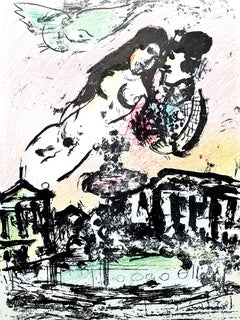
This is a wonderful colour lithograph entitled ‘Scorcio di Roma con profilo femminile’ (View of Rome with female profile) by Italian artist Ugo Attardi (1923-2006). The work is a gr...
Category

1980s Contemporary R.C. Gorman Prints and Multiples

Materials

Lithograph

Autumn in New York by Jane Wooster Scott
By Jane Wooster Scott
Located in New York, NY
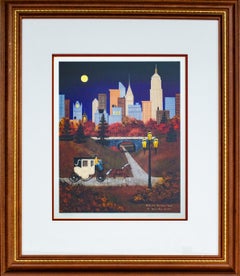
Jane Wooster Scott (American, b. 1920) Autumn in New York, c. 20th Century Lithograph Sight: 15 x 12 in. Framed: 27 3/4 x 23 3/4 x 1 in. Signed and titled lower right in plate: Autum...
Category

20th Century Folk Art R.C. Gorman Prints and Multiples

Materials

Lithograph

Marc Chagall - Original Lithograph
By Marc Chagall
Located in Collonge Bellerive, Geneve, CH
Marc Chagall Original Lithograph 1963 Dimensions: 32 x 24 cm Reference: Chagall Lithographe 1957-1962. VOLUME II. Condition : Excellent Marc Chagall (born in 1887) Marc Chagall was born in Belarus in 1887 and developed an early interest in art. After studying painting, in 1907 he left Russia for Paris, where he lived in an artist colony on the city’s outskirts. Fusing his own personal, dreamlike imagery with hints of the fauvism and cubism popular in France at the time, Chagall created his most lasting work—including I and the Village (1911)—some of which would be featured in the Salon des Indépendants exhibitions. After returning to Vitebsk for a visit in 1914, the outbreak of WWI trapped Chagall in Russia. He returned to France in 1923 but was forced to flee the country and Nazi persecution during WWII. Finding asylum in the U.S., Chagall became involved in set and costume design before returning to France in 1948. In his later years, he experimented with new art forms and was commissioned to produce numerous large-scale works. Chagall died in St.-Paul-de-Vence in 1985. The Village Marc Chagall was born in a small Hassidic community on the outskirts of Vitebsk, Belarus, on July 7, 1887. His father was a fishmonger, and his mother ran a small sundries shop in the village. As a child, Chagall attended the Jewish elementary school, where he studied Hebrew and the Bible, before later attending the Russian public school. He began to learn the fundamentals of drawing during this time, but perhaps more importantly, he absorbed the world around him, storing away the imagery and themes that would feature largely in most of his later work. At age 19 Chagall enrolled at a private, all-Jewish art school and began his formal education in painting, studying briefly with portrait artist Yehuda Pen. However, he left the school after several months, moving to St. Petersburg in 1907 to study at the Imperial Society for the Protection of Fine Arts. The following year, he enrolled at the Svanseva School, studying with set designer Léon Bakst, whose work had been featured in Sergei Diaghilev's Ballets Russes. This early experience would prove important to Chagall’s later career as well. Despite this formal instruction, and the widespread popularity of realism in Russia at the time, Chagall was already establishing his own personal style, which featured a more dreamlike unreality and the people, places and imagery that were close to his heart. Some examples from this period are his Window Vitebsk (1908) and My Fianceé with Black Gloves (1909), which pictured Bella Rosenfeld, to whom he had recently become engaged. The Beehive Despite his romance with Bella, in 1911 an allowance from Russian parliament member and art patron Maxim Binaver enabled Chagall to move to Paris, France. After settling briefly in the Montparnasse neighborhood, Chagall moved further afield to an artist colony known as La Ruche (“The Beehive”), where he began to work side by side with abstract painters such as Amedeo Modigliani and Fernand Léger as well as the avant-garde poet Guillaume Apollinaire. At their urging, and under the influence of the wildly popular fauvism and cubism, Chagall lightened his palette and pushed his style ever further from reality. I and the Village (1911) and Homage to Apollinaire (1912) are among his early Parisian works, widely considered to be his most successful and representative period. Though his work stood stylistically apart from his cubist contemporaries, from 1912 to 1914 Chagall exhibited several paintings at the annual Salon des Indépendants exhibition, where works by the likes of Juan Gris, Marcel Duchamp and Robert Delaunay were causing a stir in the Paris art world. Chagall’s popularity began to spread beyond La Ruche, and in May 1914 he traveled to Berlin to help organize his first solo exhibition, at Der Sturm Gallery. Chagall remained in the city until the highly acclaimed show opened that June. He then returned to Vitebsk, unaware of the fateful events to come. War, Peace and Revolution In August 1914 the outbreak of World War I precluded Chagall’s plans to return to Paris. The conflict did little to stem the flow of his creative output, however, instead merely giving him direct access to the childhood scenes so essential to his work, as seen in paintings such as Jew in Green (1914) and Over Vitebsk (1914). His paintings from this period also occasionally featured images of the war’s impact on the region, as with Wounded Soldier (1914) and Marching (1915). But despite the hardships of life during wartime, this would also prove to be a joyful period for Chagall. In July 1915 he married Bella, and she gave birth to a daughter, Ida, the following year. Their appearance in works such as Birthday (1915), Bella and Ida by the Window (1917) and several of his “Lovers” paintings give a glimpse of the island of domestic bliss that was Chagall’s amidst the chaos. To avoid military service and stay with his new family, Chagall took a position as a clerk in the Ministry of War Economy in St. Petersburg. While there he began work on his autobiography and also immersed himself in the local art scene, befriending novelist Boris Pasternak, among others. He also exhibited his work in the city and soon gained considerable recognition. That notoriety would prove important in the aftermath of the 1917 Russian Revolution when he was appointed as the Commissar of Fine Arts in Vitebsk. In his new post, Chagall undertook various projects in the region, including the 1919 founding of the Academy of the Arts. Despite these endeavors, differences among his colleagues eventually disillusioned Chagall. In 1920 he relinquished his position and moved his family to Moscow, the post-revolution capital of Russia. In Moscow, Chagall was soon commissioned to create sets and costumes for various productions at the Moscow State Yiddish Theater...
Category

1960s Surrealist R.C. Gorman Prints and Multiples

Materials

Lithograph

Marc Chagall - Original Lithograph
$1,483
H 9.45 in W 12.6 in D 0.04 in
Salvador Dali Lithograph Limited Edition Hand Signed -The Immaculate Conception
By Salvador Dalí­
Located in Plainview, NY
This captivating lithograph by Salvador Dalí ( Spanish, 1904 -1989) , titled The Immaculate Conception, is an original limited-edition piece,...
Category

20th Century Surrealist R.C. Gorman Prints and Multiples

Materials

Lithograph

Previously Available Items
"Fatima"
By R.C. Gorman
Located in Warren, NJ
Rc Gorman lithograph signed and numbered in good condition measures 47x36 International buyers must cover shipping expense
Category

1990s R.C. Gorman Prints and Multiples

Materials

Lithograph

"Fatima"
"Fatima"
H 46 in W 37 in D 1 in
"Winter Lights"
By R.C. Gorman
Located in Warren, NJ
Signed and numbered Lithograph by rc gorman In good condition Measures 43x34 International buyers must cover shipping expenses
Category

21st Century and Contemporary R.C. Gorman Prints and Multiples

Materials

Lithograph

"Winter Lights"
"Winter Lights"
H 43 in W 34 in D 1 in
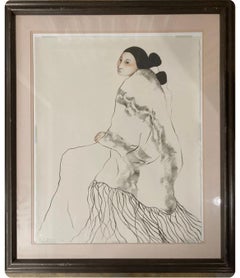
Modern Abstract Taos Pueblo Woman Figurative Minimalist Lithograph 68/80
By R.C. Gorman
Located in Houston, TX
Modern figurative abstract lithograph by Sante Fe, NM artist R.C. Gorman (Rudolph Carl Gorman). This lithograph depicts a Taos woman in a kneeling position and wearing a plain fringed shawl. Signed, dated, and editioned by the artist along lower margin. Framed and matted in a gold wooden modern frame. Dimensions Without Frame: H 30 in. x W 22.5 in. Artist Biography: Rudolph Carl Gorman (July 26, 1931 – November 3, 2005) was a Native American artist of the Navajo Nation. Referred to as "the Picasso of American Indian artists" by The New York Times, his paintings are primarily of Native American women...
Category

1970s Modern R.C. Gorman Prints and Multiples

Materials

Lithograph

Damita, State #1 Pink Blouse
By R.C. Gorman
Located in San Francisco, CA
This artwork titled "Damita Pink Blouse" first state, 1979 Is an original lithograph on Arches paper by renown Navajo artist Rudolph Carl Gorman, 1932-20...
Category

Late 20th Century Realist R.C. Gorman Prints and Multiples

Materials

Lithograph

Cholena
By R.C. Gorman
Located in San Francisco, CA
This artwork titled "Cholena" 1980 Is an original lithograph on creme Wove paper by renown Navajo artist Rudolph Carl Gorman, 1932-2005. It is signed, dated and numbered 26/150 in pe...
Category

Late 20th Century Realist R.C. Gorman Prints and Multiples

Materials

Lithograph

Cholena
Cholena
H 16.75 in W 14.25 in D 0.01 in
Su-Sho-Bah
By R.C. Gorman
Located in San Francisco, CA
This artwork titled "Su-Sho-Bahi" 1980 Is an original lithograph on Arches paper by renown Navajo artist Rudolph Carl Gorman, 1932-2005. It is signed, dated and numbered 95/100 in pe...
Category

Late 20th Century Realist R.C. Gorman Prints and Multiples

Materials

Lithograph

Su-Sho-Bah
Su-Sho-Bah
H 30 in W 22.25 in D 0.01 in
Naomi
By R.C. Gorman
Located in San Francisco, CA
This artwork titled "Naomi" 1980 Is an original lithograph on creme Arches paper by renown Navajo artist Rudolph Carl Gorman, 1932-2005. It is signed, dated and numbered 84/150 in pe...
Category

Late 20th Century Realist R.C. Gorman Prints and Multiples

Materials

Lithograph

Naomi
Naomi
H 27.5 in W 22.25 in D 0.01 in
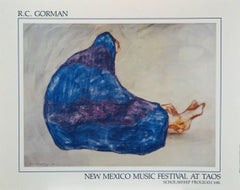
“Francine” New Mexico Music Festival at Taos Scholarship Program
By R.C. Gorman
Located in Chesterfield, MI
R.C. GORMAN (Native American, 1931-2005). "New Mexico Music Festival at Taos Scholarship Program" Event Poster. Featuring the image “Francine” by the artist. Plate signed, 1981. The ...
Category

1980s R.C. Gorman Prints and Multiples

Materials

Lithograph

PANADERA
By R.C. Gorman
Located in Aventura, FL
Hand signed and numbered by the artist. Edition 121/225. Artwork in excellent condition. Additional images are available upon request. Certificate of Authenticity is included. Pleas...
Category

1990s Contemporary R.C. Gorman Prints and Multiples

Materials

Lithograph, Paper

Woman of Paris
By R.C. Gorman
Located in Paonia, CO
Woman of Paris is a signed limited edition lithograph numbered 18 out of 100 by Rudolph Carl Gorman ( 1931 -2005 ). It is in the original frame. The print size is 21 x 29 frame size is 29 x 36 During R. C. Gorman's time in the Navy he would frequently draw the girlfriends of his fellow sailor friends in order to acquire some extra cash. After the Navy Gorman earned a scholarship to study at the University of the Americas in Mexico where he was exposed to the art of the great Mexican masters -Orozco, Rivera, Siqueiros, and Tamayo who deeply influenced his work. After Mexico, Gorman moved to San Francisco and established his first studio. Referred to as the Picasso of American Indian artists by The New York Times his paintings are primarily of Native American women...
Category

1970s Impressionist R.C. Gorman Prints and Multiples

Materials

Lithograph

"Gladia, " an Original Color Lithograph signed by Rudolph Carl Gorman
By R.C. Gorman
Located in Milwaukee, WI
"Gladia" is an original signed color lithograph by R.C. Gorman. A woman is seated with a basket of flowers in front of a sunset-colored gradient background. Signed and dated lower le...
Category

1990s Contemporary R.C. Gorman Prints and Multiples

Materials

Lithograph

"New Dawn, " Original Figurative Color Lithograph signed by R.C. Gorman
By R.C. Gorman
Located in Milwaukee, WI
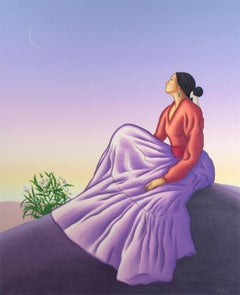
"New Dawn" is an original signed color lithograph by R.C. Gorman. A woman is seated on a hill, gazing pensively at the moon in front of a pastel sunset-colored gradient background. S...
Category

Early 2000s Contemporary R.C. Gorman Prints and Multiples

Materials

Lithograph

R C Gorman prints and multiples for sale on 1stDibs.

Find a wide variety of authentic R C Gorman prints and multiples available for sale on 1stDibs.