Raku Kichizaemon XI Keinyu
to
1
1
1
1
1
1
1
1
1
1
1
1
12,861
3,850
2,369
2,228
Creator: Raku Kichizaemon XI Keinyu
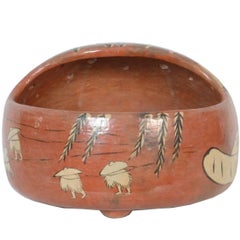
Furo Tea Ceremony Hibachi by Raku Kichizaemon xi Keinyu, 1817-1902
By Raku Kichizaemon XI Keinyu
Located in Prahran, Victoria
A furo tearoom brazier by Raku Kichizaemon XI Keinyu (1817-1902) decorated in bold style over a brick red glaze. The classical scene depicts men in ‘mino’ straw raincoats pulling a barge up river under the overhanging branches of an ancient willow tree.
With makers mark to base and sold with its original paulownia wood storage box.
Overall the piece is in excellent condition but has sustained several stress cracks in one corner due to heat encountered during continual use. This is typical of Japanese raku ceramics...
Category
Late 19th Century Japanese Meiji Antique Raku Kichizaemon XI Keinyu
Materials
Pottery

$1,950 Sale Price
25% Off
Related Items
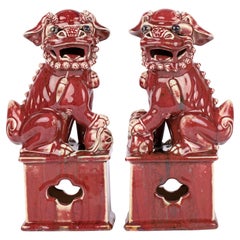
Chinese Qing Pair Jun-Ware Liver Red Glazed Foo Dogs
Located in Bishop
s Stortford, Hertfordshire
A rare and attractive pair Chinese Qing Jun-ware Foo dogs decorated in liver red glazes and dating from around 1850. The porcelain dogs are heavily made and stand raised on rectangul...
Category
1850s Chinese Qing Antique Raku Kichizaemon XI Keinyu
Materials
Porcelain
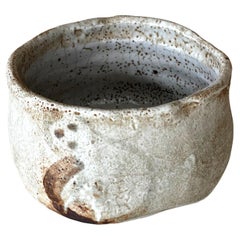
Antique Japanese Shino Ware Chawan Tea Bowl
Located in Atlanta, GA
On offer is a Japanese ceramic tea bowl (chawan) used in the traditional chado ceremony. The bowl was potted in clog form with a ring foot shaved extremely low. Its size and harmonious proportion make it perfect to be held in both hands during chado. Classified as shino ware...
Category
18th Century Japanese Edo Antique Raku Kichizaemon XI Keinyu
Materials
Ceramic
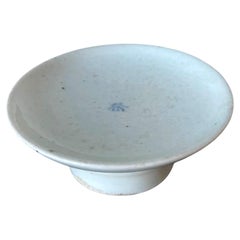
Korean Ceramic Ritual Offering Stemmed Dish with Inscription Joseon Dynasty
Located in Atlanta, GA
A small ceramic stemmed dish with high cylindrical foot in white glaze with a cobalt blue underglaze inscription in the center from Korea, circa 18-19th cent...
Category
Late 18th Century Korean Archaistic Antique Raku Kichizaemon XI Keinyu
Materials
Ceramic
Japanese Glazed Ceramic and Silver Koro Incense Burner Makuzu Kozan
By Makuzu Kozan
Located in Atlanta, GA
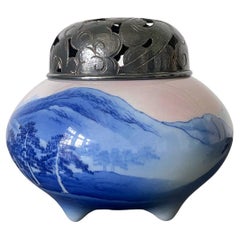
A tri-pod ceramic incense burner (koro) by Japanese Imperial potter Makuzu Kozan (1842-1916) circa late Meiji to the start of Taisho period (1890-1910s). A fine example of the artist's work belonging to the late part of his underglaze paint phase (started around 1887 until his death), the surface of the koro was painted in beautiful shades of blue to depict a continuous landscape not unlike a traditional ink and watercolor hand scroll. The rise and fall mountains recede and fade into the horizon and are dotted with groves of pines. The sky is painted with a beautiful subtle shade of pink, suggesting a time of sunrise or sunset. The koro is fitted with an ensuite reticulated sterling silver hoya (incense cover), pierced with swirling cloud and marked with "pure silver' in Kanji. The base is signed in underglaze blue "Makuzu Kozan Sei" within a double ring. The piece is beautifully potted in form and the decoration was done with expertise using the novel technique developed by Kozan called Fuki-e (the blow painting), in order to achieve the striking landscape known as "Mountain and Water" with sense of dimensions and gradient, the poetic effects normally conveyed only by sumi ink staining on paper. The piece comes with an unsigned tomobako (wood storage box) of a recent age.
Also known as Miyagawa Kozan (1842–1916), Makuzu Kozan was one of the most established and collected ceramist from Meiji Period. Born as Miyagawa Toranosuke, Kozan established his pottery studio in Yokohama around 1870s and later became one of the appointed artists to the Japanese Imperial household. His work was exhibited in many international fairs that the Meiji government participated at the turn of the century and won many grand prizes. Being one of the most creative ceramists, Kozan started experimenting with new chemical colors from the West in the format of his porcelain glaze around 1880s. New colors allowed him to create underglaze designs that appeared bright, smooth and glossy. He even invented his own receipt of cobalt blue to achieve a much brighter yet softer shade, as evident on this vase. To create landscape that is realistic and dimensional, more common in the western paintings, he was inspired by the native Japanese ink painting technique developed around 1900 by Yokoyama...
Category
Early 1900s Japanese Japonisme Antique Raku Kichizaemon XI Keinyu
Materials
Silver
Korean White Ceramic Stem Dish Joseon Dynasty
Located in Atlanta, GA
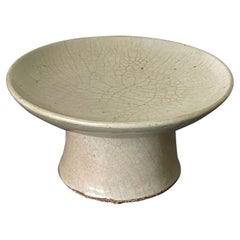
A ceramic dish with high cylindrical foot in white glaze from Korea, circa 19th century Joseon Dynasty. By shape, this piece is most likely a ceremonial vessel that was used to make offerings on the altar. Although without inscription, we can't rule out that it could be a household item for occasions that were less formal. Such as a private shrine in the household. During Joseon dynasty, the social morals were largely centered on the principles of Confucianism that originated from China. Many ritual ceramic wares were produced for rituals and worships on all level of the society. The ware were often modeled after the archaic bronze ware that elevated them from the aesthetic of daily use pieces. High foot dish like this were made in both round and square shape to suite different use but they were all distinguished with the inscription for their exclusive ceremonial purpose.
Of elegant form and harmonious proportion, this stem dish...
Category
19th Century Korean Archaistic Antique Raku Kichizaemon XI Keinyu
Materials
Ceramic
Kichizaemon Raku Seinyu XIII "13th" Signed Antique Japanese Raku Chawan Tea Bowl
Located in Studio City, CA
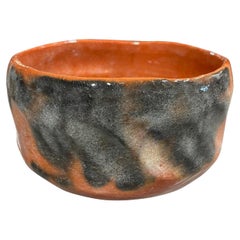
A wonderfully glazed, impeccably made Chawan tea bowl by famed Japanese master potter the 13th Kichizaemon Raku, Seinyu (1887-1944) who was the eldest son of Konyu - the 12th Kichizaemon of the Raku family line of potters - known as the most noted and celebrated tradition of pottery within the world of Japanese tea. Kichizaemon Raku was the 13th master to carry on the family's esteemed name and tradition. The bowl features shifting textures and deep, rich colours which radiate in the light.
The term "Raku" was derived from the site where clay was dug in Kyoto in the late 16th century. The Kanji character for Raku translates to "enjoyment" or "fun/delightful" For 15 generations it has been the title and seal used by a lineage of potters whose work formed the central tradition in Japan. This lineage believes that 'Raku' refers to the potters who use the technique, not the technique itself. In the 16th century, the first of these potters, Chojiro is said to have come under the patronage of the Japanese tea master, Sen-No-Rikyu. According to legend, in 1598 a few years after Chojiro's death, ruler, Hideyoshi Toyotomi bestowed upon his adopted son, Jokei, a golden seal with the written symbol "Raku." Both the name and the ceramic style have been passed down through the family to the present ever since. The name and the style of ware have become influential in both Japanese culture and literature. Raku ware marked an important point in the historical development of Japanese ceramics, as it was the first ware to use a seal mark and the first to focus on close collaboration between potter and patron. Other famous Japanese clay artists...
Category
Early 20th Century Japanese Meiji Raku Kichizaemon XI Keinyu
Materials
Ceramic
$5,500
H 3.25 in W 5 in D 5 in
Korean Ceramic Ritual Offering Vessel with Inscription Joseon Dynasty
Located in Atlanta, GA
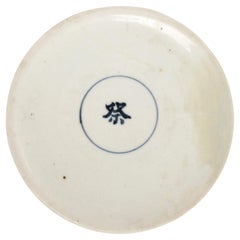
A ceramic dish with high cylindrical foot in white glaze with a cobalt blue underglaze inscription from Korea, circa 18-19th century Joseon Dynasty. This is a classic ceremonial vess...
Category
Late 18th Century Korean Archaistic Antique Raku Kichizaemon XI Keinyu
Materials
Ceramic
$3,200 Sale Price
46% Off
H 3.25 in Dm 9 in
Rare and Fine Antique Japanese Ceramic Ko-Satsuma Chaire Tea Caddy
Located in Atlanta, GA
A ceramic tall chaire (Tea caddies) ko-satsuma type from Edo period Japan circa 18th century. This type of small jar was made of stoneware. Its specific form with raised shoulder and...
Category
18th Century Japanese Edo Antique Raku Kichizaemon XI Keinyu
Materials
Ceramic
Chinese Pair Kangxi Porcelain Famille Verte Buddhist Lion Joss Stick Holders
Located in Bishop
s Stortford, Hertfordshire
A very fine pair antique Chinese Kangxi porcelain famille verte Buddhist Lion joss stick holders dating between 1662 and 1722. The dogs sit raised on...
Category
17th Century Chinese Qing Antique Raku Kichizaemon XI Keinyu
Materials
Porcelain
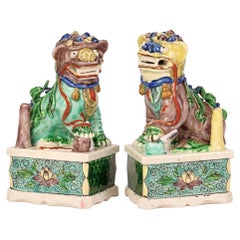
$4,043 / set
H 5.12 in W 2.96 in D 2.17 in
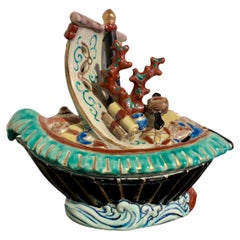
Japanese Kutani Treasure Boat
Takarabune
Censer, Taisho Period, Japan
Located in Austin, TX
A wonderful Japanese Kutani porcelain incense burner, koro, in the form of a treasure ship, Takarabune, Taisho Period (1912 - 1926), Japan.
The censer boldly modeled as the legendary Takarabune, or Treasure Ship, a mythical ship said to carry the shichifukujin, the Seven Lucky Gods, around the heavens during the first days of the New Year, visiting lucky humans to bring blessings and prosperity.
The black bodied, single mast ship sails on the water, its sail full of wind and decorated with the character "takara", meaning treasure. The pierced top of the ship serving as the cover for the censer. It is loaded with magical items and treasure, most prominently, a large coral branch...
Category
1910s Vintage Raku Kichizaemon XI Keinyu
Materials
Porcelain
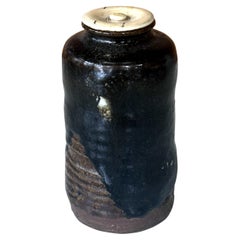
Antique Japanese Ceramic Tanba Chaire with Lid
Located in Atlanta, GA
A stoneware ceramic chaires (Tea caddies) of Ko-seto ware type from Edo period Japan circa 18th century. This type of small jar was made of stoneware possibly in Tanba (Tamba) kilns,...
Category
18th Century Japanese Edo Antique Raku Kichizaemon XI Keinyu
Materials
Ceramic
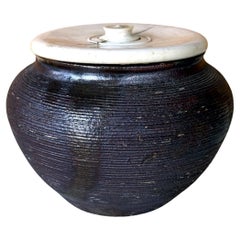
Rare Antique Japanese Ceramic Takatori Ware Hoso Mizusashi
Located in Atlanta, GA
This small ceramic container from Edo period Japan circa 1800s was made in the Takatori Kilns in Fukuoka Prefecture. This type of small, tall jar with a lid was specifically created ...
Category
19th Century Japanese Edo Antique Raku Kichizaemon XI Keinyu
Materials
Ceramic
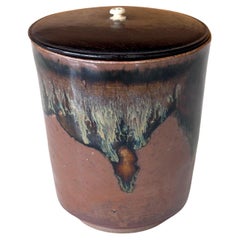
Raku Kichizaemon Xi Keinyu furniture for sale on 1stDibs.
Raku Kichizaemon XI Keinyu furniture are available for sale on 1stDibs. These distinctive items are frequently made of pottery and are designed with extraordinary care. There are many options to choose from in our collection of Raku Kichizaemon XI Keinyu furniture, although brown editions of this piece are particularly popular. If you’re looking for additional options, many customers also consider furniture by Satsuma, Imari Porcelain, and Yabu Meizan. Prices for Raku Kichizaemon XI Keinyu furniture can differ depending upon size, time period and other attributes — on 1stDibs, these items begin at $1,950 and can go as high as $1,950, while a piece like these, on average, fetch $1,950.