R.B. Kitaj Art
Born Ronald Brooks Kitaj in Cleveland, Ohio, to an American family with Viennese and Russian-Jewish heritage, R.B. Kitaj (1932-2007) is widely regarded as one of the most erudite and iconographically complex artists of the last half-century; he is subsequently considered to be a key figure in the canon of European and American art. His expressive, figurative works combine aspects of contemporary life with art historical and socio-political references, sexuality,self-analysis and Judeo-Christian mysticism embedded in the early 20th-century literature of Franz Kafka and Walter Benjamin. While his work has occasionally been considered controversial, he is undeniably viewed as a master draughtsman with a commitment to figurative art. His highly personal paintings, prints and drawings reflect his deep interest in history; cultural, social and political ideologies; and issues of identity.
As a child, attended art classes at the Cleveland Museum of Art. Following his studies at Cooper Union in New York and the Academy of Fine Arts, Vienna, he spent two years in Europe serving for the United States Army. He then continued his studies at the Ruskin School of Art, Oxford University, and at the Royal College of Art in London. He enrolled at the latter in 1959, where he became a close friend of David Hockney, Patrick Caulfield and Allen Jones, he was inititally identified as a pioneer of Pop Art, before recontextualising himself as a School of London painter alongside admired contemporaries that included Auerbach, Bacon, Freud and Kossoff. Kitaj remained in in London for 40 years, until 1997 when he moved to Los Angeles. He died at his home there in 2007, one week before his 75th birthday.
Despite his early association with Pop Art, Kitaj had limited interest in the culture of mass media and instead works from pictorial and literary sources. Renowned for his use of intellectually stimulating historical references, Kitaj's work was often inspired by late 19th-century French art and by his Jewish identity. His paintings and prints add up to an extraordinary body of work; the latter function as an illustrated journal of an artist's life, characterized by a quest for new subject matter and innovative ways to depict it. R.B. Kitaj remains one of the most influential artists since the late 1950's and continues to link personal history with contemporary art through his unique vision.
to
1
3
3
3
2
1
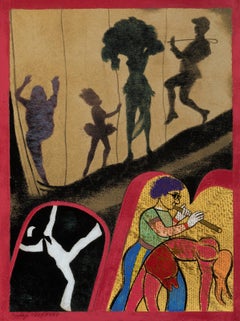
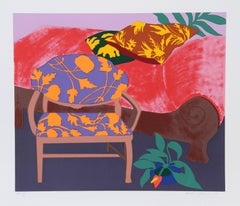
Performing Arts Center, Modern Art Screenprint by RB Kitaj
By R.B. Kitaj
Located in Long Island City, NY
This print by R.B. Kitaj is part of an 8-piece portfolio published by The New York Graphic Society in 1983 and includes works from Red Grooms, Robert Indiana, Alex Katz, R.B. Kitaj, ...
Category
1980s Modern R.B. Kitaj Art
Materials
Screen
1972
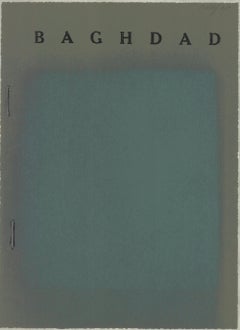
Baghdad
Hand Signed
By R.B. Kitaj
Located in Brooklyn, NY
Six color screen-print and photo-screenprint. Signed and numbered AP in pencil by Kitaj in the top right corner.
Printed at Kelpra Studio, London and published by Marlborough Graphi...
Category
1970s Contemporary R.B. Kitaj Art
Materials
Screen

$1,200 Sale Price
20% Off
Cap
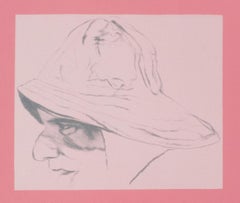
n A.B. Dick (B) Pale pink and raspberry sailor
s portrait drawing R.B. Kitaj
By R.B. Kitaj
Located in New York, NY
Kitaj’s drawing on pink paper is of a man in profile, wearing a sou’wester: a fisherman’s collapsible rain hat. The image is a wry portrait, ostensibly of Albert Blake...
Category
1970s Realist R.B. Kitaj Art
Materials
Lithograph
Related Items
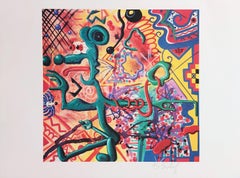
Ratfinkbonerthunk : Surrealist Rat - Original Giclee Print, Handsigned
By Kenny Scharf
Located in Paris, IDF
Kenny Scharf
Ratfinkbonerthunk : Surrealist Rat, 1990
Original Giclee Print
Handsigned in pencil
On Arches vellum 56 x 76 cm (c. 22 x 30 in)
Published by Editions Vermorel in 1990
...
Category
1990s American Modern R.B. Kitaj Art
Materials
Giclée, Screen
$1,783
H 22.05 in W 29.93 in
Chez, Pop Art Screenprint by Hunt Slonem
By Hunt Slonem
Located in Long Island City, NY
Artist: Hunt Slonem, American (1951 - )
Title: Chez
Year: 1980
Medium: Serigraph, signed and numbered in pencil
Edition: AP 30
Image Size: 22 x 29 inches
Size: 26 in. x 30 in....
Category
1970s Contemporary R.B. Kitaj Art
Materials
Screen
VENDEDORA Signed Lithograph, Portrait Seated Young Girl, Mexican Fruit Seller
By Elizabeth Catlett
Located in Union City, NJ
VENDEDORA, a limited edition lithograph by the renowned American-born Mexican sculptor and printmaker Elizabeth Catlett(b.1915–2012) depicts a sensitive black and white portrait of a...
Category
Early 2000s Realist R.B. Kitaj Art
Materials
Lithograph
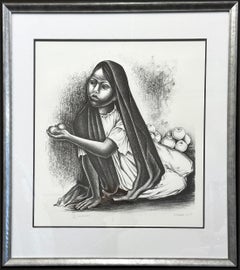
Elizabeth CatlettVENDEDORA Signed Lithograph, Portrait Seated Young Girl, Mexican Fruit Seller, 2001
$3,650
H 31.25 in W 27.75 in
YE PIPE AND BOWL Signed Lithograph Colonial Sign Painter, American Illustration
By Norman Rockwell
Located in Union City, NJ
Artist: Norman Rockwell, American (1894 - 1978)
Title: Ye Pipe and Bowl
Year: 1976
Medium: Hand Drawn Lithograph on Arches paper, 100% acid free, hand signed in pencil by Norman Rock...
Category
1970s Realist R.B. Kitaj Art
Materials
Lithograph
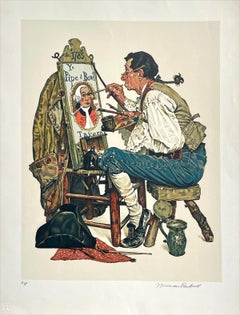
Norman RockwellYE PIPE AND BOWL Signed Lithograph Colonial Sign Painter, American Illustration, 1976
$1,931 Sale Price
25% Off
H 26.5 in W 21 in
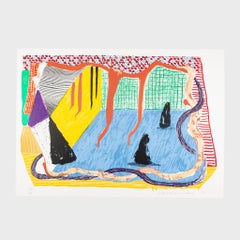
Ink in the Room, from
Some New Prints
By David Hockney
Located in Bristol, GB
23-colour screenprint on Arches 88 paper
Edition 37 of 68 + 14 AP's
Signed, numbered, dated and blindstamped by publisher on the front (Gemini G.E.L.)
Excellent, with minor loss of s...
Category
20th Century Contemporary R.B. Kitaj Art
Materials
Screen
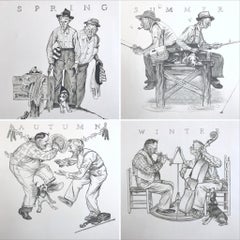
THE FOUR SEASONS 4 Lithographs on Arches paper, American Illustration, Americana
By Norman Rockwell
Located in Union City, NJ
Artist: Norman Rockwell, American (1894 - 1978)
Title: The Four Seasons: SPRING, SUMMER, AUTUMN, WINTER
Medium: Lithograph on Arches paper, 100% acid free
Paper Size: 20.5 x 19.25 in...
Category
1970s Realist R.B. Kitaj Art
Materials
Lithograph
$3,100 Sale Price
20% Off
H 20.5 in W 19.25 in
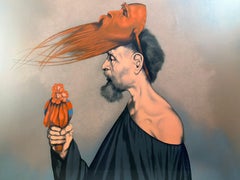
Santiago (A/P)
By Rafael Coronel
Located in San Francisco, CA
Serigraph by Mexican painter Rafael Coronel. Edition of 100. Certificate of authenticity included.
Category
Late 20th Century Contemporary R.B. Kitaj Art
Materials
Screen
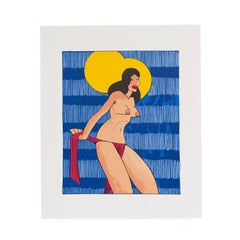
Untitled by Ken Price
By Ken Price
Located in Morton Grove, IL
Ken Price
silkscreen on Arches 88 paper
14.875 x 12.375”
1981
edition of 150
stamped by Ken Price, SOMA Fine Art Press and Arabesque Books
Category
1980s Contemporary R.B. Kitaj Art
Materials
Screen
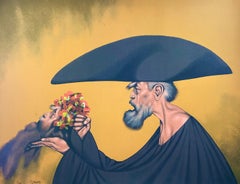
La ofrenda (The Offering) (5/100)
By Rafael Coronel
Located in San Francisco, CA
Serigraph by Mexican painter Rafael Coronel. Edition 5 of 100. Certificate of authenticity included.
Category
Late 20th Century Contemporary R.B. Kitaj Art
Materials
Screen
Modernist Silkscreen Screenprint
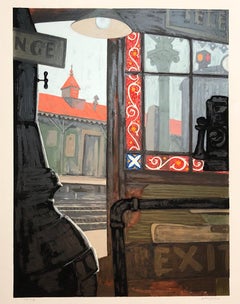
El Station, Interior
NYC Subway, WPA Artist
By Anthony Velonis
Located in Surfside, FL
screenprint printed in color ink on wove paper. New York City subway station interior.
Anthony Velonis (1911 – 1997) was an American painter and designer born in New York City who helped introduce the public to silkscreen printing in the early 20th century.
While employed under the federal Works Progress Administration, WPA during the Great Depression, Velonis brought the use of silkscreen printing as a fine art form, referred to as the "serigraph," into the mainstream. By his own request, he was not publicly credited for coining the term.
He experimented and mastered techniques to print on a wide variety of materials, such as glass, plastics, and metal, thereby expanding the field. In the mid to late 20th century, the silkscreen technique became popular among other artists such as Robert Rauschenberg and Andy Warhol.
Velonis was born into a relatively poor background of a Greek immigrant family and grew up in the tenements of New York City. Early on, he took creative inspiration from figures in his life such as his grandfather, an immigrant from the mountains in Greece, who was "an ecclesiastical painter, on Byzantine style." Velonis attended James Monroe High School in The Bronx, where he took on minor artistic roles such as the illustration of his high school yearbook. He eventually received a scholarship to the NYU College of Fine Arts, into which he was both surprised and ecstatic to have been admitted. Around this time he took to painting, watercolor, and sculpture, as well as various other art forms, hoping to find a niche that fit. He attended NYU until 1929, when the Great Depression started in the United States after the stock market crash.
Around the year 1932, Velonis became interested in silk screen, together with fellow artist Fritz Brosius, and decided to investigate the practice. Working in his brother's sign shop, Velonis was able to master the silkscreen process. He reminisced in an interview three decades later that doing so was "plenty of fun," and that a lot of technology can be discovered through hard work, more so if it is worked on "little by little."
Velonis was hired by Mayor LaGuardia in 1934 to promote the work of New York's city government via posters publicizing city projects. One such project required him to go on a commercial fishing trip to locations including New Bedford and Nantucket for a fortnight, where he primarily took photographs and notes, and made sketches. Afterward, for a period of roughly six months, he was occupied with creating paintings from these records. During this trip, Velonis developed true respect and affinity for the fishermen with whom he traveled, "the relatively uneducated person," in his words.
Following this, Velonis began work with the Public Works of Art Project (PWAP), an offshoot of the Civil Works Administration (CWA), where he was assigned to serve the different city departments of New York. After the formation of the federal Works Progress Administration, which hired artists and sponsored projects in the arts, he also worked in theater.
Velonis began working for the federal WPA in 1935. He kept this position until 1936 or 1938, at which point he began working in the graphic art division of the Federal Art Project, which he ultimately led. Under various elements of the WPA program, many young artists, writers and actors gained employment that helped them survive during the Depression, as well as contributing works that created an artistic legacy for the country.
When interviewed in December 1994 by the Library of Congress about his time in the WPA, Velonis reflected that he had greatly enjoyed that period, saying that he liked the "excitement" and "meeting all the other artists with different points of view." He also said in a later interview that "the contact and the dialogue with all those artists and the work that took place was just invaluable." Among the young artists he hired was Edmond Casarella, who later developed an innovative technique using layered cardboard for woodcuts.
Velonis introduced silkscreen printing to the Poster Division of the WPA. As he recalled in a 1965 interview: "I suggested that the Poster division would be a lot more productive and useful if they had an auxiliary screen printing project that worked along with them. And apparently this was very favorably received..."
As a member of the Federal Art Project, a subdivision of the WPA, Velonis later approached the Public Use of Arts Committee (PUAC) for help in "propagandizing for art in the parks, in the subways, et cetera." Since the Federal Art Project could not be "self-promoting," an outside organization was required to advertise their art more extensively. During his employment with the Federal Art Project, Velonis created nine silkscreen posters for the federal government.
Around 1937-1939 Velonis wrote a pamphlet titled "Technical Problems of the Artist: Technique of the Silkscreen Process," which was distributed to art centers run by the WPA around the country. It was considered very influential in encouraging artists to try this relatively inexpensive technique and stimulated printmaking across the country.
In 1939, Velonis founded the Creative Printmakers Group, along with three others, including Hyman Warsager. They printed both their own works and those of other artists in their facility. This was considered the most important silkscreen shop of the period.
The next year, Velonis founded the National Serigraph Society. It started out with relatively small commercial projects, such as "rather fancy" Christmas cards that were sold to many of the upscale Fifth Avenue shops...
Category
1980s American Modern R.B. Kitaj Art
Materials
Screen
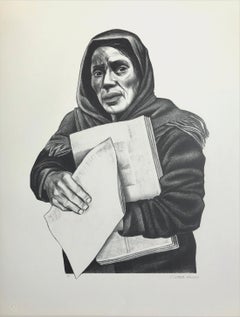
VENDEDORA DE PERIÓDICOS Signed Lithograph, Mexican Woman Newspaper Vendor
By Elizabeth Catlett
Located in Union City, NJ
VENDEDORA DE PERIÓDICOS is a limited edition lithograph by the acclaimed African American woman artist, sculptor and printmaker, Elizabeth Catlett (April 15, 1915 - April 2, 2012) p...
Category
21st Century and Contemporary Realist R.B. Kitaj Art
Materials
Lithograph
$3,275
H 24.25 in W 18.5 in
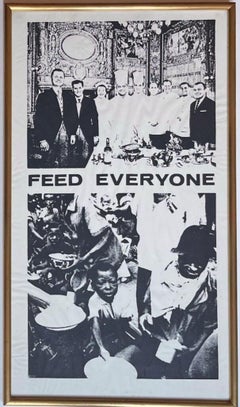
Feed Everyone (for the Black Panthers at 1960s Harvard Square Be-in) food in art
Located in New York, NY
Unknown Artist
Feed Everyone, ca. 1969
Offset lithograph poster
Frame included: held in original vintage metal frame
Measurements:
Framed
27.5 inches vertical by 16 inches vertical b...
Category
1960s Realist R.B. Kitaj Art
Materials
Lithograph, Offset
$2,100 Sale Price
25% Off
H 27.5 in W 16 in D 0.75 in
Previously Available Items
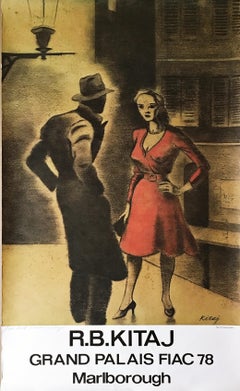
Femme de Peuple II (hand signed and inscribed to poet Robert Duncan)
By R.B. Kitaj
Located in New York, NY
R. B. Kitaj
Femme de Peuple II (hand signed and inscribed to poet Robert Duncan), 1978
Offset Lithograph (hand signed and inscribed to poet Robert Duncan)
Hand signed and inscribed o...
Category
1970s Pop Art R.B. Kitaj Art
Materials
Graphite, Lithograph, Offset
R.b. Kitaj art for sale on 1stDibs.
Find a wide variety of authentic R.B. Kitaj art available for sale on 1stDibs. If you’re browsing the collection of art to introduce a pop of color in a neutral corner of your living room or bedroom, you can find work that includes elements of pink, purple and other colors. You can also browse by medium to find art by R.B. Kitaj in screen print, mixed media, lithograph and more. Much of the original work by this artist or collective was created during the 20th century and is mostly associated with the Pop Art style. Not every interior allows for large R.B. Kitaj art, so small editions measuring 14 inches across are available. Customers who are interested in this artist might also find the work of Peter Phillips, Patrick Nagel, and Clemens Briels. R.B. Kitaj art prices can differ depending upon medium, time period and other attributes. On 1stDibs, the price for these items starts at $800 and tops out at $4,000, while the average work can sell for $1,450.