Richard Lindner Abstract Prints
American, 1901-1978
Richard Lindner (1901 – 1978) was a German-American painter. Lindner's mother was owner of a custom-fitting corset business and Richard Lindner grew up and studied at the Kunstgewerbeschule (Arts and Crafts School since 1940 Academy of Fine Arts). From 1924 to 1927 he lived in Munich and studied there from 1925 at the Kunstakademie. In 1927 Lindner moved to Berlin and stayed there until 1928, when he returned to Munich to become art director of a publishing firm. He remained in Munich until 1933, when he was forced to flee to Paris. Once in Paris, Lindner became politically engaged, sought contact with French artists and earned his living as a commercial artist. He was interned when World War II broke out in 1939 and later served in the French Army. In 1941, Lindner moved to the United States and worked in New York City as an illustrator of books and magazines. There he made contact with New York artists and German emigrants such as Albert Einstein, Marlene Dietrich, and Saul Steinberg. In 1948, Lindner became an American citizen. Lindner taught at a number of institutions including the Pratt Institute, Brooklyn, Hochschule fur bildende Kunste in Hamburg and Yale University School of Art and Architecture. His paintings often used the sexual symbolism of advertising and investigated definitions of gender roles in the media.to
1
6
2
2
Overall Width
to
Overall Height
to
7
1
1
52
660
215
169
165
10
5
4
8
2
2
2
2
2
1
1
1
9
3
1
1
9
1
Artist: Richard Lindner
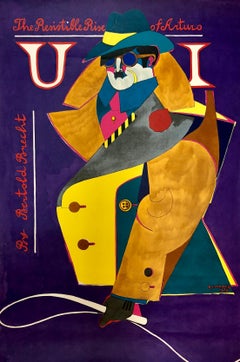
Offset Lithograph Poster Resistible Rise of Arturo, Bertold Brecht 1968 Pop Art
By Richard Lindner
Located in Surfside, FL
Plate signed and dated, offset lithograph.
Richard Lindner was born in Hamburg, Germany. In 1905 the family moved to Nuremberg, where Lindners mother was owner of a custom-fitting corset business and Richard Lindner grew up and studied at the Kunstgewerbeschule (Arts and Crafts School since 1940 Academy of Fine Arts). From 1924 to 1927 he lived in Munich and studied there from 1925 at the Kunstakademie. In 1927 he moved to Berlin and stayed there until 1928, when he returned to Munich to become art director of a publishing firm. He remained there until 1933, when he was forced to flee to Paris, where he became politically engaged, sought contact with French artists and earned his living as a commercial artist. He was interned when the war broke out in 1939 and later served in the French Army. In 1941 he went to the United States and worked in New York City as an illustrator of books and magazines (Vogue, Fortune and Harper's Bazaar). He began painting seriously in 1952, holding his first one-man exhibit in 1954. His style blends a mechanistic cubism with personal images and haunting symbolism. LIndner maintained contact with the emigre community including New York artists and German emigrants (Albert Einstein, Marlene Dietrich, Saul Steinberg). Though he became a United States citizen in 1948, Lindner considered himself a New Yorker, but not a true American. However, over the course of time, his continental circus women became New York City streetwalkers. New York police...
Category
1960s Pop Art Richard Lindner Abstract Prints
Materials
Lithograph, Offset
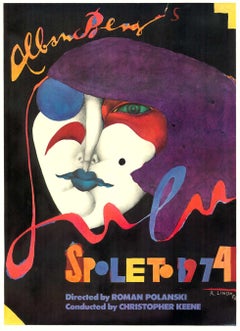
Original "Spoleto 1974, Lulu Opera
vintage poster
By Richard Lindner
Located in Spokane, WA
Original linen-backed 1974 Spoleto poster. Roman Polanski directed Alban Berg's opera LuLu at the Spoleto Festival, which was conducted by Christopher K...
Category
1970s Abstract Richard Lindner Abstract Prints
Materials
Lithograph

$799 Sale Price
20% Off
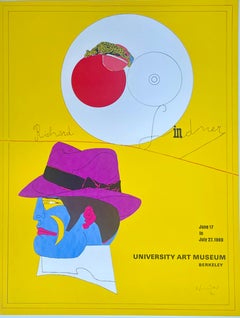
Original University Art Museum Berkeley 1969 serigraph vintage poster
By Richard Lindner
Located in Spokane, WA
Berkley; University Art Museum; original exhibition poster by Richard Lindner. Size: 23.5" x 30" Exhibition year: 1969.
Archival linen-backed original serigraph; excellent cond...
Category
1960s Richard Lindner Abstract Prints
Materials
Screen

Richard Lindner - rare 1960
s Pop offset lithograph Art Museum Berkeley Signed/N
By Richard Lindner
Located in New York, NY
Color lithograph with offset lettering
Pencil signed and numbered 129/200 in pencil on the front
Unframed
This signed limited edition was published on the occasion of Richard Lindner...
Category
1960s Pop Art Richard Lindner Abstract Prints
Materials
Lithograph, Offset
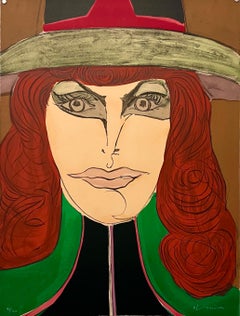
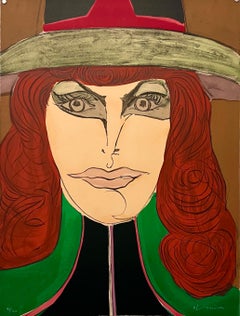
1971 Modernist Lithograph Redhead Pop Art Mod Fashionable Woman Richard Lindner
By Richard Lindner
Located in Surfside, FL
RICHARD LINDNER (American. 1901-1978)
Hand Signed limited edition lithograph with blindstamp
Publisher: Shorewood-Bank Street Atelier for the Skowhegan School of Painting and Sculpt...
Category
1970s Pop Art Richard Lindner Abstract Prints
Materials
Lithograph
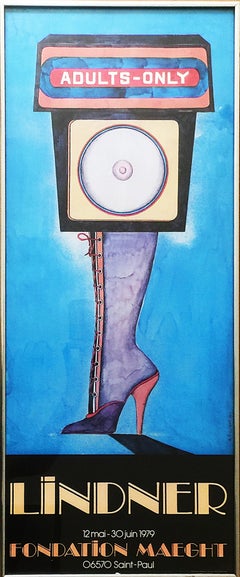
Richard Lindner, Adults-Only, Rare 1970s Pop Art poster in vintage frame Lt. Ed.
By Richard Lindner
Located in New York, NY
Richard Lindner
Adults-Only, 1979
Offset lithograph poster
Plate signature with date, right front
Limite Edition of 500 (unnumbered)
Frame Included: held in vintage 1970s metal perio...
Category
1970s Pop Art Richard Lindner Abstract Prints
Materials
Lithograph, Offset
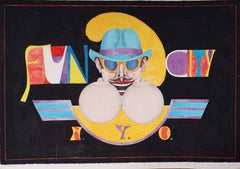
1970
s New York original lithograph by Richard Lindner
By Richard Lindner
Located in Petworth, West Sussex
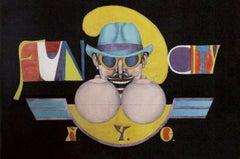
A funky urban image from 1971 depicting some of the nuances of New York seedy underbelly. This original lithograph is number 73 of and edition of 75 from the 1971 'Fun City' suite. Originally there were 12 different artworks in this series by Richard Lindner of which this is the title piece.
Signed in pencil 'R Lindner...
Category
Late 20th Century Modern Richard Lindner Abstract Prints
Materials
Lithograph
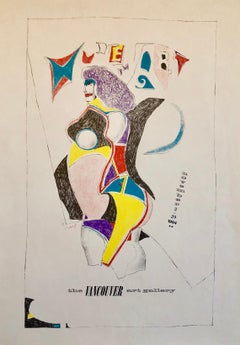
Vintage Modern Lithograph Poster 1960s Pop Art Mod Figure Pencil Signed
By Richard Lindner
Located in Surfside, FL
Richard Lindner was born in Hamburg, Germany. In 1905 the family moved to Nuremberg, where Lindners mother was owner of a custom-fitting corset business and Richard Lindner grew up a...
Category
1960s Pop Art Richard Lindner Abstract Prints
Materials
Lithograph
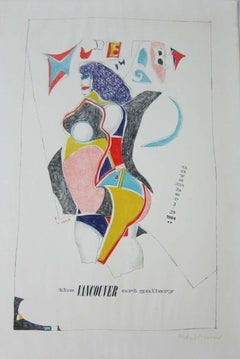
Vintage Modern Lithograph Poster 1960s Pop Art Mod Figure
By Richard Lindner
Located in Surfside, FL
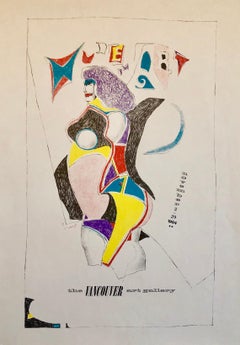
Vintage 1960's Lithograph poster for Vancouver Canada art show.
Richard Lindner was born in Hamburg, Germany. In 1905 the family moved to Nuremberg, where Lindners mother was owner of a custom-fitting corset business and Richard Lindner grew up and studied at the Kunstgewerbeschule (Arts and Crafts School since 1940 Academy of Fine Arts). From 1924 to 1927 he lived in Munich and studied there from 1925 at the Kunstakademie. In 1927 he moved to Berlin and stayed there until 1928, when he returned to Munich to become art director of a publishing firm. He remained there until 1933, when he was forced to flee to Paris, where he became politically engaged, sought contact with French artists and earned his living as a commercial artist. He was interned when the war broke out in 1939 and later served in the French Army. In 1941 he went to the United States and worked in New York City as an illustrator of books and magazines (Vogue, Fortune and Harper's Bazaar). He began painting seriously in 1952, holding his first one-man exhibit in 1954. His style blends a mechanistic cubism with personal images and haunting symbolism. LIndner maintained contact with the emigre community including New York artists and German emigrants (Albert Einstein, Marlene Dietrich, Saul Steinberg). Though he became a United States citizen in 1948, Lindner considered himself a New Yorker, but not a true American. However, over the course of time, his continental circus women became New York City streetwalkers. New York police...
Category
1960s Pop Art Richard Lindner Abstract Prints
Materials
Lithograph
Fun City, N.Y.C.
By Richard Lindner
Located in New York, NY
A very good impression of this color lithograph. Signed and numbered 125/175 in pencil, lower margin.
Category
1970s Pop Art Richard Lindner Abstract Prints
Materials
Color, Lithograph
Related Items
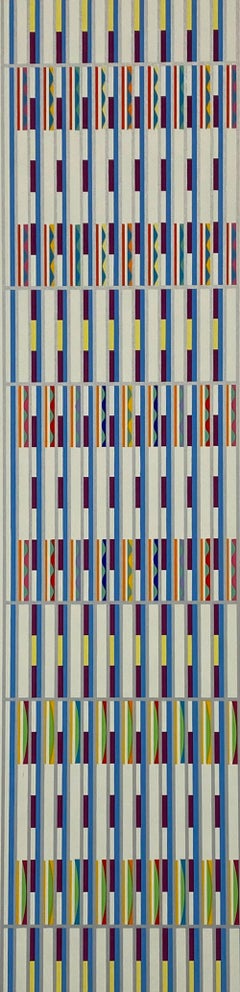
Yaacov Agam Untitled Vertical Orchestration
By Yaacov Agam
Located in Washington, DC
Artist: Yaacov Agam
Title: Untitled
Portfolio: Vertical Orchestration
Medium: Silkscreen
Year: 1980s
Edition: 23/54
Sheet Size: 29 5/8" x 8 3/4"...
Category
1980s Abstract Richard Lindner Abstract Prints
Materials
Screen
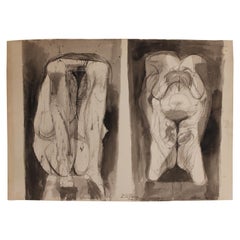
Abstract Figurative Lithograph
By Rico Lebrun
Located in Houston, TX
Black and white figurative abstract lithograph of two naked, crouching figures by California artist "Rico Lebrun," titled "Crouching Figures" and dated 1961. Additional writing on th...
Category
1960s Abstract Richard Lindner Abstract Prints
Materials
Lithograph
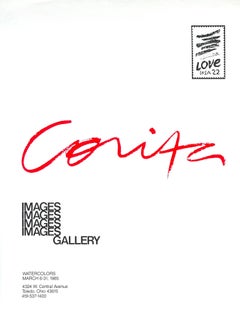
Sister Corita (vintage hand signed poster) Images Gallery rarely found signed
By Corita Kent
Located in New York, NY
Sister Mary Corita Kent
Sister Corita hand signed poster, 1985
Offset Lithograph
Signed in pencil by the artist on the lower right
24 x 18 inches
Unframed
This offset lithograph post...
Category
1980s Pop Art Richard Lindner Abstract Prints
Materials
Pencil, Lithograph, Offset
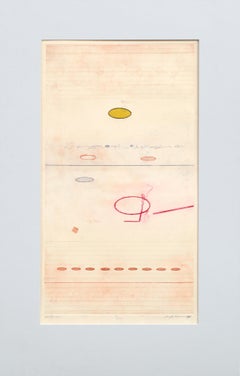
"Orange Row", Abstract Geometric Minimalist Composition w Ovals, Limited Edition
By Geoffrey Bowman
Located in Soquel, CA
"Orange Row", Abstract Geometric Minimalist Composition w Ovals, Limited Edition
Delicate and perfect ovals in orange, yellow, red, and blue are purposefully arranged on lined paper...
Category
1990s Abstract Geometric Richard Lindner Abstract Prints
Materials
Paper, Ink, Lithograph, Etching
$556 Sale Price
20% Off
H 32 in W 20 in D 0.25 in
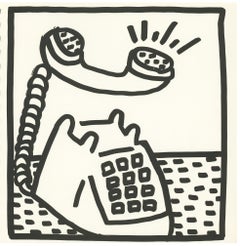
Keith Haring lithographic insert 1982 (Keith Haring Tony Shafrazi 1982)
By Keith Haring
Located in NEW YORK, NY
Keith Haring Lithograph 1982:
Double-sided lithographic insert from the seminal spiral bound, 1982 Tony Shafrazi catalog published on the occasion of Haring's first gallery solo exhi...
Category
1980s Pop Art Richard Lindner Abstract Prints
Materials
Lithograph, Offset
$400 Sale Price
20% Off
H 9 in W 9 in
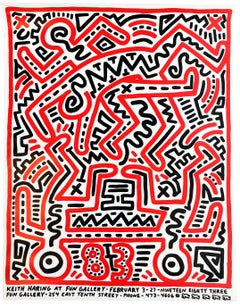
Keith Haring Fun Gallery exhibition poster 1983 (vintage Keith Haring)
By Keith Haring
Located in NEW YORK, NY
Keith Haring Fun Gallery 1983:
Original 1983 Keith Haring illustrated exhibition poster published on the occasion of Haring's historic 1983 show at the Fun Gallery in the East Village. A classic array of early Haring imagery that reveals red and black interlocking figures. A rare example in very good overall vintage condition.
Offset lithograph in colors on smooth wove paper.
23 x 29 inches.
Only some minor signs of handling; in otherwise very good overall vintage condition with strong colors; one of the better examples we've come across. Stored away from light; never mounted or framed.
Unsigned from an edition of unknown; scarce.
Catalog Raisonne:
Keith Haring: Posters (Prestel Publishing).
References:
Included in the collection of the Cooper Hewitt, Smithsonian Design Museum.
About the Fun Gallery:
Historic, short-lived, East Village gallery known for giving Keith Haring, Basquiat & Kenny Scharf some of their first solo shows.
“FUN Gallery was a place where neighborhood kids, downtown artists, b-boys, rock, film, and rap stars mixed with museum directors art historians and uptown collectors at wild openings featuring artists like Futura, Fab 5...
Category
1980s Pop Art Richard Lindner Abstract Prints
Materials
Lithograph, Offset
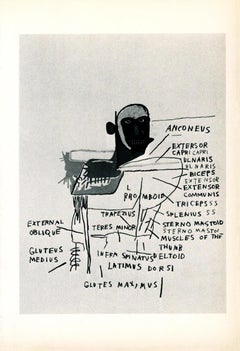
Basquiat Annina Nosei Gallery 1982 (Basquiat anatomy announcement)
By Jean-Michel Basquiat
Located in NEW YORK, NY
Jean-Michel Basquiat, Annina Nosei Gallery, New York, 1982:
Rare Basquiat announcement card published by Annina Nosei Gallery to advertise the release of ‘Basquiat Anatomy’ (a suite ...
Category
1980s Pop Art Richard Lindner Abstract Prints
Materials
Paper, Lithograph, Offset
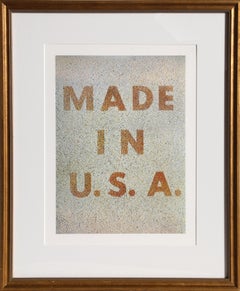
America: Her Best Product (Made in USA), Pop Art Lithograph by Ed Ruscha
By Ed Ruscha
Located in Long Island City, NY
Artist: after Ed Ruscha
Title: America: Her Best Product (Made in USA) from the Kent Bicentennial Portfolio
Year: 1975
Medium: Offset Lithograph (unsigned as issued)
Image: 13 x 9 in...
Category
1970s Pop Art Richard Lindner Abstract Prints
Materials
Offset
$1,200
H 21 in W 17.5 in
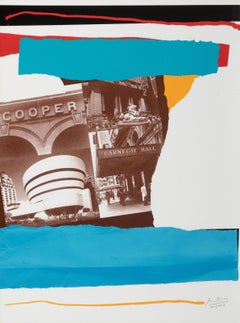
Cultural Institutions, Abstract Expressionist Lithograph by Robert Motherwell
By Robert Motherwell
Located in Long Island City, NY
This print by Robert Motherwell is part of an 8-piece portfolio published by The New York Graphic Society in 1983 and includes works from Red Grooms, Robert Indiana, Alex Katz, R.B. ...
Category
1980s Abstract Expressionist Richard Lindner Abstract Prints
Materials
Lithograph
Robert MotherwellCultural Institutions, Abstract Expressionist Lithograph by Robert Motherwell, 1983
$2,800 Sale Price
20% Off
H 30 in W 22.5 in
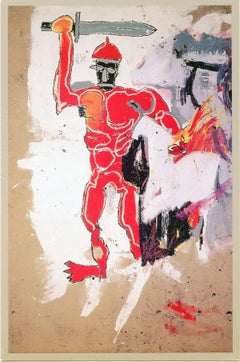
Basquiat at Vrej Baghoomian gallery 1989 (Basquiat Red Warrior announcement)
By Jean-Michel Basquiat
Located in NEW YORK, NY
Basquiat: Vrej Baghoomian gallery New York, 1989:
Vintage original folding announcement card to Jean-Michel Basquiat at Vrej Baghoomian Gallery New York: 10/21 to 11/25, 1989. Pictured on front side is an image of Basquiat's iconic, 'Red Warrior.' A rare, highly collectible Basquiat ephemera piece that works well in any collection.
Off-set printed gallery announcement.
8.75 x 5.75 inches (folded closed).
Light signs of handling; otherwise very good overall vintage condition.
Published by Vrej Baghoomian Gallery, New York, 1989.
Unsigned from an edition of unknown. Scarce.
Jean-Michel Basquiat rose to success during the 1980s. Basquiat’s paintings are largely responsible for elevating graffiti artists into the realm of the New York gallery scene. His spray-painted crowns and scribbled words referenced everything from his Haitian and Puerto Rican heritage, to political issues, pop-culture icons, and Biblical verse. The gestural marks and expressive nature of his work not only aligned him with the street art of Keith Haring and Kenny Scharf, but also the Neo-Expressionists Julian Schnabel and David Salle. “If you wanna talk about influence, man, then you've got to realize that influence is not influence,” he said of his process. After quickly rising to fame in the early 1980s, Basquiat was befriended by many celebrities and artists, including Andy Warhol, with whom he made several collaborative works. At only 27, his troubles with fame and drug addiction led to his tragic death from a heroin overdose on August 12, 1988 in New York, NY. The Whitney Museum of American Art held the artist’s first retrospective from October 1992 to February 1993.
Related Categories:
Basquiat Tony Shafrazi. Basquiat ephemera. Basquiat poster. Basquiat prints...
Category
1980s Pop Art Richard Lindner Abstract Prints
Materials
Lithograph, Offset
$1,150
H 8.75 in W 5.75 in
Litografia Original II
By Joan Miró
Located in Kansas City, MO
Joan Miró
Litografia Original II
Color Lithograph
Year: 1975
Size: 12.5 × 9.6 inches
Catalogue Raisonné: Queneau, Miro Lithographe II, 1952-1963, p.35
Publisher: Maeght Editeur, Pari...
Category
1970s Abstract Expressionist Richard Lindner Abstract Prints
Materials
Lithograph

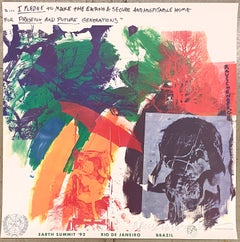
Rio de Janeiro
By Robert Rauschenberg
Located in Brooklyn, NY
Rio de Janeiro is a colorful, bold, graphic, and visually compelling offset-lithograph by blue chip, pop artist Robert Rauschenberg. In 1991, he was involved with th...
Category
1990s Pop Art Richard Lindner Abstract Prints
Materials
Archival Ink, Archival Paper, Lithograph, Offset
Previously Available Items
1971 Modernist Lithograph Redhead Pop Art Mod Fashionable Woman Richard Lindner
By Richard Lindner
Located in Surfside, FL
RICHARD LINDNER (American. 1901-1978)
Hand Signed limited edition lithograph with blindstamp
Publisher: Shorewood-Bank Street Atelier for the Skowhegan School of Painting and Sculpture
29.25 X 22 inches
Richard Lindner was born in Hamburg, Germany. In 1905 the family moved to Nuremberg, where Lindner's mother was owner of a custom-fitting corset business and Richard Lindner grew up and studied at the Kunstgewerbeschule (Arts and Crafts School since 1940 Academy of Fine Arts). From 1924 to 1927 he lived in Munich and studied there from 1925 at the Kunstakademie. In 1927 he moved to Berlin and stayed there until 1928, when he returned to Munich to become art director of a publishing firm. He remained there until 1933, when he was forced to flee to Paris, where he became politically engaged, sought contact with French artists and earned his living as a commercial artist. He was interned when the war broke out in 1939 and later served in the French Army. In 1941 he went to the United States and worked in New York City as an illustrator of books and magazines (Vogue, Fortune and Harper's Bazaar). He began painting seriously in 1952, holding his first one-man exhibit in 1954. His style blends a mechanistic cubism with personal images and haunting symbolism. LIndner maintained contact with the emigre community including New York artists and German emigrants (Albert Einstein, Marlene Dietrich, Saul Steinberg). Though he became a United States citizen in 1948, Lindner considered himself a New Yorker, but not a true American. However, over the course of time, his continental circus women became New York City streetwalkers. New York police uniforms replaced European military uniforms as symbols of authority.At a time when Abstract Expressionism was all the rage, Lindner’s painting went against the current and always kept its distance. His pictorial language of vibrant colours and broad planes of colour and his urban themes make him a forerunner of American Pop Art. At the same time, he owes the critical tone of his paintings to the influence of European art movements such as Neue Sachlichkeit and Dada. His first exhibition did not take place until 1954, by which time he was over fifty, and, interestingly, it was held at the Betty Parsons Gallery in New York, a venue associated with the American Expressionists. From 1952 he taught at the Pratt Institute, Brooklyn, from 1967 at Yale University School of Art and Architecture, New Haven. In 1957 Lindner got the William and Norma Copley Foundation-Award. In 1965 he became Guest Professor at the Akademie für Bildende Künste, Hamburg. His Ice (1966, Whitney Museum of American Art) established a connection between the metaphysical tradition and pop art. He did work on Rowlux which was used by a number of pop artists (most notably Roy Lichtenstein)The painting shows harsh, flat geometric shapes framing an erotic but mechanical robot-woman. His paintings used the sexual symbolism of advertising and investigated definitions of gender roles in the media. While influencing Pop Art (Andy Warhol, Tom Wesselmann and Claes Oldenburg amongst others) his highly colourful, hard-edge style seems to have brought him close to Pop Art, which he rejected. Nevertheless, he is immortalised on the cover of the Beatles record "Sgt. Pepper’s Lonely Hearts Club Band" (1967) as a patron of the pop culture. He also did a tapestry banner with the Betsy Ross Flag...
Category
1970s Pop Art Richard Lindner Abstract Prints
Materials
Lithograph
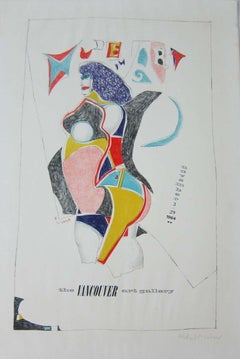
Vintage Modern Lithograph Poster 1960s Pop Art Mod Figure Pencil Signed
By Richard Lindner
Located in Surfside, FL
Richard Lindner was born in Hamburg, Germany. In 1905 the family moved to Nuremberg, where Lindners mother was owner of a custom-fitting corset business and Richard Lindner grew up and studied at the Kunstgewerbeschule (Arts and Crafts School since 1940 Academy of Fine Arts). From 1924 to 1927 he lived in Munich and studied there from 1925 at the Kunstakademie. In 1927 he moved to Berlin and stayed there until 1928, when he returned to Munich to become art director of a publishing firm. He remained there until 1933, when he was forced to flee to Paris, where he became politically engaged, sought contact with French artists and earned his living as a commercial artist. He was interned when the war broke out in 1939 and later served in the French Army. In 1941 he went to the United States and worked in New York City as an illustrator of books and magazines (Vogue, Fortune and Harper's Bazaar). He began painting seriously in 1952, holding his first one-man exhibit in 1954. His style blends a mechanistic cubism with personal images and haunting symbolism. LIndner maintained contact with the emigre community including New York artists and German emigrants (Albert Einstein, Marlene Dietrich, Saul Steinberg). Though he became a United States citizen in 1948, Lindner considered himself a New Yorker, but not a true American. However, over the course of time, his continental circus women became New York City streetwalkers. New York police uniforms replaced European military uniforms as symbols of authority.At a time when Abstract Expressionism was all the rage, Lindner’s painting went against the current and always kept its distance. His pictorial language of vibrant colours and broad planes of colour and his urban themes make him a forerunner of American Pop Art. At the same time, he owes the critical tone of his paintings to the influence of European art movements such as Neue Sachlichkeit and Dada. His first exhibition did not take place until 1954, by which time he was over fifty, and, interestingly, it was held at the Betty Parsons Gallery in New York, a venue associated with the American Expressionists. From 1952 he taught at the Pratt Institute, Brooklyn, from 1967 at Yale University School of Art and Architecture, New Haven. In 1957 Lindner got the William and Norma Copley Foundation-Award. In 1965 he became Guest Professor at the Akademie für Bildende Künste, Hamburg. His Ice (1966, Whitney Museum of American Art) established a connection between the metaphysical tradition and pop art. The painting shows harsh, flat geometric shapes framing an erotic but mechanical robot-woman.His paintings used the sexual symbolism of advertising and investigated definitions of gender roles in the media. While influencing Pop Art (Tom Wesselman and Claes Oldenburg amongst others) his highly colourful, hard-edge style seems to have brought him close to Pop Art, which he rejected. Nevertheless, he is immortalised on the cover of the Beatles record...
Category
1960s Pop Art Richard Lindner Abstract Prints
Materials
Lithograph
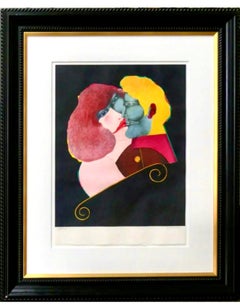
Modernist Lithograph Lovers Kiss Pop Art Mod Figure Richard Lindner Graphic Art
By Richard Lindner
Located in Surfside, FL
RICHARD LINDNER (American. 1901-1978)
32/49 Hand Signed ithograph
Framed MEASURES 43" X 57" IMAGE MEASURES 26" X 20"
Richard Lindner was born in Hamburg, Germany. In 1905 the family moved to Nuremberg, where Lindners mother was owner of a custom-fitting corset business and Richard Lindner grew up and studied at the Kunstgewerbeschule (Arts and Crafts School since 1940 Academy of Fine Arts). From 1924 to 1927 he lived in Munich and studied there from 1925 at the Kunstakademie. In 1927 he moved to Berlin and stayed there until 1928, when he returned to Munich to become art director of a publishing firm. He remained there until 1933, when he was forced to flee to Paris, where he became politically engaged, sought contact with French artists and earned his living as a commercial artist. He was interned when the war broke out in 1939 and later served in the French Army. In 1941 he went to the United States and worked in New York City as an illustrator of books and magazines (Vogue, Fortune and Harper's Bazaar). He began painting seriously in 1952, holding his first one-man exhibit in 1954. His style blends a mechanistic cubism with personal images and haunting symbolism. LIndner maintained contact with the emigre community including New York artists and German emigrants (Albert Einstein, Marlene Dietrich, Saul Steinberg). Though he became a United States citizen in 1948, Lindner considered himself a New Yorker, but not a true American. However, over the course of time, his continental circus women became New York City streetwalkers. New York police uniforms replaced European military uniforms as symbols of authority.At a time when Abstract Expressionism was all the rage, Lindner’s painting went against the current and always kept its distance. His pictorial language of vibrant colours and broad planes of colour and his urban themes make him a forerunner of American Pop Art. At the same time, he owes the critical tone of his paintings to the influence of European art movements such as Neue Sachlichkeit and Dada. His first exhibition did not take place until 1954, by which time he was over fifty, and, interestingly, it was held at the Betty Parsons Gallery in New York, a venue associated with the American Expressionists. From 1952 he taught at the Pratt Institute, Brooklyn, from 1967 at Yale University School of Art and Architecture, New Haven. In 1957 Lindner got the William and Norma Copley Foundation-Award. In 1965 he became Guest Professor at the Akademie für Bildende Künste, Hamburg. His Ice (1966, Whitney Museum of American Art) established a connection between the metaphysical tradition and pop art. He did work on Rowlux which was used by a number of pop artists (most notably Roy Lichtenstein)The painting shows harsh, flat geometric shapes framing an erotic but mechanical robot-woman. His paintings used the sexual symbolism of advertising and investigated definitions of gender roles in the media. While influencing Pop Art (Andy Warhol, Tom Wesselmann and Claes Oldenburg amongst others) his highly colourful, hard-edge style seems to have brought him close to Pop Art, which he rejected. Nevertheless, he is immortalised on the cover of the Beatles record "Sgt. Pepper’s Lonely Hearts Club Band" (1967) as a patron of the pop culture. He also did a tapestry banner with the Betsy Ross Flag...
Category
1970s Pop Art Richard Lindner Abstract Prints
Materials
Lithograph
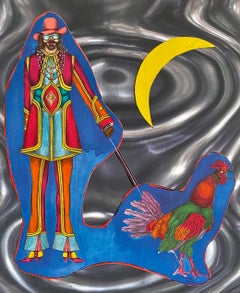
Modernist Lithograph and Collage on Rowlux Pop Art Mod Figure Richard Lindner
By Richard Lindner
Located in Surfside, FL
St. Marks, 1971
Lithograph and Collage on Gray Rowlux
Rowlux was used by a number of pop artists (most notably Roy Lichtenstein)
Richard Lindner was born in Hamburg, Germany. In 1905 the family moved to Nuremberg, where Lindners mother was owner of a custom-fitting corset business and Richard Lindner grew up and studied at the Kunstgewerbeschule (Arts and Crafts School since 1940 Academy of Fine Arts). From 1924 to 1927 he lived in Munich and studied there from 1925 at the Kunstakademie. In 1927 he moved to Berlin and stayed there until 1928, when he returned to Munich to become art director of a publishing firm. He remained there until 1933, when he was forced to flee to Paris, where he became politically engaged, sought contact with French artists and earned his living as a commercial artist. He was interned when the war broke out in 1939 and later served in the French Army. In 1941 he went to the United States and worked in New York City as an illustrator of books and magazines (Vogue, Fortune and Harper's Bazaar). He began painting seriously in 1952, holding his first one-man exhibit in 1954. His style blends a mechanistic cubism with personal images and haunting symbolism. LIndner maintained contact with the emigre community including New York artists and German emigrants (Albert Einstein, Marlene Dietrich, Saul Steinberg). Though he became a United States citizen in 1948, Lindner considered himself a New Yorker, but not a true American. However, over the course of time, his continental circus women became New York City streetwalkers. New York police uniforms replaced European military uniforms as symbols of authority.At a time when Abstract Expressionism was all the rage, Lindner’s painting went against the current and always kept its distance. His pictorial language of vibrant colours and broad planes of colour and his urban themes make him a forerunner of American Pop Art. At the same time, he owes the critical tone of his paintings to the influence of European art movements such as Neue Sachlichkeit and Dada. His first exhibition did not take place until 1954, by which time he was over fifty, and, interestingly, it was held at the Betty Parsons Gallery in New York, a venue associated with the American Expressionists. From 1952 he taught at the Pratt Institute, Brooklyn, from 1967 at Yale University School of Art and Architecture, New Haven. In 1957 Lindner got the William and Norma Copley Foundation-Award. In 1965 he became Guest Professor at the Akademie für Bildende Künste, Hamburg. His Ice (1966, Whitney Museum of American Art) established a connection between the metaphysical tradition and pop art. The painting shows harsh, flat geometric shapes framing an erotic but mechanical robot-woman. His paintings used the sexual symbolism of advertising and investigated definitions of gender roles in the media. While influencing Pop Art (Tom Wesselmann and Claes Oldenburg amongst others) his highly colourful, hard-edge style seems to have brought him close to Pop Art, which he rejected. Nevertheless, he is immortalised on the cover of the Beatles record...
Category
1970s Pop Art Richard Lindner Abstract Prints
Materials
Lithograph, Plastic
Vintage Modern Lithograph Poster 1960s Pop Art Mod Figure
By Richard Lindner
Located in Surfside, FL
Vintage 1960's Lithograph poster for Vancouver Canada art show.
Richard Lindner was born in Hamburg, Germany. In 1905 the family moved to Nuremberg, where Lindners mother was owner of a custom-fitting corset business and Richard Lindner grew up and studied at the Kunstgewerbeschule (Arts and Crafts School since 1940 Academy of Fine Arts). From 1924 to 1927 he lived in Munich and studied there from 1925 at the Kunstakademie. In 1927 he moved to Berlin and stayed there until 1928, when he returned to Munich to become art director of a publishing firm. He remained there until 1933, when he was forced to flee to Paris, where he became politically engaged, sought contact with French artists and earned his living as a commercial artist. He was interned when the war broke out in 1939 and later served in the French Army. In 1941 he went to the United States and worked in New York City as an illustrator of books and magazines (Vogue, Fortune and Harper's Bazaar). He began painting seriously in 1952, holding his first one-man exhibit in 1954. His style blends a mechanistic cubism with personal images and haunting symbolism. LIndner maintained contact with the emigre community including New York artists and German emigrants (Albert Einstein, Marlene Dietrich, Saul Steinberg). Though he became a United States citizen in 1948, Lindner considered himself a New Yorker, but not a true American. However, over the course of time, his continental circus women became New York City streetwalkers. New York police uniforms replaced European military uniforms as symbols of authority.At a time when Abstract Expressionism was all the rage, Lindner’s painting went against the current and always kept its distance. His pictorial language of vibrant colours and broad planes of colour and his urban themes make him a forerunner of American Pop Art. At the same time, he owes the critical tone of his paintings to the influence of European art movements such as Neue Sachlichkeit and Dada. His first exhibition did not take place until 1954, by which time he was over fifty, and, interestingly, it was held at the Betty Parsons Gallery in New York, a venue associated with the American Expressionists. From 1952 he taught at the Pratt Institute, Brooklyn, from 1967 at Yale University School of Art and Architecture, New Haven. In 1957 Lindner got the William and Norma Copley Foundation-Award. In 1965 he became Guest Professor at the Akademie für Bildende Künste, Hamburg. His Ice (1966, Whitney Museum of American Art) established a connection between the metaphysical tradition and pop art. The painting shows harsh, flat geometric shapes framing an erotic but mechanical robot-woman.His paintings used the sexual symbolism of advertising and investigated definitions of gender roles in the media. While influencing Pop Art (Tom Wesselman and Claes Oldenburg amongst others) his highly colourful, hard-edge style seems to have brought him close to Pop Art, which he rejected. Nevertheless, he is immortalised on the cover of the Beatles record...
Category
1960s Pop Art Richard Lindner Abstract Prints
Materials
Lithograph
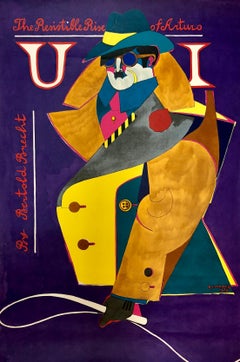
Offset Lithograph Poster Resistible Rise of Arturo, Bertold Brecht 1968 Pop Art
By Richard Lindner
Located in Surfside, FL
Plate signed and dated, offset lithograph.
Richard Lindner was born in Hamburg, Germany. In 1905 the family moved to Nuremberg, where Lindners mother was owner of a custom-fitting corset business and Richard Lindner grew up and studied at the Kunstgewerbeschule (Arts and Crafts School since 1940 Academy of Fine Arts). From 1924 to 1927 he lived in Munich and studied there from 1925 at the Kunstakademie. In 1927 he moved to Berlin and stayed there until 1928, when he returned to Munich to become art director of a publishing firm. He remained there until 1933, when he was forced to flee to Paris, where he became politically engaged, sought contact with French artists and earned his living as a commercial artist. He was interned when the war broke out in 1939 and later served in the French Army. In 1941 he went to the United States and worked in New York City as an illustrator of books and magazines (Vogue, Fortune and Harper's Bazaar). He began painting seriously in 1952, holding his first one-man exhibit in 1954. His style blends a mechanistic cubism with personal images and haunting symbolism. LIndner maintained contact with the emigre community including New York artists and German emigrants (Albert Einstein, Marlene Dietrich, Saul Steinberg). Though he became a United States citizen in 1948, Lindner considered himself a New Yorker, but not a true American. However, over the course of time, his continental circus women became New York City streetwalkers. New York police uniforms replaced European military uniforms as symbols of authority.At a time when Abstract Expressionism was all the rage, Lindner’s painting went against the current and always kept its distance. His pictorial language of vibrant colours and broad planes of colour and his urban themes make him a forerunner of American Pop Art. At the same time, he owes the critical tone of his paintings to the influence of European art movements such as Neue Sachlichkeit and Dada. His first exhibition did not take place until 1954, by which time he was over fifty, and, interestingly, it was held at the Betty Parsons Gallery in New York, a venue associated with the American Expressionists. From 1952 he taught at the Pratt Institute, Brooklyn, from 1967 at Yale University School of Art and Architecture, New Haven. In 1957 Lindner got the William and Norma Copley Foundation-Award. In 1965 he became Guest Professor at the Akademie für Bildende Künste, Hamburg. His Ice (1966, Whitney Museum of American Art) established a connection between the metaphysical tradition and pop art. The painting shows harsh, flat geometric shapes framing an erotic but mechanical robot-woman.His paintings used the sexual symbolism of advertising and investigated definitions of gender roles in the media. While influencing Pop Art (Tom Wesselman and Claes Oldenburg amongst others) his highly colourful, hard-edge style seems to have brought him close to Pop Art, which he rejected. Nevertheless, he is immortalised on the cover of the Beatles record...
Category
1960s Pop Art Richard Lindner Abstract Prints
Materials
Lithograph, Offset
Vintage Modern Lithograph Poster 1960s Pop Art Mod Figure Pencil Signed
By Richard Lindner
Located in Surfside, FL
Richard Lindner was born in Hamburg, Germany. In 1905 the family moved to Nuremberg, where Lindners mother was owner of a custom-fitting corset business and Richard Lindner grew up and studied at the Kunstgewerbeschule (Arts and Crafts School since 1940 Academy of Fine Arts). From 1924 to 1927 he lived in Munich and studied there from 1925 at the Kunstakademie. In 1927 he moved to Berlin and stayed there until 1928, when he returned to Munich to become art director of a publishing firm. He remained there until 1933, when he was forced to flee to Paris, where he became politically engaged, sought contact with French artists and earned his living as a commercial artist. He was interned when the war broke out in 1939 and later served in the French Army. In 1941 he went to the United States and worked in New York City as an illustrator of books and magazines (Vogue, Fortune and Harper's Bazaar). He began painting seriously in 1952, holding his first one-man exhibit in 1954. His style blends a mechanistic cubism with personal images and haunting symbolism. LIndner maintained contact with the emigre community including New York artists and German emigrants (Albert Einstein, Marlene Dietrich, Saul Steinberg). Though he became a United States citizen in 1948, Lindner considered himself a New Yorker, but not a true American. However, over the course of time, his continental circus women became New York City streetwalkers. New York police uniforms replaced European military uniforms as symbols of authority.At a time when Abstract Expressionism was all the rage, Lindner’s painting went against the current and always kept its distance. His pictorial language of vibrant colours and broad planes of colour and his urban themes make him a forerunner of American Pop Art. At the same time, he owes the critical tone of his paintings to the influence of European art movements such as Neue Sachlichkeit and Dada. His first exhibition did not take place until 1954, by which time he was over fifty, and, interestingly, it was held at the Betty Parsons Gallery in New York, a venue associated with the American Expressionists. From 1952 he taught at the Pratt Institute, Brooklyn, from 1967 at Yale University School of Art and Architecture, New Haven. In 1957 Lindner got the William and Norma Copley Foundation-Award. In 1965 he became Guest Professor at the Akademie für Bildende Künste, Hamburg. His Ice (1966, Whitney Museum of American Art) established a connection between the metaphysical tradition and pop art. The painting shows harsh, flat geometric shapes framing an erotic but mechanical robot-woman.His paintings used the sexual symbolism of advertising and investigated definitions of gender roles in the media. While influencing Pop Art (Tom Wesselman and Claes Oldenburg amongst others) his highly colourful, hard-edge style seems to have brought him close to Pop Art, which he rejected. Nevertheless, he is immortalised on the cover of the Beatles record...
Category
1960s Pop Art Richard Lindner Abstract Prints
Materials
Lithograph
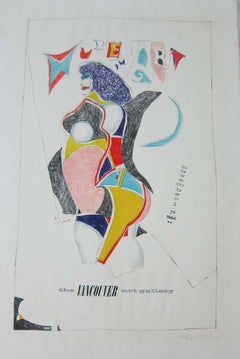
Richard Lindner abstract prints for sale on 1stDibs.
Find a wide variety of authentic Richard Lindner abstract prints available for sale on 1stDibs. You can also browse by medium to find art by Richard Lindner in lithograph, offset print and more. Much of the original work by this artist or collective was created during the 20th century and is mostly associated with the Pop Art style. Not every interior allows for large Richard Lindner abstract prints, so small editions measuring 17 inches across are available. Customers who are interested in this artist might also find the work of CLAYTON POND, Jack Brusca, and Red Grooms. Richard Lindner abstract prints prices can differ depending upon medium, time period and other attributes. On 1stDibs, the price for these items starts at $500 and tops out at $2,420, while the average work can sell for $1,200.