Robert Adams More Art
to
1
Overall Width
to
Overall Height
to
1
1
1
3
319
230
121
117
1
1
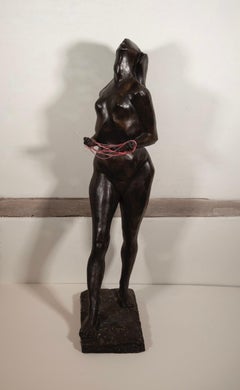
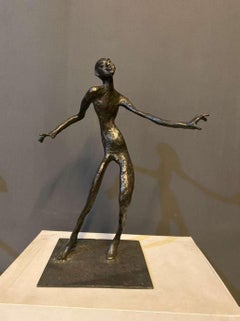
Artist: Robert Adams
1960s Bronze Sculpture, Female Standing Nude, Figurative
By Robert Adams
Located in Kingsclere, GB
Woman With a Skein, Michael Ayrton, 1963
Additional information:
Medium: Bronze
Height 87 cm (34 1/4 in)
Signed and numbered on base
Provenance
acquired by the present owner in 201...
Category
20th Century Robert Adams More Art
Materials
Bronze
Related Items
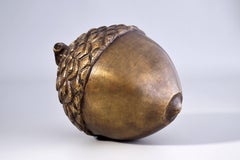
Bellota 7
By María José de la Macorra
Located in Mexico City, CDMX
María José de la Macorra (México, D.F., 1964) realizó sus estudios en la Escuela de Cerámica y Porcelana de Toluca, Mokichi Okada Association,...
Category
2010s Naturalistic Robert Adams More Art
Materials
Bronze

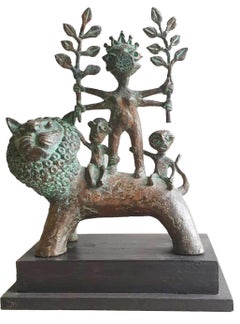
Mother Nature, Figurative Bronze by Contemporary Indian Artist "In Stock"
By Subrata Biswas
Located in Kolkata, West Bengal
Subrata Biswas - Mother Nature
Bronze, H 11.75 x W 9 x D 3.75 inches
Style : The motive of a child in its most basic form appears quite repeatedly in the works of Subrata Biswas. Th...
Category
2010s Contemporary Robert Adams More Art
Materials
Bronze
$975
H 11.75 in W 9 in D 3.75 in
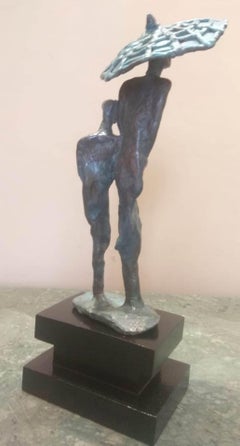
Rain-2, Bronze Sculpture by Contemporary Indian Artist “In Stock”
By Tushar Kanti Das Roy
Located in Kolkata, West Bengal
Tushar Kanti Das Roy - Rain-2 - 8.5 x 2 x 3 inches
Bronze Sculpture
About the Artist & his work :
Born : 1968.
Education : He has completed his education from I.C.Art & Craft at Kol...
Category
2010s Contemporary Robert Adams More Art
Materials
Bronze
$429
H 8.5 in W 2 in D 3 in
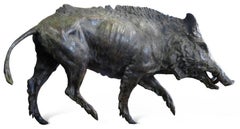
"Wild Boar" contemporary realist bronze cinghiale sculpture, life-size, Fenske
By Ben Fenske
Located in Sag Harbor, NY
‘Wild Boar’, the striking new bronze sculpture by Ben Fenske and Richard Zinon, vibrantly illustrates the ‘new’ Renaissance currently under way.
Ferocio...
Category
21st Century and Contemporary American Realist Robert Adams More Art
Materials
Bronze
$80,000
H 33 in W 51 in D 25 in
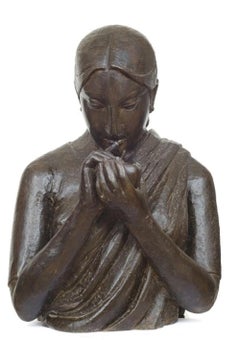
Joubana, Bronze, by Modern Indian Master Artist Lalu Prasad Shaw "In Stock"
By Lalu Prasad Shaw
Located in Kolkata, West Bengal
Lalu Prasad Shaw - Joubana - 27 x 21 x 18 inches (unframed size)
Bronze, Edition-5.
Style : Known widely for his highly stylized portraits of Bengali women and couples, Lalu Prasad ...
Category
2010s Modern Robert Adams More Art
Materials
Bronze
$5,199 Sale Price
53% Off
H 27 in W 21 in D 18 in
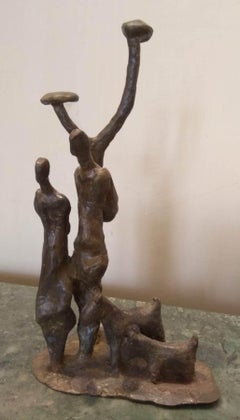
Rakhal, Bronze Sculpture by Contemporary Indian Artist “In Stock”
By Tushar Kanti Das Roy
Located in Kolkata, West Bengal
Tushar Kanti Das Roy - Rakhal - 7 x 4 x 2.5 inches
Bronze Sculpture
About the Artist & his work :
Born : 1968.
Education : He has completed his education from I.C.Art & Craft at Kol...
Category
2010s Contemporary Robert Adams More Art
Materials
Bronze
$429
H 7 in W 4 in D 2.5 in
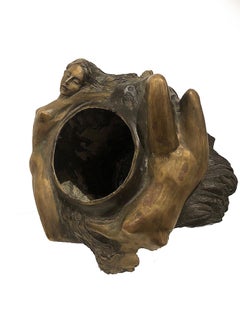
Figurative Bronze Sculpture or Planter
Located in San Diego, CA
Figurative cast bronze cachepot. This cachepot depicts two nude female figures floating along the top, as though they are immersed in water. Their hair is long and floats on the side...
Category
20th Century Robert Adams More Art
Materials
Bronze
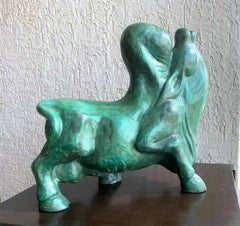
Bull, Bronze Sculpture by Modern Indian Artist B. Vithal "In Stock"
By B. Vithal
Located in Kolkata, West Bengal
B. Vithal – Horse – H 13 x W 14 x D 5 inches
Bronze
Born : 1935 Vardha Maharashtra
Died : 1992
Education : Sir J.J. School of Art, Mumbai
Exhibitions :
Selected Posthumous Exhibitions
2013 'The Naked and the Nude: The Body in Indian Modern Art', Delhi Art Gallery, New Delhi
2011 'Agape', Hacienda Art...
Category
Early 2000s Modern Robert Adams More Art
Materials
Bronze
$8,645
H 13 in W 14 in D 5 in
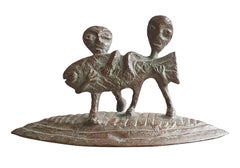
Innocent Life, Figurative Bronze by Contemporary Indian Artist "In Stock"
By Subrata Biswas
Located in Kolkata, West Bengal
Subrata Biswas - Innocent Life
Bronze, H 6 x W 11 x D 4.75 inches
Style : The motive of a child in its most basic form appears quite repeatedly in the works of Subrata Biswas. The e...
Category
2010s Contemporary Robert Adams More Art
Materials
Bronze
$779
H 6 in W 11 in D 4.75 in
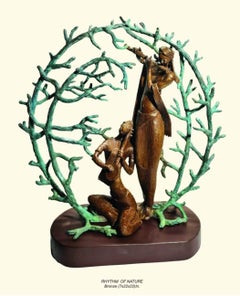
Rhythm of Nature, Figurative, Bronze by Contemporary Indian Artist "In Stock"
Located in Kolkata, West Bengal
Subrata Paul - Rhythm of Nature
Bronze, H 22 x W 22 x D 7 inches
About :
Subrata Paul ( b 1972) is one of the empanelled sculptors of Abundant Art Gallery. Subrata Paul’s favoured materials are bronze embellished with wood. His signature fusion of the two different materials with his stitching style lends an unique texture to his sculptures. Our collection, includes some of his remarkable creations including “Fish”, “Goat” and “Bull”.Paul’s ‘Fish’ represents contrasting characteristics. The Buddha like drooping eyes of the ‘Fish’ is contrasted paradoxically against the frenzied fins, reminding us of Medusa’s dishevelled hair. Calmness and restlessness in one form, the ‘Fish’ resembles the life force.It is a metaphor for the inner human strength to swim against the tide of adversities. His ‘The King’ represents an imperial image. The statute is looking towards heaven, as if seeking some inspiration to perform his royal duties. His crown is like a crown of thorns. It is not a pleasant task but it has to be performed. His attire declares he has to modify his own life into the straightjacket of his royal duties. Another creation of his, ‘Bull’ recalls the interpretation of a bison of the Altamira cave paintings. Paul’s ‘Meditation’ series defines peace in different perspectives through various aspects of Buddha figures. Inspired by sculptors such as Sunil Kumar Das...
Category
2010s Contemporary Robert Adams More Art
Materials
Bronze
$4,639
H 22 in W 22 in D 7 in
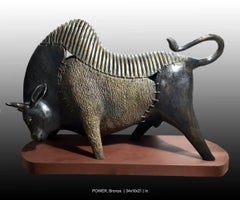
Power, Bull, Bronze, Brown Colors by Contemporary Indian Artist "In Stock"
Located in Kolkata, West Bengal
Subrata Paul - Power
Bronze, H 21 x W 34 x D 10 inches
About :
Subrata Paul ( b 1972) is one of the empanelled sculptors of Abundant Art Gallery. Subrata Paul’s favoured materials are bronze embellished with wood. His signature fusion of the two different materials with his stitching style lends an unique texture to his sculptures. Our collection, includes some of his remarkable creations including “Fish”, “Goat” and “Bull”.Paul’s ‘Fish’ represents contrasting characteristics. The Buddha like drooping eyes of the ‘Fish’ is contrasted paradoxically against the frenzied fins, reminding us of Medusa’s dishevelled hair. Calmness and restlessness in one form, the ‘Fish’ resembles the life force.It is a metaphor for the inner human strength to swim against the tide of adversities. His ‘The King’ represents an imperial image. The statute is looking towards heaven, as if seeking some inspiration to perform his royal duties. His crown is like a crown of thorns. It is not a pleasant task but it has to be performed. His attire declares he has to modify his own life into the straightjacket of his royal duties. Another creation of his, ‘Bull’ recalls the interpretation of a bison of the Altamira cave paintings. Paul’s ‘Meditation’ series defines peace in different perspectives through various aspects of Buddha figures. Inspired by sculptors such as Sunil Kumar Das...
Category
2010s Contemporary Robert Adams More Art
Materials
Bronze
$8,389
H 21 in W 34 in D 10 in
Ramp Figure, Bronze Sculpture, Black color by Modern Indian Artist "In Stock"
By K.S. Radhakrishnan
Located in Kolkata, West Bengal
K.S. Radhakrishnan - Ramp Figure
Bronze Sculpture
H 13 x W 10 x D 6 inches
K.S. Radhakrishnan working with Musui & Maiya, Musui potraits has a hand Rickshaw puller as is still prevalent in few parts of Bengal.
The bronze figures are elfin, mischievous, airy, acrobatic, and archaic, delicately balancing on one hand or leg. He renders a sensuous quality to his works by deploying extraordinary body movements of his figures.
Radhakrishnan is a distinctive and appealing presence on the modern Indian sculpture scene. He says: “For me bronze works best because it is strong, and brings out the character of my sculptures. Although it takes time, the process also becomes a part of my art form.”
Style : K.S Radhakrishnan is one of the most notable among the new generation of sculptors. Like many of his contempories he is a figurative sculptor, but his preference for modelling and bronze casting sets him apart from the rest of them. Recharging age old sculptural processes with a new sensibility, thus is the singular challenge he brings to modern Indian sculpture. And this makes him a modernist - who approaches his work with discernible ambition and considerable aplomb while steering clear of brinkmanship.
Radhakrishnan's works often drawn from the emotions and myths of the Hindu gods, such as Shiva, Kali and Radha. His sculptures are often larger than life-sized; placed in the outdoors, they evoke a superhuman atmosphere. Over the years, Radhakrishnan has experienced with alternate sculpting mediums, working in molten bronze, beeswax and Plaster of Paris.The physical process of working with the materials becomes a performance in itself. The sculpture is the product of a tactile engagement with his medium.
With celebration of sensuality as one of its running themes, his works is at once both intimate and universal in its appeal. A personal commemorative sculpture, with a scale and presence that holds well in natural settings, his work has found permanent home in a number of public collections all over the world.
About the Artist and his work :
Born : Born 1956, Kerala.
Education :
1979 : B.F.A. in Sculpture, Viswa Bharati University, Santiniketan, West Bengal
1981 : M.F.A. in Sculpture, Viswa Bharati University, Santiniketan, West Bengal.
Solo exhibitions :
2006 : ’Freehold’ at Museum Gallery, Mumbai
‘Freehold’ at Artalive Gallery, New Delhi
2005 : ’The Ramp’ at Tao Art Gallery, Mumbai
‘Unbearable Lightness of being’ at India International Centre, New Delhi
2004 : ’The Ramp’ at Sridharani Art Gallery, New Delhi
‘The Ramp’ at Bayer ABS Limited Gallery, Vadodara
2000 : ’Musui Maiya’ sponsored by Vadehra Art Gallery, New Delhi
1998 : ’Song of the Road’ – sponsored by International Travel House, ITC, New Delhi
‘Portal’ – Apeejay Lawns, Calcutta, sponsored by Apeejay Surendra, Group, Calcutta
1993 : Centre des Bonds de Marne, LePerreux-Bry sur-Marne, Paris, France.
1987 : Jehangir Art Gallery, Mumbai.
Participated Exhibitions :
2007 : ’Darpan’ an exhibition sponsored by Nvya Gallery, New Delhi
Travel to Moscow and St. Petersburg, Russia – sponsored by Nvya Gallery.
2006 : Travel to U.S.A, sponsored by Arts India, New York
Travel to Russia, sponsored by Art Resource Trust, Mumbai
Travel to Morocco, sponsored by Popular Prakashan, Mumbai.
2005 : Travel to Istanbul, Turkey to attend artists workshop
Travel to China (Silk Route) sponsored by Uttarayan, Baroda
Travel to South Africa organised by Gallery Navya, New Delhi.
2003 : Travel to Cairo and other cities in Egypt to attend an artists workshop
Travel to France and Italy sponsored by TMI Foundation France
Exhibition titled ‘Can’ curated by Johny M.L
Exhibition ‘Only connect’ at India Habitat Centre, New Delhi
Exhibition ‘Nayika’ by Ganesha Art...
Category
Early 2000s Modern Robert Adams More Art
Materials
Bronze
$2,225
H 13 in W 10 in D 6 in
Robert Adams more art for sale on 1stDibs.
Find a wide variety of authentic Robert Adams more art available for sale on 1stDibs. You can also browse by medium to find art by Robert Adams in birch, wood and more. Not every interior allows for large Robert Adams more art, so small editions measuring 1 inch across are available. Customers who are interested in this artist might also find the work of Grayson Perry, Richard Fox, and Pablo Picasso.