Victor Max Ninon Prints and Multiples
to
4
Overall Width
to
Overall Height
to
4
4
1,200
949
936
834
4
4
4
2
2
4
Artist: Victor Max Ninon
Coquette
By Victor Max Ninon
Located in Fairlawn, OH
Coquette
Pochoir (silk screen) printed in colors, c. 1923-1925
Signed by the artist in pencil lower right; numbered in ink on the image, (see photo)
Edition: 250 (100/250) in pencil in image (see photo)
Image size: 10-1/2 x 12-3/4"
The artist won a gold medal in Paris in 1925 for his porchoirs
Victor Max Ninon (Vittorio Accornero de Testa, Italian, 1896-1982)
Biography
Vittorio Accornero de Testa was born in Casale Monferrato in 1896. He completed his first studies at the "Leardi" institute, but was forced to interrupt them due to the war events of the First World War . At 19 he was second lieutenant of the Alpine troops and in 1916 he took one of the first pilot's licenses. During the war he knows the bitterness of shooting down in air combat (for which he is decorated), but also the good fortune to stay alive, albeit with a disability. His art blossomed in the postwar period, first signing his works simply Ninon and then, probably at the suggestion of a French publisher, under the pseudonym of "Victor Max Ninon" (Victor and Max indicate strength and masculinity, Ninon boyhood) .In 1919 and 1924 he made illustrations for theGiornalino della Domenica , also together with his first wife Edina Altara , for Ardita and La Lettura . In 1923 he won the cover competition organized by the magazine El Hogar of Buenos Aires and in 1925 with his pochoirs he imposed himself in Paris at the international exhibition of modern decorative and industrial arts , obtaining a gold medal. In the same year he made two covers for the US magazine The Smart Set . In the 1920s he made numerous series of art deco style postcards for the Milanese publishing house Degami . On June 4, 1929, aGenoa embarks on the Conte Grande together with his wife Edina Altara , for New York . The two stayed in the American metropolis for a few months: in this period Accornero worked on the creation of theatrical sets and created some covers for Country Life magazine . Accornero gets awards and prizes, but the great economic crisis of the time and the nostalgia for Italy convince the two to return to their homeland, where they resume their activity as illustrators.
In 1934 Accornero moved to Milan, separated amicably from his wife and continued to dedicate himself to the illustration of children's books, abandoning the pseudonym Victor Max Ninon. It illustrates about 60 books, from the fables of Andersen , Perrault and Grimm , to the tales of Poe , as well as the famous Pinocchio and Cuore published by Mondadori, Mursia, Hoepli, Martello. Several books illustrated by Accornero have been published in French, Spanish, German and English. In addition to the periodicals already mentioned, he collaborates on the first edition of the Encyclopedia of Boys , Mondadori, and with the Italian magazines Lidel , Il Secolo XX, The Italian Illustration , Fantasies of Italy , The Woman , Cordelia , For You Lady , Grace , Metropolis , La Domenica del Corriere , The Corriere dei Piccoli .
In 1936 enters the world of cinema, creating sets and costumes for Wedding Vagabonde of Guido Brignone and The White Squadron of Augustus Genina . From 1935 to 1950 he also devoted himself to the theater, taking care of sets and costumes for numerous operettas, ballets and performances at the Scala in Milan and for the Milanese theaters Manzoni, Lirico and Olympia. Stages Marcello di Giordano, Nina pazza d'amore by Paisiello, I cantori di Nurimberga by Wagner, La Bohème by Puccini and other works. For this activity he is also cited in the Theater encyclopedia.
In the 1940s and 1950s he wrote and illustrated six books for children for Mondadori: Tomaso (1944), Giacomino (1949), Tomaso Cacciatore (1950), Zio Stefano (1950), In Campagna che delizia! (1953), Tomaso, dear Tomaso (1955). His illustrations of Perrault's Tales published in those years by Hoepli are famous.
His art in the fifties evolves towards hyperrealism . There are many personal exhibitions in Italy and abroad, including those at the Gallerie Gussoni (1959) and Bolzani (1963 and 1966) in Milan and Walcheturm (1962) in Zurich. Eminent critics praise his work, from Orio Vergani to Enrico Piceni, from Reto Roedel to De Chirico himself. On the Domenica del Corriere , the journalist, writer and painter Dino Buzzati...
Category
1920s Art Deco Victor Max Ninon Prints and Multiples
Materials
Stencil
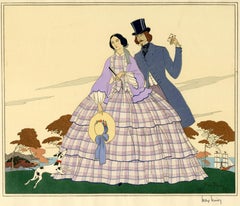
En Espagne
By Victor Max Ninon
Located in Fairlawn, OH
En Espagne
Pochoir (silk screen) printed in colors
Signed by the artist in pencil lower right
The artist won a gold medal in Paris in 1925 for his pochoirs
Condition: Excellent
Image...
Category
1920s Art Deco Victor Max Ninon Prints and Multiples
Materials
Screen
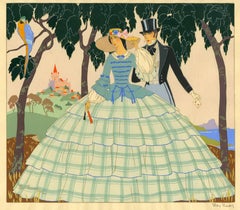
Au Japon
By Victor Max Ninon
Located in Fairlawn, OH
Au Japon
Pochoir (Stencil Print), 1925
Signed by the artist in pencil lower right (see photo)
Signed in the image lower left (see photo)
Stamped verso: Made in France
Note: The artis...
Category
1920s Art Deco Victor Max Ninon Prints and Multiples
Materials
Screen
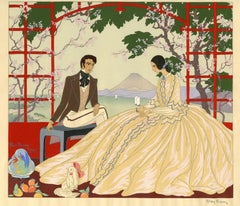
Robe Grise
By Victor Max Ninon
Located in Fairlawn, OH
Robe Grise
Pochoir (silk screen) printed in colors, 1923
Signed by the artist in pencil lower right (see photo)
The artist won a gold medal in Paris in 1925 for his pochoirs
Condition: Two spots in the upper left corner associated with the printing.
Victor Max Ninon (Vittorio Accornero de Testa, Italian, 1896-1982)
Biography
Vittorio Accornero de Testa was born in Casale Monferrato in 1896. He completed his first studies at the "Leardi" institute, but was forced to interrupt them due to the war events of the First World War . At 19 he was second lieutenant of the Alpine troops and in 1916 he took one of the first pilot's licenses. During the war he knows the bitterness of shooting down in air combat (for which he is decorated), but also the good fortune to stay alive, albeit with a disability. His art blossomed in the postwar period, first signing his works simply Ninon and then, probably at the suggestion of a French publisher, under the pseudonym of "Victor Max Ninon" (Victor and Max indicate strength and masculinity, Ninon boyhood) .In 1919 and 1924 he made illustrations for theGiornalino della Domenica , also together with his first wife Edina Altara , for Ardita and La Lettura . In 1923 he won the cover competition organized by the magazine El Hogar of Buenos Aires and in 1925 with his pochoirs he imposed himself in Paris at the international exhibition of modern decorative and industrial arts , obtaining a gold medal. In the same year he made two covers for the US magazine The Smart Set . In the 1920s he made numerous series of art deco style postcards for the Milanese publishing house Degami . On June 4, 1929, aGenoa embarks on the Conte Grande together with his wife Edina Altara , for New York . The two stayed in the American metropolis for a few months: in this period Accornero worked on the creation of theatrical sets and created some covers for Country Life magazine . Accornero gets awards and prizes, but the great economic crisis of the time and the nostalgia for Italy convince the two to return to their homeland, where they resume their activity as illustrators.
In 1934 Accornero moved to Milan, separated amicably from his wife and continued to dedicate himself to the illustration of children's books, abandoning the pseudonym Victor Max Ninon. It illustrates about 60 books, from the fables of Andersen , Perrault and Grimm , to the tales of Poe , as well as the famous Pinocchio and Cuore published by Mondadori, Mursia, Hoepli, Martello. Several books illustrated by Accornero have been published in French, Spanish, German and English. In addition to the periodicals already mentioned, he collaborates on the first edition of the Encyclopedia of Boys , Mondadori, and with the Italian magazines Lidel , Il Secolo XX, The Italian Illustration , Fantasies of Italy , The Woman , Cordelia , For You Lady , Grace , Metropolis , La Domenica del Corriere , The Corriere dei Piccoli .
In 1936 enters the world of cinema, creating sets and costumes for Wedding Vagabonde of Guido Brignone and The White Squadron of Augustus Genina . From 1935 to 1950 he also devoted himself to the theater, taking care of sets and costumes for numerous operettas, ballets and performances at the Scala in Milan and for the Milanese theaters Manzoni, Lirico and Olympia. Stages Marcello di Giordano, Nina pazza d'amore by Paisiello, I cantori di Nurimberga by Wagner, La Bohème by Puccini and other works. For this activity he is also cited in the Theater encyclopedia.
In the 1940s and 1950s he wrote and illustrated six books for children for Mondadori: Tomaso (1944), Giacomino (1949), Tomaso Cacciatore (1950), Zio Stefano (1950), In Campagna che delizia! (1953), Tomaso, dear Tomaso (1955). His illustrations of Perrault's Tales published in those years by Hoepli are famous.
His art in the fifties evolves towards hyperrealism . There are many personal exhibitions in Italy and abroad, including those at the Gallerie Gussoni (1959) and Bolzani (1963 and 1966) in Milan and Walcheturm (1962) in Zurich. Eminent critics praise his work, from Orio Vergani to Enrico Piceni, from Reto Roedel to De Chirico himself. On the Domenica del Corriere , the journalist, writer and painter Dino...
Category
1920s Art Deco Victor Max Ninon Prints and Multiples
Materials
Stencil
Related Items
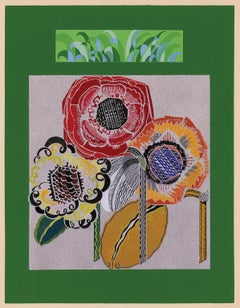
Poppy
— Art Deco Pochoir from the acclaimed portfolio
RELAIS
By Edouard Benedictus
Located in Myrtle Beach, SC
Edouard Benedictus, 'Poppy' from the portfolio 'Relais', plate 14, color pochoir, 1930. Signed in the matrix, in the center bottom margin. A superb, richly-inked impression, with fresh, vibrant colors, including metallic gold and silver inks, on heavy, cream wove paper; the full sheet with margins (1 3/8 inches), in excellent condition. Published by Éditions Vincent, Fréal et Cie, Paris. The pochoir production is by Jean Saudé, the French printmaker known for his mastery of the technique and the author of the first how-to book on the pochoir process. Matted to museum standards, unframed.
Image size 14 3/8 x 11 inches (365 x 279 mm); sheet size 17 1/4 x 13 7/8 inches (438 x 352 mm).
Impressions of this work are held in the following museum collections: Cooper-Hewitt National Design Museum Library (Smithsonian), Metropolitan Museum of Art, Minneapolis Institute of Art, New York Public Library, Toledo Museum of Art, Victoria and Albert Museum (London), Virginia Museum of Fine Arts.
ABOUT THIS WORK
The Pochoir process is a refined stencil-based technique employed to create multiples or to add color to prints produced in other mediums. Characterized by its crisp lines and rich color, the print-making process was most popular from the late 19th century through the 1930s, with its center of activity in Paris. The pochoir process began with the analysis of an image’s composition, including color tones and densities. The numerous stencils (made of aluminum, copper, or zinc) necessary to create a complete image were then designed and hand-cut by the 'découpeur.' The 'coloristes' applied watercolor or gouache pigments through the stencils, skillfully employing a variety of different brushes and methods of paint application to achieve the desired depth of color and textural and tonal nuance. The pochoir process, by virtue of its handcrafted methodology, resulted in the finished work producing the effect of an original painting, and in fact, each print was unique.
ABOUT THE ARTIST
Edouard Benedictus (1878 -1930), artist, designer, composer, and chemist, was born and died in Paris. A highly-regarded designer and art critic of the Art Nouveau era, Benedictus gained renown as a colorist and creator of Art Deco-inspired geometric and floral motifs. His work had a significant influence on international fashions in clothing, home furnishings, graphic design, and decorative objects of the period, earning him commissions from leading European design firms. In 1925 he was invited to represent Art Deco textile design...
Category
1930s Art Nouveau Victor Max Ninon Prints and Multiples
Materials
Stencil

$350
H 14.38 in W 11 in
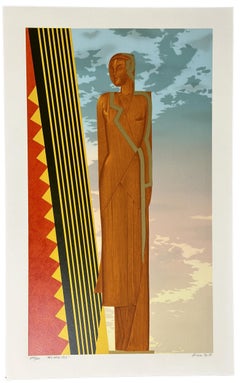
Art Deco 1925 Signed Limited Edition Screen Print
By Michael Knigin
Located in Rochester Hills, MI
Art Deco 1925
1980
Silkscreen
Paper size 33½" × 21"inches
Signed in pencil and marked 234/300
Michael Knigin was born in 1942 in Brooklyn, NY. He attended and graduated from Tyler S...
Category
1980s Art Deco Victor Max Ninon Prints and Multiples
Materials
Screen
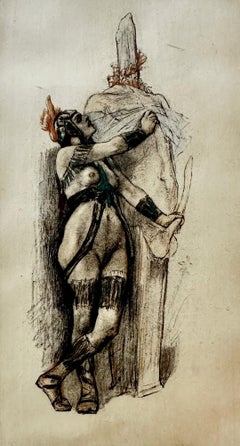
Prêtresse antique (Ancient Priestess)
By Félicien Rops
Located in Middletown, NY
Heliogravure by Félicien Rops (1833 – 1898), a Belgian artist, known primarily as a printmaker in etching and aquatint. He is noted for his drawings depicting erotic and Satanic them...
Category
Late 19th Century Symbolist Victor Max Ninon Prints and Multiples
Materials
Handmade Paper, Photogravure, Stencil
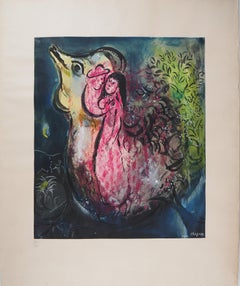
Lovers with a Rooster - Lithograph, Numbered / 500
By Marc Chagall
Located in Paris, IDF
Marc CHAGALL
Lovers with a Rooster
Lithograph and stencil (Jacomet workshop)
Printed signature in the plate
Numbered /500
On vellum 65 x 54 cm (c. 26 x 21...
Category
1960s Modern Victor Max Ninon Prints and Multiples
Materials
Lithograph, Stencil
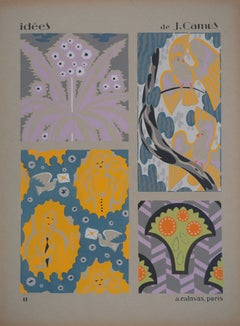
The Dove and the Snake, 1933 - Original Lithograph
By Jacques Camus
Located in Paris, IDF
Jacques Camus
The Dove and the Snake, 1933
Original lithograph and stencil
Unsigned
On paper 39 x 29 cm (c. 15.3 x 11.4 inch)
INFORMATION : This lithograph is part of the "Idées" p...
Category
1930s Art Deco Victor Max Ninon Prints and Multiples
Materials
Lithograph, Stencil
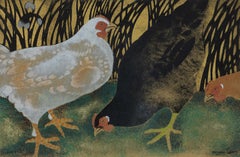
Three Hens by Georges Manzana Pissarro - Animal stencil
By Georges Henri Manzana Pissarro
Located in London, GB
Three Hens by Georges Manzana Pissarro (1871-1961)
Pochoir
31.8 x 48.3 cm (12 ½ x 19 inches)
Signed with Estate stamp and épreuve d'état
Provenance
Private Collection, London
Artis...
Category
19th Century Post-Impressionist Victor Max Ninon Prints and Multiples
Materials
Stencil
$1,750
H 12.52 in W 19.02 in
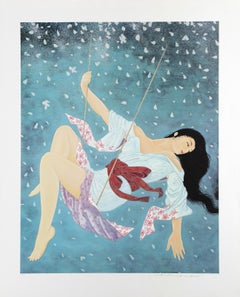
The Swing, Art Deco Screen Print by Muramasa Kudo
By Muramasa Kudo
Located in Long Island City, NY
Muramasa Kudo, Japanese (1948 - ) - The Swing, Medium: Screenprint, signed and numbered in pencil lower right, Edition: 218/275, Image Size: 34.5 x 27 inches, Size: 41 x 33 in. (104....
Category
Late 20th Century Art Deco Victor Max Ninon Prints and Multiples
Materials
Screen
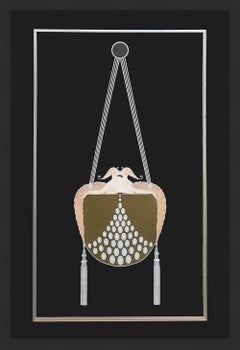
THE CLASP
By Erté
Located in Aventura, FL
Hand signed and numbered by the artist. From the Roman Numeral edition of 150. Framed size approx 50 x 34 inches.
Artwork is in excellent condition. Certificate of Authenticity inc...
Category
1980s Art Deco Victor Max Ninon Prints and Multiples
Materials
Paper, Screen
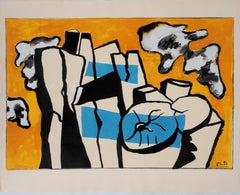
Cubist Wood Logs - Lithograph and Stencil, 1959
By Fernand Léger
Located in Paris, IDF
Fernand LÉGER
Cubist Wood Logs, 1959
Original lithograph and stencil
Printed signature in the plate
On vellum Auvergne 38,9 x 50 cm (c. 15,3 x 19,6 Inches)
Published in 1959, under the control of the wife of the artist, Nadia Léger...
Category
1950s Modern Victor Max Ninon Prints and Multiples
Materials
Lithograph, Stencil
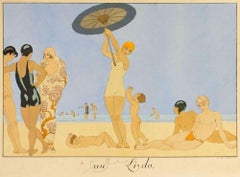
Au Lido - Pochoir by G. Barbier - 1920
By George Barbier
Located in Roma, IT
This pochoir belongs to the portfolio 'Le Bonheur du Jour', by George Barbier.
A very fine work of one of the most important and famous european illustrators of Art Deco, whose infl...
Category
1920s Art Deco Victor Max Ninon Prints and Multiples
Materials
Stencil
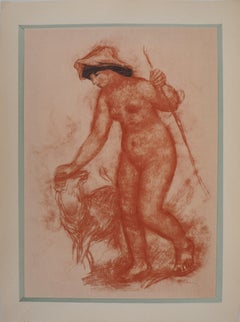
Shepherdess and Lamb - Lithograph and Charcoal stencil
By Auguste Renoir
Located in Paris, IDF
Pierre Auguste RENOIR (after)
Shepherdess and lamb
Lithograph and stencil (Jacomet process)
Printed signature in the plate
On paper mounted on vellum 45 x 34 cm (c. 18 x 13 inch)
E...
Category
1950s Impressionist Victor Max Ninon Prints and Multiples
Materials
Watercolor, Lithograph, Stencil
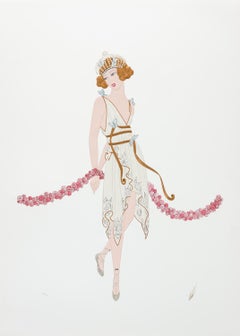
June
By Erte - Romain de Tirtoff
Located in Greenwich, CT
June is an expertly crafted, embossed serigraph on paper with foil stamping and an image size of 27 x 22 inches. From the edition of 650, the art is numbered 203/300 and estate-stamp...
Category
20th Century Art Deco Victor Max Ninon Prints and Multiples
Materials
Paper, Screen
Victor Max Ninon prints and multiples for sale on 1stDibs.
Find a wide variety of authentic Victor Max Ninon prints and multiples available for sale on 1stDibs. You can also browse by medium to find art by Victor Max Ninon in screen print, stencil and more. Much of the original work by this artist or collective was created during the 1920s and is mostly associated with the Art Deco style. Not every interior allows for large Victor Max Ninon prints and multiples, so small editions measuring 13 inches across are available. Customers who are interested in this artist might also find the work of Paul Vera, Umberto Brunelleschi, and Charles Turzak. Victor Max Ninon prints and multiples prices can differ depending upon medium, time period and other attributes. On 1stDibs, the price for these items starts at $550 and tops out at $800, while the average work can sell for $650.