William Langson Lathrop Drawings and Watercolor Paintings

American, 1859-1938

William Langson Lathrop, deemed the Father of the New Hope Art Colony, was born in Warren, Illinois. He was largely self-taught, having only studied briefly with William Merritt Chase in 1887 at the Art Students League. Lathrop first moved east in the early 1880s and took a job at the Photo-engraving Company in New York City. While there, he befriended fellow employee, Henry B. Snell. The two men became lifelong friends and ultimately, both would be considered central figures among the New Hope Art Colony. Lathrop’s early years as an artist were ones of continuing struggles. His efforts to break through in the New York art scene seemed futile, so he scraped enough money together and traveled to Europe with Henry Snell in 1888. There, he met and married an English girl, Annie Burt. Upon returning to New York, he tried his hand at etching, making tools from old saw blades. Even though his prints were extremely beautiful, he remained impoverished.

Lathrop would return to his family in Ohio, before once again attempting the New York art scene. In 1899, with great trepidation, he submitted five small watercolors to an exhibit at the New York Watercolor Club. He won the Evans Prize, the only award given, and four of the five paintings were sold the opening night. At age 40, Lathrop’s career would finally take off as he became an overnight success. Lathrop came to Phillips Mill for the first time in 1898 to visit his boyhood friend, Dr. George Marshall. Shortly after, he and his family purchased the old miller’s house from Dr. Marshall. The Lathrop’s home became a social and artistic center for the growing New Hope artists’ community. Tea and fascinating conversation were the “order of the day” every Sunday. This was a scene fondly recalled by many younger art students who Lathrop taught privately at Phillips Mill. It was common to see groups of his students painting and sketching along the banks of the canal or aboard his boat. He had previously taught in the Poconos and at the Lyme Summer School in Lyme, Connecticut in 1907, but Phillips Mill always remained Lathrop’s permanent address.

In 1928, a committee headed by Lathrop was formed to purchase the old Phillips Mill building as a place to hold community gatherings and art exhibitions. The committee had success and in 1929, the Phillips Mill Community Association was formed. This became the center of the New Hope Art Colony, holding annual exhibitions, and continues its operations today. In 1930, Lathrop built a sailboat, which he named the “Widge”. For eight consecutive seasons, he sailed it along the coast of Long Island, painting as he cruised. In 1938, while trying to ride out a storm off of Montauk, he died aboard his beloved “Widge” during the hurricane. Lathrop is remembered not only for his leading role as founder of the New Hope Art Colony, but as one of the most talented artists to emerge from this group of painters. His atmospheric and tonalist works as well as his colorful Impressionist landscapes are highly sought after by collectors. Relatively prolific throughout his career, Lathrop’s paintings still remain one of the greatest values among the important New Hope painters. His work is in the permanent collections of over 20 museums throughout the United States. William Lathrop exhibited at the Pennsylvania Academy of the Fine Arts (1922 Gold Medal), the Art Institute of Chicago, the Boston Art Club, the American Watercolor Society, the New York Watercolor Club (1899 prize), the National Academy of Design, the Philadelphia Art Club (Gold Medal), the Society of American Artists (1899 prize), the Worcester Art Museum (1904 prize), the Corcoran Gallery Biennials and the Panama-Pacific Exposition in San Francisco (1915 Gold Medal).

to
1
Overall Width
to
Overall Height
to
1
1
1
1
1
1
4
971
401
330
279
1
1
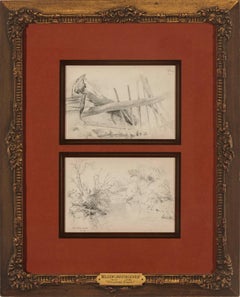
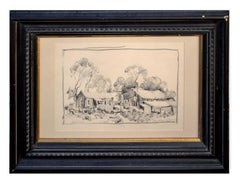
Artist: William Langson Lathrop
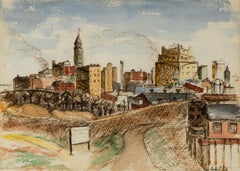
"Central Park"
By William Langson Lathrop
Located in Lambertville, NJ
Jim’s of Lambertville is proud to offer this artwork. Signed. Complemented by a hand carved and gilt frame. William L. Lathrop (1859-1938) Deemed “Father of the New Hope Art Colony”, William Langson Lathrop was born in Warren, Illinois. He was largely self-taught, having only studied briefly with William Merritt Chase in 1887, at the Art Students League. Lathrop first moved east in the early 1880s, and took a job at the Photoengraving Company in New York City. While there, he befriended a fellow employee, Henry B. Snell. The two men became lifelong friends and ultimately, both would be considered central figures among the New Hope Art Colony. Lathrop's early years as an artist were ones of continuing struggle. His efforts to break through in the New York art scene seemed futile, so he scraped enough money together to travel to Europe with Henry Snell in1888. There he met and married an English girl, Annie Burt. Upon returning to New York, he tried his hand at etching, making tools from old saw blades. Even though his prints were extremely beautiful, he still was impoverished. Lathrop would return to his family in Ohio, before once again attempting the New York art scene. In 1899, with great trepidation, he submitted five small watercolors to an exhibit at the New York Watercolor Club. He won the Evans Prize, the only award given, and four of the five paintings were sold the opening night. At age forty Lathrop’s career would finally take off and he became an “overnight success Lathrop came to Phillips Mill for the first time in1898, to visit his boyhood friend, Dr. George Marshall. Shortly after, he and his family purchased the old miller’s house from Dr. Marshall. The Lathrop’s home became a social and artistic center for the growing New Hope colony. Tea and fascinating conversation was the “order of the day” every Sunday. This was a scene fondly recalled by many younger art students that Lathrop taught privately at Phillips Mill. It was common to see groups of his students painting and sketching along the banks of the canal or aboard his canal boat. He had previously taught in the Poconos and at the Lyme, Connecticut Summer School in1907, but Phillips Mill always remained Lathrop’s permanent address. In 1928, a committee headed by Lathrop was formed to purchase the old Phillips Mill building as a place to hold community gatherings and art exhibitions. The committee had success and in 1929 the Phillips Mill Community Association was formed. This became the center of the New Hope Art Colony holding annual exhibitions and still operating today. In 1930, Lathrop had built a sailboat he named the “Widge”. For eight consecutive seasons he sailed it along the coast of Long Island...
Category

Early 20th Century American Impressionist William Langson Lathrop Drawings and Watercolor Paintings

Materials

Paper, Graphite

Related Items
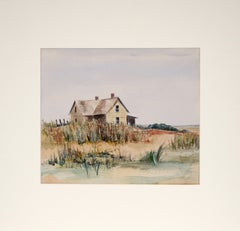
Farmhouse by the Sea - Original Watercolor on Paper
Located in Soquel, CA
Farmhouse by the Sea - Original Watercolor on Paper Tranquil landscape of a seaside farmhouse on the sand surrounded by coastal plants, in soft neutral watercolors. A distant ocean s...
Category

Late 20th Century American Impressionist William Langson Lathrop Drawings and Watercolor Paintings

Materials

Paper, Watercolor

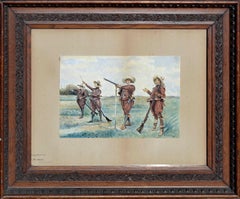
"Arquebusiers En Manoeuvre", After Marchetti
Located in Soquel, CA
Figurative landscape of four infantrymen in formation with their long arquebus guns by Adolphe Ancker (Dutch, 19th Century), after Marchetti. Signed and dated "Adolph Ancker 1888" lo...
Category

1880s American Impressionist William Langson Lathrop Drawings and Watercolor Paintings

Materials

Watercolor, Pencil, Paper

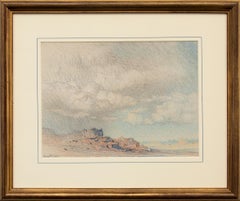
George Elbert Burr 1924 Drawing – Storm over Arizona Desert Landscape, Southwest
By George Elbert Burr
Located in Denver, CO
This rare 1924 colored pencil drawing by renowned American artist George Elbert Burr (1859–1939) beautifully captures the raw, untamed drama of the Arizona de...
Category

Early 20th Century American Impressionist William Langson Lathrop Drawings and Watercolor Paintings

Materials

Paper, Color Pencil

1950s Denver Skyline Painting – Graphite Watercolor Colorado Cityscape Art
Located in Denver, CO
A captivating midcentury cityscape titled "Denver Skyline", this original 1950s watercolor and graphite painting offers a rare industrial-era view of lower downtown Denver, Colorado....
Category

1950s American Impressionist William Langson Lathrop Drawings and Watercolor Paintings

Materials

Watercolor, Graphite

Mid Century Modern Farmhouse Landscape in Watercolor and Ink on Paper
Located in Soquel, CA
Mid Century Modern Farmhouse Landscape in Watercolor and Ink on Paper Bright, modern landscape by Robin Gay McCline (American, 1928-2008). A line of trees and buildings runs across ...
Category

Mid-20th Century American Impressionist William Langson Lathrop Drawings and Watercolor Paintings

Materials

Paper, Ink, Watercolor

Planting (Spring Plowing) - Watercolor Landscape Painting with Figures, c. 1939
By Thomas Hart Benton
Located in Palm Desert, CA
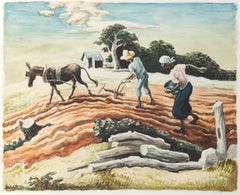
"Planting (Spring Plowing)", a vibrant watercolor and graphite on paper by Thomas Hart Benton, circa 1939-40, embodies the artist's signature Regionalist style. The work depicts a ru...
Category

Mid-20th Century American Impressionist William Langson Lathrop Drawings and Watercolor Paintings

Materials

Paper, Watercolor, Graphite

Late 19th Century Boats at San Francisco Port Seascape Drawing
By Raymond Dabb Yelland
Located in Soquel, CA
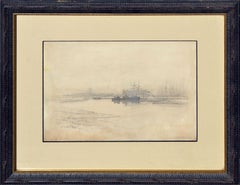
San Francisco moorings, a late 19th century double-sided pencil sketch by Raymond Dabb Yelland (American, 1848 - 1900), 1987. Signed "R.D. Yelland" lower right. Dated "87" lower left. Drawing on both sides of paper. Wood frame. Image size, 8.5"H x 12"L. A master marine painter, Yelland painted in Gloucester Harbor. He sailed to San Francisco in 1874 to take a teaching position in art at Mills College in Oakland. From 1877 to 1894, he taught at the California School of Design. He was a decisive influence on a younger generation of California artists. Full Bio: Raymond Dabb Yelland was born in London, England on February 2, 1848. At the age of three, he immigrated with his family to New York City where he was raised and attended public schools. By the age of twelve, he had settled on art as a career. He was born as Raymond Dabb, but due to the negative connotation of his name, his mother's maiden name, Yelland, was added. After serving under Sheridan in the Federal Army during the Civil War, Yelland attended Pennington Seminary in New Jersey. He studied art at the National Academy of Design from 1869 to 1871 with Page and Brevoort, and then taught at the Academy for one year. With his new bride, he sailed around the Horn in 1874 to San Francisco where he would assume the position of an art instructor at Mills College in Oakland. In 1877, he traveled to England, and later continued his studies in Paris with Luc Oliver Merson. Upon his return to California, Yelland became assistant director of the San Francisco School of Design, and in 1888, assumed its directorship. While at that school, he also taught at the University of California, Berkeley, for many years. His many pupils included Homer Davenport, Alexander Harrison...
Category

1880s American Impressionist William Langson Lathrop Drawings and Watercolor Paintings

Materials

Paper, Pencil

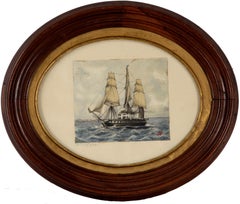
19th Century Maritime Seascape, USS Steam Frigate Niagara
Located in Soquel, CA
19th century maritime seascape of a naval ship similar to those used in the war of 1812, by William B. Hoff (American, 1846-1903). This miniature wat...
Category

19th Century American Impressionist William Langson Lathrop Drawings and Watercolor Paintings

Materials

Paper, Watercolor, Graphite

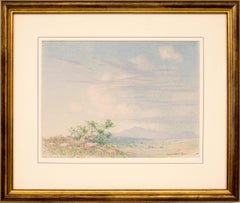
1888 George Elbert Burr Southwest Desert Landscape Drawing, Morning Near Arizona
By George Elbert Burr
Located in Denver, CO
This original 1888 color pencil drawing, Morning Near Arizona, is a luminous Southwestern landscape by acclaimed American artist George Elbert Burr (1859–1939). Rendered with Burr’s ...
Category

1880s American Impressionist William Langson Lathrop Drawings and Watercolor Paintings

Materials

Color Pencil

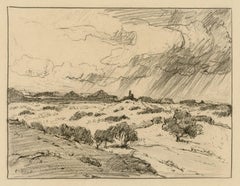
Storm Clouds (Arizona) — Early 20th-Century American Impressionism
By Albert Groll
Located in Myrtle Beach, SC
Albert Lorey Groll, 'Storm Clouds (Arizona)', graphite on paper, c. 1914. Signed in pencil, in the image, lower left. A fine spontaneous rendering on heavy buff, wove paper, with margins (1 1/2 to 2 inches); slight toning at the sheet edges, in good condition. With a pen and ink landscape drawing, verso. Image size 7 5/8 x 10 inches; sheet size 10 3/4 x 13 5/8 inches. Matted to museum standards, unframed. Provenance: Ex. collection Kennedy Galleries, New York. ABOUT THE ARTIST Albert Lorey Groll (1866-1910) was born in New York in 1866, the son of a pharmacist immigrant from Darmstadt, Germany. During his early years, he traveled to Europe to study at the Royal Academy of Fine Arts in Munich under Nicholas Gysis and Ludwig von Löfftz. He further pursued his studies in London and at the Royal Academy of Fine Arts in Antwerp, Belgium. Groll returned to New York in 1895 and moved from figure to landscape painting while expanding his interests to printmaking. In 1904 Groll made the first of several trips to the American Southwest, traveling to Arizona with ethnographer Stewart Culin of the Brooklyn Museum. Later he went to New Mexico with his friend, the artist and illustrator William Robinson Leigh (see our 1stDibs listing no. LU53239015112 ). He focused on impressionistic scenes of Native American lands. The Laguna Pueblo people admired Groll's paintings, honoring him with the name "Chief Bald Head Eagle Eye." Groll kept a studio in the Gainsborough Studios in Manhattan and won several awards for his work in Arizona and New York, including the Salmagundi Club Shaw Prize in 1904 and a gold medal at the Pennsylvania Academy of Fine Arts in 1906. He was also awarded the George Inness gold medal from the National Academy of Design in 1912 for his painting of Lake Louise in the Canadian Rockies. In 1910 he was elected into the National Academy of Design and, in 1919, an associate member of the Taos Society...
Category

1910s American Impressionist William Langson Lathrop Drawings and Watercolor Paintings

Materials

Pencil

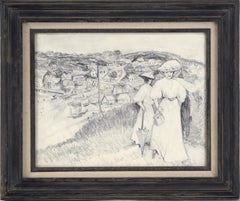
"Yesterday s Ladies" Figurative Drawing
By Virginia J Hughins
Located in Soquel, CA
Charming "Yesterday's Ladies" drawing by Aptos, California artist Virginia J Hughins,(Virginia Brubaker DeWolf), (American, 1923-2004). Presented in a rustic black wood frame. Signed...
Category

1990s American Impressionist William Langson Lathrop Drawings and Watercolor Paintings

Materials

Paper, Carbon Pencil

"Yesterday
s Ladies" Figurative Drawing
"Yesterday
s Ladies" Figurative Drawing
$440 Sale Price
20% Off
H 16 in W 19 in D 1 in
Toiler s House Drawing
By George Demont Otis
Located in Soquel, CA
Significant 1940s work titled "Toiler's House" by George Demont Otis (American, 1879-1962). Titled "Toiler's House on the bottom left and signed "George Demont Otis" on the bottom right. Presented in a black wood frame. Image size, 12"H x 18"W. Otis was born in Memphis, Tennessee where he was orphaned at age six and was raised by his grandmother in Chicago...
Category

1940s American Impressionist William Langson Lathrop Drawings and Watercolor Paintings

Materials

Pencil, Crayon, Paper

Previously Available Items
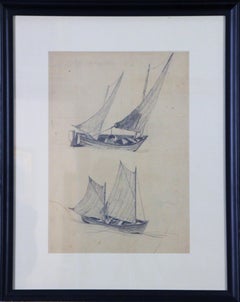
Two Schooners, Pencil on Paper Drawing, Pennsylvania Impressionist Artist
By William Langson Lathrop
Located in Doylestown, PA
"Two Schooners" is a pencil on paper drawing of New Hope School founder American Impressionist painter William Lathrop. The 13" x 9" drawing sh...
Category

Early 20th Century American Impressionist William Langson Lathrop Drawings and Watercolor Paintings

Materials

Archival Paper, Pencil

William Langson Lathrop drawings and watercolor paintings for sale on 1stDibs.

Find a wide variety of authentic William Langson Lathrop drawings and watercolor paintings available for sale on 1stDibs. You can also browse by medium to find art by William Langson Lathrop in graphite, paper, pencil and more. Much of the original work by this artist or collective was created during the 20th century and is mostly associated with the Impressionist style. Not every interior allows for large William Langson Lathrop drawings and watercolor paintings, so small editions measuring 13 inches across are available. Customers who are interested in this artist might also find the work of Albert Van Nesse Greene, Louis Oscar Griffith, and Robert Hallowell. William Langson Lathrop drawings and watercolor paintings prices can differ depending upon medium, time period and other attributes. On 1stDibs, the price for these items starts at $3,700 and tops out at $3,700, while the average work can sell for $3,700.

Still Thinking About These?

All Recently Viewed