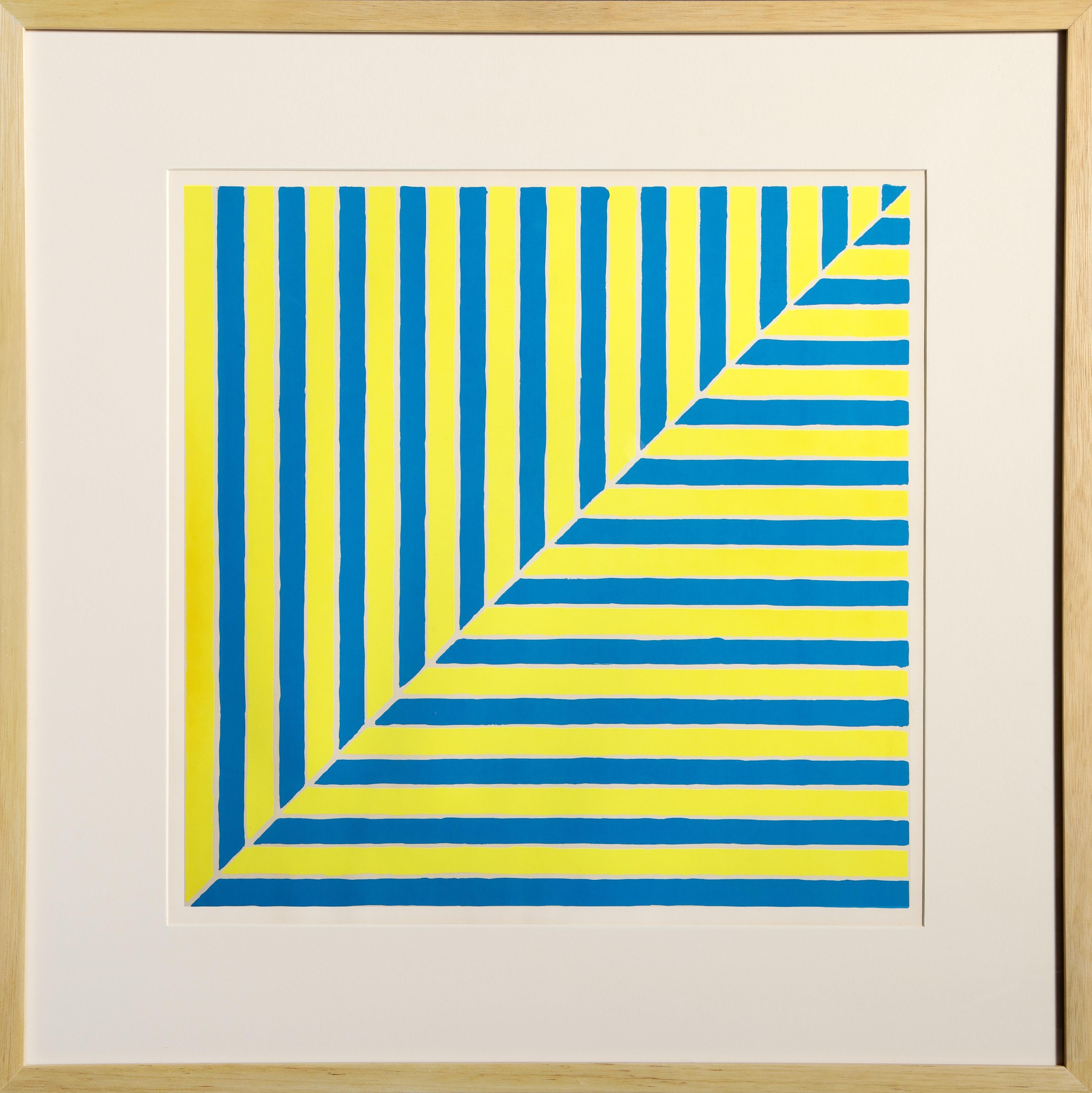
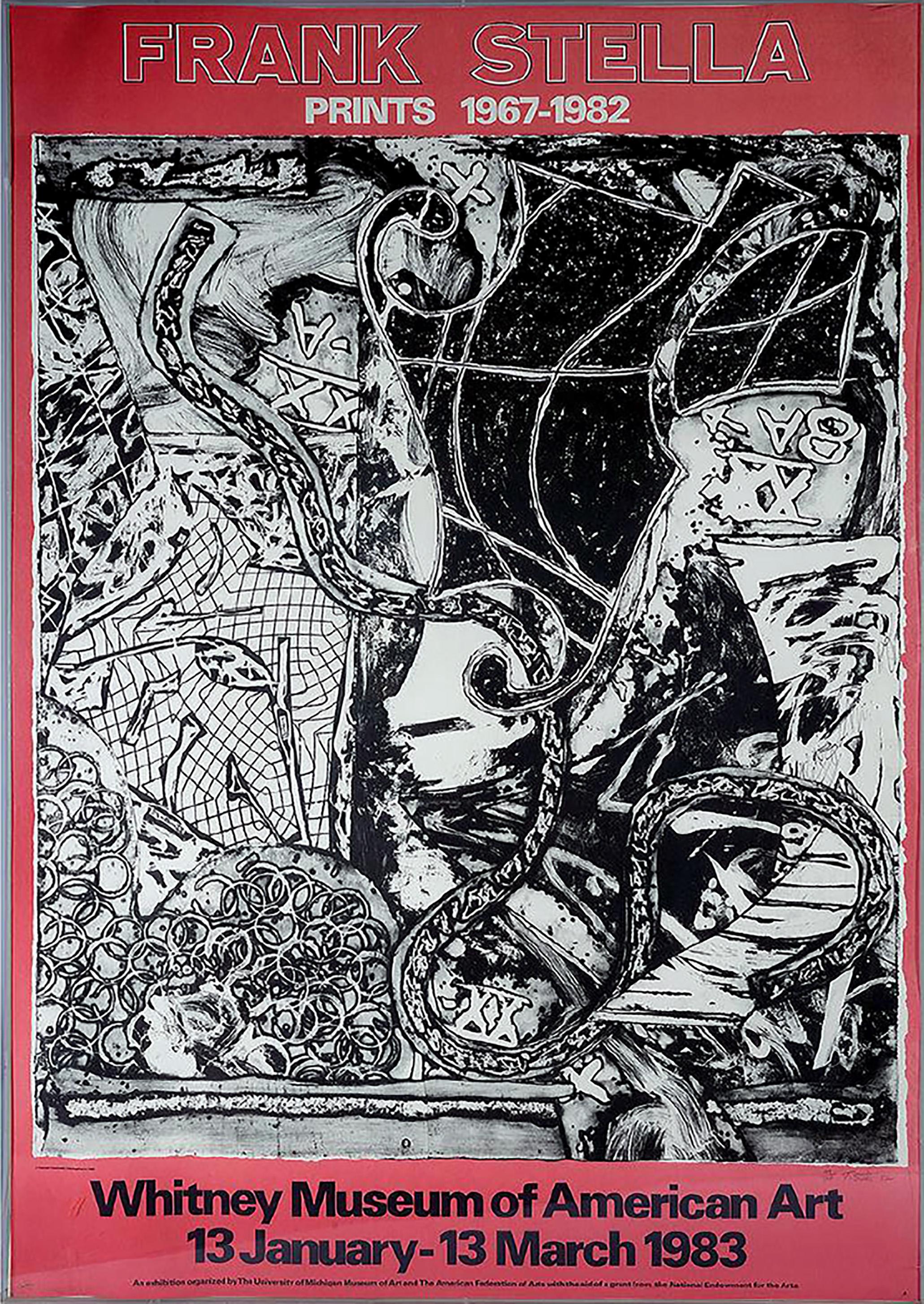
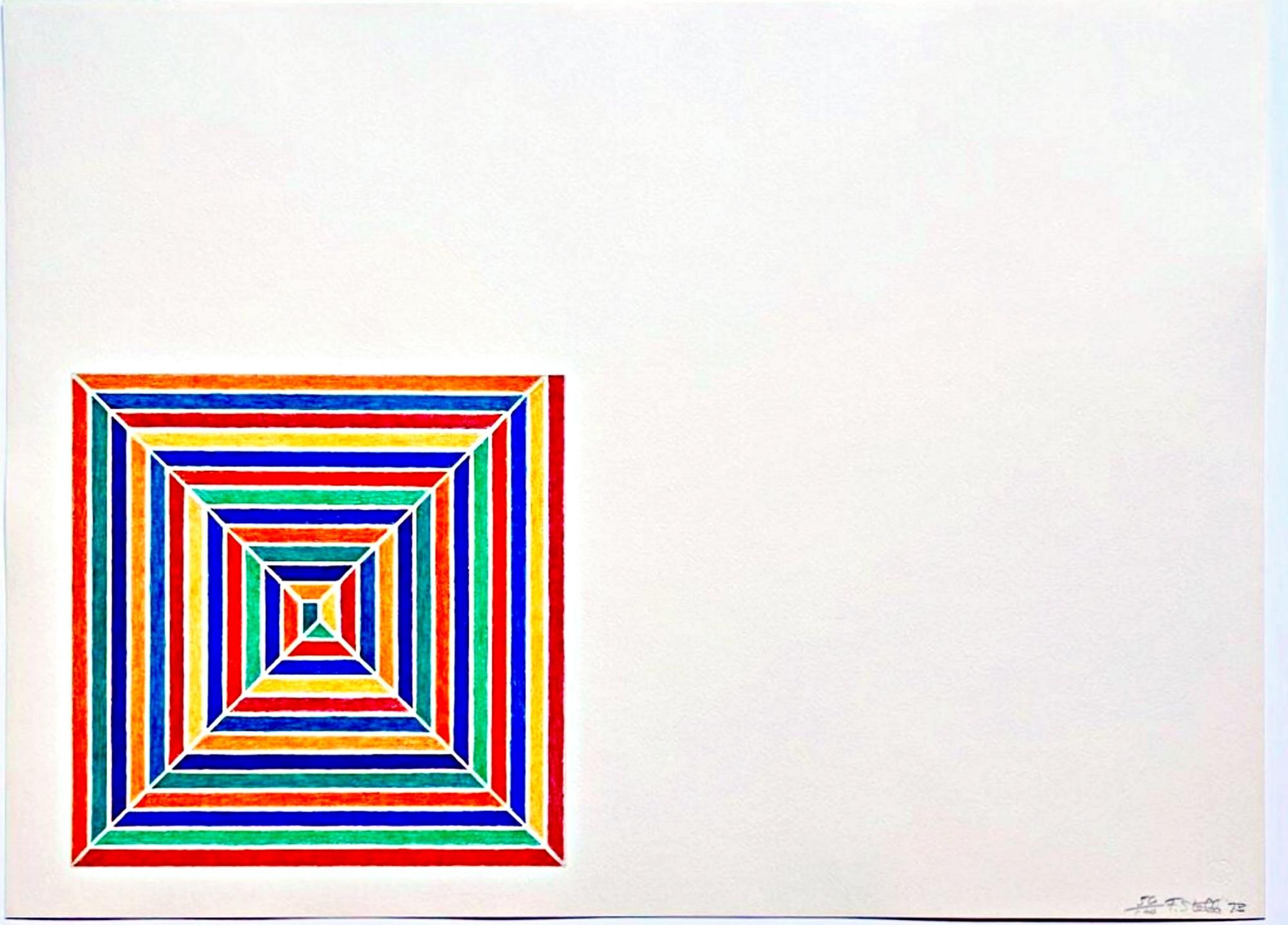
Frank StellaFrank Stella -Attica Defense Fund historic LtEd Geometric abstraction lithograph1974
1974
Angaben zum Objekt
- Schöpfer*in:Frank Stella (1936, Amerikanisch)
- Entstehungsjahr:1974
- Maße:Höhe: 74,93 cm (29,5 in)Breite: 74,93 cm (29,5 in)
- Medium:
- Bewegung und Stil:
- Zeitalter:
- Zustand:
- Galeriestandort:New York, NY
- Referenznummer:1stDibs: LU1745217369442
Frank Stella
Frank Stella war eine der zentralen Figuren der amerikanischen Nachkriegskunst. Als Verfechter des Minimalismus und der ungegenständlichen Abstraktion war Stella ein Maler, Grafiker und Bildhauer.
Der in Massachusetts geborene Stella besuchte die Phillips Academy in Andover und erwarb einen BA in Princeton, wo er Kunst und Farbtheorie bei Josef Albers und Hans Hofmann studierte. Stella besuchte als Studentin häufig New Yorker Galerien und war fasziniert von den Arbeiten von Jackson Pollock und Franz Kline, die sich beide Ende der 1950er Jahre auf dem Höhepunkt ihrer Schaffenskraft befanden.
Nachdem er 1958 nach New York gezogen war, wandte sich Stella der geometrischen Abstraktion und dem zurückhaltenden Malstil von Barnett Newman und Jasper Johns zu.
Johns' flache, grafische Bilder von alltäglichen Gegenständen wie Zielscheiben und Flaggen veranlassen den Betrachter dazu, das Wesen der Darstellung zu hinterfragen und sich zu fragen, ob es sich bei diesen Bildern wirklich um Gemälde oder einfach um neue Iterationen der Gegenstände selbst handelt. Stella trieb Johns' Überlegungen weiter und betrachtete Gemälde auf Leinwand als eigenständige Objekte, wie Skulpturen, und nicht als Repräsentationen. Dies führte dazu, dass er bestimmte formale Konventionen ablehnte, keine Skizzen anfertigte und oft unkonventionelle Materialien wie Hausfarbe verwendete.
1959 schuf Stella seine Serie "Black Paintings", in der schwarze Farbbänder durch dünne, präzise Streifen auf der nackten Leinwand getrennt sind. In einer Zeit, in der es in der zeitgenössischen Malerei vor allem um wilde Gesten, dicke Farben und formale Unbekümmertheit ging, sorgten diese Werke für Aufsehen: . Im selben Jahr wurde Stella in die Ausstellung "Sechzehn Amerikaner" im Museum of Modern Art in New York aufgenommen, und er wurde in die Liste der von der Leo Castelli Gallery Art vertretenen Künstler aufgenommen. 1960 begann er, Farbe in sein Werk zu bringen, und verwendete unkonventionell geformte Leinwände, um seine Kompositionen zu ergänzen.
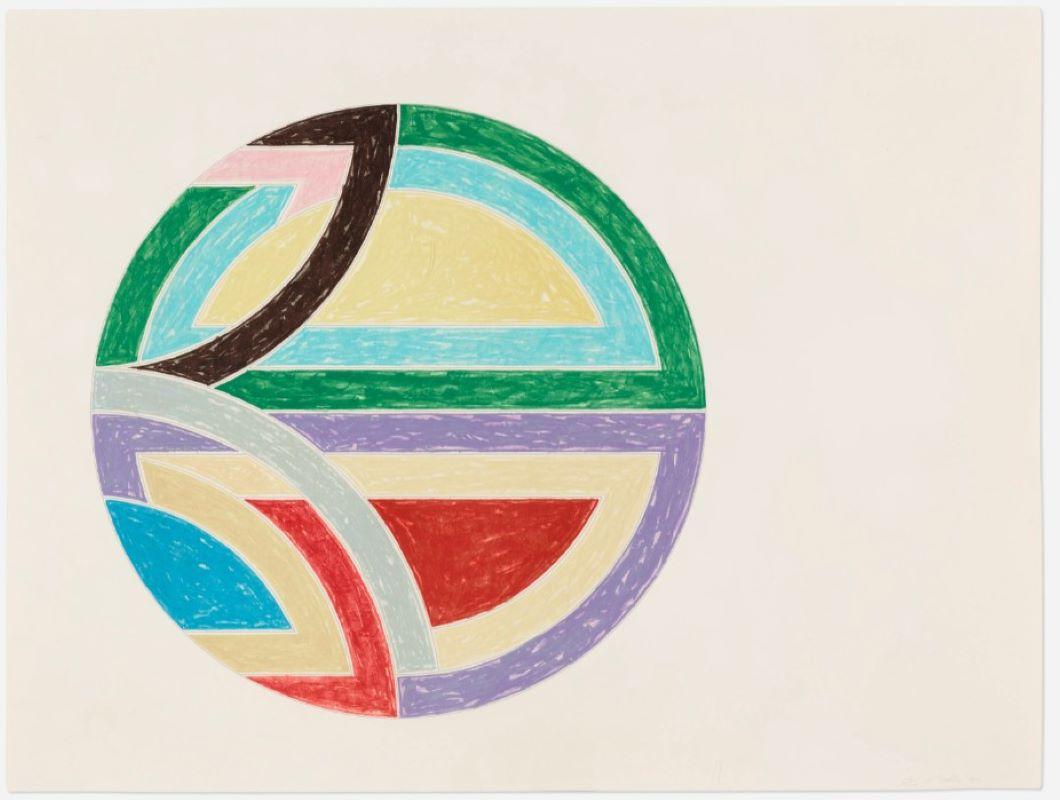
In seiner Serie "Eccentric Polygon" aus den Jahren 1965 und '66 setzt Stella auf Asymmetrie und kräftige Farben, wobei er Formen schafft, die von gemalten Feldern und den Rändern der Leinwand abgegrenzt werden. Auf diese Serie folgte 1967-70 die Serie "Protractor", die sich durch bunte Kreise und Bögen auszeichnet. Diese Werke, die nach den antiken Städten benannt sind, deren kreisförmige Grundrisse Stella während seiner Reisen im Nahen Osten in den 1960er Jahren aufgefallen waren, bestehen in der Regel aus mehreren Leinwänden, die bündig aneinandergereiht sind, so dass sich die geometrischen Figuren in jedem Abschnitt zu einem größeren, komplexeren Ganzen zusammenfügen.
Ebenfalls Mitte der 1960er Jahre begann Stella, sich mit der Druckgrafik zu befassen, wobei er zunächst mit Kenneth Tyler von Gemini A.E.L. zusammenarbeitete und später eine Druckausrüstung in seinem eigenen Studio installierte. 1968 schuf er die "V"-Serie von Lithografien, zu der auch der Druck Quathlamba I gehörte. Nach einer Einzelausstellung im Museum of Modern Art 1970 begann Stella dreidimensional zu arbeiten und fügte den Gemälden Reliefelemente hinzu, die fast als Wandskulpturen betrachtet werden konnten.
Stellas 1970-73 entstandene Serie "Polish Village" wurde von Dokumentarfotos und Architekturzeichnungen polnischer Synagogen inspiriert, die während des Zweiten Weltkriegs von den Nazis zerstört worden waren. Die daraus resultierenden Werke - hauptsächlich aus Farbe und Stoff auf Sperrholz - sind schroffer und weniger poliert als seine früheren Serien.
Herman Melvilles Moby Dick war Stellas Muse für eine Reihe von dreidimensionalen Werken, die er in den 1980er Jahren schuf und in denen Wellenformen, architektonische Elemente und platonische Körper eine wichtige Rolle spielen. In dieser Zeit entwickelte Stella einen neuen, überschwänglichen Stil, der in "La Scienza della Fiacca" zum Ausdruck kommt.
1997 überwachte der Künstler die Schaffung des Stella-Projekts, ein 5.000 Quadratmeter großes Werk im Moores Opera House an der Universität von Houston. Eine große freistehende Skulptur von Stella steht vor der National Gallery of Art in Washington, D.C.
Stellas Werke befinden sich in den Sammlungen zahlreicher bedeutender Museen auf der ganzen Welt, darunter das Museum of Modern Art in New York und das Metropolitan Museum of Art, die Menil Collection, in Houston, das Hirshhorn Museum and Sculpture Garden, in Washington, D.C., und das San Francisco Museum of Modern Art. Er wurde 2009 von Präsident Obama mit der National Medal of Arts ausgezeichnet und erhielt 2011 den Lifetime Achievement Award in Contemporary Sculpture des International Sculpture Center.
Finden Sie Original Frank Stella Kunst zum Verkauf auf 1stDibs.
- VersandAngebot wird abgerufen …Versand von: New York, NY
- Rückgabebedingungen
Mehr von diesem*dieser Anbieter*in
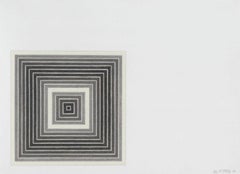
Alle anzeigen1970er, Geometrische Abstraktion, Abstrakte Drucke
Lithografie
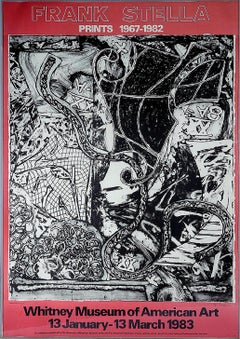
1980er, Abstrakter Expressionismus, Abstrakte Drucke
Lithografie, Versatz
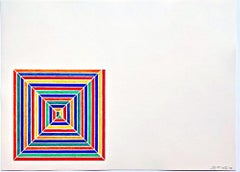
1970er, Geometrische Abstraktion, Abstrakte Drucke
Lithografie
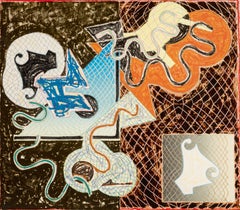
1980er, Abstrakter Expressionismus, Abstrakte Drucke
Mixed Media, Lithografie, Siebdruck
Anfang der 2000er, Abstrakter Expressionismus, Abstrakte Drucke
Lithografie, Versatz
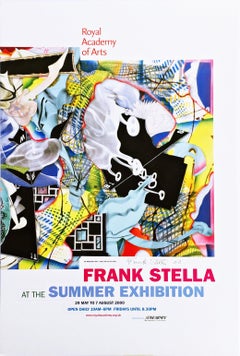
1980er, Abstrakter Expressionismus, Abstrakte Drucke
Lithografie, Versatz
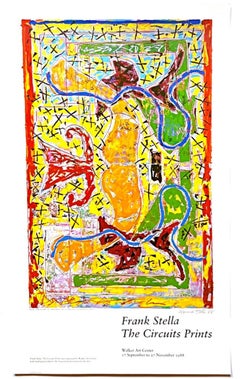
Das könnte Ihnen auch gefallen
1970er, Geometrische Abstraktion, Abstrakte Drucke
Lithografie
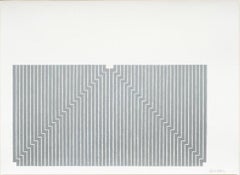
1960er, Geometrische Abstraktion, Abstrakte Drucke
Siebdruck
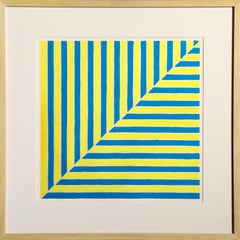
1970er, Geometrische Abstraktion, Druckgrafiken und Multiples
Lithografie, Siebdruck
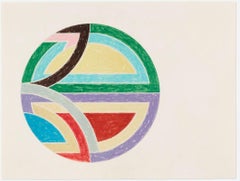
1970er, Druckgrafiken und Multiples
Lithografie
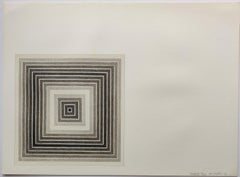
1970er, Geometrische Abstraktion, Druckgrafiken und Multiples
Lithografie, Siebdruck
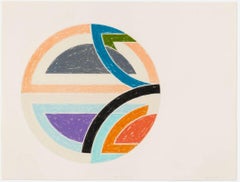
Mitte des 20. Jahrhunderts, amerikanisch, Moderne der Mitte des Jahrhund...
Papier