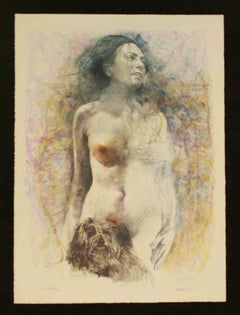
Objekte ähnlich wie 1980s Italian Signed Numbered and Dated Original Work on Paper
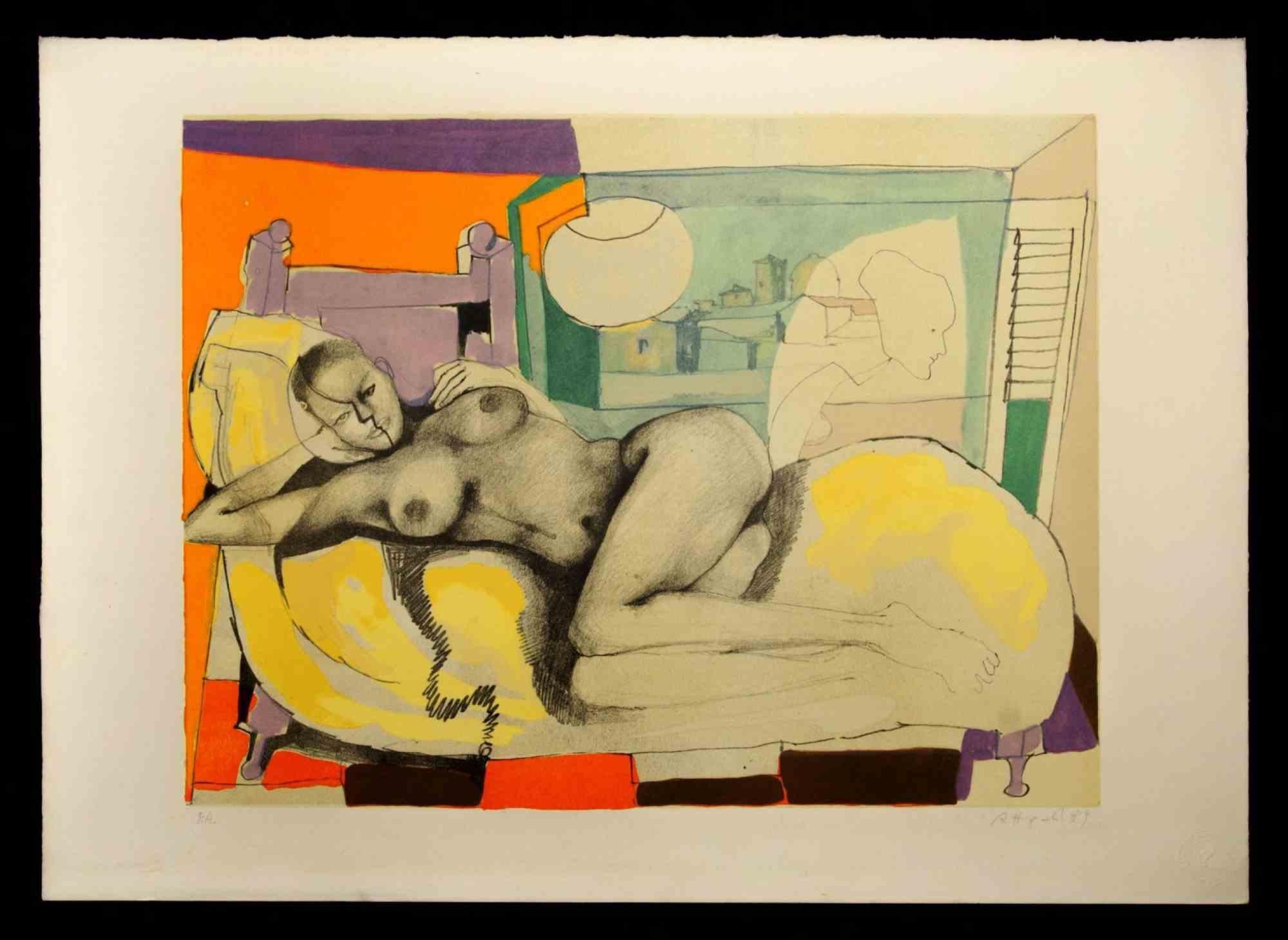
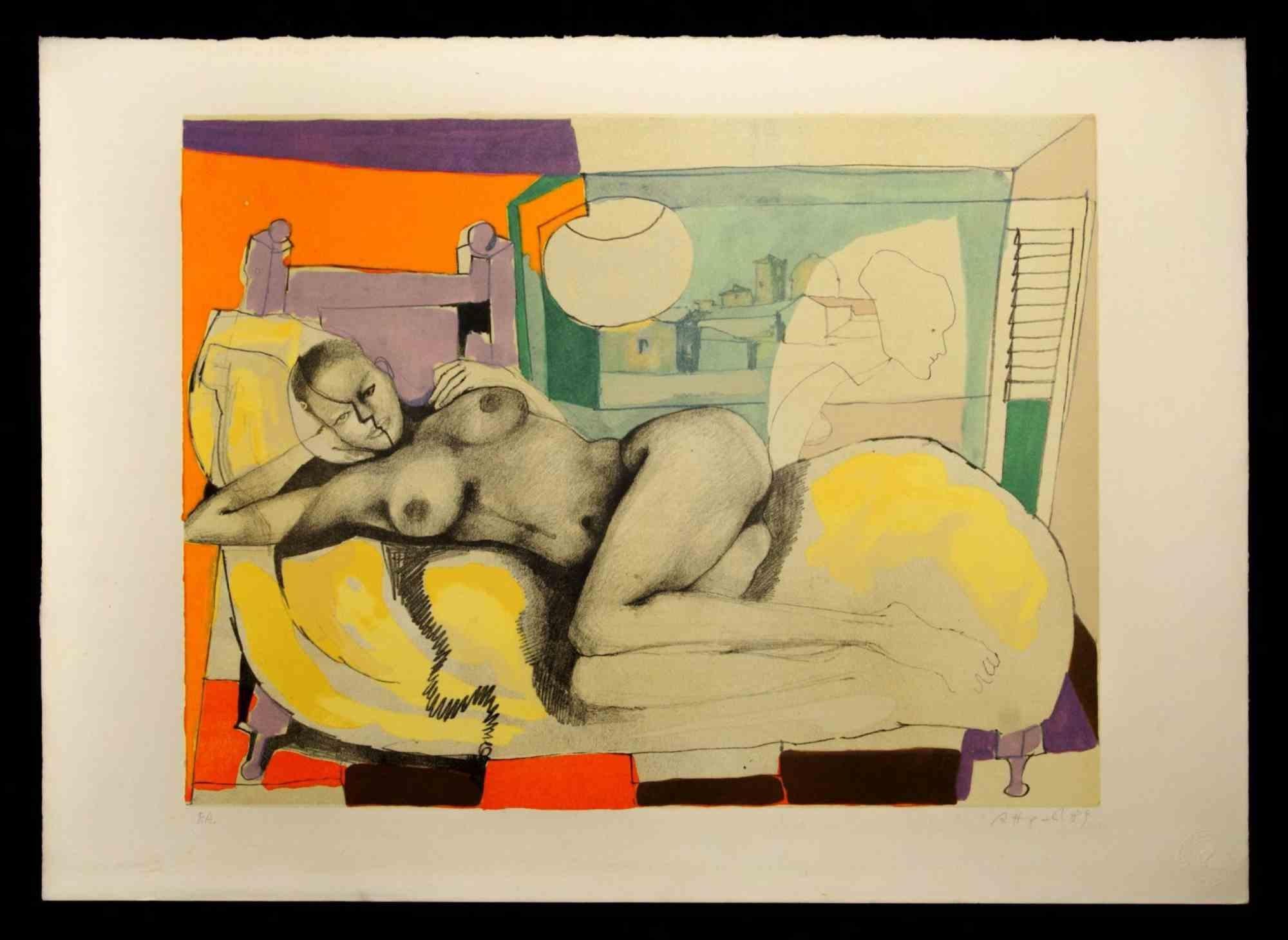
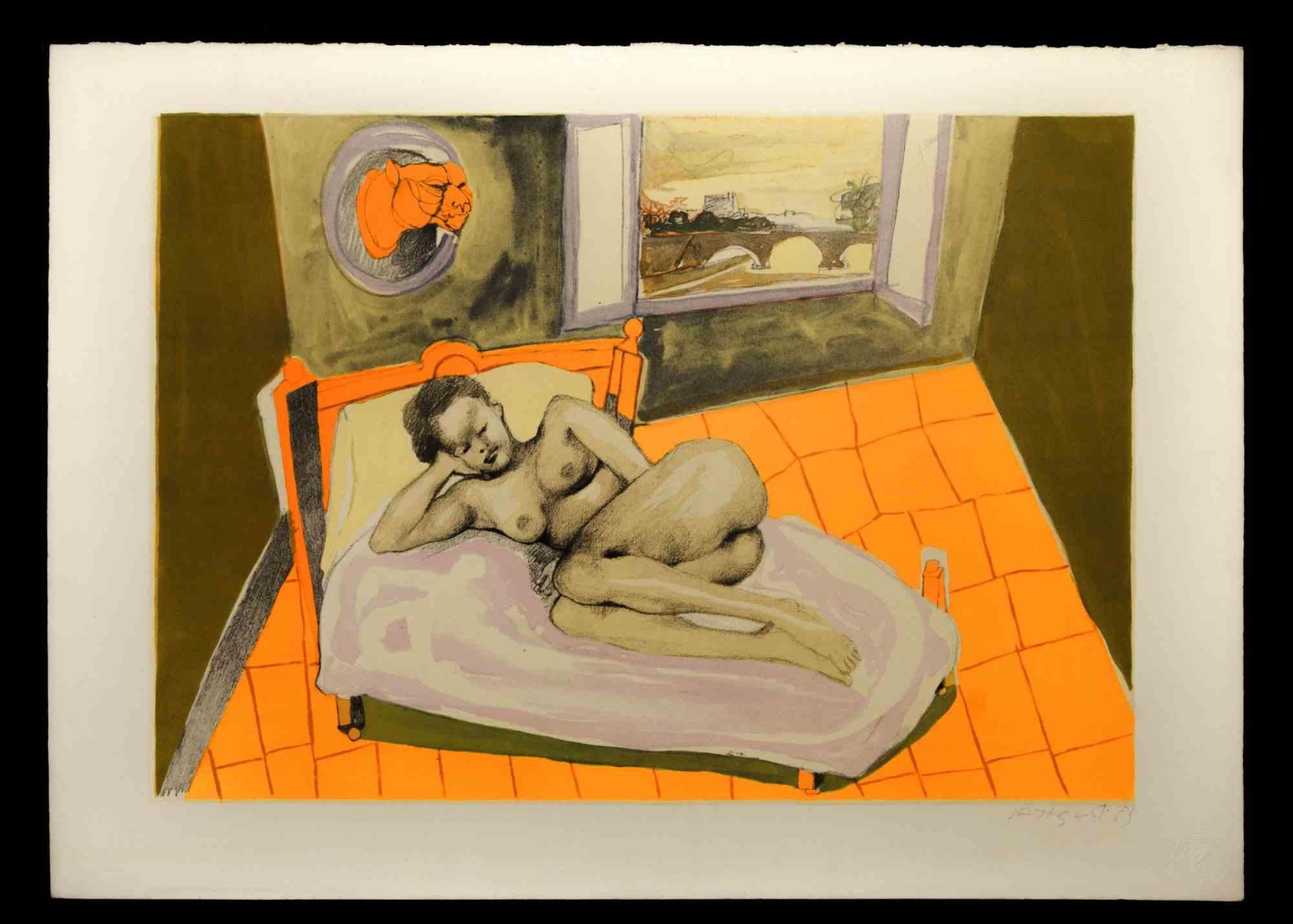
Möchten Sie mehr Bilder oder Videos?
Zusätzliche Bilder oder Videos von dem*der Anbieter*in anfordern
1 von 14
Ugo Attardi1980s Italian Signed Numbered and Dated Original Work on Paper1984
1984
2.318 €Einschließlich MwSt.
Angaben zum Objekt
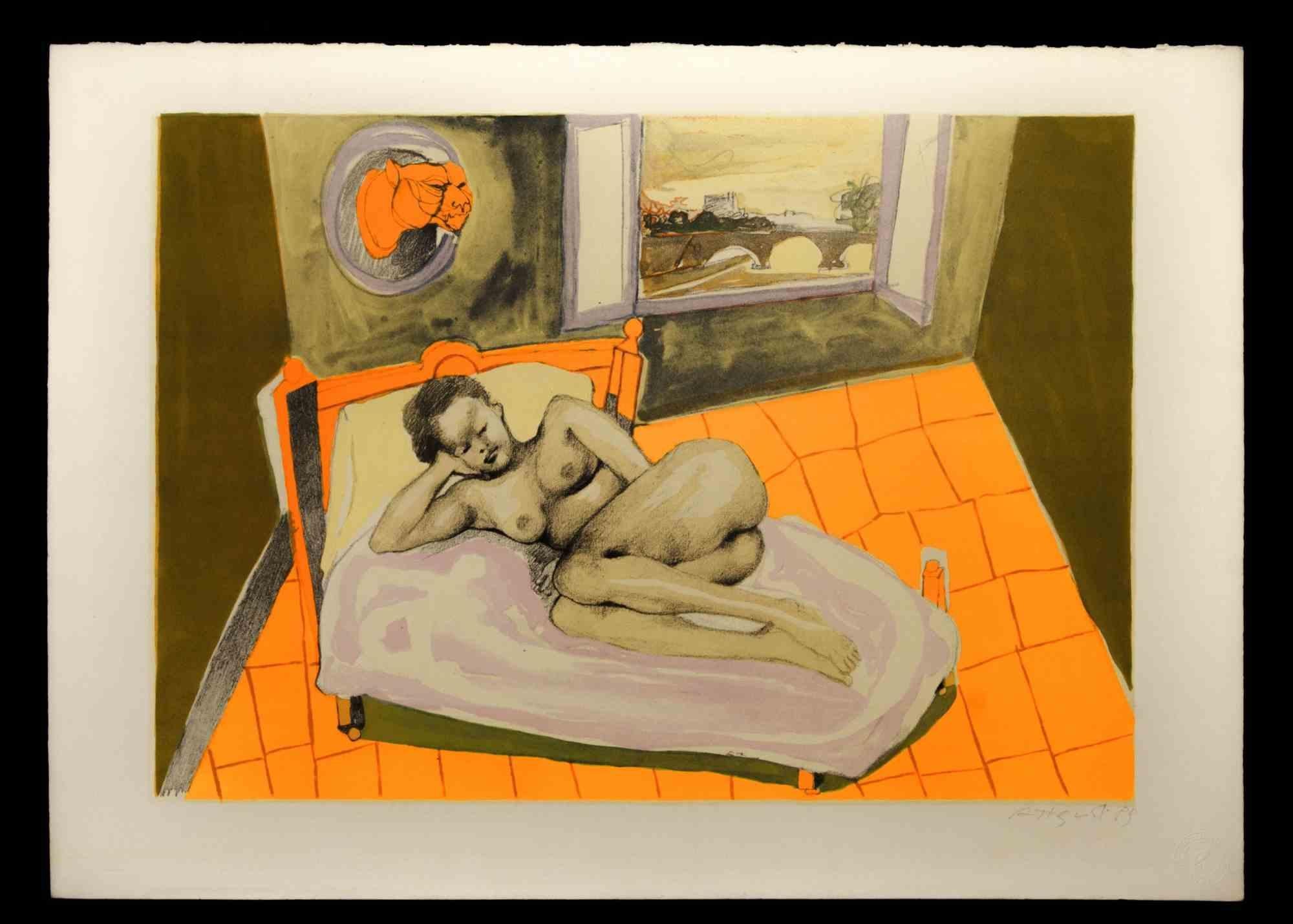
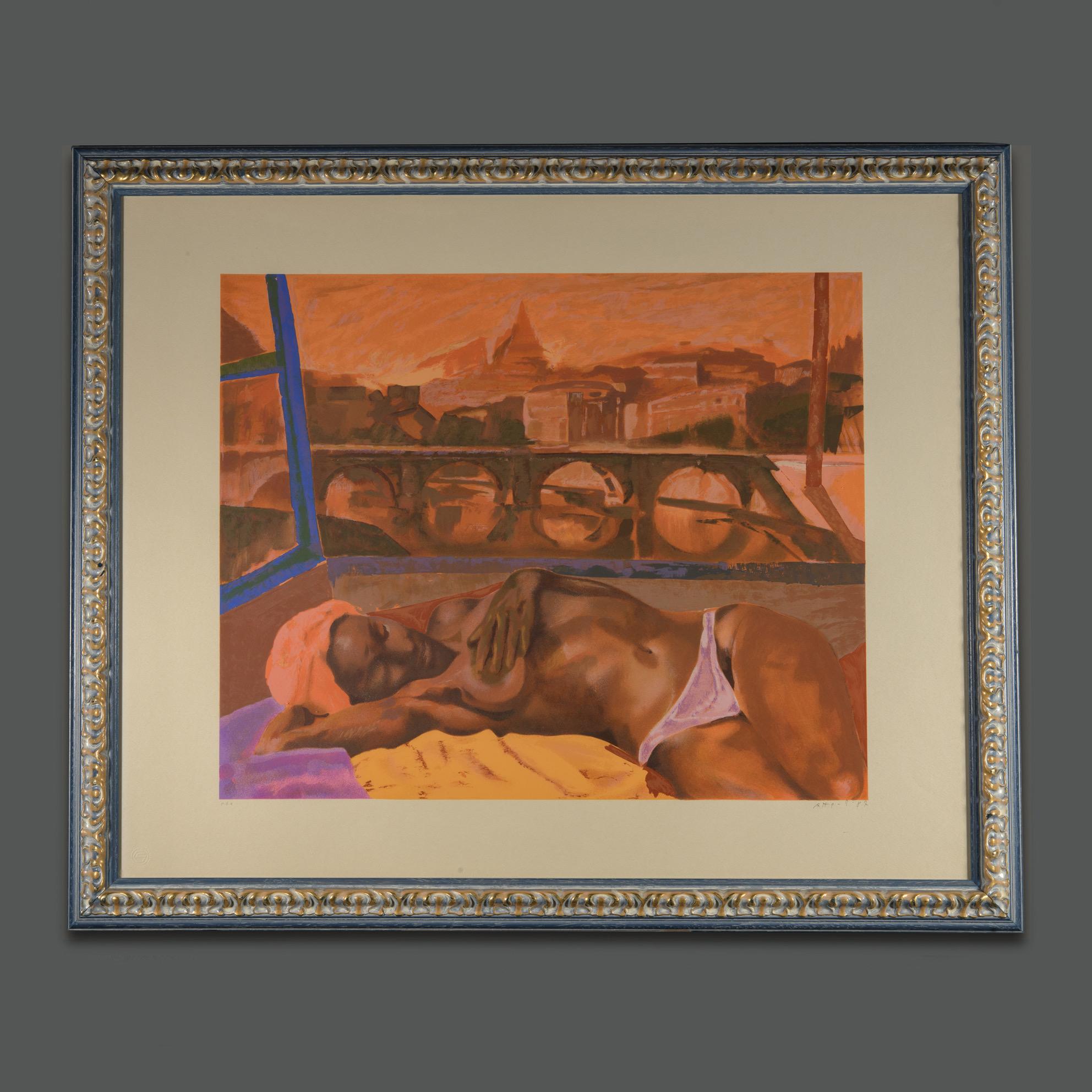
This is a wonderful colour lithograph entitled ‘Scorcio di Roma con profilo femminile’ (View of Rome with female profile) by Italian artist Ugo Attardi (1923-2006).
The work is a graphic print on paper, a figurative work of art depicting a nude female figure in the foreground with a view of Rome, including St. Peter's Basilica, in the background.
Our beautiful example is hand-signed in pencil by the artist, numbered 22/100 and dated 1984.
This beautiful and elegant work is characterised by its elements of expressionism and cubism, with a complex composition and the use of multiple perspectives.
This artwork, never before on the market, comes from an important Italian private collection and is beautified by an impressive original frame in gilded wood, in almost perfect condition.
The artwork is also protected by glass
Every item of our Gallery, upon request, is accompanied by a certificate of authenticity issued by Sabrina Egidi official Expert in Italian furniture for the Chamber of Commerce of Rome and for the Rome Civil Courts.
Our company has been present on this platform for many years, with numerous sales made and just as many excellent reviews received that you can under our Furniture account.
Ugo Attardi (Sori, 12 March 1923 – Rome, 20 July 2006) was an Italian painter, sculptor and writer.
ways
He was born in the province of Genoa.
His father, a trade unionist and active member of the “Federazione dei Marittimi” (Seafarers' Federation), originally from Santo Stefano Quisquina, a small village in the province of Agrigento, was forced by the
fascist regime to leave Liguria and return to Sicily.
His mother was Natalia Attardi Donnini
After moving with his family to Palermo, intrigued by painting and its techniques, he began attending the
Academy of Fine Arts and later the Faculty of Architecture.
In 1945 he moved to Rome, where he was hosted by Pietro Consagra
Rome, staying with Pietro Consagra, who was himself a guest of Renato Guttuso.
The climate of cultural and civil initiatives in the post-war period allowed him to resume his research with enthusiasm. In 1948, together with a group of young artists, he founded the abstract movement Forma Uno, but his views diverged from those of the rest of the group.
His companions were Carla Accardi, Antonio Sanfilippo, Pietro Consagra, Piero Dorazio, Mino Guerrini, Concetto Maugeri, Achille Perilli and Giulio Turcato.
In 1948, he participated in the National Exhibition of Figurative Arts (V Quadriennale Nazionale d'Arte) in Rome.
In the early 1950s, he turned his art towards expressionism, drawing inspiration from Francis Bacon and George Grosz, among others, combining his artistic activity with political commitment within the Italian Communist Party.
The need to experiment with a new and visionary relationship with reality led him to move away from abstractionism and study his own form of expressionism.
In 1952 and 1954, he was invited to the 26th and 27th Venice Biennales.
In 1956, despite the crisis of realism, he exhibited successfully in a gallery in Trastevere.
In 1958, he participated in the founding of the cultural and political newspaper Città Aperta and began collaborating with it, together with Tommaso Chiaretti, Elio Petri, Renzo Vespignani and Mario Socrate. In the early 1960s, he participated in numerous exhibitions both in Italy and abroad.
In 1961, he founded the group Il Pro e il Contro, leading all the events until the last year, when it was dissolved.
In 1963, one of his works was exhibited at the Contemporary Italian Paintings exhibition, held in several Australian cities.
In 1963-64, he exhibited at the Peintures italiennes d'aujourd'hui exhibition, held in the Middle East and North Africa.
A trip to Spain led him to rediscover the classics and deepen his historical studies.
In 1974, he created the banner for the Palio di Siena on 16 August.
In 1986 and 1987, he exhibited at the ICAF in London and at the International Exhibition of Contemporary Art in Milan.
In 1988, his works were exhibited in Tokyo.
In 1997, Telecom chose one of his works as the image for a telephone card.
In 2003, the Presidency of the Council of Ministers of the Republic awarded him the Prize for Culture in the Arts, an institutional recognition aimed at highlighting the figures and works of great artists and cultural personalities.
In 2006, he received the title of Grand Officer of the Republic from President Carlo Azeglio Ciampi for his artistic merits and for having been able to spread and promote Italian genius and creativity throughout the world.
At the end of the 1960s, he worked on his novel L'erede selvaggio (The Wild Heir), published in 1970, which won him the 1971 Viareggio Prize in the fiction category.
In 1967, he began a remarkable career as a sculptor: after the bas-relief Addio Che Guevara (Farewell Che Guevara) in 1968, he worked on several wooden groups, including L'arrivo di Pizarro (The Arrival of Pizarro) from 1968-71, and on very enigmatic and sensual bronzes, including La Maga (The Sorceress) from 1974.
In the spring of 1973, at the request of local political figures, he painted a monumental fresco (three and a half metres high and over ten metres long) entitled La nuova Somalia (The New Somalia) in the new Parliament building in Mogadishu. The work was later destroyed during the war.
Attardi also created important public works, including the group Il vascello della Rivoluzione (The Ship of the Revolution), a tribute from the Italian government to the French state on the bicentenary of the storming of the Bastille.
It was temporarily exhibited in Paris and permanently installed in the EUR (Rome) near the Palazzo dello Sport, I sogni del re normanno (The Dreams of the Norman King) inside the new international airport of Palermo, En las Americas in Avenida 9 de Julio in Buenos Aires, Ulysses in Battery Park in New York, Christ acquired by the Vatican Museums, and Aeneas, donated to the people of Malta and placed at the entrance to the port of Valletta.
In 1983, the Centre Georges Pompidou in Paris dedicated an exhibition and a ballet inspired by his works to him.
In 1986, he exhibited a polychrome wood sculpture from 1984, La Cantante, at the XI Quadriennale in Rome. In 1987, he created the monument “Per la libertà” (For Freedom), commissioned by the UIL trade union.
In 1989, he created the commemorative bust of Teresa Gullace (martyr of the resistance), which is still on display in the atrium of the Liceo Scientifico di Roma.
In 1987, a selection of his drawings was chosen by Newton Compton to embellish the anthology of poems by Emily Dickinson.
In March 2003, he took part in the travelling group exhibition “Giochi Olimpici” (Olympic Games) at the Royal Palace in Naples, which moved to Athens in June, to the Museum of Cycladic Art, and in October to Venice, to the Church and Scuola Grande di San Giovanni Evangelista.
Under existing legislation, any artwork created over 70 years ago by an artist who has died can requires a license for export regardless of the work’s market price. The shipping may require additional handling days to require the license according to the destination of the artwork.
Dimensions are frame included
- Schöpfer*in:Ugo Attardi (1923 - 2006, Italienisch)
- Entstehungsjahr:1984
- Maße:Höhe: 105 cm (41,34 in)Breite: 60 cm (23,63 in)Tiefe: 6 cm (2,37 in)
- Medium:
- Bewegung und Stil:
- Zeitalter:
- Zustand:
- Galeriestandort:Roma, IT
- Referenznummer:1stDibs: LU2883217398222
Ugo Attardi
Ugo Attardi (Sori, 12. März 1923 - Rom, 20. Juli 2006) war ein italienischer Maler, Bildhauer und Schriftsteller.
Er wurde in der Provinz Genua geboren. Sein Vater, ein Gewerkschafter und aktives Mitglied der "Federazione dei Marittimi" (Vereinigung der Seeleute), der ursprünglich aus Santo Stefano Quisquina, einem kleinen Dorf in der Provinz Agrigento, stammte, wurde vom faschistischen Regime gezwungen, Ligurien zu verlassen und nach Sizilien zurückzukehren. Seine Mutter war Natalia Attardi Donnini. Nachdem er mit seiner Familie nach Palermo gezogen war, interessierte er sich schon früh für die Malerei und ihre Techniken (in seiner Freizeit half er seinem Onkel väterlicherseits, einem alten Porträt- und Landschaftsmaler) und besuchte zunächst die Akademie der Schönen Künste und später die Fakultät für Architektur. 1945 zog er nach Rom und wohnte bei Pietro Consagra, der seinerseits Gast von Renato Guttuso war.
Das an kulturellen und zivilen Initiativen reiche Klima der Nachkriegszeit ermöglichte es ihm, seine Forschungen mit Begeisterung wieder aufzunehmen. 1948 gründete er zusammen mit einer Gruppe junger Künstler die abstrakte Bewegung Forma Uno, doch seine Ansichten wichen von denen der übrigen Gruppe ab. Seine Gefährten waren Carla Accardi, Antonio Sanfilippo, Pietro Consagra, Piero Dorazio, Mino Guerrini, Concetto Maugeri, Achille Perilli und Giulio Turcato.
Im Jahr 1948 nimmt er an der Nationalen Ausstellung für figurative Kunst (V Quadriennale Nazionale d'Arte) in Rom teil.
Anfang der 1950er Jahre wendet er sich dem Expressionismus zu und lässt sich u. a. von Francis Bacon und George Grosz inspirieren, wobei er seine künstlerische Tätigkeit mit politischem Engagement in der Kommunistischen Partei Italiens verbindet. Das Bedürfnis, mit einer neuen und visionären Beziehung zur Realität zu experimentieren, veranlasste ihn, sich von der Abstraktion zu lösen und seine eigene Form des Expressionismus zu entwickeln. In den Jahren 1952 und 1954 wurde er zur 26. und 27. Biennale von Venedig eingeladen. Im Jahr 1956 stellt er trotz der Krise des Realismus erfolgreich in einer Galerie in Trastevere aus. Im Jahr 1958 beteiligte er sich an der Gründung der kulturellen und politischen Zeitung Città Aperta und begann die Collaboration mit Tommaso Chiaretti, Elios, Renzo Vespignani und Mario Socrate. In den frühen 1960er Jahren nahm er an zahlreichen Ausstellungen in Italien und im Ausland teil. Im Jahr 1961 gründete er die Gruppe Il Pro e il Contro, die bis zu ihrer Auflösung im letzten Jahr alle Veranstaltungen leitete.
1963 wurde eines seiner Werke auf der Ausstellung Zeitgenössische italienische Malerei ausgestellt, die in mehreren australischen Städten stattfand. In den Jahren 1963-64 nahm er an der Ausstellung Peintures italiennes d'aujourd'hui teil, die im Nahen Osten und Nordafrika stattfand.
Eine Reise nach Spanien führte ihn dazu, die Klassiker wiederzuentdecken und seine historischen Studien zu vertiefen. Im Jahr 1974 entwarf er das Banner für den Palio di Siena am 16. August. In den Jahren 1986 und 1987 stellte er auf der ICAF in London und auf der Internationalen Ausstellung für zeitgenössische Kunst in Mailand aus.
Anbieterinformationen
Noch keine Bewertungen
Geprüfte*r Anbieter*in
Jede*r Anbieter*in erfüllt strenge Standards bezüglich Echtheit und Zuverlässigkeit
Gründungsjahr 1990
1stDibs-Anbieter*in seit 2025
7 Verkäufe auf 1stDibs
Typische Antwortzeit: 2 Stunde
- VersandAngebot wird abgerufen …Versand von: Roma, Italien
- Rückgabebedingungen
Einige Inhalte dieser Seite wurden automatisch übersetzt. Daher kann 1stDibs nicht die Richtigkeit der Übersetzungen garantieren. Englisch ist die Standardsprache dieser Website.
Mehr von diesem*dieser Anbieter*in
Alle anzeigenItalienisch 1980er Ugo Attardi Signierte Arbeit auf Papier Akt der Frau
Von Ugo Attardi
Italienisch 1980er Ugo Attardi Signierte Arbeit auf Papier Akt der Frau
Eine schöne "Prova d'Artista" Von der Pop Art inspiriertes grafisches Werk eines der größten modernen Künstle...
Kategorie
Ende des 20. Jahrhunderts, Moderne, Aktdrucke
Materialien
Lithografie
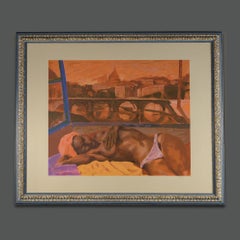
1950er Jahre Italienische signierte Lithographie von Francesco Messina
Von Francesco Messina
Schöne Lithografie des großen italienischen Nachkriegskünstlers Francesco Messina.
Zeigt in schöner Pose einen Frauenakt "Liegendes Modell".
Sehr seltener "Artist's Proof Hors Comm...
Kategorie
Mitte des 20. Jahrhunderts, Moderne, Aktdrucke
Materialien
Lithografie
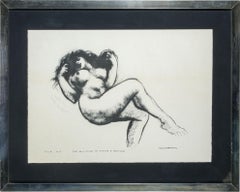
Signiertes Mario Schifano-Kunstwerk auf Papier, 1980er Jahre
Von Mario Schifano
Mater-Siebdruck "Ondate di gelo" (Frostwellen) von Mario Schifano.
Signatur und Nummerierung mit Bleistift auf der Vorderseite.
Trockenstempel des Künstlers auf der Vorderseite.
A...
Kategorie
1980er, Moderne, Abstrakte Drucke
Materialien
Papier
1.561 € Verkaufspreis
20 % Rabatt
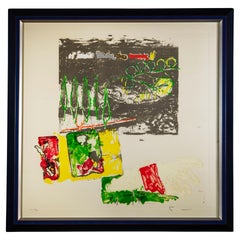
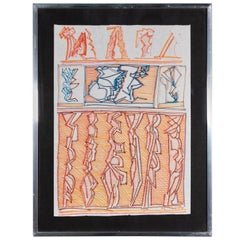
Zeitraum Italienisch Fausto Pirandello signiert abstrakte Kunstwerk
Von Fausto Calogero Pirandello
Bedeutendes Werk eines der größten Künstler der italienischen Kunstavantgarde Fausto Pirandello
Es zeigt eines seiner ikonischen Motive "Badende" mit fünf Figuren in seinem unverwec...
Kategorie
Mitte des 20. Jahrhunderts, Abstrakt, Abstrakte Gemälde
Materialien
Papier, Pastell
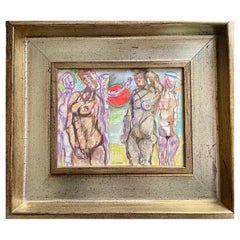
Italienisches signiertes modernes abstraktes Gemälde von Riccardo Licata, 1970er Jahre
Von Riccardo Licata
Bedeutendes Aquarell auf Papier "Ohne Titel" des großen italienischen Künstlers Riccardo Licata.
Rechts unten datiert und signiert "74 Licata".
Dieses Werk ist auf höchstem Niveau r...
Kategorie
Mitte des 20. Jahrhunderts, Abstrakt, Abstrakte Gemälde
Materialien
Papier, Wasserfarbe
1.537 € Verkaufspreis
30 % Rabatt
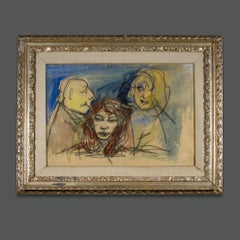
1960er Jahre Italienisches Gemälde, signiert, datiert und signiert
Von Mino Maccari
1960er Jahre Italienisches Gemälde, signiert, datiert und signiert
Mino Maccari Arbeit
Drei stilisierte Figuren
Werk des sienesischen Künstlers Mino Maccari, signiert unten rechts Ma...
Kategorie
1960er, Abstrakter Expressionismus, Figurative Gemälde
Materialien
Papier, Wasserfarbe
Das könnte Ihnen auch gefallen
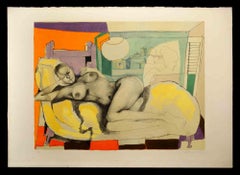
Untitled – Lithographie von Ugo Attardi – 1985
Von Ugo Attardi
Lithographie von Ugo Attardi aus dem Jahr 1985.
Sehr guter Zustand.
Ugo Attardi wurde 1923 in Sori, in der Nähe von Genua, geboren - 2006
Im Jahr 1948 gründete er in Rom zusammen m...
Kategorie
1980er, Zeitgenössisch, Figurative Drucke
Materialien
Lithografie
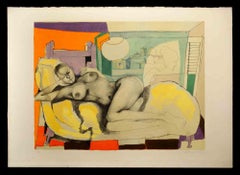
Untitled – Lithographie von Ugo Attardi – 1985
Von Ugo Attardi
Lithographie von Ugo Attardi aus dem Jahr 1985.
Sehr guter Zustand.
Ugo Attardi wurde 1923 in Sori, in der Nähe von Genua, geboren - 2006
Im Jahr 1948 gründete er in Rom zusammen m...
Kategorie
1980er, Zeitgenössisch, Figurative Drucke
Materialien
Lithografie
Untitled – Lithographie von Ugo Attardi – 1985
Von Ugo Attardi
Farblithografie, auf Fabriano-Rosaspina-Papier. Papierformat 70cmx50cm, Arbeitsformat 53cmx40cm. Ausgezeichneter Zustand, leichte Gebrauchsspuren, keine Mängel.
Ugo Attardi wurde 19...
Kategorie
1980er, Zeitgenössisch, Figurative Drucke
Materialien
Lithografie
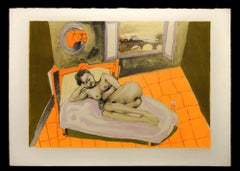
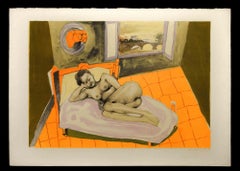
Untitled – Lithographie von Ugo Attardi – 1985
Von Ugo Attardi
Farblithografie, auf Fabriano-Rosaspina-Papier. Papierformat 70cmx50cm, Arbeitsformat 53cmx40cm. Ausgezeichneter Zustand, leichte Gebrauchsspuren, keine Mängel.
Ugo Attardi wurde 192...
Kategorie
1980er, Zeitgenössisch, Figurative Drucke
Materialien
Lithografie
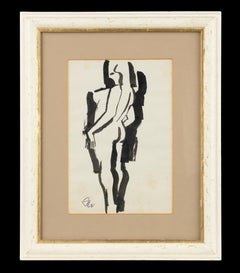
Ohne Titel – Zeichnung von Remo Brindisi – 1970er Jahre
Von Remo Brindisi
Untitled ist ein modernes Kunstwerk von Remo Brindisi aus den 1970er Jahren.
Schwarz-weiße Porzellan-Tuschezeichnung.
Handsigniert am unteren Rand.
Inklusive Rahmen: 96 x 1,5 x 75 cm
Kategorie
1970er, Zeitgenössisch, Figurative Zeichnungen und Aquarelle
Materialien
Papier, Tinte
Ohne Titel - Lithographie von Renzo Vespignani - 1988
Von Renzo Vespignani
Lithographie auf Magnani-Pescia Papier 310 gr/m2, Papierformat 58cm x 81cm, 53cmx 73cm . Ausgezeichneter Zustand, keine Mängel.
Werk Nummer II zweiter Zustand 93/94; Künstler Signatu...
Kategorie
1980er, Moderne, Porträtdrucke
Materialien
Lithografie