Objekte ähnlich wie Stefanie Schneider Polaroid sized unlimited Mini
Forgive me
- signed
Möchten Sie mehr Bilder oder Videos?
Zusätzliche Bilder oder Videos von dem*der Anbieter*in anfordern
1 von 2
Stefanie SchneiderStefanie Schneider Polaroid sized unlimited Mini
Forgive me
- signed2006
2006
78,41 €
Angaben zum Objekt
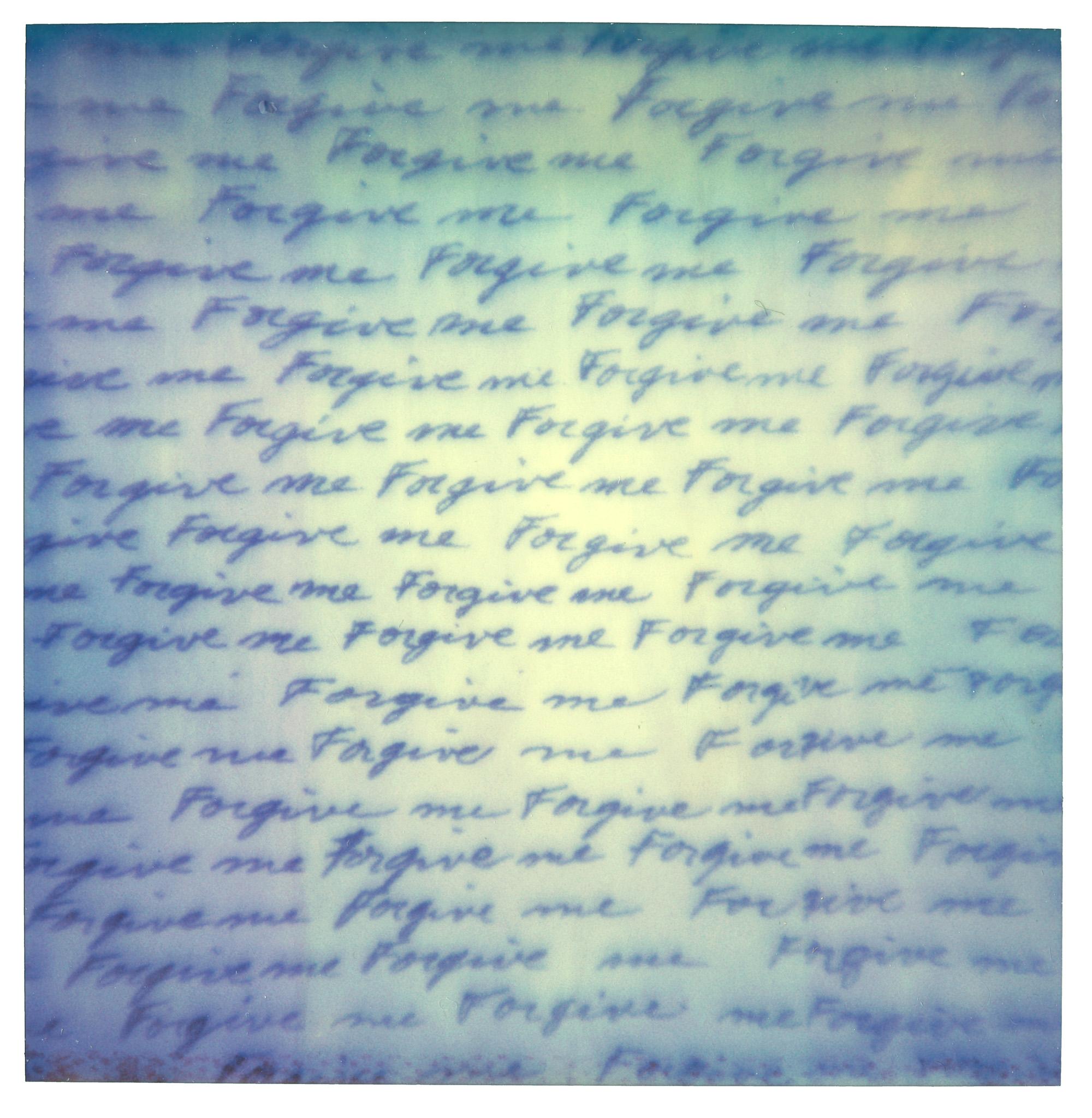
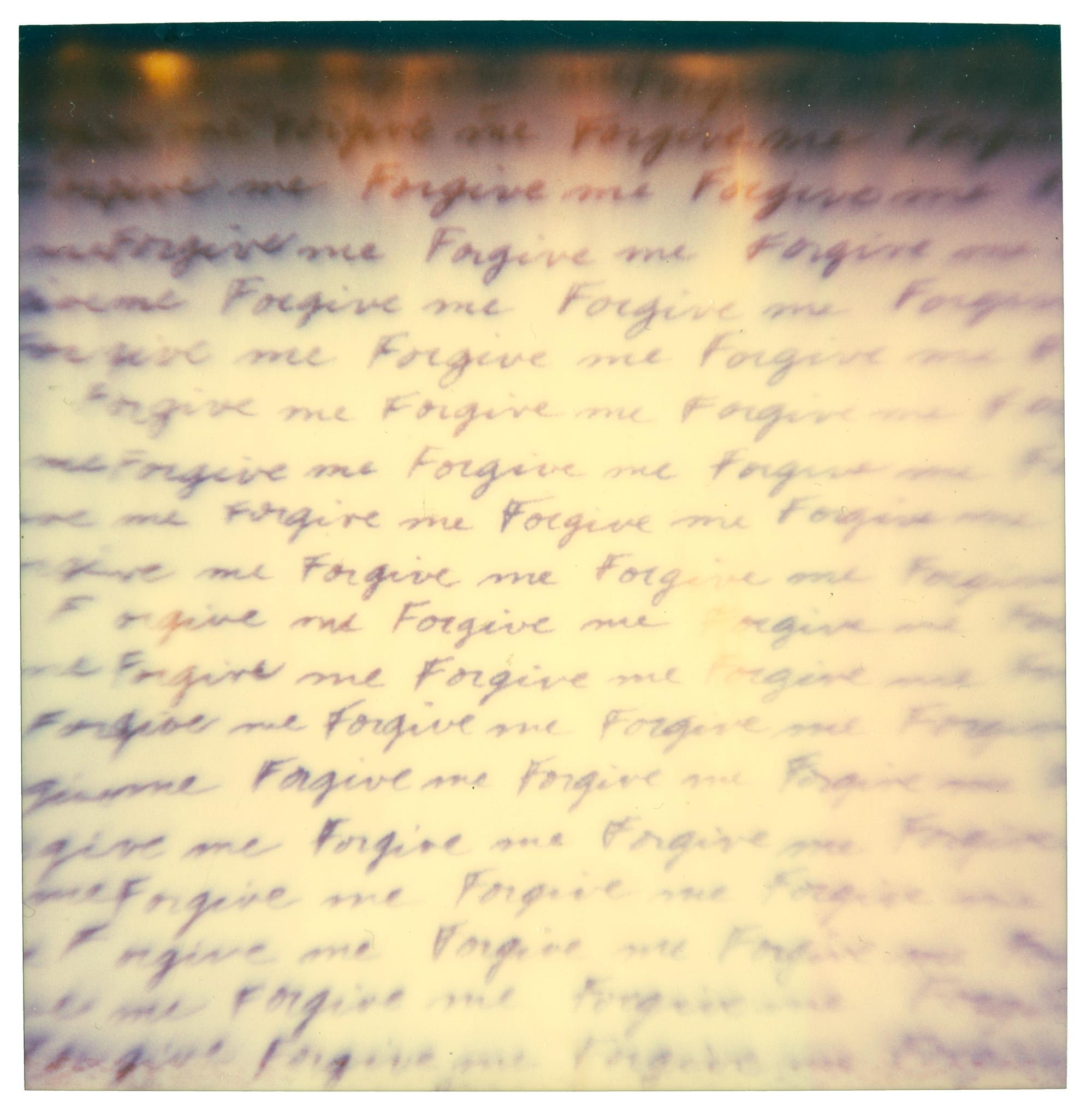
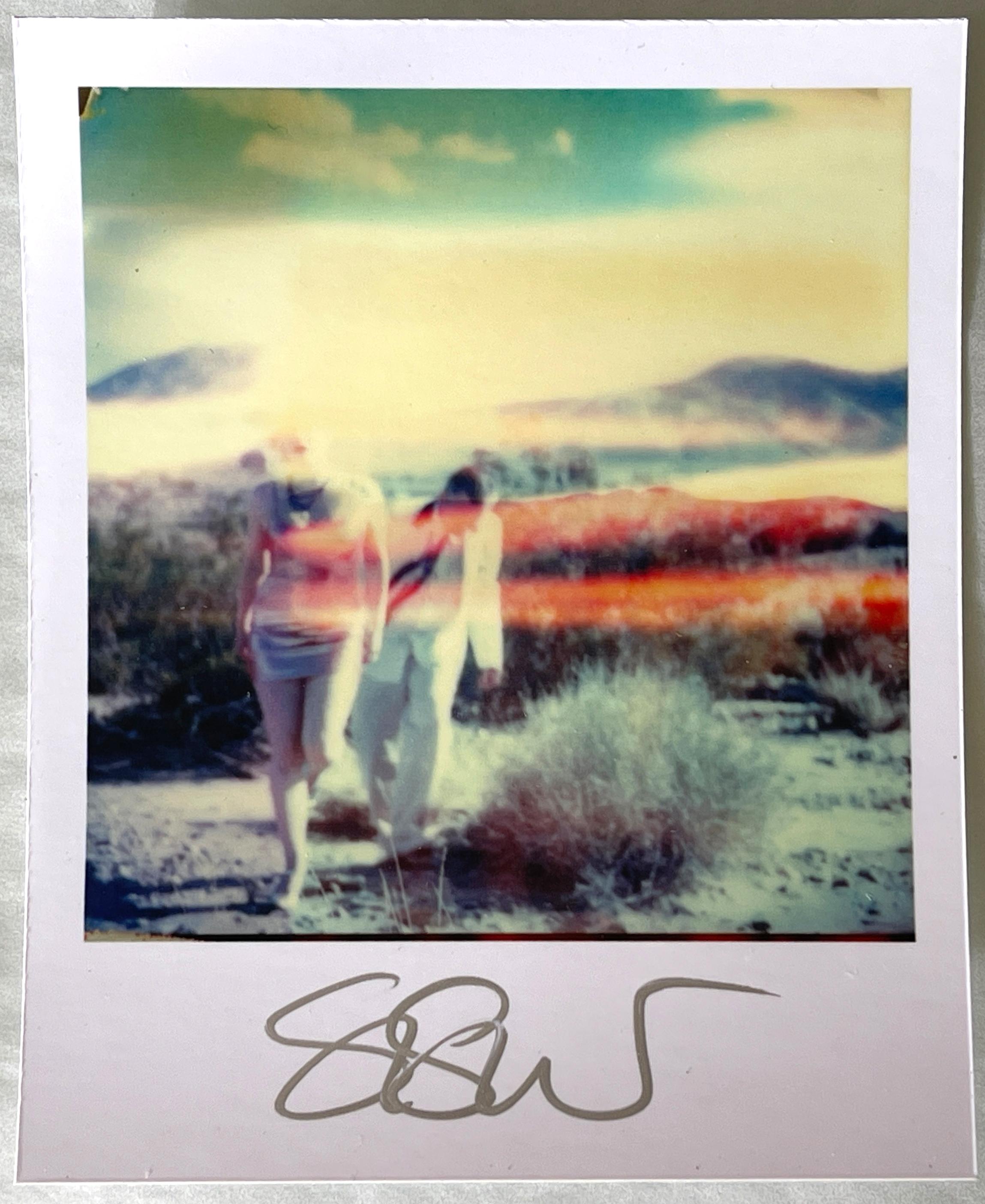
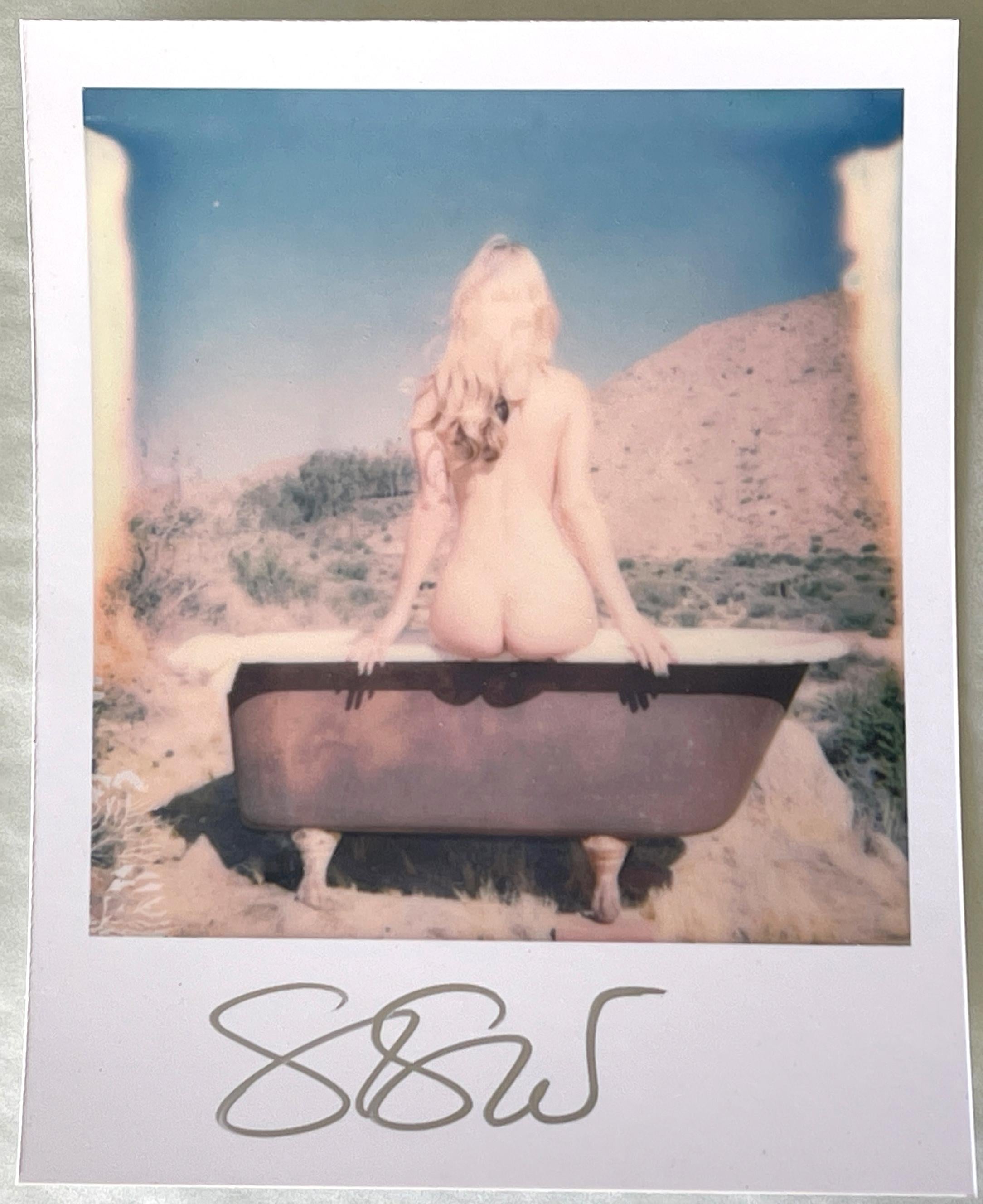
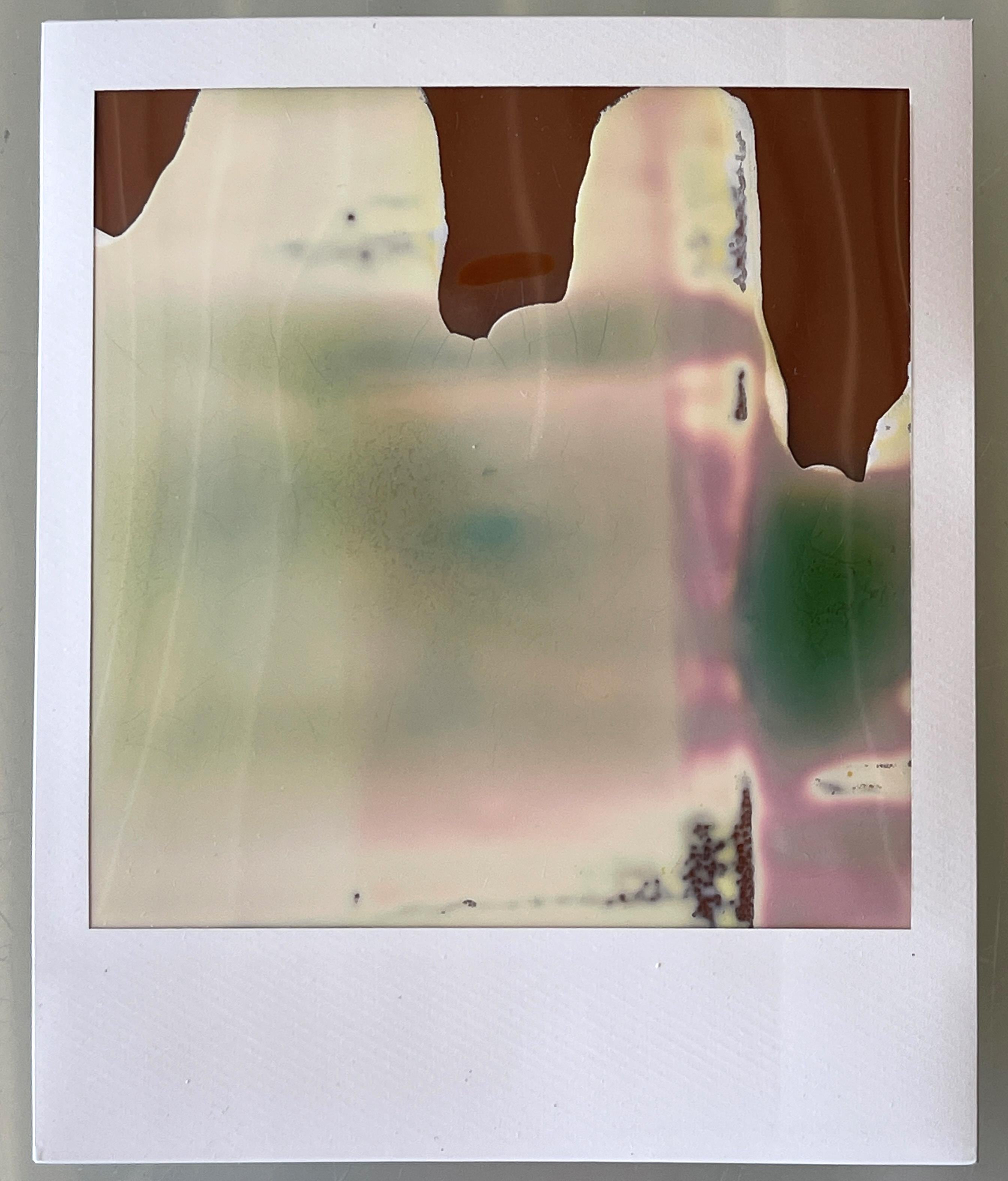
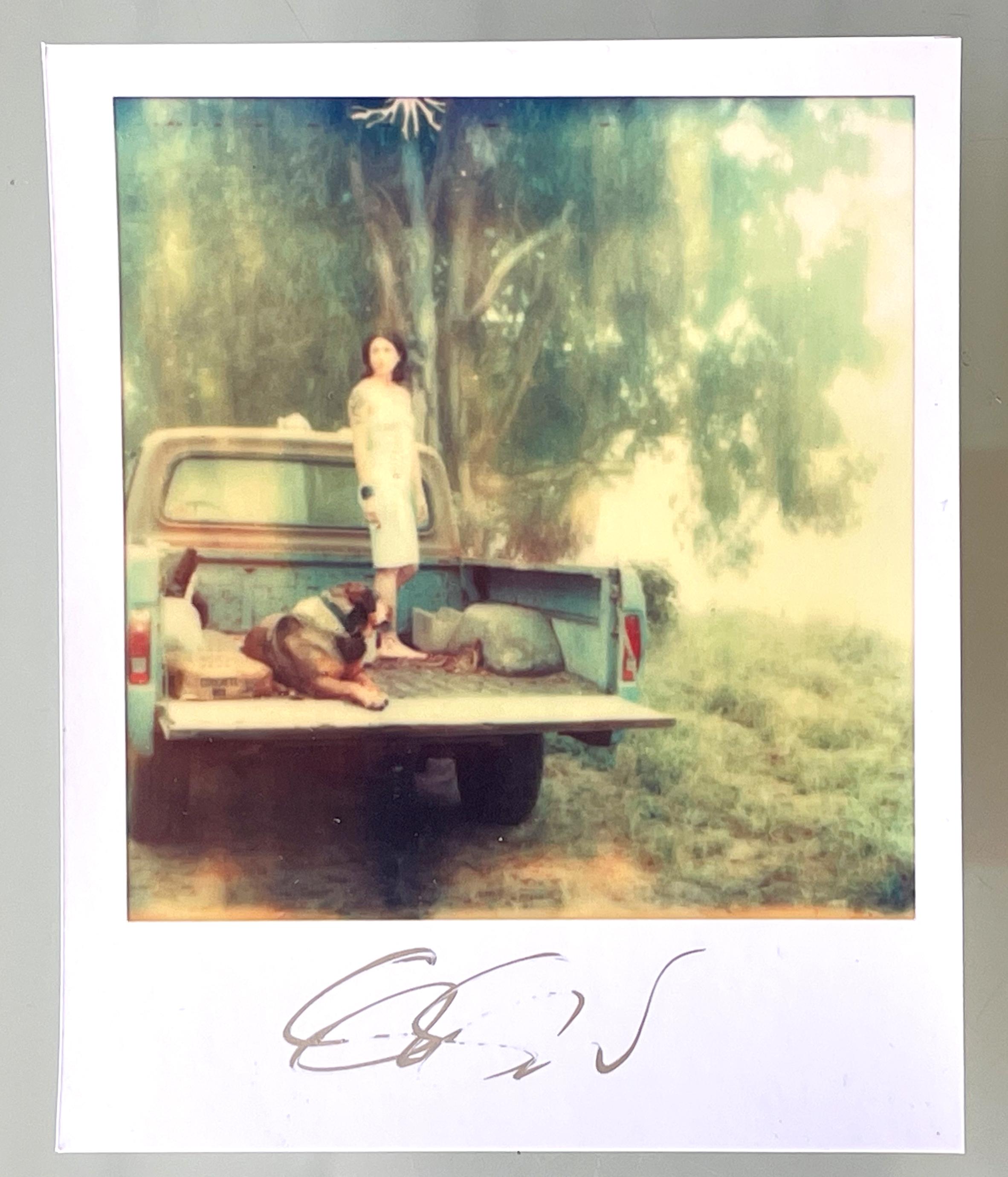
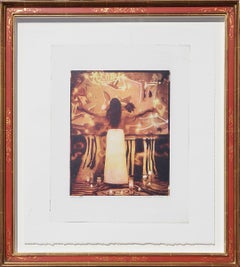
Stefanie Schneider Polaroid sized unlimited Mini 'Forgive me' - 2006 -
signed in front, not mounted.
1 Digital Color Photographs based on a Polaroid.
Polaroid sized open Editions 1999-2016
10.7 x 8.8cm (Image 7.9x7.7cm) each.
Stefanie Schneider interviewed for the Instant Dreams Documentary
When did you first decide to work with Polaroids? Why do Polaroids seem to be so well tuned to our (artistic) senses, perception and minds?
I started using expired Polaroid film in 1996. It has the most beautiful quality and encapsulates my vision perfectly. The colors on one hand, but then the magic moment of witnessing the image appear. Time seems to stand still, and the act of watching the image develop can be shared with the people around you. It captures a moment, which becomes the past so instantly that the decay of time is even more apparent; – it gives the image a certain sentimentality. The Polaroid moment is an original every time.
Why use a medium from the past?
For me, analog has always been there in the present. For the new generation, analog is interesting because it's new to them. I understand that people growing up in a digital age will wonder about its usefulness, but it's theirs to recover if they want to. When I first started working with Polaroid, it wasn't the past. It was a partially forgotten medium, but it existed nonetheless. It is mine by choice. There is no substitute for tangible beauty.
Is it imperfect?
The imperfect perfection in a “wabi-sabi” kind of way.
Wabi-sabi (侘寂) represents a comprehensive Japanese world view or aesthetic centered on the acceptance of transience and imperfection. The aesthetic is sometimes described as one of beauty that is imperfect, impermanent, and incomplete.
'If an object or expression can bring about, within us, a sense of serene melancholy and a spiritual longing, then that object could be said to be wabi-sabi'. 'Wabi-sabi nurtures all that is authentic by acknowledging three simple realities: nothing lasts, nothing is finished, and nothing is perfect.'
Is the Polaroid photograph recognizable or even sometimes cliché?
Absolutely! There's something cliché about the way I'm showing the American Dream. I live it myself, trying to find perfection in an imperfect world. Reaching for the horizon. The dream is broken; the cliché tumbles. There are different ways to involve an audience. You could make movies like Harmony Korine's 'Gummo', a masterpiece in my view, which would estrange a large part of the audience. A certain film education is a prerequisite. Or you can start with clichés, the audience then feels safe, which lures them into the depth of your world without them even knowing it or understanding where exactly they are being led to. Appealing to emotions and the sub-conscious. Normal, Change, New Normal.
You continually revisit the landscape of the American West in your work. What draws you back to this scene?
Southern California represents a dream to me. The contrast of Northern Germany, where I grew up, to the endless sunshine of Los Angeles was what first attracted me. The American West is my dream of choice. Wide, open spaces give perspectives that articulate emotions and desires. Isolation feeds feelings of freedom or sometimes the pondering of your past. The High Desert of 29 Palms has very clear and vivid light, which is vital. Expired Polaroid film produces 'imperfections' that I would argue mirrors the decline of the American dream. These so called 'imperfections' illustrate the reality of that dream turning into a nightmare. The disintegration of Western society.
Are you playing with the temporality of the material and the value of the moment itself?
The value of the moment is paramount, for it is that moment that you're trying to transform. All material is temporary, it's relative, and time is forever.
Why does analog film feel more pure and intuitive?
It's tangible and bright and represents a single moment.
The digital moment may stay in the box (the hard drive / camera / computer etc.) forever, never to be touched, put into a photo album, sent in a letter, or hung on a wall. Printing makes it an accomplishment.
The analog world is more selective, creating images of our collective memory.
The digital worldwide clicking destroys this moment. The generation without memories due to information overload and hard drive failures. Photo albums are a thing of the past.
Why does it feel this way?
That's how the human instinct works.
When I was a child, every picture been taken was a special moment. Analog photographic film as well as Super-8 material were expensive treasures. My family's memories were created by choosing certain moments in time. There was an effort behind the picture. The roll of film might wait months inside the camera before it was all used. From there, the film required developing, which took more time, and finally, when the photos were picked up from the shop, the memories were visited again together as a family. Who knew then, how fleeting these times were. Shared memories was a ritual.
What's your philosophy behind the art of Polaroid pictures?
The 'obsolete' is anything but obsolete. Things are not always as they appear, and there are hidden messages. Our memories and our dreams are under-valued. It is there that real learning and understanding begins by opening yourself to different perspectives.
What inspired you to use stop motion cinematography?
My work has always resembled movie stills. I remember the first time I brought a box of Polaroids and slid them onto Susanne Vielmetter's desk (my first gallery). Instantly, it became apparent that there was a story to tell. The stories grew. It was undeniable to me, that the emerging story was where I was destined to go. I've made four short films before my latest feature film, 'The Girl behind the White Picket Fence.' This film is 60 minutes long with over 4000 edited Polaroids. It's important to remember that our sub-conscious fills in the blanks, the parts missing from the story allow a deeper and more personal experience for the viewer. That is, if you surrender yourself and trust me as the director to lead you somewhere you might not have been before.
Why do you think it is important to own art?
'We have art in order not to die of the truth'
Nietzsche
- Schöpfer*in:Stefanie Schneider (1968, Deutsch)
- Entstehungsjahr:2006
- Maße:Höhe: 10,7 cm (4,22 in)Breite: 8,8 cm (3,47 in)Tiefe: 1 mm (0,04 in)
- Medium:
- Bewegung und Stil:
- Zeitalter:
- Zustand:
- Galeriestandort:Morongo Valley, CA
- Referenznummer:1stDibs: LU652317381672
Stefanie Schneider
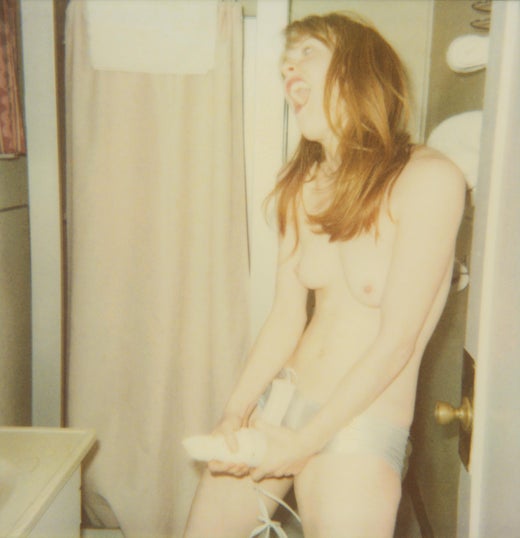
Stefanie Schneider erhielt ihren MFA in Kommunikationsdesign an der Folkwang Schule Essen, Deutschland. Ihre Arbeiten wurden u.a. im Museum für Fotografie, Braunschweig, Museum für Kommunikation, Berlin, dem Institut für Neue Medien, Frankfurt, dem Nassauischen Kunstverein, Wiesbaden, Kunstverein Bielefeld, Museum für Moderne Kunst Passau, Les Rencontres d'Arles, Foto -Triennale Esslingen, Bombay Beach Biennale 2018, 2019 gezeigt.
Anbieterinformationen
4,9
Platin-Anbieter*in
Premium-Anbieter*innen mit einer Bewertung über 4,7 und 24 Stunden Reaktionszeit
Gründungsjahr 1996
1stDibs-Anbieter*in seit 2017
1.051 Verkäufe auf 1stDibs
Typische Antwortzeit: <1 Stunde
- VersandAngebot wird abgerufen …Versand von: Morongo Valley, CA
- Rückgabebedingungen
Einige Inhalte dieser Seite wurden automatisch übersetzt. Daher kann 1stDibs nicht die Richtigkeit der Übersetzungen garantieren. Englisch ist die Standardsprache dieser Website.
Mehr von diesem*dieser Anbieter*in
Alle anzeigenForgive Me #02 (Stay) - Polaroid, Zeitgenössisch, 21. Jahrhundert, Filmkunst
Von Stefanie Schneider
Ein Kunstwerk aus dem Film "Stay" von Stefanie Schneider
Stefanie hat das Design für die beiden Hauptdarsteller Naomi Watts und Ryan Gosling in dem Film 'Stay' unter der Regie von M...
Kategorie
Anfang der 2000er, Zeitgenössisch, Stilllebenfotografie
Materialien
Archivpapier, Fotopapier, C-Print, Farbe, Polaroid

Forgive Me (Stay) – der Film, abgelaufener Polaroid, handgefertigt
Von Stefanie Schneider
Ein Kunstwerk aus dem Film "Stay" von Stefanie Schneider
Stefanie hat das Design für die beiden Hauptdarsteller Naomi Watts und Ryan Gosling in dem Film 'Stay' unter der Regie von M...
Kategorie
Anfang der 2000er, Zeitgenössisch, Landschaftsfotografie
Materialien
Archivpapier, Fotopapier, C-Print, Farbe, Polaroid

Stefanie Schneider Polaroid sized unlimited Mini
Memory of a Dream
- signed
Von Stefanie Schneider
Stefanie Schneider Polaroid sized unlimited Mini 'Memory of a Dream (29 Palms, CA)' - 2006 -
1 Archival Color Photograph based on the original Polaroid.
Polaroid sized open Editio...
Kategorie
Anfang der 2000er, Zeitgenössisch, Farbfotografie
Materialien
Archivpapier, C-Print, Farbe, Lambda, Polaroid
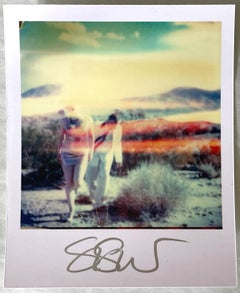
Stefanie Schneider Polaroid sized unlimited Mini
Fairy
- signed
Von Stefanie Schneider
Stefanie Schneider Polaroid sized unlimited Mini 'Fairy (Heavenly Falls)' - 2016 -
signed in front, not mounted.
1 Archival Color Photograph based on the original Polaroid.
Pola...
Kategorie
Anfang der 2000er, Zeitgenössisch, Farbfotografie
Materialien
C-Print, Polaroid, Lambda, Farbe, Archivpapier
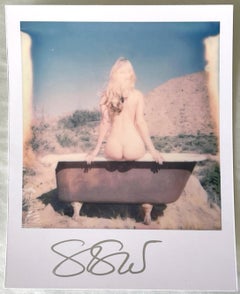
Abstrakt – Original Polaroid Einzigartiges Stück
Von Stefanie Schneider
Zusammenfassung - 2020
Polaroid - Einzigartiges Stück 1/1,
7.8 x 7,7cm (Bildfläche)
10.7 x 8,7 cm (einschließlich weißem Polaroidrahmen).
Künstler-Inv. Nr. 23481.
Verso signiert. ...
Kategorie
Anfang der 2000er, Zeitgenössisch, Abstrakte Fotografie
Materialien
Polaroid
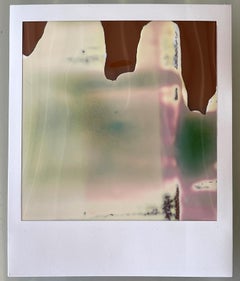
Stefanie Schneider Minis in Polaroidgröße -
Saigon
- signiert, lose
Von Stefanie Schneider
Stefanie Schneiders Mini
Saigon (Fremder als das Paradies) - 2003
vorne signiert, nicht montiert.
Digitale Farbfotografien auf der Grundlage eines Polaroids.
Offene Editionen in Po...
Kategorie
Anfang der 2000er, Zeitgenössisch, Farbfotografie
Materialien
Archivpapier, C-Print, Farbe, Lambda, Polaroid
Das könnte Ihnen auch gefallen
Vintage 20X24 Format Polaroid signiert Surrealist Fotografie Eve Sonneman Foto
Von Eve Sonneman
Dieses Bild stammt aus einer Ausstellung in der Sidney Janis Gallery und aus dem Nachlass von Joan Sonnabend.
Eve Sonneman (geboren 1946 in Chicago) ist eine amerikanische Fotografin...
Kategorie
1990er, Zeitgenössisch, Farbfotografie
Materialien
Farbe, Polaroid
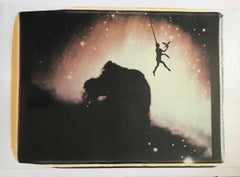
Stephen Frailey, Polaroiddruck, 1988
Stephen Frailey
Unbetitelt, 1988
Polaroid-Abzug
Visier: 19 3/4 x 19 3/4 Zoll.
Gerahmt: 24 1/4 x 24 x 1 3/4 Zoll.
Auflage 2/3
Provenienz:
Lieberman & Saul, New York
Stephens studi...
Kategorie
1980er, Zeitgenössisch, Figurative Drucke
Materialien
Polaroid
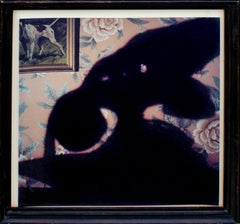
Polaroid von Andy Warhol, Gemälde
Von Andy Warhol
Dieses Werk ist einzigartig.
Polaroid-Abmessungen: 4,25 x 3,5 in
Provenienz: Geschenk des Künstlers, an die persönliche Sammlung von Ronnie Cutrone an den heutigen Besitzer
Das We...
Kategorie
1980er, Pop-Art, Farbfotografie
Materialien
Polaroid
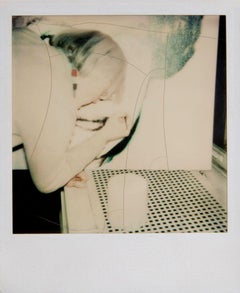
Expired_14_2020 - Fotografie von Serena Zeppilli
Dieses Foto Expired_14_2020 wurde von der italienischen Fotografin Serena Zeppilli aufgenommen.
Es ist Teil der Serie "Ich habe etwas gesucht, das ich schon gesehen habe". Kunstd...
Kategorie
21. Jahrhundert und zeitgenössisch, Zeitgenössisch, Figurative Fotografie
Materialien
Fotopapier
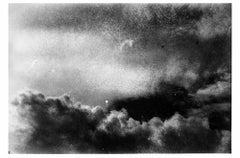
Gods Gift Zeitgenössische Fotografie auf Collotype
Von Delilah Montoya
Zeitgenössische Fotografie auf Lichtdruck der Künstlerin Delilah Montoya aus Houston, TX. Das Foto zeigt eine junge Frau mit langem, dunklem Haar, die beide Arme zur Seite streckt un...
Kategorie
1990er, Zeitgenössisch, Abstrakte Drucke
Materialien
Fotopapier
Lila Notiz von JJK, Fotografie, limitierte Auflage, Musik, Polaroid
Violette Note
Auflage von 25 Stück
vom Künstler signiert und nummeriert
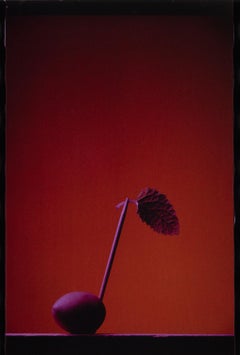
Dieses Stillleben mit einer Musiknote besteht aus einer Olive, einem Minzblatt und einem Zahnstocher. Es wurd...
Kategorie
1980er, Zeitgenössisch, Farbfotografie
Materialien
Fotofilm, Archivalisches Pigment, Polaroid