Objekte ähnlich wie French school Landscape village riverside Signed oil painting
Video wird geladen …
Möchten Sie mehr Bilder oder Videos?
Zusätzliche Bilder oder Videos von dem*der Anbieter*in anfordern
1 von 13
French School MastersFrench school Landscape village riverside Signed oil painting1884
1884
270 €
1.600 €83 % Rabatt
Angaben zum Objekt
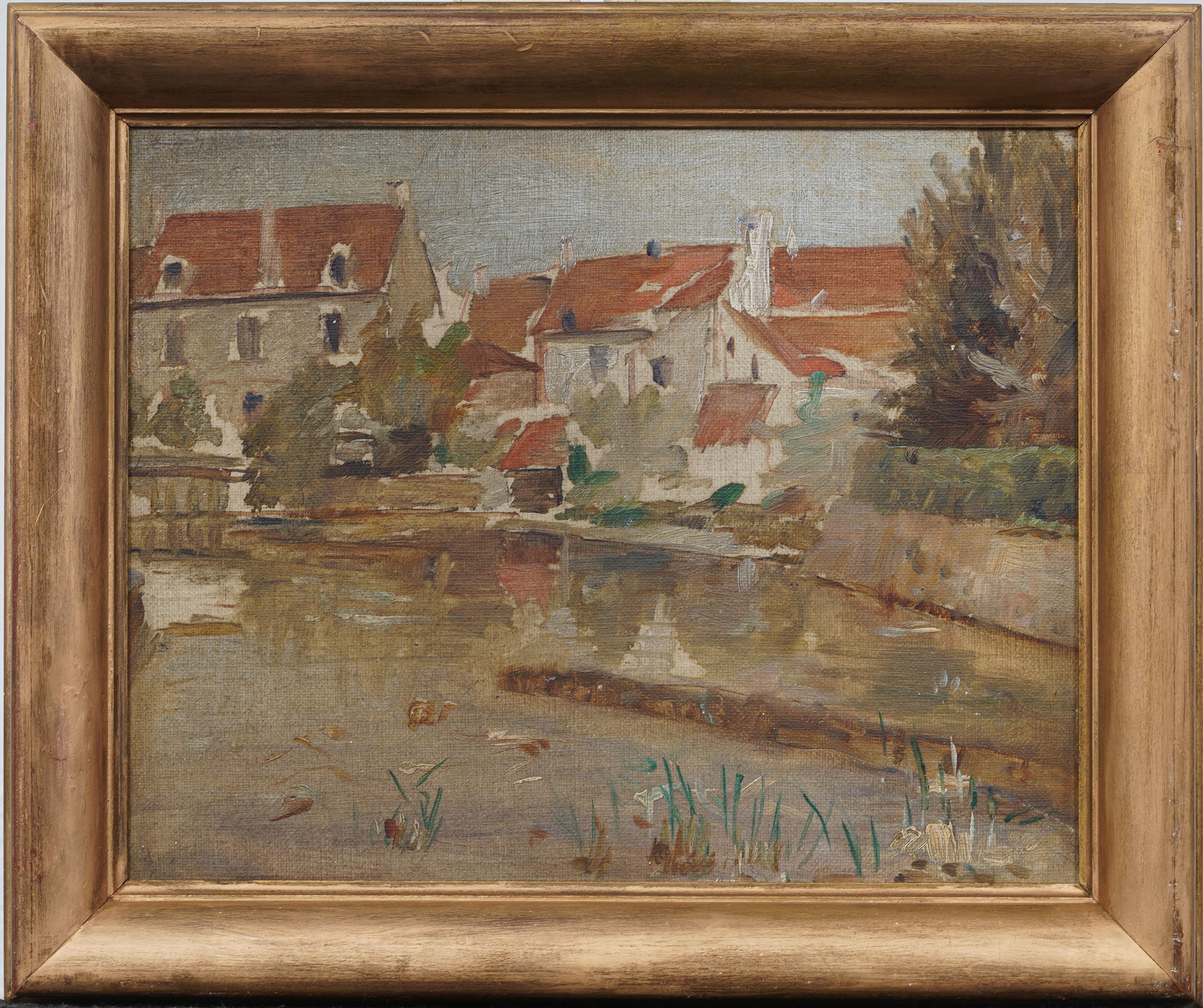
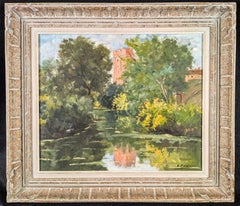
➡️ Landscape village riverside ⬅️
⏩It is signed G Labranche⏪
⭐Medium:⭐ Oil on wood panel
⭐Technique: ⭐Impasto painting with expressive brushwork.
⭐Size:⭐24.5x23.5cm / 9.6x9.3 inch
with golden frame 33.5x34.5cm / 13.2x13.6 inch
⭐Date: 1884⭐
⭐Condition : ⭐ Good condition. NO cracks,
⭐Provenance:⭐ Private collection - France.
⭐Shipping:⭐ from France is fast 4-6 days with Fedex / DHL
🟢🟢🟢🟢🟢🟢🟢🟢🟢🟢🟢🟢🟢🟢🟢🟢🟢🟢
More about the painting:
This charming oil painting, dated 1884 and bearing a signature that appears to read "E. Labranche," presents an intriguing attribution challenge.
☀️Subject Matter and Setting☀️
The painting depicts a provincial European canal scene, likely located in France. The composition centers on a stone bridge with a single arch spanning murky, brown water, a typical feature of historic canal towns throughout Europe. Multi-story buildings with weathered plaster facades flank both sides of the waterway, their warm ochre, cream, and pale yellow walls punctuated by darker window openings, green shutters, and terracotta roof tiles. The architecture suggests a modest working-class or merchant quarter rather than an aristocratic neighborhood, lending the scene an authentic, unpretentious character.
On the right foreground, a wooden dock or landing platform extends into the water, animated by small figures engaged in daily activities. These figures, though rendered with economical brushwork, provide essential human interest and establish scale. They suggest the quotidian rhythm of life in such towns, perhaps locals simply passing time by the water. The inclusion of these figures transforms what could have been merely an architectural study into a genuine genre scene documenting everyday life.
The left side features taller buildings with visible architectural details stone quoins, shuttered windows, and weathered surfaces that speak to age and continuous habitation. A bare tree in the immediate foreground provides vertical interest and frames the composition, its leafless branches suggesting late autumn or early spring. This seasonal indicator adds to the painting's contemplative mood, evoking transition and the passage of time.
☀️Compositional Strategy☀️
The composition demonstrates classical academic training in its careful structuring of space and attention to creating depth through layered recession. The bridge functions as the primary focal point, positioned slightly off-center to create visual interest while maintaining overall balance. Its arch creates a natural frame through which we glimpse buildings and vegetation in the middle distance, employing the Renaissance device of framing views through architectural openings.
The artist creates spatial depth through several means: the foreground platform and tree establish the nearest plane; the bridge and flanking buildings occupy the middle ground; and distant architecture and sky recede into atmospheric space. This clear organization of spatial planes reflects academic training in perspective and composition, demonstrating that the artist understood fundamental principles of picture-making.
The diagonal recession from lower right to upper left provides dynamic movement and guides the viewer's eye through the composition. This diagonal is balanced by the vertical accents of building facades and the foreground tree, creating a stable yet dynamic equilibrium. The horizontal emphasis of the water and bridge provides restful counterpoint to these vertical and diagonal elements.
☀️Technical Execution☀️
The painting demonstrates competent oil technique with varied paint handling appropriate to different elements. The artist builds up textured surfaces in the foreground architecture through layered applications, while using thinner, more fluid paint for sky and distant passages. This variation in paint thickness contributes to spatial recession, thicker, more substantial paint naturally advances toward the viewer, while thin passages recede.
The brushwork shows confidence without overworking. Forms are clearly defined and structurally sound, yet the artist preserves a sense of painterly spontaneity that prevents the work from becoming tight or labored. Individual brushstrokes remain visible, particularly in the architecture and water, contributing to the painting's sense of handmade authenticity and direct observation.
The treatment of water merits particular attention. Rather than attempting photographic detail, the artist suggests the canal's surface through horizontal strokes in warm browns and grays, with subtle indications of reflections. This approach demonstrates understanding that successful water painting relies on suggestion rather than literal description—capturing the essential character of reflective, moving water without overworking details.
☀️Color Harmony and Light☀️
The palette is restrained and harmonious, dominated by earth tones that create naturalistic unity. Warm ochres, siennas, and cream colors in the architecture contrast gently with cooler blue-grays in sky and shadowed passages. Touches of terracotta red in roof tiles, green in shutters, and darker browns in shadows provide tonal variety without disrupting overall coherence. This is the palette of direct observation, colors selected to match what the eye actually sees rather than idealized or exaggerated for dramatic effect.
The light quality suggests overcast conditions or the soft illumination of early morning or late afternoon. There are no harsh shadows or dramatic contrasts; instead, a diffused, even light bathes the scene, creating gentle transitions between light and shadow. This atmospheric quality contributes to the painting's contemplative mood and suggests the artist worked from direct observation, capturing specific lighting conditions rather than inventing theatrical effects in the studio.
The sky receives economical treatment, delicate blue-gray washes with minimal modeling. This understated approach keeps attention focused on the architectural subject while providing atmospheric context. The pale sky creates a light ground against which the darker architecture reads clearly, demonstrating sound compositional judgment.
Stylistic Context: 1884
The date of 1884 places this work at a fascinating moment in European art history. Impressionism was well established, the final Impressionist exhibition would occur just two years later in 1886, yet many artists continued working in more traditional modes. This painting demonstrates selective influence from newer movements while maintaining academic foundations.
The work shows awareness of plein-air practices in its attention to atmospheric effects and natural light, yet retains the structured composition, careful drawing, and tonal unity characteristic of academic training. This represents a common pattern among late 19th-century artists who appreciated Impressionism's focus on direct observation and natural effects while finding pure Impressionism's dissolution of form too radical for their purposes.
The choice of subject a modest provincial canal scene, reflects broader trends in 19th-century landscape painting toward democratic subject matter. Rather than depicting dramatic Alpine vistas, classical ruins, or aristocratic estates, the artist presents an ordinary working town with honest affection. This democratization of subject matter represents one of the century's significant shifts in artistic values.
☀️Documentary and Historical Value☀️
Beyond its aesthetic merits, this painting possesses significant documentary value as a record of 19th-century urban fabric and daily life. The buildings, bridge, and waterfront installations were likely rendered accurately from observation, providing visual evidence of architectural styles, construction methods, and urban planning characteristic of provincial European towns in the 1880s.
Many such structures have since been altered, demolished, or modernized, making period paintings valuable historical documents. The painting records not only physical structures but also intangible aspects, the quality of light, the relationship between water and buildings, the scale and character of public spaces, and the rhythms of daily life suggested by the figures' activities.
The 1880s marked a period of accelerating change across Europe. Railways were transforming commerce and communications, industrialization was reshaping economies, and traditional urban patterns were beginning to feel pressure from modernization. Paintings like this can be read as documentation but also as implicit statements about values worth preserving, the beauty and authenticity of historic towns before wholesale modern transformation.
- Schöpfer*in:French School Masters (Französisch)
- Entstehungsjahr:1884
- Maße:Höhe: 23,5 cm (9,26 in)Breite: 24,5 cm (9,65 in)Tiefe: 3 cm (1,19 in)
- Medium:
- Bewegung und Stil:
- Zeitalter:
- Zustand:
- Galeriestandort:Zofingen, CH
- Referenznummer:Anbieter*in: Labranche1stDibs: LU2203217507382
Anbieterinformationen
5,0
Platin-Anbieter*in
Premium-Anbieter*innen mit einer Bewertung über 4,7 und 24 Stunden Reaktionszeit
Gründungsjahr 2019
1stDibs-Anbieter*in seit 2022
737 Verkäufe auf 1stDibs
Typische Antwortzeit: 3 Stunde
- VersandAngebot wird abgerufen …Versand von: La Baule, Frankreich
- Rückgabebedingungen
Einige Inhalte dieser Seite wurden automatisch übersetzt. Daher kann 1stDibs nicht die Richtigkeit der Übersetzungen garantieren. Englisch ist die Standardsprache dieser Website.
Mehr von diesem*dieser Anbieter*in
Alle anzeigenFranzösische Schule Landschaft Flussszene Signiert
➡️ Schöne Studie Landscape⬅️
Titel: Sur les bords du Loing (Seine et Marne Frankreich) Jean Baptiste Camille Corot
Medium: Öl auf Leinwand
Zeitraum: Wahrscheinlich Mitte des 19. Jah...
Kategorie
1850er, Tonalismus, Figurative Gemälde
Materialien
Gips, Leinwand, Öl, Keilrahmenleisten
111.000 € Verkaufspreis
26 % Rabatt
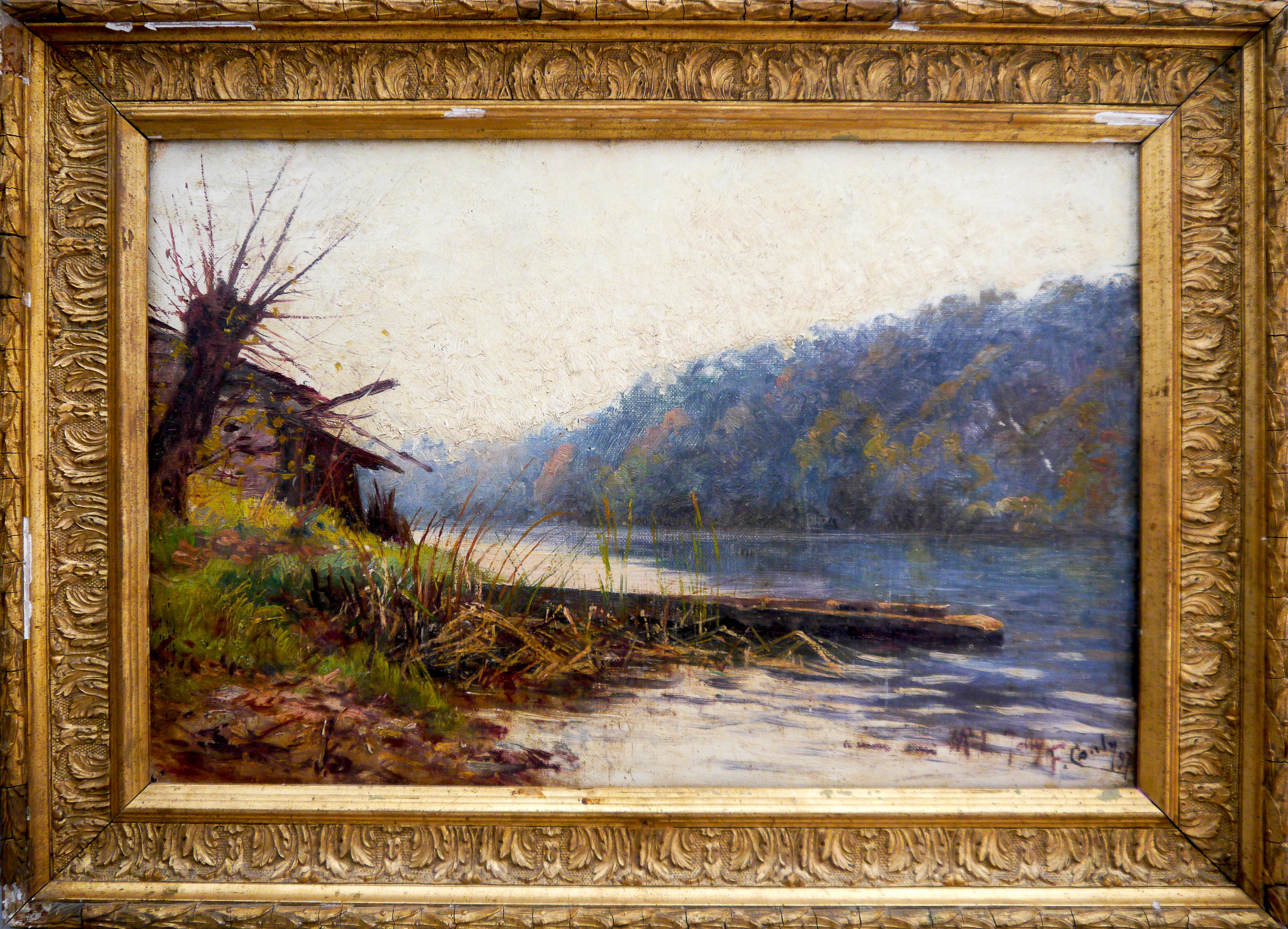
Französische Schule Spektakuläre Landschaft in der Nähe eines Teiches Signiertes Ölgemälde
➡️ Landschaft in der Nähe eines Teiches ⬅️
⏩ Es ist mit F Couly⏪ unterzeichnet.
Wahrscheinlich F Couly Raymond
⭐Medium:⭐ Öl auf Leinwand
⭐Technik: ⭐Impasto-Malerei mit ausdruckss...
Kategorie
1890er, Tonalismus, Figurative Gemälde
Materialien
Gips, Leinwand, Öl, Keilrahmenleisten
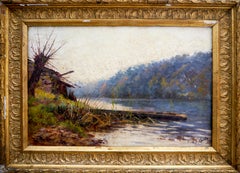
430 € Verkaufspreis
77 % Rabatt
German School Landschaft Flussszene Signiertes Ölgemälde
➡️ Landschaft Venedig Szene auf einem Kanal ⬅️
⏩ Es ist unterzeichnet Mindermann⏪
⭐Medium:⭐ Öl auf Leinwand
⭐Technik: ⭐Impasto-Malerei mit ausdrucksstarken Pinselstrichen.
⭐Größe...
Kategorie
1930er, Post-Impressionismus, Figurative Gemälde
Materialien
Gips, Leinwand, Öl, Keilrahmenleisten

290 € Verkaufspreis
83 % Rabatt
Französische Schule Landschaft am Flussufer Unterzeichnet
➡️ LandschaftDer Fluss von Rousseau⬅️
Sie trägt die Unterschrift R Rousseau.⏪
⭐Medium:⭐ Öl auf Leinwand
⭐Technik: ⭐Impasto-Malerei mit ausdrucksstarken Pinselstrichen.
⭐Größe...
Kategorie
1890er, Schule von Barbizon, Figurative Gemälde
Materialien
Gips, Leinwand, Öl, Keilrahmenleisten
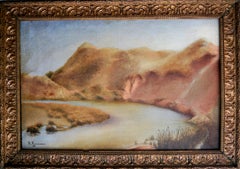
414 € Verkaufspreis
77 % Rabatt
French school Landscape Mediterranean coastal village Signed oil painting
➡️ Mediterranean coastal village⬅️
⏩It is signed Ru Rinaldi⏪
⭐Medium:⭐ Oil on canvas
⭐Technique: ⭐Impasto painting with expressive brushwork.
⭐Size:⭐55.5x46cm / 21.9x18.1 inch
...
Kategorie
1960er, Post-Impressionismus, Figurative Gemälde
Materialien
Gips, Leinwand, Öl, Keilrahmenleisten
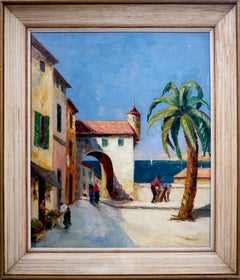
370 € Verkaufspreis
76 % Rabatt
Französisch Schule Antike Szene Landschaft Signiert
➡️Vivid Antike Szene Landscape⬅️
Sie ist mit J. Ch. Millet unterzeichnet.⏪
Jean Charles Millet (1892-1944)
Wie wurde Jean-Charles Millet, der Enkel des berühmten Malers, zum Meist...
Kategorie
1920er, Tonalismus, Figurative Gemälde
Materialien
Gips, Leinwand, Öl, Keilrahmenleisten
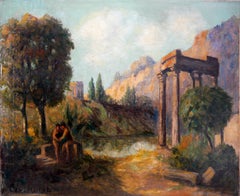
370 € Verkaufspreis
79 % Rabatt
Das könnte Ihnen auch gefallen
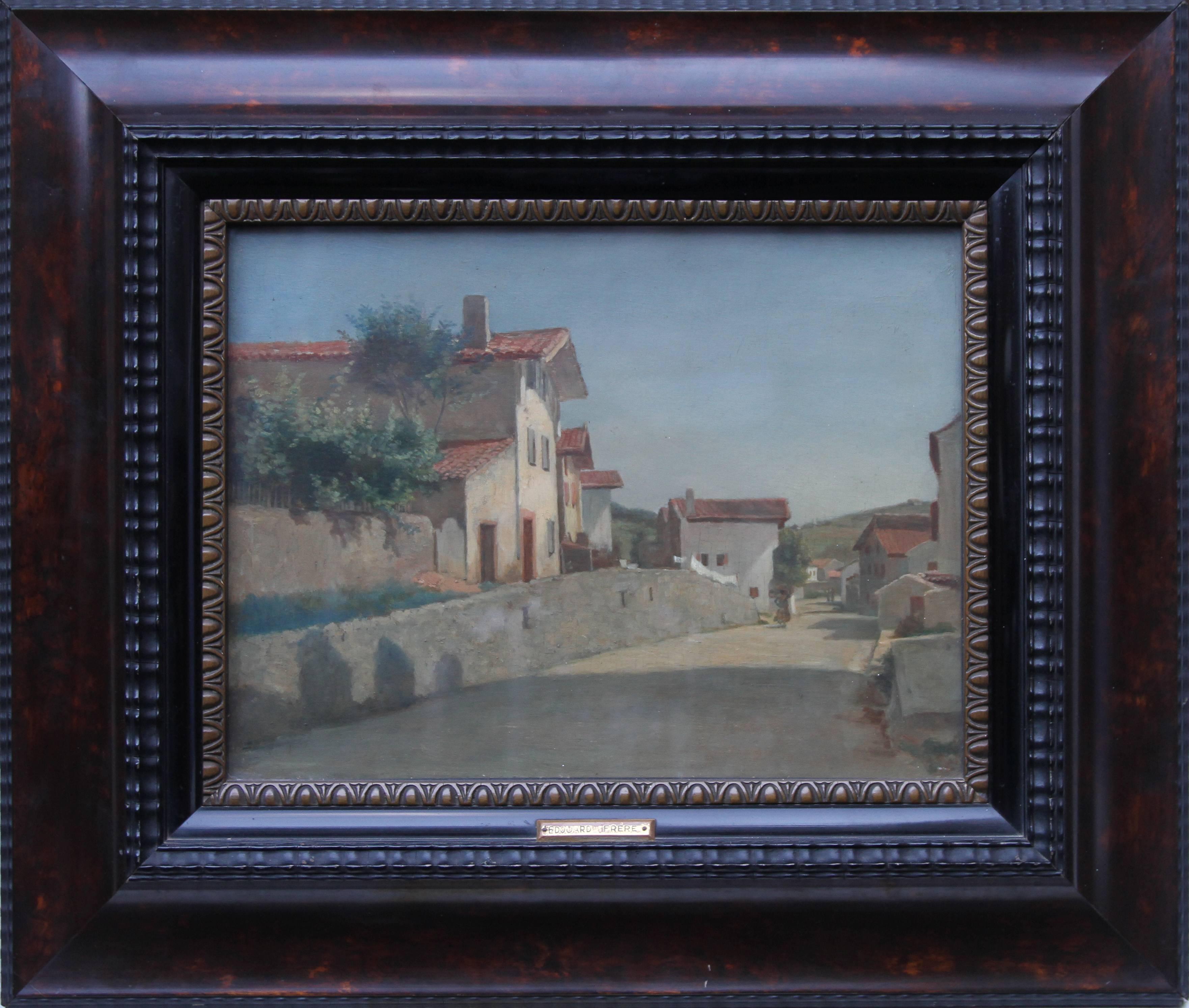
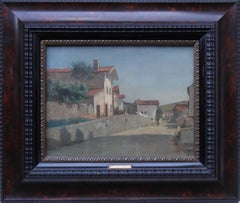
Dorflandschaft – Französisches impressionistisches Ölgemälde des 19. Jahrhunderts Frankreich
Von Pierre Edouard Frere
Dieses charmante französische Ölgemälde einer impressionistischen Landschaft aus dem 19. Jahrhundert stammt von dem bekannten Künstler Edouard Frere. Es wurde um 1860 gemalt und zeig...
Kategorie
19. Jahrhundert, Impressionismus, Landschaftsgemälde
Materialien
Öl
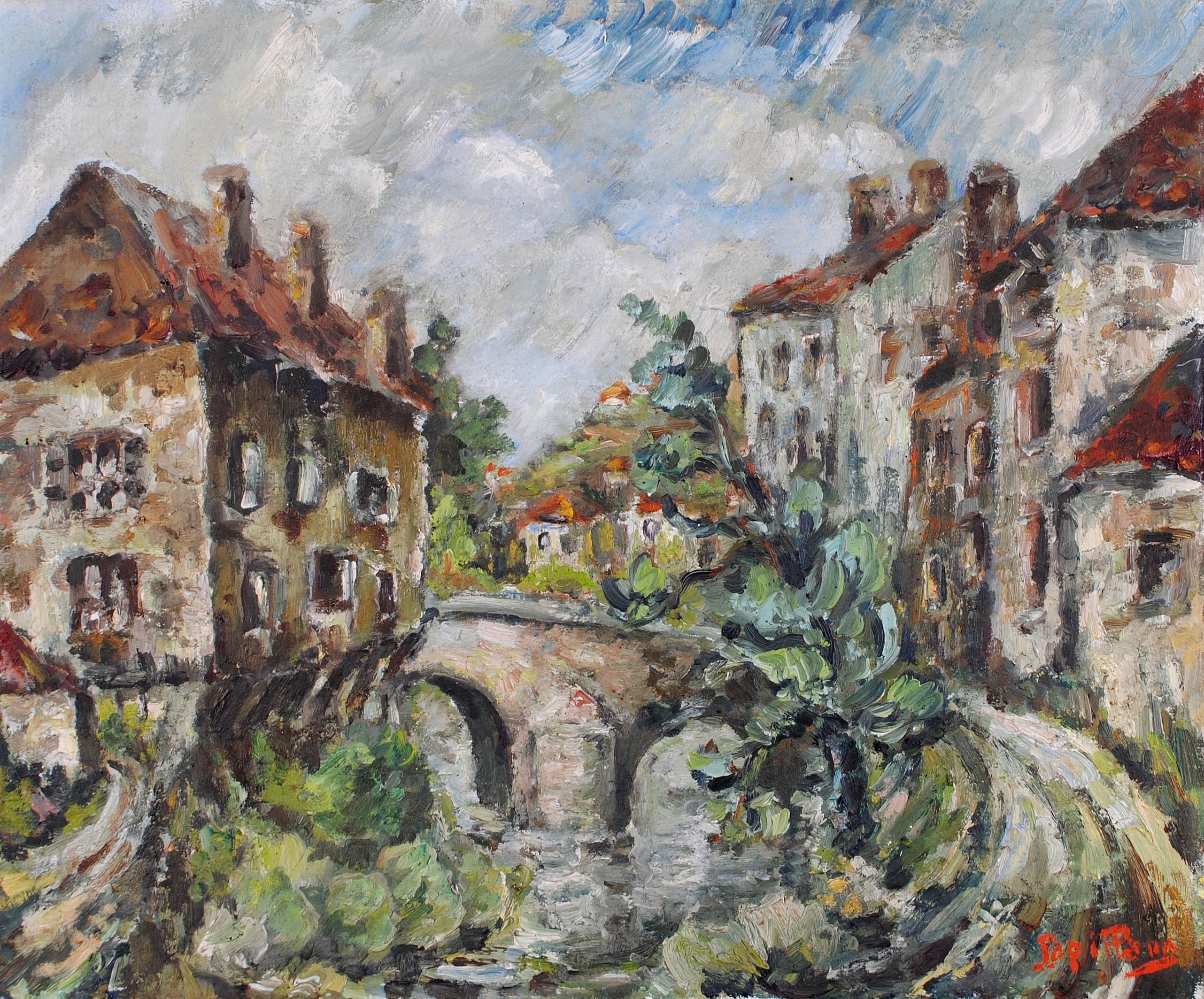
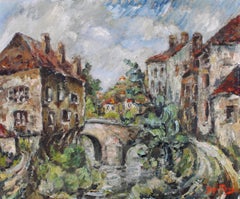
Flusslandschaft - Antikes französisches expressionistisches Ölgemälde des frühen 20. Jahrhunderts
Ein schönes französisches expressionistisches Ölgemälde aus den 1930er Jahren, das eine Flusslandschaft mit einer Brücke und Häusern unter einem dramatischen Himmel zeigt.
Hervorrag...
Kategorie
Frühes 20. Jahrhundert, Expressionismus, Landschaftsgemälde
Materialien
Leinwand, Öl
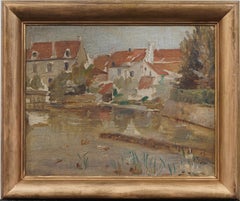
Antique French Impressionist Gerahmte Landschaft Küsten Original Ölgemälde
Antikes französisches Landschaftsölgemälde. Öl auf Leinwand. Gerahmt. Verso signiert. Messen: 12 von 14 Zoll insgesamt, und 9 von 11 Malerei allein. In ausgezeichnetem Originalzust...
Kategorie
1920er, Moderne, Abstrakte Gemälde
Materialien
Öl, Karton
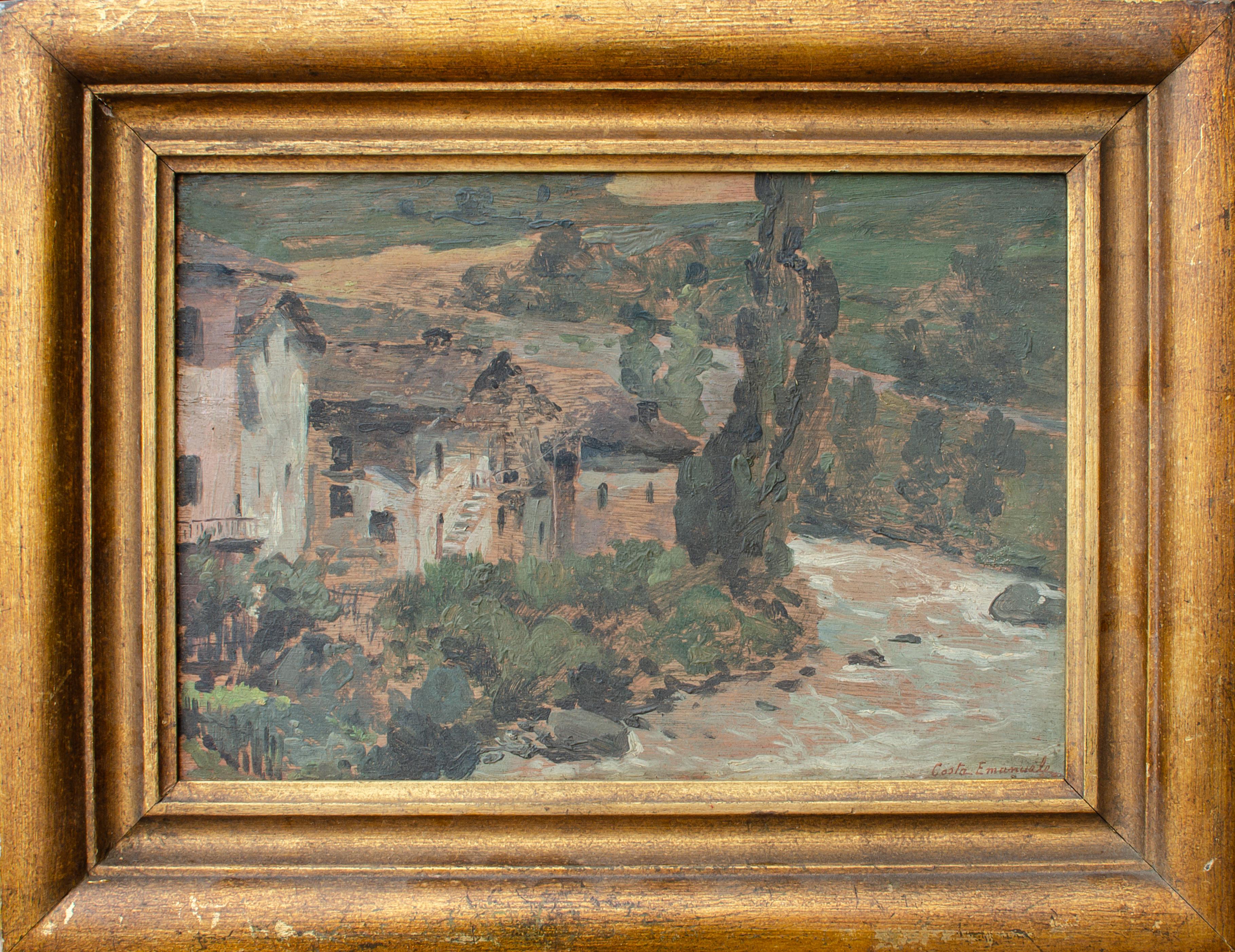
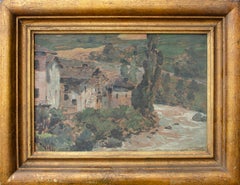
Emmanuel Costa, Flusslandschaft, Stadtlandschaft, Gemälde
Von Emmanuel Costa
Emmanuel Costa (Franzose, 1833-1921) zugeschrieben
Ohne Titel, c. Ende des 19. Jahrhunderts
Öl auf Holzplatte
9 1/2 x 13 1/4 in.
Gerahmt: 14 x 18 x 1 1/4 Zoll.
Signiert unten rechts:...
Kategorie
Spätes 19. Jahrhundert, Französische Schule, Landschaftsgemälde
Materialien
Öl, Holzverkleidung
Tranquil Flusslandschaft - Französische Landschaft des mittleren 20. Jahrhunderts, Ölgemälde
Ein charmantes französisches Ölgemälde aus der Mitte des 20. Jahrhunderts, das eine ruhige Flusslandschaft darstellt.
Schönes atmosphärisches Werk von hoher Qualität in ausgezeichne...
Kategorie
Mitte des 20. Jahrhunderts, Landschaftsgemälde
Materialien
Öl
Le Puits - Französische impressionistische Dorflandschaft des 20. Jahrhunderts, Ölgemälde
Ein schönes französisches impressionistisches Ölgemälde aus den 1930er Jahren, das einen Dorfbrunnen von Jeanne Lauvernay-Pettitjean, der Frau von Edmond Marie Pettitjean, darstellt....
Kategorie
Frühes 20. Jahrhundert, Impressionismus, Landschaftsgemälde
Materialien
Öl, Karton