Zum Hauptinhalt wechseln
Möchten Sie mehr Bilder oder Videos?
Zusätzliche Bilder oder Videos von dem*der Anbieter*in anfordern
1 von 6

Daum
Vase with Tobacco Flowers

circa 1905

7.200 €Einschließlich MwSt.

Angaben zum Objekt

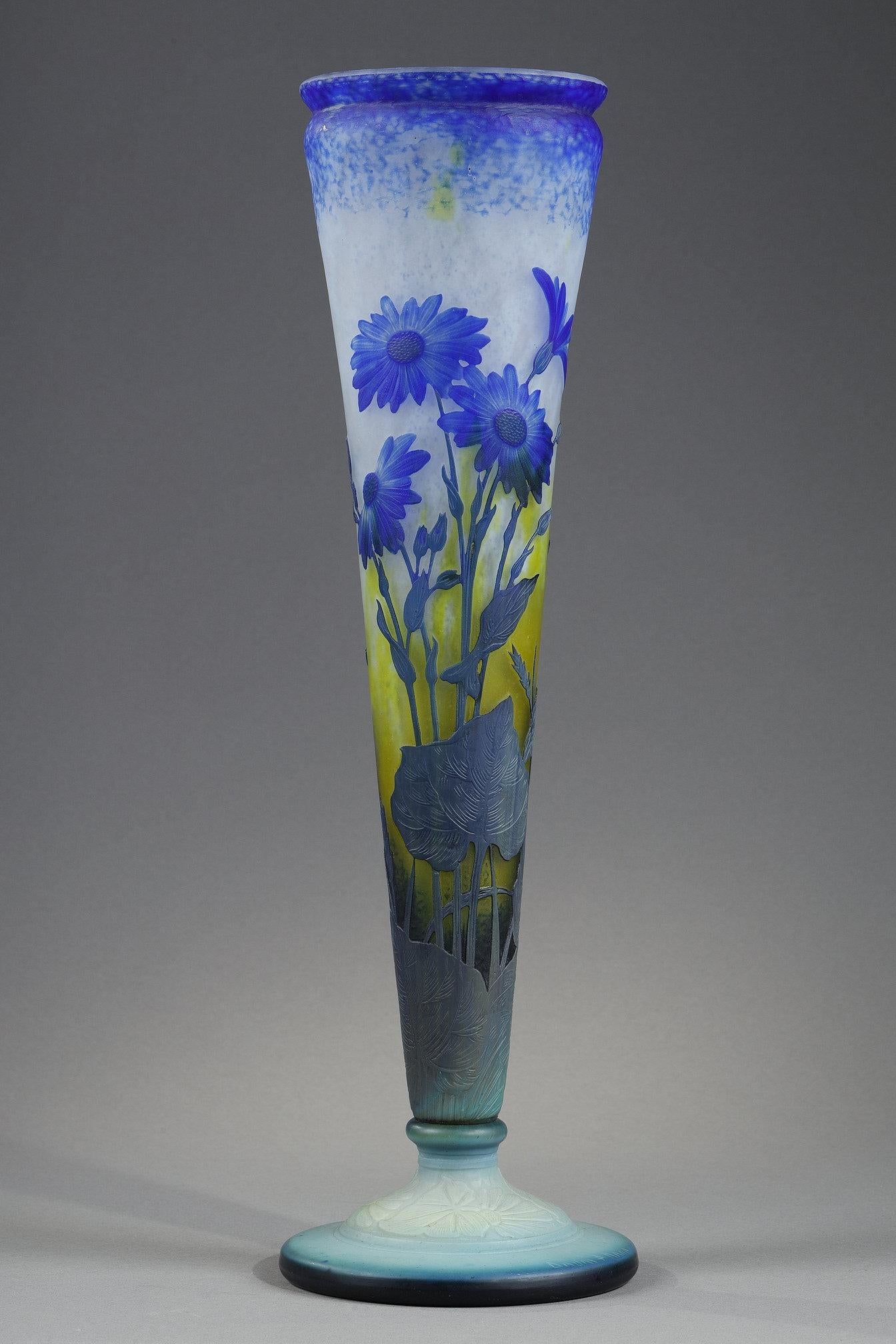
Vase with Tobacco Flowers by DAUM Vase decorated with Tobacco Flowers Multi-layer blown-molded glass Hammered background Decor in reserve acid-etched and wheel-etched Perfect condition Signed on the foot "Daum Nancy" with the Cross of Lorraine France circa 1905-1910 height 47 cm diameter of base 13,2 cm Biography : The French Company of crystal Daum was a glassworks factory founded by the Daum brothers in 1878 in Nancy, in Lorraine region. The workshops of the Daum brothers, Auguste (1853-1909) and Antonin (1864-1930), trained some of the great names of Art Nouveau like Jacques Gruber, Henri Bergé, or Almaric Walter Schneider brothers. Following the 1870 war, Jean Daum (1825-1885), notary in Bitche, sold his totary office and opted for France. He moved to Nancy in 1876 and lent money the same year several times to Avril and Bertrand, owner of the Nancy St. Catherine glassware factory, that produced bottles and ordinary glassware. The company didn't its financial equilibrium and Daum was then forced to buy it in 1878 and became head of a company of 150 workers in an area that he knows nothing about. In 1878, Jean Auguste associated his son, but he didn't know the first success of the company. At his death, in 1885, Auguste took only the direction of the glass company before being joined in 1887 by his brother Antonin, just graduated from the Central School of Arts and Manufactures of Paris. Given the poor financial health of the company, Auguste, who followed legal training, was forced to take the leadership. Antonin began beautify common wares. Familiar with the techniques of glass by training, he directed production to artistic creation. The brothers prepare, between 1889 and 1891, the establishment of an art department that was entrusted to Antonin. Auguste gave him all means to work to follow as previously did Emile Gallé in the Art Nouveau glassware. Antonin Daum began with some simple models to continue rapidly with acid etching, then made models using wheel etching techniques, glasses made with two or three layers. From 1890 to 1914, he created about three thousand references. Jacques Gruber was the first artist of the glassware company. Recruited in 1893, he was entrusted with creating works to appear at the Chicago World Fair of 1893. It was the first major success that propelled Daum in the closed circle of the art industries. Daum brothers earned participation in the Nancy exhibition in 1894. Then there was the exhibition of Lyon (1894), Bordeaux (1895) and Brussels (1895 and 1897), during which they received awards. An art school was created in 1897 within the company as well as its own designers and engravers. Henri Bergé was decorator in chief and was the second artist of the company. He was joined by Emile Writz from 1898. The consecration of the adventure happened when the first grand prize for the art glass of the 1900 World Exposition was awarded to Daum and Gallé. Daum presented pieces carefully prepared: vases with an insert decor (patent 1899) and lightings that became a specialty. In 1904, Almaric Walter developed glass paste ware (named "pâtes de verre"), he remained with Daum until 1915. In 1901, the Statutes of the School of Nancy were officially deposited. Emile Gallé was the man behind this group and became president. Antonin was vice-president. Antonin was also one of the personalities of the Chamber of Commerce of Nancy. It played an important role in 1909 at the International Exhibition of Eastern France, which marked the end of the School of Nancy. Auguste died in 1909, Antonin was active until his death in 1930, but shared responsibilities with the sons of Auguste : Jean, Henri and Paul. Jean died in 1916, Henri's manager as his father. Paul was a graduate of the Institute of Physics and Chemistry of Nancy, he gradually took the place of Antonin. Daum ensured after 1918, adapting the business to the new conditions of production, anxious to maintain quality there, the company continued to participate in major exhibitions: Barcelona in 1923, International Exhibition of Decorative Arts in Paris in 1925, Colonial Exhibition in Paris in 1931. In the 1920s, Paul Daum directed production to Art Deco to the loss of public interest in Art Nouveau. Demand was high and successful business. He opened a second crystal factory, "Belle Etoile", in Croismare in 1925 that Paul was the director. It provided white glass and balls. Pierre Davesn created models from 1928. Because of the economic crisis of 1930, Belle Etoile was closed in 1934. Some large orders allowed the company to continue production: in 1935, the Transatlantic Company ordered 90,000 glass and crystal pieces for the liner Normandy. After World War II, the crystal manufactory took a prominent place under the direction of Henri and Michel Daum. The eldest grandchildren Antonin Antoine Froissart (1920-1971), an engineer from the Ecole Centrale of Paris, was developing the production of a particularly transparent and bright crystal. This new crystal favored the creation of parts with thick and soft shapes, and bright appearance. Jacques, grand-son of Auguste, brought new life in 1965 by appealing to contemporary designers.
  • Schöpfer*in:
  • Entstehungsjahr:
    circa 1905
  • Maße:
    Höhe: 47 cm (18,51 in)Durchmesser: 13,2 cm (5,2 in)
  • Medium:
  • Bewegung und Stil:
  • Zeitalter:
  • Zustand:
  • Galeriestandort:
    PARIS, FR
  • Referenznummer:
    Anbieter*in: N.X1stDibs: LU2514216112992
Mehr von diesem*dieser Anbieter*in

Alle anzeigen
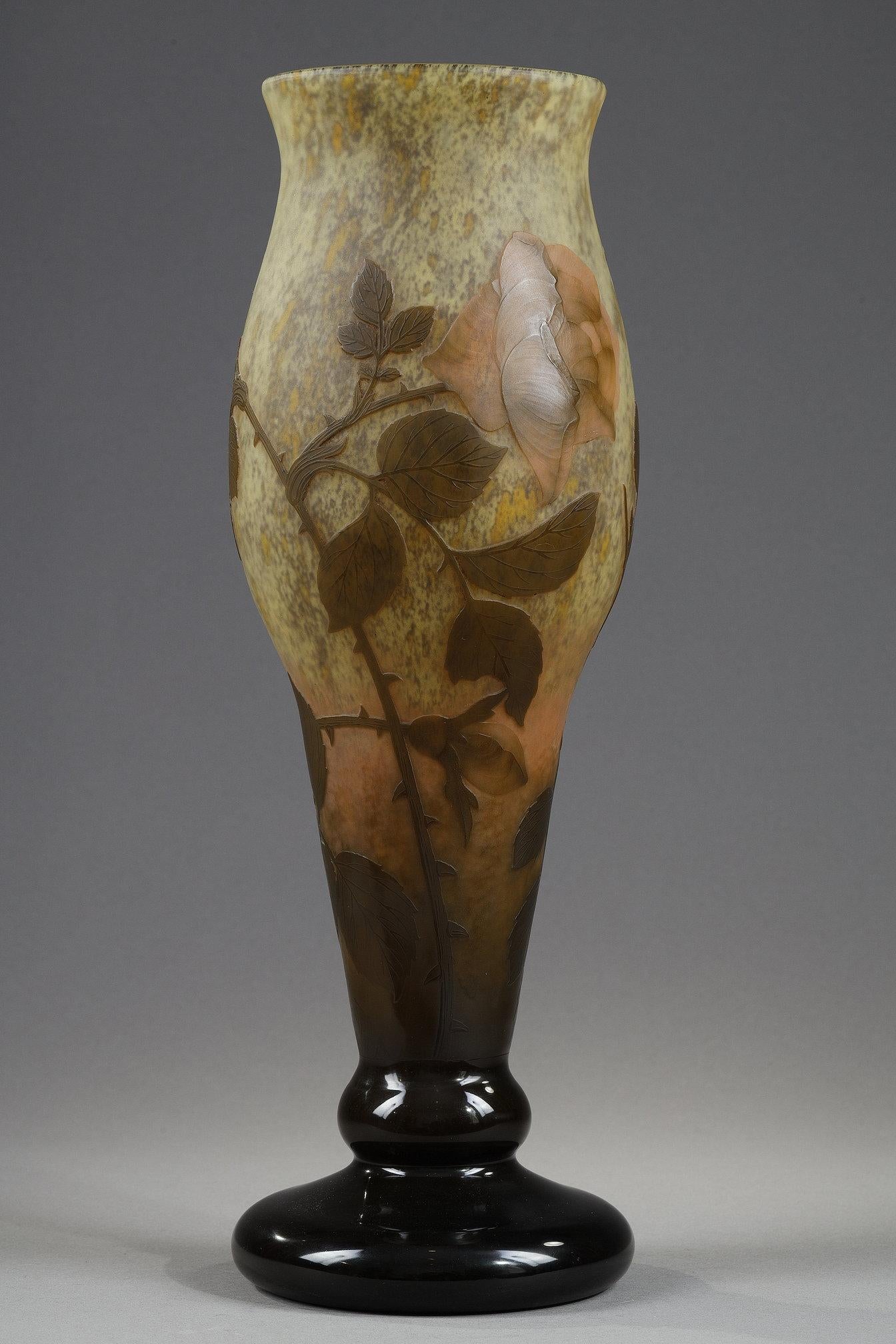
Vase mit Rosen
Von Daum
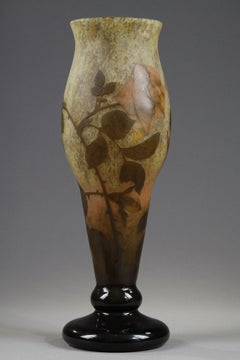
Vase mit Rosen von DAUM Eine balusterförmige Vase mit ausgestelltem Hals, Mehrschichtiges, mundgeblasenes Glas, mit Rosendekoration. Mit säuregeätztem Dekor und geschnitzten Rosenbl...
Kategorie

1920er, Art nouveau, Mehr Kunstobjekte

Materialien

Geblasenes Glas

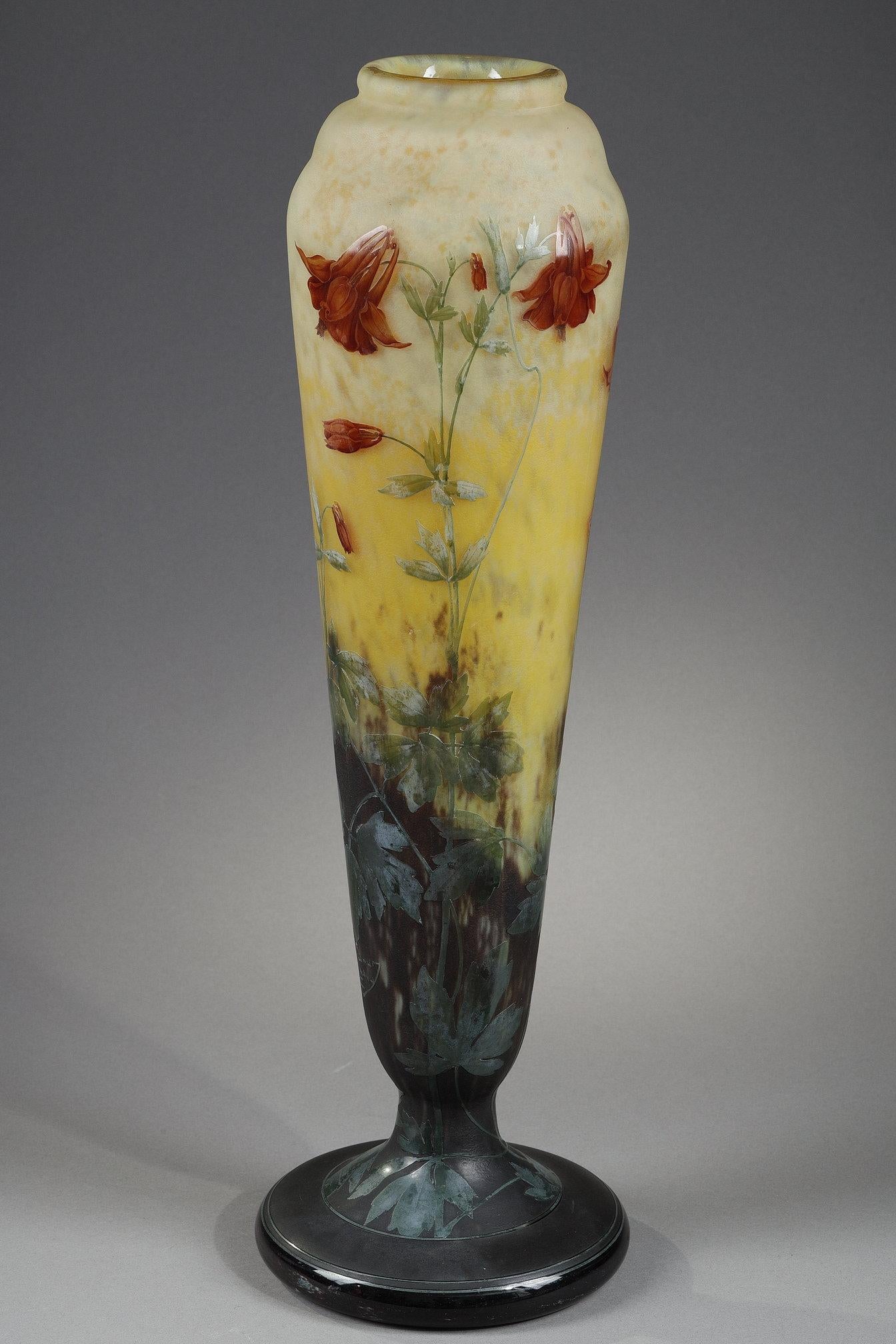
Vase mit Columbinen
Von Daum
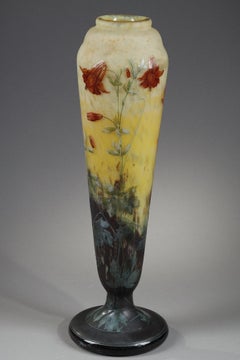
Vase mit Columbinen von DAUM Große Vase mit Akeleiblüten verziert Mehrschichtiges mundgeblasenes Glas Durch Verglasung von Pulvern gefärbtes Glas Dekor in Reserve säuregeätzt und mi...
Kategorie

Frühes 20. Jahrhundert, Art nouveau, Mehr Kunstobjekte

Materialien

Glas

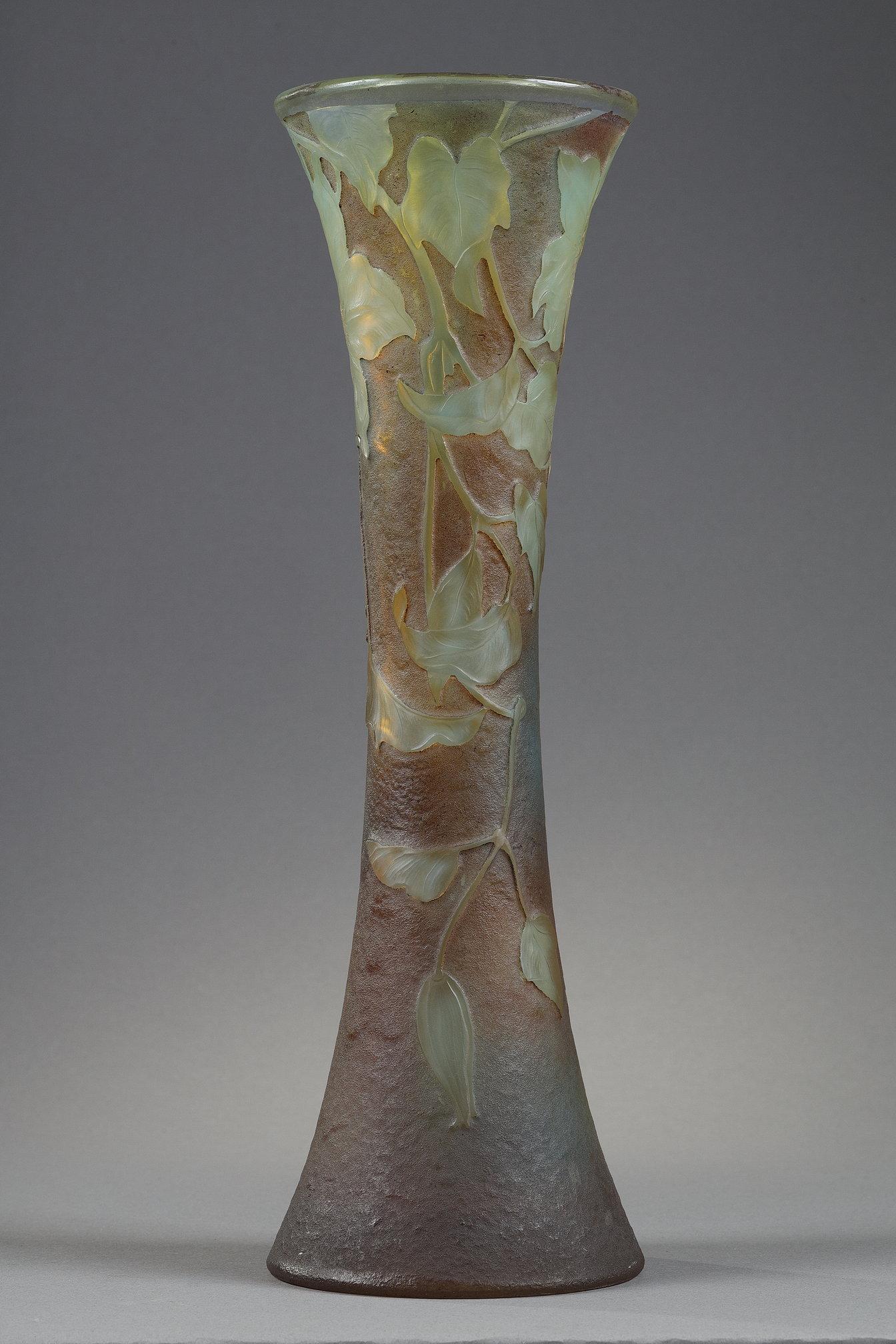
Vase mit Clematis
Von Daum
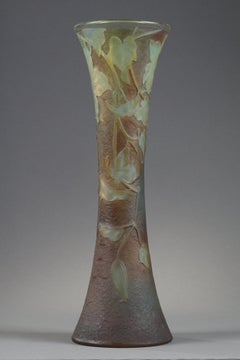
Vase mit Clematis von DAUM Eine Vase in Form eines Diabolo mit gelb-opalisierendem Clematis-Dekor Blasgeformtes Mehrschichtglas Säuregeätztes Dekor in Reserve Mattierter Hintergrun...
Kategorie

Spätes 19. Jahrhundert, Art nouveau, Mehr Kunstobjekte

Materialien

Geblasenes Glas

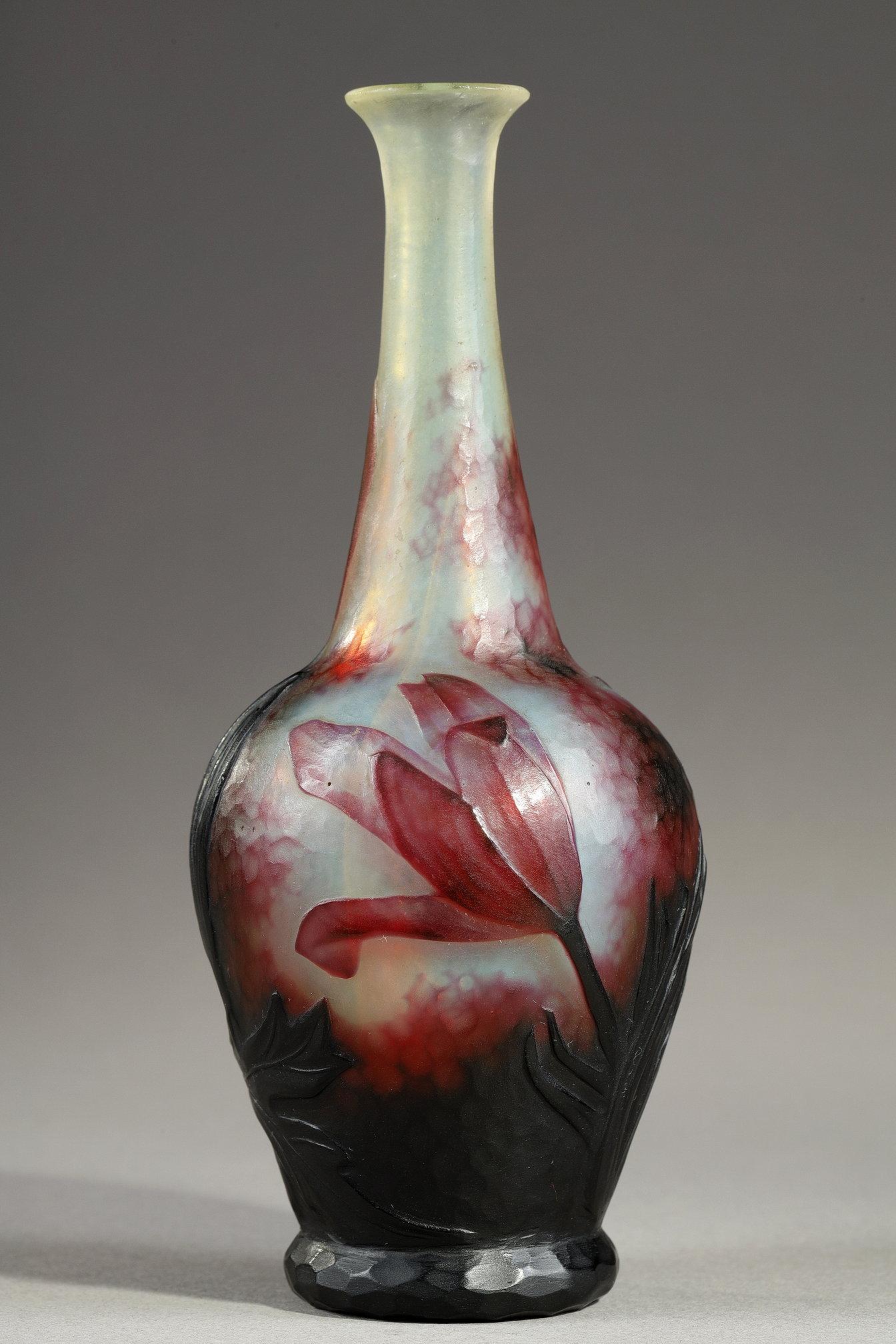
Vase mit Colchicum
Von Daum
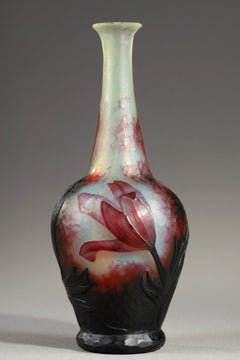
Vase mit Colchicum von DAUM Eine mit Colchicum dekorierte Knospenvase Blasgeformtes Mehrschichtglas Säuregeätztes Dekor in Reserve und leicht geschliffen Gehämmerter Hintergrund Si...
Kategorie

Spätes 19. Jahrhundert, Art nouveau, Mehr Kunstobjekte

Materialien

Geblasenes Glas

Vase mit Astern
Von Daum
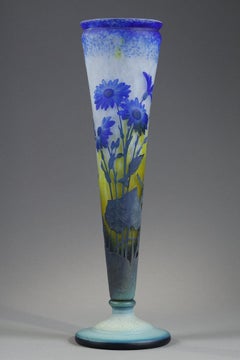
Vase mit Astern von DAUM Eine Vase in Form einer Kornblume auf einem Fuß, Mehrschichtiges, mundgeblasenes Glas, mit blauen Astern verziert. Mit säuregeätztem Dekor in Reserve und ge...
Kategorie

Frühes 20. Jahrhundert, Art nouveau, Mehr Kunstobjekte

Materialien

Geblasenes Glas

Vase mit Löwenzahn
Von Daum
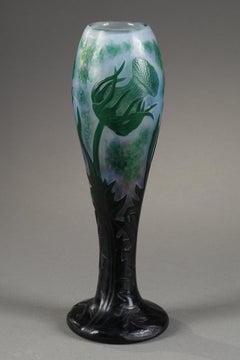
Vase mit Löwenzahn von DAUM Vase mit Löwenzahn verziert Blasgeformtes Dreischichtglas Säuregeätzte Dekoration in Reserve und Radschnitt Gehämmerter Hintergrund Signiert unter "Daum...
Kategorie

Spätes 19. Jahrhundert, Art nouveau, Mehr Kunstobjekte

Materialien

Geblasenes Glas

Das könnte Ihnen auch gefallen

DAUM Große Vase mit säuregeätzten Rosenhip-Blumen, dekoriert, 1910-1915
Von Daum
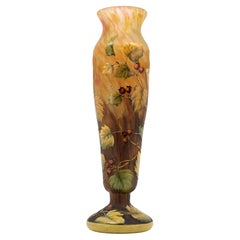
Große französische Vase im Jugendstil von DAUM (Nancy), Frankreich, 1910-1915. Hagebuttenblüten. Große Vase aus doppelt geblasenem Glas in Form eines Balusters mit offenem Hals, verz...
Kategorie

Vintage, 1910er, Französisch, Art nouveau, Vasen

Materialien

Glaskunst

Daum Nancy, „Fleurs et Abeilles“-Vase aus emailliertem und geätztem Glas
Von Daum
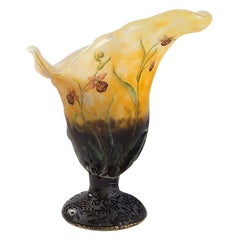
Diese emaillierte und geätzte Glasvase "Fleurs et Abeilles" von Daum Nancy im französischen Jugendstil zeichnet sich durch eine ungewöhnliche und wild gewellte Form aus, die durch di...
Kategorie

Antik, Frühes 20. Jhdt., Französisch, Art nouveau, Vasen

Materialien

Glaskunst

Weinrebenvase von Clement Massier, Jugendstil, um 1900
Von Clement Massier
Vase aus Keramik mit blauer und grüner Metallglanzglasur des Meisters des Schillerns Clement Massier, mit Trauben und Blättern in tiefem Violett. Signiert MCM in der Basis, und numme...
Kategorie

Frühes 20. Jhdt., Art nouveau, Mehr Kunstobjekte

Materialien

Keramik

Daum Nancy Vase Blumen, Jugendstil, Frankreich Lorraine, um 1895-1900
Von Daum
Daum Nancy Stalky Rarest Vase mit Blumen FERTIGUNG: DAUM FRÈRES hergestellt in Frankreich / Nancy, Lothringen, um 1895-1900. DESIGNER: DAUM FRÈRES (Auguste und Antonin Da...
Kategorie

Antik, 1890er, Französisch, Art nouveau, Glaswaren

Materialien

Glas

Große Jugendstil-Kamee-Einzelvase Ancolie , Daum Nancy, Frankreich, um 1910/1915
Von Daum
Balusterförmige Vase, auf rundem, durch einen Nodus abgesetztem Sockel, mit sanft geschwungenen, schlanken Wänden, leichte Einschnürung am Hals mit ausgestelltem Rand, farbloses Glas...
Kategorie

Vintage, 1910er, Französisch, Art nouveau, Glaswaren

Materialien

Glas

Große ""Tabakblumen"-Vase" aus mehrschichtigem Glas von Daum Nancy, Frankreich, frühes 20. Jahrhundert
Daum Nancy, Frankreich. Große, mehrschichtige Glasvase "Tabakblumen" mit einem geätzten Dekor aus roten Blumen auf gelb-orangem und rosa Hintergrund. Anfang des 20. Jahrhunderts. M...
Kategorie

Frühes 20. Jahrhundert, Französisch, Art nouveau, Vasen

Materialien

Glaskunst