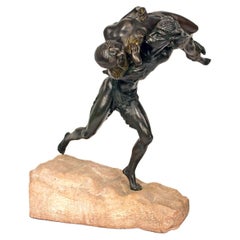
Objekte ähnlich wie Centaur abducting a woman
Möchten Sie mehr Bilder oder Videos?
Zusätzliche Bilder oder Videos von dem*der Anbieter*in anfordern
1 von 15
Aimé-Jules DalouCentaur abducting a womancirca 1895-1902
circa 1895-1902
27.000 €Einschließlich MwSt.
Angaben zum Objekt
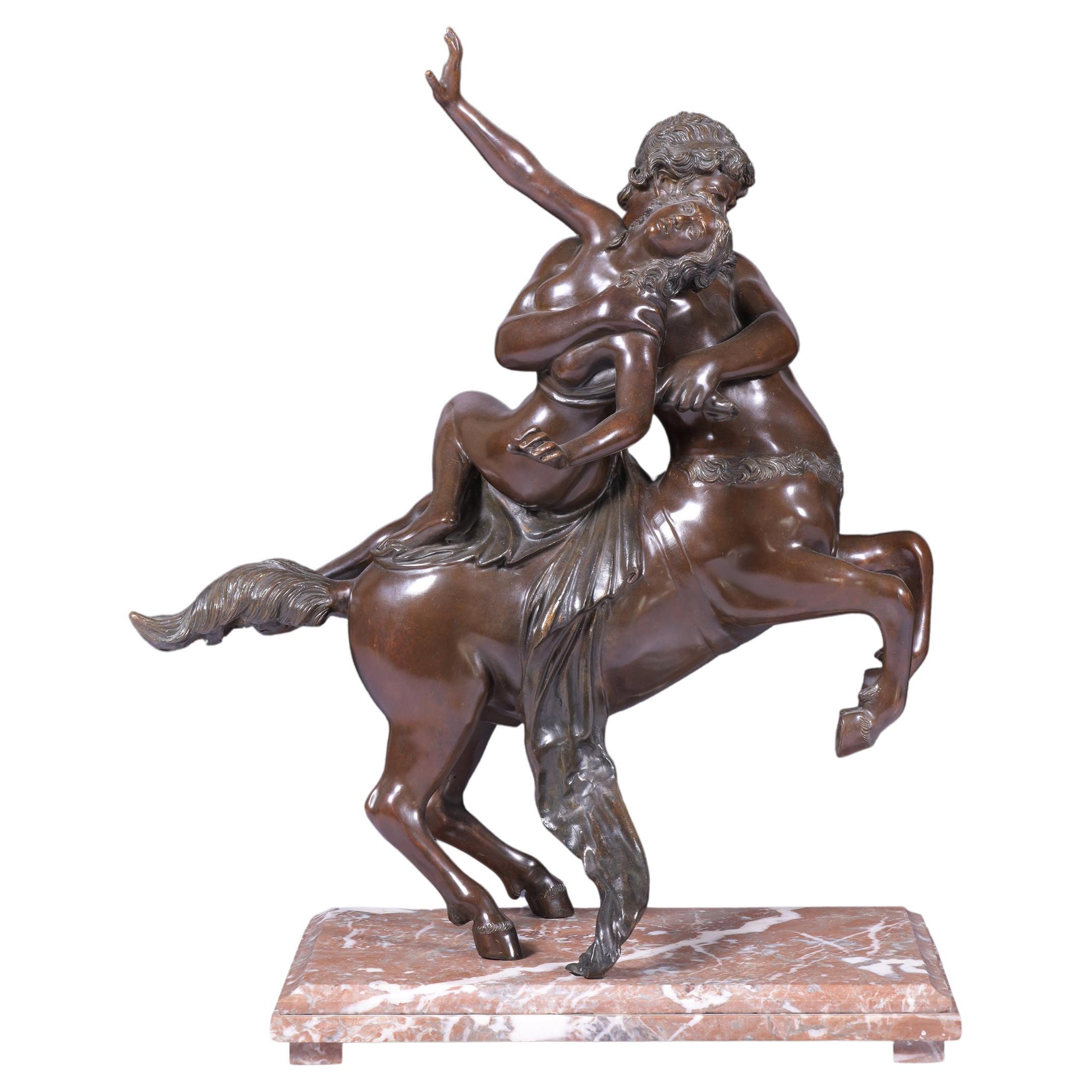
Centaur abducting a woman
by Aimé-Jules DALOU (1838-1902)
A bronze group sculpture with a dark brown patina
Signed on the base "Dalou"
Cast by "A.A. Hébrard" (with the foundry stamp)
The casts by Hébrard are always the finest ones regarding Dalou's works. Perfect in quality of cast and patina.
France
posthumous cast around 1910
height 27 cm
width 21 cm
depth 15,5 cm
A similar model reproduced in "Jules Dalou, le sculpteur de la République", Exhibition held at the Musée du Petit Palais, Paris, 2013, page 415, n°337.
Biography :
Aimé-Jules Dalou, said Jules Dalou (1838-1902) was a French sculptor, born from Protestants glovers craftsmen who raised in secularism and love of the Republic. Jules Dalou was very young talented for modeling and drawing, which earned him the attention of Jean-Baptiste Carpeaux, who made him entered in 1852 in the Little School, the future National School of Decorative Arts in Paris. In 1854, he was admitted to the School of Fine Arts in Paris, where he studied painting in the workshop of Abel de Pujol and sculpture in the workshop of Francisque Duret. He began to earn his living by working for decorators, and began his friendship with Auguste Rodin. Dalou then produced decorative sculptures for buildings on major Parisian avenues, such as the Hotel de la Paiva, on the Champs-Elysees Avenue. He presented but failed four times to Rome prize competition, but exhibited at the 1869 Salon his "Daphnis and Chloe" and the "Embroiderer" at the Salon of 1870, two pieces acquired by the French state. Dalou had one child, Georgette, a girl born with a mental handicap. This is to ensure funding for her daughter's life accommodation in the Orphanage of Arts, that Dalou bequeathed the funds from his workshop to this institution.
After the bloody week of May 1871 Dalou, his wife and their daughter were threatened as Communards, forced into exile and requested asylum. They then joined England and were greeted by his former fellows of the Little School, the painter Alphonse Legros. With Legros, much introduced in the City, he made a serie of terracotta statuettes inspired by boulonnaise peasants or intimate subjects (readers, lullabies), and portraits of the English aristocracy. He became professor for modeling at the National Art Training School, his influence was decisive for many British sculptors. He received orders for a public fountain in marble titled "Charity" (1877) near the Royal Exchange in London, and a monument dedicated to Queen Victoria's grandchildren located in the private chapel of Frogmore at Windsor Castle.
In May 1874, the Paris War Council condemned Dalou in absentia to hard labor for life. Having refused to beg for mercy, he was only in May 1879 being granted amnesty and his family finally returned from exile. His group "The Triumph of the Republic", originally planned for the Place de la Republique in Paris, was finally erected on the Place du Trône, renamed Place de La Nation in 1880. Dalou devoted twenty years to the realization of this monument. The years 1881 and 1882 were difficult, but the 1883 Salon finally revealed him to the French public. He exhibited his two high reliefs: "The Brotherhood of Peoples" and "Mirabeau answering Dreux-Brézé", for which he was awarded the Medal of Honor. Fleeing the world and living in family, Dalou engaged in considerable work and many orders both private and public. For the Universal Exhibition of 1889, was inaugurated on the Place de la Nation the plaster of "The Triumph of the Republic" commissioned by the city of Paris in 1879. Although the bronze version of the group was inaugurated in 1899, this work won the grand prize for sculpture in the exhibition. Dalou left the French Society of Artists in 1890 to expose at the National Society of Fine Arts, of which he was a founding member with Ernest Meissonier, Auguste Rodin and Pierre Puvis de Chavannes. Awarded Knight of the Legion of Honor in 1883, and promoted to officer by President Carnot in 1889, he was elevated to the rank of Commander of the same order in 1899 by President Loubet at the inauguration of the monument of "The Triumph of the Republic".
Dalou had no time to complete his last great project, a monument dedicated to workers, the idea came to him in 1889 after the first opening of "TheTriumph of the Republic". The formality of the ceremony and military parades held the people away from the official event. Dalou was disappointed. True to its republican ideals, he had hoped that this inauguration was an opportunity of great popular democratic party (as it was at the inauguration of the bronze in 1899). His idea was then to pay tribute to the world of workers, craftsmen and peasants with this work being the central subject. At the end of his career Dalou described the project as follows: "I think I have finally found the monument to the workers that I seek since 1889. Sober, without molding or ornament, I wish it'd be severe and imposing. Will I execute it? There is the question. I am old and my health is so weak."
- Schöpfer*in:Aimé-Jules Dalou (1838 - 1902, Französisch)
- Entstehungsjahr:circa 1895-1902
- Maße:Höhe: 27 cm (10,63 in)Breite: 21 cm (8,27 in)Tiefe: 15,5 cm (6,11 in)
- Medium:
- Bewegung und Stil:
- Zeitalter:
- Zustand:
- Galeriestandort:PARIS, FR
- Referenznummer:Anbieter*in: N.X1stDibs: LU2514216390642

Aimé-Jules Dalou
Aimé-Jules Dalou (1838-1902) war einer der wenigen führenden französischen Bildhauer des späten 19. Jahrhunderts, dessen Ruf vielleicht nur von seinen Zeitgenossen Henri Chapu (1833-1891) und Marius Jean Antonin Mercié (1845-1916) übertroffen wurde. Dalou war sehr einflussreich und gehörte zu den Gründungsmitgliedern der Société des Artistes Français und später zu den Gründern der Société Nationale des Beaux-Arts. Zwei Jahre vor seinem Tod, bei der Einweihung des Triumphs der Republik 1899, wurde er offiziell mit dem höchsten Rang der Ehrenlegion ausgezeichnet. Auf Anregung von Jean-Baptiste Carpeaux beginnt er 1852 seine künstlerische Ausbildung an der Petite Ecole, wo er Zeichnen und Modellieren lernt. Carpeaux unterstützte Dalou während seiner gesamten Karriere und beeinflusste seine Bildhauerei stark. Dalou begann seine Tätigkeit im Bereich der dekorativen Bildhauerei bei zwei Pariser Unternehmen, den Goldschmieden Lefèvre und Favière. In dieser Zeit trug er zur architektonischen Gestaltung des Hôtel de la Païva bei, dem damaligen Wohnsitz der berüchtigten französischen Kurtisane Esther Lachmann, genannt La Païva. Dalous einzigartiger Ansatz lag in der großen Bandbreite seines thematischen, malerischen und bildhauerischen Ausgangsmaterials, durch das er ein beeindruckendes Spektrum an Inspiration aufnahm. Das Werk des Bildhauers Louis-François Roubiliac aus dem 18. Jahrhundert spielte eine wichtige Rolle für Dalous künstlerische Entwicklung, dessen Skulpturen er während seines Aufenthalts in London studierte. Dalous Werk umfasst Friese, Maquetten, Reliefs und einzelne Bronzefiguren. Er ist für seine vom Barock inspirierten allegorischen Gruppenkompositionen ebenso bekannt wie für seine Darstellungen der französischen Landbevölkerung. Dalou ermutigte Kunststudenten, sich von den Zwängen etablierter Traditionen zu befreien. Sein Stil und seine Lehren sollen eine neue Generation junger britischer Bildhauer geweckt haben, deren Arbeiten später der New Sculpture-Bewegung zugerechnet wurden.
Anbieterinformationen
5,0
Anerkannte Anbieter*innen
Diese renommierten Anbieter*innen sind führend in der Branche und repräsentieren die höchste Klasse in Sachen Qualität und Design.
Gründungsjahr 1992
1stDibs-Anbieter*in seit 2023
11 Verkäufe auf 1stDibs
Typische Antwortzeit: 1 Stunde
- VersandAngebot wird abgerufen …Versand von: PARIS, Frankreich
- Rückgabebedingungen
Einige Inhalte dieser Seite wurden automatisch übersetzt. Daher kann 1stDibs nicht die Richtigkeit der Übersetzungen garantieren. Englisch ist die Standardsprache dieser Website.
Mehr von diesem*dieser Anbieter*in
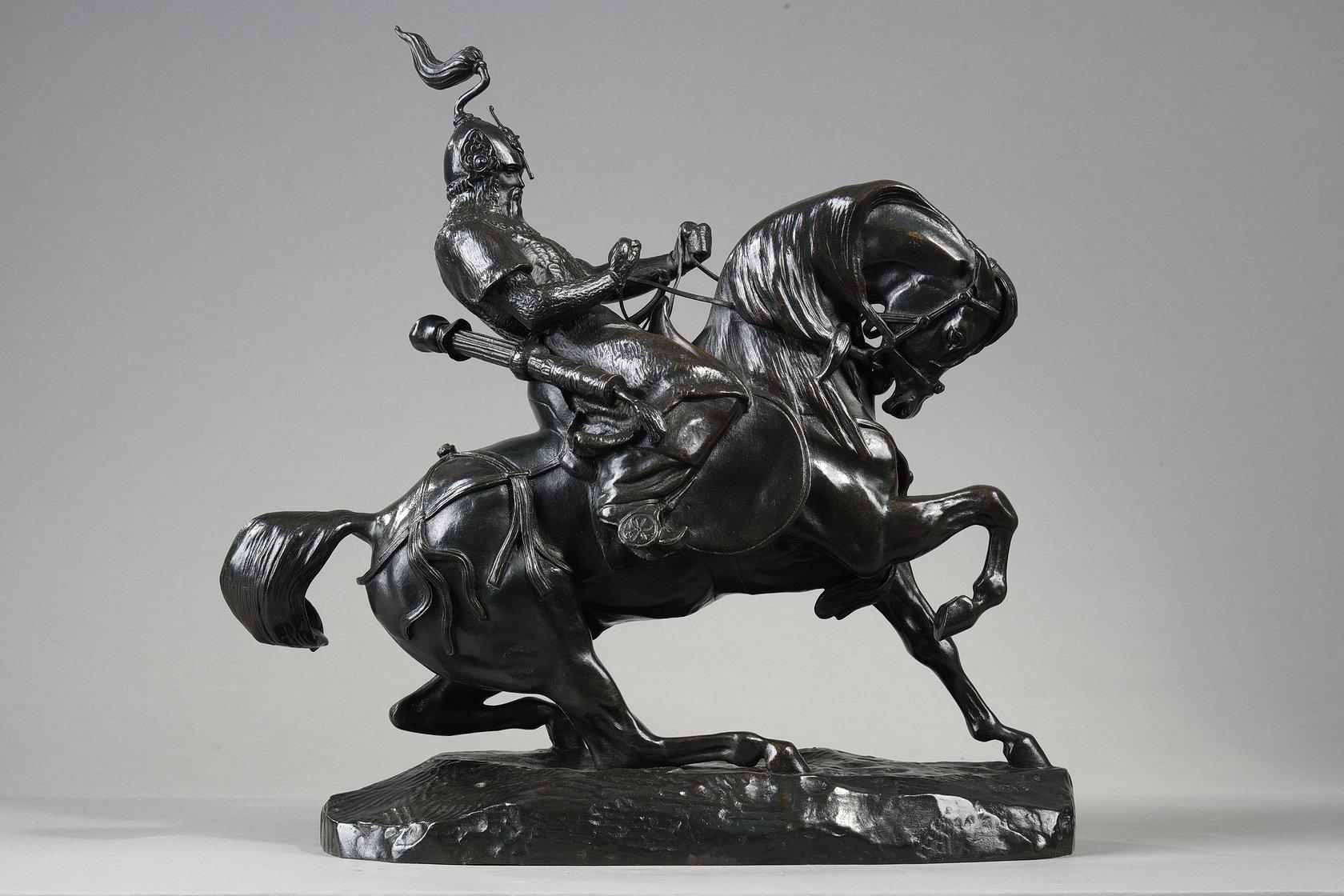
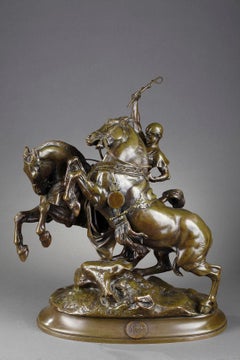
Alle anzeigenTatarenkrieger hält sein Pferd an
Von Antoine-Louis Barye
Tatarenkrieger hält sein Pferd an
von Antoine-louis BARYE (1796-1875)
Reitergruppe aus Bronze mit einer nuancierten grünbraunen Patina
jede Gussmarke
alte Ausgabe gegossen
Frankre...
Kategorie
Spätes 19. Jahrhundert, Französische Schule, Figurative Skulpturen
Materialien
Bronze
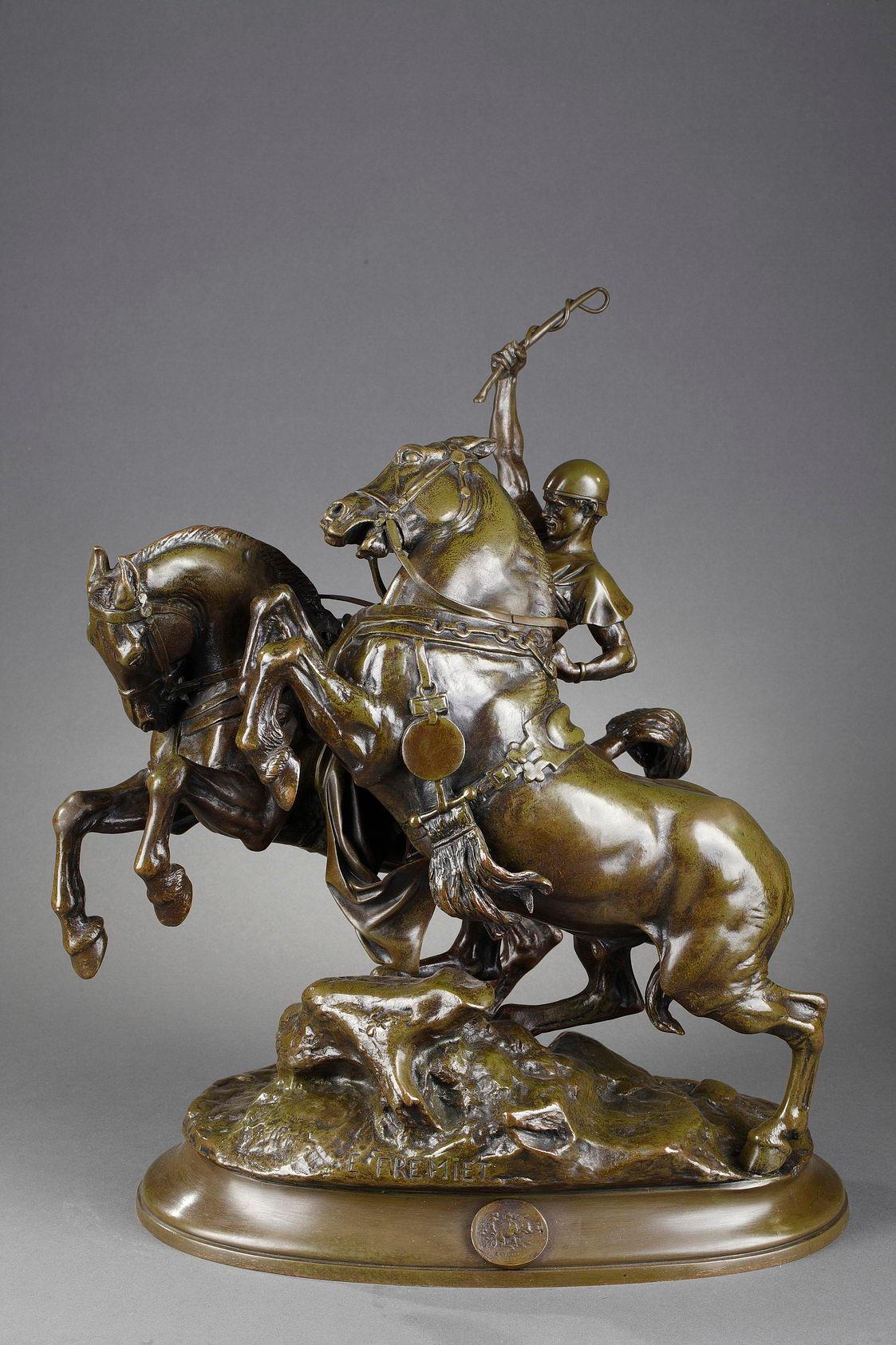
Römischer Autofahrer auf seinem Cabriot
Von Emmanuel Fremiet
Römischer Autofahrer auf seinem Cabriot
von Emmanuel Fremiet (1824-1910)
Bronzegruppe mit originaler, nuancierter grüner Patina
signiert auf dem Sockel " E. Fremiet "
Besetzung durc...
Kategorie
Spätes 19. Jahrhundert, Französische Schule, Figurative Skulpturen
Materialien
Bronze
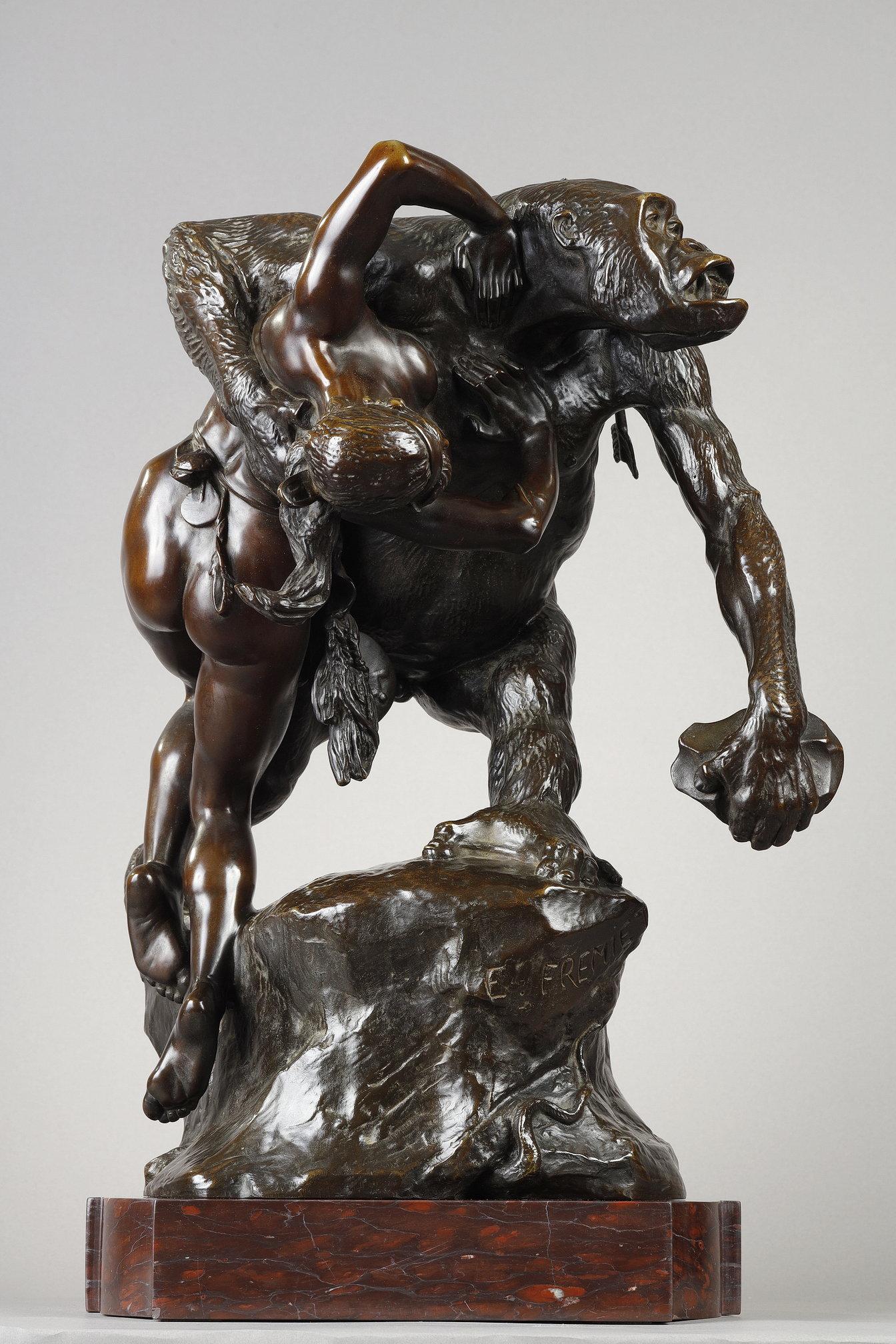
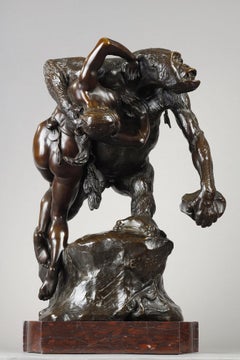
Gorilla entführte eine Frau
Von Emmanuel Fremiet
Emmanuel FREMIET (1824-1910)
Gorilla entführte eine Frau
Eine seltene Bronzegruppe mit grünlich-dunkelbrauner Patina
signiert "E. Fremiet" auf dem Sockel
gegossen von " F. Barbedie...
Kategorie
Spätes 19. Jahrhundert, Französische Schule, Figurative Skulpturen
Materialien
Bronze
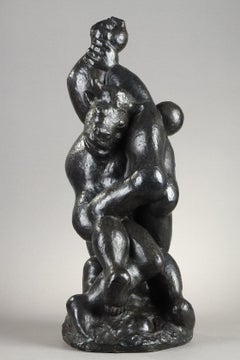
Theseus und der Minotaur
Von Baltasar Lobo
Theseus und der Minotaur
von Baltasar LOBO (1910-1993)
Eine Bronzegruppe mit grünlich-dunkelbrauner Patina
Signiert auf der unteren Rückseite "Lobo".
Gegossen von " Susse Fondeur Pa...
Kategorie
1970er, Französische Schule, Figurative Skulpturen
Materialien
Bronze
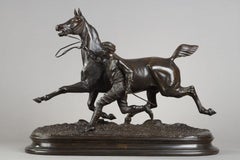
Pferdetraining mit seinem Stallburschen
Pferdetraining mit seinem Stallburschen
von Arthur Marie Gabriel comte du Passage (1838-1909)
Eine Bronzegruppe mit nuancierter dunkelbrauner Patina
Signiert auf dem Sockel "Cte du ...
Kategorie
Spätes 19. Jahrhundert, Französische Schule, Figurative Skulpturen
Materialien
Bronze
Liebkosung der Liebe
Von Albert-Ernest Carrier-Belleuse
"Liebkosung der Liebe"
von Albert-Ernest CARRIER-BELLEUSE (1824-1887)
Bronzeskulptur mit nuancierter dunkelbrauner Patina
Signiert auf der Rückseite "A. Carrier-Belleuse"
Auf einem...
Kategorie
1870er, Französische Schule, Figurative Skulpturen
Materialien
Bronze
Das könnte Ihnen auch gefallen
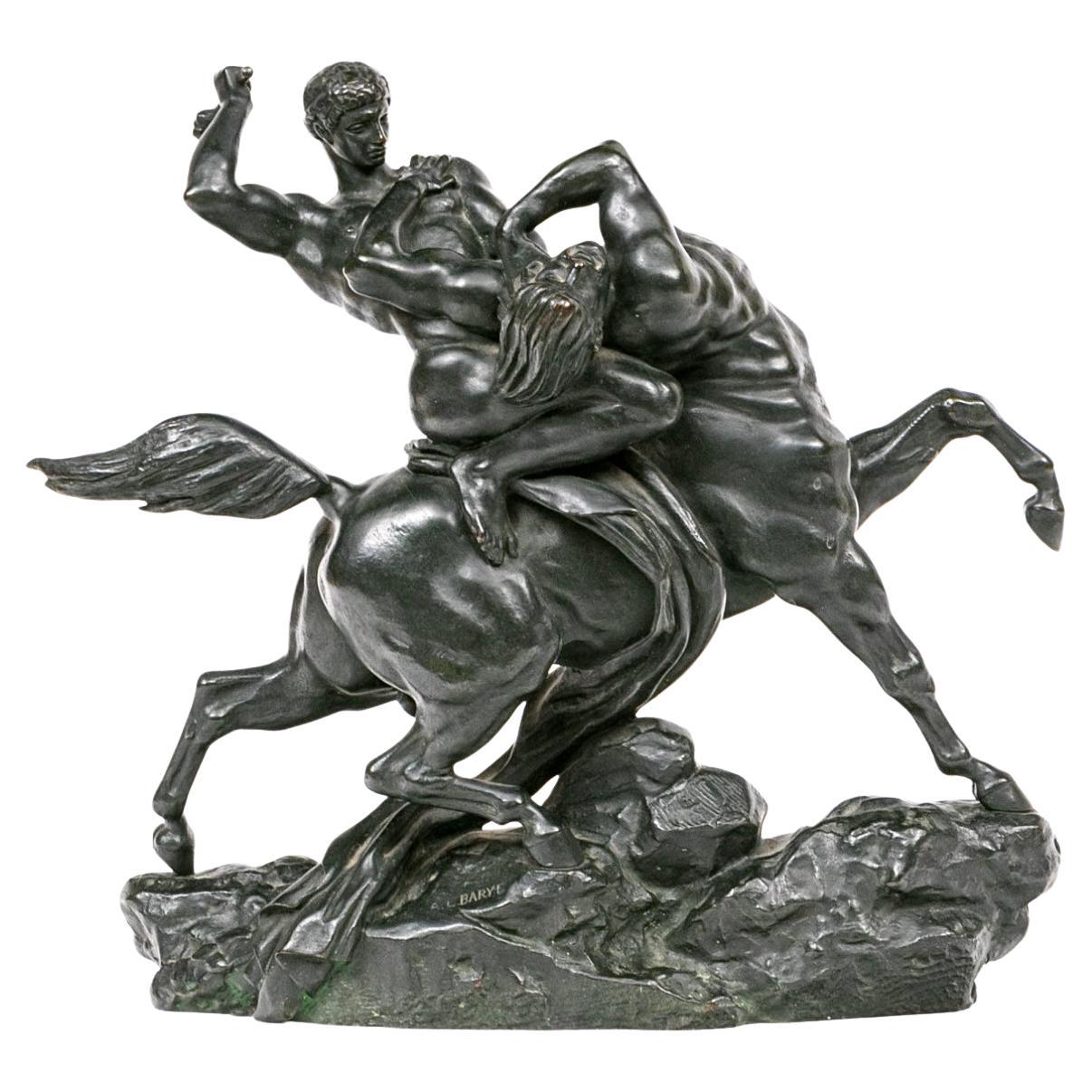
Antoine-Louis Barye Theseus erschlägt den Kentauren Bienor Bronze
Von Antoine-Louis Barye
Antoine Louis Barye Theseus, der den Kentauren tötet Bienor Schwarz patinierte Bronzegruppe.
Französische Bronzegruppe mit dem Titel "Thesee combattant le centaure Bienor, esquisse"...
Kategorie
Antik, 1850er, Französisch, Beaux Arts, Figurative Skulpturen
Materialien
Bronze
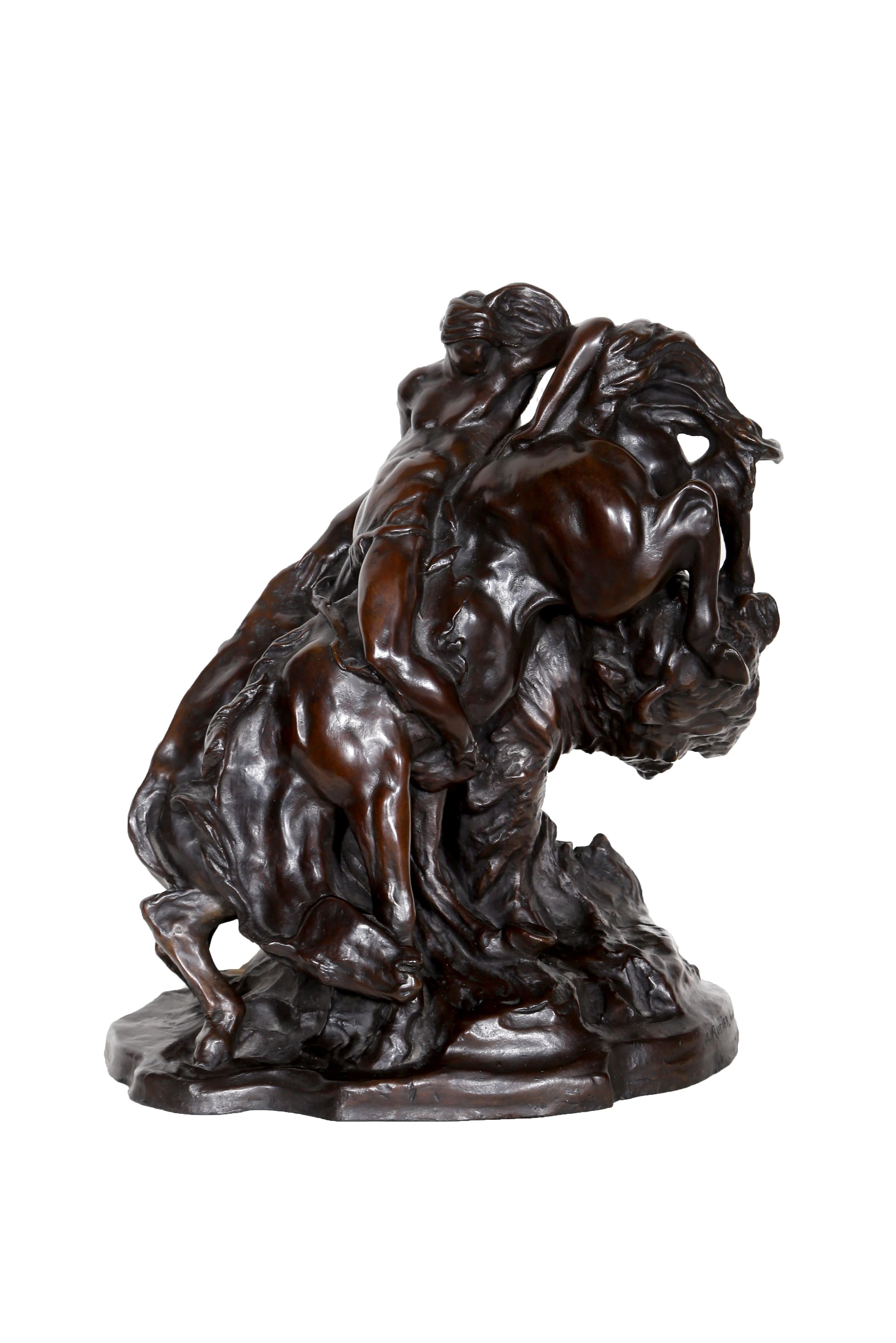
Combat: Indianer, Pferd und Büffel
Kampf: Indianer, Pferd und Büffel: Arthur Putnam (6. September 1873 - 27. Mai 1930) war ein amerikanischer Bildhauer und Tiermaler, der für seine Bronzeskulpturen von Wildtieren beka...
Kategorie
Frühes 20. Jahrhundert, Romantik, Figurative Skulpturen
Materialien
Bronze
Preis auf Anfrage
Französische Bronzegruppe des Nessus, der Deianira abführt, 19. Jahrhundert
Von Giambologna
Französische Grand Tour-Bronzegruppe des Nessus, der Deianira nach Giambologna abführt, auf Marmorsockel.
Modell nach dem Vorbild von Giambologna
Um 1880
Französisch
Fußnot...
Kategorie
Antik, 19. Jahrhundert, Französisch, Klassisch-griechisch, Figurative Sk...
Materialien
Marmor, Bronze
Perseus befreit Andromeda
JEAN-LÉON GRÉGOIRE
Französisch, (1840-1890)
Perseus befreit Andromeda
Patinierte Bronze; signiert 'L. GREGOIRE'
25 1/2 x 13 x 11 Zoll
Anmerkungen:
Jean-Léon Grégoire stellt se...
Kategorie
1870er, Figurative Skulpturen
Materialien
Bronze
Antoine Louis Barye (1795-1875), „ Theseus im Kampf mit dem centaur Bianor“
Von Antoine-Louis Barye
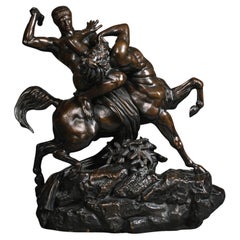
Eine schöne patinierte Bronzegruppe mit dem Titel "Theseus kämpft gegen den Kentauren Bianor", gegossen von Ferdinand Barbedienne, nach dem Modell von Antoine Louis Barye (1795-1875)...
Kategorie
Antik, 19. Jahrhundert, Französisch, Klassisch-griechisch, Figurative Sk...
Materialien
Bronze
Art Deco Satyr Abducting a Nymph Sculpture by Marcel Bouraine
Von Marcel-André Bouraine
Art Deco Skulptur aus kalt patinierter Bronze von Marcel-André Bouraine mit dem Titel Satyr entführt eine Nymphe. Das Stück ruht in einem handgeformten Felsen.
Hergestellt in Frankr...
Kategorie
20. Jahrhundert, Französisch, Art déco, Figurative Skulpturen
Materialien
Kalkstein, Bronze