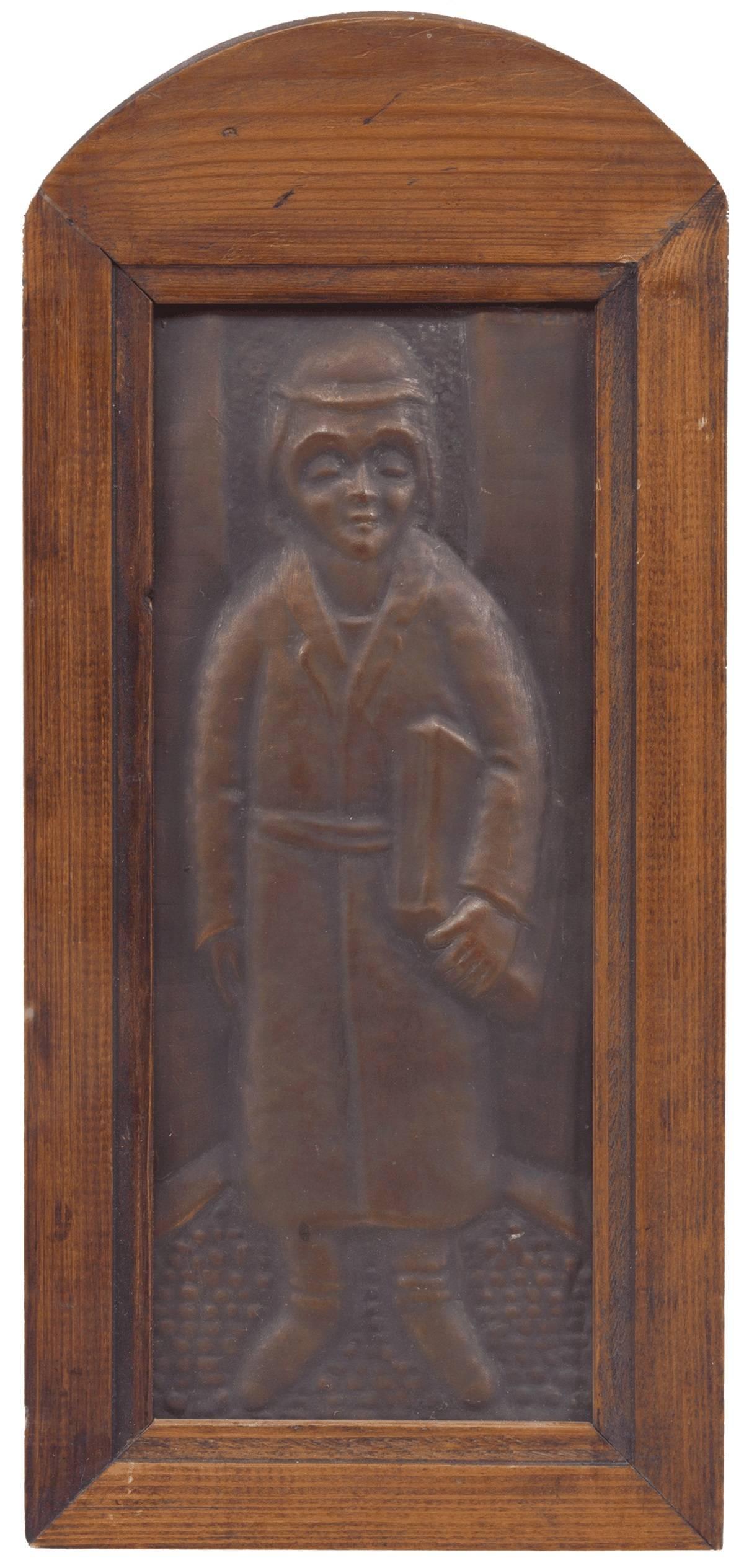
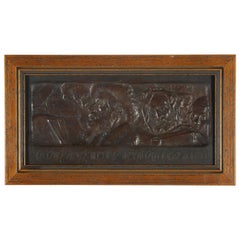
Objekte ähnlich wie Jerusalem Rabbi, Repousse Sculpture Relief Plaque Israeli Judaica
Möchten Sie mehr Bilder oder Videos?
Zusätzliche Bilder oder Videos von dem*der Anbieter*in anfordern
1 von 5
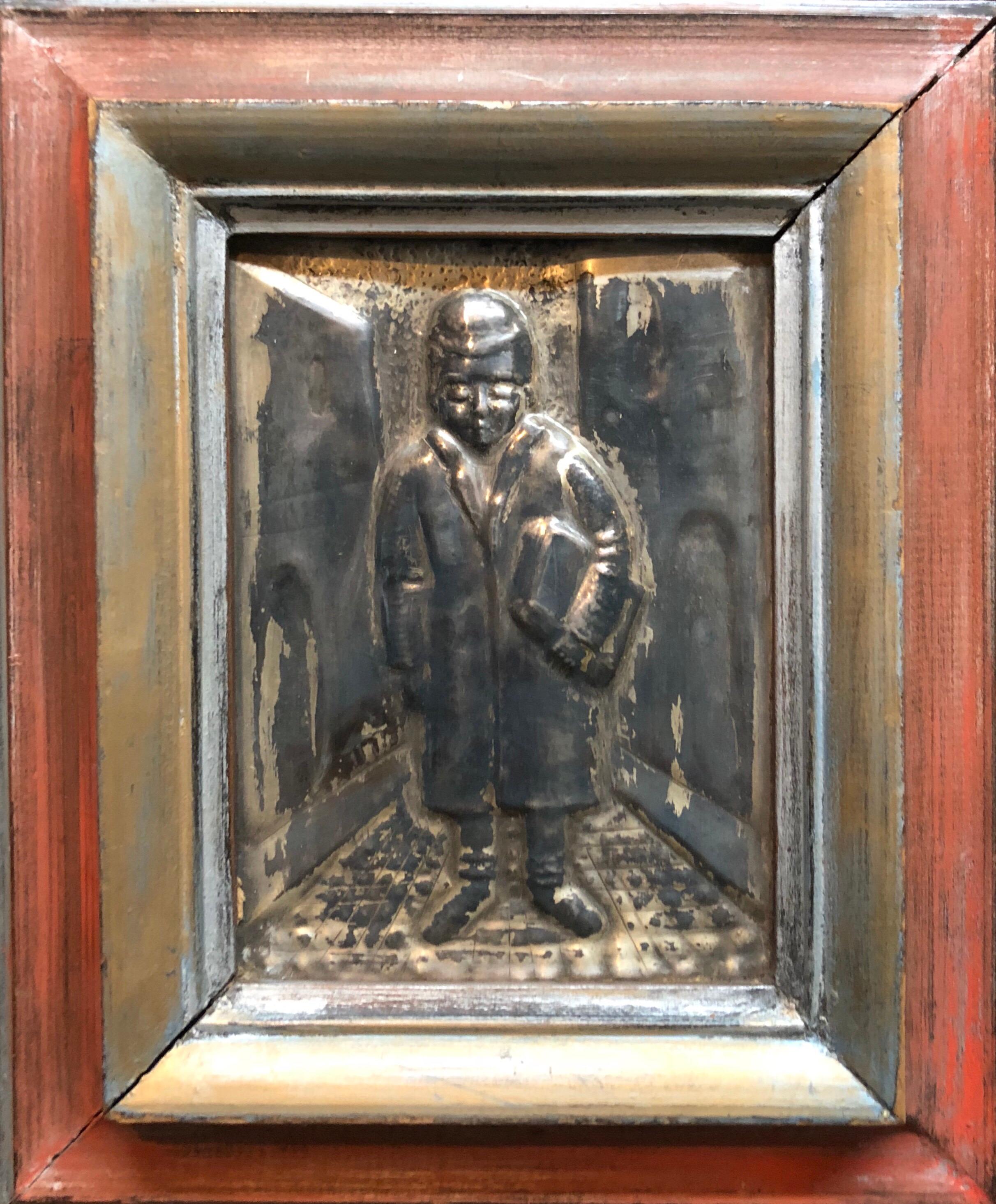
Arieh MerzerJerusalem Rabbi, Repousse Sculpture Relief Plaque Israeli Judaica
1.559,30 €
Angaben zum Objekt
Arieh Merzer was a prominent Israeli artist and metal worker.
Arie Merzer, an artist who worked in hand-hammered copper, was born in Warsaw, Poland in 1905, the scion of a large Hassidic family. He graduated from the Academy of Arts in Warsaw, and became the pupil of Professor Adam Richtarsky. He later worked with a group of Jewish artists who wanted to resuscitate the ancient oriental-Jewish craft of hand-hammering metal (metaloplastics), which was passed on to us as a legacy by far-off generations from the time of the Bible.
In 1928 Arieh Merzer exhibited his works in Warsaw for the first time. From 1930 he lived and worked in Paris. He was one of the Jewish artists who gathered there and were known as the Jewish 'Ecole de Paris.' Merzer regularly exhibited in the well-known 'Salon d'Automne' and 'Salon des Tuileries,' as well as in solo exhibitions in Paris and throughout France.
Arieh Merzer's work was highly acclaimed well before the Holocaust, before it became a memorial to a world destroyed. He portrayed the story of the Jewish spirit on copper, on silver, and on gold: stories from the Bible, the life-styles of the Jews in their shtetls and ghettos, of Chassidim and Kabbalists of renown, of wars of liberation and revival.
A special stress was placed on the link between the new Jewish experience and its historical nucleus. His major innovation was the moulding of mystic and traditional Jewish motifs, that surrounded the Holy Ark in Europe's burning synagogues, and presenting the results before the world of modern art. As a result he became generally recognized as an international Jewish artist.
In 1943, when France was conquered by the Nazis, Arieh Merzer escaped from a concentration camp, and after a stint in the maquis, he crossed the border into Switzerland and was sent to a labor camp. Later, he arrived in Geneva, where an album of sketches of his works was put out. In 1945 he made aliyah to Israel with his family, settled in Safed, and helped to found the Artists' Quarter there.
Arieh Merzer lived and worked in Israel for twenty-one years. His exhibitions in the country include: 1946 in the Tel Aviv Museum; 1947 in the Pevsner Artists' Pavilion in Haifa; 1951 in the Artists' Pavilion in Tel Aviv; 1955 in the Museum for Modern Art in Haifa; 1955 in the Artists' Pavilion in Jerusalem; and 1957 in the Tel Aviv Museum. His works were also on permanent show in his atelier in Safed. He was awarded prizes, including: the Herman Struck prize in 1946; the Dizengoff prize in 1951 and then again in 1965; and the Mayor of Haifa's prize in 1954. His works appear in numerous museums and collections throughout the country and abroad. His heart stopped beating on the eve of Holocaust Day, 1966.
Arieh Merzer, who was brought up in a Hassidic family, was drawn to the world of art from an early age; he was influenced by the moods and new ideals of the socialist circles and prepared himself to study art in the academy. On Passover eve , after clearing out the bread, while the rest of the household was busy preparing for the Holiday, a book fell from the bookcase and from out its pages flew dozens of sketches and drawings of nudes that the young Arieh had prepared for his folio for the entrance examinations to the academy. His sisters tore up the drawings with cries of treyfe treyfe (ritually non-kosher) and many months' hard work went down the drain. As a result of this, he left his home at the age of fifteen, and later joined a group of young artists who wanted to revive the ancient art of hand-hammered copper - metaloplastics - bequeathed to them by past generations who lived in Bible times.
Thus did he part from his family - mother, father, thirteen brothers and sisters - who all perished in the Holocaust. He alone survived, and made an oath that he would commemorate in copper all who had died.
The pictures do not do justice to this magnificent item.
- Schöpfer*in:Arieh Merzer (1905 - 1966, Französisch)
- Maße:Höhe: 24,13 cm (9,5 in)Breite: 19,05 cm (7,5 in)Tiefe: 2,54 cm (1 in)
- Medium:
- Bewegung und Stil:
- Zeitalter:
- Zustand:Original frame, has wear, see photos. Measurements include frame.
- Galeriestandort:Surfside, FL
- Referenznummer:1stDibs: LU38217398552
Anbieterinformationen
4,9
Platin-Anbieter*in
Premium-Anbieter*innen mit einer Bewertung über 4,7 und 24 Stunden Reaktionszeit
Gründungsjahr 1995
1stDibs-Anbieter*in seit 2014
1.848 Verkäufe auf 1stDibs
Typische Antwortzeit: <1 Stunde
- VersandAngebot wird abgerufen …Versand von: Surfside, FL
- Rückgabebedingungen
Einige Inhalte dieser Seite wurden automatisch übersetzt. Daher kann 1stDibs nicht die Richtigkeit der Übersetzungen garantieren. Englisch ist die Standardsprache dieser Website.
Mehr von diesem*dieser Anbieter*in
Alle anzeigenBronzetafel Skulptur Judaica Rabbi Figur Porträt Amerikaner Boston Modernist
Von David Aronson
Kleine jüdische Portrait-Reliefplakette
Signiert und nummeriert in römischen Ziffern aus limitierter Auflage
Aronson, David 1923-
David Aronson, Sohn eines Rabbiners, wurde 1923 in L...
Kategorie
20. Jahrhundert, Expressionismus, Figurative Skulpturen
Materialien
Bronze

Judaica Kupferplakette Israelischer Künstler Mordechai Avniel, Palästina, Bezalel Schule
Von Mordechai Avniel
MORDECHAI AVNIEL
Minsk, Weißrussland, geb. 1900, gest. 1989
Mordechai Avniel ist vor allem für seine geschickten und einzigartigen Landschaftsbilder bekannt.
Er sagte über seine Sze...
Kategorie
20. Jahrhundert, Moderne, Mehr Kunstobjekte
Materialien
Kupfer
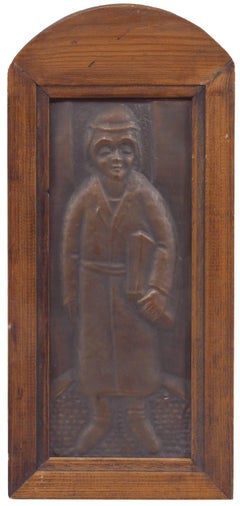
Seltene 1940er Kupfer Repousse Judaica "Shtetl Cheder Boy" Plakette
Von Arieh Merzer
Arieh Merzer war ein bekannter israelischer Künstler und Metallarbeiter.
Arie Merzer, ein Künstler, der mit handgehämmertem Kupfer arbeitet, wurde 1905 in Warschau, Polen, als Spros...
Kategorie
1940er, Figurative Skulpturen
Materialien
Kupfer
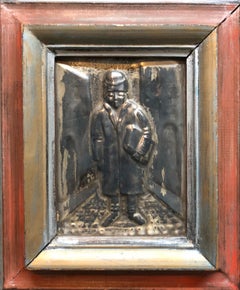
Judaica versilberte Kupfer Repousse-Skulptur Reliefplakette Shtetl Yeshiva Bochur, Judaica
Von Arieh Merzer
Arieh Merzer war ein bekannter israelischer Künstler und Metallarbeiter.
Arie Merzer, ein Künstler, der mit handgehämmertem Kupfer arbeitet, wurde 1905 in Warschau, Polen, als Spros...
Kategorie
Mittleres 20. Jahrhundert, Figurative Skulpturen
Materialien
Metall
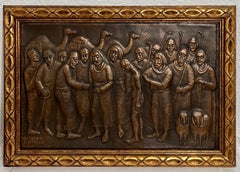
Große Judaica Kupfer-Repousse-Skulptur Repousse-Skulptur Reliefplakette Arie Merzer Bezalel-Ära
Von Arieh Merzer
Arieh Merzer (Israeli, 1905-1966)
Reliefplastik aus Kupfer in vergoldetem Rahmen
Gerahmte Abmessungen 18 x 26,25, Kupfer 14,5 X 22,5
Arieh Merzer war ein bekannter israelischer Kü...
Kategorie
Mitte des 20. Jahrhunderts, Figurative Skulpturen
Materialien
Metall, Kupfer
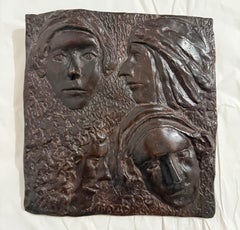
Bronze-Skulptur Wandrelief Judaica Jüdische Matriarchen Modernist Leonard Baskin
Von Leonard Baskin
Leonard Baskin (1922-2000)
Jüdische Matriarchinnen, Sarah, Rebecca, Rachel und Leah
mit hebräischer Kalligrafie
Bronze, 1998
9,5 x 9 Zoll
Judaische biblische Bronze der jüdischen Mü...
Kategorie
20. Jahrhundert, Moderne, Figurative Skulpturen
Materialien
Bronze
Das könnte Ihnen auch gefallen
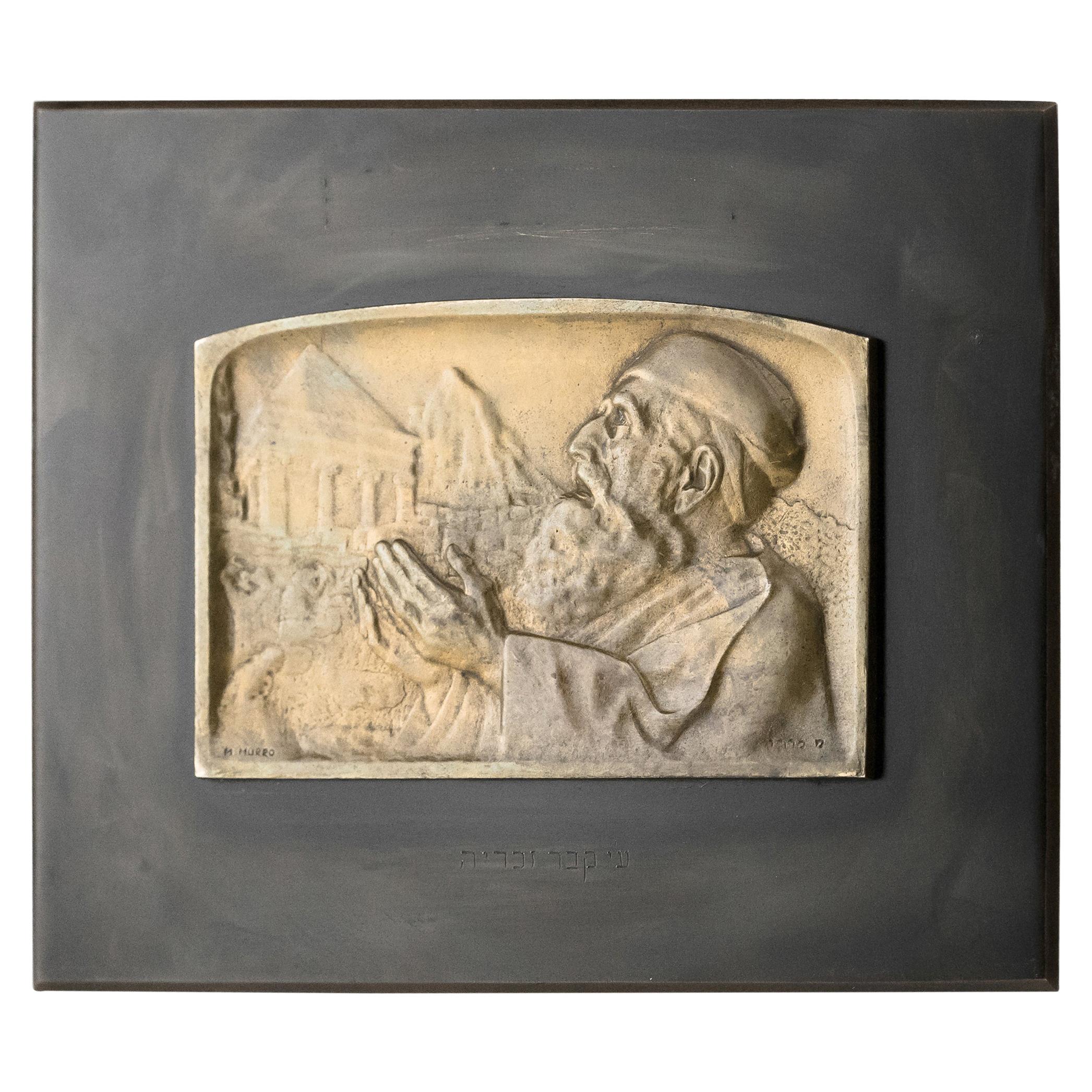
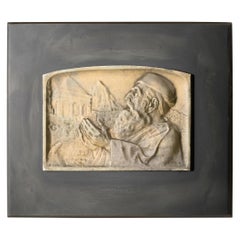
Jew at the Tomb of Zechariah-Bronze Plakette von Moshe Murro für Bezalel, Jerusalem
Bronzetafel mit dem Relief eines Juden mit dem Grab des Zacharias im Hintergrund.
Hergestellt in der Bezalel-Schule, Jerusalem, von Moshe Murro, um 1915.
Unterzeichnet: "Bezalel Je...
Kategorie
Frühes 20. Jahrhundert, Israelisch, Dekorative Kunst
Materialien
Bronze
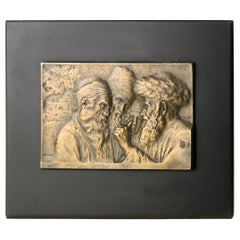
Jews at Rachel
s Tomb-Bronzeplakette aus dem frühen 20. Jahrhundert von Moshe Murro, Jerusalem
Bronzetafel mit dem Relief dreier älterer Juden und eines jungen Juden mit dem Rachelsgrab im Hintergrund.
Hergestellt in der Bezalel-Schule, Jerusalem, von Moshe Murro, um 1915.
Un...
Kategorie
Frühes 20. Jahrhundert, Israelisch, Dekorative Kunst
Materialien
Bronze
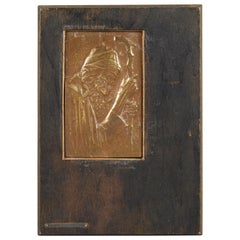
Messingplakette der Bezalel-Schule aus dem frühen 20. Jahrhundert Jerusalem
Messingplakette von Bezalel, die einen jüdischen Ältesten neben der Klagemauer darstellt, hergestellt in Jerusalem um 1920, mit einem kleinen Metallschild mit der Gravur "Bezalel Jer...
Kategorie
Frühes 20. Jahrhundert, Israelisch, Dekorative Kunst
Materialien
Messing
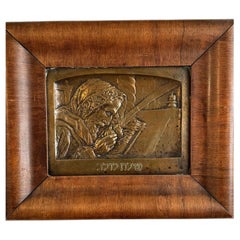
Bronzeplakette „Netilat Lulav“ von Boris Schatz, Bezalel, frühes 20. Jahrhundert
Massive Bronzetafel mit der Darstellung des Akts "Netilat Lulav", der während des jüdischen Feiertags Sukkot vollzogen wird. Die Plakette wurde von Boris Schatz angefertigt und signi...
Kategorie
Frühes 20. Jahrhundert, Israelisch, Neoklassisch, Wandskulpturen
Materialien
Bronze
Tisha B
Av, Bronzetafel von Boris Schatz, Bezalel Schule Jerusalem
Bronzeplakette Boris Schatz Hochrelief, fachmännisch aus Bronze gegossen. Dargestellt sind bärtige Männer, die am Fasttag Tisha B'Av auf dem Boden der Synagoge Kinnot (traurige Gedic...
Kategorie
Frühes 20. Jahrhundert, Israelisch, Dekorative Kunst
Materialien
Bronze
Silbernes Schild der Bezalel-Schule Jerusalem aus dem frühen 20
Bezalel-Silberplatte mit der Darstellung von Moses auf dem Berg Sinai, hergestellt in Jerusalem, um 1925, mit hebräischer Aufschrift "Bezalel Jerushalem" und "Made in Palestine", Hol...
Kategorie
Frühes 20. Jahrhundert, Israelisch, Dekorative Kunst
Materialien
Versilberung