Objekte ähnlich wie Peter Halley - Prison 30, unique signed drawing, geometric abstraction, Framed
Möchten Sie mehr Bilder oder Videos?
Zusätzliche Bilder oder Videos von dem*der Anbieter*in anfordern
1 von 7
Peter HalleyPeter Halley - Prison 30, unique signed drawing, geometric abstraction, Framed1995
1995
3.895,33 €
Angaben zum Objekt
Peter Halley
Prison 30, 1995
Original graphite drawing on paper
Pencil signed on the on the front. Titled and dated on the back
This unique work on paper was created by Peter Halley in 1995 to benefit the AIDS Community Research Initiative of America (ACRIA) in New York. It is featured in the hardback book, "Unframed: Artists Respond to AIDS, AIDS Community Research Initiative of America," pg. 21.
This work has been elegantly floated and framed in a museum quality wood frame under UV plexiglass with a die-cut window in the back to reveal the title in the artist's hand
Measurements:
Framed:
14 inches (vertical) by 15 inches (horizontal) by 1.5 inches
Artwork:
5 inches (vertical) x 7 inches (horizontal)
"My paintings have a very simple vocabulary: I call the rectangles either prisons or cells, and they’re connected by lines that I call conduits. For whatever reason, ever since I was a very young person, I made geometric paintings, and I grew up in the era of Minimalism. And the Minimalist artists generally said “these forms don’t refer to anything; they’re geometric forms, they have no relationship to the outside world.” And to me, that didn’t make sense. I thought, “our whole technological world is full of geometric forms.” And for the Minimalist artists, geometry represented a kind of ideal form: Platonic squares and circles. But for me, I began to think, “well, geometry is also kind of a prison. If you’re in your office or in front of your computer, it’s also kind of keeping you in a box.” So my vocabulary came about in reaction to Minimalism, trying to bring back a relationship between Geometric Abstraction and the world we live in….” - Peter Halley
Peter Halley Biography
Peter Halley was born in 1953 in New York. He began his formal training at Phillips Academy in Andover, Massachusetts, from which he graduated in 1971. During that time, Halley read Josef Albers’s Interaction of Color (1981), which would influence him throughout his career. From 1973 to 1974 Halley lived in New Orleans, where he absorbed the vibrant cultural influences of the city, began using commercial materials in his art, and first became acquainted with the writings of earthwork artist Robert Smithson. In 1975 the artist graduated from Yale University, New Haven, with a degree in art history. After Yale, Halley returned to New Orleans, where he received an MFA in painting from the University of New Orleans in 1978. He had his first solo exhibition at the Contemporary Art Center, New Orleans, that same year.
In 1978 Halley spent a semester teaching art at the University of Louisiana, Lafayette. He has continued to teach throughout his career. In 1980, Halley moved back to New York and had his first solo exhibition in the city at PS122 Gallery. At this time, Halley was drawn to the pop themes and social issues addressed in New Wave music. Inspired by New York’s intense urban environment, Halley set out to use the language of geometric abstraction to describe the actual geometricized space around him. He also began his iconic use of fluorescent Day-Glo paint.
In 1984, Halley started to exhibit with the International With Monument gallery, becoming closely associated with the organization and its artists, who exhibited conceptually rigorous work in a market-savvy, coolly presented space that stood in stark contrast to the bohemian, Neo-Expressionist flair of the East Village art scene at the time. In 1986, an exhibition of four artists from International With Monument at the Sonnabend Gallery in New York heralded the group’s growing success. By the late 1980s, Halley was exhibiting with prominent galleries in the United States and Europe. In 1989, an exhibition of his paintings traveled to the Museum Haus Esters, Krefeld, Germany; Maison de la culture et de la communication de Saint-Étienne, France; and Institute of Contemporary Arts, London. From 1991 to 1992, a retrospective toured Europe, with presentations at the CAPC Musée d’art contemporain de Bordeaux, France; Musée d’art contemporain, Lausanne, Switzerland; Museo nacional centro de arte Reina Sofía, Madrid; and Stedelijk Museum, Amsterdam. In 1992, the Des Moines Art Center hosted his first solo exhibition at a U.S. museum.
While developing his visual language, Halley became interested in French post-structuralist writers, including Jean Baudrillard, Guy Debord, Michel Foucault, and Paul Virillio, all of whom shared his concern with the character of social spaces in a post-industrial society. In 1981, he published his first essay “Beat, Minimalism, New Wave, and Robert Smithson” in Arts, a New York–based magazine that would publish eight of his essays before the decade’s end. Halley’s writings became the basis for Neo-Geometric Conceptualism (also known as Neo-Geo), the offshoot of Neo-Conceptualism associated with the work of Ashley Bickerton, Halley, and Jeff Koons. In 1988, the artist’s writings were anthologized in Collected Essays, 1981–1987, and again in 1997 in a second anthology, Recent Essays, 1990–1996.
In the mid-1990s, Halley began to produce site-specific installations for museums, galleries, and public spaces. These characteristically brought together a range of imagery and mediums, including paintings, wall-size flowcharts, and digitally generated wallpaper prints. Halley has executed permanent installations at the Dallas/Fort Worth International Airport, Texas, and the Gallatin School of Individualized Study at New York University. In 2011, his installation of digital prints Judgment Day was installed in the Palazzo Bembo in Venice as a part of the exhibition Personal Structures during the Venice Biennale. Halley has taught at the School of Visual Arts, New York; the University of California, Los Angeles; and Columbia University. He subsequently served as the Director of Graduate Studies in Painting and Printmaking at the Yale University School of Art from 2002 to 2011. From 1996 to 2006 he also published index magazine. Halley lives and works in New York.
-Courtesy Guggenheim
- Schöpfer*in:Peter Halley (1953, Amerikanisch)
- Entstehungsjahr:1995
- Maße:Höhe: 12,7 cm (5 in)Breite: 17,78 cm (7 in)
- Medium:
- Bewegung und Stil:
- Zeitalter:
- Zustand:minor, unobtrusive pinholes to the corners.
- Galeriestandort:New York, NY
- Referenznummer:1stDibs: LU1745217388182
Anbieterinformationen
5,0
Gold-Anbieter*in
Premium-Anbieter*innen mit einer Bewertung über 4,3 und 24 Stunden Reaktionszeit
Gründungsjahr 2007
1stDibs-Anbieter*in seit 2022
477 Verkäufe auf 1stDibs
Typische Antwortzeit: 1 Stunde
- VersandAngebot wird abgerufen …Versand von: New York, NY
- Rückgabebedingungen
Einige Inhalte dieser Seite wurden automatisch übersetzt. Daher kann 1stDibs nicht die Richtigkeit der Übersetzungen garantieren. Englisch ist die Standardsprache dieser Website.
Mehr von diesem*dieser Anbieter*in
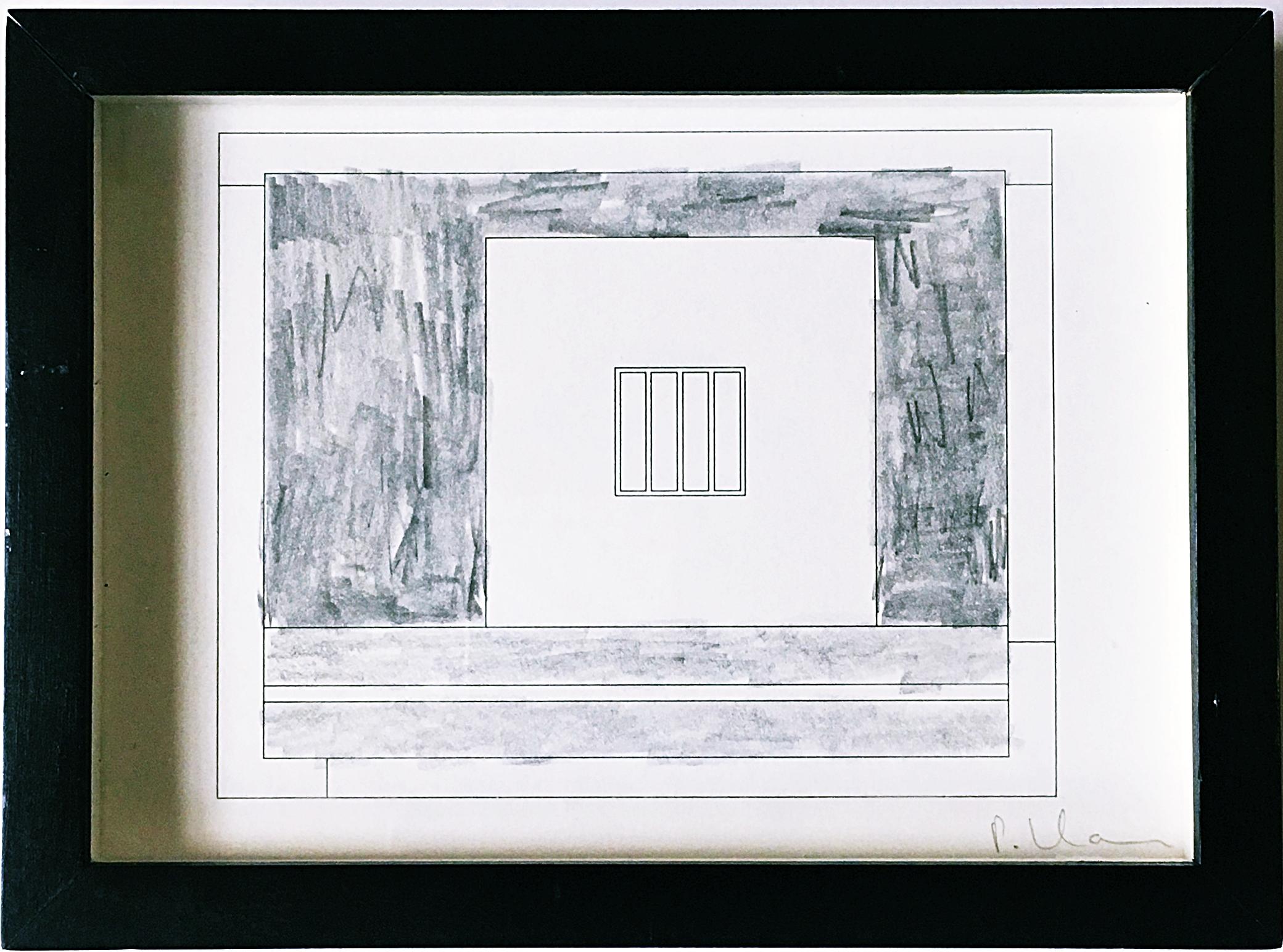
Alle anzeigenPeter Halley - Prison 14, Unique, signed, Graphite pencil
ink drawing Framed
Von Peter Halley
Peter Halley
Prison 14, 1995
Graphite pencil and ink drawing on paper. Hand signed. Titled. Dated. Framed.
Hand signed on lower right front corner
Unique
Frame included
Unique earli...
Kategorie
1990er, Geometrische Abstraktion, Abstrakte Zeichnungen und Aquarelle
Materialien
Tinte, Grafit
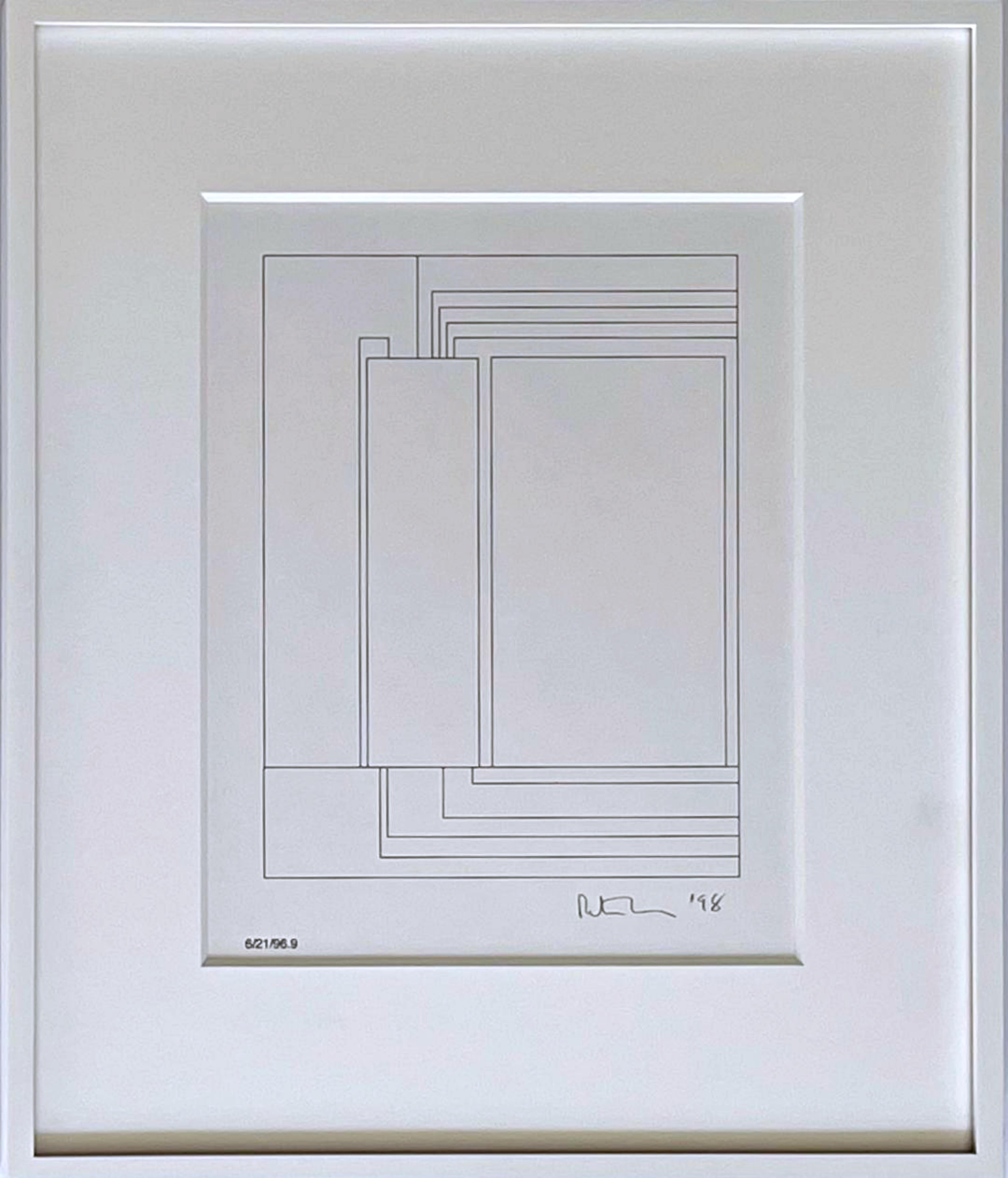
Hand signierte und datierte Original-Tinte- und Graphitzeichnung von Peter Halley, einzigartig gerahmt
Von Peter Halley
PETER HALLEY
6/21/96.9, 1998
Graphit- und Tuschezeichnung
Handsigniert vom Künstler, signiert und datiert in Graphit unten rechts auf der Vorderseite; unten links auf der Vorderseite...
Kategorie
1990er, Geometrische Abstraktion, Abstrakte Zeichnungen und Aquarelle
Materialien
Tinte, Grafit
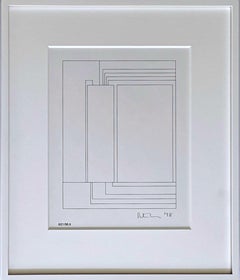
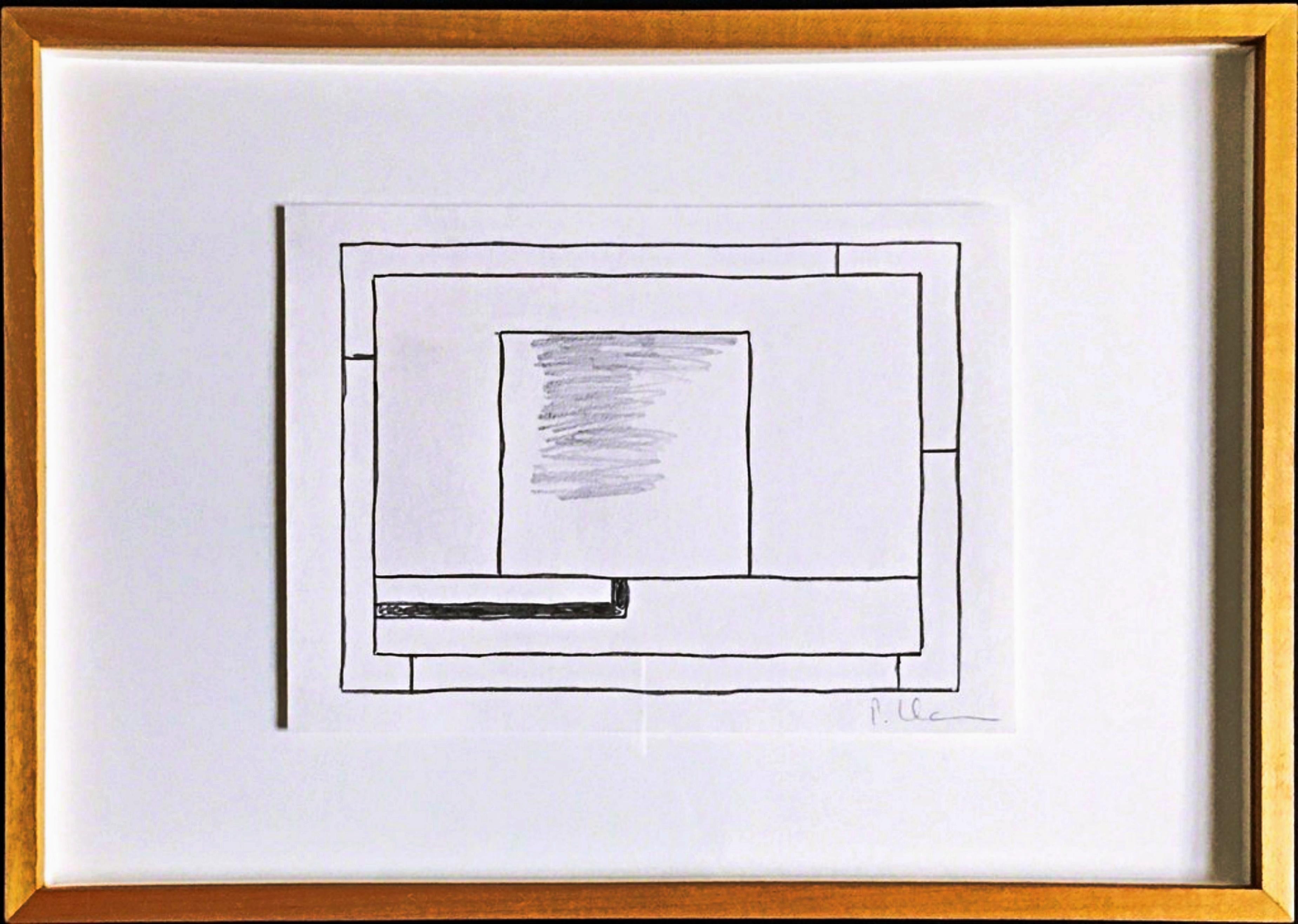
Geometrische Abstraktion (Einzigartige, signierte Graphitzeichnung, die einem Künstlerkollegen geschenkt wurde)
Von Peter Halley
Peter Halley
Geometrische Abstraktion ohne Titel, ca. 1990
Graphit und Tinte
Signiert in Graphitstift von Peter Halley; unten rechts vorne
Inklusive Rahmen: schwimmend und gerahmt in...
Kategorie
1990er, Geometrische Abstraktion, Abstrakte Zeichnungen und Aquarelle
Materialien
Tinte, Grafit
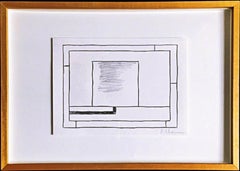
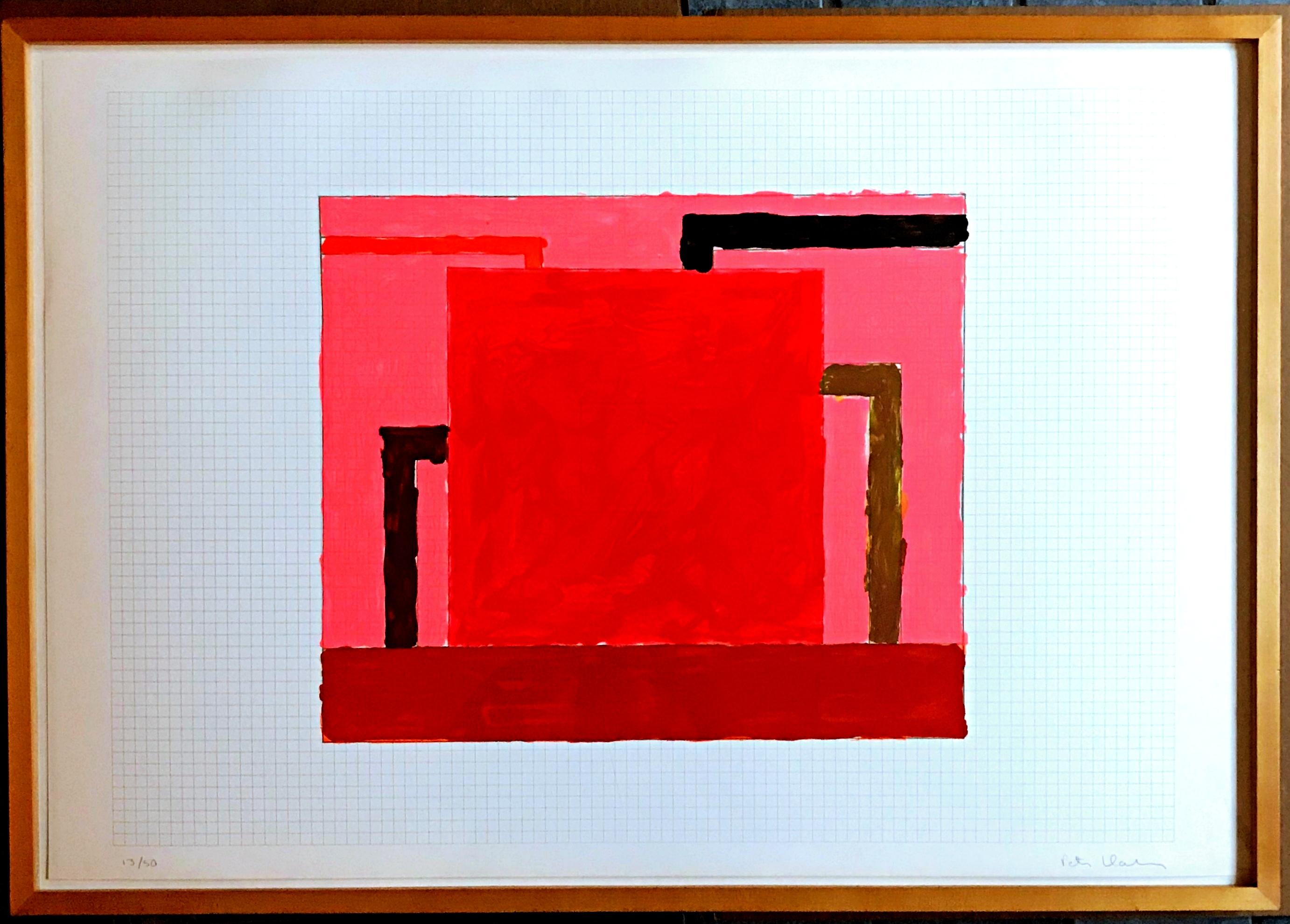
Peter Halley - CORE Geometric Abstraction Silkscreen, Lithograph Signed/N Framed
Von Peter Halley
Peter Halley
Core, 1991
Limited Edition Silkscreen with lithography on Coventry Rag paper.
Pencil signed and numbered 13/50 on the front
Publisher: Edition Schellmann
Pace Edit...
Kategorie
1990er, Geometrische Abstraktion, Abstrakte Drucke
Materialien
Lithografie, Siebdruck
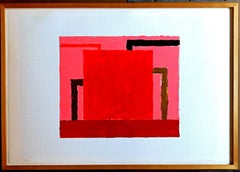
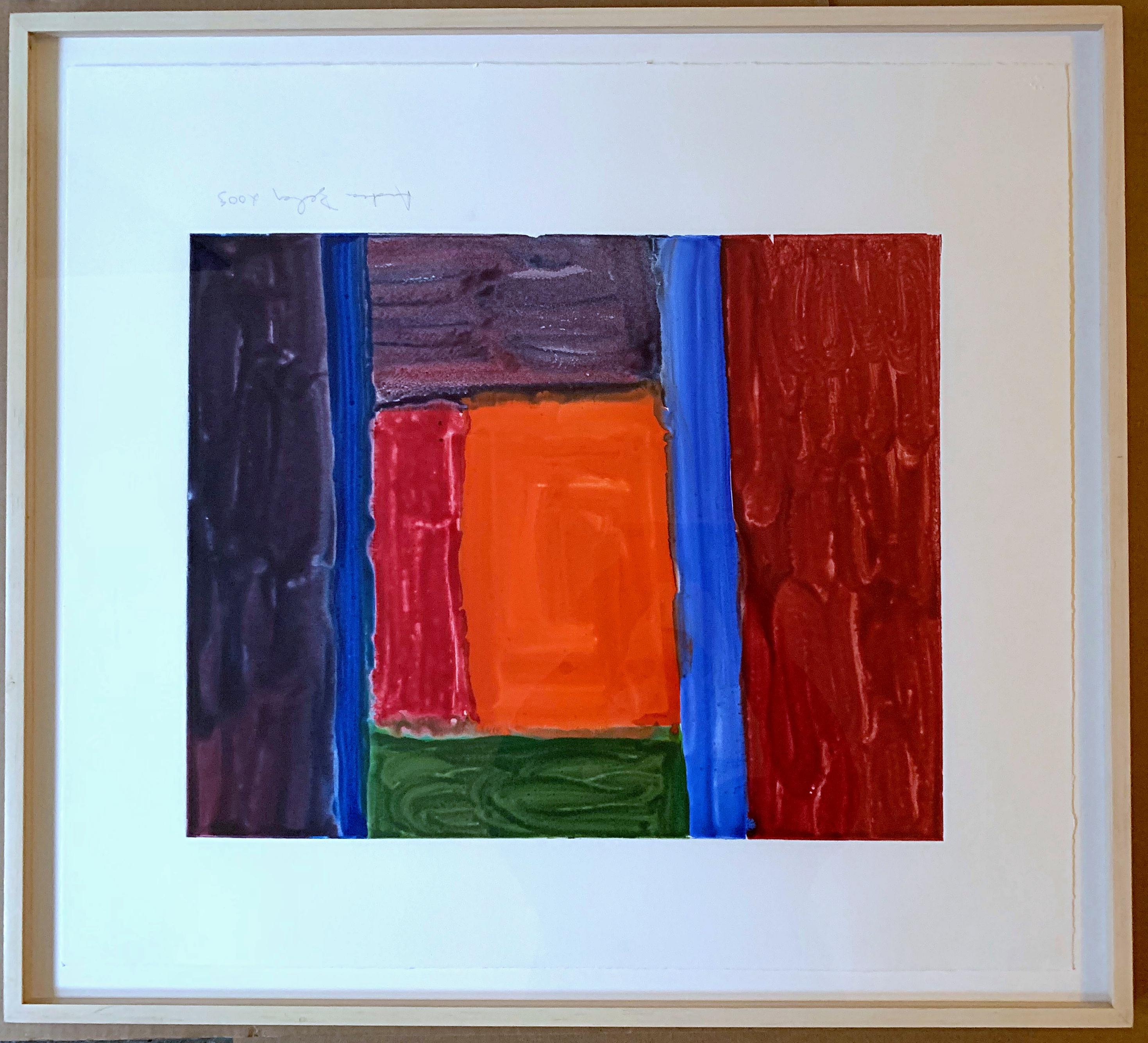
Untitled, aus der Lehman Brothers Art Collection, einzigartige signierte gerahmte Monotypie
Von Andrea Belag
Andrea Belag
Ohne Titel, aus der Lehman Brothers Art Collection, 2003
Aquarell-Monotypie auf Papier
Mit Bleistift signiert und datiert auf der Vorderseite
Gerahmt
Wunderschöne Aquare...
Kategorie
Anfang der 2000er, Abstrakt, Abstrakte Zeichnungen und Aquarelle
Materialien
Wasserfarbe, Monotyp, Grafit
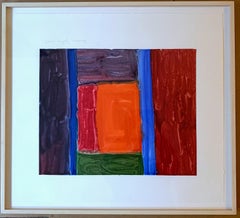
Geometrische Abstraktion ohne Titel – einzigartiges signiertes und beschriftetes Werk – gerahmt
Paul Pagk
Geometrische Abstraktion ohne Titel, 1989
Gouache und Aquarell auf Papier
Signiert, datiert und beschriftet "A Jacqueline".
Inklusive Rahmen
Ausgezeichnetes Unikat auf Papi...
Kategorie
1980er, Geometrische Abstraktion, Abstrakte Zeichnungen und Aquarelle
Materialien
Wasserfarbe, Gouache, Bleistift, Grafit

Das könnte Ihnen auch gefallen
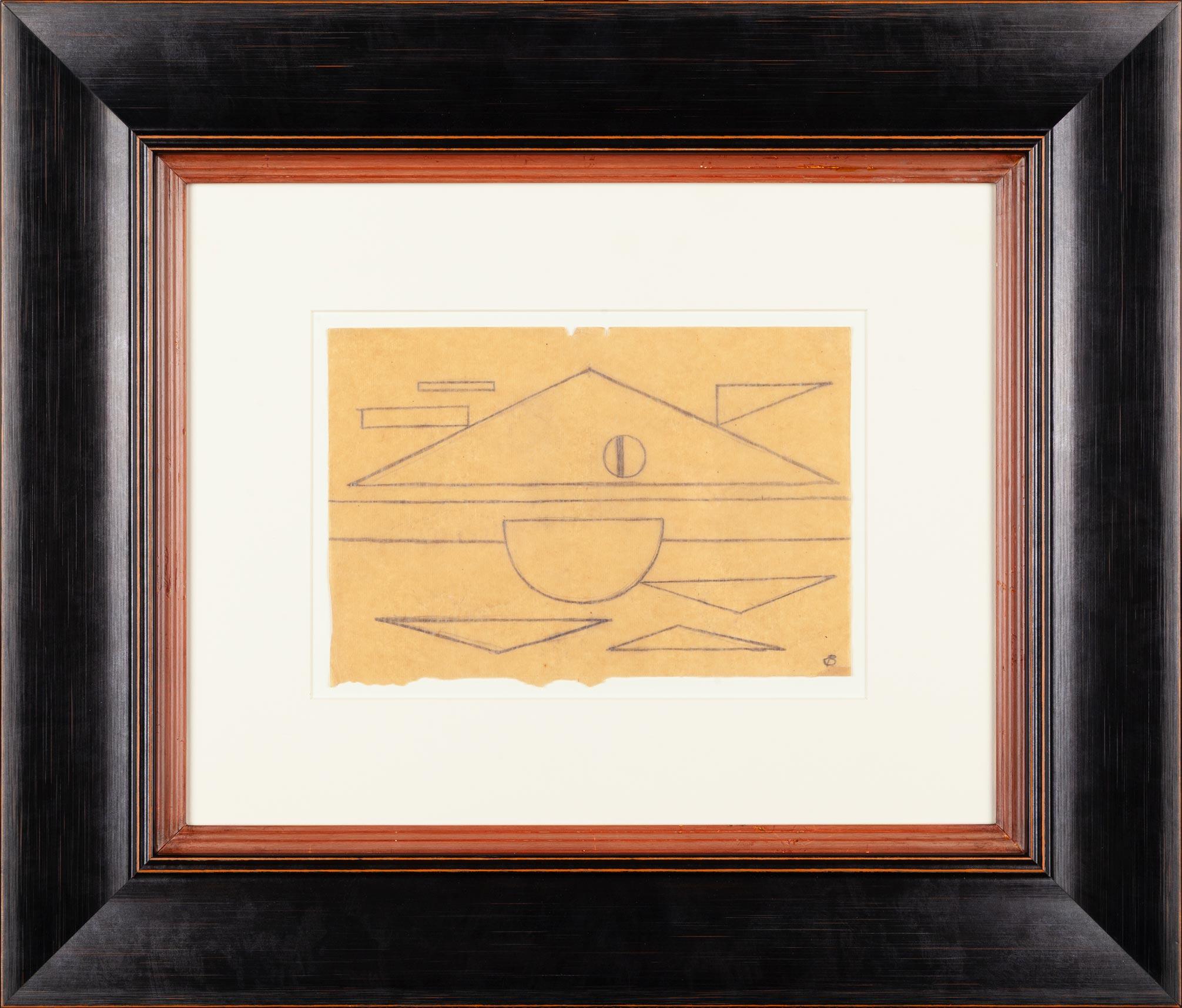
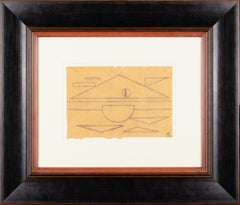
Ohne Titel (Gefängnis-Zeichnung)
Von Rudolf Bauer
Rudolf Bauer wurde 1889 in eine wohlhabende, aber nicht sehr wohlhabende Familie an der deutsch-polnischen Grenze geboren, die bald darauf nach Berlin zog. Obwohl er schon früh ein k...
Kategorie
Frühes 20. Jahrhundert, Geometrische Abstraktion, Abstrakte Zeichnungen ...
Materialien
Papier, Bleistift
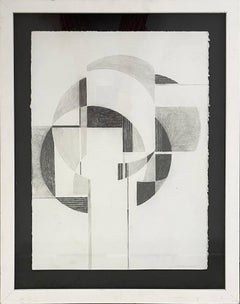
Oculus III (Framierte Zeichnung auf Papier der geometrischen Abstraktion in Schwarz-Weiß)
Von David Dew Bruner
Abstrakte geometrische Graphitzeichnung inspiriert durch den Mond
"Oculus III" von David Dew Bruner
2024
Graphit auf Papier
15 x 11 Zoll ungerahmt / 19 x 15 Zoll gerahmt
David Dew B...
Kategorie
2010er, Zeitgenössisch, Abstrakte Zeichnungen und Aquarelle
Materialien
Papier, Grafit
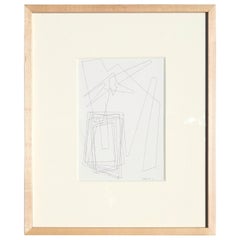
John Sennhauser Geometrische abstrakte Feder- und Tuschezeichnung, 1944
Von John Sennhauser
Original-Feder- und Tuschezeichnung des abstrakten New Yorker Künstlers John Sennhauser (1907-1978)
Signiert unten rechts "J. Sennhauser" und datiert '44.
Verso betitelt und datiert:...
Kategorie
Mitte des 20. Jahrhunderts, Abstrakte Zeichnungen und Aquarelle
Materialien
Papier
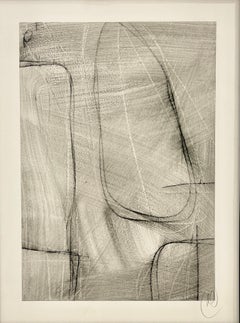
Geometrische Linienstudie C- 5 von Murray Duncan Mischtechnik auf Papier
Von Murray Duncan
Geometric Line Studies C- 5 ist eine Original-Mixed-Media-Arbeit auf Papier des Torontoer Künstlers Murray Duncan, Teil seiner fortlaufenden Erkundung von gestischer Geometrie, räuml...
Kategorie
21. Jahrhundert und zeitgenössisch, Geometrische Abstraktion, Abstrakte ...
Materialien
Farbe, Papier, Tinte, Bleistift
Oculus I (Framierte Zeichnung auf Papier der geometrischen Abstraktion in Schwarz-Weiß)
Von David Dew Bruner
Abstrakte geometrische Graphitzeichnung inspiriert durch den Mond
Oculus I von David Dew Bruner
2024
Graphit auf Papier
15 x 11 Zoll ungerahmt / 19 x 15 Zoll gerahmt
David Dew Brune...
Kategorie
2010er, Zeitgenössisch, Abstrakte Zeichnungen und Aquarelle
Materialien
Papier, Grafit
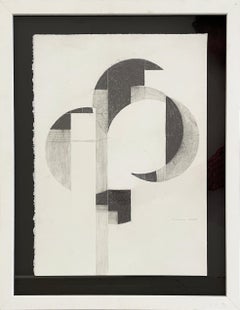
Geometrische Linienstudien C-2 von Murray Duncan Mischtechnik auf Papier
Von Murray Duncan
Geometric Line Studies C-2 ist eine Original-Mixed-Media-Arbeit auf Papier des Torontoer Künstlers Murray Duncan, die Teil seiner fortlaufenden Erkundung von gestischer Geometrie, rä...
Kategorie
21. Jahrhundert und zeitgenössisch, Geometrische Abstraktion, Abstrakte ...
Materialien
Farbe, Papier, Tinte, Bleistift