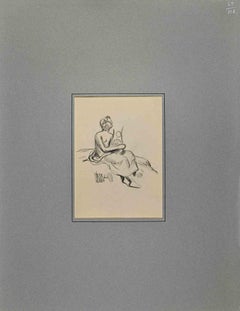
Objekte ähnlich wie Musician, The Lute Player, 1945 circa - Watercolour Painting by Duncan Grant
Möchten Sie mehr Bilder oder Videos?
Zusätzliche Bilder oder Videos von dem*der Anbieter*in anfordern
1 von 8
Duncan GrantMusician, The Lute Player, 1945 circa - Watercolour Painting by Duncan Grant1945, circa
1945, circa
12.885,78 €
Angaben zum Objekt
Estate of Paul Roche, the Artist's partner. Unsigned.
Duncan Grant was a British artist, designer and prominent member of the Bloomsbury Group.
His father was Bartle Grant, a major in the army, and much of his early childhood was spent in India and Burma. He was a grandson of John Peter Grant, 12th Laird of Rothiemurchus and sometime Lt-Governor of Bengal. Duncan was also the first cousin twice removed of John Grant, 13th Earl of Dysart.
Grant was born in Rothiemurchus, Scotland, though much of his early childhood was spent in India and Burma. After returning to Britain permanently, he was educated at Hillbrow School, Rugby, and St. Paul's School, London. Grant showed little enthusiasm for studying, enjoying only his art classes, so was encouraged by his art teacher and his aunt, Lady Strachey, who organised drawing lessons for him. Grant’s father wanted him to join the army and turn his back on his desire to become an artist, though was eventually persuaded to allow his son to attend Westminster School of Art in 1902. This was followed by study at the Slade School, in Italy and in Paris.
He was a cousin and, for some time, a lover of Lytton Strachey. Through the Stracheys, Duncan was introduced to the Bloomsbury Group, where the economist John Maynard Keynes became another of his lovers.
Grant is best known for his painting style, which developed following the French post-impressionist exhibitions mounted in London in 1910. These were organised in part by Roger Fry, another member of the Bloomsbury Group whom Grant often worked with and was influenced by. For portraits of Fry by the Group, see the National Portrait Gallery here.
After Fry founded the Omega Workshops design house in 1913, Grant became co-director with Vanessa Bell, who was then involved with Fry. Although Grant had always been actively homosexual, a relationship with Vanessa blossomed, which was both creative and personal, and he eventually moved in with her and her two sons by her husband Clive Bell. In 1916, in support of his application for recognition as a conscientious objector, Grant joined his new lover, David Garnett, in setting up as fruit farmers in Suffolk. Both their applications were initially unsuccessful, but eventually the Central Tribunal agreed to recognise them on condition of their finding more appropriate premises. Vanessa Bell found the house named Charleston near Firle in Sussex. Relationships with Clive Bell remained amicable, and Bell stayed with them for long periods fairly often - sometimes accompanied by his own mistress, Mary Hutchinson. Their relationships were briefly summarised by his biographer Frances Spalding in the Independent, Amanda Coe in the BBC's 'Life in Squares' and recounted in many books, including this by Derek Ryan and Stephen Ross. For a summary of the interiors of the House, see Emily Senior's 2020 piece in House and Garden.
In 2020, the Charleston Trust acquired a group of erotic drawings that Grant had gifted to his friend Edward le Bas on his death.
Grant's work is included in many public collections, including that of the Courtauld, London.
In 1935 Grant was selected along with nearly 30 other prominent British artists of the day to provide works of art for the RMS Queen Mary then being built in Scotland. Grant was commissioned to provide paintings and fabrics for the first class Main Lounge. In early 1936, after his work was installed in the Lounge, directors from the Cunard Line made a walk-through inspection of the ship. When they saw what Grant had created, they immediately rejected his works and ordered it removed.
Grant is quoted in the book The Mary: The Inevitable Ship, by Neil Potter and Jack Frost:
"I was not only to paint some large murals to go over the fireplaces, but arrange for the carpets, curtains, textiles, all of which were to be chosen or designed by me. After my initial designs had been passed by the committee I worked on the actual designs for four months. I was then told the committee objected to the scale of the figures on the panels. I consented to alter these, and although it entailed considerable changes, I got a written assurance that I should not be asked to make further alterations. I carried on, and from that time my work was seen constantly by the Company's (Cunard's) representative.
When it was all ready I sent the panels to the ship to put the finishing touches to them when hanging. A few days later I received a visit from the Company's man, who told me that the Chairman had, on his own authority, turned down the panels, refusing to give any reason.
From then on, nothing went right. My carpet designs were rejected and my textiles were not required. The whole thing had taken me about a year..... I never got any reason for the rejection of my work. The company simply said they were not suitable, paid my fee, and that was that."
- Schöpfer*in:Duncan Grant (1885-1978)
- Entstehungsjahr:1945, circa
- Maße:Höhe: 49 cm (19,3 in)Breite: 31 cm (12,21 in)
- Medium:
- Zeitalter:
- Zustand:
- Galeriestandort:Kingsclere, GB
- Referenznummer:1stDibs: LU2718215981542
Duncan Grant
Duncan Grant wurde im Jahr 1885 im Vereinigten Königreich geboren. Er war ein prominentes Mitglied der Bloomsbury-Gruppe. Sein Malstil entwickelte sich im Gefolge des französischen Postimpressionismus. Grant arbeitete häufig mit Roger Fry zusammen und war zusammen mit Vanessa Bell Leiter der Omega Workshops. Obwohl er aktiv homosexuell war, entwickelte sich seine Beziehung zu Vanessa Bell. Um seinen Antrag auf Anerkennung als Kriegsdienstverweigerer zu unterstützen, ließen sich Grant und sein neuer Liebhaber David Garner 1916 als Obstbauern in Suffolk nieder.
Anbieterinformationen
Noch keine Bewertungen
Geprüfte*r Anbieter*in
Jede*r Anbieter*in erfüllt strenge Standards bezüglich Echtheit und Zuverlässigkeit
Gründungsjahr 2010
1stDibs-Anbieter*in seit 2024
44 Verkäufe auf 1stDibs
Typische Antwortzeit: 5 Stunde
- VersandAngebot wird abgerufen …Versand von: Kingsclere, Vereinigtes Königreich
- Rückgabebedingungen
Einige Inhalte dieser Seite wurden automatisch übersetzt. Daher kann 1stDibs nicht die Richtigkeit der Übersetzungen garantieren. Englisch ist die Standardsprache dieser Website.
Mehr von diesem*dieser Anbieter*in
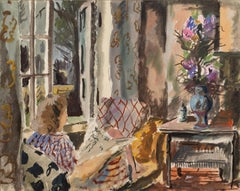
Alle anzeigenElizabeth Reading, um 1940 - 20. Jahrhundert Innenraum-Aquarellmalerei
Von Rowland Suddaby
Rowland Suddaby war Maler und Illustrator, vor allem von Landschaften. Suddaby wurde in Kimberworth, Yorkshire, geboren und studierte ab 1926 am Sheffield College of Art, wo er ein S...
Kategorie
Mitte des 20. Jahrhunderts, Interieurzeichnungen und -aquarelle
Materialien
Wasserfarbe, Gouache
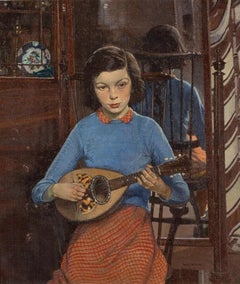
Interieur mit jungem Mädchen von Ernest Herbert Whydale, Ölporträt, frühes 20. Jahrhundert
Von Ernest Herbert Whydale
Interieur mit kleinem Mädchen
Kategorie
20. Jahrhundert, Gemälde
Materialien
Leinwand, Öl
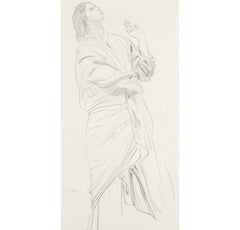
Dorelia looking Up, Bleistift auf Papier Zeichnung von Augustus John
Von Augustus John
Dorelia schaut nach oben, Bleistift auf Papier Zeichnung von Augustus John 1878-1961
Zusätzliche Informationen:
Medium: Bleistift auf Papier
39.4 x 20.3 cm
15 1/2 x 8 in
Unterzeichn...
Kategorie
20. Jahrhundert, Porträtzeichnungen und - aquarelle
Materialien
Bleistift
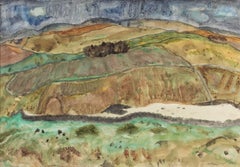
Auf der Meldons Road, Aquarell von William George Gillies, um 1940
Auf der Meldons Road, Aquarell von William George Gillies, ca. 1940er Jahre
Zusätzliche Informationen:
Medium: Aquarell
41,5 x 59 cm
16 3/8 x 23 1/4...
Kategorie
20. Jahrhundert, Landschaftszeichnungen und -aquarelle
Materialien
Wasserfarbe
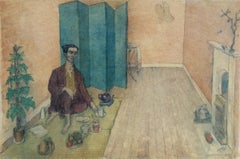
Student Life, The Artist-Orientalist Having Tea, Chelsea, Gemälde, 1941
Student Life, The Artist-Orientalist Having Tea, Chelsea, Gemälde, 1941
Zusätzliche Informationen:
Medium: Aquarell über Feder und Tinte
10 x 15 in
25.4 x 38.1 cm
Signiert und datie...
Kategorie
20. Jahrhundert, Figurative Zeichnungen und Aquarelle
Materialien
Wasserfarbe
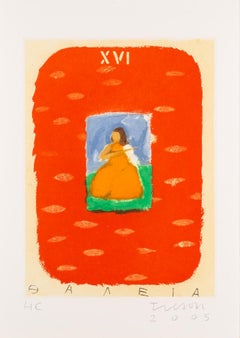
Thalia, von den Neun Musen - Rot, Orange + Weiß Aquatinta-Druck mit Figur
Von Joe Tilson
Joe Tilson 1928-2023
Thalia, aus "Die neun Musen", 2005
Aquatinta
50 x 35.5 cm
19 3/4 x 14 in
signiert, beschriftet und datiert mit Bleistift
Nach seinem Dienst in der Royal Air For...
Kategorie
21. Jahrhundert und zeitgenössisch, Mehr Drucke
Materialien
Aquatinta
Das könnte Ihnen auch gefallen
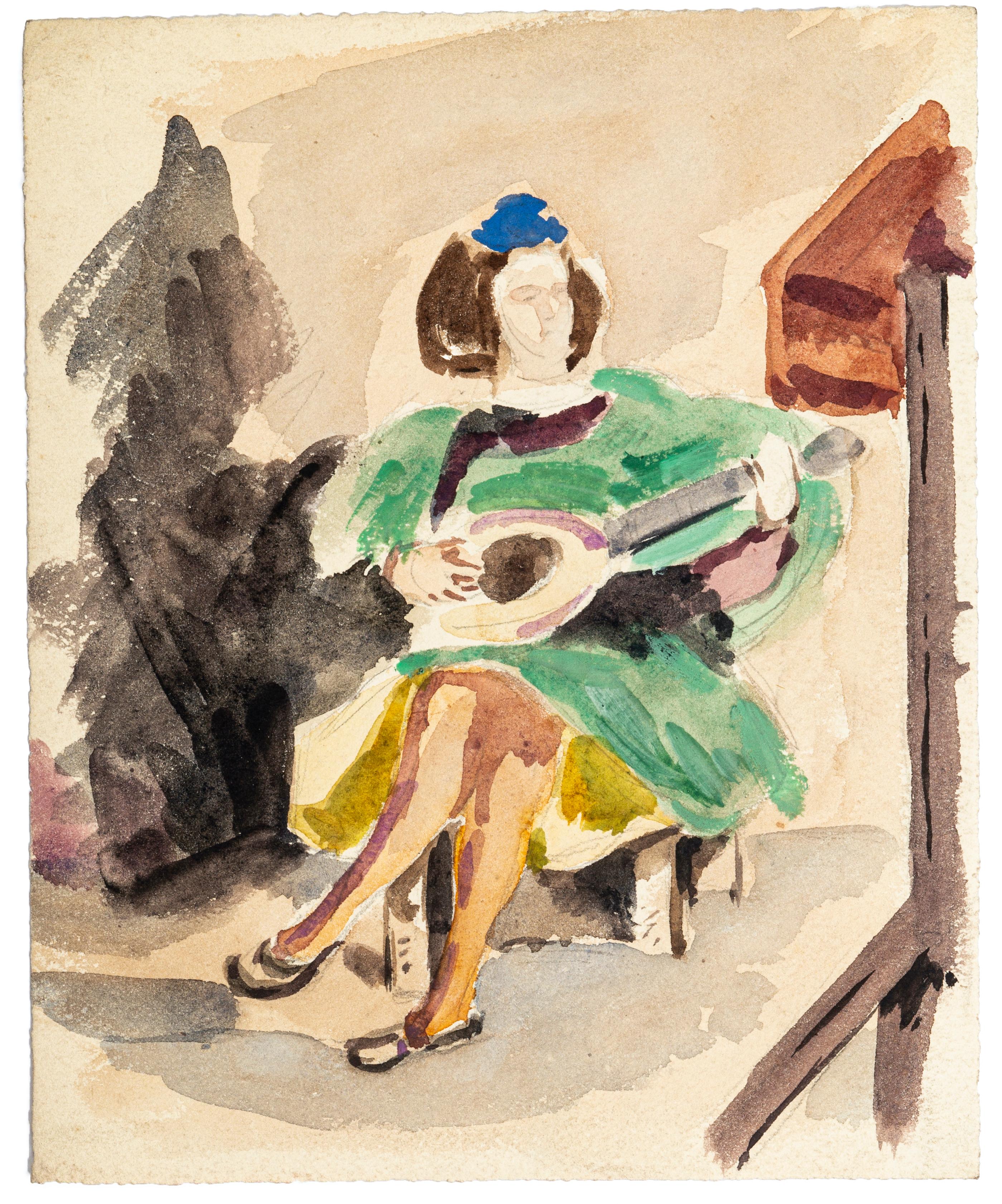
La Guitariste - Chinesische Tinte und Aquarellzeichnung von Jean Chapin - Anfang 1900
Von Jean Chapin
La Guitariste ist ein farbiges Aquarell von Jean Chapin aus der ersten Hälfte des 20. Jahrhunderts.
Das Kunstwerk stellt eine Gitarre spielende Frau dar.
Gute Bedingungen.
Jean ...
Kategorie
Frühes 20. Jahrhundert, Figurative Zeichnungen und Aquarelle
Materialien
Tinte, Wasserfarbe

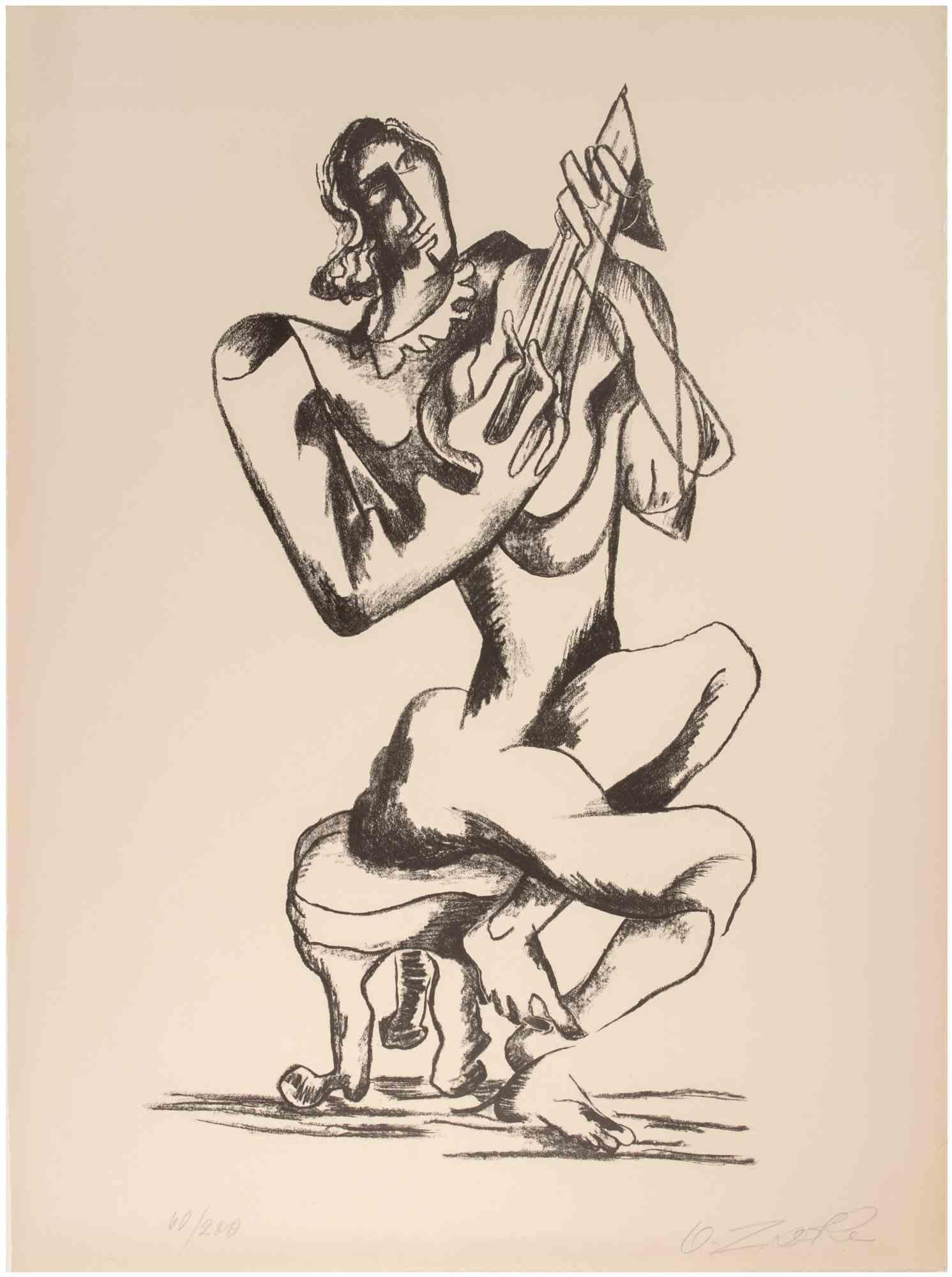
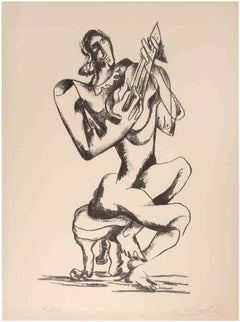
Lutespieler – Lithographie von Ossip Zadkine – Mitte des 20. Jahrhunderts
Von Ossip Zadkine
Lute Player ist ein zeitgenössisches Kunstwerk, das von Ossip Zadkine realisiert wurde.
Lithographie auf BFK Rives, mit Wasserzeichen und Trockenstempel 'Bodensee Verlag'.
Inklusiv...
Kategorie
Mitte des 20. Jahrhunderts, Kubismus, Mehr Drucke
Materialien
Lithografie
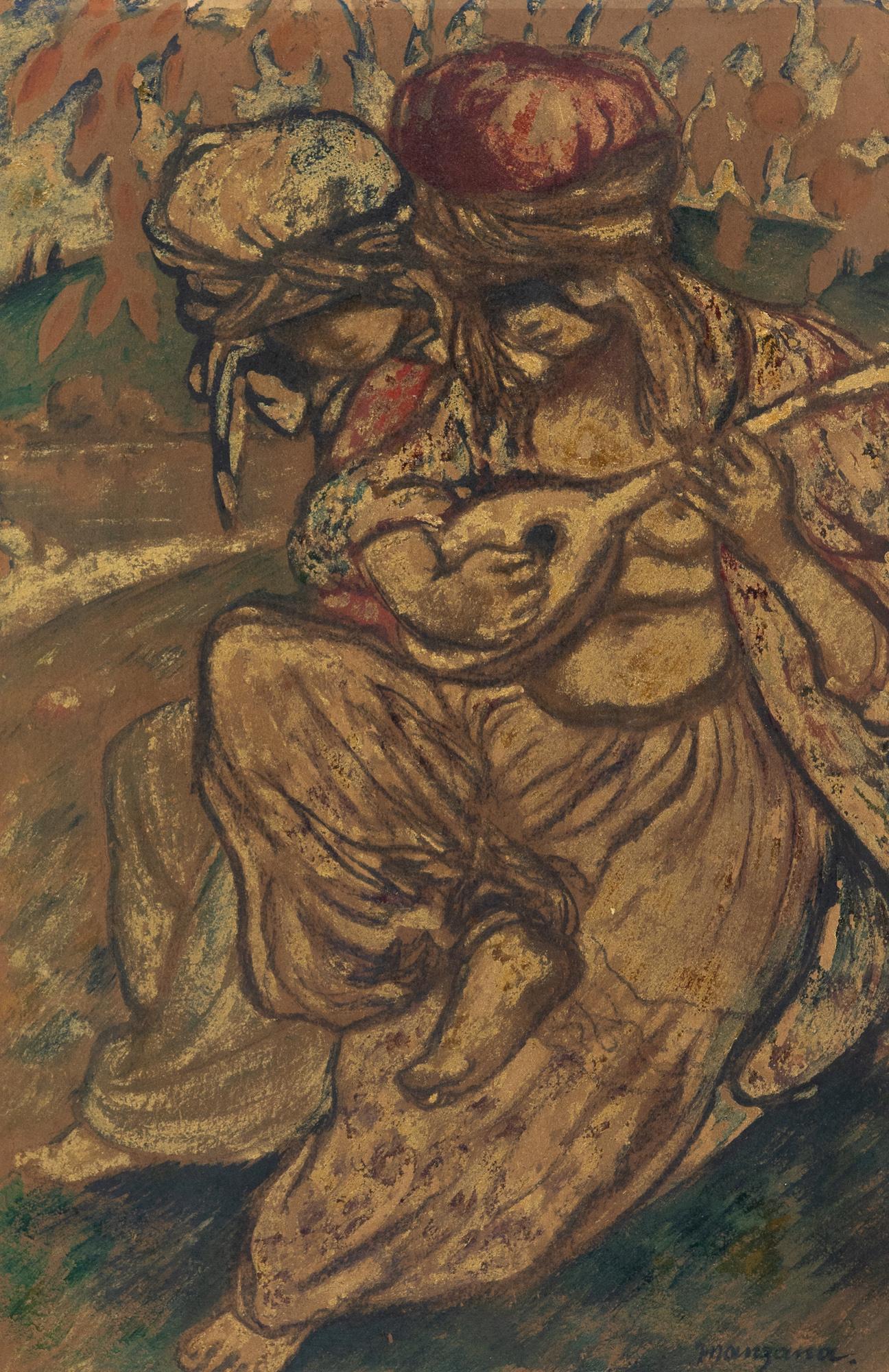
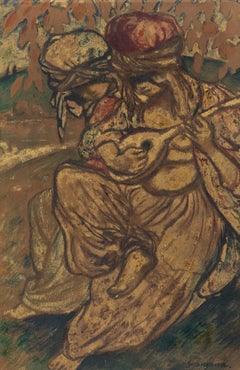
Femme à la mandoline von Georges Manzana Pissarro - Mischtechnik auf Papier
Von Georges Henri Manzana Pissarro
Femme à la mandoline von Georges Manzana Pissarro (1871-1961)
Gemischte Medien auf Papier
48 x 31 cm (18 ⁷/₈ x 12 ¹/₄ Zoll)
Signiert unten rechts, manzana.
Ausgeführt um 1910
Dieses...
Kategorie
1910er, Post-Impressionismus, Mixed Media
Materialien
Papier, Mixed Media
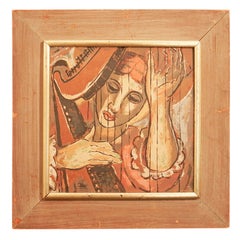
„Harpist“, Serigrafie von Lena Gurr, 1930er-Jahre
Von Lena Gurr
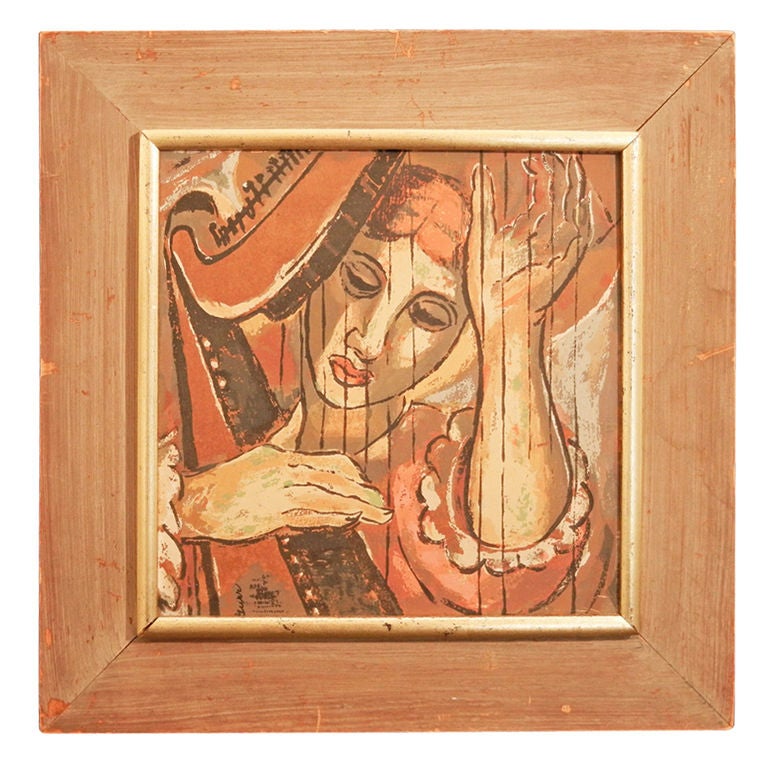
Diese wunderschön gerahmte und handgefertigte Ansicht einer Harfenspielerin, die durch die Saiten ihres Instruments gesehen wird, wurde von der New Yorker Künstlerin Lena Gurr gemalt...
Kategorie
Vintage, 1930er, amerikanisch, Gemälde
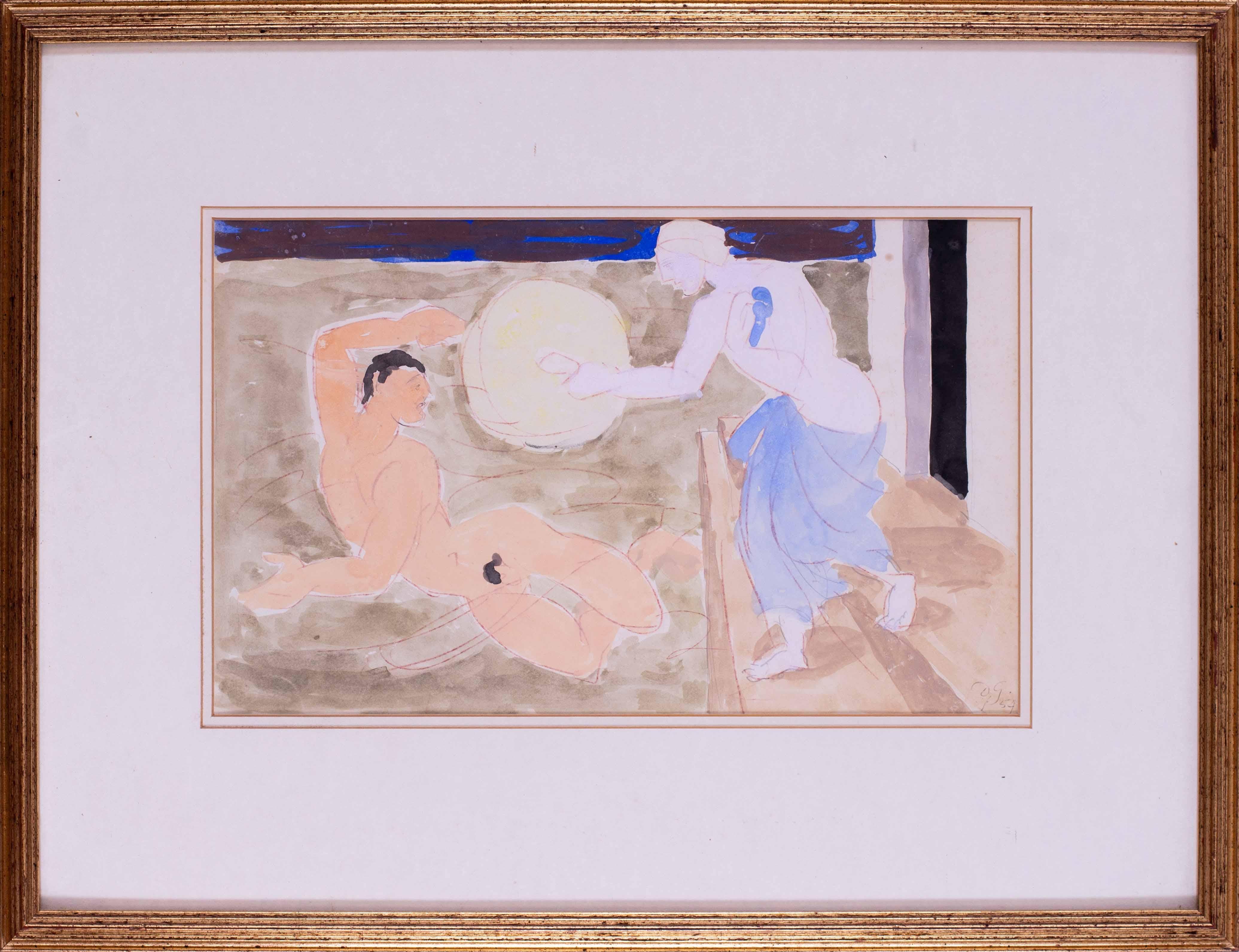
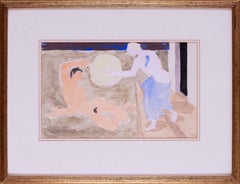
Duncan Grant Original 1954 Aquarell „Hero und Leander“, signiert mit Initialen
Von Duncan Grant
Duncan Grant (Brite, 1885 - 1978)
Held und Leander, 1954
Aquarell und Gouache mit Kreide
Signiert mit Initialen und datiert 'DG. / 54" (rechts unten)
8.3/4 x 13.7/8 in. (22.3 x 35.3 ...
Kategorie
20. Jahrhundert, Moderne, Figurative Zeichnungen und Aquarelle
Materialien
Papier, Buntstift, Wasserfarbe, Gouache
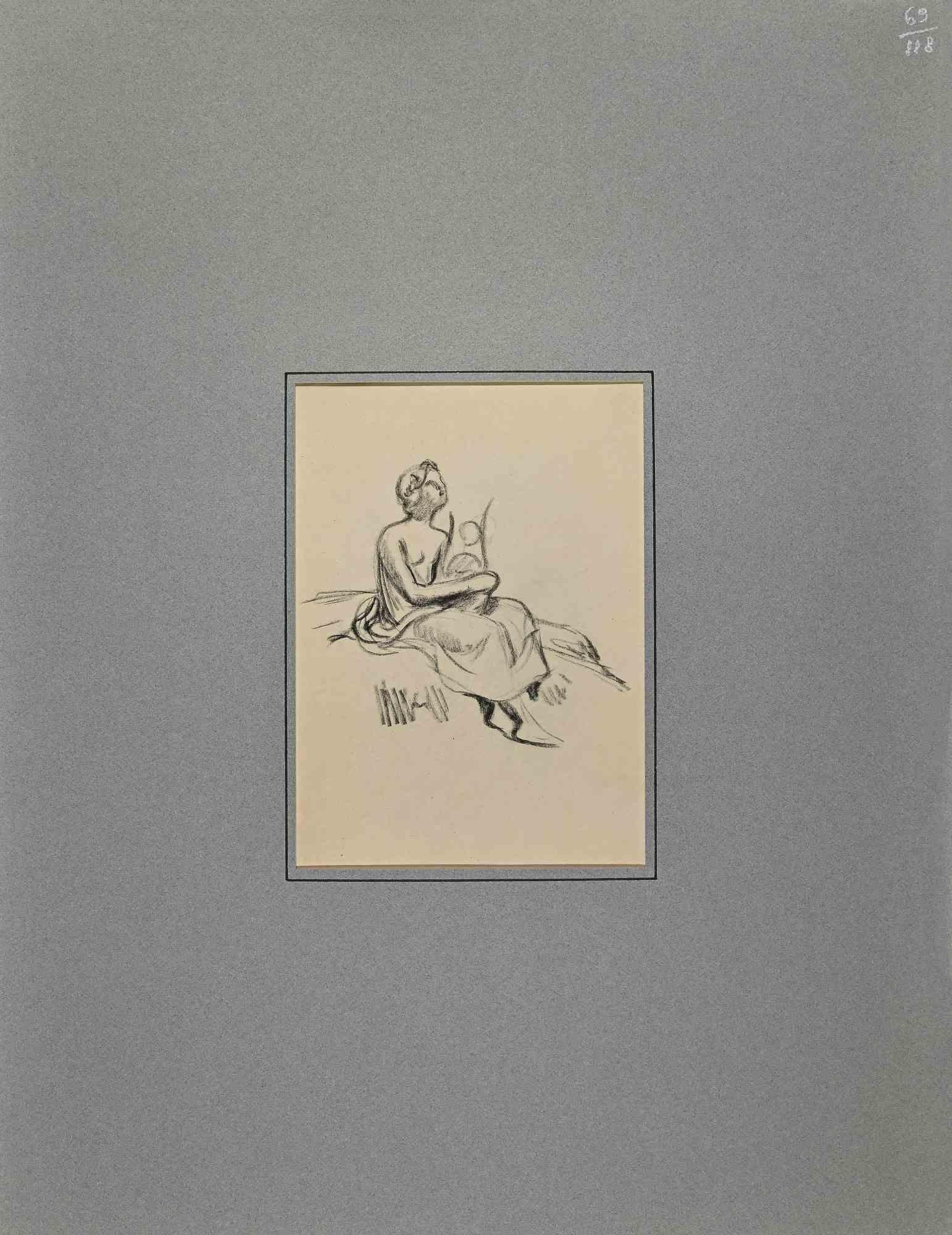
Harfspieler – Zeichnung – Mitte des 20. Jahrhunderts
Harfenspieler ist eine Zeichnung in Kohle auf Papier, die Mitte des 20. Jahrhunderts entstand.
Gute Bedingungen.
Das Kunstwerk wird mit weichen Strichen in einer ausgewogenen Kompo...
Kategorie
Mitte des 20. Jahrhunderts, Art déco, Figurative Zeichnungen und Aquarelle
Materialien
Holzkohle