Objekte ähnlich wie Petite Han Dynasty Bronze Mirror, c. 200 BC
Möchten Sie mehr Bilder oder Videos?
Zusätzliche Bilder oder Videos von dem*der Anbieter*in anfordern
1 von 6
Petite Han Dynasty Bronze Mirror, c. 200 BC
418,02 €
Angaben zum Objekt
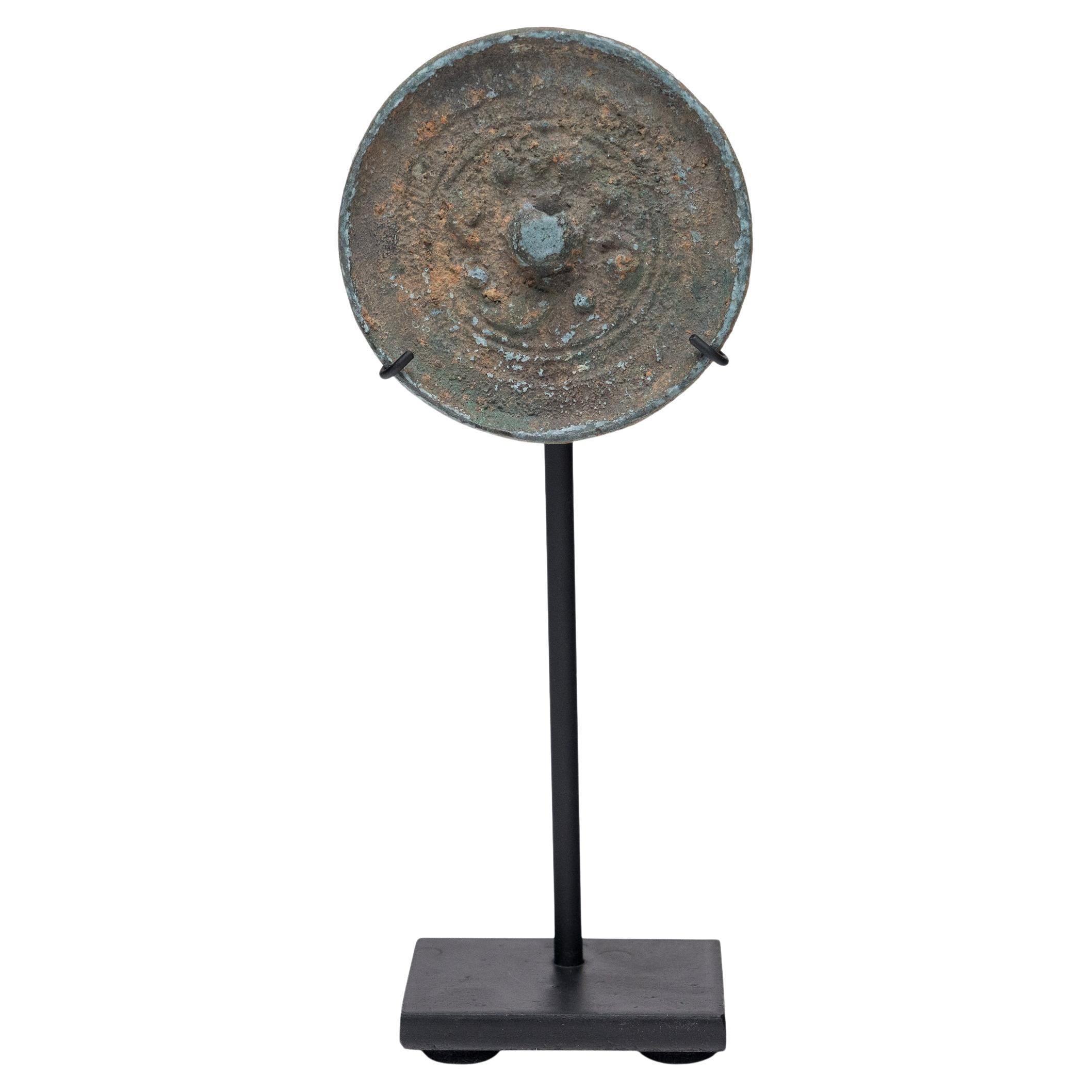
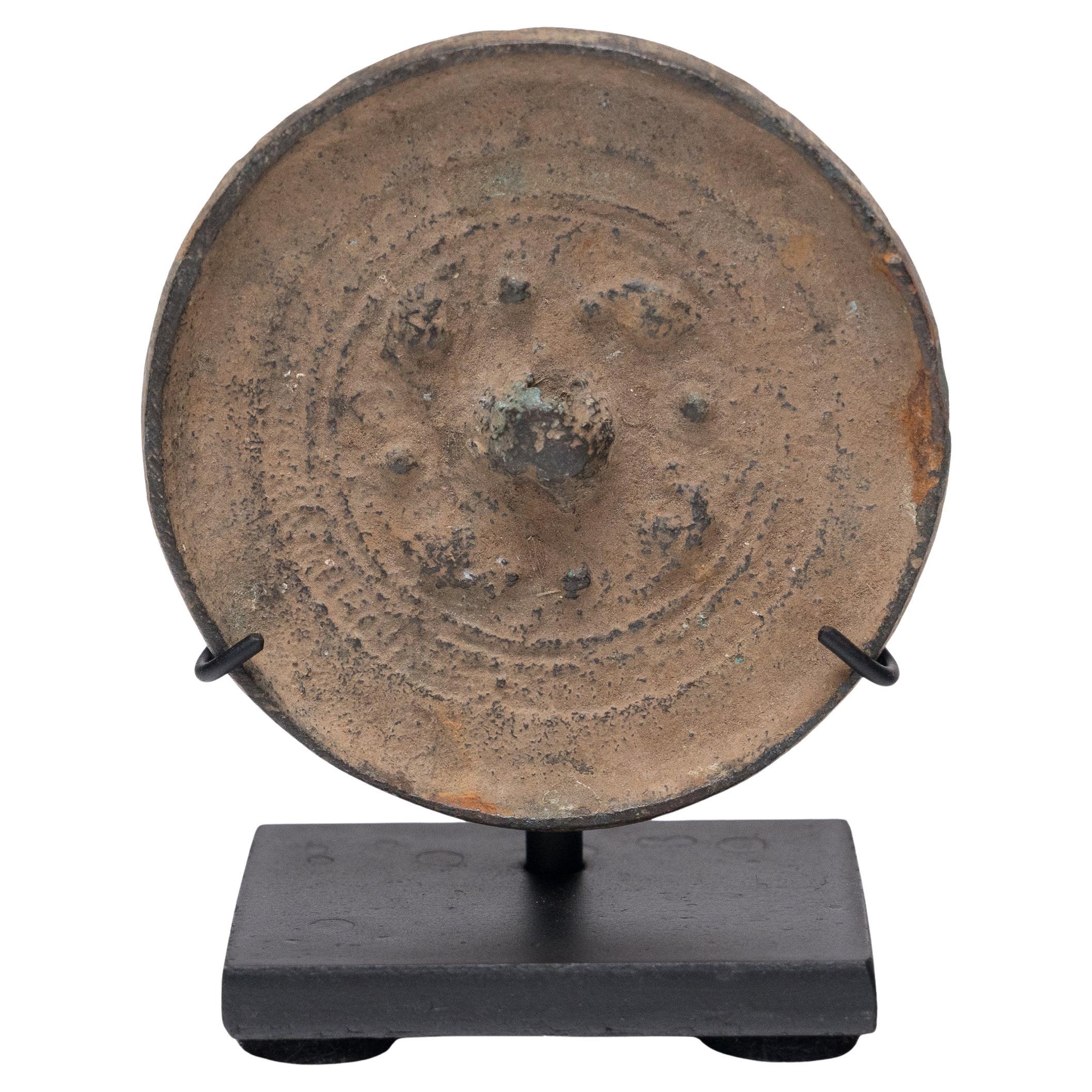
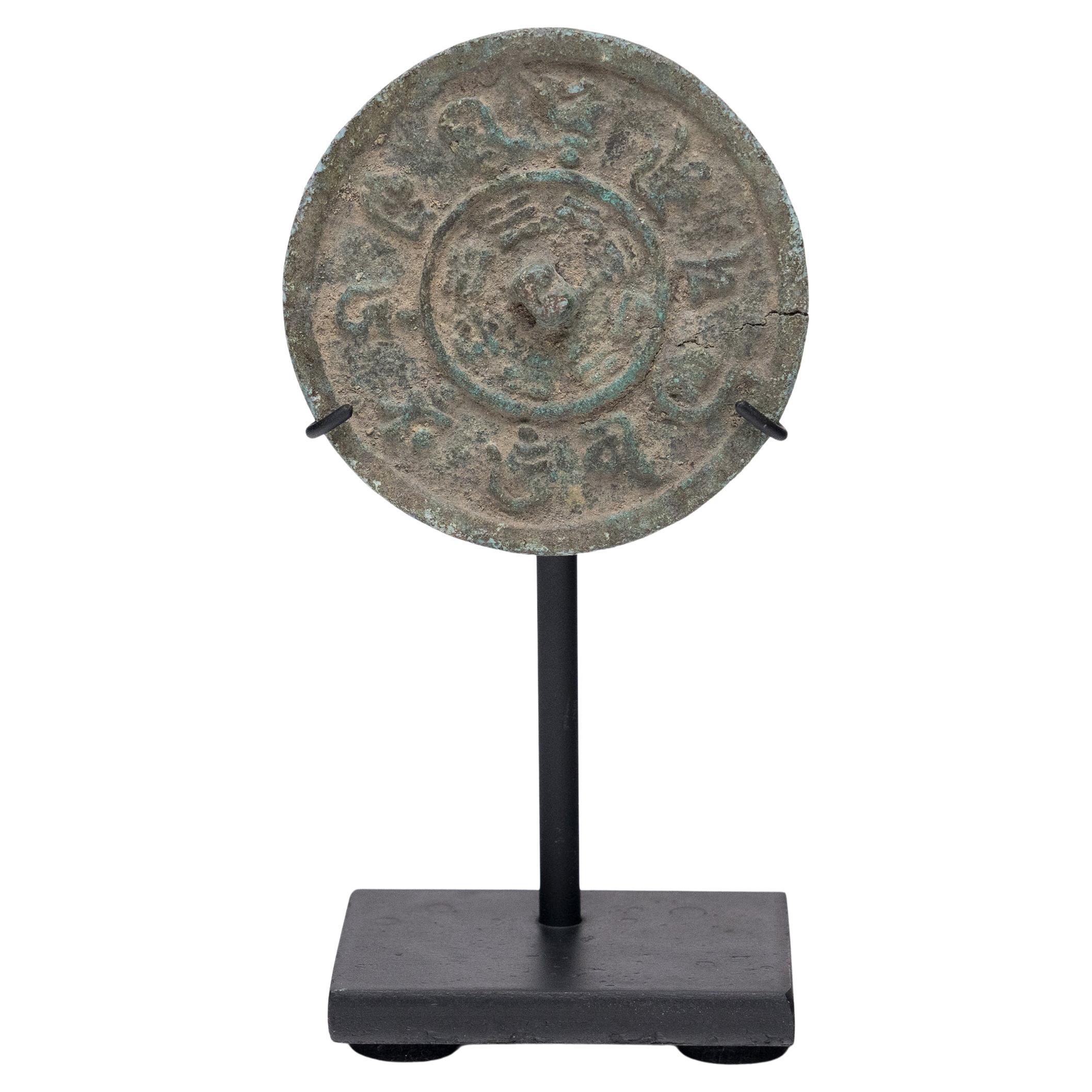
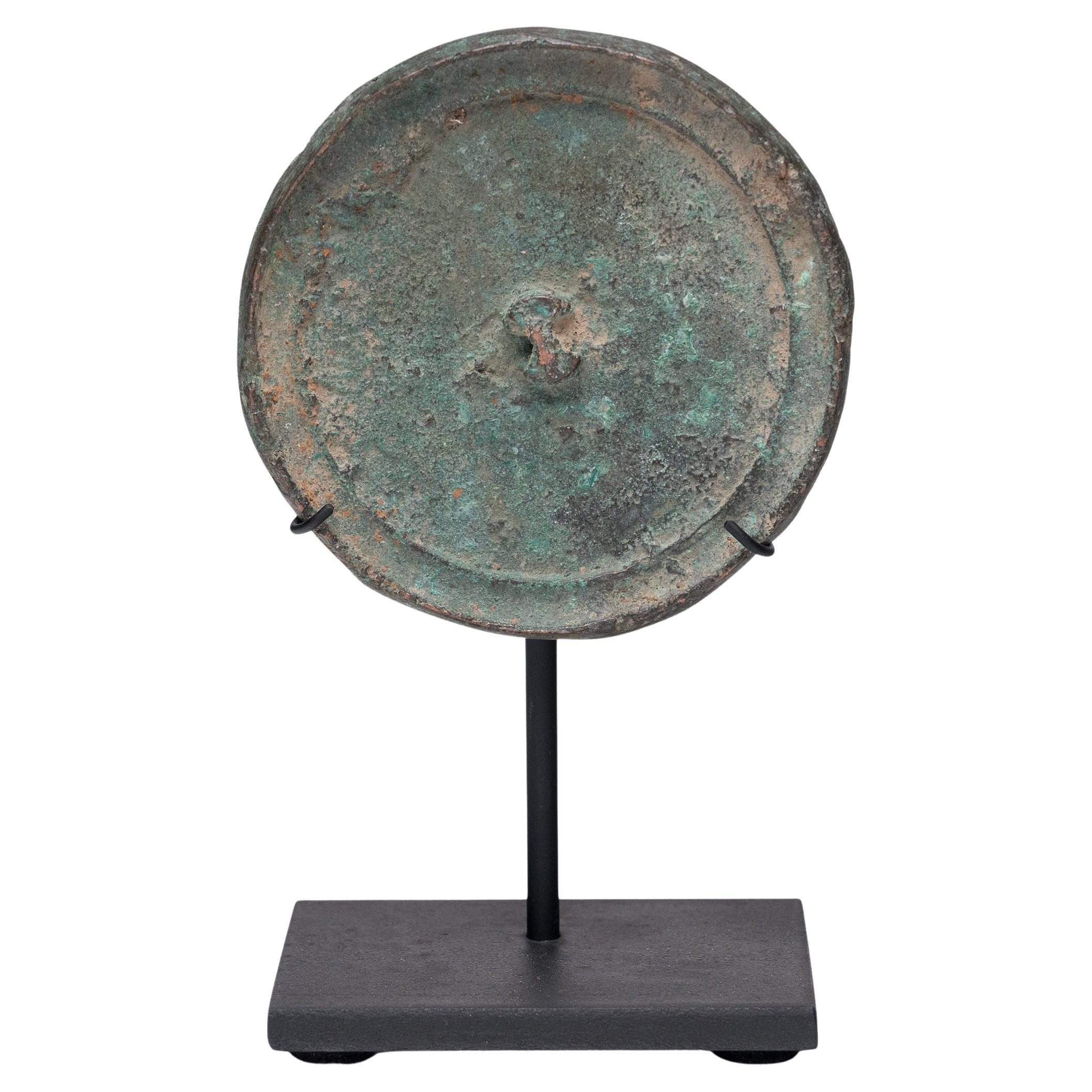
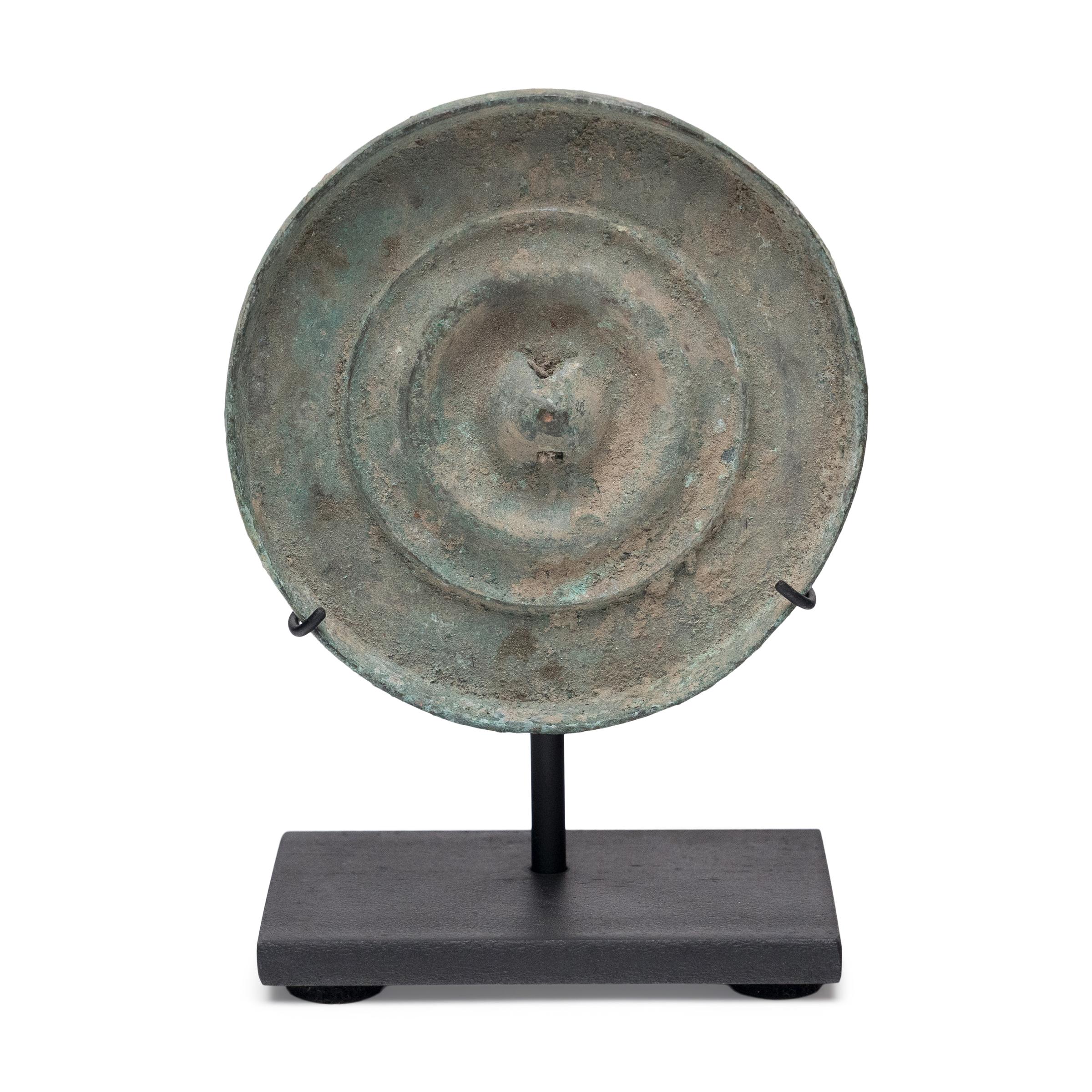
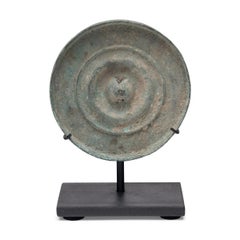
Cloaked in allover verdigris oxidization, this petite Chinese bronze mirror has the simple beauty and undeniable texture of an ancient object. Though an exact date is unknown, the mirror's round form and relief decoration suggest it was cast during the early Han dynasty (206 BC - AD 220). Like the jade bi disc, the circular form of early bronze mirrors were closely associated with the sun, the moon and the spiritual realm.
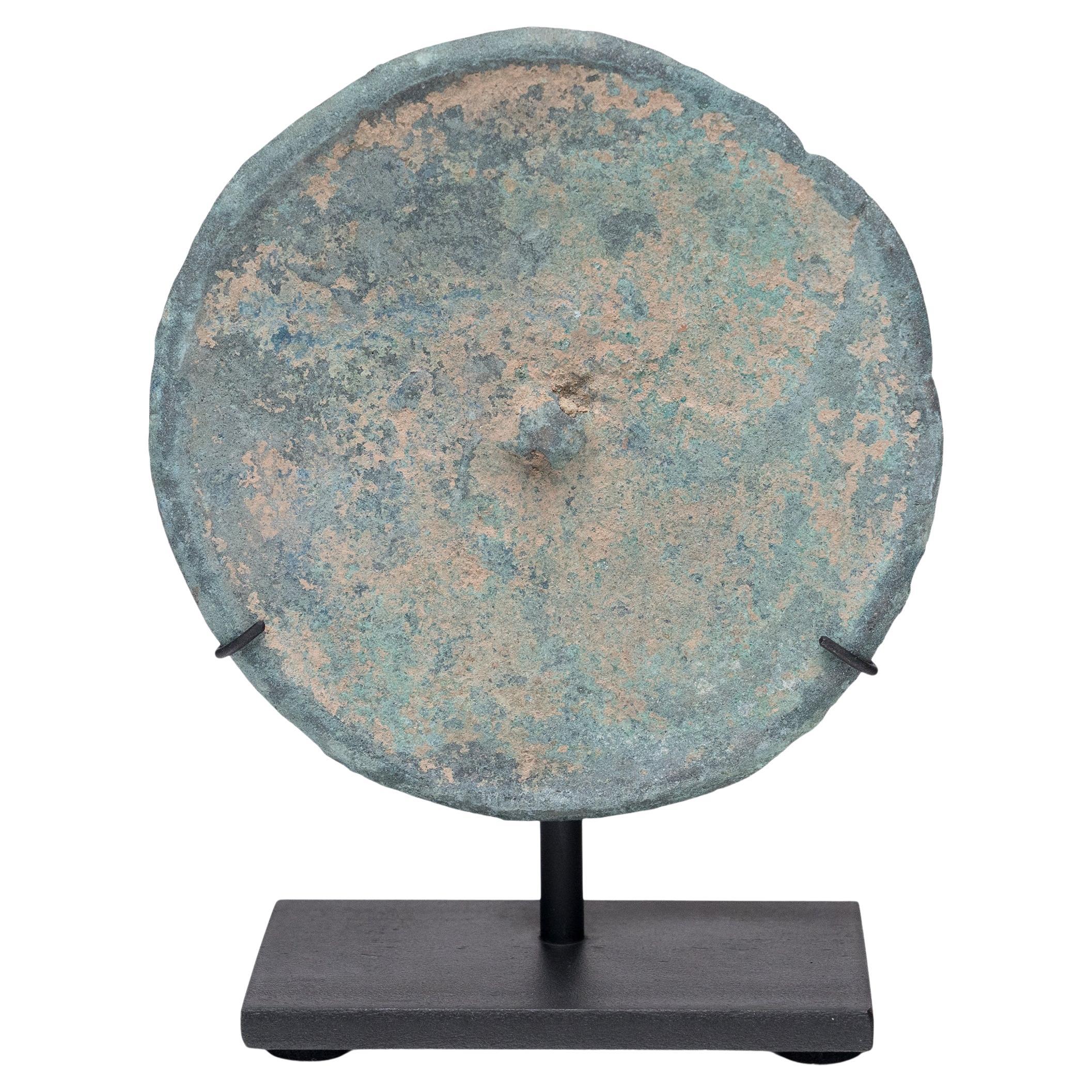
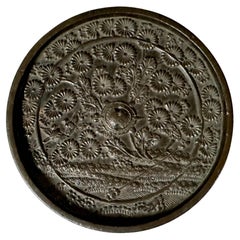
The back of this small mirror is adorned with concentric bands of low relief decoration, the innermost circle patterned with raised dots and small birds around an ingot-shaped knob. Radiating outwards are thin borders, a band of hachured lines and a smooth edge that curves upwards to the rim. Left flat and unadorned, the opposite side would have been highly polished and coated with mercury or silver for a bright, reflective surface.
_ _ _ _ _
Before the broadened popularity of polished metal mirrors, many could only view their reflection by filling a basin with still water. With advancements in metalworking during the Warring States period (475 BC - 221 BC), cast bronze mirrors emerged in ancient China as daily tools reserved for the aristocratic class.
Besides their functional purpose, early mirrors were closely associated with the sun and moon and therefore imbued with special cosmological and spiritual meaning. Objects of art made from valuable material, such mirrors were commonly bestowed as gifts or dowry offerings and passed down within families as cherished heirlooms.
Additional Dimensions:
Diameter of Mirror: 2.5"
Base: 2"W x 1.5"D
- Maße:Höhe: 10,16 cm (4 in)Breite: 6,99 cm (2,75 in)Tiefe: 3,81 cm (1,5 in)
- Stil:Han (Aus dem Zeitalter)
- Materialien und Methoden:Bronze,Gegossen
- Herkunftsort:
- Zeitalter:
- Herstellungsjahr:c. 200 BC
- Zustand:Abnutzung dem Alter und der Nutzung entsprechend. Geringfügiges Verblassen.
- Anbieterstandort:Chicago, IL
- Referenznummer:Anbieter*in: YUN0004A1stDibs: LU820048009362
Anbieterinformationen
5,0
Platin-Anbieter*in
Premium-Anbieter*innen mit einer Bewertung über 4,7 und 24 Stunden Reaktionszeit
Gründungsjahr 1997
1stDibs-Anbieter*in seit 2006
1.750 Verkäufe auf 1stDibs
Typische Antwortzeit: 2 Stunde
- VersandAngebot wird abgerufen …Versand von: Chicago, IL
- Rückgabebedingungen
Einige Inhalte dieser Seite wurden automatisch übersetzt. Daher kann 1stDibs nicht die Richtigkeit der Übersetzungen garantieren. Englisch ist die Standardsprache dieser Website.
Mehr von diesem*dieser Anbieter*in
Alle anzeigenPetite Han Dynasty Bronze Mirror, c. 200 BC
This petite Chinese bronze mirror has the simple beauty and undeniable texture of an ancient object. Though an exact date is unknown, the mirror's round form and relief decoration s...
Kategorie
Antik, 15. Jahrhundert und früher, Chinesisch, Han, Metallarbeit
Materialien
Bronze
Petite Han Dynasty Bronze Mirror, c. 200 BC
This petite Chinese bronze mirror has the simple beauty and undeniable texture of an ancient object. Though an exact date is unknown, the mirror's round form and relief decoration su...
Kategorie
Antik, 15. Jahrhundert und früher, Chinesisch, Han, Metallarbeit
Materialien
Bronze
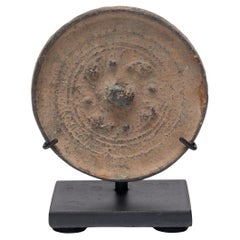
Chinese Han Dynasty Bronze Mirror, c. 200 BC
Cloaked in allover verdigris oxidization, this Chinese bronze mirror has the simple beauty and undeniable texture of an ancient object. Though an exact date is unknown, the mirror's ...
Kategorie
Antik, 15. Jahrhundert und früher, Chinesisch, Han, Metallarbeit
Materialien
Bronze
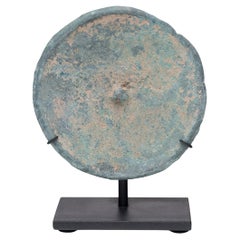
Petite Tang Bronze Mirror with I-Ching, c. 800 AD
Cloaked in allover verdigris oxidization, this petite Chinese bronze mirror has the simple beauty and undeniable texture of an ancient object. Though an exact date is unknown, the m...
Kategorie
Antik, 15. Jahrhundert und früher, Chinesisch, Tang-Dynastie, Metallarbeit
Materialien
Bronze
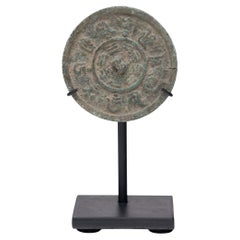
Petite Ming Bronze Mirror with Ingot Knob, c. 1400
Cloaked in rich patina and verdigris oxidization, this petite Chinese bronze mirror has the simple beauty and undeniable texture of an ancient object. Though an exact date is unknown...
Kategorie
Antik, 15. Jahrhundert und früher, Chinesisch, Ming-Dynastie, Metallarbeit
Materialien
Bronze
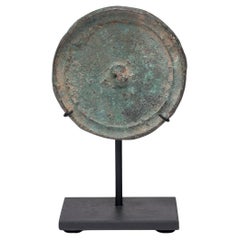
Petite Tang Bronze Mirror, c. 900 AD
Cloaked in allover verdigris oxidization, this petite Chinese bronze mirror has the simple beauty and undeniable texture of an ancient object. Though an exact date is unknown, the mi...
Kategorie
Antik, 15. Jahrhundert und früher, Chinesisch, Tang-Dynastie, Metallarbeit
Materialien
Bronze
Das könnte Ihnen auch gefallen
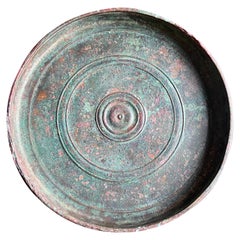
Hochdekorierter antiker hellenistischer Bronzespiegel mit Deckel aus der Antike
Hochdekorierter antiker römischer runder Bronzehandspiegel in sehr gutem Zustand mit schöner Patina ohne Abdeckung.
Möglicherweise war daran ein Gebäude angeschlossen, aber jetzt sin...
Kategorie
Antik, 15. Jahrhundert und früher, Europäisch, Antiquitäten
Materialien
Bronze
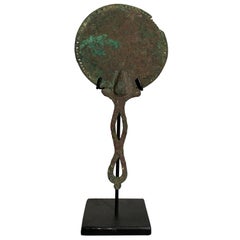
Römischer Bronze-Handspiegel mit schöner Patina:: ca. 1
Schlichter und eleganter römischer Handspiegel aus Bronze, späte Republik, ca. 1. Jahrhundert, Italien.
Der Bronzespiegel in einfacher Form. Das runde Gesicht ist mit einem durchb...
Kategorie
Antik, 15. Jahrhundert und früher, Italienisch, Klassisch-römisch, Antiq...
Materialien
Bronze
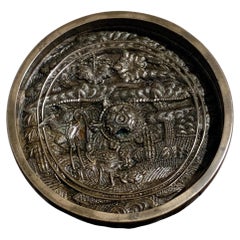
Japanischer „Longevity“-Spiegel aus Bronzeguss, Edo-Periode, 18. Jahrhundert
Ein schwerer und fein gegossener japanischer Bronzespiegel mit Langlebigkeitssymbolen, Edo-Periode, 18. Jahrhundert, Japan.
Der kleine, runde Spiegel mit hohen Wänden wurde aufwändi...
Kategorie
Antik, Spätes 18. Jahrhundert, Japanisch, Edo, Metallarbeit
Materialien
Bronze
Japanischer Bronzespiegel
Dieser exquisite japanische Bronzespiegel mit einem Durchmesser von etwa 11 cm ist ein seltenes und bezauberndes Stück Geschichte. Sie stammt aus...
Kategorie
Antik, 19. Jahrhundert, Japanisch, Metallarbeit
Materialien
Bronze
Bronzespiegel aus der Edo-Zeit mit einem seltenen Design, das einen Tiger und Pflaumenblüten darstellt
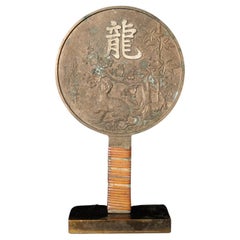
Ein fein gegossener Bronzespiegel aus der Edo-Periode, der ein außergewöhnlich seltenes Motiv zeigt: einen kräftigen Tiger vor eleganten Pflaumenblüten. Die kontrastreiche Bildsprach...
Kategorie
Antik, 18. Jahrhundert, Japanisch, Edo, Metallarbeit
Materialien
Silber, Bronze
Tang Dynasty Silberne Bronze gelappt Beast and Birds Mirror
Antike chinesische Silber Bronze gelappt "Beast and Birds" Spiegel, Tang-Dynastie. Die achtblättrige Stachelform hat in der Mitte einen gegossenen Reliefknopf in Form eines vierbeinigen Tieres, das von vier Reliefgänsen mit ausgebreiteten Flügeln umgeben ist, die mit Blumenzweigen durchsetzt sind, während der äußere Rand eine erhabene Bordüre mit abwechselnden Schmetterlingen und blühenden Pflanzen aufweist. Die Rückseite ist leicht gewölbt. Ausgestattete Box.
Geringfügige Bronzekrankheit...
Kategorie
Antik, 15. Jahrhundert und früher, Chinesisch, Tang-Dynastie, Metallarbeit
Materialien
Bronze