Objekte ähnlich wie Jorge Mealha (1934 -2021) Pottery, Large Bull Sculpture Portugal, late 20th C.
Möchten Sie mehr Bilder oder Videos?
Zusätzliche Bilder oder Videos von dem*der Anbieter*in anfordern
1 von 20
Jorge Mealha (1934 -2021) Pottery, Large Bull Sculpture Portugal, late 20th C.
1.468,40 €
Angaben zum Objekt
Jorge Mealha (1934-2021) Pottery—Large Bull Sculpture
Portugal, late 20th century
Dimensions: 17" W × 5.5" D × 7.5" H
Material: Hand-built stoneware with expressive ash and iron-rich glazes
Marks: Incised signature and stamp reading “Jorge Mealha” on underside
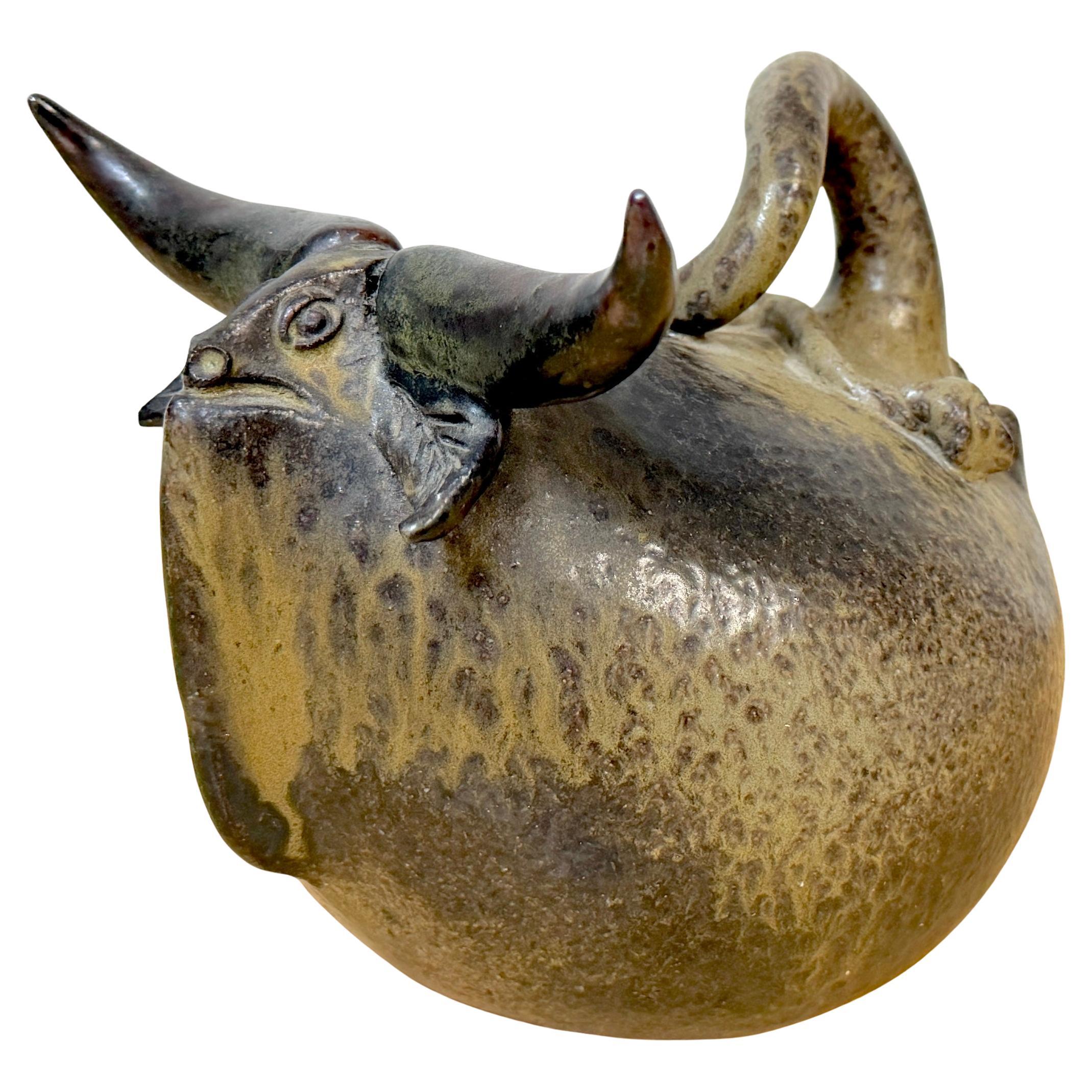
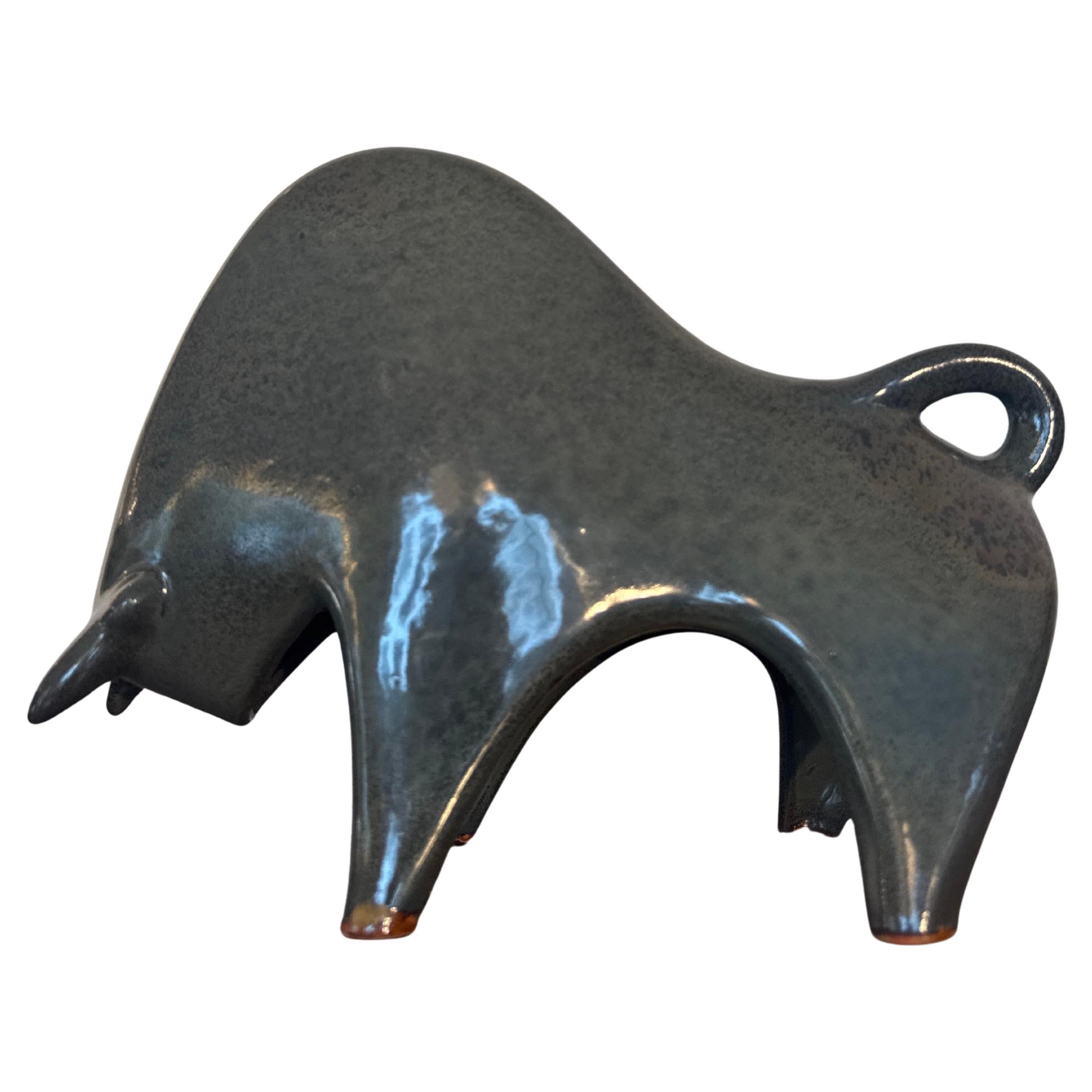
This substantial and highly expressive ceramic bull sculpture is a masterwork by Jorge Mealha, a Portuguese studio potter celebrated for his sculptural interpretations of animals rendered with anatomical conviction, tactile surface modeling, and a deeply grounded sense of materiality.
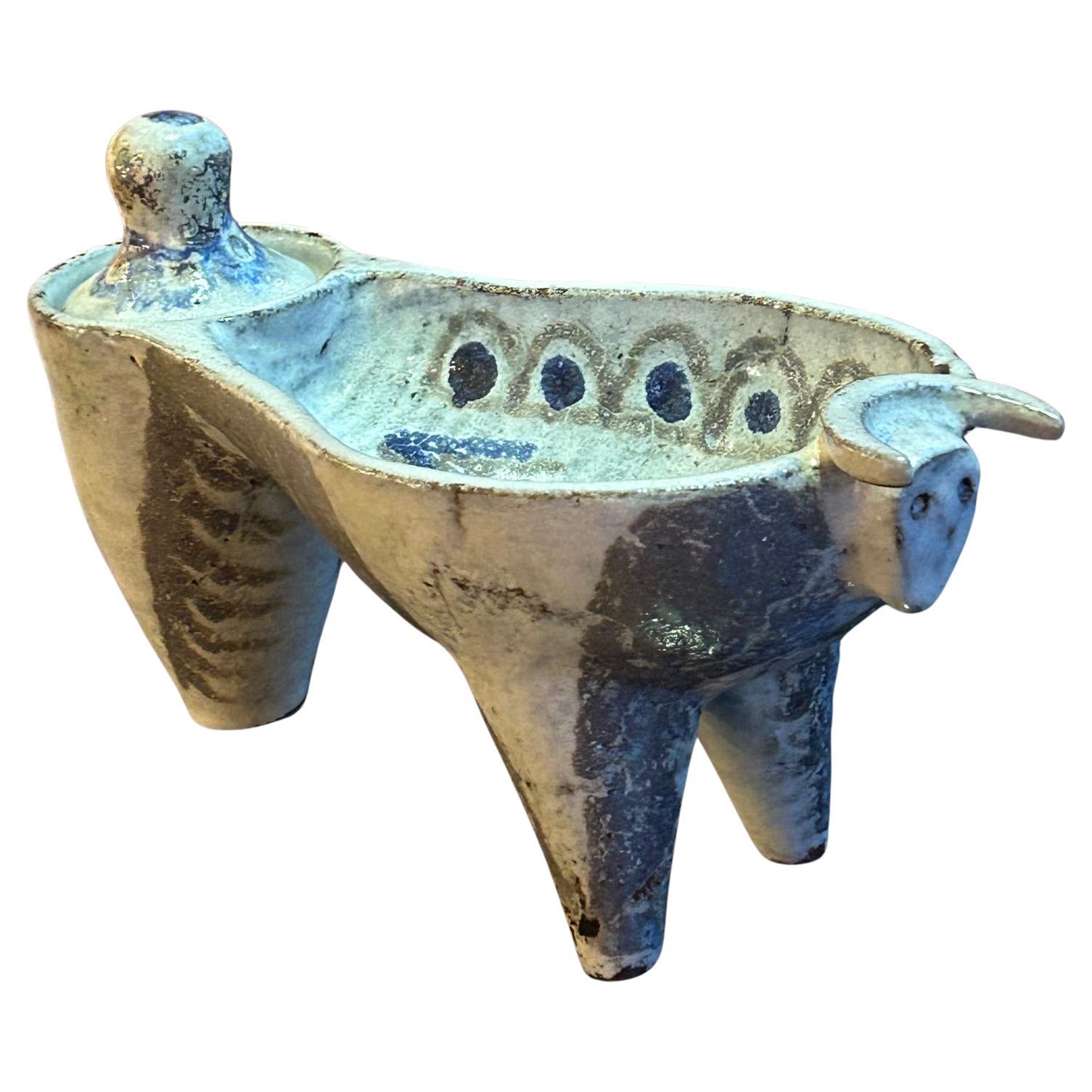
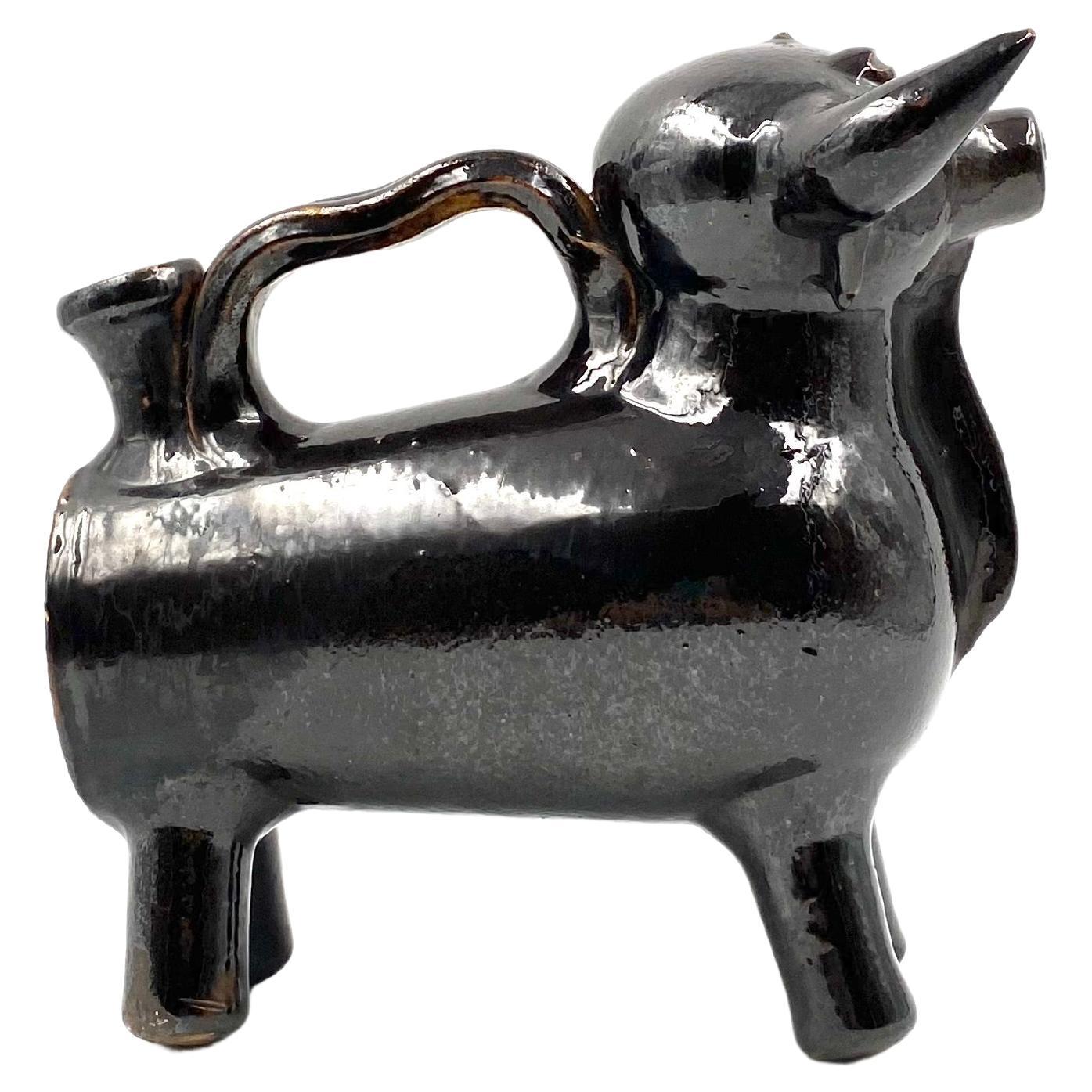
The bull is conceived as a low, elongated form with a pronounced, weight-bearing torso set firmly on stout legs. The body swells organically at the chest and flanks, conveying both mass and latent strength. The head is carefully articulated, with broad horns extending laterally, subtly asymmetrical ears, and a facial expression that balances realism with a restrained, almost archaic stylization. The raised tail curls upward into a looped handle-like form, an element that is both playful and sculptural, reinforcing the object’s three-dimensional dynamism.
Anatomical Accuracy
Artistic Signature
The anatomical correctness evident here—particularly in the proportional relationship between torso, legs, and head—is indeed a hallmark of Mealha’s work. Rather than producing naïve or purely decorative animal figures, Mealha consistently grounded his sculptures in close observation of real animals. Musculature, balance, and stance are carefully considered, giving the figures a convincing physical presence while remaining firmly within the language of modern studio pottery. This synthesis of realism and stylization is one of his defining artistic signatures.
Technique
Surface
The sculpture is hand-built, not wheel-thrown, allowing for nuanced modeling and subtle irregularities that emphasize its handmade nature. The surface is enriched by a complex glaze palette: deep olive greens, umber browns, iron blacks, and areas of smoky, matte texture suggestive of ash or reduction firing. The glaze pools and thins organically across the surface, accentuating contours and lending the piece a sense of age and elemental force. The finish is neither glossy nor precious; instead, it recalls earth, hide, and horn—materials conceptually aligned with the animal itself.
Meaning
Symbolism
In Iberian culture, the bull carries layered symbolism—strength, fertility, endurance, and a deep connection to land and tradition. Mealha’s interpretation avoids overt narrative or folkloric reference, instead presenting the animal as a timeless, almost totemic form. The grounded stance and calm expression suggest controlled power rather than aggression, aligning the sculpture with themes of balance between nature and human observation.
Artist Background
Jorge Mealha was an important figure in Portuguese studio pottery in the late 20th century, working within a broader European movement that emphasized individual artistic expression, sculptural form, and respect for raw materials. His work is closely associated with animal subjects—bulls, goats, and other pastoral forms—executed with technical assurance and a distinctly Mediterranean sensibility. Pieces by Mealha are collected for their sculptural integrity as much as their ceramic excellence.
Condition
Excellent vintage condition, with only minor surface variations inherent to the firing and glazing process. No structural damage noted.
This sculpture stands as a commanding example of Portuguese modern ceramics—simultaneously sculptural, tactile, and deeply rooted in both observation and tradition—making it a strong centerpiece for collectors of studio pottery, animal sculpture, or European modern decorative arts.
- Maße:Höhe: 19,05 cm (7,5 in)Breite: 44,45 cm (17,5 in)Tiefe: 13,97 cm (5,5 in)
- Stil:Moderne (Aus dem Zeitalter)
- Materialien und Methoden:
- Herkunftsort:
- Zeitalter:
- Herstellungsjahr:1990s
- Zustand:Abnutzung dem Alter und der Nutzung entsprechend.
- Anbieterstandort:West Palm Beach, FL
- Referenznummer:Anbieter*in: T36621stDibs: LU2592348230982
Anbieterinformationen
5,0
Platin-Anbieter*in
Premium-Anbieter*innen mit einer Bewertung über 4,7 und 24 Stunden Reaktionszeit
Gründungsjahr 1996
1stDibs-Anbieter*in seit 2017
1.484 Verkäufe auf 1stDibs
Typische Antwortzeit: <1 Stunde
- VersandAngebot wird abgerufen …Versand von: West Palm Beach, FL
- Rückgabebedingungen
Einige Inhalte dieser Seite wurden automatisch übersetzt. Daher kann 1stDibs nicht die Richtigkeit der Übersetzungen garantieren. Englisch ist die Standardsprache dieser Website.
Mehr von diesem*dieser Anbieter*in
Alle anzeigenJorge Mealha (1934–2021) Sculptural Steer / Bovine Form Portugal, late 20th C.
Jorge Mealha (1934–2021)
Sculptural Steer/Bovine Form
Portugal, late 20th century
Dimensions: 7.5" W × 5.5" D × 6" H
Material: Hand-built stoneware with iron-rich glaze
Marks: Incise...
Kategorie
Ende des 20. Jahrhunderts, Portugiesisch, Moderne, Tierskulpturen
Materialien
Töpferwaren
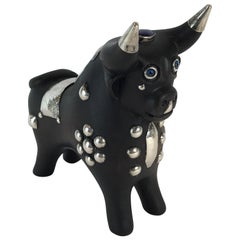
Mitte des Jahrhunderts geschnitzt Holz und Silber Taurus Stier-Skulptur
Mitte des Jahrhunderts geschnitztes Holz und Silber Taurus Stier Skulptur, gut geschnitzt mit ausdrucksstarken Gesicht und Glasaugen. Der Korpus ist mit einem Lapislazuli-Stein und z...
Kategorie
Vintage, 1960er, Mexikanisch, Moderne der Mitte des Jahrhunderts, Tiersk...
Materialien
Lapis Lazuli, Sterlingsilber
487 € Verkaufspreis
20 % Rabatt
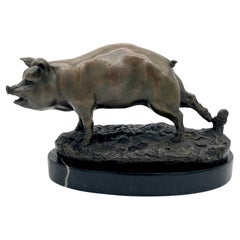
Französische Schule Animalier Sculpture Bronze eines Roped Preis Schwein
Von Antoine-Louis Barye
Französische Schule Animalier Sculpture Bronze eines Roped Preis Schwein
20. Jahrhundert Frankreich, Signiert 'Barex'
Diese Animalier-Skulptur aus Bronze aus dem 20. Jahrhundert, si...
Kategorie
20. Jahrhundert, Europäisch, Jagdkunst, Tierskulpturen
Materialien
Marmor, Bronze
1.048 € Verkaufspreis
20 % Rabatt
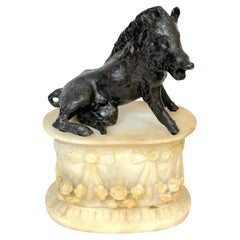
Grand Tour Bronzereduktion Il Porcellino "Borghese Wildschwein" Geschnitzter Alabastersockel
Grand Tour Bronzereduktion von Il Porcellino "Borghese Wildschwein" auf einem geschnitzten neoklassizistischen Alabaster-Sockel
Italien, 19. Jahrhundert
Ein fein gegossenes Bronzemo...
Kategorie
Antik, 19. Jahrhundert, Italienisch, Grand Tour, Tierskulpturen
Materialien
Alabaster, Bronze
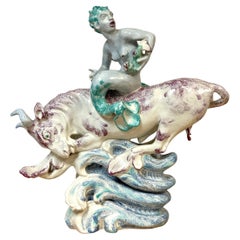
Jean René Gauguin "Havtyren" / "Seestier" Skulptur für Bing
Grøndahl, Dänemark
Von Jean Rene Gauguin
Jean René Gauguin "Havtyren" Monumentale glasierte Fayence-Skulptur eines Seestiers für Bing & Grøndahl, Dänemark, um 1930
Ein monumentales und seltenes bildhauerisches Meisterwerk ...
Kategorie
20. Jahrhundert, Dänisch, Moderne, Porzellan
Materialien
Töpferwaren
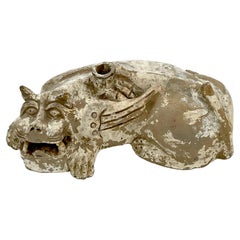
Große chinesische Han-Dynastie Stil Keramik stilisierte Foo Hund Joss / Kerzenständer
Große chinesische Han-Dynastie Stil Keramik stilisierte Foo Hund Joss / Kerzenständer
China, 20. Jahrhundert
Ein beeindruckendes Stück chinesischer Kunstfertigkeit - eine große Ko...
Kategorie
20. Jahrhundert, Chinesisch, Chinesischer Export, Kerzenständer
Materialien
Töpferwaren
1.329 € Verkaufspreis
20 % Rabatt
Das könnte Ihnen auch gefallen
Keramischer liegender Stier aus der Mitte des Jahrhunderts, Petucco und Tolio, Nove Italien 1960er Jahre
Keramischer liegender Stier aus der Mitte des Jahrhunderts
Keramik-Kunstwerkstatt Giovanni Petucco und Antonio Tolio, Nove Italien 1960er Jahre
H 14,5 - 24 cm Durchm.
Zustand: au...
Kategorie
Vintage, 1960s, Italian, Moderne der Mitte des Jahrhunderts, Tierskulpturen
Materialien
Keramik
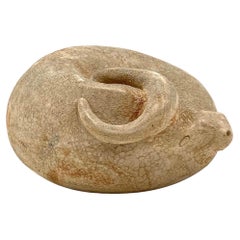
Italienischer Töpferbulle
Designer: Unbekannt
Importeur: Unbekannt.
Zeitraum oder Modell: Mid-Century Modern.
Spezifikationen: Töpferei
Bedingung:
Dieser italienische Töpferstier ist in einem ausg...
Kategorie
Vintage, 1960er, Italienisch, Moderne der Mitte des Jahrhunderts, Tiersk...
Materialien
Töpferwaren
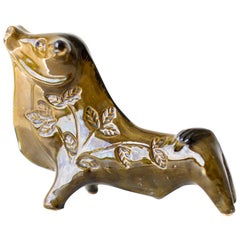
Keramische Stier-Skulptur, Bruno Gambone zugeschrieben, 1980er Jahre
Von Bruno Gambone
Ein grafischer stilistischer Eindruck einer schönen skulpturalen Stierfigur, ein Sammlerstück für Ihr Interieur, das Bruno Gambon zugeschrieben wird, hergestellt in Italien in den 19...
Kategorie
Vintage, 1980er, Italienisch, Moderne der Mitte des Jahrhunderts, Tiersk...
Materialien
Keramik
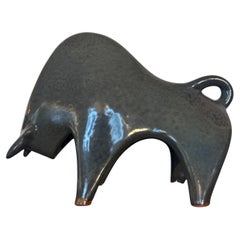
Skulptur eines Stiers von Jean Derval / Vallauris, Frankreich, 1960er Jahre
Von Vallauris, Jean Derval
Keramische Stierskulptur von Jean Derval, der in den 1960er Jahren in Vallauris, Frankreich, tätig war.
Kategorie
Vintage, 1960er, Französisch, Tonwaren
Materialien
Keramik
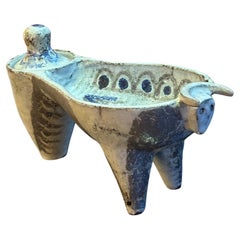
Bull Shaped Jug-Skulptur im antiken mediterranen Stil, Frankreich, 1960er Jahre
Antike Skulptur in Form eines Stiers im mediterranen Stil. Phönizier Karalis / Motya.
Frankreich 1970er Jahre
23 x 24 x 11 cm
Bedingungen: ausgezeichnet, keine Mängel.
Kategorie
Vintage, 1970er, Französisch, Primitiv, Tierskulpturen
Materialien
Keramik
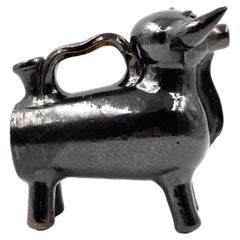
Keramik Ruhender Stier Tisch Skulptur Signiert Vintage Mitte des Jahrhunderts
Von Marcello Fantoni
USA, ca. 1970er Jahre. Unbekannter Künstler, erworben aus einem Nachlass in Washington DC. Eine ruhende Stier-Skulptur mit stilisiertem Loch im Kopf. Der Stier ist ein Symbol für Wo...
Kategorie
Vintage, 1970er, amerikanisch, Moderne der Mitte des Jahrhunderts, Tiers...
Materialien
Keramik